Lemon-rumped Warbler
Phylloscopus chloronotus
淡黄腰柳莺
Introduction
A small Old World warbler in the family Phylloscopidae. Native to the Himalayas, breeding in montane forests from northern Pakistan through Nepal into India, Bhutan, and China, and wintering in the southern foothills and the Purvanchal Range. The species is structurally identical to the Sichuan Leaf Warbler (Phylloscopus forresti) but differs distinctly in vocalizations. Assessed as Least Concern on the IUCN Red List, with stable populations across its range.
Description
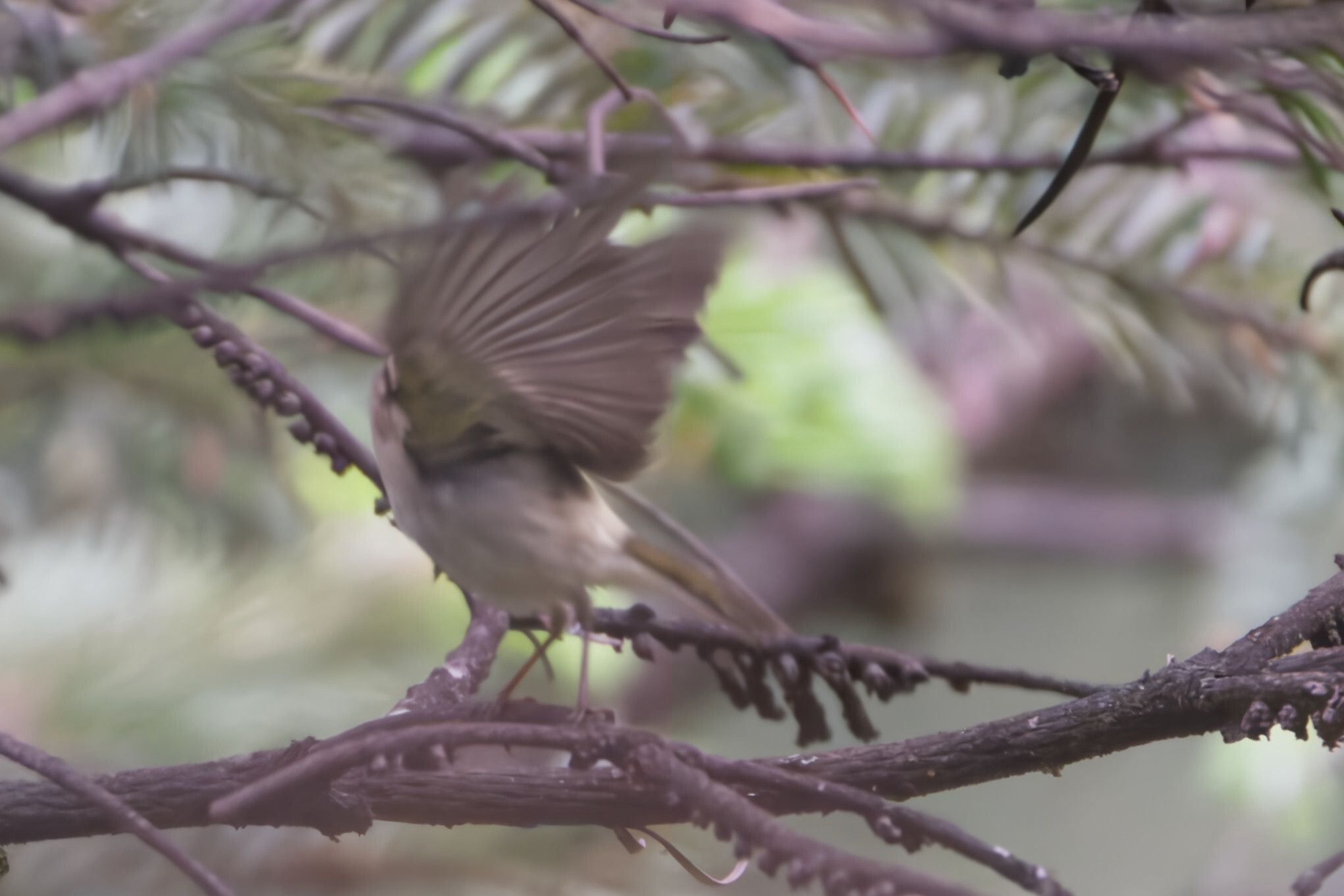
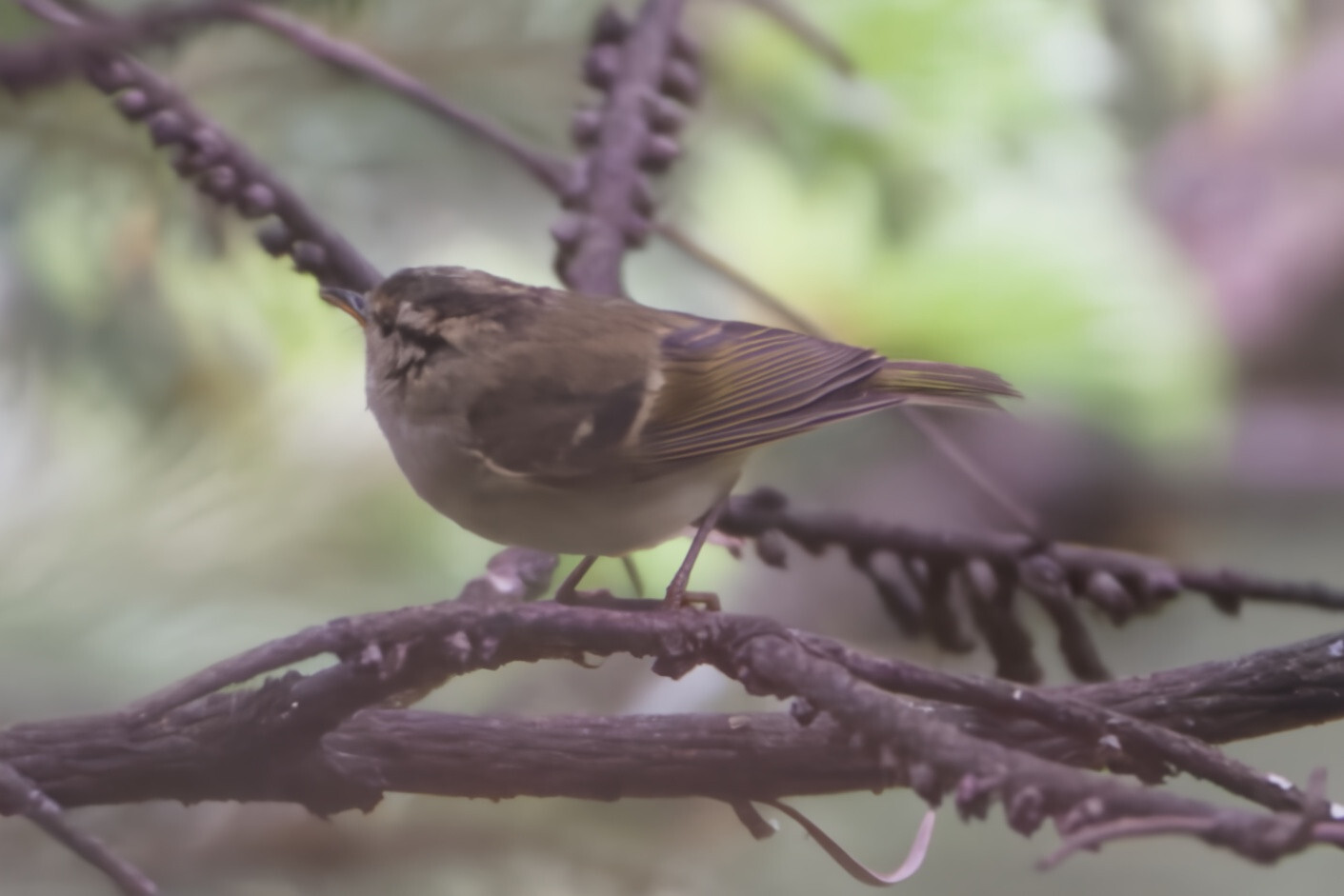
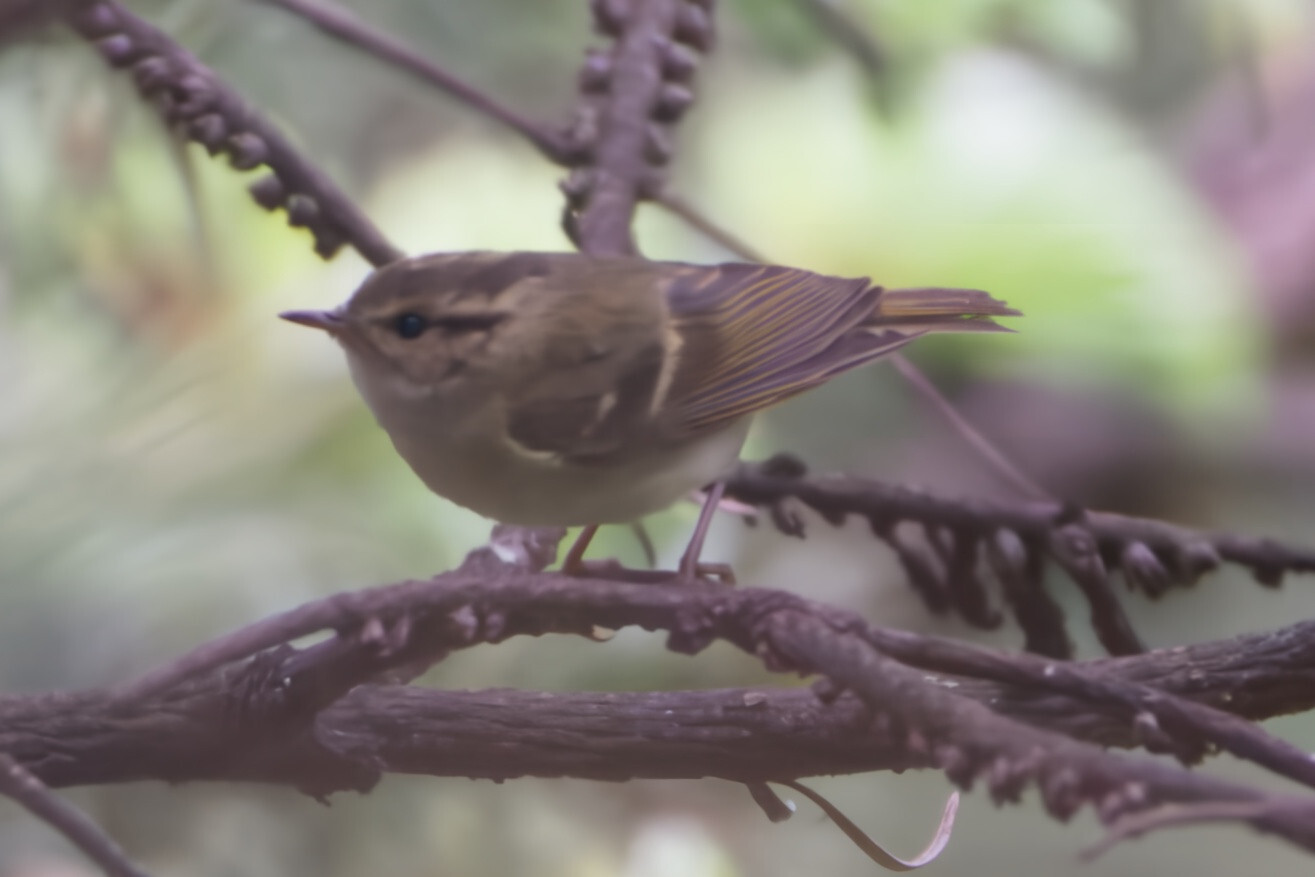
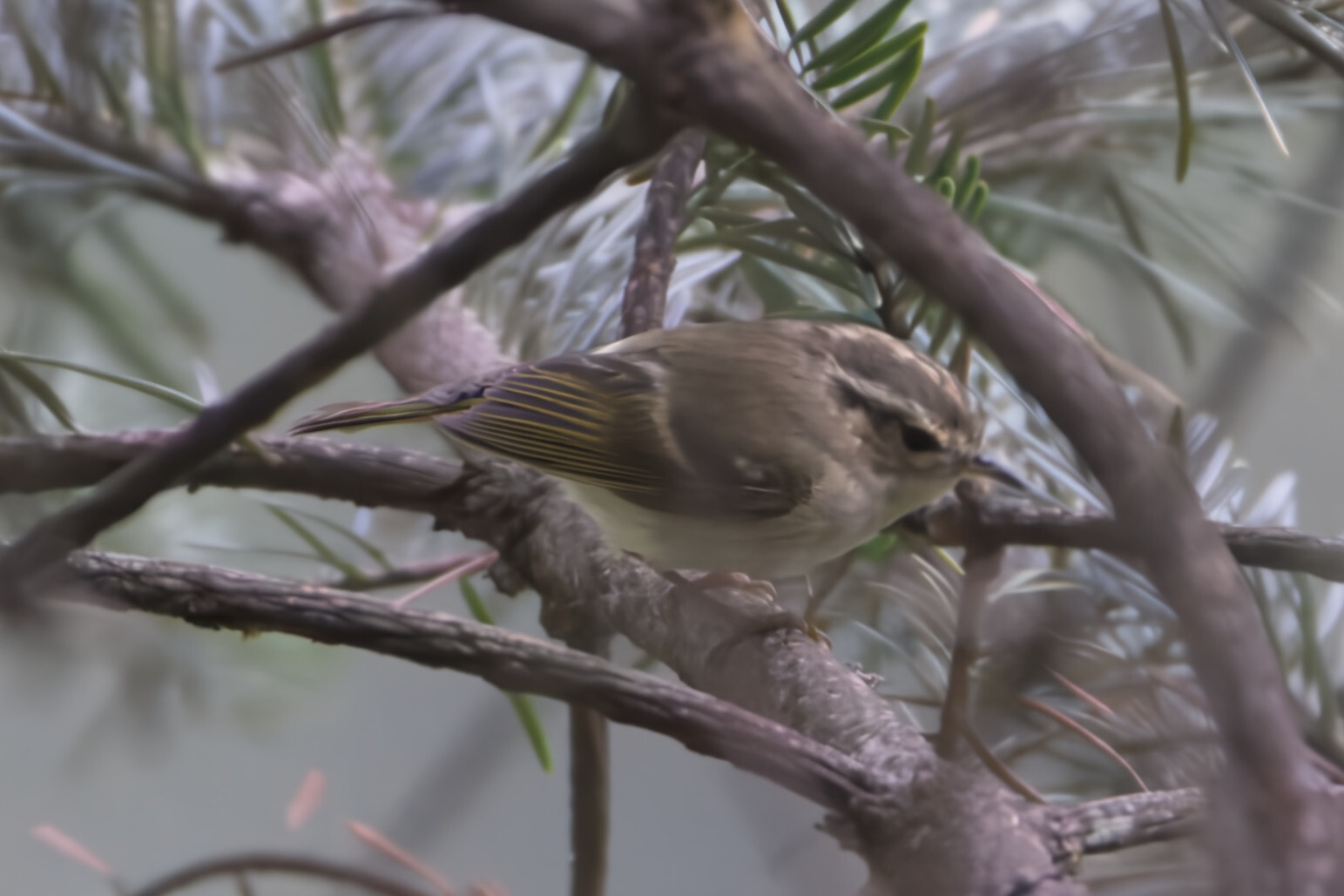
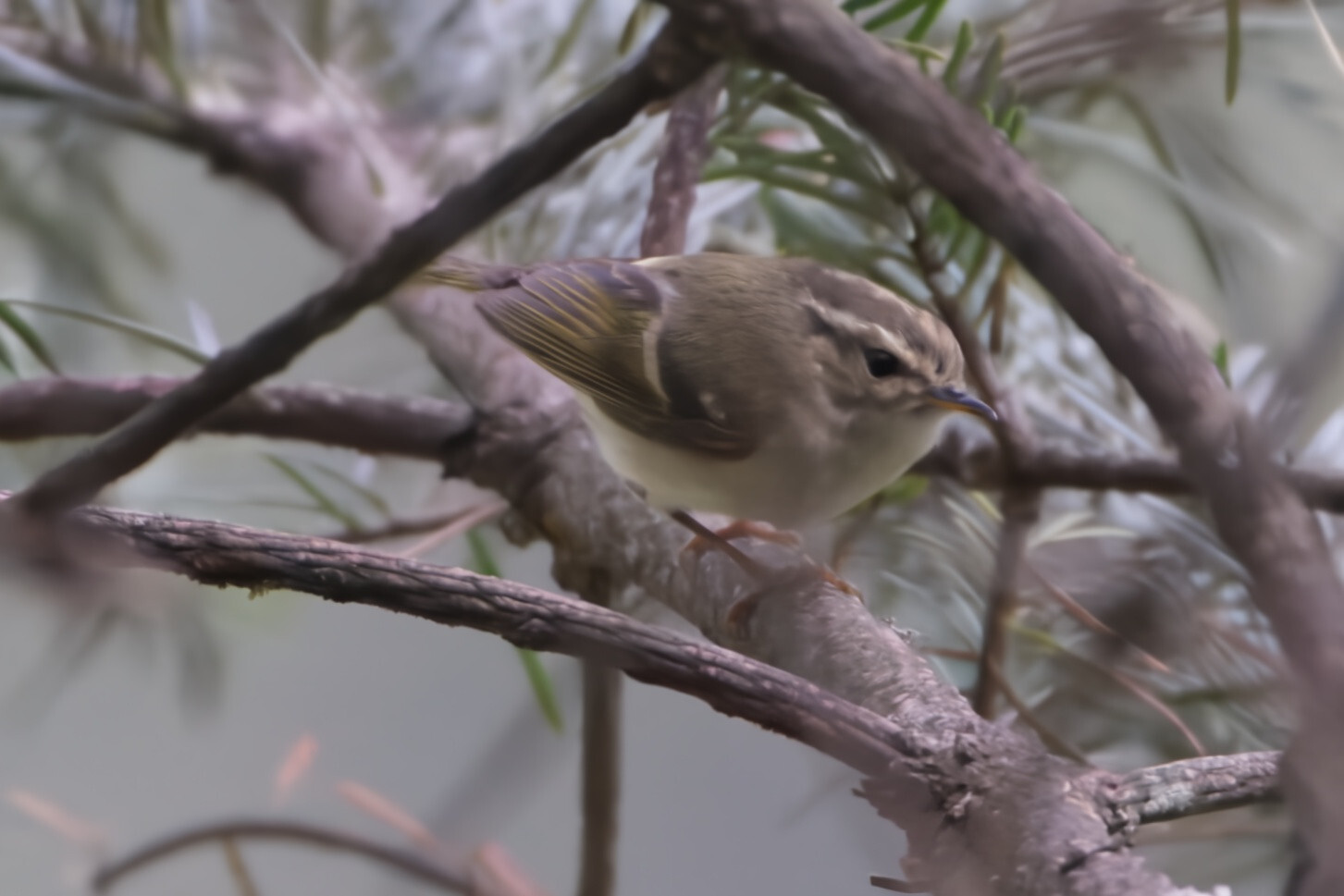
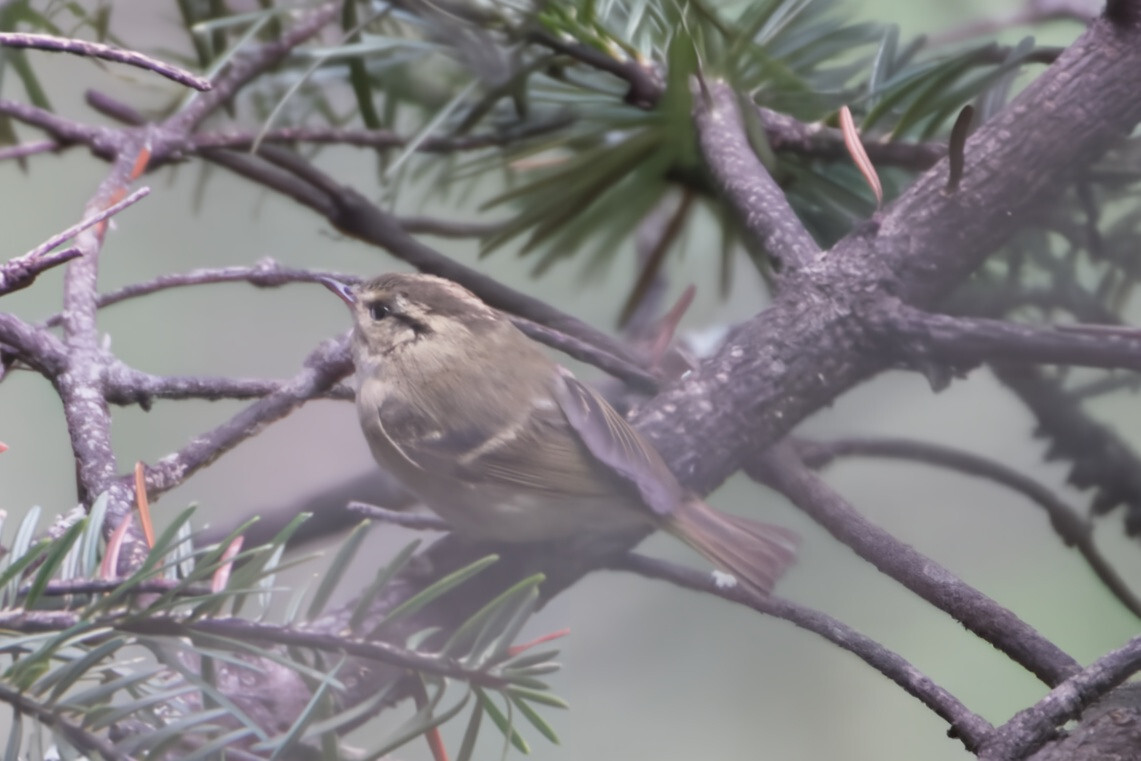
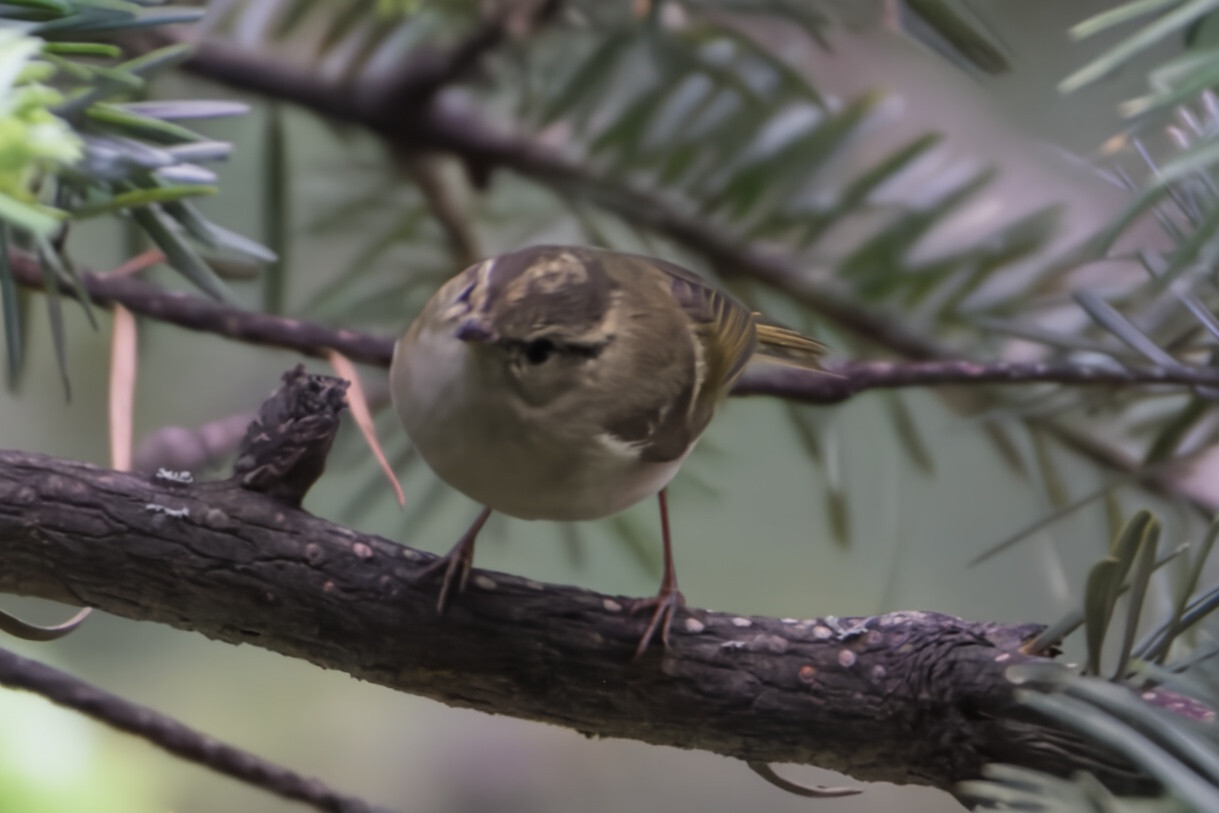
A tiny warbler measuring 9–10 cm in length and weighing 4.6–5.1 g. The head features a whitish crown stripe bordered by darker olive-brown sides, a pale supercilium, and a dark eyestripe that often curves downward. Upperparts are greenish-grey, and the rump is yellowish or whitish, giving the species its name. Wings are grey-brown with green edging and typically show one or two pale wingbars. Underparts are whitish or buff with grey along the breast sides. The bill is dark with a yellowish or orange base to the lower mandible, and legs are dark grey. Sexes are similar, though females are slightly smaller. Juveniles resemble adults. Two subspecies are recognized: one in the central and eastern Himalayas, and another in the west with greener and more buff-toned plumage.
Distribution & Habitat
Breeds across the Himalayas from northern Pakistan through Nepal into India, Bhutan, and China. In winter, descends to lower elevations, reaching Assam and occasionally Myanmar, though its presence in Afghanistan is uncertain. Inhabits montane forests between 2,200 and 4,200 meters elevation. In Pakistan, most frequent at 2,200–2,700 m, while in Nepal ranges up to 4,000 m. Winter records occur from 300–2,700 m, generally above 1,000 m. Breeding habitat includes spruce and fir forests with rhododendron and broadleaf trees, as well as oak and lower-elevation broadleaf stands near the conifer zone.
Behavior & Ecology
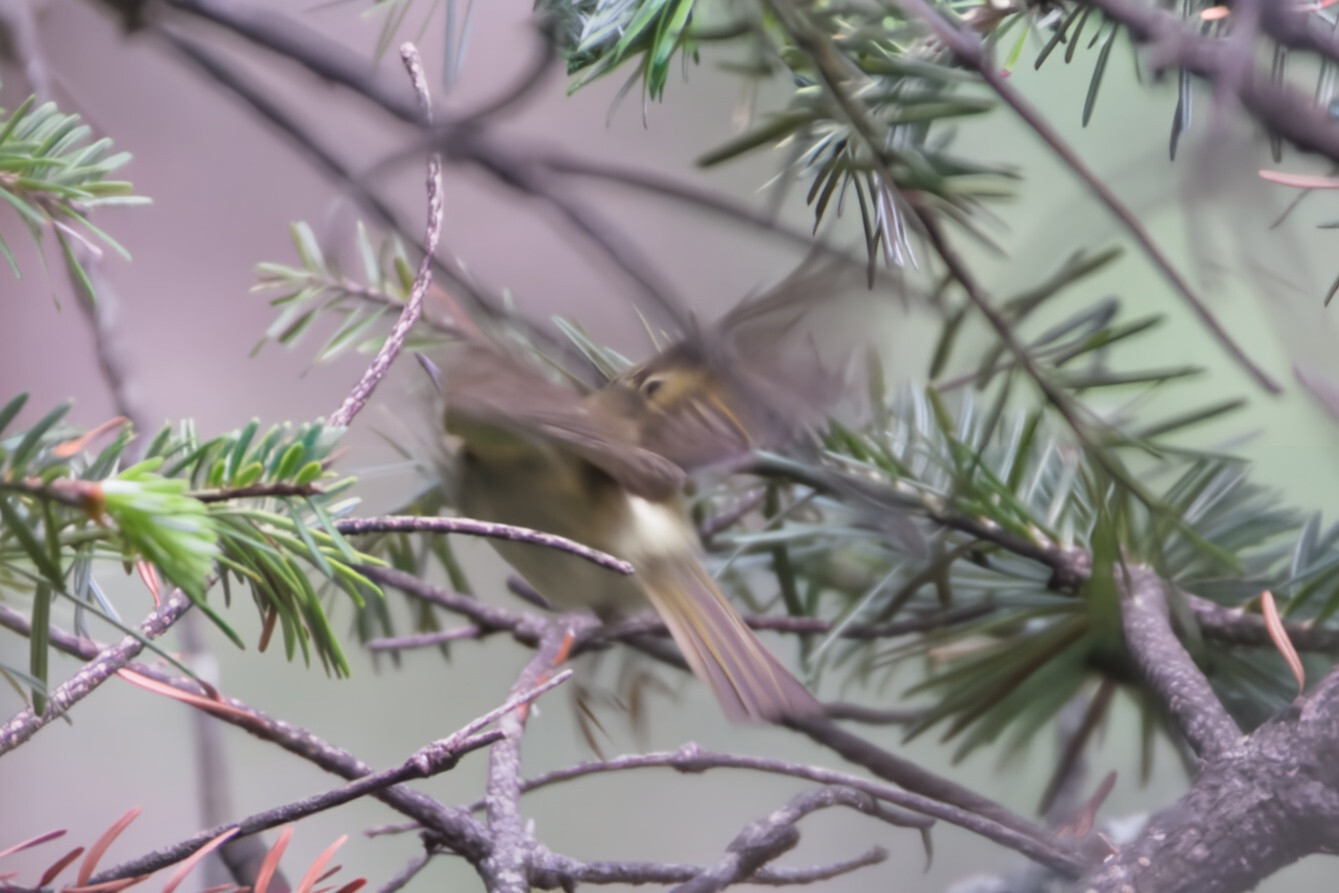
Makes altitudinal movements, breeding higher in summer and descending to lower elevations in winter. Diet consists mainly of insects and larvae. Forages alone or in pairs in winter but also joins mixed-species flocks. Feeding occurs in the canopy and understory, often involving short hovering or sallies to catch prey in the air (flycatching). Two song types are reported: a short trill followed by a lower trill lasting 2–4 seconds, and a longer, varied series lasting several minutes. The call is a sharp, high 'pist' or 'psit.' Breeding occurs from April to July, peaking in May and June. The female builds a ball-shaped nest with a side entrance from grass, moss, lichen, and birch bark, lined with feathers, placed 2–15 m above ground in conifers. Clutches contain 3–5 eggs, most often four. Female incubates; both adults feed the young.
Conservation
Assessed as Least Concern on the IUCN Red List. The species is widespread across the Himalayas with stable populations. Much of its range falls within protected areas, and no major threats are currently reported. Localized logging or habitat alteration may affect some populations, but the species adapts to a range of montane forests.
Source: Wikipedia · CC BY-SA 3.0
Taxonomy
- Order
- Passeriformes
- Family
- Phylloscopidae
- Genus
- Phylloscopus
- eBird Code
- parwar1
Subspecies (2)
-
Phylloscopus chloronotus chloronotus
Himalayas of Pakistan to southeastern Tibet, northeastern India, and south-central China
-
Phylloscopus chloronotus simlaensis
northwestern Himalayas (Afghanistan to western Nepal)
Data Sources
Species description from Wikipedia, licensed under CC BY-SA 3.0.
Bird images and sounds sourced from GBIF, contributed by citizen scientists worldwide under Creative Commons licenses.
Taxonomy data from AviList 2025.