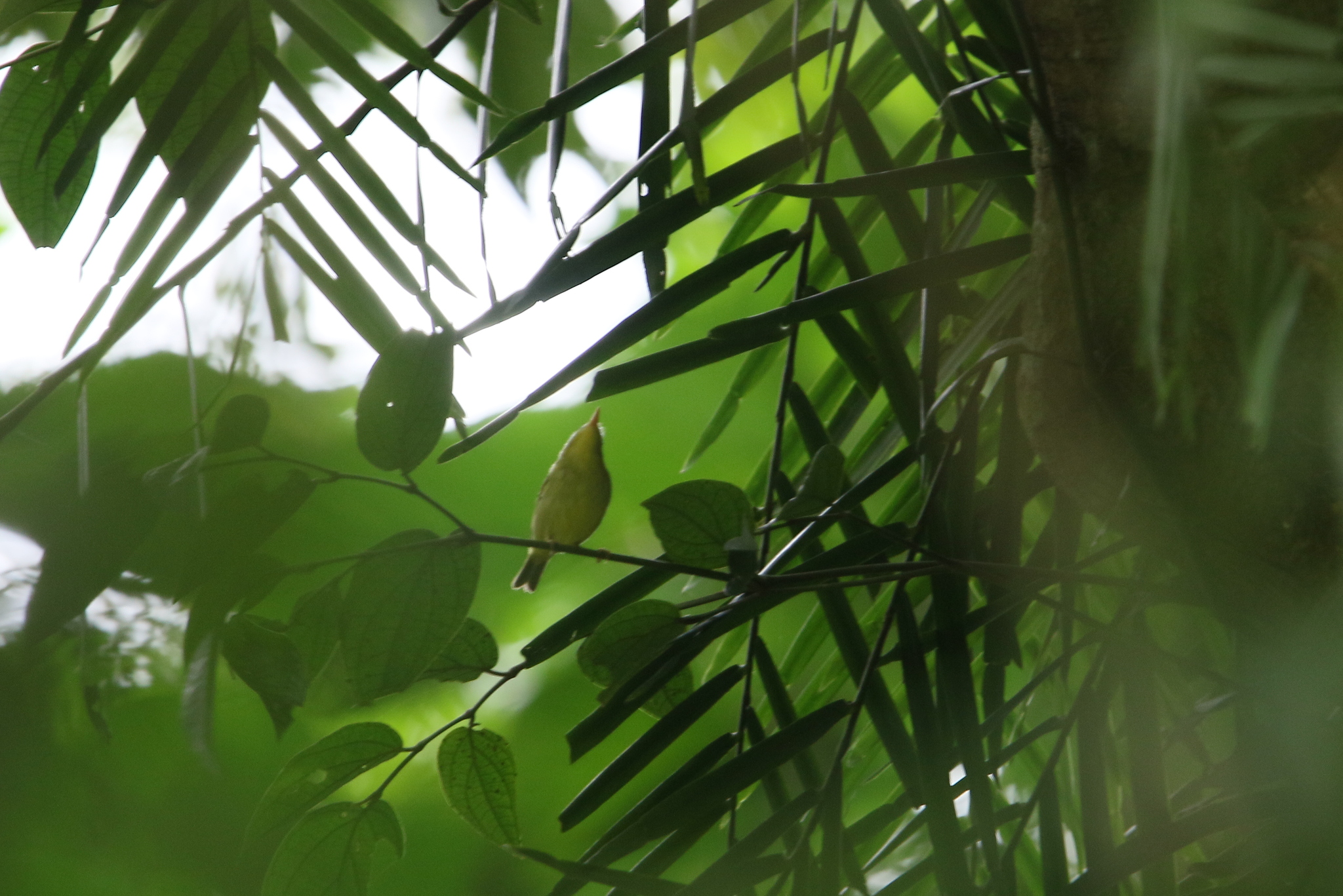
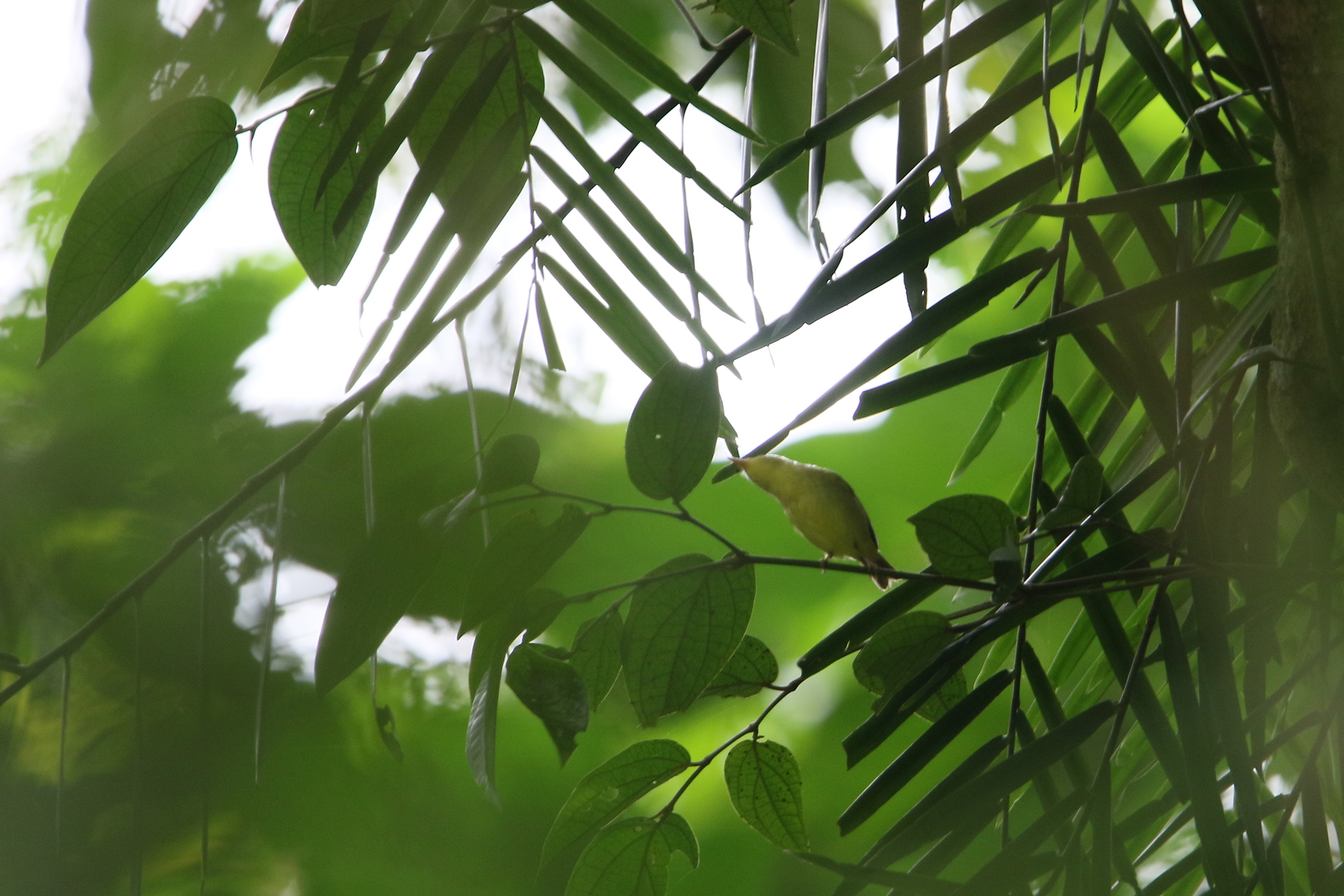
Limestone Leaf Warbler
Phylloscopus calciatilis
灰岩柳莺
Introduction
A species of warbler in the family Phylloscopidae, first observed in 1994. It is endemic to northern Vietnam and Laos, with potential occurrence in southern China. The species name calciatilis means 'dwelling on limestone,' referring to its specialized habitat in broadleaved evergreen and semi-evergreen forest growing around limestone karst mountains. Most closely related to the sulphur-breasted warbler (P. ricketti) and yellow-vented warbler (P. cantator) based on mitochondrial and nuclear DNA. It may hybridize with the sulphur-breasted warbler and is allopatric or parapatric to these two species.
Description
A small warbler, smaller than the sulphur-breasted warbler, with more rounded wings and a proportionately elongated bill. The plumage is greenish-olive above with a yellow breast. The crown features black lateral crown-stripes that are paler and more diffuse near the bill, a greenish-yellow median crown stripe, and a yellow supercilium with a faint greenish tinge. The mantle, scapulars, back, rump, and coverts are bright grey-green; the throat, breast, and belly are bright yellow. The remiges, rectrices, and coverts are dark grey with brown tinge and bright greyish-green outer edges. Juveniles resemble adults but have looser plumage, less yellow underparts, and whiter tips to the greater coverts. Measurements: wing 5.2 cm, tail 3.7 cm, bill 1.39 cm.
Identification
Distinguished from the sulphur-breasted warbler by smaller size, more rounded wings, and proportionally larger bill. Plumage differences are subtle: marginally colder yellow below, greyer upperparts, and greyer lateral crown-stripes. The black lateral crown-stripes, paler near the bill, are a key feature. Easily separated from the yellow-vented warbler by its yellow belly rather than yellow vent. The call and song are diagnostic, and DNA analysis can confirm identification. Plumage alone may not reliably distinguish it from P. ricketti.
Distribution & Habitat
Known from northern Vietnam and Laos, with potential occurrence in southern China. At Phong Nha-Ke Bang, found in forest on mountains or valleys between karsts, between 80m and at least 200m elevation. In Hin Namno National Protected Area, found in old-growth and mature secondary semi-evergreen forest on limestone karst between 280 and 460m. In Laos, recorded in dry evergreen and semi-evergreen forest and secondary growth on limestone from 600–1000m, and in tall secondary scrub at approximately 1200m in Ha Giang, Vietnam. Not found in plains away from hills.
Behavior & Ecology
Breeds specifically in limestone karst environments. The discovery in 1994 was initially mistaken for the sulphur-breasted warbler. Its call and song are diagnostic and serve as reliable identification features in the field. Part of the same lineage as the sulphur-breasted and yellow-vented warblers. Social structure and specific dietary information are not detailed in available sources.
Conservation
Habitat-dependent conservation concern. The species depends on forest within limestone karst formations, which are generally unsuitable for industrial agriculture. However, timber extraction is clearing parts of karst blocks, reducing forest extent and quality. If the species depends on taller forests within karst areas, population decline may occur. Large areas of karst remain within its known range in Laos and Vietnam. The Wildlife Conservation Society is working with the Lao Government to reduce threats to the species and its habitat.
Culture
The discovery of this species in 1994, announced in 2010, was described as exciting and underscores the importance of the Annamite mountain range of Indochina for conservation. Colin Poole of the Wildlife Conservation Society noted the region is revealing itself as a 'lost world' for new and unusual wildlife. The species was named for its breeding habitat in Laos's limestone karst environments, an area known for unusual wildlife.
Source: Wikipedia · CC BY-SA 3.0
Taxonomy
- Order
- Passeriformes
- Family
- Phylloscopidae
- Genus
- Phylloscopus
- eBird Code
- limlew1
Distribution
northern and central Laos, and northern and central Vietnam
Data Sources
Species description from Wikipedia, licensed under CC BY-SA 3.0.
Bird images and sounds sourced from GBIF, contributed by citizen scientists worldwide under Creative Commons licenses.
Taxonomy data from AviList 2025.