
Black Redstart
Phoenicurus ochruros
赭红尾鸲
Introduction
Classified as an Old World flycatcher, this species breeds across south and central Europe, western Asia, and north-west Africa. It formerly bred in Britain but is now scarce there. Originally occupying mountain cliff habitats, it has expanded into urban industrial areas, wartime bombed sites, and factory complexes. The species is migratory, passing through coastal areas during migration and winter. It superficially resembles the common redstart but occupies different ecological niches. Hybridization occasionally occurs where ranges overlap, producing fertile offspring.
Description
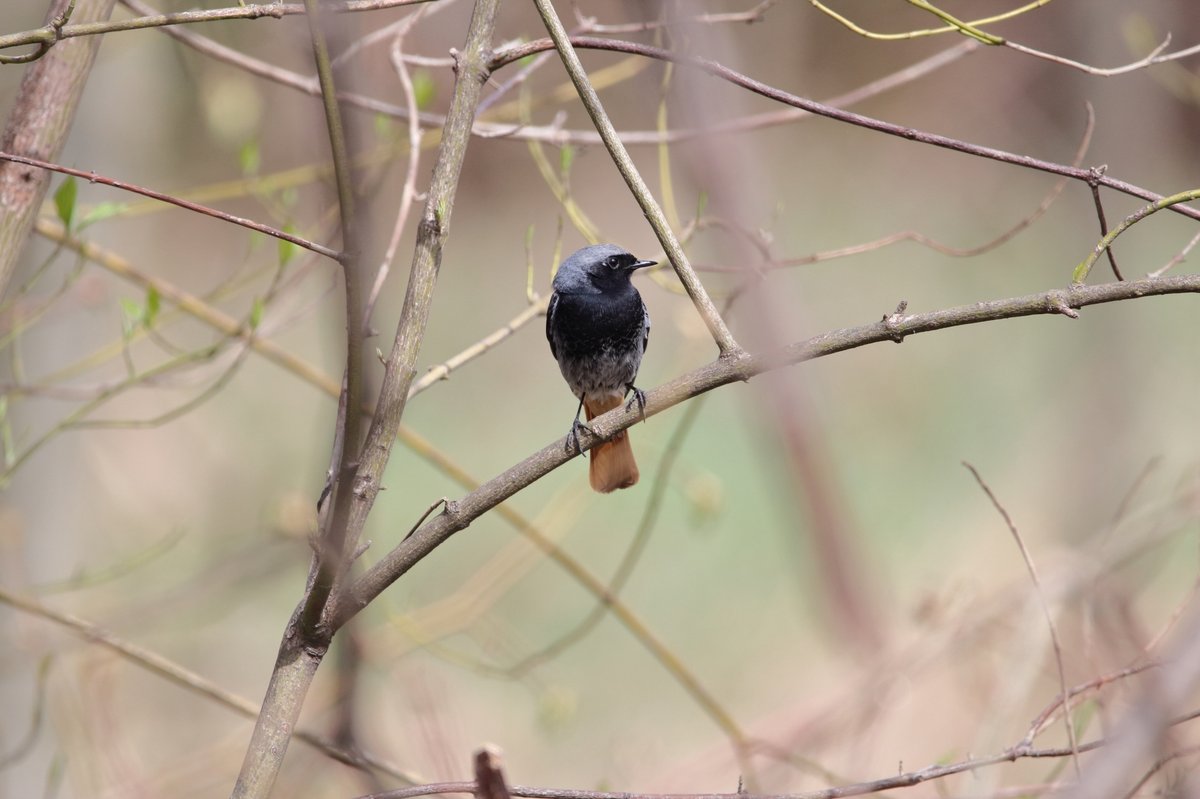
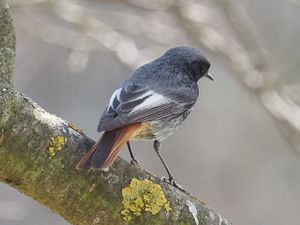
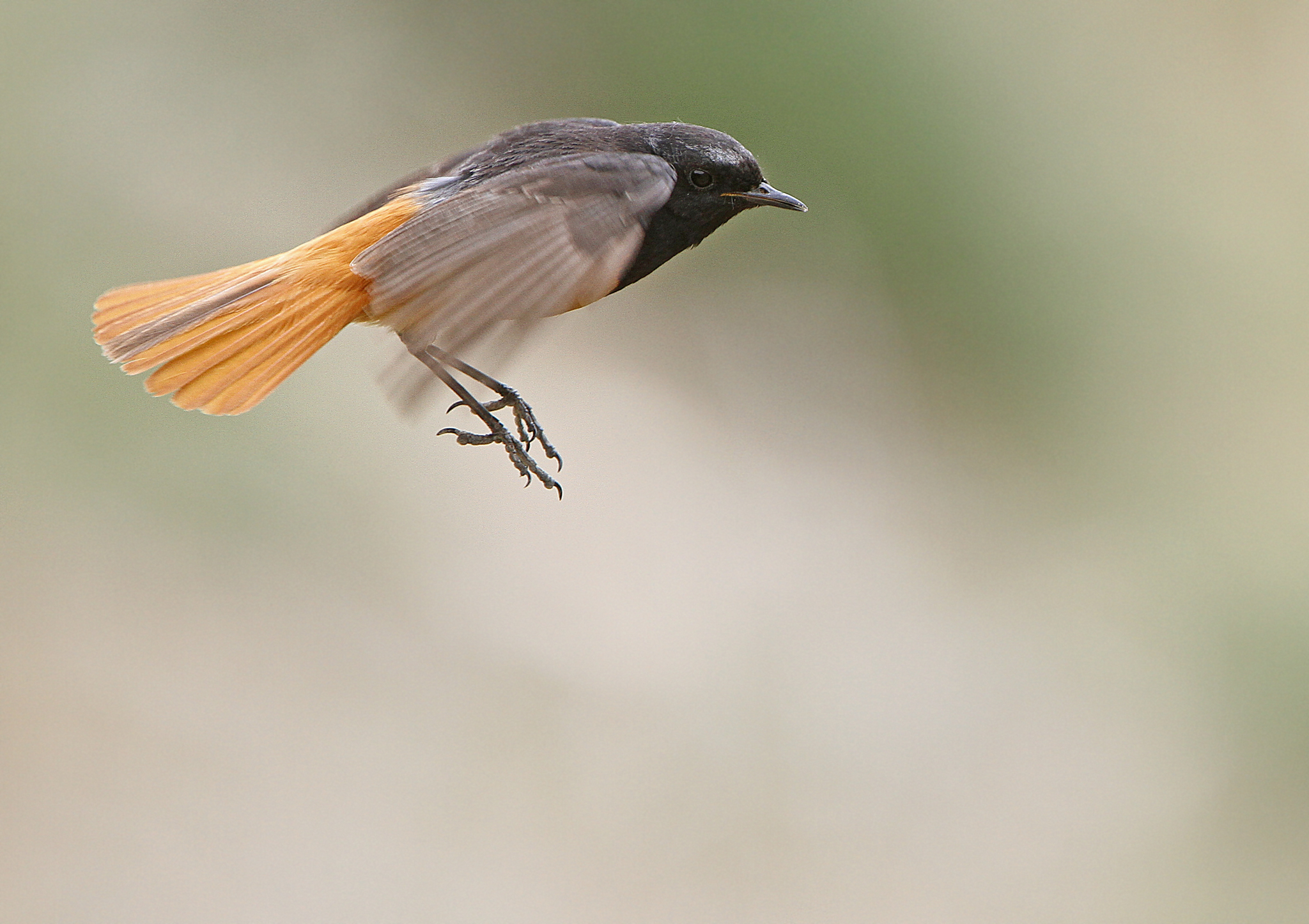
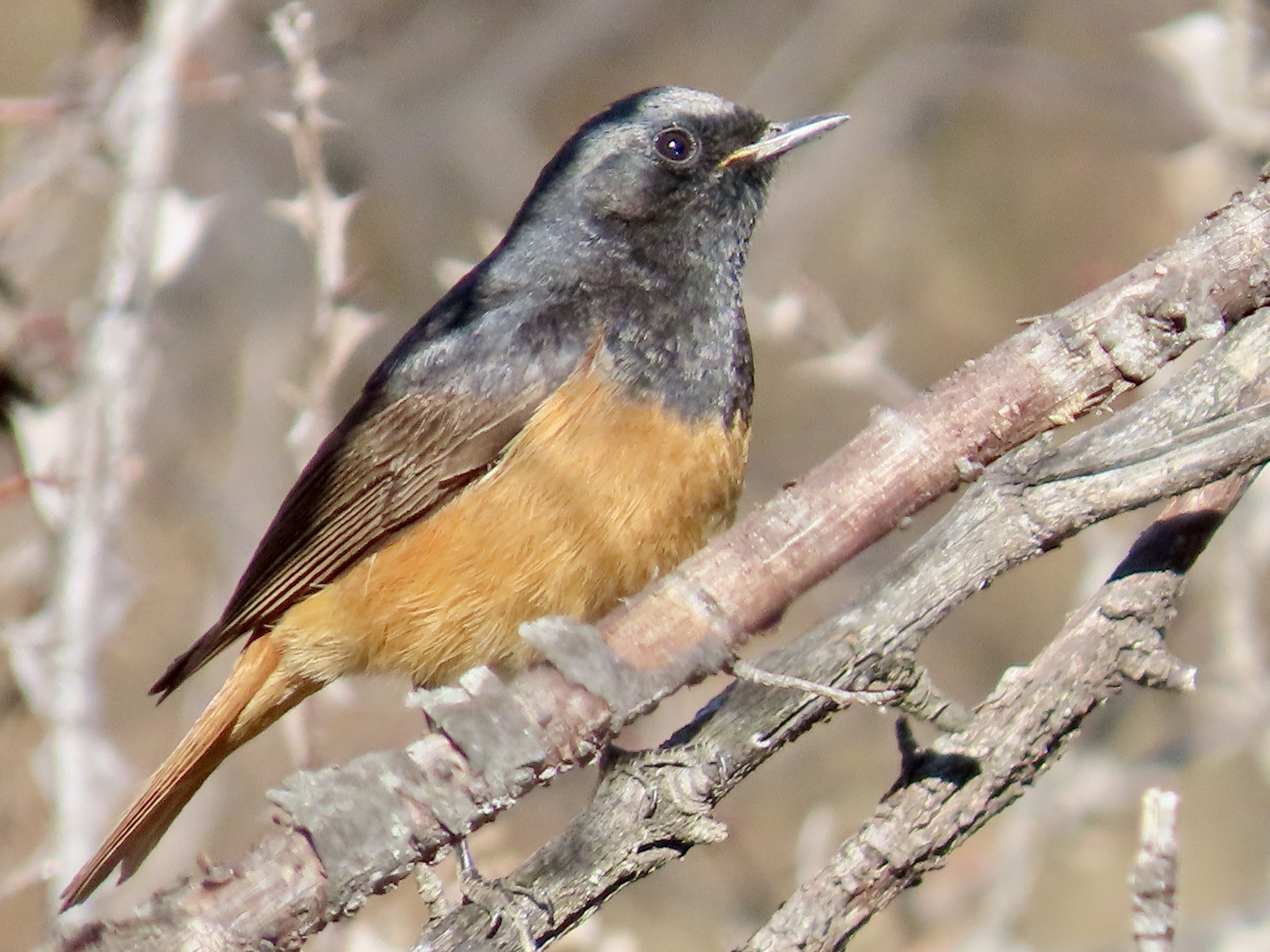
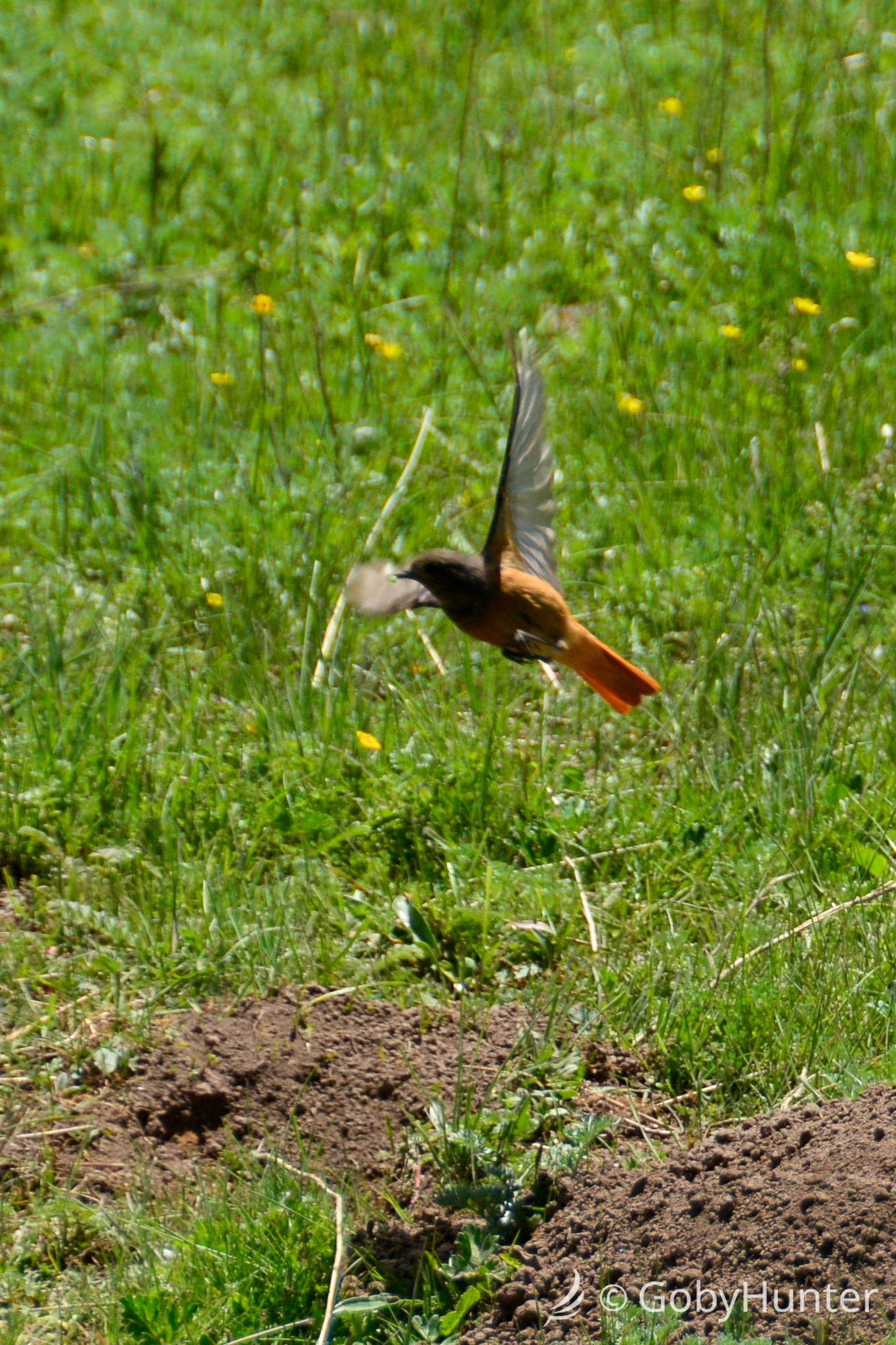
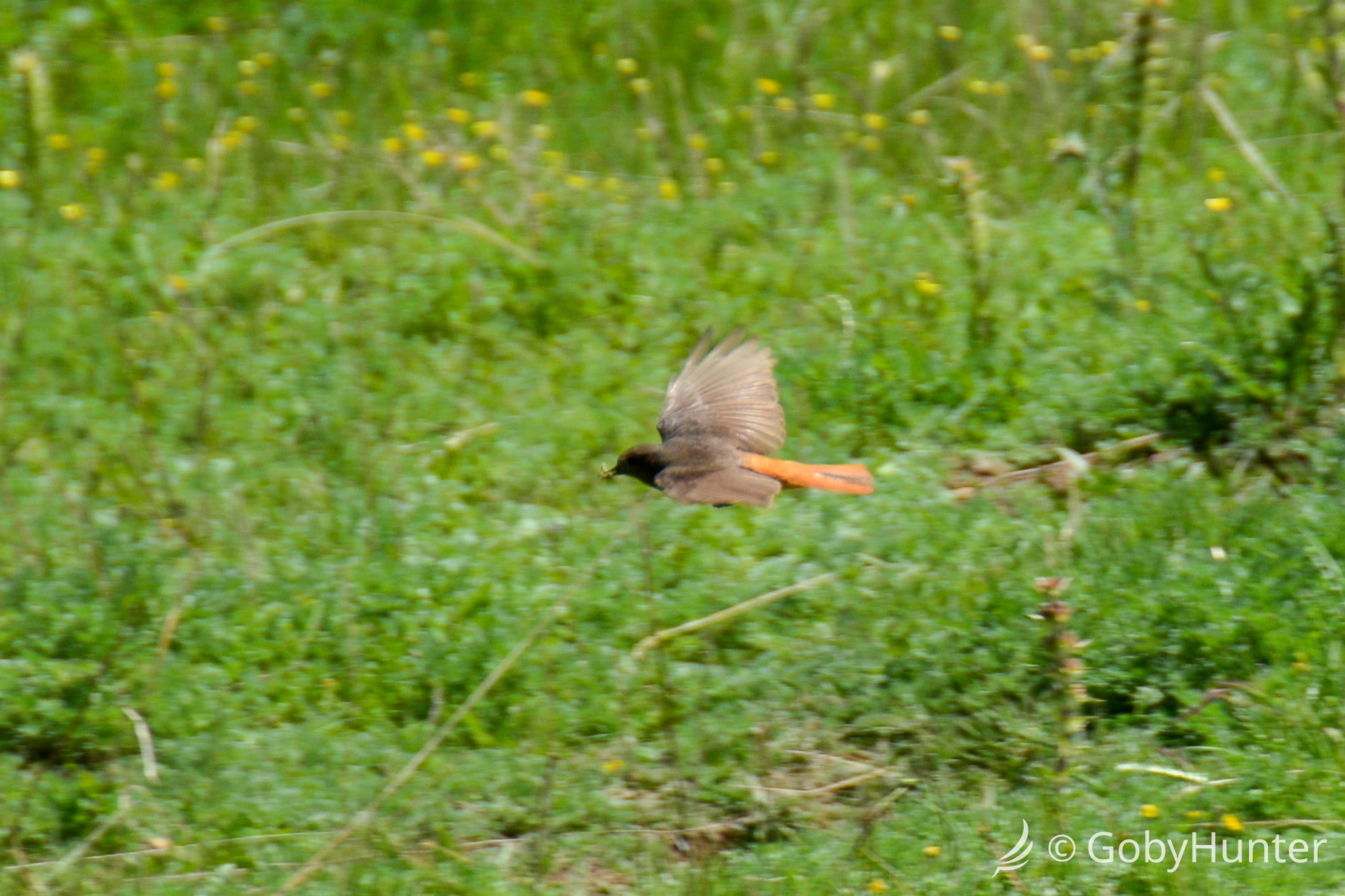
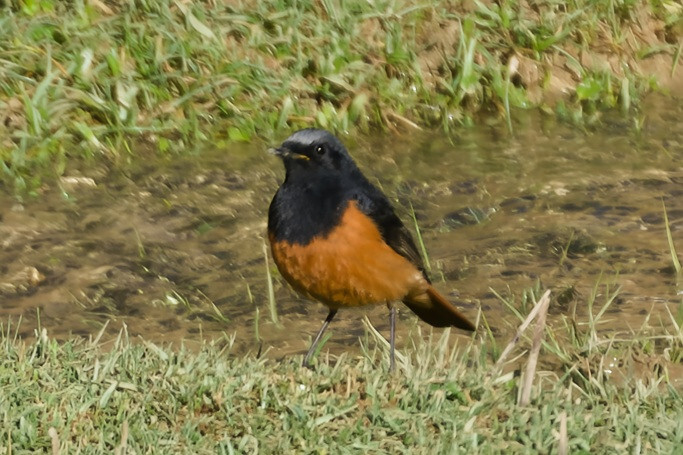
A compact, robin-sized bird measuring 13-14.5 cm in length and weighing 12-20 g. Adult males are predominantly dark grey to black on the upperparts with a black breast; the lower rump and tail are striking orange-red, though the two central tail feathers are darker red-brown. The belly and undertail coverts vary by subspecies—blackish-grey in western populations or orange-red in eastern ones. The wings show a distinctive pale panel on the secondaries in western subspecies, while eastern birds have all-blackish wings. Females are grey to grey-brown overall, always showing the characteristic orange-red lower rump and tail, and are distinctly greyer than female common redstarts. Both sexes have grey axillaries and underwing coverts, a key distinguishing feature. First-year males appear in two morphs: one female-like and another approaching adult plumage but lacking the wing panel until their second year.
Identification
The frequently-flicked tail, reminiscent of a robin's movements, is a characteristic behavior to watch for. The grey underwing coverts and axillaries immediately separate this species from the common redstart, which has buff to orange-red coloration in these areas. Females are noticeably greyer than the warm brown females of common redstarts. The rattling song and sharp 'tick' call are distinctive vocalizations, though birders should note that eastern race birds are rare vagrants in western Europe and may cause identification challenges. When observing males, note the extent of the pale wing panel and the color of the underparts, which vary between subspecies groups.
Distribution & Habitat
This species breeds widely across south and central Europe and Asia, from Great Britain and Ireland east to central China, and south to Morocco. Populations in milder western areas are largely resident, but northeastern breeders migrate to spend winters in southern and western Europe, western Asia, and north Africa. In Britain, breeding is restricted to just 20-50 pairs, mostly in industrial areas, though it is more common as a passage and winter visitor along east and south coasts and in Wales and southern England. Migrants arrive in October or November, either wintering or passing through, returning eastward in March or April. Originally a mountain bird nesting on cliffs and stony slopes, it has successfully adapted to urban environments with similar bare, rocky characteristics.
Behavior & Ecology
Pairs are typically monogamous. Breeding begins in mid-April, with the female constructing a loose cup-shaped nest of grass and stems, lined with hair, wool, and feathers. She places it in crevices, holes, or ledges in walls, buildings, or rocks. The clutch contains 4-6 white to pale blue eggs, measuring about 19.4 × 14.4 mm. The female incubates alone for 13-17 days, while both parents feed the young, which fledge after 12-19 days. The species catches insects in flight and often hunts in coastal tide-wrack during migration. It has a rattling song and gives a sharp 'tick' call. The characteristic quick ducking movements of the head and body are reminiscent of robins.
Conservation
The conservation status and population trends for this species are not detailed in the available source material.
Culture
No cultural significance, folklore, or traditional references to this species are documented in the provided source material.
Source: Wikipedia · CC BY-SA 3.0
Taxonomy
- Order
- Passeriformes
- Family
- Muscicapidae
- Genus
- Phoenicurus
- eBird Code
- blared1
Subspecies (6)
-
Phoenicurus ochruros gibraltariensis
Europe, western Türkiye, and northwestern Africa
-
Phoenicurus ochruros murinus
northeastern Kazakstan, south-central Siberia, extreme north-central China and west-central Mongolia
-
Phoenicurus ochruros ochruros
breeds mountains of eastern Türkiye to northern Iran; winters to Iraq
-
Phoenicurus ochruros phoenicuroides
northeastern Iran and Turkmenistan eastward to southeastern Kazakhstan, northwestern China, and south-central and eastern Mongolia
-
Phoenicurus ochruros rufiventris
Central Himalayas to central China
-
Phoenicurus ochruros semirufus
breeds hills of Syria and Lebanon; winters to Israel and Sinai Peninsula
Data Sources
Species description from Wikipedia, licensed under CC BY-SA 3.0.
Bird images and sounds sourced from GBIF, contributed by citizen scientists worldwide under Creative Commons licenses.
Taxonomy data from AviList 2025.