Eversmann's Redstart
Phoenicurus erythronotus
红背红尾鸲
Introduction
A passerine bird in the Old World flycatcher family Muscicapidae (formerly classified in Turdidae). It breeds in the mountains of Central Asia and southern Siberia from the Tien Shan range to the Tarbagatay and Altay Mountains and near Lake Baikal, occurring up to 5,400 meters elevation. The wintering range extends from southern Iraq through Iran and Pakistan to the western Himalayas of Kashmir. It inhabits forest and woodland during the breeding season and more open, arid habitats in winter. Two distinctive traits are the frequent up-and-down tail flicking behavior and the loud, lively song. The species has a large range and large population with stable development, classified as Least Concern by the IUCN.
Description
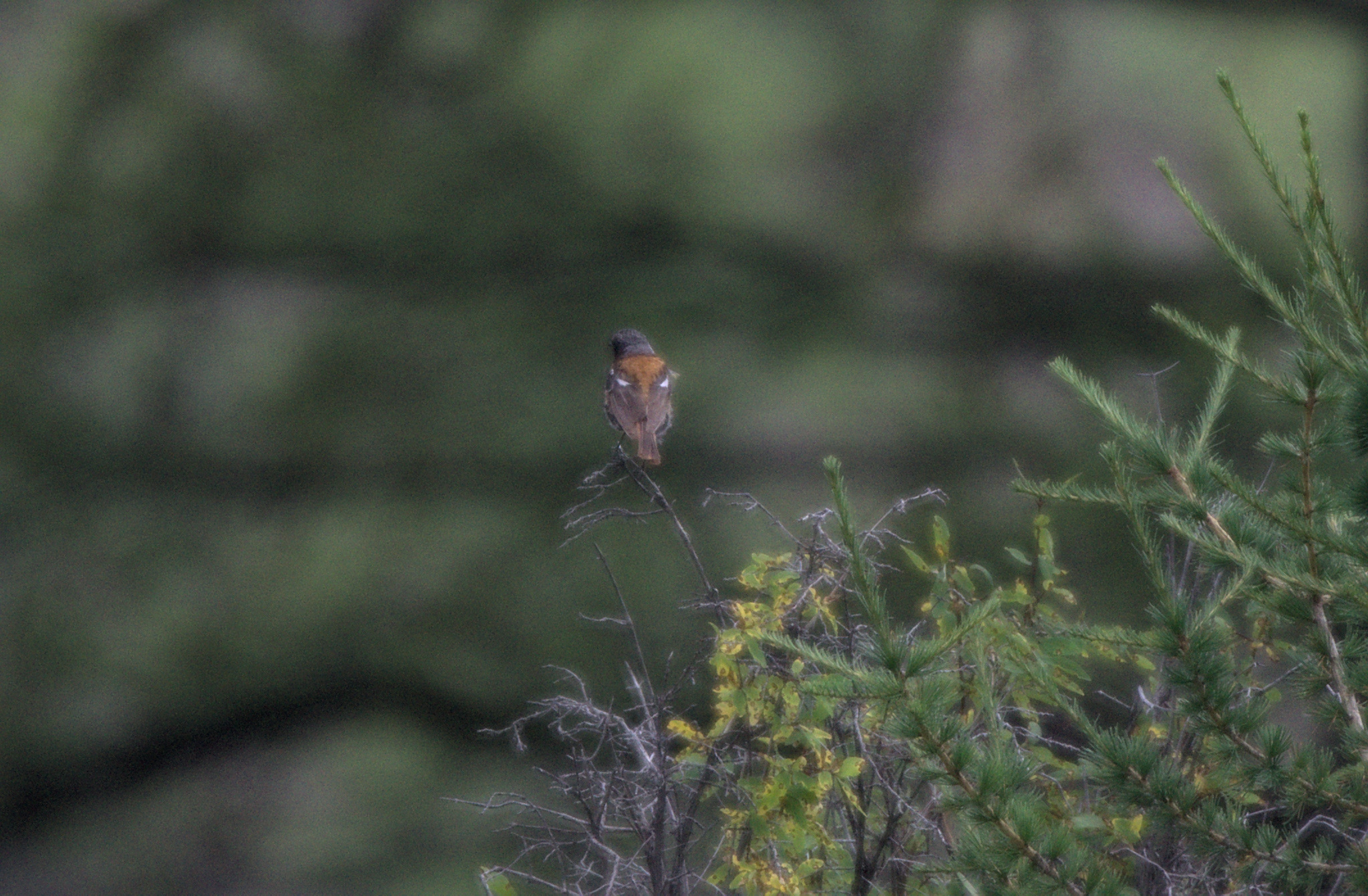
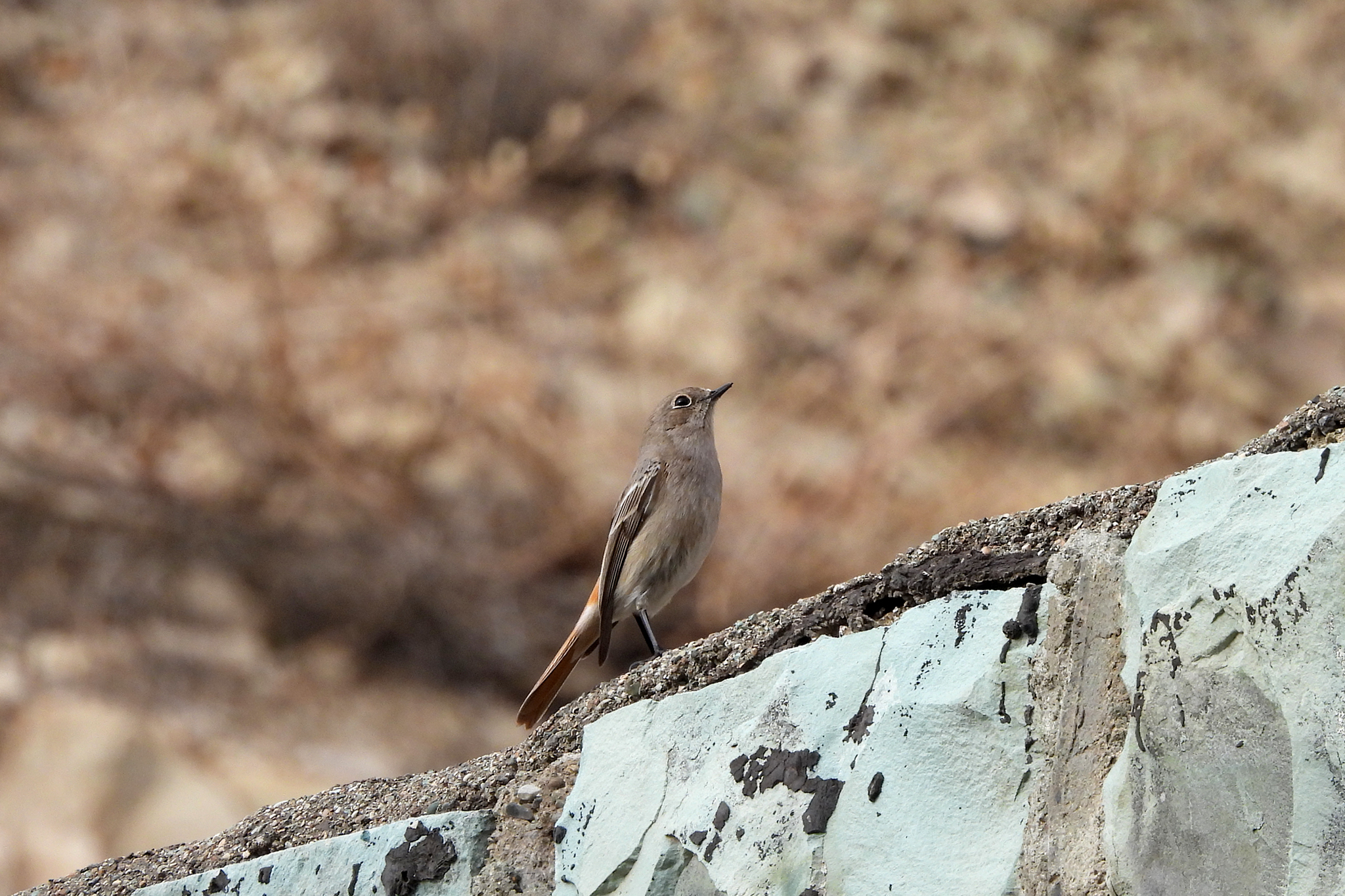
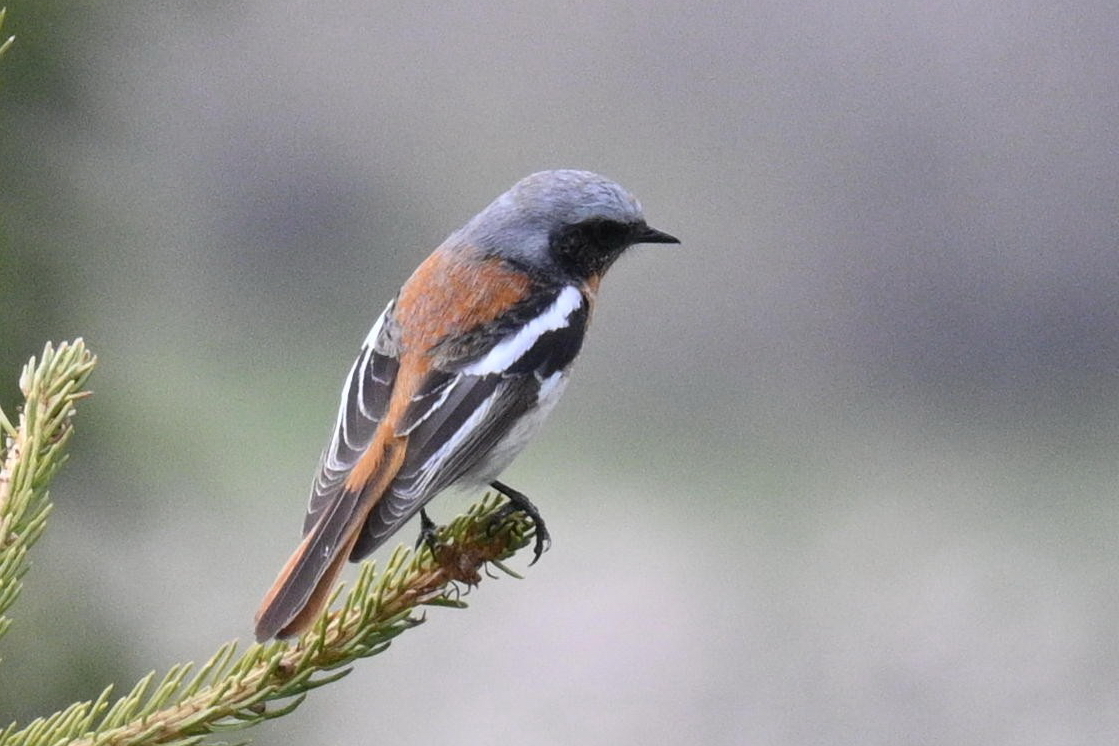
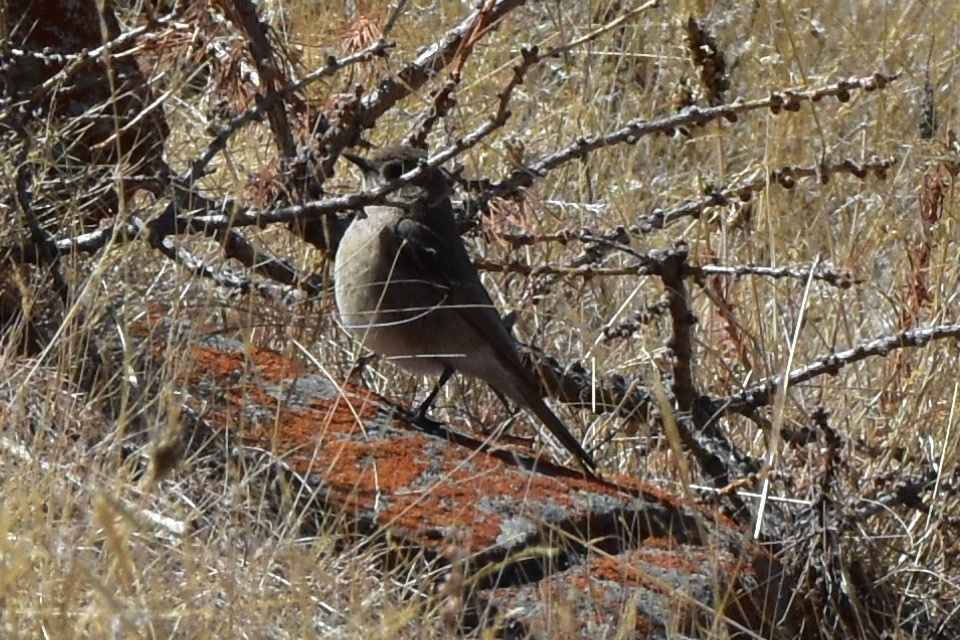
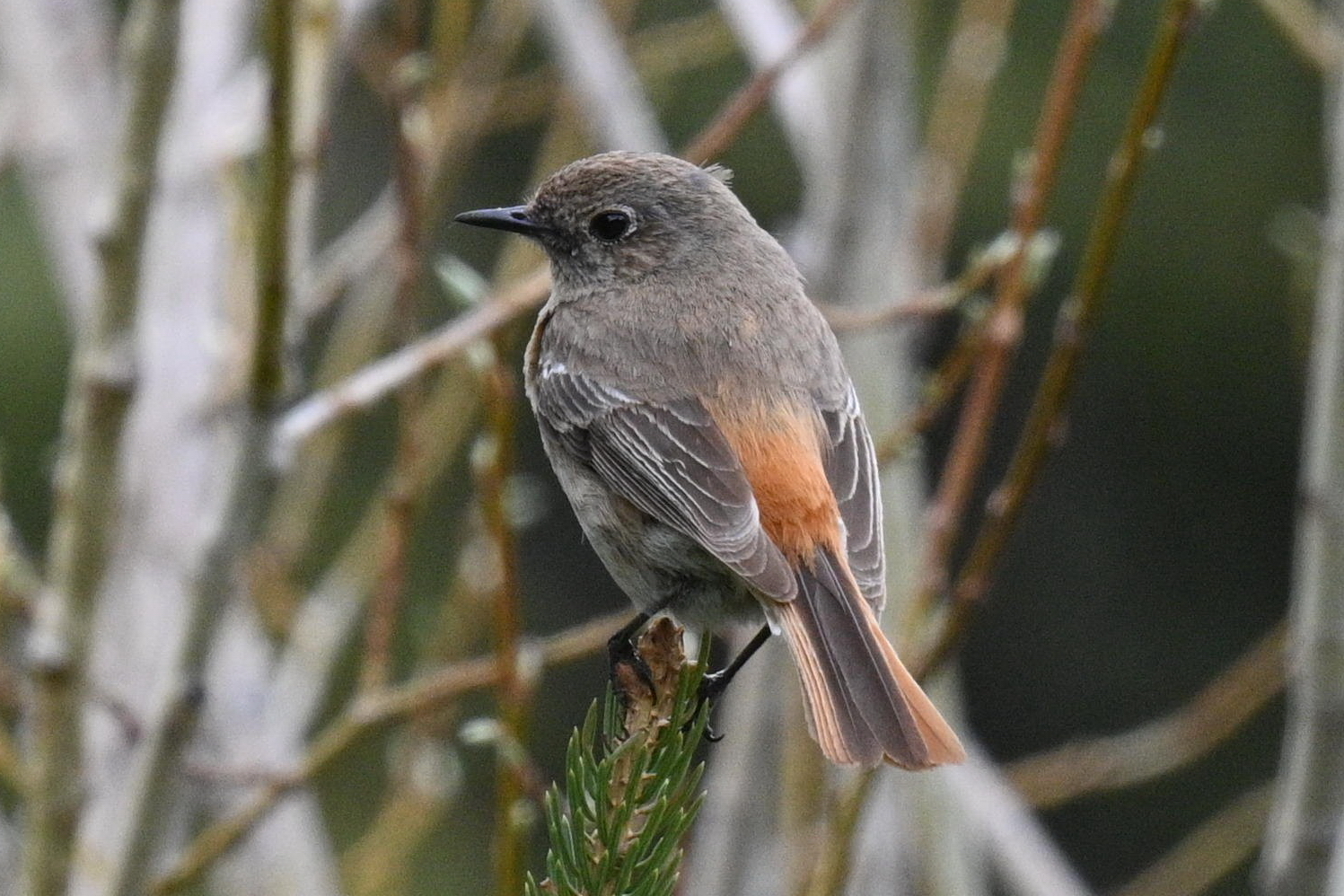
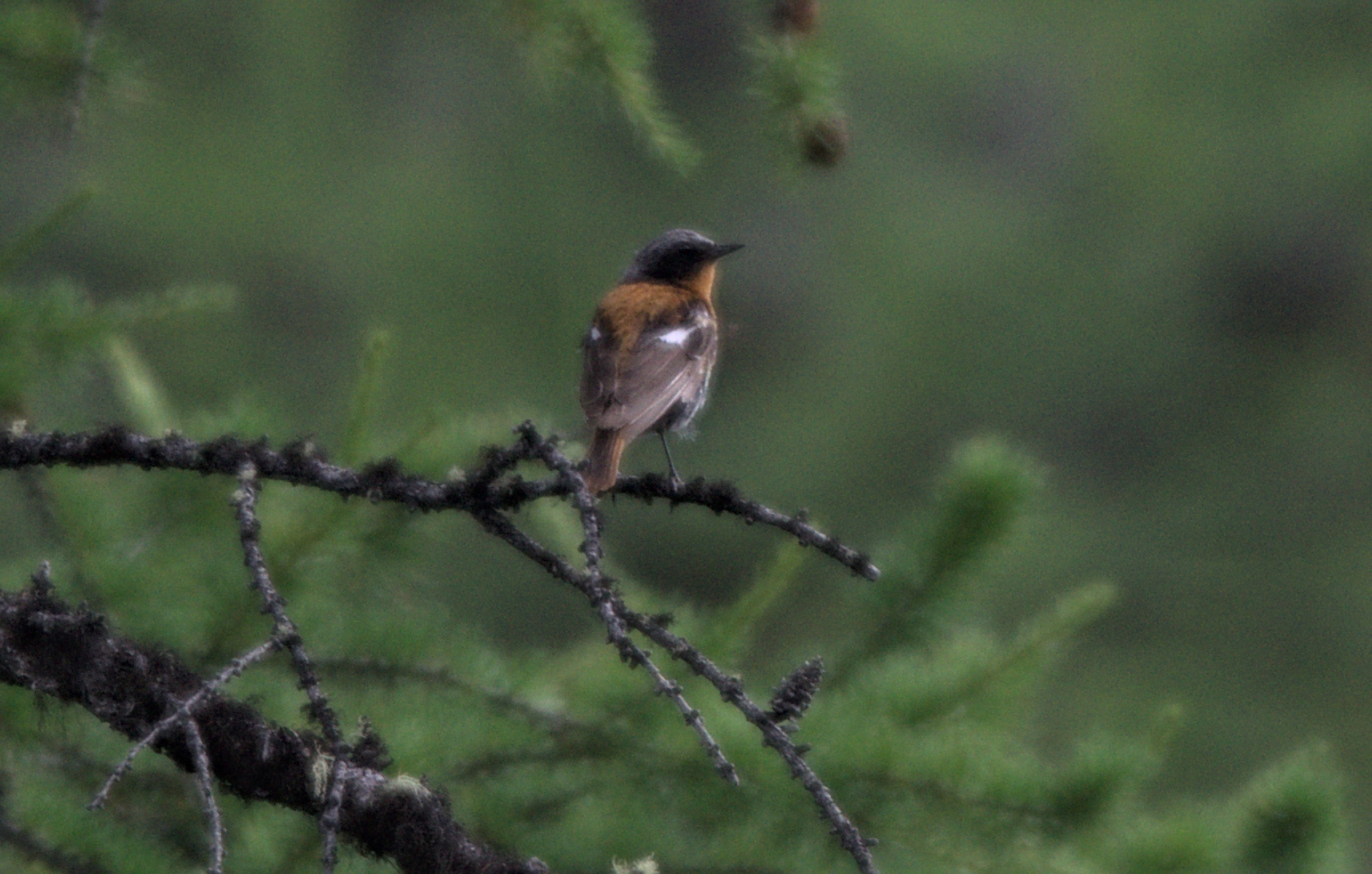
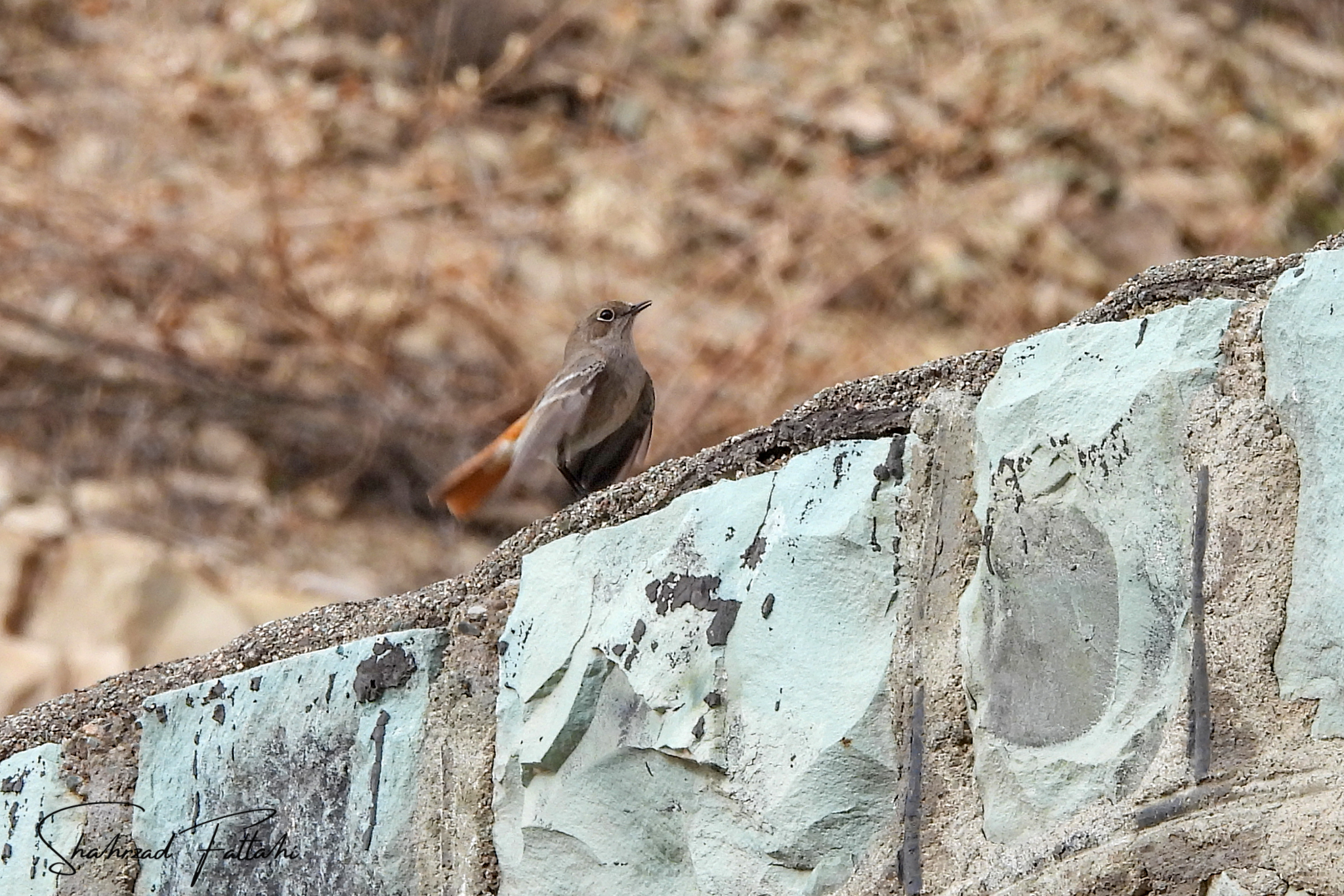
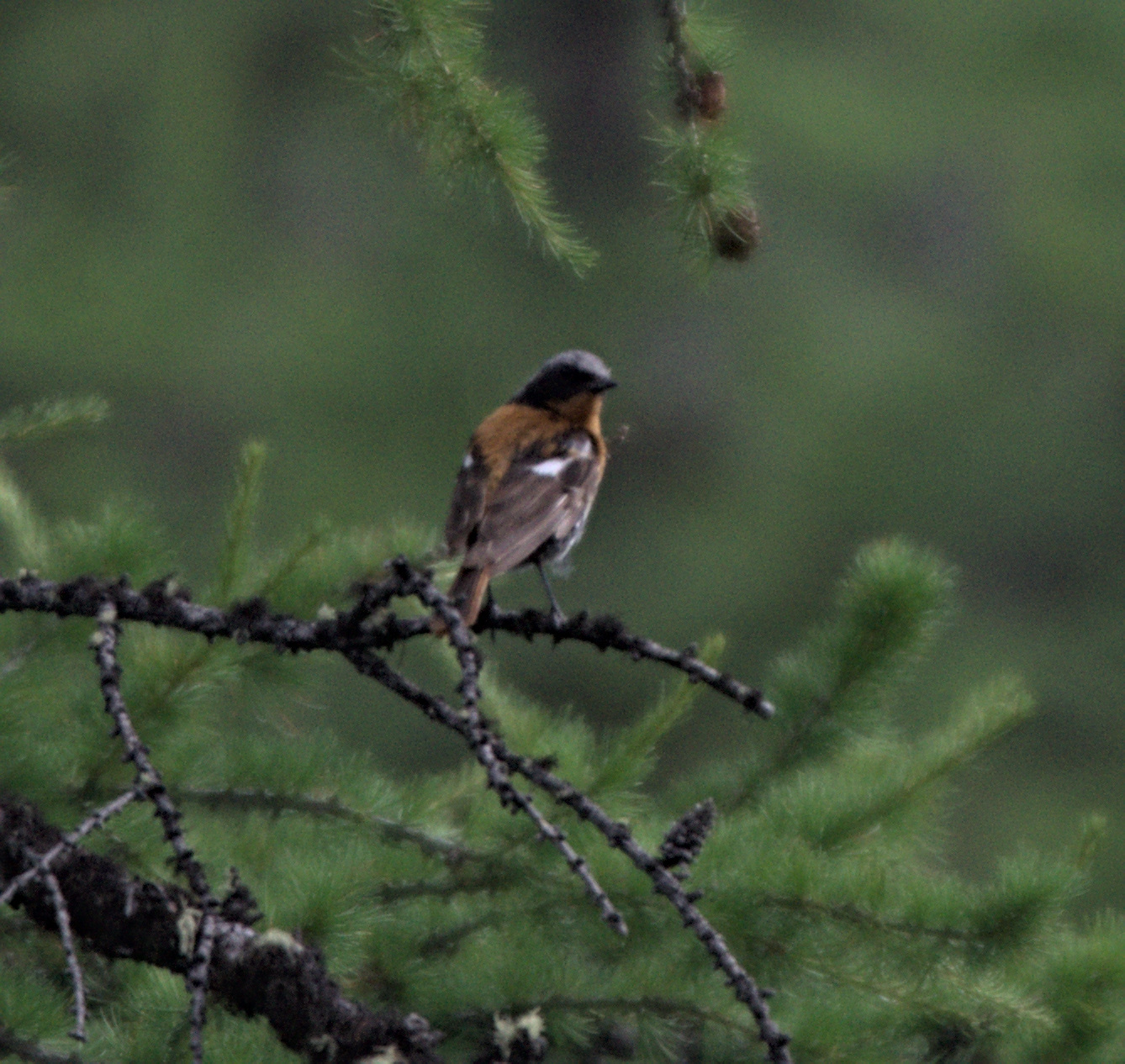
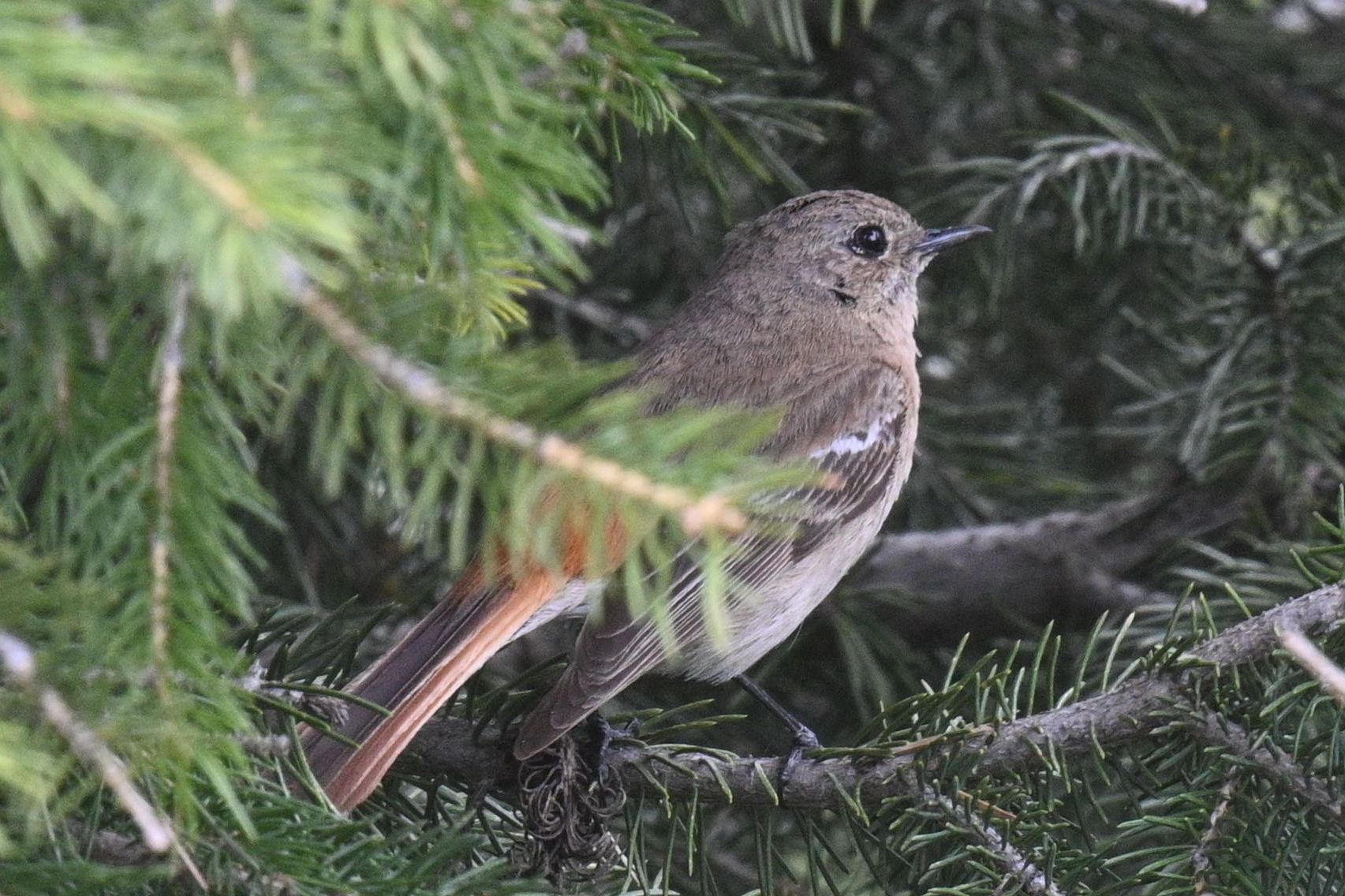
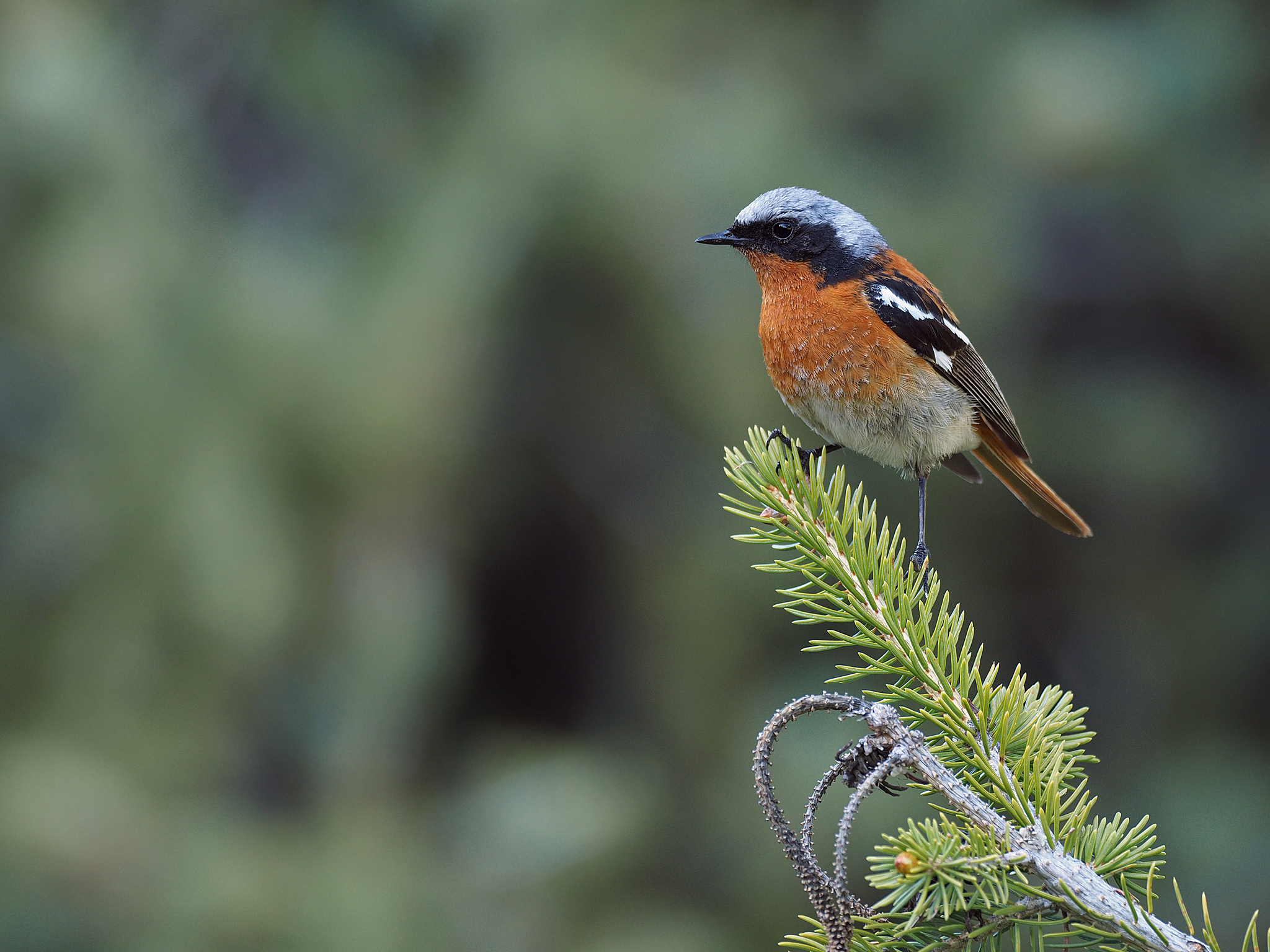
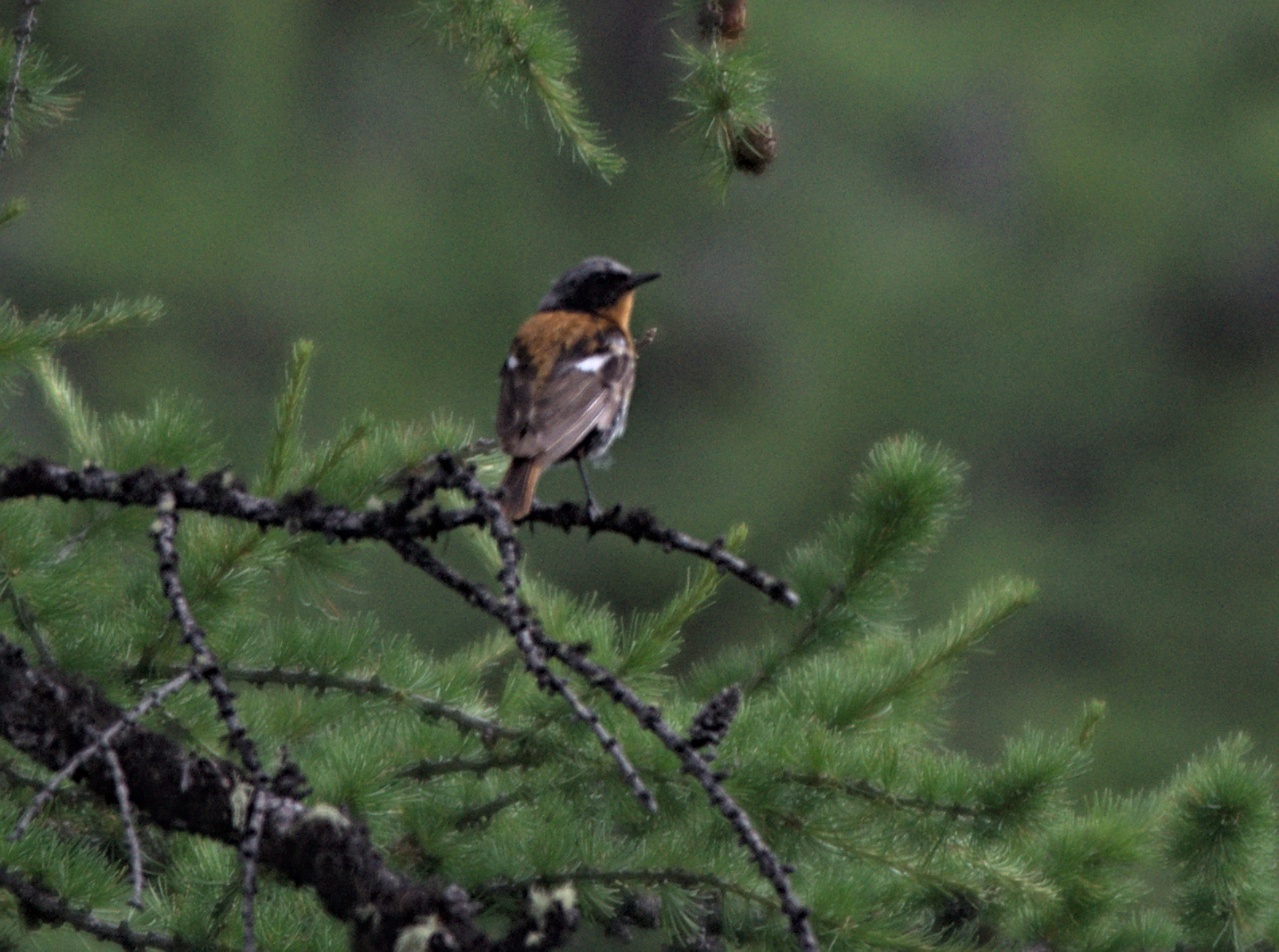
One of the larger redstart species, measuring 15-16 cm in length with a wingspan of 25.5-27 cm and weighing 15-22 g. The bill and legs are black. Breeding males have a black mask, grey crown and nape, rufous back and rump, and a rufous tail with darker central feathers. The dark wings display white patches on the scapulars and primary-coverts. Underparts are mainly rufous with white on the belly and undertail-coverts. Non-breeding and first-winter males are duller and browner. Females are grey-brown with a rufous tail featuring a dark center, a pale eye-ring, two buff wingbars, and buff-edged tertials.
Identification
A relatively large redstart with prominent rufous coloration in the tail and underparts. Males in breeding plumage are distinctive with their black mask and grey head contrasting with the rufous back. The white wing patches on the scapulars and primary-coverts are diagnostic. Females are identified by their grey-brown plumage, rufous tail with dark center, pale eye-ring, and buff wingbars. The characteristic habit of flicking the tail up and down aids identification.
Distribution & Habitat
Breeds in the mountains of Central Asia and southern Siberia from the Tien Shan range east to the Tarbagatay and Altay Mountains and the Lake Baikal region. Some populations move downhill for winter while others, particularly in the northeast, migrate longer distances. The winter range extends from southern Iraq through Iran and Pakistan to the western Himalayas of Kashmir, with a few birds reaching eastern Arabia. It has occurred as a vagrant in Israel and Turkey.
Behavior & Ecology
Diet consists primarily of insects during the breeding season, with fruit and seeds becoming important in winter. Foraging is done by lunging at prey from a low perch or by moving on the ground. The breeding season occurs from June to July. The cup-shaped nest is constructed from grass stems and moss with a foundation of twigs, lined with wool and fur, and typically placed on the ground concealed beneath roots or amongst rocks. The clutch contains 3-6 pale green eggs with brownish-grey speckles. The song is loud and lively, with additional soft croaking and whistling calls. The tail is frequently flicked up and down.
Conservation
Classified as Least Concern by the IUCN due to its large range and large population with stable development, with no substantial threats identified. The global population has not been estimated but the species is described as fairly common to locally very common in southern Russia, rare in China, and locally frequent in winter in Pakistan.
Source: Wikipedia · CC BY-SA 3.0
Taxonomy
- Order
- Passeriformes
- Family
- Muscicapidae
- Genus
- Phoenicurus
- eBird Code
- rubred2
Distribution
breeds montane forest of central Asia; winters to Iran and northern India
Data Sources
Species description from Wikipedia, licensed under CC BY-SA 3.0.
Bird images and sounds sourced from GBIF, contributed by citizen scientists worldwide under Creative Commons licenses.
Taxonomy data from AviList 2025.