Greater Flamingo
Phoenicopterus roseus
大红鹳
Introduction
The greater flamingo is the largest and most widespread species of the flamingo family. It occurs across the Old World, from the Mediterranean basin through the Middle East to the Indian subcontinent and much of Africa. Its habitat includes coastal regions, shallow lagoons, and mudflats. Adults have pink and white plumage with black flight feathers visible in flight. It was formerly considered conspecific with the American flamingo but is now treated as a separate species based on morphological differences. This species breeds in large colonies, sometimes numbering in the thousands, and performs synchronized courtship displays. Individuals can live over 30 years in the wild.
Description
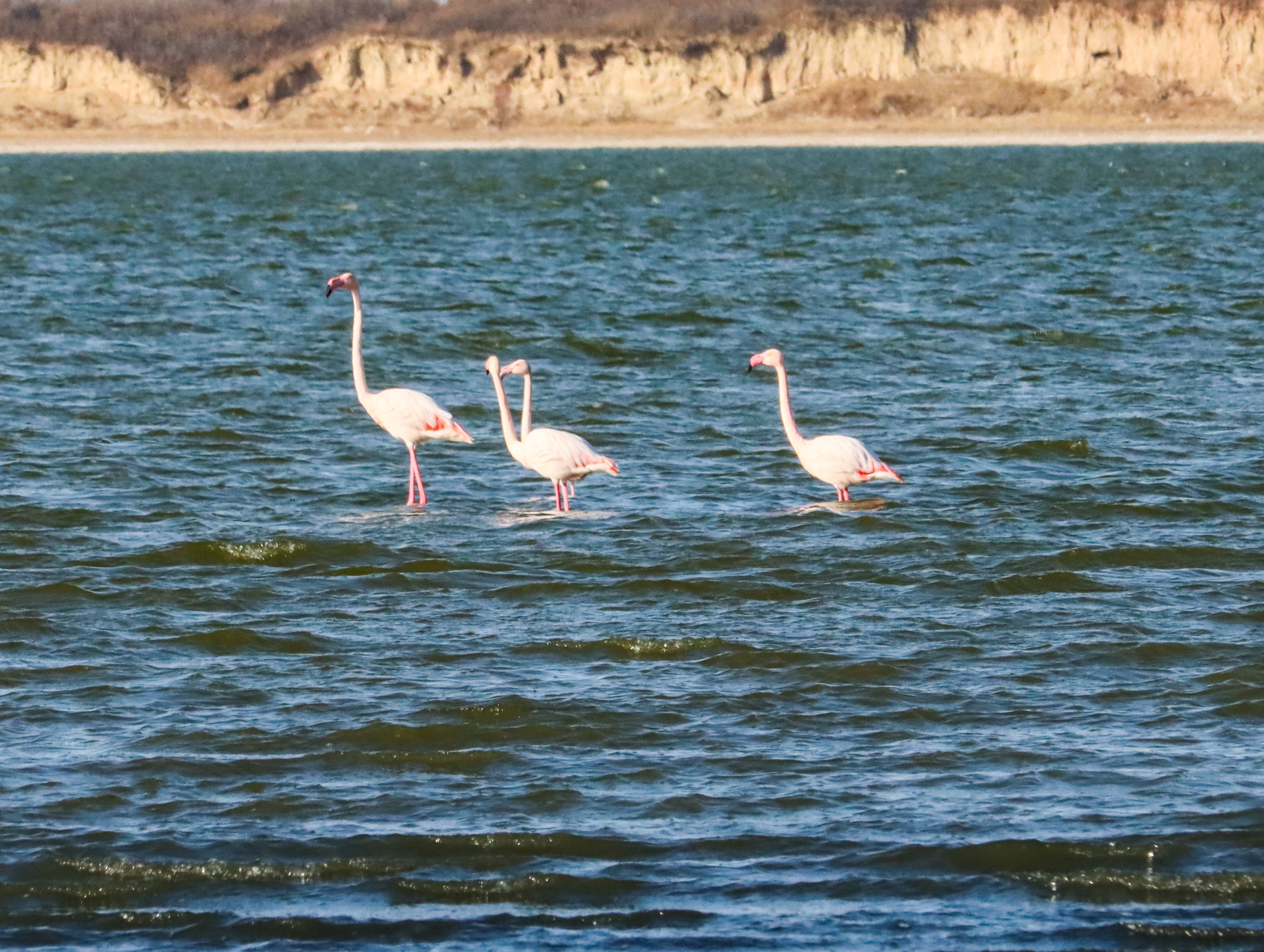
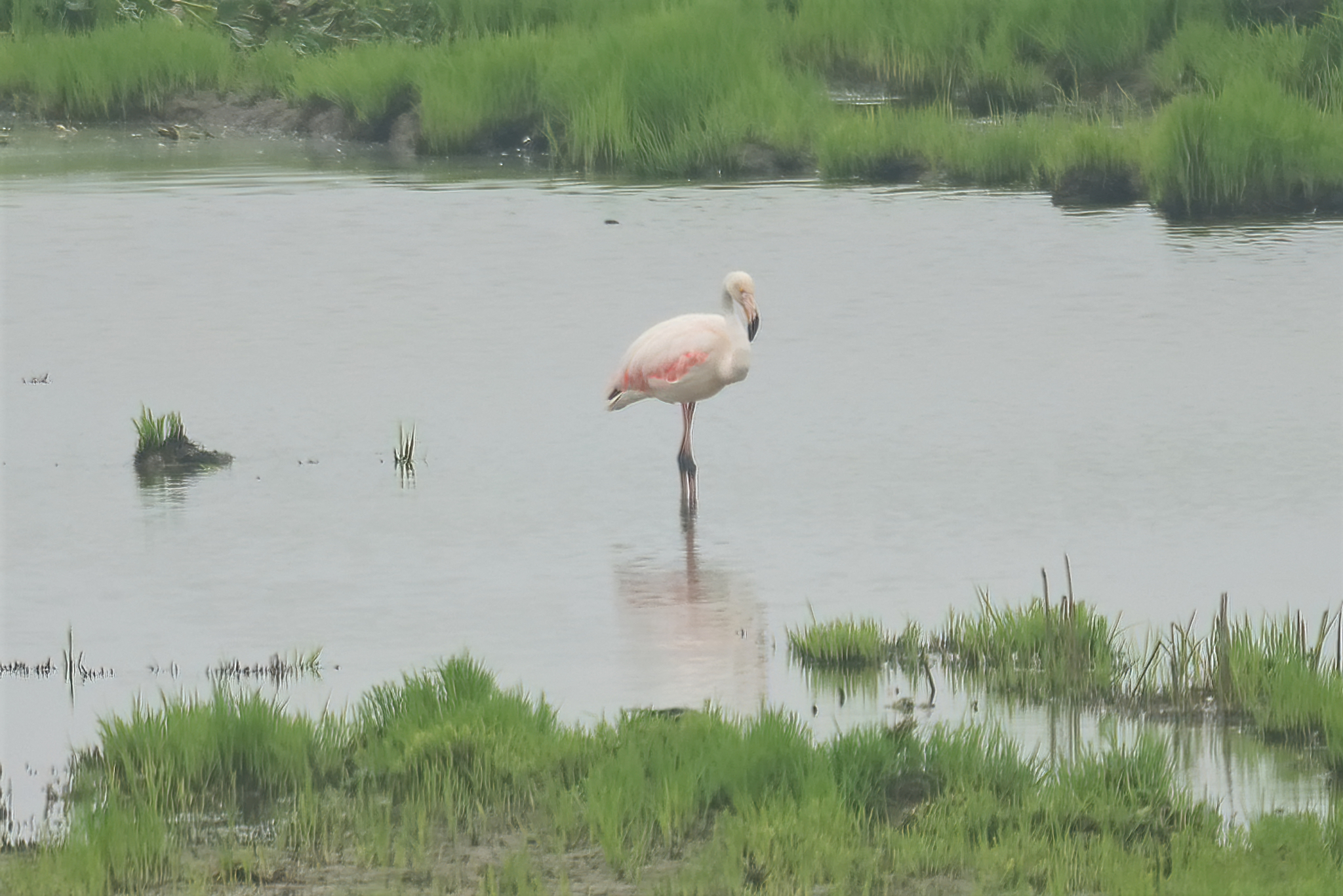
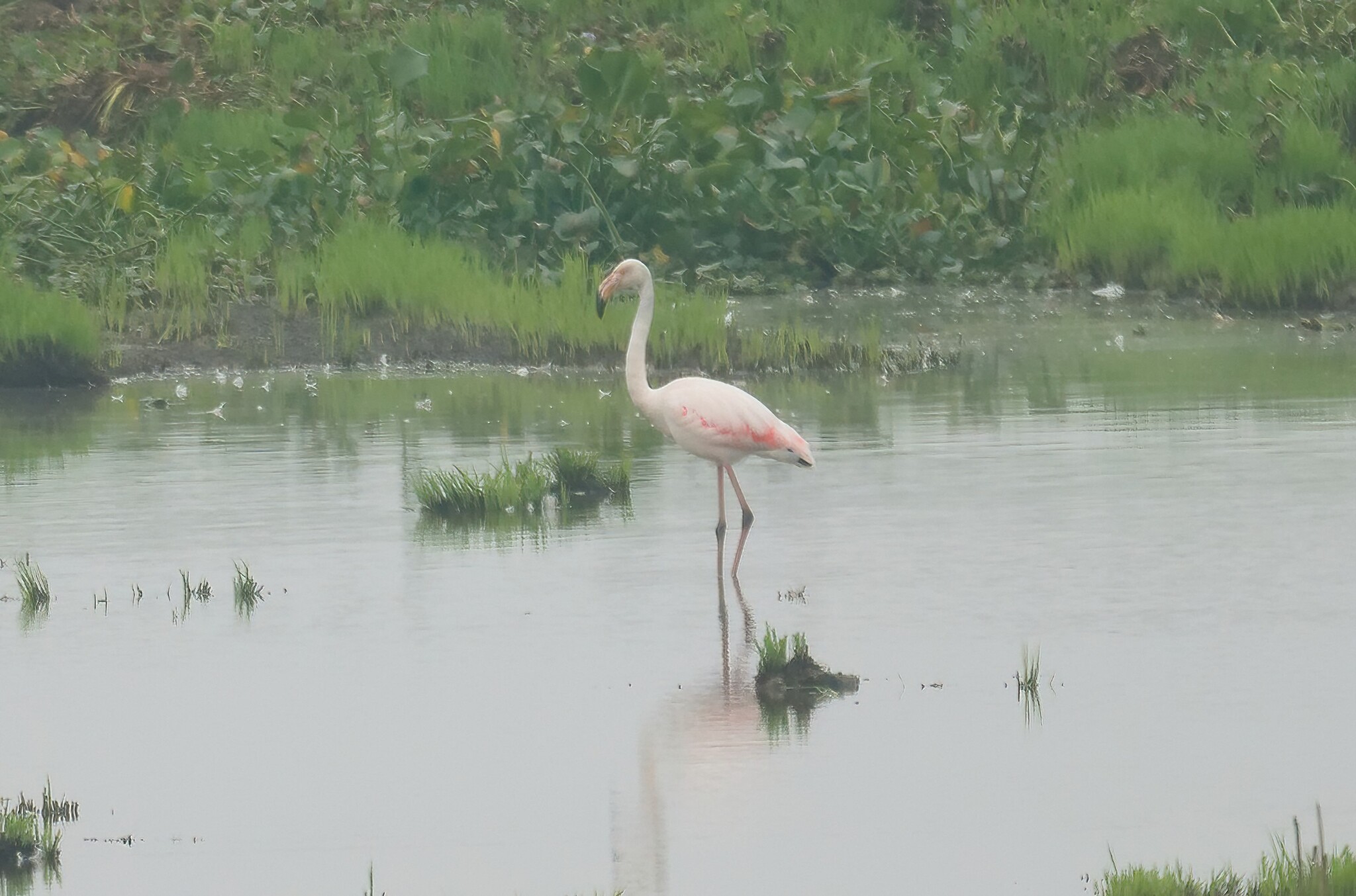
As the largest living flamingo species, this bird stands 110-150 cm tall and typically weighs 2-4 kg, though exceptional males can reach 187 cm and 4.5 kg. The overall plumage is a beautiful pinkish-white, with vibrant red wing coverts contrasting against black primary and secondary flight feathers. The bill is pink with a distinctive black tip, while the legs are entirely pink. Chicks are covered in gray fluffy down, and subadults appear paler with dark legs. Adults feeding chicks also become somewhat paler, though they maintain their bright pink leg coloration. This striking pink comes from carotenoid pigments in their food sources, supplemented by cosmetic applications of uropygial gland secretions during breeding season.
Identification
The greater flamingo's massive size sets it apart from other flamingo species. Its pink bill with a restricted black tip distinguishes it from the American flamingo, which has a more extensively black bill. In flight, the black wing feathers contrast sharply against the pinkish-white body, creating a distinctive pattern. The goose-like honking call is characteristic and often heard from large flocks. Subadults can be identified by their overall paler coloration and dark legs, taking until around four years to acquire full adult plumage.
Distribution & Habitat
This species has an extensive range across the Old World, inhabiting coastal and inland wetlands from northern Africa through the Mediterranean countries of Southern Europe, across the Middle East and Western Asia, to the Indian subcontinent. Northern populations breed as far north as Zwillbrocker Venn in western Germany, while significant populations occur throughout Spain, France's Camargue, Italy's Po River delta, and parts of the Persian Gulf. In India's Gujarat state, major concentrations occur at Nal Sarovar Bird Sanctuary, Khijadiya Bird Sanctuary, Flamingo City, and Thol Bird Sanctuary during winter months. They also breed in the UAE at multiple Abu Dhabi locations.
Behavior & Ecology
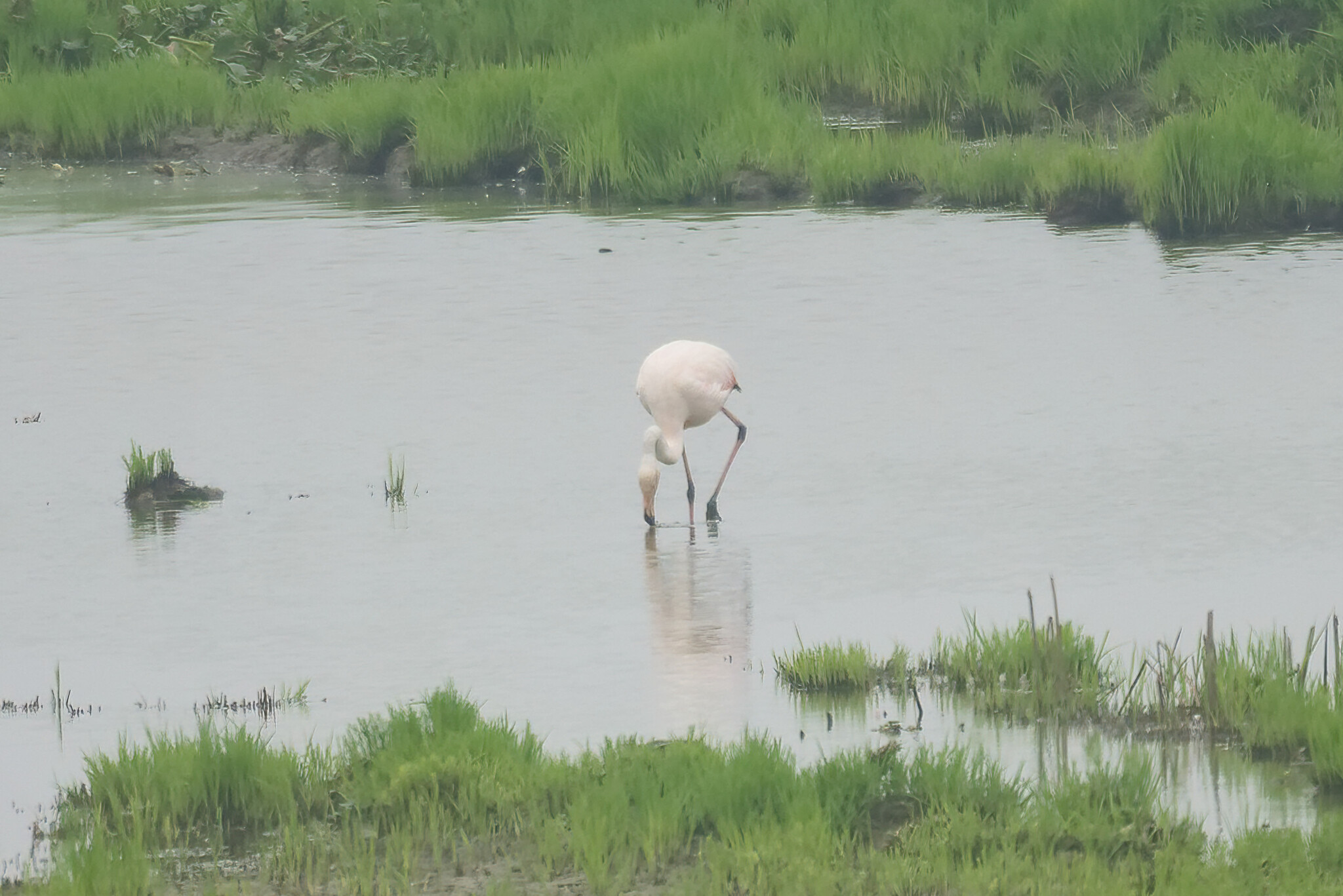
Greater flamingos inhabit mudflats and shallow coastal lagoons with salt water, feeding by stirring the mud with their feet and filtering small organisms through their specialized bills. Their diet includes brine shrimp, other crustaceans, seeds, blue-green algae, diatoms, insect larvae, and mollusks. Unlike many long-lived birds, they do not maintain pair bonds across breeding seasons, instead showing preference for older, experienced mates. Courtship displays occur in large mixed-sex groups, with complexity increasing until around age 20. Both parents share duties, though males are more involved in incubation. Only one egg is laid, taking 26-32 days to hatch, and most individuals don't acquire full adult plumage until age four, though they can reproduce by age three.
Conservation
While not formally assessed on the IUCN Red List in the provided article, the primary threats to populations include bacterial contamination, toxins, and industrial pollution in water supplies from manufacturing runoff, plus ongoing habitat encroachment. Conservation efforts include successful zoo breeding programs, with Zoo Basel having hatched over 400 birds since 2000, averaging 20-27 annually.
Culture
The first recorded zoo hatching occurred in 1959 at Zoo Basel, marking a significant milestone in captive breeding of this species. Their dramatic courtship displays and striking appearance have made them popular attractions in zoos worldwide, where visitors can observe these ancient, elegant birds up close and learn about their remarkable biology and conservation needs.
Source: Wikipedia · CC BY-SA 3.0
Taxonomy
- Order
- Phoenicopteriformes
- Family
- Phoenicopteridae
- Genus
- Phoenicopterus
- eBird Code
- grefla3
Distribution
southern Europe and Mediterranean basin to southern Africa, Madagascar, and southern Asia
Data Sources
Species description from Wikipedia, licensed under CC BY-SA 3.0.
Bird images and sounds sourced from GBIF, contributed by citizen scientists worldwide under Creative Commons licenses.
Taxonomy data from AviList 2025.