Oriental Bay Owl
Phodilus badius
栗鸮
Introduction
A species of bay owl (Phodilus badius) found throughout Southeast Asia and parts of India. Inhabits tropical moist forests, woodland, plantations, and mangrove swamps up to 2,200 meters elevation. Distinguished by completely nocturnal habits and heart-shaped face with earlike extensions. Four subspecies are recognized: arixuthus, badius, parvus, and saturatus. A population on Samar Island in the Philippines became extinct during the 20th century; the subspecies riverae is known only from a lost specimen and its validity remains uncertain. The Congo bay owl was formerly classified as a subspecies but may belong to a different genus.
Description
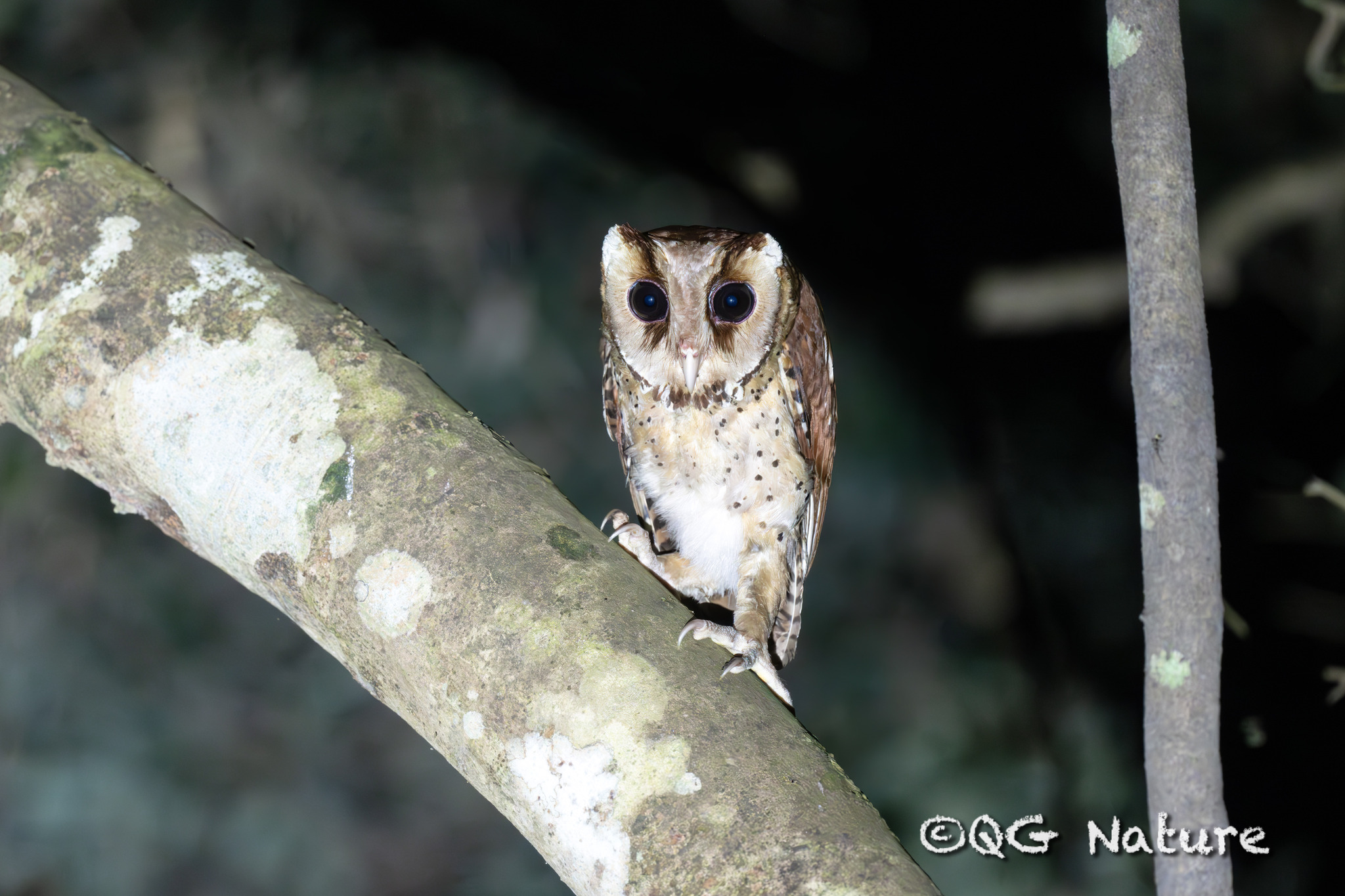
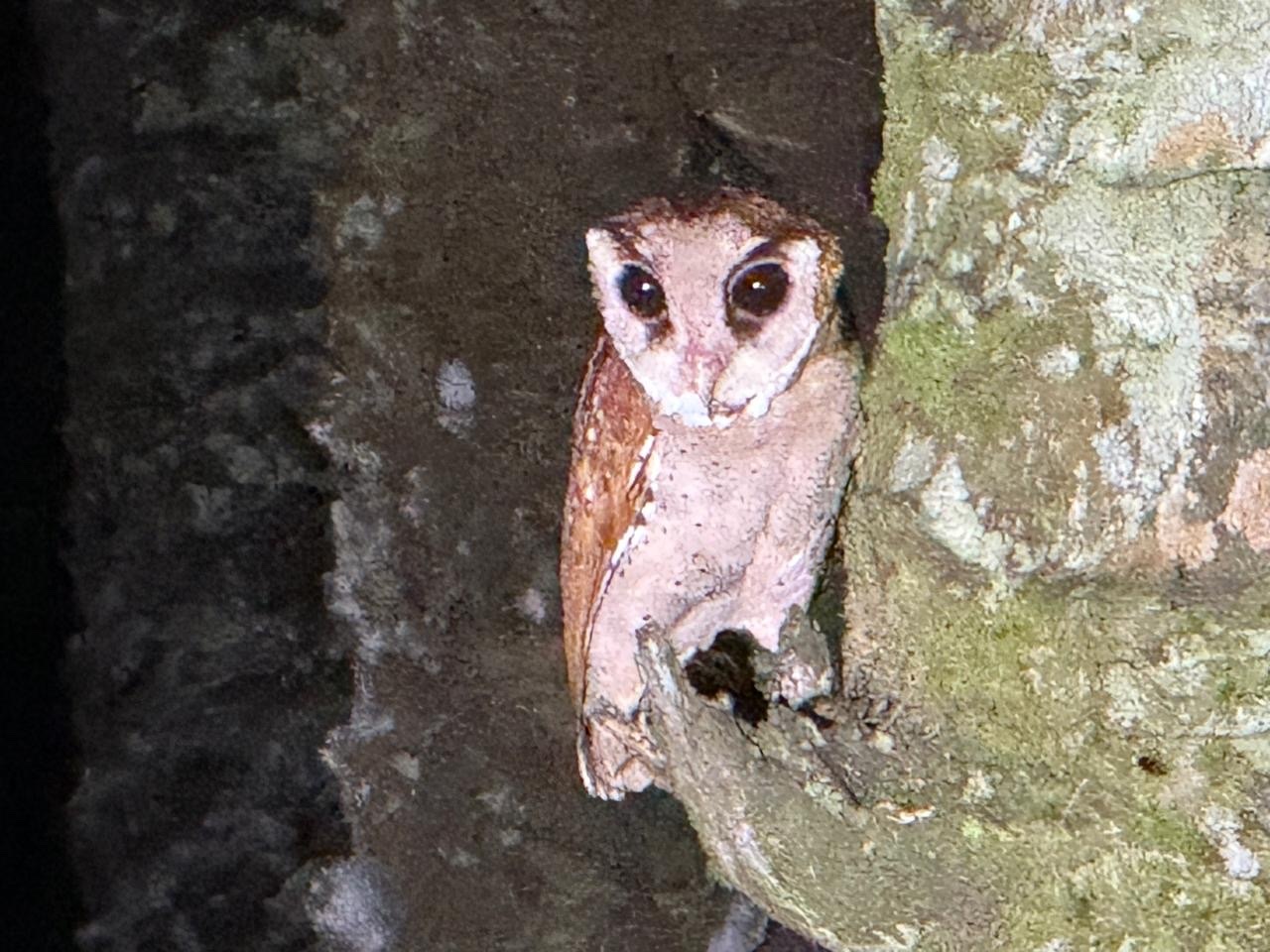
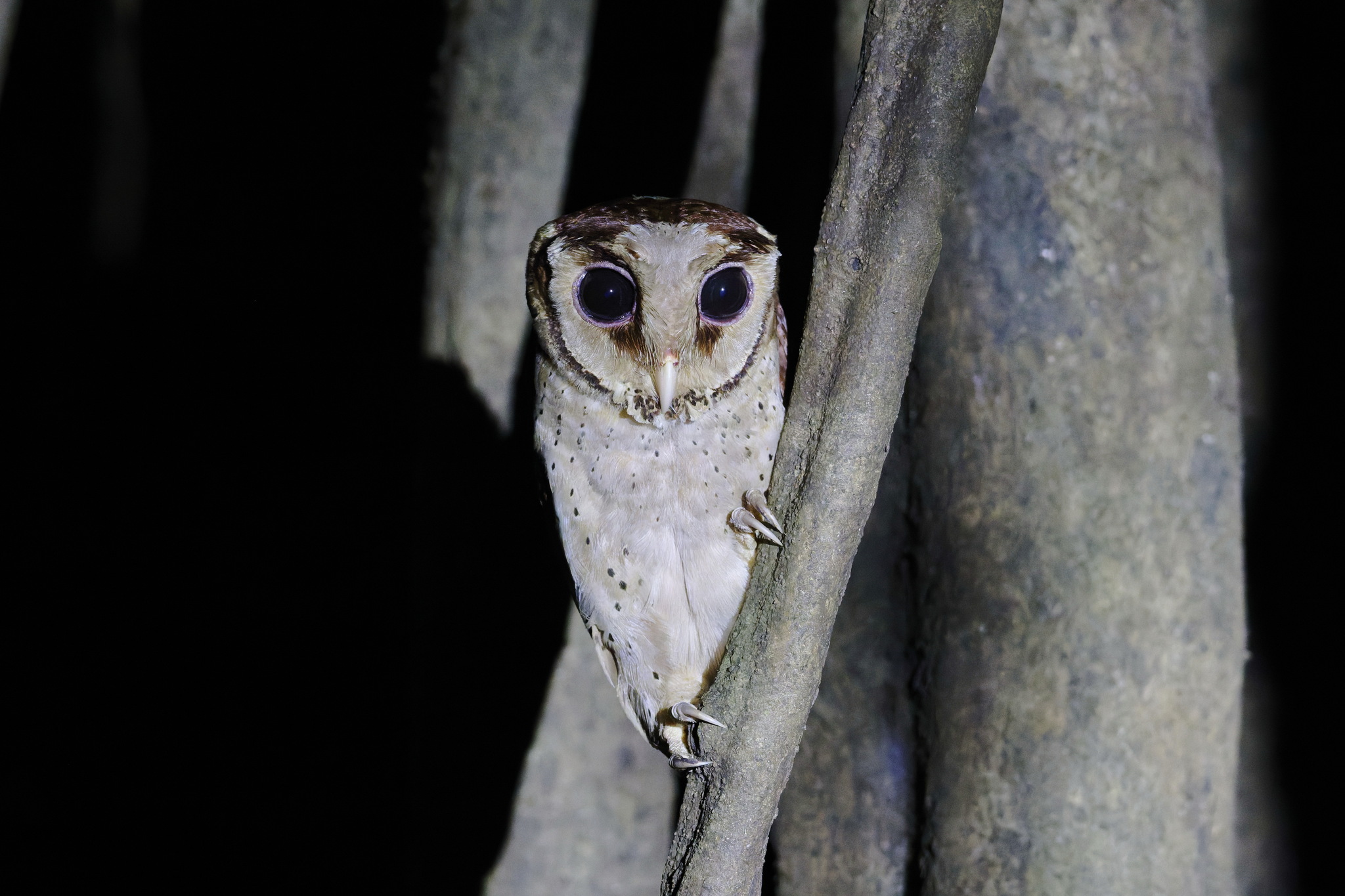
Small owl with highly angular heads. Upperparts deep chestnut; underparts cream and tan. Large, striking black eyes stand out against facial coloration. Small-bodied, typically maintains upright posture. Total length 22.5–29 cm, wing length 172–237 mm, tail length 168–239 mm, weight 255–308 g. Females are larger than males.
Identification
Heart-shaped facial disc with prominent earlike extensions distinguishes this species from similar owls. Large black eyes provide strong color contrast against the face. Small, compact body and upright posture. Angular head shape is diagnostic. Can be confused with other small owls but the unique facial configuration and chestnut upperparts are distinctive.
Distribution & Habitat
Ranges from Nepal, Sikkim, Assam, Nagaland, Manipur, Burma, and Thailand, east to south China, and south through the Malay Peninsula to the Greater Sundas. Occurs throughout India, Thailand, Singapore, the Philippines, and Southeast Asia. Inhabits woodland, plantations, and mangrove swamps at elevations up to 2,200 meters. Extinct on Samar Island in the Philippines.
Behavior & Ecology
Completely nocturnal. Vocalizations include 4-7 melancholic whistles lasting 2-8 seconds with rising pitch, alternating with short kleet-kleet-kleet or kleek-kleek-kleek calls. Hunts from perches, flying through trees to catch prey. Diet includes rodents, bats, birds, snakes, frogs, lizards, magpies, beetles, grasshoppers, and spiders. Breeds March-July, nesting in tree hollows or palms. Lays 3-5 white eggs measuring 38-40.6 mm; incubation 36-42 days. Both parents care for young; only female incubates.
Conservation
IUCN conservation status not specified in source. The Samar Island population became extinct during the 20th century. Main threat is habitat destruction of foothill forests, forcing owls to higher elevations.
Culture
Taxonomic history notable: the Congo bay owl was formerly classified as a subspecies of this species due to insufficient knowledge but may not belong to the same genus. The Sri Lanka bay owl was also once considered a subspecies. The Samar Island subspecies riverae, known only from a single specimen lost in a 1945 bombing raid, represents a lost taxonomic entity.
Source: Wikipedia · CC BY-SA 3.0
Taxonomy
- Order
- Strigiformes
- Family
- Tytonidae
- Genus
- Phodilus
- eBird Code
- orbowl1
Vocalizations
Subspecies (4)
-
Phodilus badius arixuthus
Bunguran (Middle Natuna Archipelago)
-
Phodilus badius badius
Malay Peninsula, Borneo, Sumatra including Nias (off northwest), and Java
-
Phodilus badius parvus
Belitung (off southwestern Borneo)
-
Phodilus badius saturatus
Sikkim and northeastern India to southern China, Myanmar, Thailand, and Indochina
Data Sources
Species description from Wikipedia, licensed under CC BY-SA 3.0.
Bird images and sounds sourced from GBIF, contributed by citizen scientists worldwide under Creative Commons licenses.
Taxonomy data from AviList 2025.