Red-necked Phalarope
Phalaropus lobatus
红颈瓣蹼鹬
Introduction
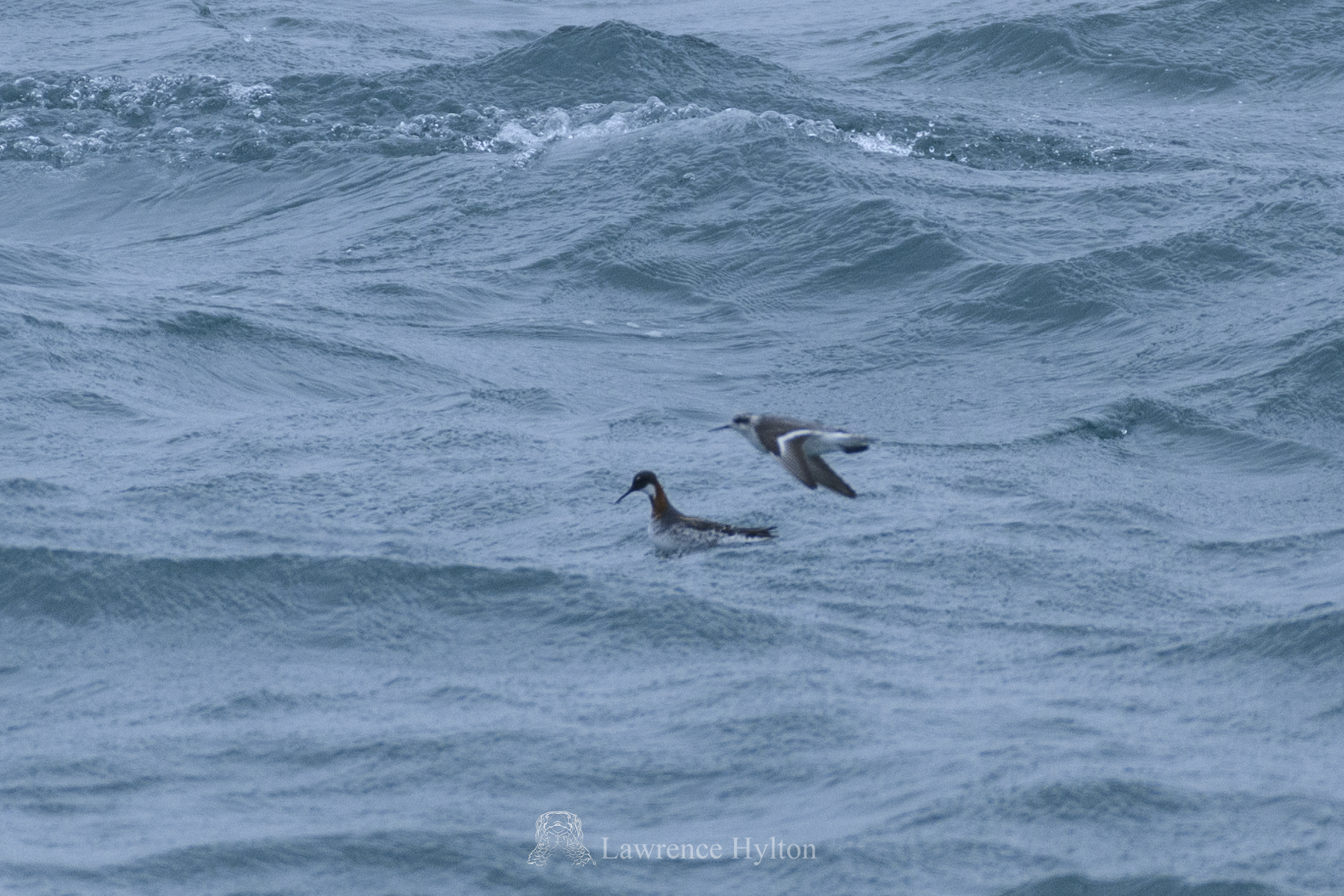
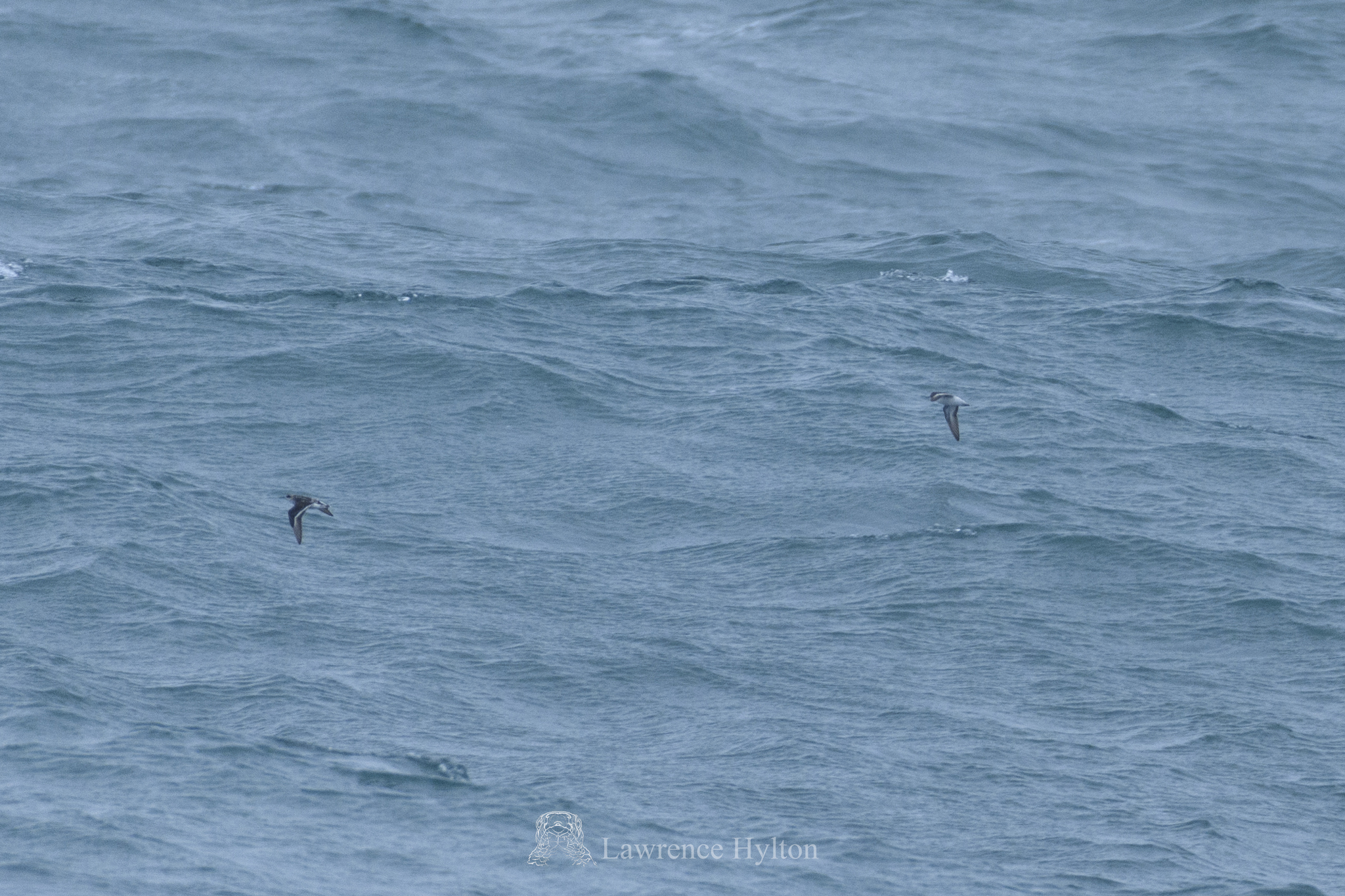
The red-necked phalarope is an Arctic-breeding wader that spends almost its entire nonbreeding season at sea. In Britain and Ireland, it breeds at a handful of locations, with the Shetland Islands hosting the most reliable population. The species arrives on breeding grounds in late spring and departs by midsummer. It exhibits a distinctive swimming behavior, often spinning in tight circles to create whirlpools that bring food to the surface. During the breeding season, females are larger and more colorful than males, actively pursuing males and competing for mates, while males perform all incubation and chick-rearing duties.
Description
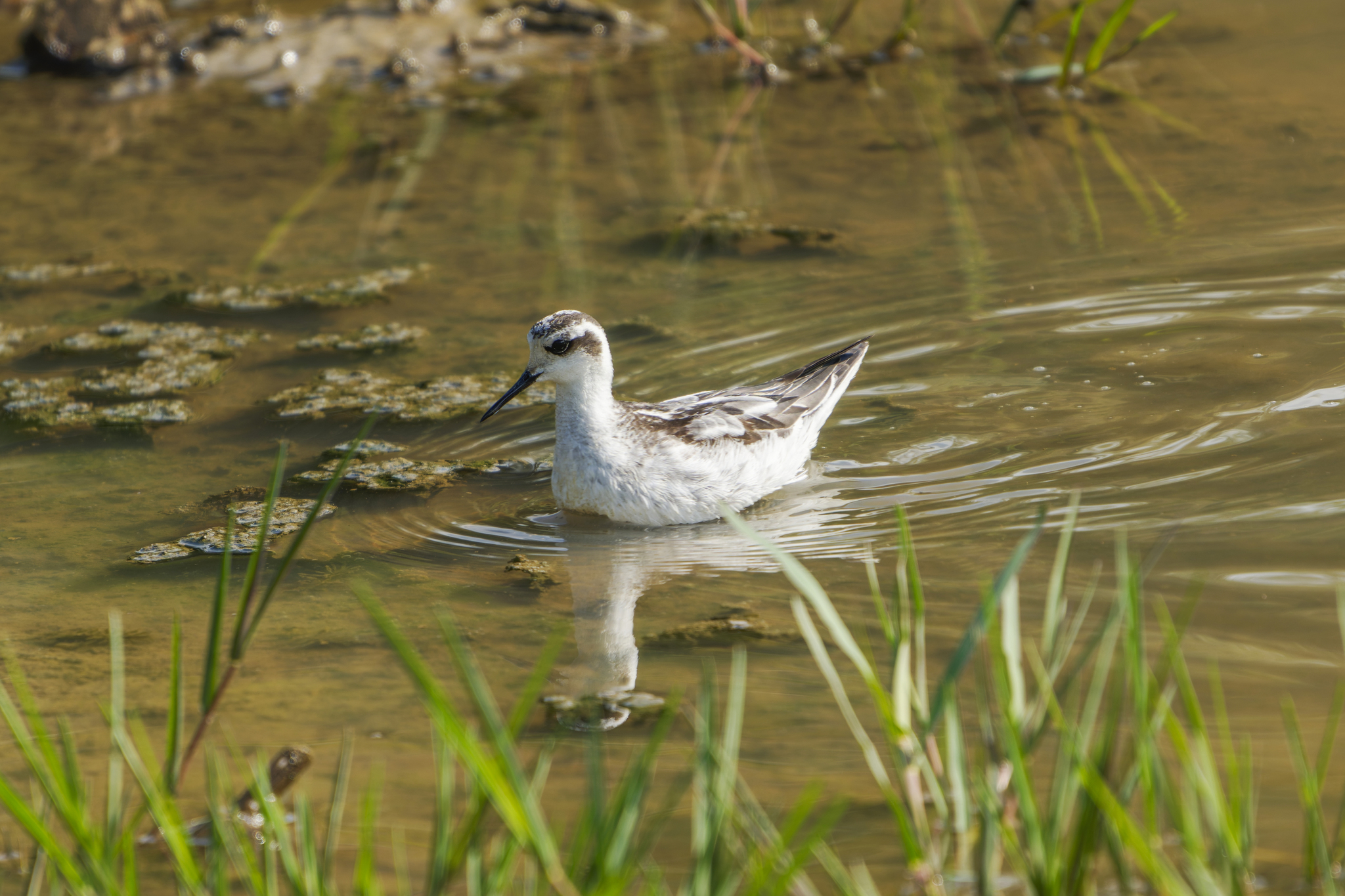
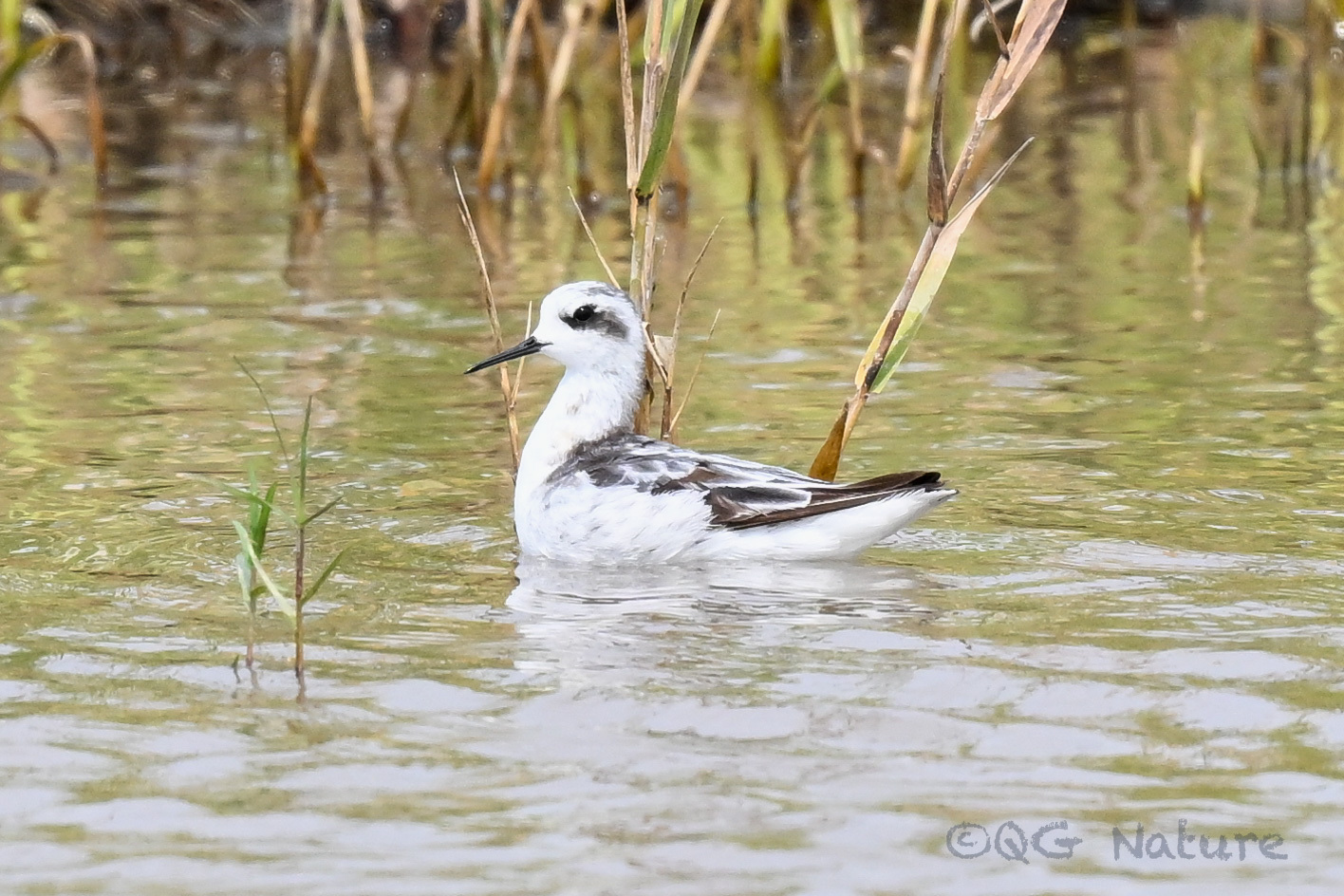
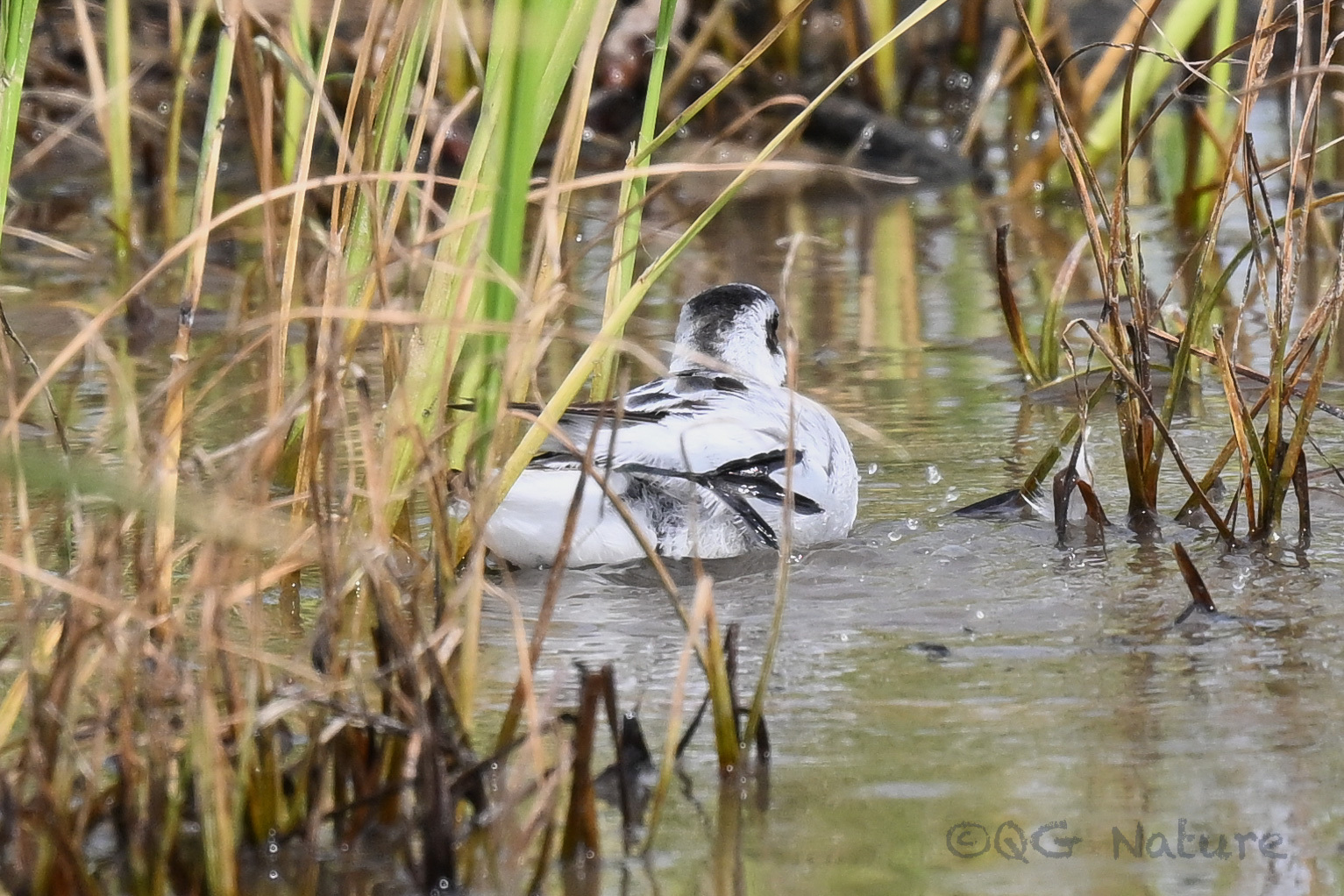
This compact wader measures approximately 18 cm in length with a straight, fine bill and distinctive lobed toes adapted for swimming. Breeding females display striking plumage with dark grey upperparts, a rich chestnut neck and upper breast, black face markings, and a white throat. The white wing stripe is a key identification feature. Breeding males are noticeably duller, with muted versions of the female's colors. Juvenile birds show grey and brown upperparts with buff underparts and a prominent black eye patch. Winter plumage is much plainer, with grey upperparts and white underparts, though the black eye patch persists year-round. The species produces a sharp, metallic call often described as a 'whit' or 'twit'.
Identification
The white wing stripe provides the most reliable way to distinguish this species from Wilson's phalarope, which lacks this feature. In breeding plumage, females are more boldly colored than males, with the chestnut neck and breast being particularly distinctive. The black face mask combined with white throat is unique among phalaropes in the region. Winter birds can be identified by their grey upperparts, white underparts, and the persistent black eye patch. Their swimming behavior, with rapid spinning circles, is characteristic and distinguishes them from most other waders. The small size and lobed toes are also helpful field marks.
Distribution & Habitat
This species breeds across the Arctic regions of both North America and Eurasia. In Britain and Ireland, it is a rare and localized breeder at the extreme edge of its global range, with Shetland hosting the most reliable populations, particularly on Fetlar. Scottish populations also breed in the Outer Hebrides and occasionally on the mainland in Ross-shire and Sutherland. A small population has historically bred in western Ireland, with recent records from County Mayo. Migratory movements are extraordinary: some populations winter in the tropical Pacific off Ecuador and Peru, while others cross the Atlantic via Iceland and Greenland to reach the Arabian Sea. Tracking studies revealed one bird made a 16,000-mile round trip from Shetland.
Behavior & Ecology
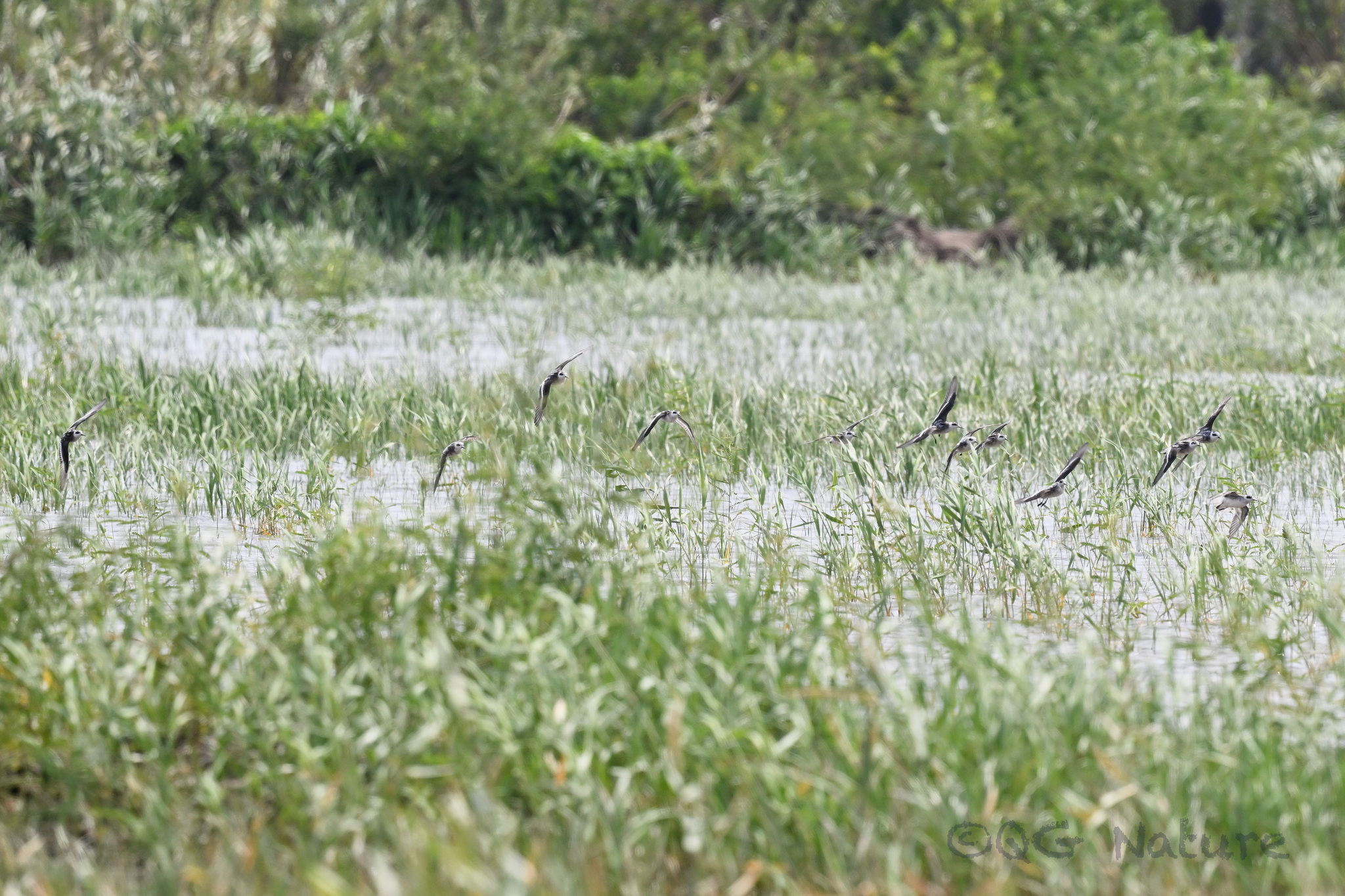
Feeding behavior is one of this species' most remarkable features: birds swim in rapid circles to create small whirlpools, bringing aquatic invertebrates to the surface where they can be plucked from the vortex. On the open ocean, they gather at ocean upwellings and convergence zones. Breeding displays reverse traditional sex roles, with larger females pursuing and fighting over males, then defending their mates until egg-laying is complete. Males perform all incubation duties over approximately 20 days and raise the precocial young, which can fly within 20 days of hatching. Females may lay multiple clutches per season and depart breeding grounds early, leaving males to finish the breeding cycle. The sharp 'whit' or 'twit' call is often heard as birds take flight.
Conservation
The species is protected under the Agreement on the Conservation of African-Eurasian Migratory Waterbirds. While global population trends are not fully established, the British and Irish populations remain small and vulnerable, with breeding records in Ireland becoming increasingly rare since the 1970s despite occasional successful nesting. The species' reliance on remote Arctic breeding habitats and vast oceanic wintering grounds makes comprehensive population monitoring challenging. Habitat loss and degradation at staging areas during migration may pose threats, though specific conservation concerns require further study.
Source: Wikipedia · CC BY-SA 3.0
Taxonomy
- Order
- Charadriiformes
- Family
- Scolopacidae
- Genus
- Phalaropus
- eBird Code
- renpha
Distribution
breeds mostly low Arctic tundra from southern Greenland and Iceland eastward to Kamchatka, Kuril, and Commander islands, and Aleutians through Canada; winters off coasts of Indian Ocean from Arabian Sea eastward through Indonesian Archipelago and in Pacific to New Guinea and Bismarck Archipelago and western Mexico to Peru and Galapagos
Data Sources
Species description from Wikipedia, licensed under CC BY-SA 3.0.
Bird images and sounds sourced from GBIF, contributed by citizen scientists worldwide under Creative Commons licenses.
Taxonomy data from AviList 2025.