
Japanese Cormorant
Phalacrocorax capillatus
绿背鸬鹚
Introduction
This waterbird inhabits coastal waters and inland waterways of the eastern Palearctic region. It is migratory, traveling between breeding and wintering grounds. The species is adapted to an aquatic lifestyle and capable of deep diving. It has been traditionally used in Japanese cormorant fishing, where trained birds catch fish for handlers.
Description
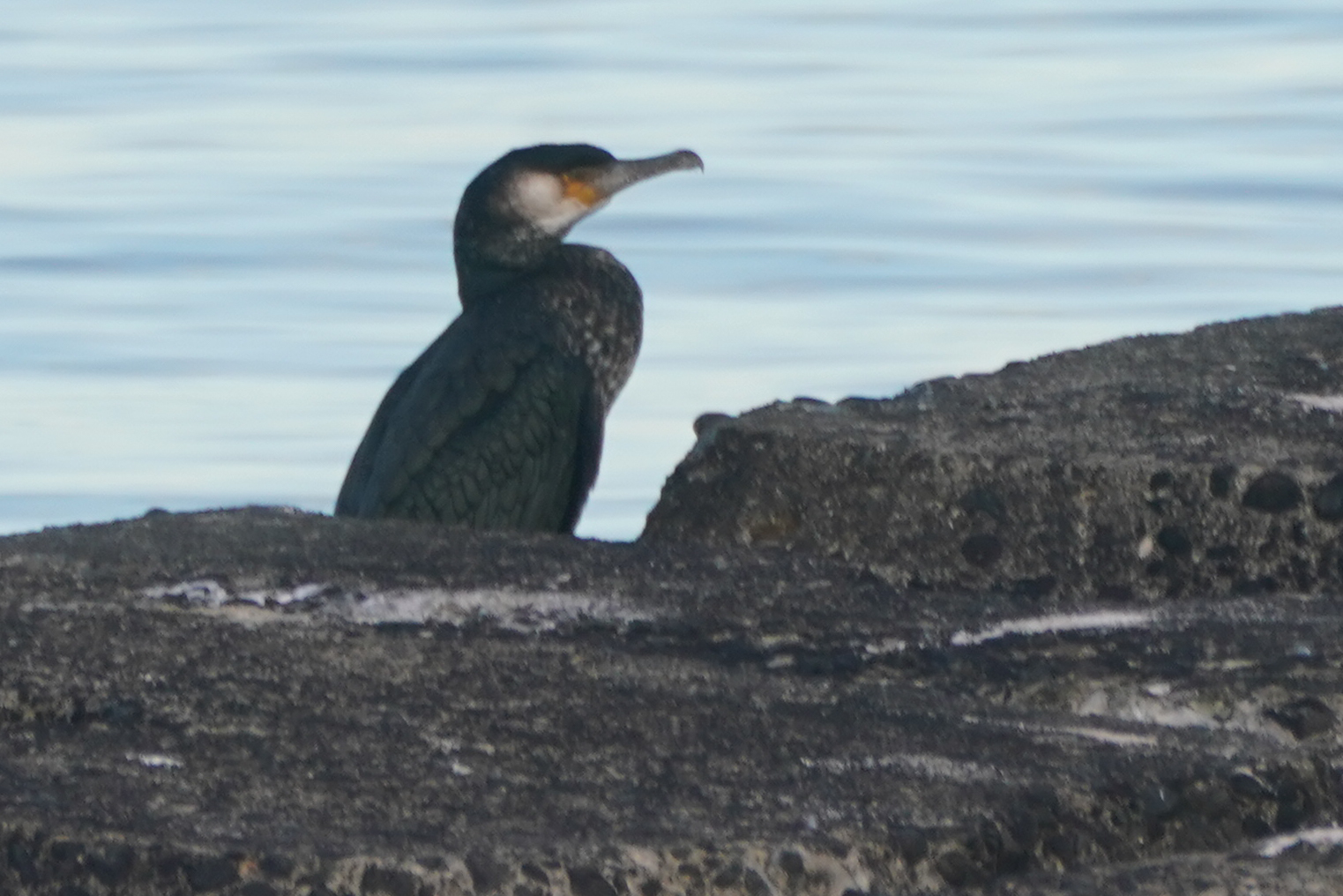
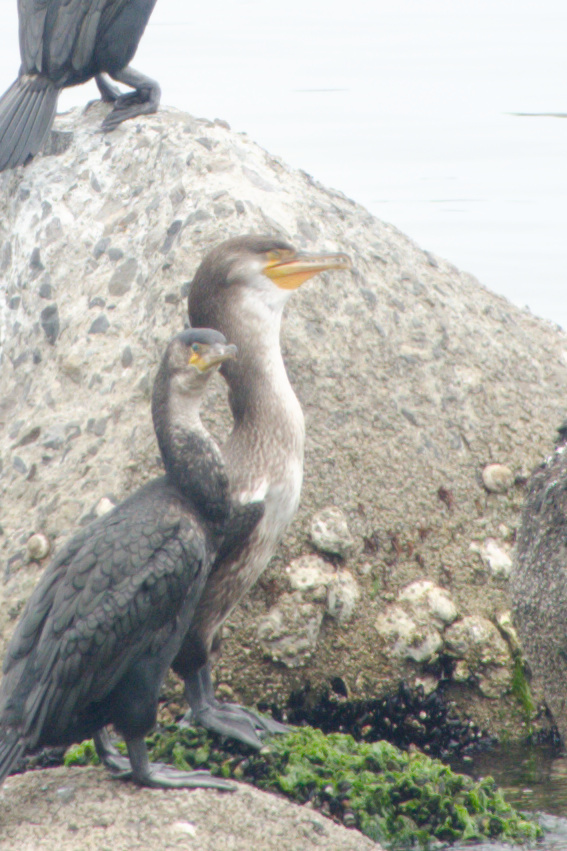
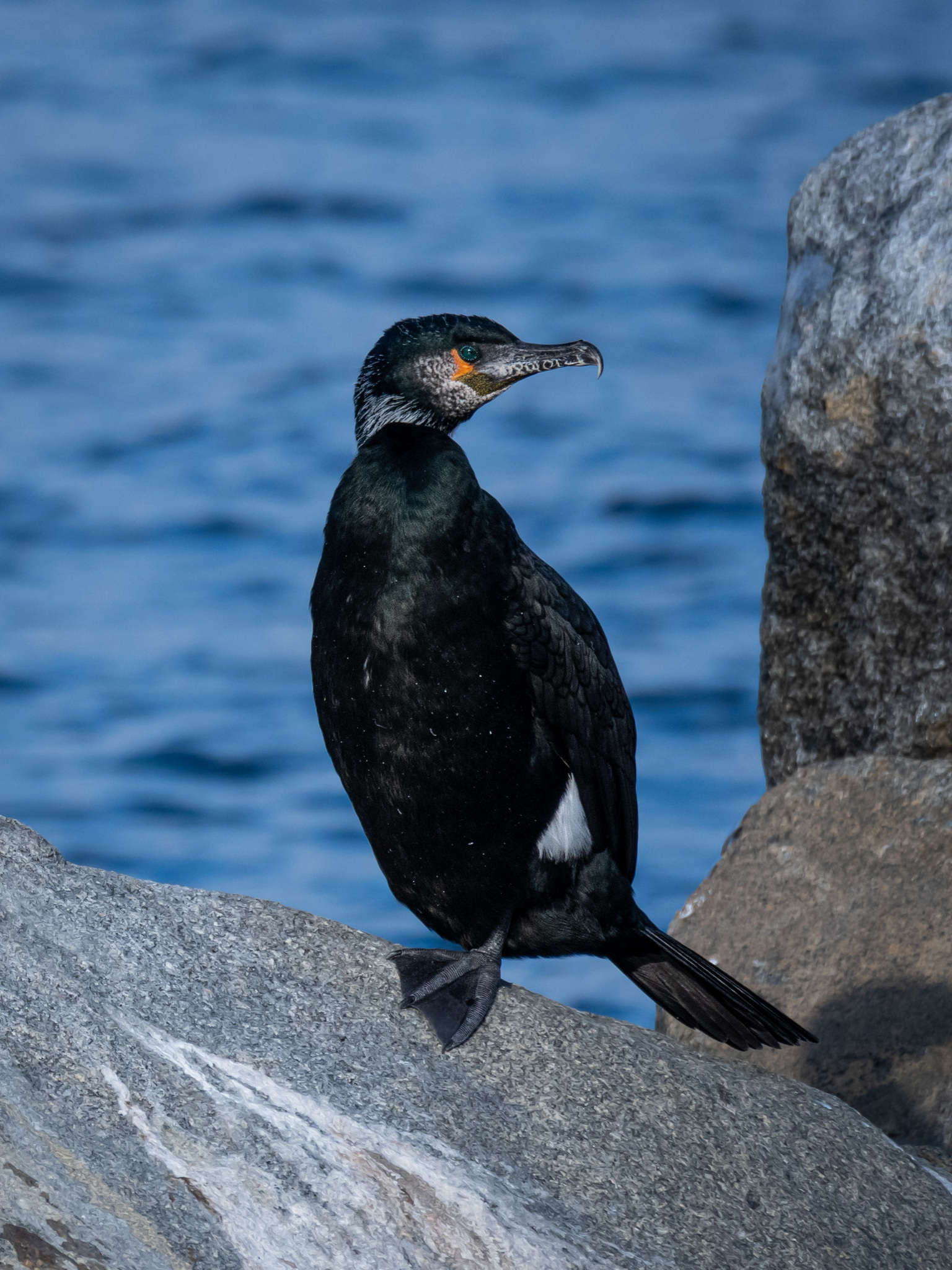
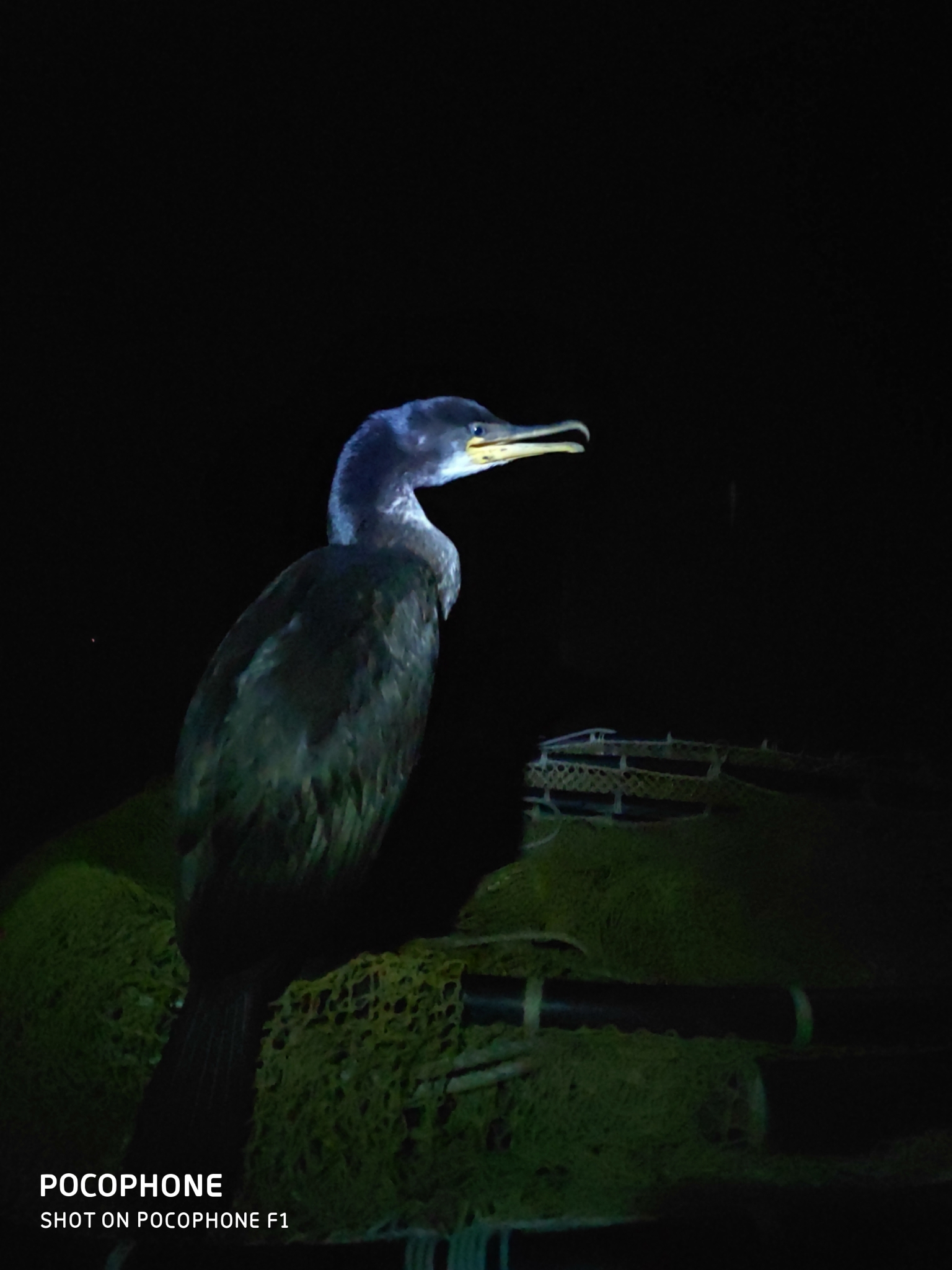
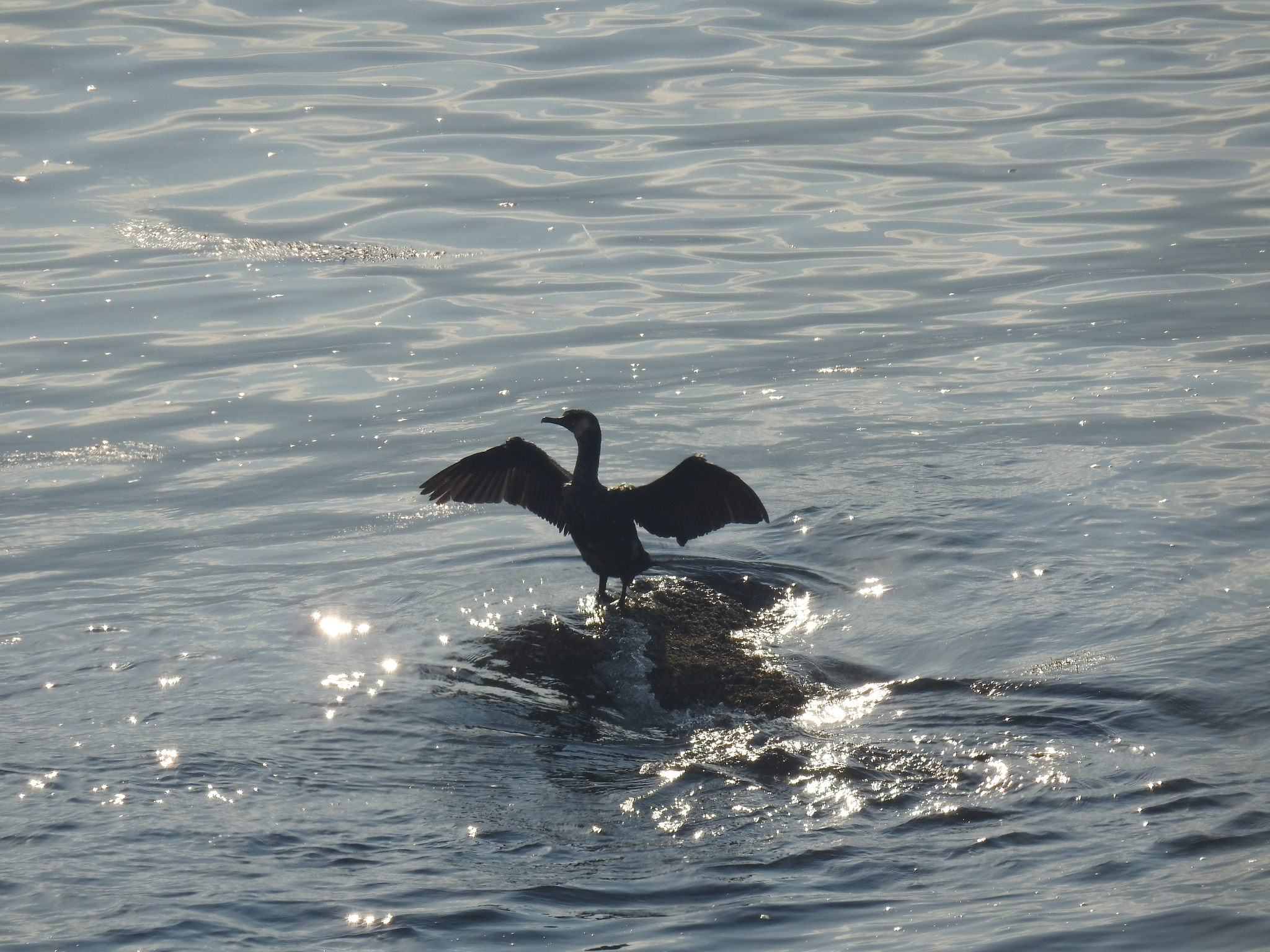
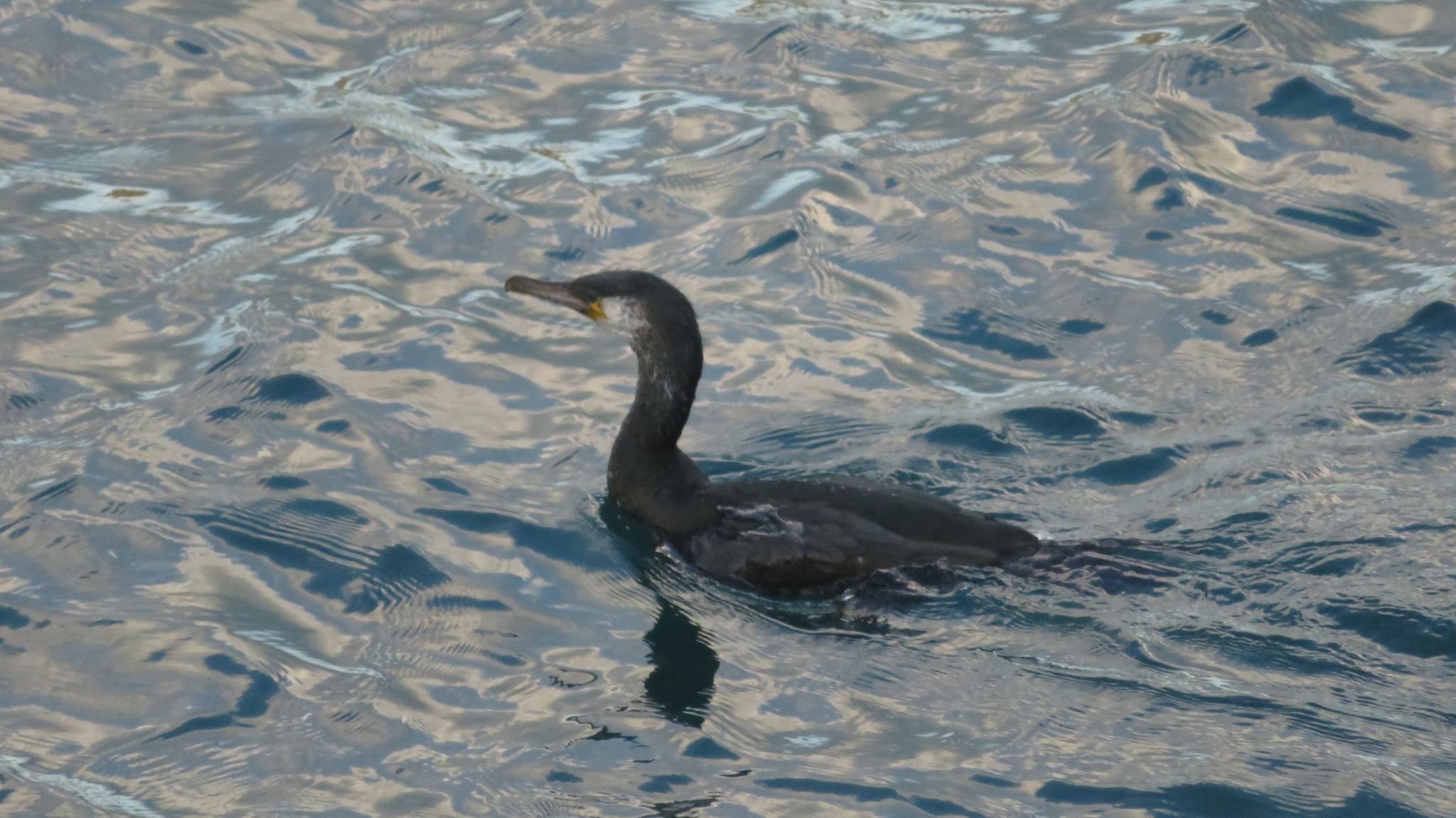
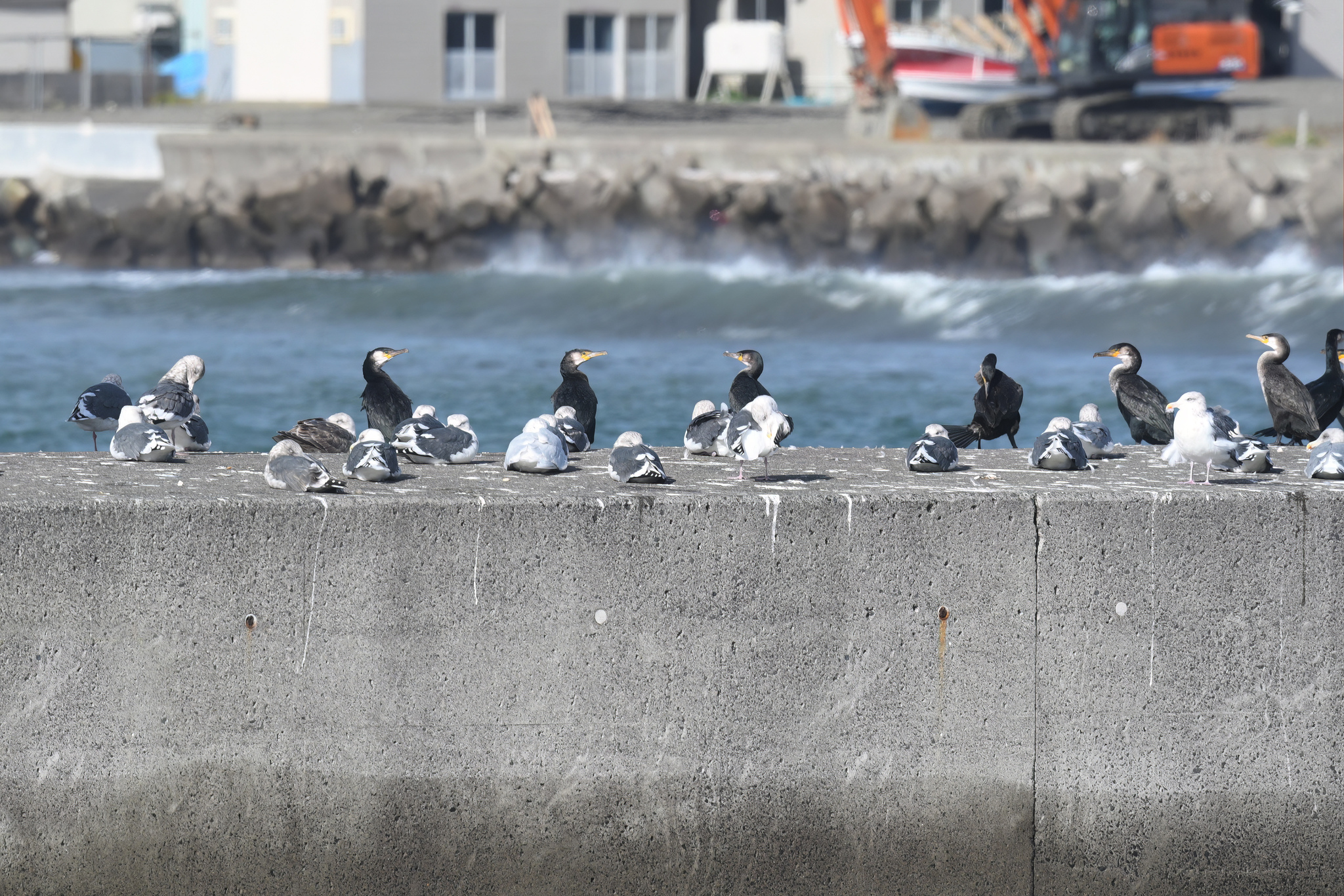
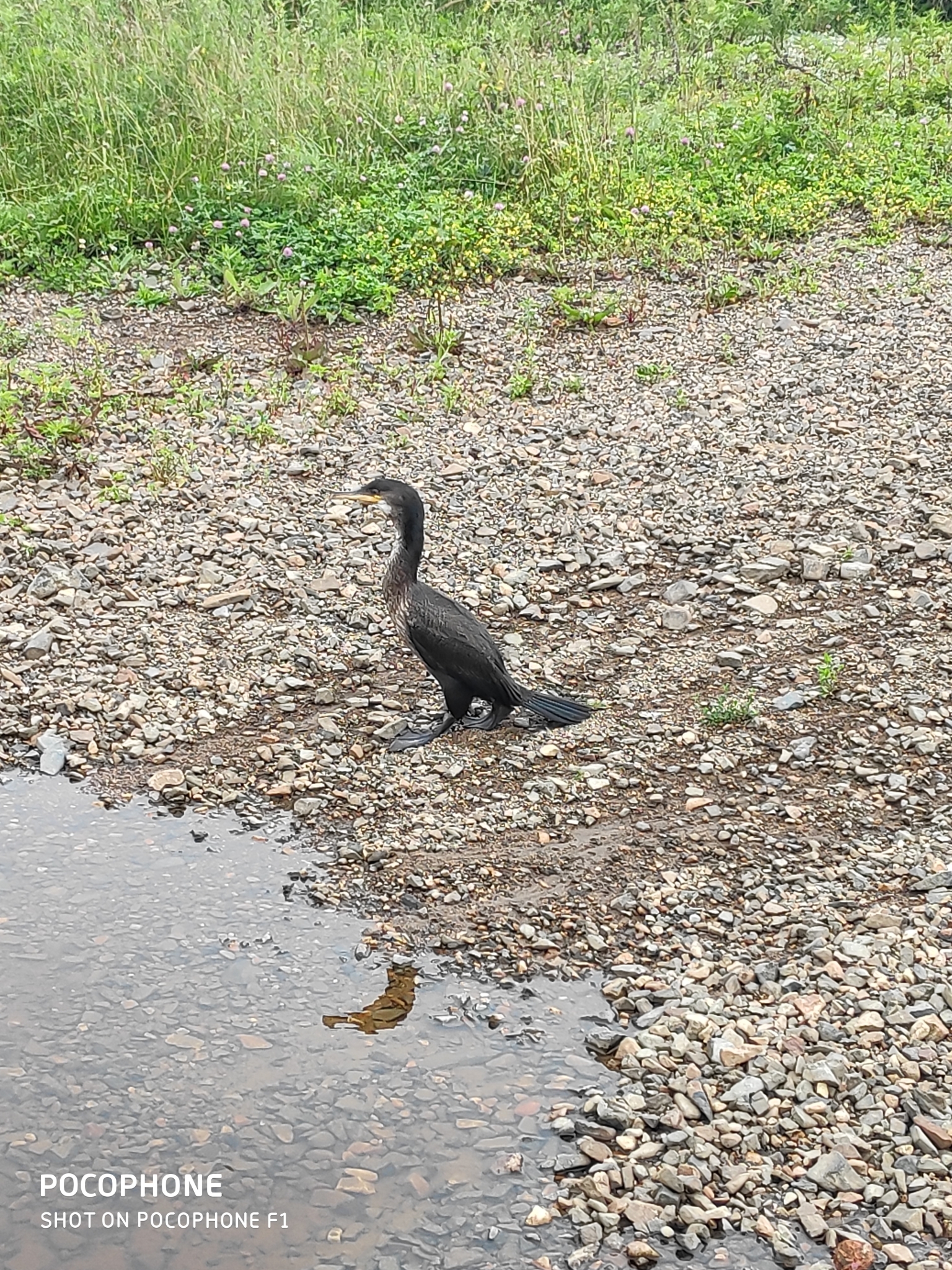
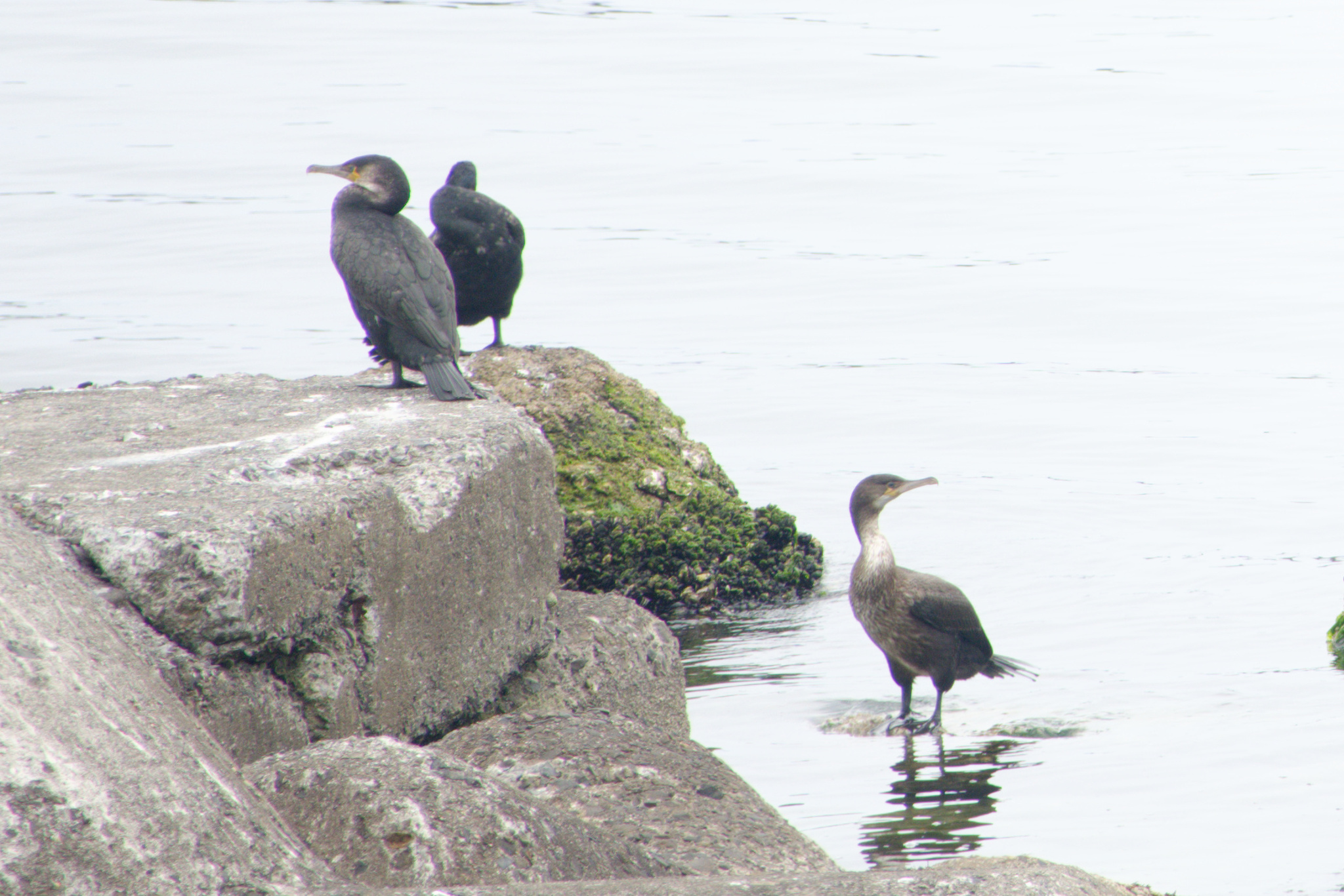
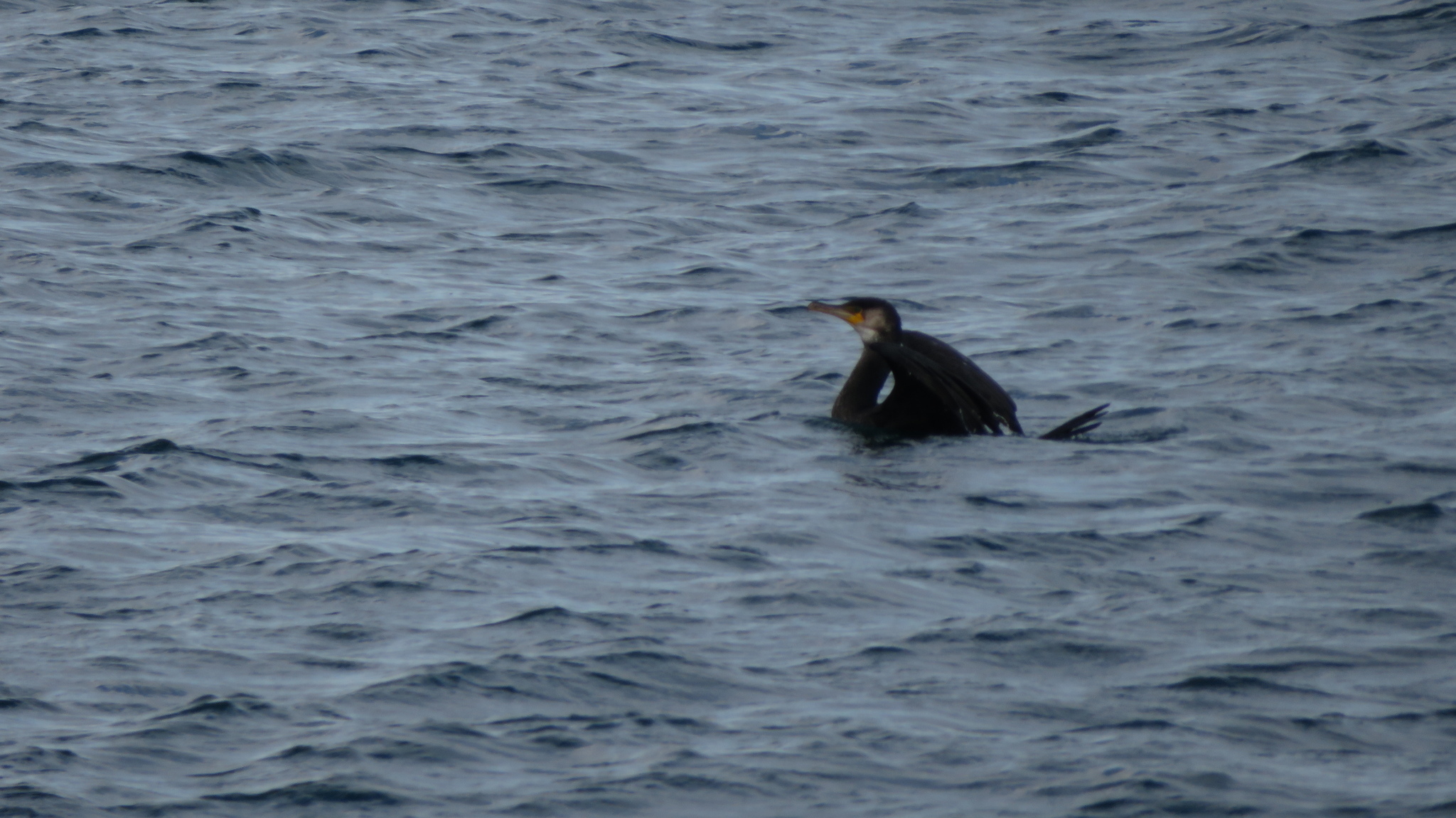
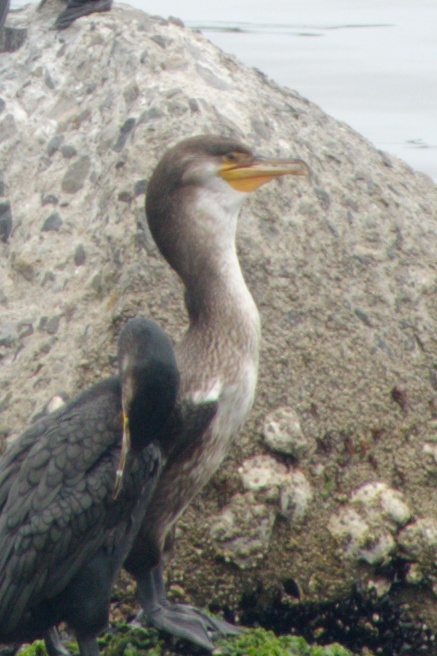
This is one of the larger cormorant species, comparable in size to the great cormorant. Adults display predominantly black plumage across the body and wings, with distinctive white coloring on the throat and cheeks. The bill is partially yellow, particularly at the base, providing useful identification features. Juveniles are considerably plainer, showing browner tones overall without the crisp contrasts of adults. Measurements reveal substantial size variation: body length ranges from 81 to 92 centimeters, wingspan reaches approximately 152 centimeters, and weight varies between 2.3 and 3.55 kilograms.
Identification
Field identification centers on its large size and distinctive facial pattern. The white throat and cheek patches contrast sharply with the all-black body, distinguishing it from many other cormorant species. Its overall dimensions closely match those of the great cormorant, requiring careful observation of bill coloration and facial markings for confident separation. The partially yellow bill base is particularly useful for identification in the field.
Distribution & Habitat
The species breeds and winters across the eastern Palearctic, with documented presence in China, Japan, North Korea, the Russian Far East, South Korea, and Taiwan. It occupies coastal marine environments, estuaries, and freshwater systems throughout this range. The migratory nature of the species means populations move between these regions seasonally, though specific migration patterns vary among different populations.
Behavior & Ecology
The species is renowned for its role in the traditional Japanese fishing practice known as ukai, or cormorant fishing. Fishermen on rivers such as the Nagara River work specifically with this species to catch ayu, a prized freshwater fish. The birds are trained to return caught fish to their handlers while remaining attached to cords. Beyond this cultural practice, the species exhibits typical cormorant behavior, diving proficiently to capture fish and other aquatic prey at significant depths.
Conservation
The species holds a status of Least Concern on the IUCN Red List as of 2018, indicating that it currently faces no immediate threat of extinction across its range. While population trends require ongoing monitoring, current assessments suggest stable numbers throughout most of its distribution.
Culture
This species holds profound cultural significance in Japan, where it is known locally as umiu, meaning sea cormorant. It is central to the centuries-old tradition of ukai, cormorant fishing, which remains a living cultural practice on several Japanese rivers. The Nagara River is particularly famous for its ukai masters who work exclusively with this species. This tradition represents one of the oldest continuous human-animal partnerships in the world, with fishermen passing techniques down through generations.
Source: Wikipedia · CC BY-SA 3.0
Taxonomy
- Order
- Suliformes
- Family
- Phalacrocoracidae
- Genus
- Phalacrocorax
- eBird Code
- japcor1
Distribution
rocky seacoasts and islands of northeastern Asia, from southeastern Russia southward to Kyushu (southern Japan), Korean Peninsula, and northeastern China; ranges southward to Izu Islands and northern Ryukyu Islands (southern Japan), coastal eastern China, and Taiwan
Data Sources
Species description from Wikipedia, licensed under CC BY-SA 3.0.
Bird images and sounds sourced from GBIF, contributed by citizen scientists worldwide under Creative Commons licenses.
Taxonomy data from AviList 2025.