Red-tailed Tropicbird
Phaethon rubricauda
红尾鹲
Introduction
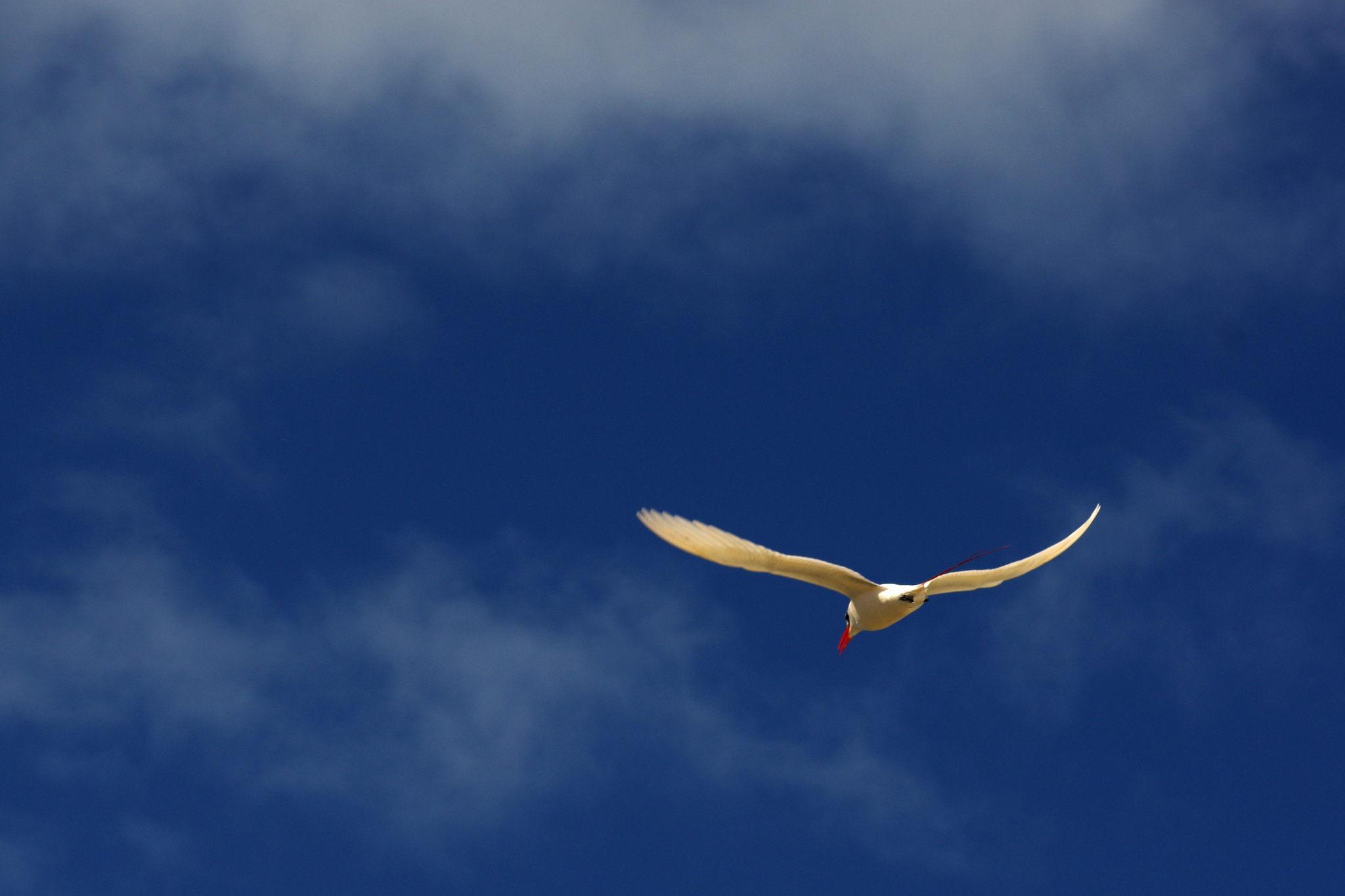
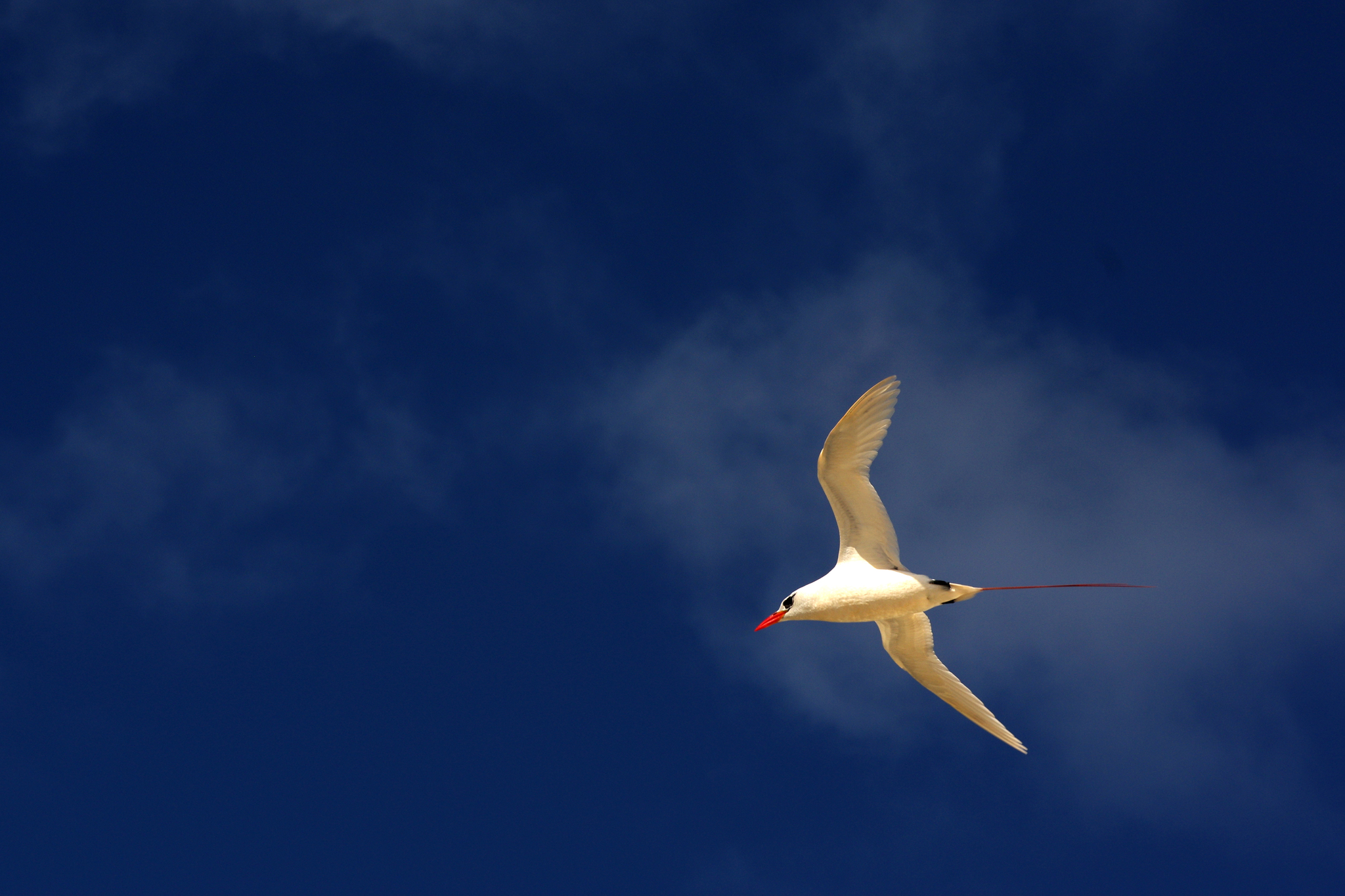
A seabird species (Phaethon rubricauda) in the family Phaethontidae, native to tropical regions of the Indian and Pacific Oceans from East Africa to Chile and Japan. One of three closely related tropicbird species, superficially resembling a tern in appearance. Distinguished by almost entirely white plumage with a black mask and bright red bill. Adults possess red tail streamers approximately twice their body length. The species was described by Pieter Boddaert in 1783. While four subspecies have been described, evidence indicates clinal variation in body size with smaller birds in northern populations and larger in southern ones. Classified as least concern by the IUCN, though adversely affected by human contact with rats and feral cats preying on eggs and young at nesting sites.
Description
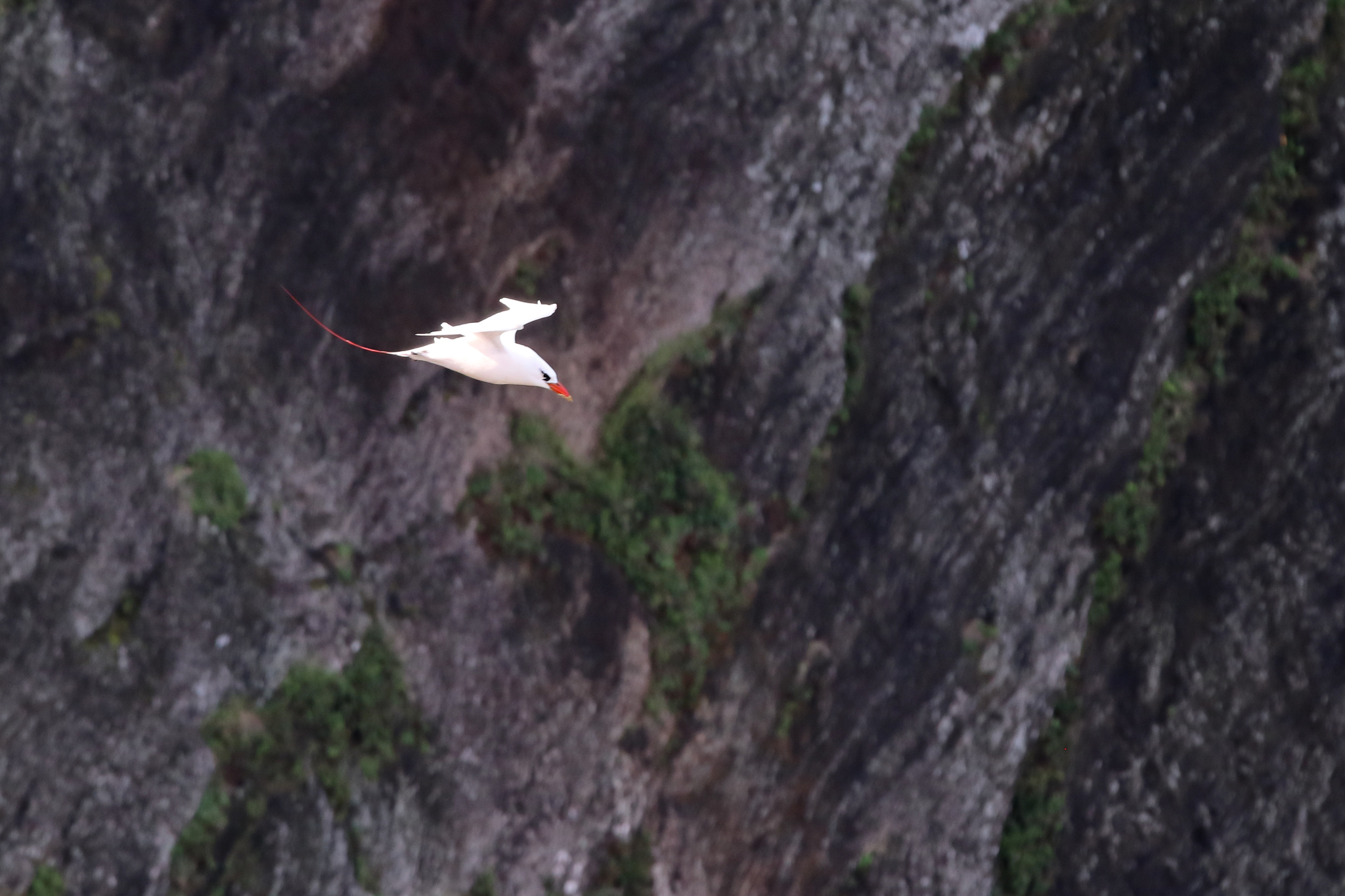
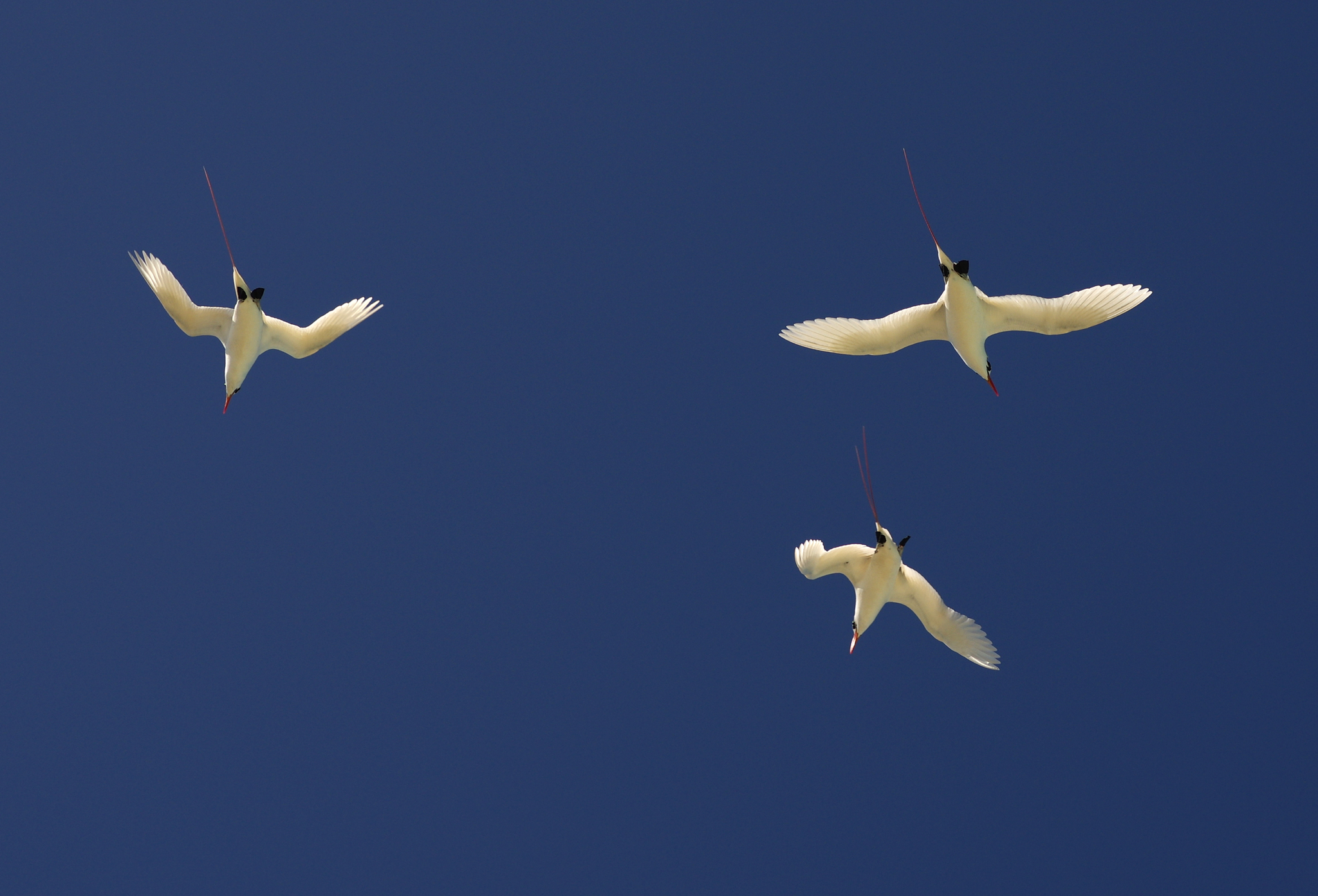
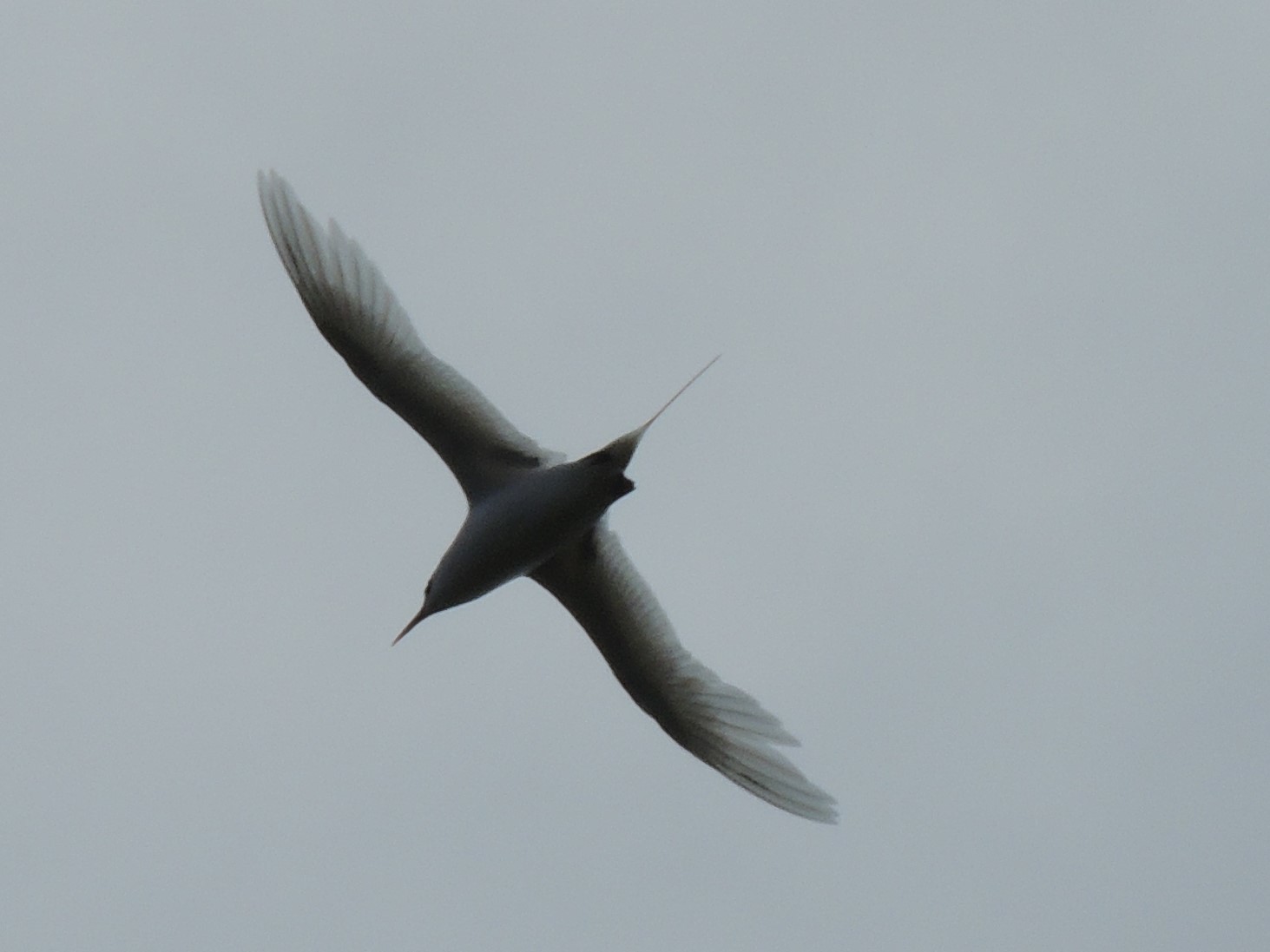
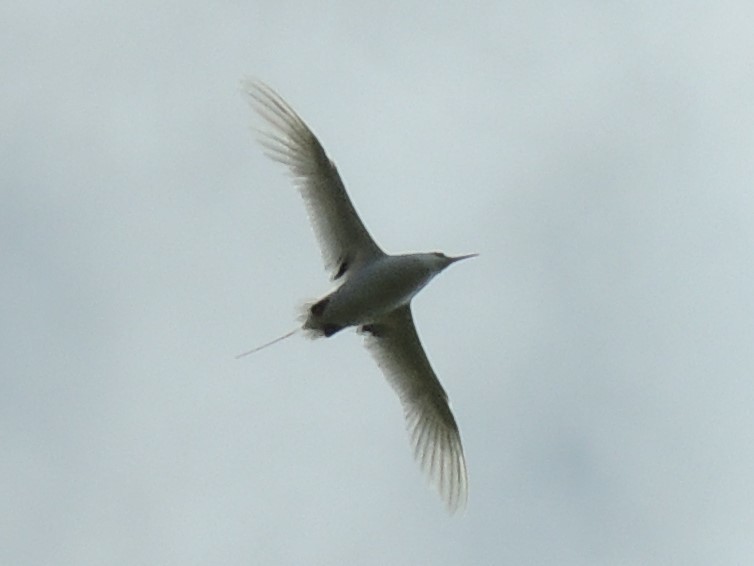
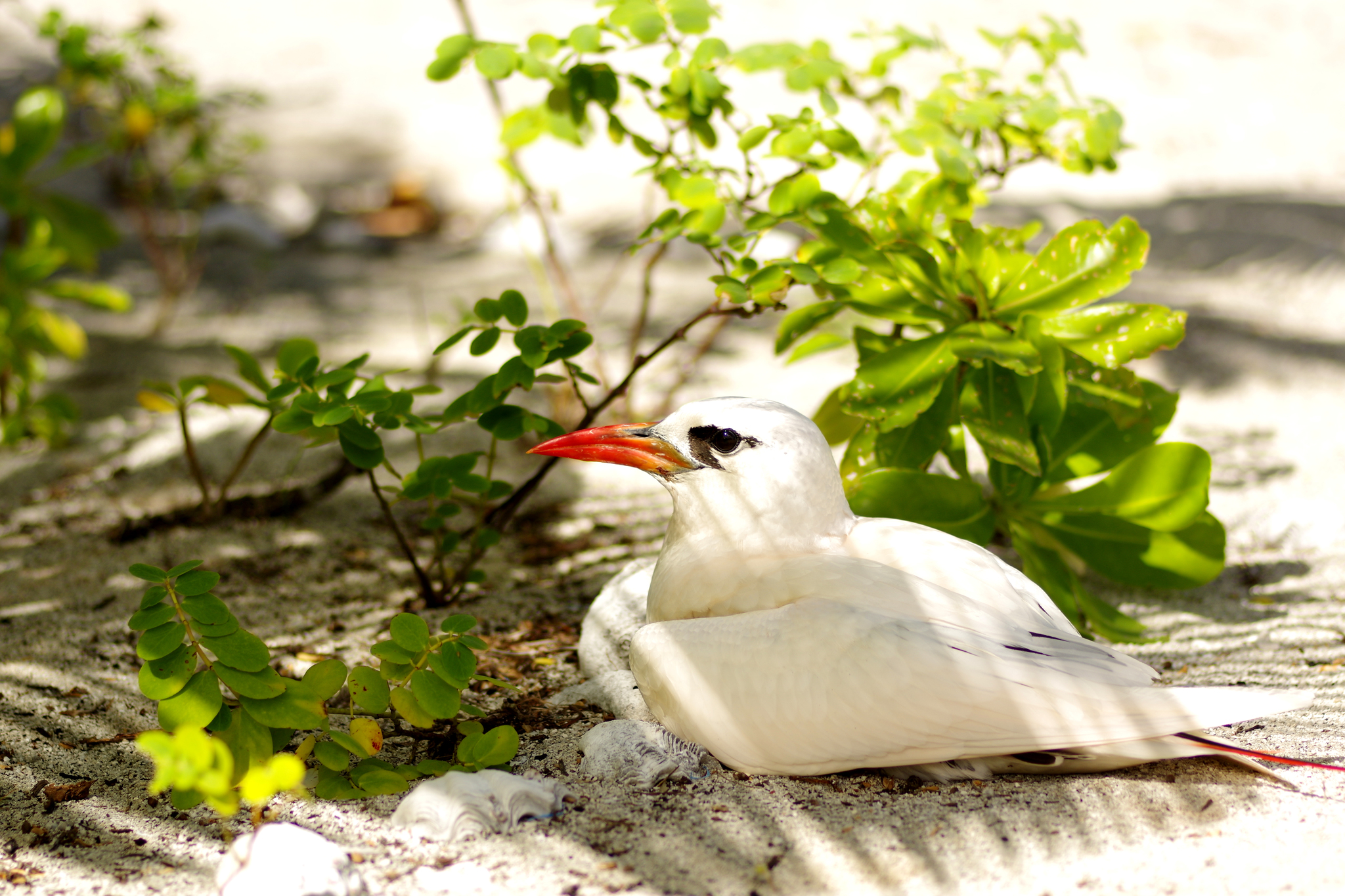
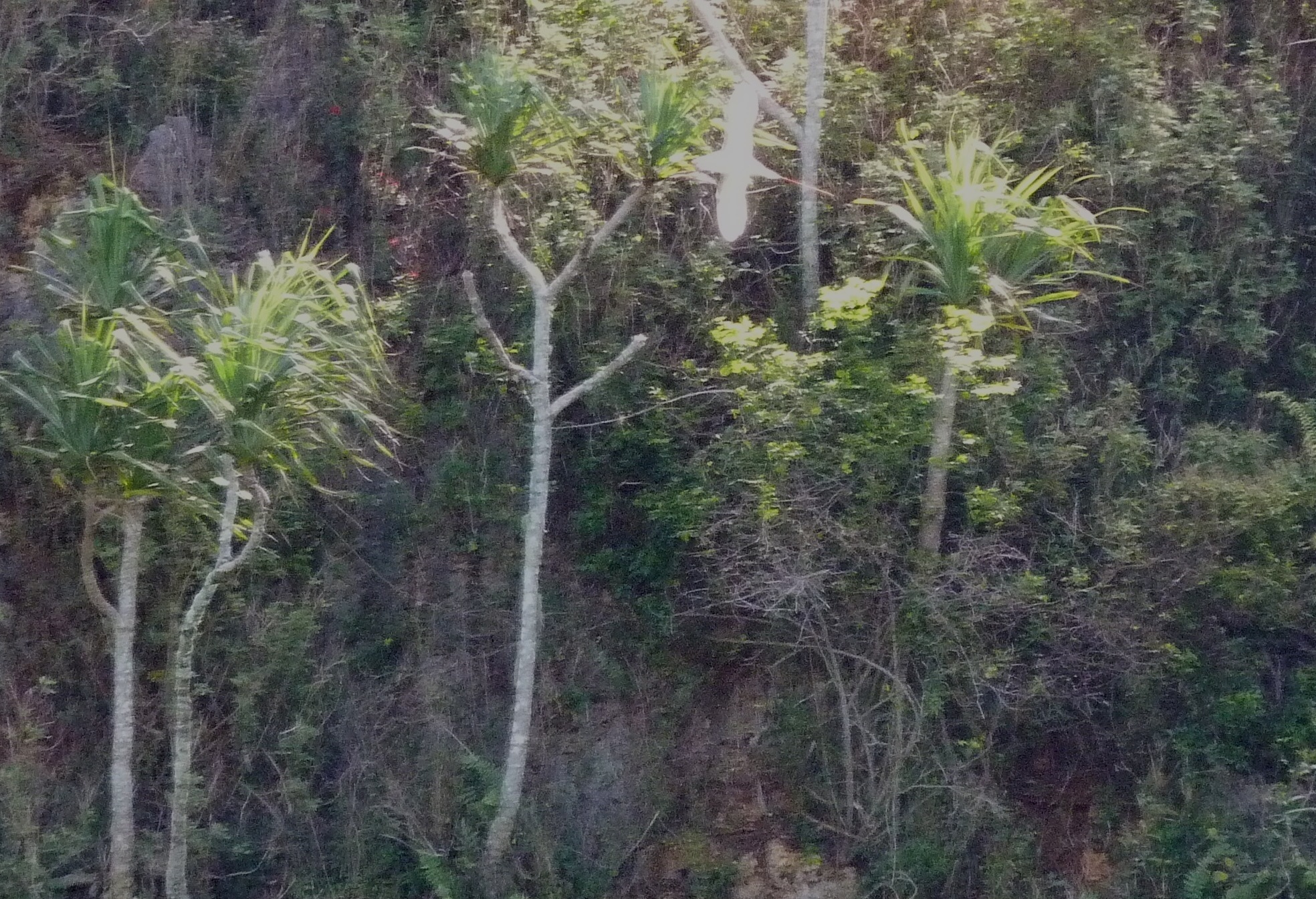
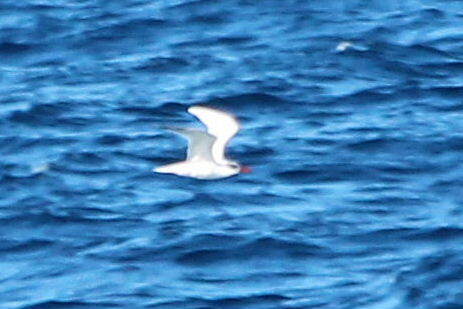
Medium-sized seabird measuring 95-104 cm in length including the 35 cm tail streamers, weighing approximately 800 g, with a wingspan of 111-119 cm. Streamlined, solid build with almost entirely white plumage often displaying a pink tinge, more pronounced in the wing remiges. A dark brown comma-shaped stripe extends from the lores through and over the eyes to the ear coverts. The bright red bill is slightly paler at the base with black around the nostrils. Legs and base of toes are pale blue-mauve, while webbing and remaining toes are black. Two elongated tail streamers are orange or red with white bases covering approximately one-tenth of their length. Wings display dark chevron-shaped patches on tertials with visible dark shafts on primary flight feathers.
Identification
In Australian waters, potentially confused with silver gull or various tern species, but distinguished by larger, heavier build and wedge-shaped tail. The red bill and entirely white wings separate this species from the adult white-tailed tropicbird. Immature individuals differ from immature white-tailed tropicbirds by having partly red rather than yellow bills. The species is generally silent while flying.
Distribution & Habitat
Ranges across the southern Indian Ocean and western and central Pacific Ocean, from the East African coast through Indonesia, around southern Japan, to Chile and the Hawaiian Islands where it is more common on northwestern islands. Inhabits ocean areas with water temperatures of 24-30°C and salinity under 35% in the southern hemisphere and 33.5% in the northern hemisphere. Disperses widely after breeding, with Indian Ocean populations following prevailing winds westward and North Pacific birds dispersing eastward. The world's largest colony, with 10,800 nests as of 2020, occurs at Johnston Atoll. Breeds on numerous island groups including Kermadec, Norfolk, Lord Howe, Raine, Lady Elliot, Christmas, Europa, Aldabra, and throughout the Hawaiian, Fiji, French Polynesian, and Cook Islands. A rare vagrant to New Zealand proper, Palau, Guam, and North America.
Behavior & Ecology
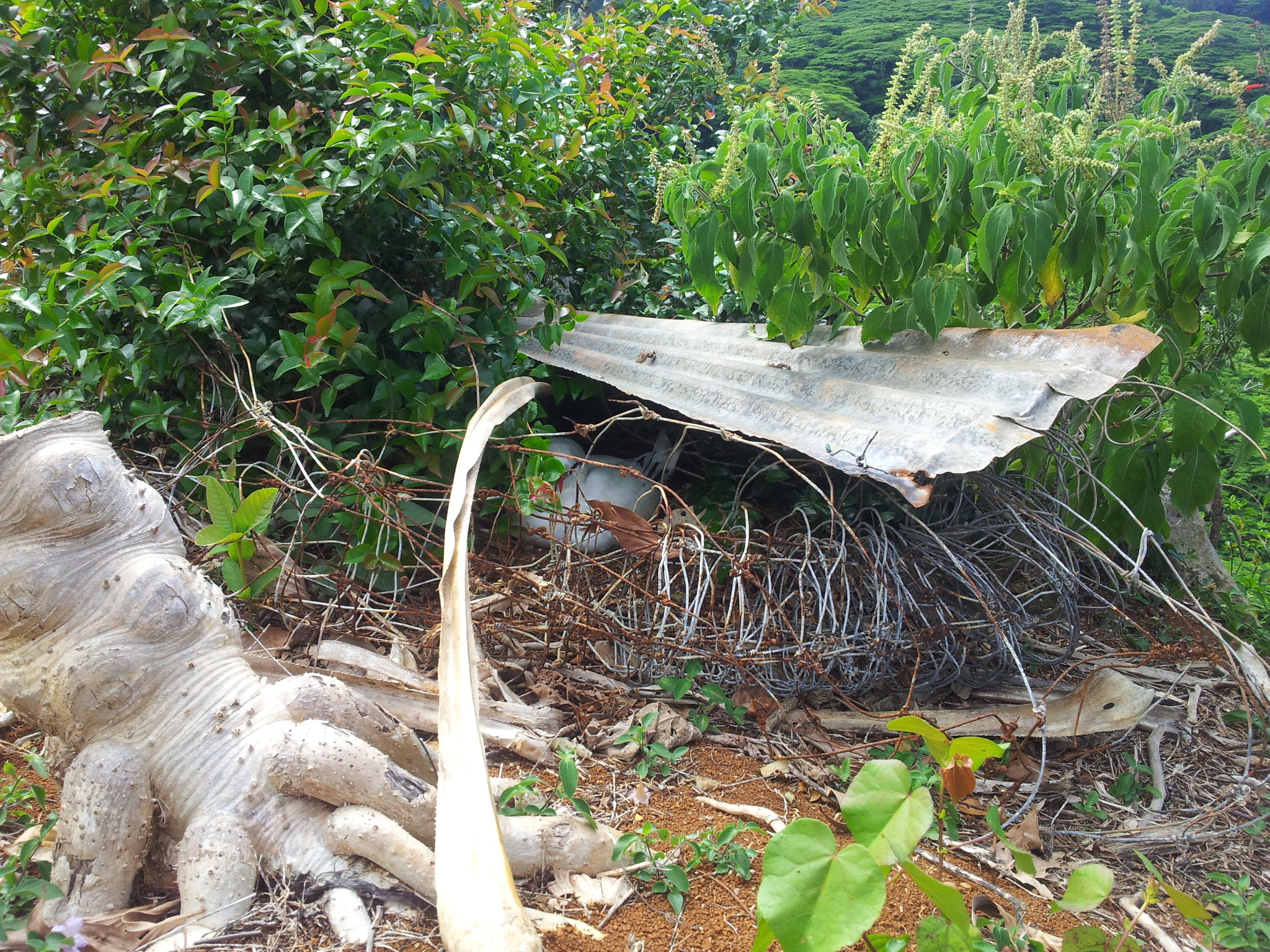
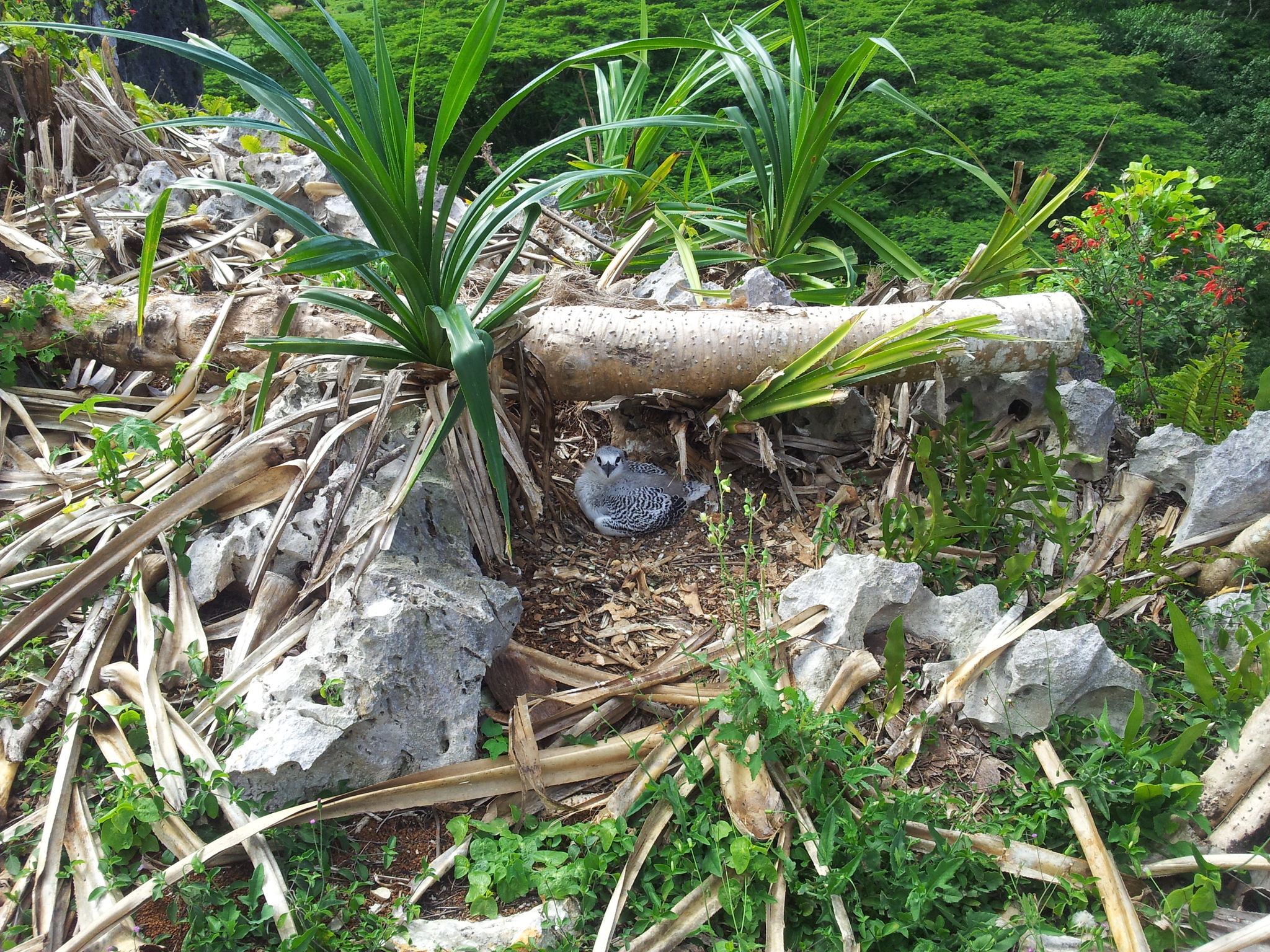
Strong flyer with difficulty walking on land, using a shuffling gait. Performs aerial courtship displays involving large circles, gliding, rapid wing-beating, and low flight while making sharp cackling calls. Monogamous, with pairs remaining bonded across breeding seasons. Nests in loose colonies on cliff faces, crevices, or sandy beaches of oceanic islands, typically within one meter of shrub edges to minimize walking distance. Lays a single pale tan egg with brown and red-black markings, incubated by both parents for 42-46 days. Chicks fledge after 67-91 days. Forages by plunge-diving from heights of 6-50 meters to depths of about 4.5 meters, catching prey in approximately 26.6 seconds on average. Diet consists primarily of flying fish and squid, supplemented by crustaceans and other fish species. During incubation, parents undertake long foraging trips averaging 153 hours; after hatching, one parent makes long trips for self-feeding while the other makes short trips averaging three hours to feed the chick.
Conservation
Classified as least concern by the IUCN due to large range and population. Eastern Pacific population estimated at 80,000 birds with minimum 41,000. Approximately 9,000 birds breed on Europa Island and 9,000-12,000 on Hawaiian islands. Within Australia, classified as near threatened due to unexpected population declines, human impact, and yellow crazy ant invasion of Christmas Island. Listed as vulnerable in New South Wales. Threats include habitat destruction, introduced predators (rats, feral cats, dogs), and invasive species. Yellow crazy ants discovered on Johnston Atoll in 2010 overrun nesting areas and can blind birds with their spray. Large raptors including white-bellied sea eagle and eastern osprey prey on adults, while silver gulls, crows, and ravens raid nests. Vagrant red-billed tropicbirds have been implicated in egg losses in Hawaii.
Culture
The bird's tail streamers were highly prized by the Māori people of New Zealand. The Ngāpuhi tribe of the Northland Region collected streamers from dead or stray birds blown ashore after easterly gales, trading them for greenstone with southern tribes. English naturalist Andrew Bloxam reported that Hawaiians valued the feathers and would pull them from nesting birds. Known as 'amokura' in Māori and 'koaʻe ʻula' in Hawaiian.
Source: Wikipedia · CC BY-SA 3.0
Taxonomy
- Order
- Phaethontiformes
- Family
- Phaethontidae
- Genus
- Phaethon
- eBird Code
- rettro
Subspecies (4)
-
Phaethon rubricauda melanorhynchos
breeds and disperses widely in tropical Pacific Ocean, from Ryukyu and other islands of far southern Japan southward to New Caledonia, eastward to Hawaii and Easter Island, and Salas y Gomez; presumably this race, Islas Revillagigedos (off Mexico)
-
Phaethon rubricauda roseotinctus
breeds southwestern Pacific islands, from Great Barrier Reef, Lord Howe and Norfolk islands (east of Australia), and Kermadec Islands (north of New Zealand)
-
Phaethon rubricauda rubricauda
breeds islands in western Indian Ocean from Europa (Mozambique Channel), Aldabra and Aride (Seychelles), Nosy Ve (southwestern Madagascar), and the Mascarenes
-
Phaethon rubricauda westralis
breeds islands in eastern Indian Ocean, from Cocos (Keeling) and Christmas Island (east-central Indian Ocean), Rowley Shoals, Ashmore Reef, and Sugarloaf Rock (off Australia); also (presumably this race) Gunungapi and Manuk (Banda Sea)
Data Sources
Species description from Wikipedia, licensed under CC BY-SA 3.0.
Bird images and sounds sourced from GBIF, contributed by citizen scientists worldwide under Creative Commons licenses.
Taxonomy data from AviList 2025.