

White-tailed Tropicbird
Phaethon lepturus
白尾鹲
Introduction
The white-tailed tropicbird (Phaethon lepturus) is the smallest of three closely related seabirds of the tropical oceans and the smallest member of the order Phaethontiformes. It is found in the tropical Atlantic, western Pacific, and Indian Oceans. It breeds on Caribbean islands and as far north as Bermuda, where it is locally called a 'longtail.' Recently, a few pairs have begun nesting on Little Tobago alongside the red-billed tropicbird colony. This species disperses widely across oceans when not breeding and sometimes wanders far from its breeding grounds.
Description
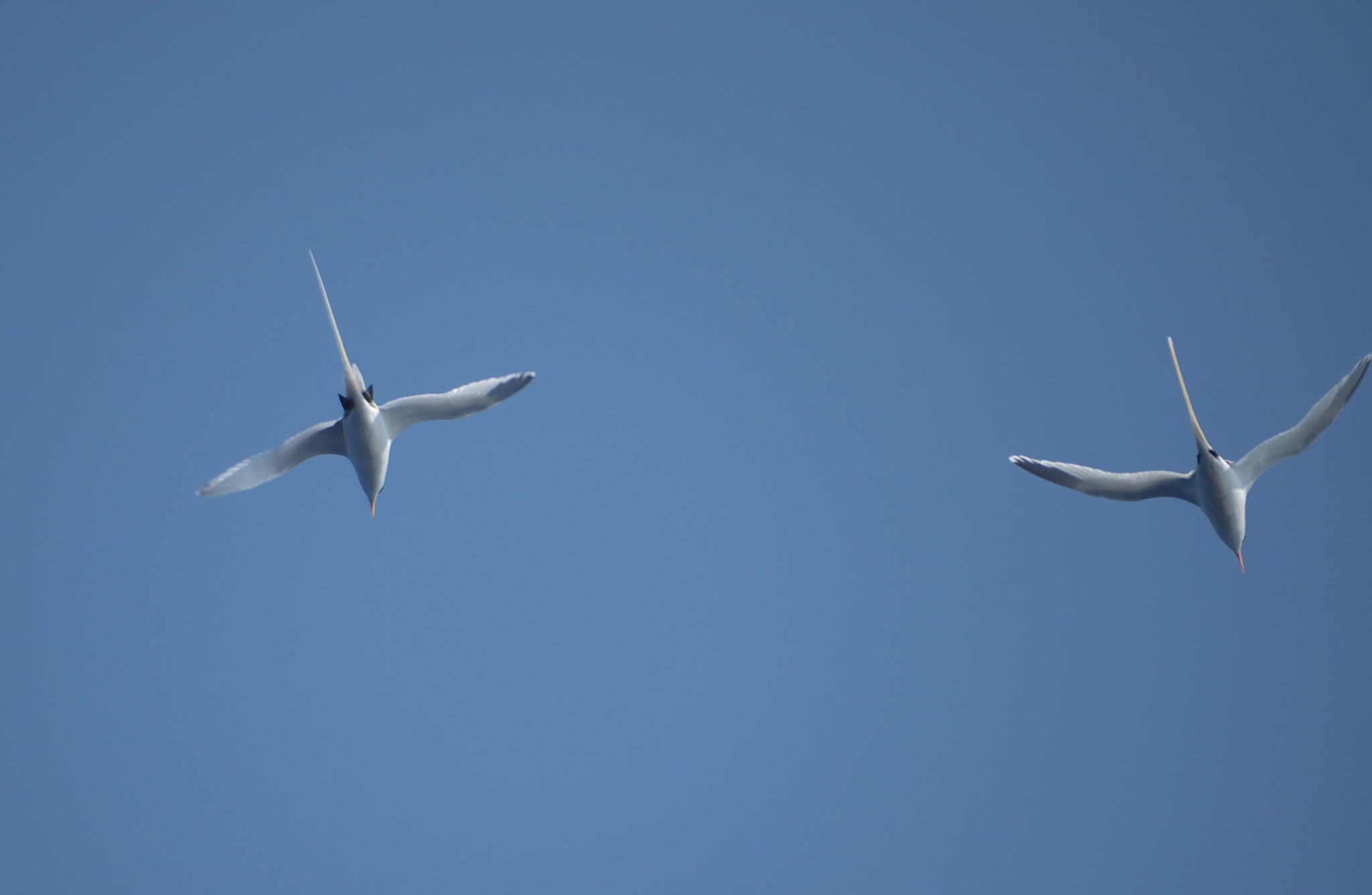
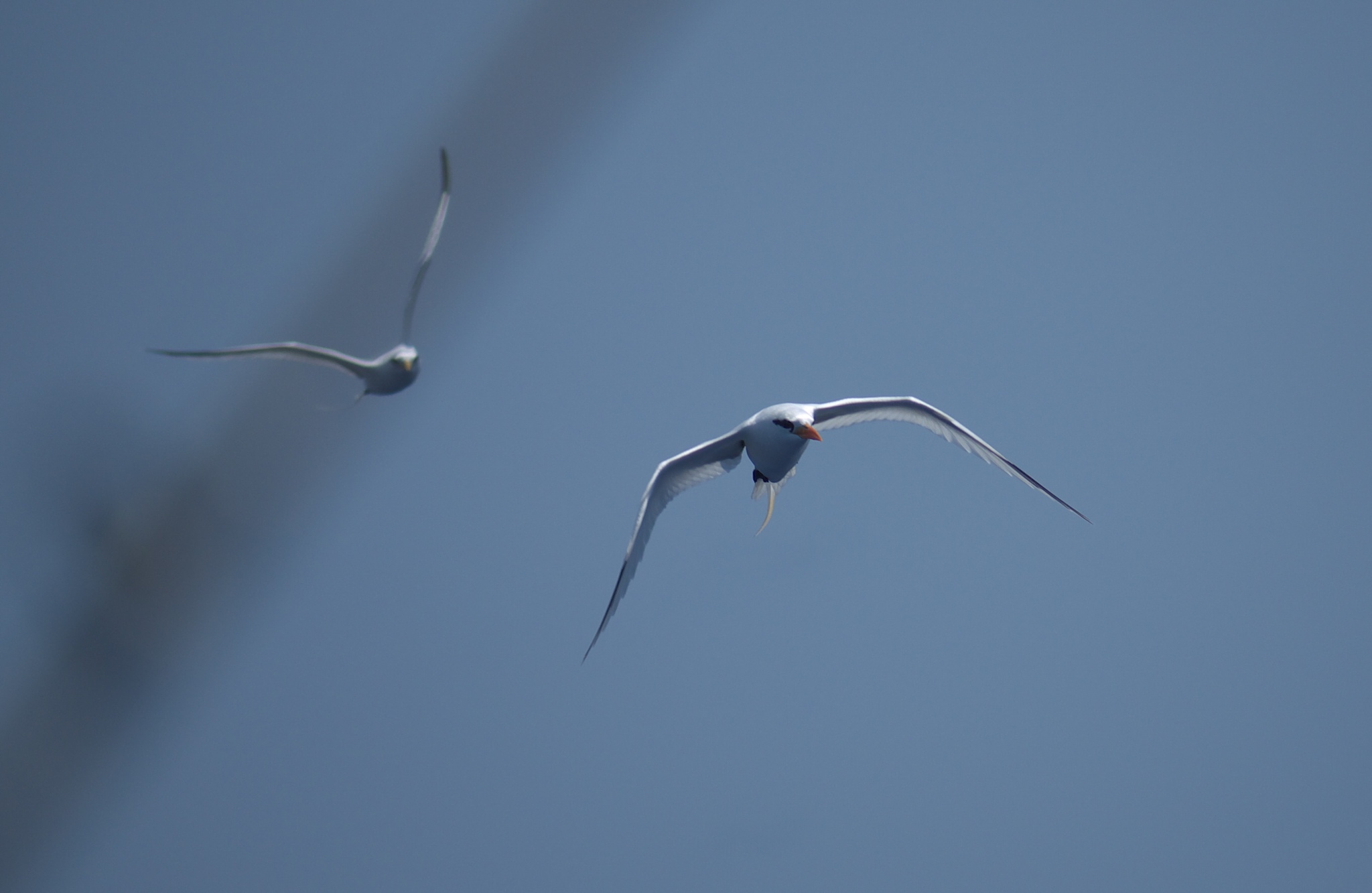
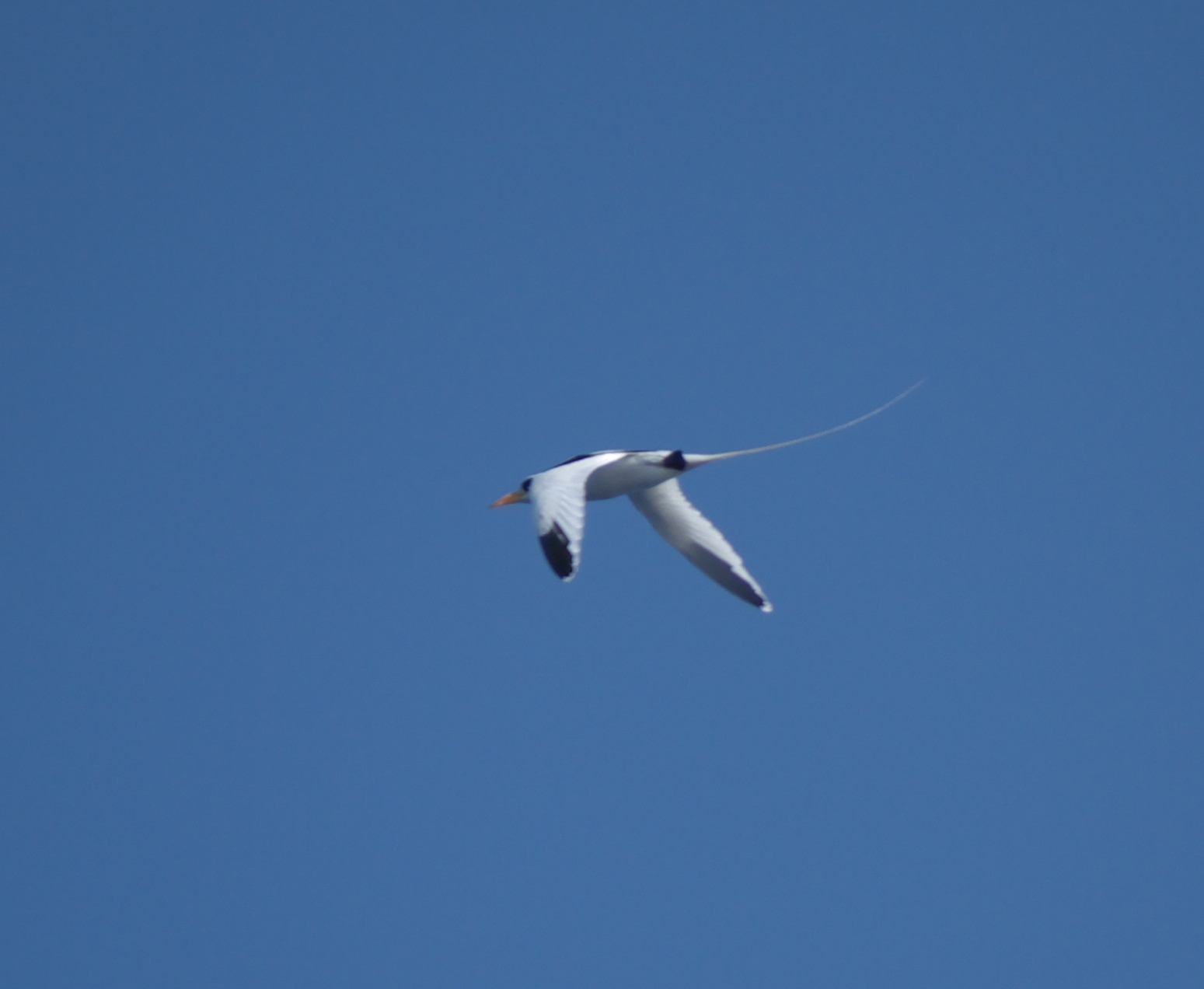
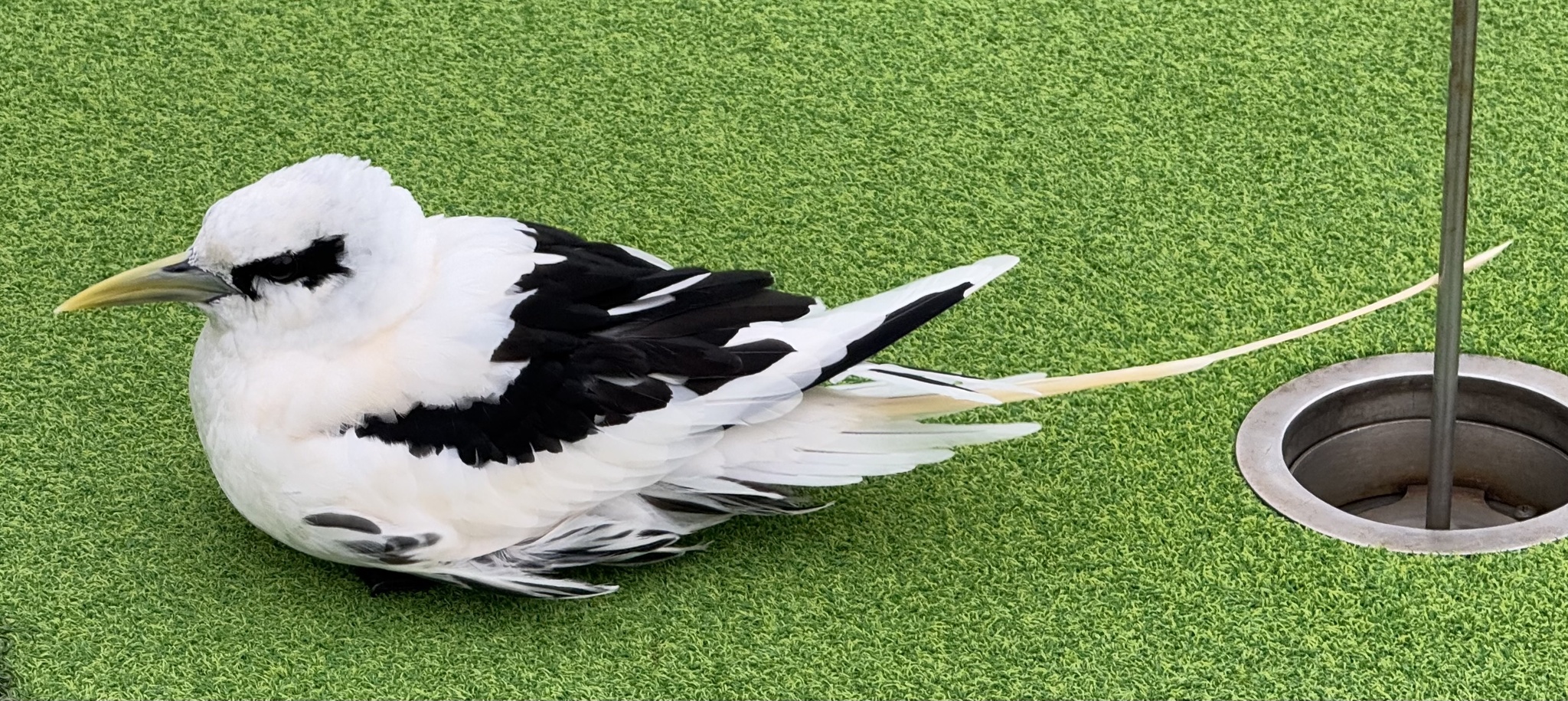
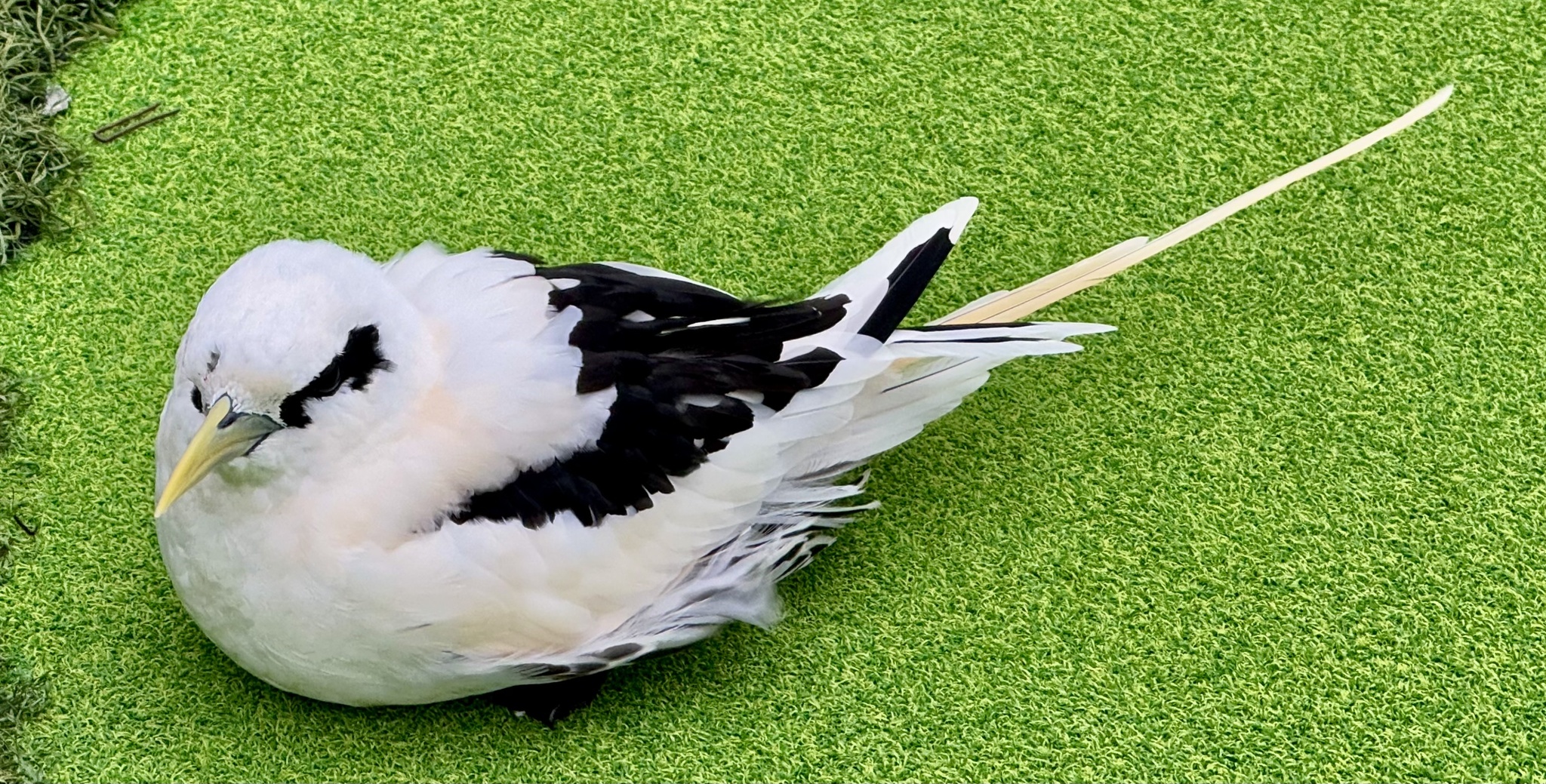
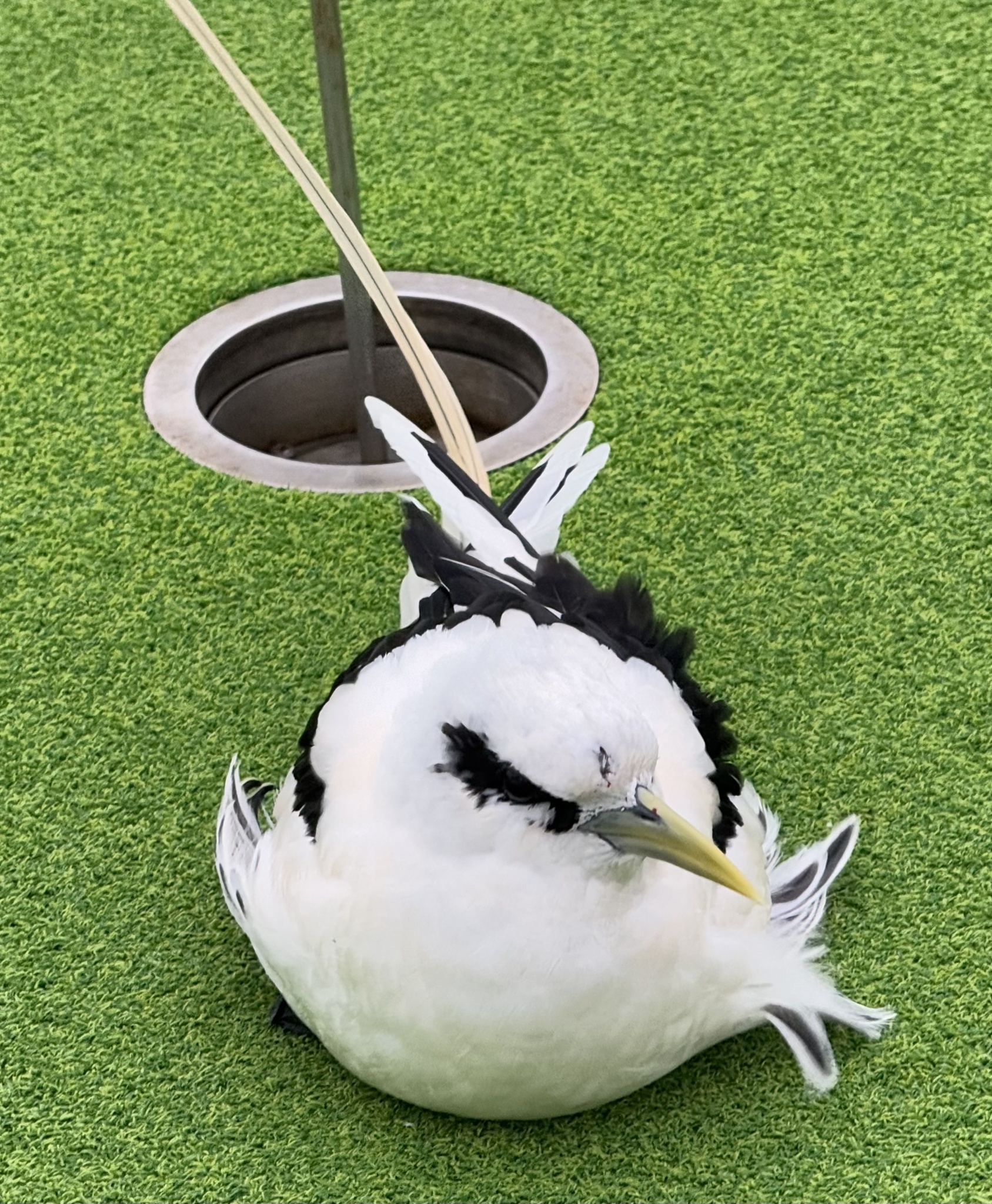
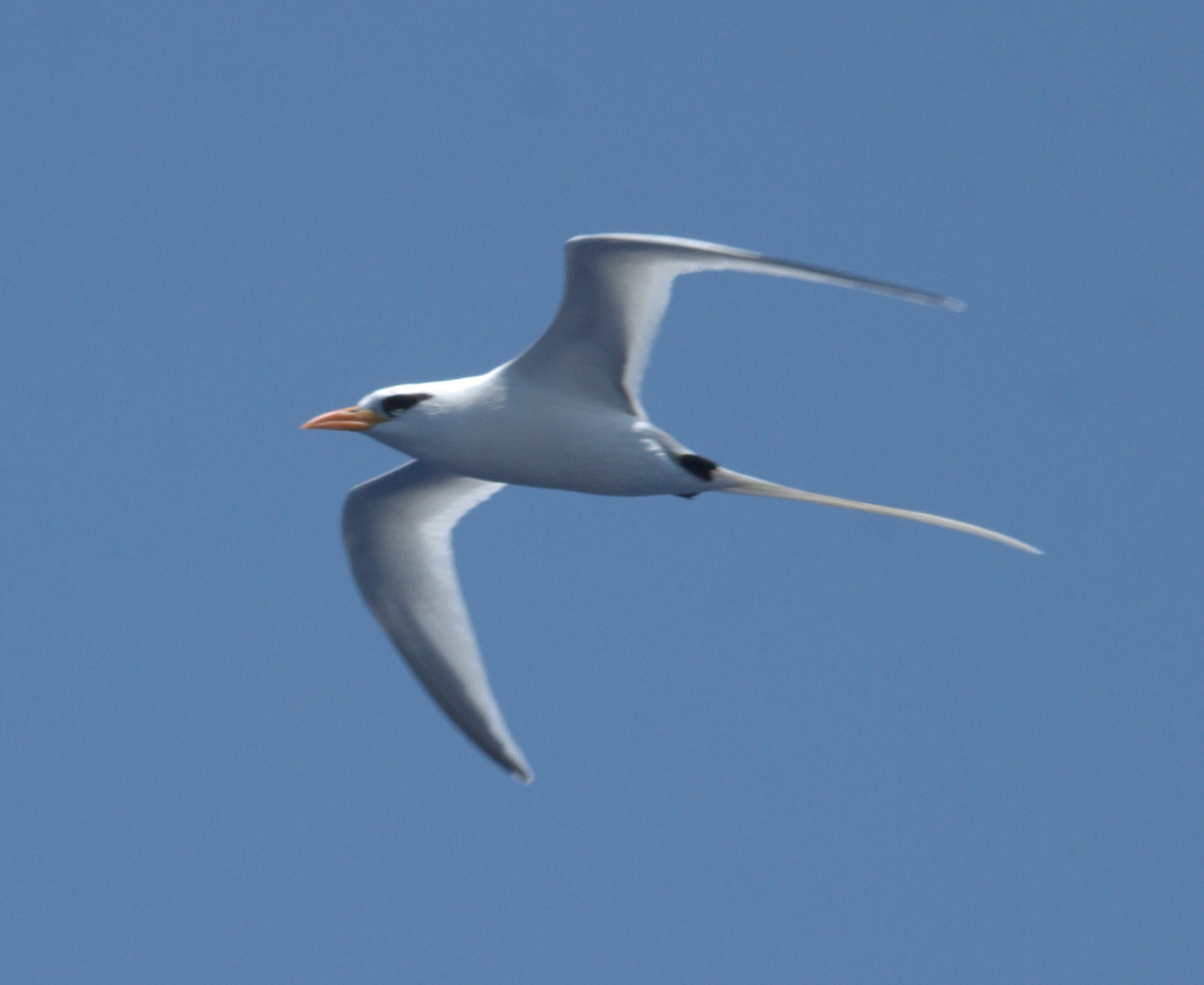
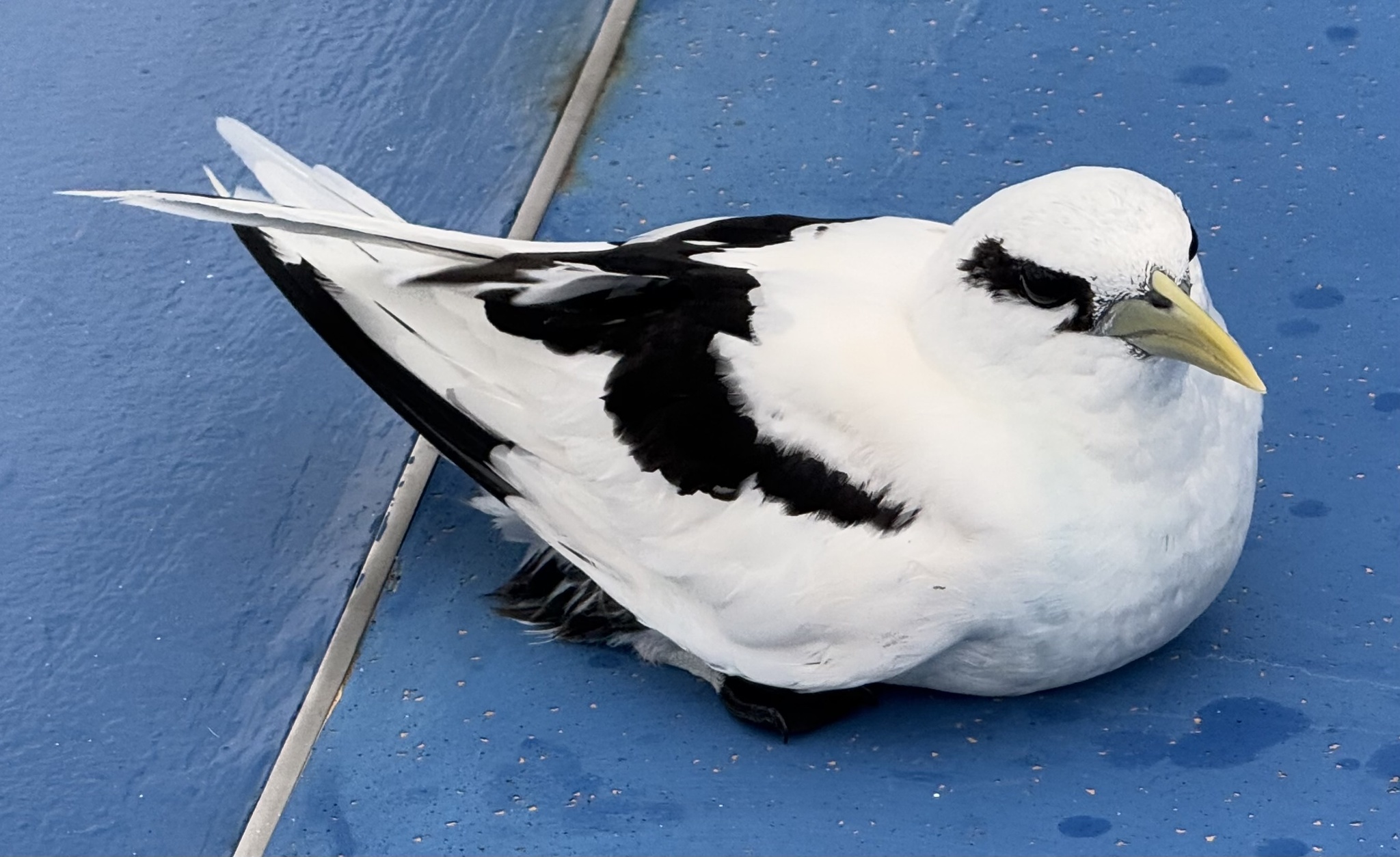
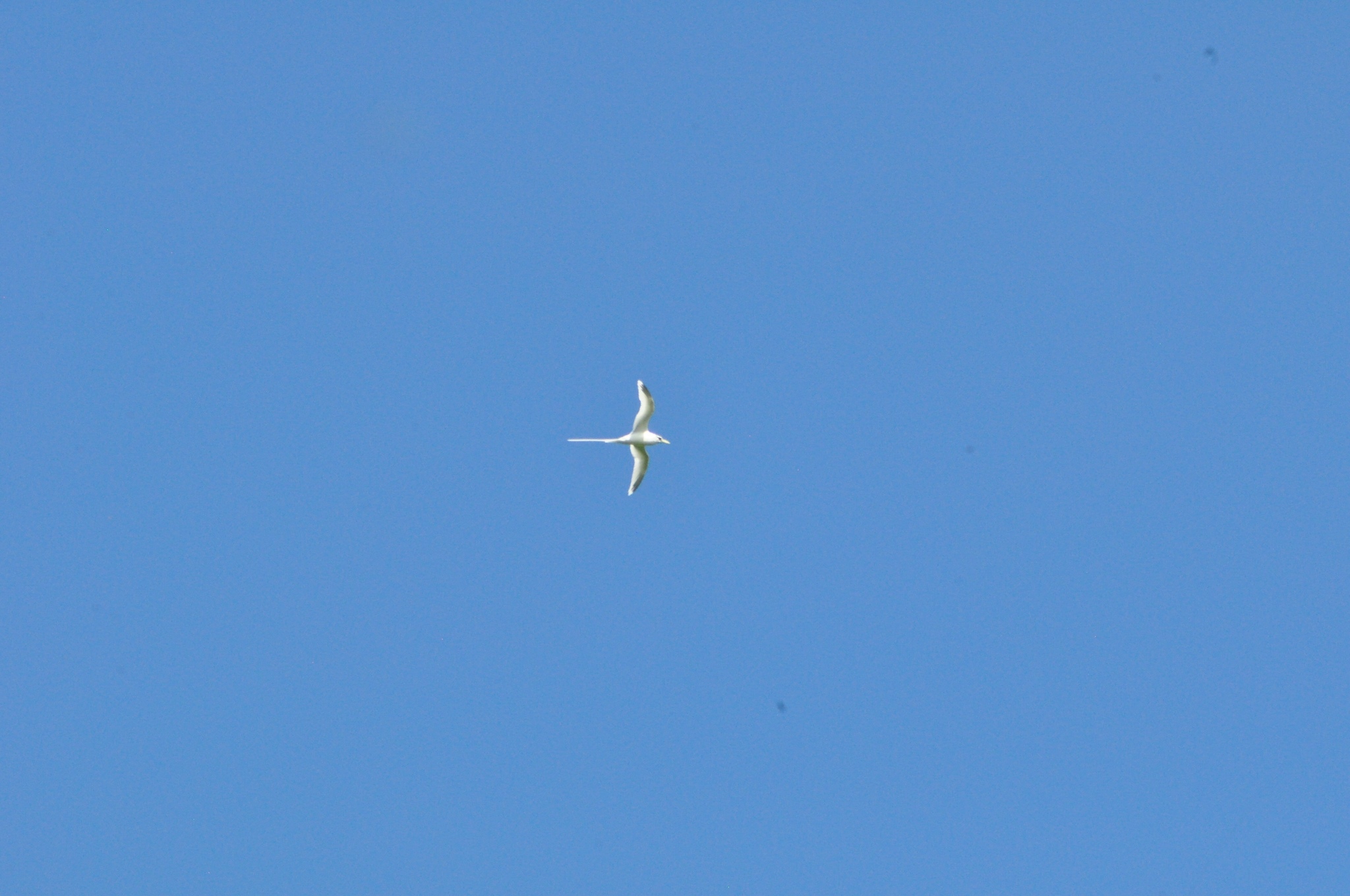
A slender, mainly white bird measuring 71-80 cm in length including the very long central tail feathers, which double its total length. The wingspan is 89-96 cm (35-38 in). It has a black band on the inner wing, a black eye-mask, and an orange-yellow to orange-red bill. The pure white back distinguishes it from the red-billed tropicbird. Sexes are similar, though males average longer-tailed. Juveniles lack tail streamers, have a green-yellow bill, and a finely barred back.
Identification
Distinguished from the red-billed tropicbird by its orange-yellow to orange-red bill (versus red), pure white back, and black wing bar. The extremely long central tail streamers of adults are distinctive in flight.
Distribution & Habitat
Breeds on tropical islands throughout the tropical Atlantic, western Pacific, and Indian Oceans. Northern breeding limit extends to Bermuda; also breeds on Caribbean islands and recently established on Little Tobago. Disperses widely across oceans when not breeding and occasionally wanders far from colonies.
Behavior & Ecology
Breeds on ground or cliff ledges, laying a single egg. Does not have a yearly breeding cycle; frequency depends on climate and site availability. Can reproduce 10 months after successful breeding or 5 months after unsuccessful attempt. Feeds mainly on flying fish, squid, and crabs by diving from heights up to 20 meters, though flying fish are caught in flight. Usually feeds in pairs. Call is a high screamed 'keeee-keee-krrrt-krrt-krrt.' Prey is detected by hovering above the surface.
Conservation
Classified as Least Concern globally. Population trends are unknown. In Mexico, it has no protected category, and no specific conservation programs exist. Recommended actions include studies on at-sea biology and monitoring of breeding colonies.
Culture
The ancient Chamorro people called this bird 'utak' or 'itak' and believed that when it screamed over a house, it signaled an imminent death or an unmarried girl's pregnancy. Its call was thought to kill anyone who did not believe in it. Chamorro fishermen used the birds to locate schools of fish.
Source: Wikipedia · CC BY-SA 3.0
Taxonomy
- Order
- Phaethontiformes
- Family
- Phaethontidae
- Genus
- Phaethon
- eBird Code
- whttro
Subspecies (6)
-
Phaethon lepturus ascensionis
breeds Fernando de Noronha (off northeastern Brazil) and Ascension Island (south-central South Atlantic)
-
Phaethon lepturus catesbyi
breeds Bermuda, Bahamas, and Greater to Lesser Antilles
-
Phaethon lepturus dorotheae
breeds tropical western Pacific, from New Caledonia and remote islets of Melanesia and Northern Mariana Islands eastward to Hawaiian Islands and Easter Island; disperses widely in southwestern Pacific
-
Phaethon lepturus europae
breeds Europa Island (southern Mozambique Channel)
-
Phaethon lepturus fulvus
breeds Christmas Island (east-central Indian Ocean)
-
Phaethon lepturus lepturus
breeds islands in Indian Ocean, from Seychelles and Malagasy region eastward to southeastern Java, Lombok (western Lesser Sundas), Cocos (Keeling) Islands (east-central Indian Ocean), and Ashmore Reef (northwest of Australia)
Data Sources
Species description from Wikipedia, licensed under CC BY-SA 3.0.
Bird images and sounds sourced from GBIF, contributed by citizen scientists worldwide under Creative Commons licenses.
Taxonomy data from AviList 2025.