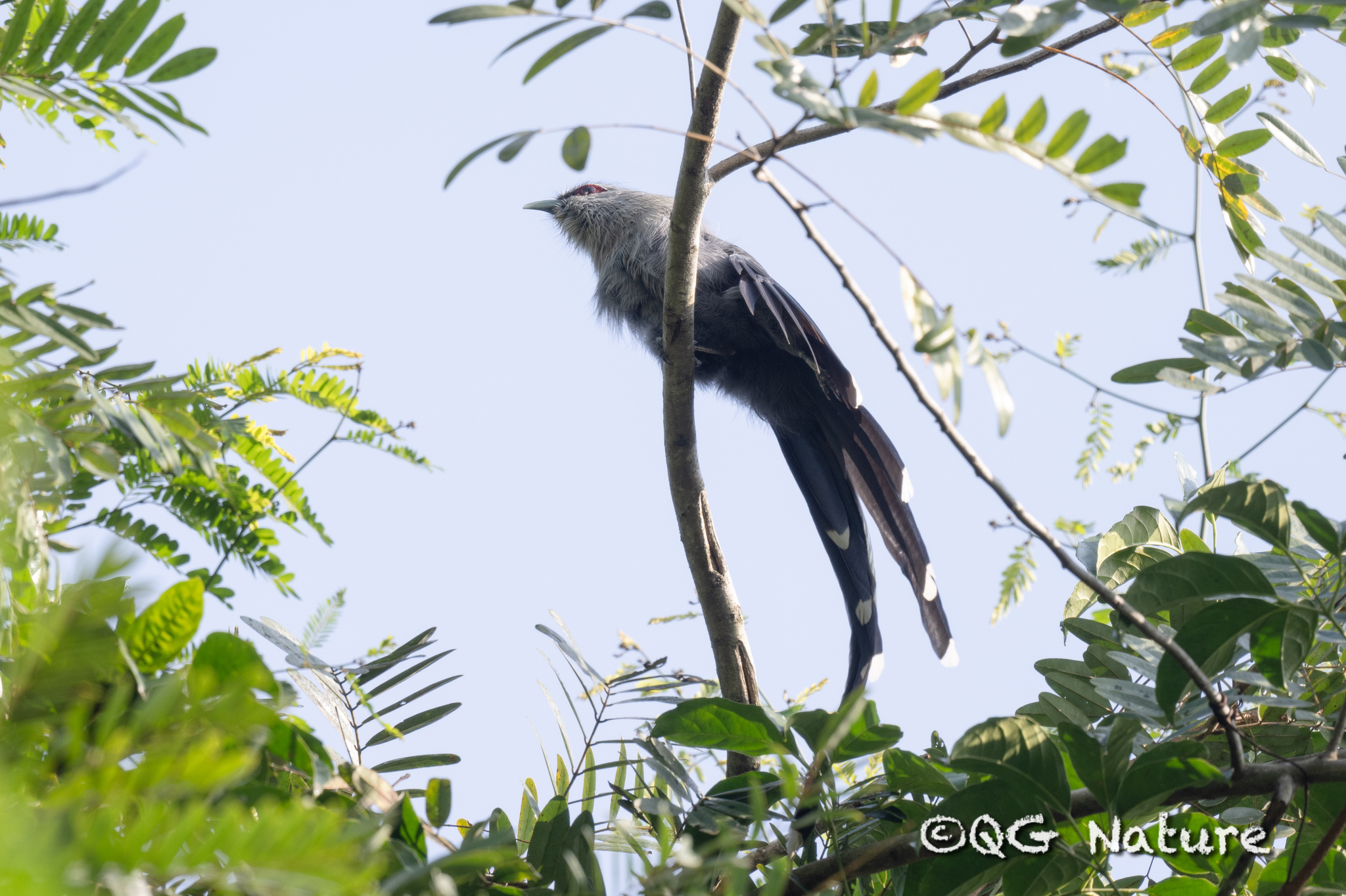
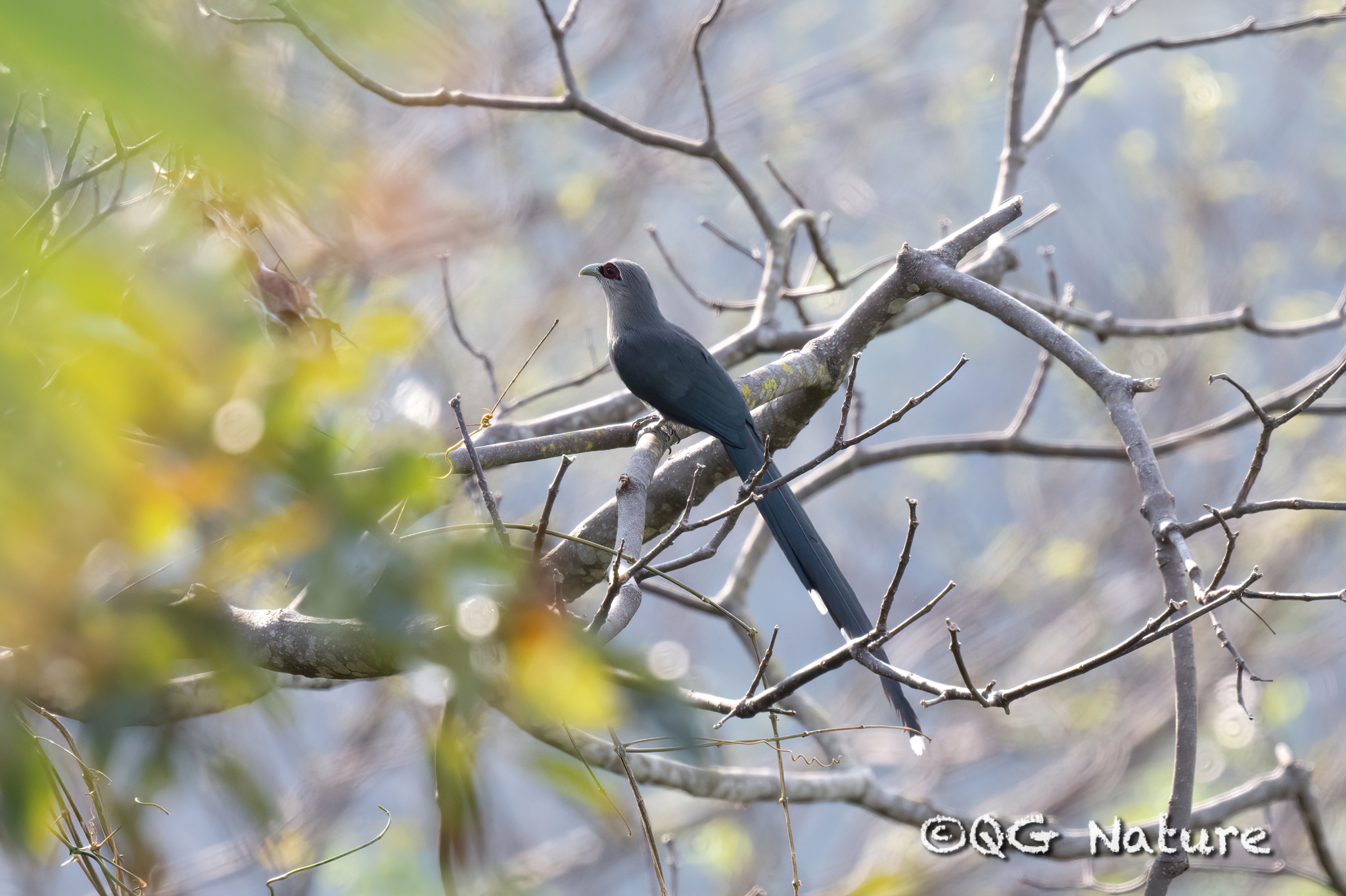
Green-billed Malkoha
Phaenicophaeus tristis
绿嘴地鹃
Introduction
Non-parasitic cuckoo found throughout the Indian subcontinent and Southeast Asia. Inhabits dry scrub and thin forests. Distinctive features include waxy bluish-black plumage, long graduated tail with white-tipped feathers, and prominent curved bill.
Description
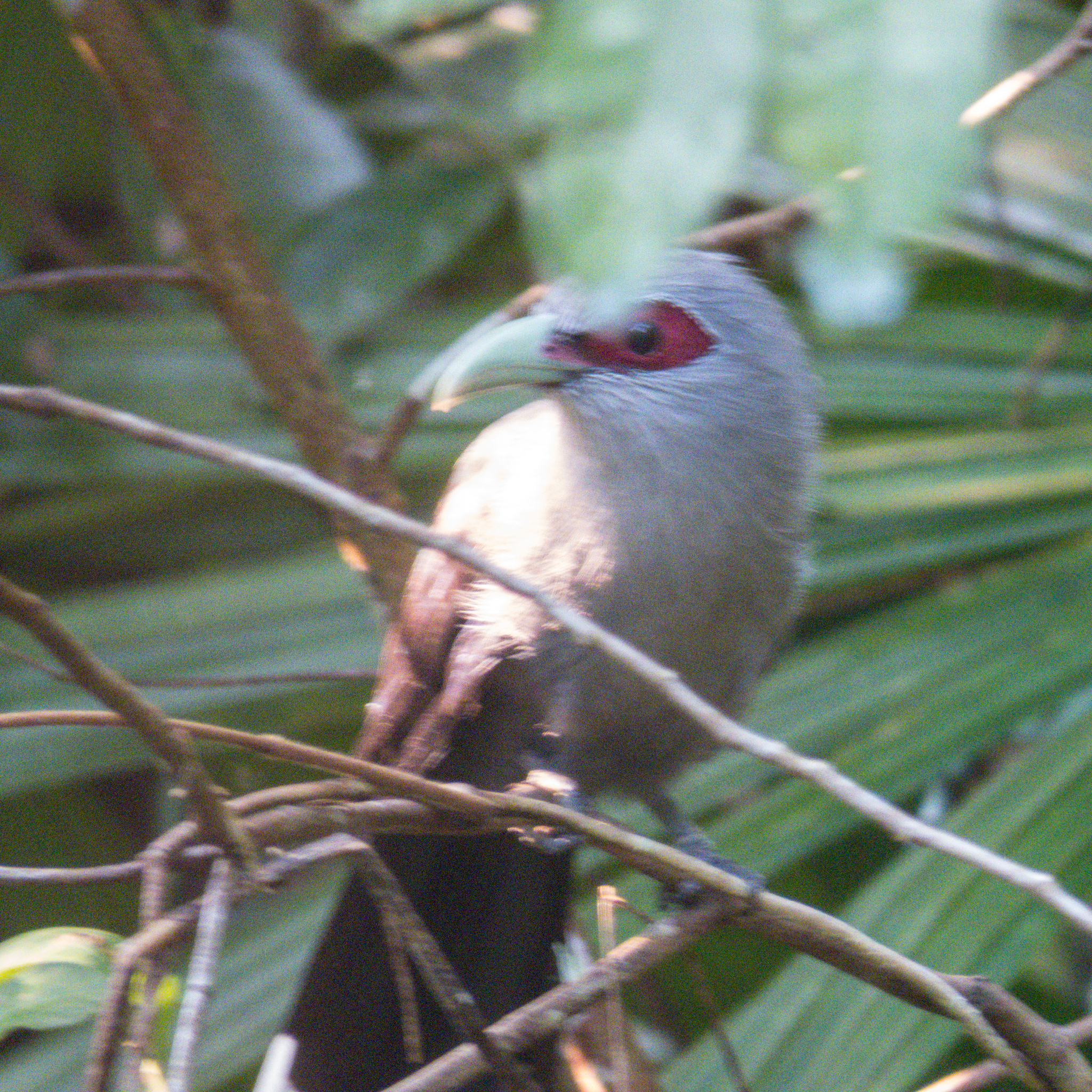
Approximately 50–60 cm in length with a body mass of 100–128 g. Plumage is waxy bluish-black overall with dark grey upperparts showing green gloss and oily green wings. Features a prominent, curved bill. Face patch is red with a clear white border; face and neck are grey. Tail is long and graduated with white tips to the tail feathers.
Identification
Large cuckoo with distinctive waxy bluish-black plumage and long graduated tail with white-tipped feathers. The red face patch with white border is diagnostic. Similar species can be distinguished by the combination of facial markings, tail pattern, and the prominent curved bill.
Distribution & Habitat
Range extends across south Asia from Nepal, India, and Sri Lanka eastward through Southeast Asia. Inhabits primary forest, second growth, dense thickets, scrub, cultivated areas, and rubber plantations.
Behavior & Ecology
Feeds mainly on insects but also catches small lizards and small mammals. Occasionally hawks insects in flight. Inhabits forest edges, dense thickets, and scrubland. Behavior typical of non-parasitic cuckoos, being more secretive and less vocal than parasitic species.
Conservation
Not provided in article.
Culture
Not provided in article.
Source: Wikipedia · CC BY-SA 3.0
Taxonomy
- Order
- Cuculiformes
- Family
- Cuculidae
- Genus
- Phaenicophaeus
- eBird Code
- grbmal1
Subspecies (2)
-
Phaenicophaeus tristis kangeangensis
Kangean Islands (Java Sea)
-
Phaenicophaeus tristis tristis
northern India from about Uttarakhand eastward through Sumatra
Data Sources
Species description from Wikipedia, licensed under CC BY-SA 3.0.
Bird images and sounds sourced from GBIF, contributed by citizen scientists worldwide under Creative Commons licenses.
Taxonomy data from AviList 2025.