Siberian Jay
Perisoreus infaustus
北噪鸦
Introduction
A small corvid in the family Corvidae, genus Perisoreus. Widespread resident across coniferous forests of North Eurasia, from Scandinavia through Russia to Siberia. Inhabits northern boreal spruce, pine, cedar and larch forests, preferring dense mature forest with closed canopy. Notable for complex social structure living in small groups of 2-7 individuals, yet lacks cooperative breeding behavior. Has specialized adaptations for navigating dense forest and winter food caching with sticky saliva. Range estimated at 19,300,000 km². Assessed as Least Concern by IUCN due to very large range, though populations are declining.
Description
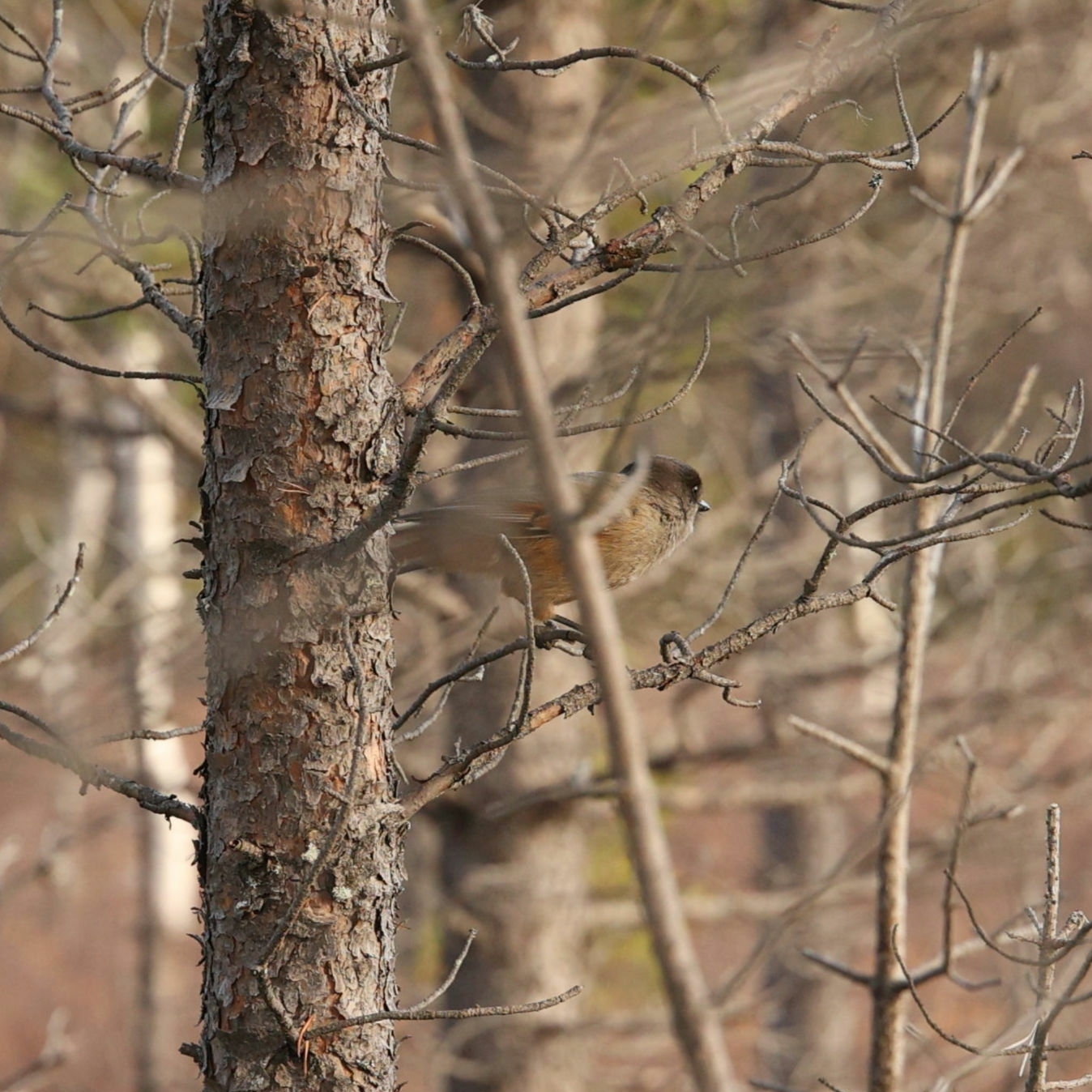
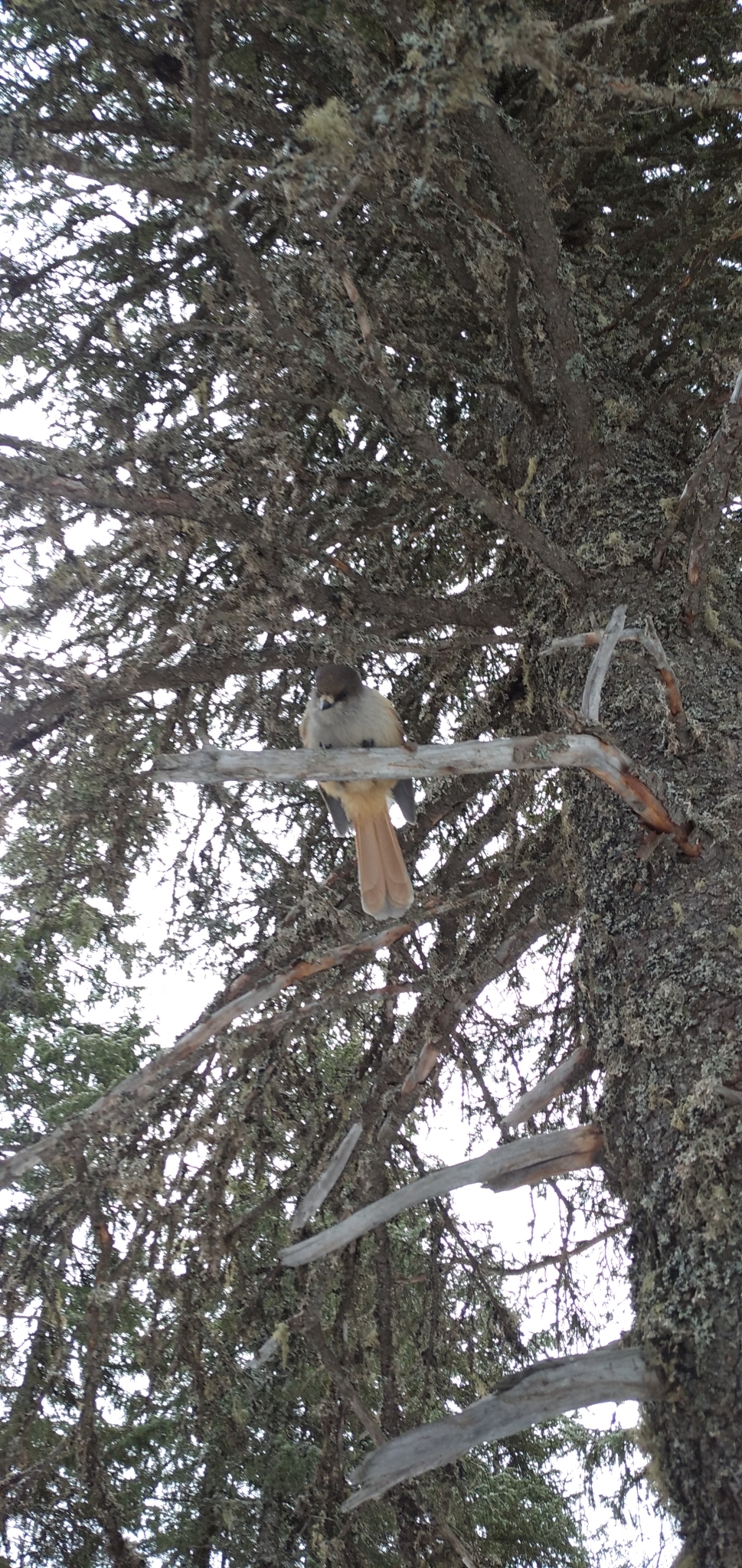
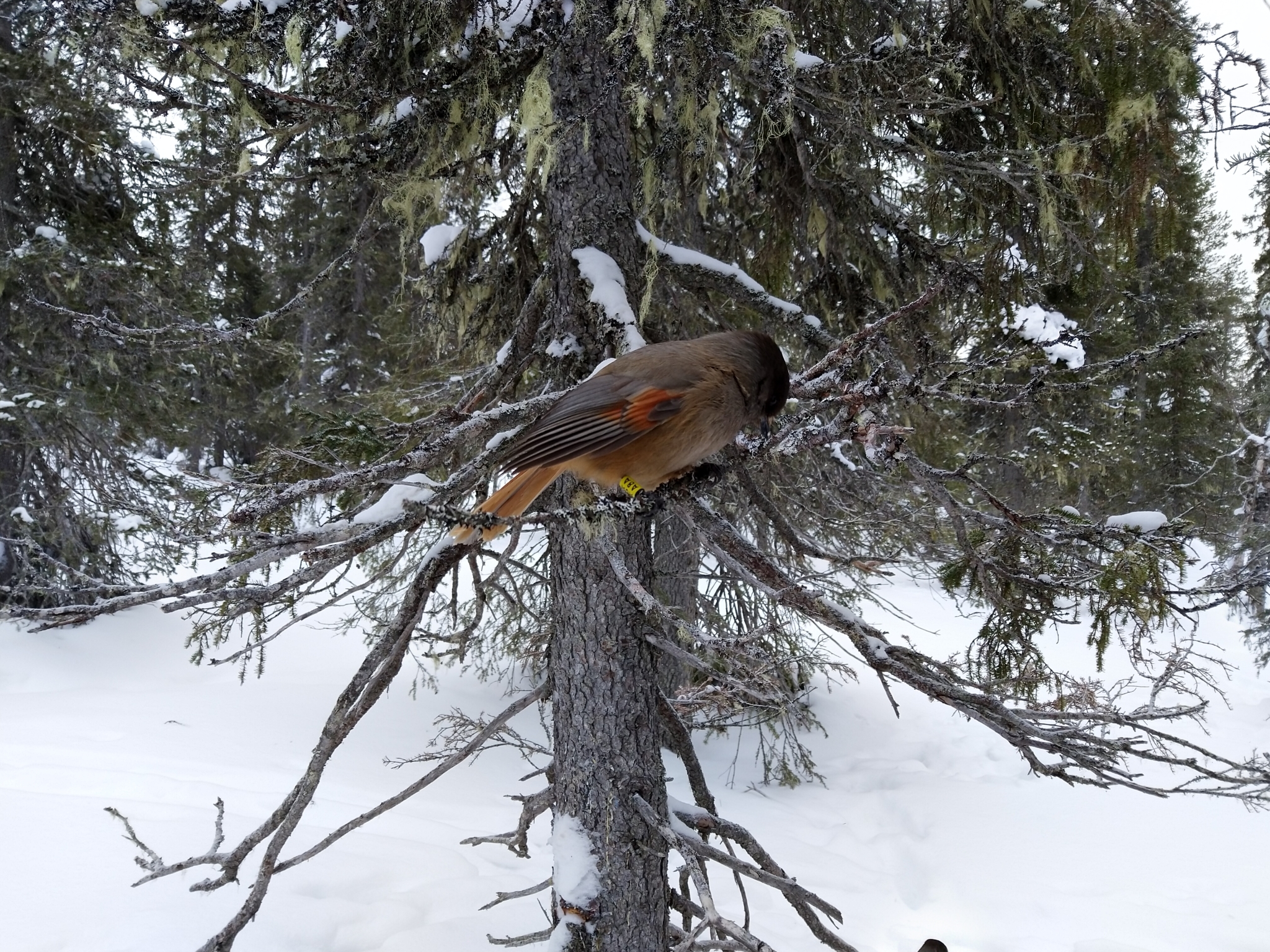
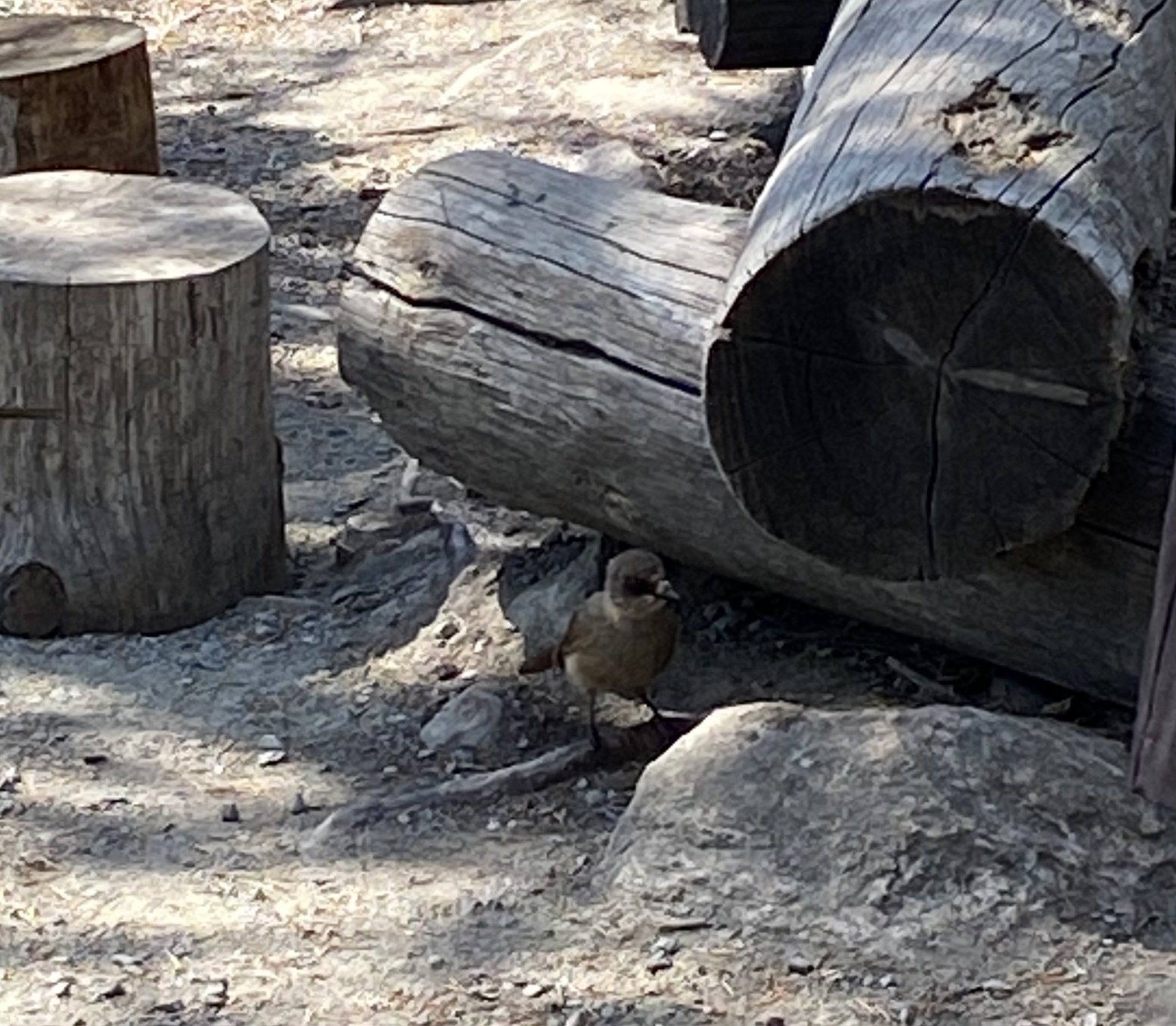
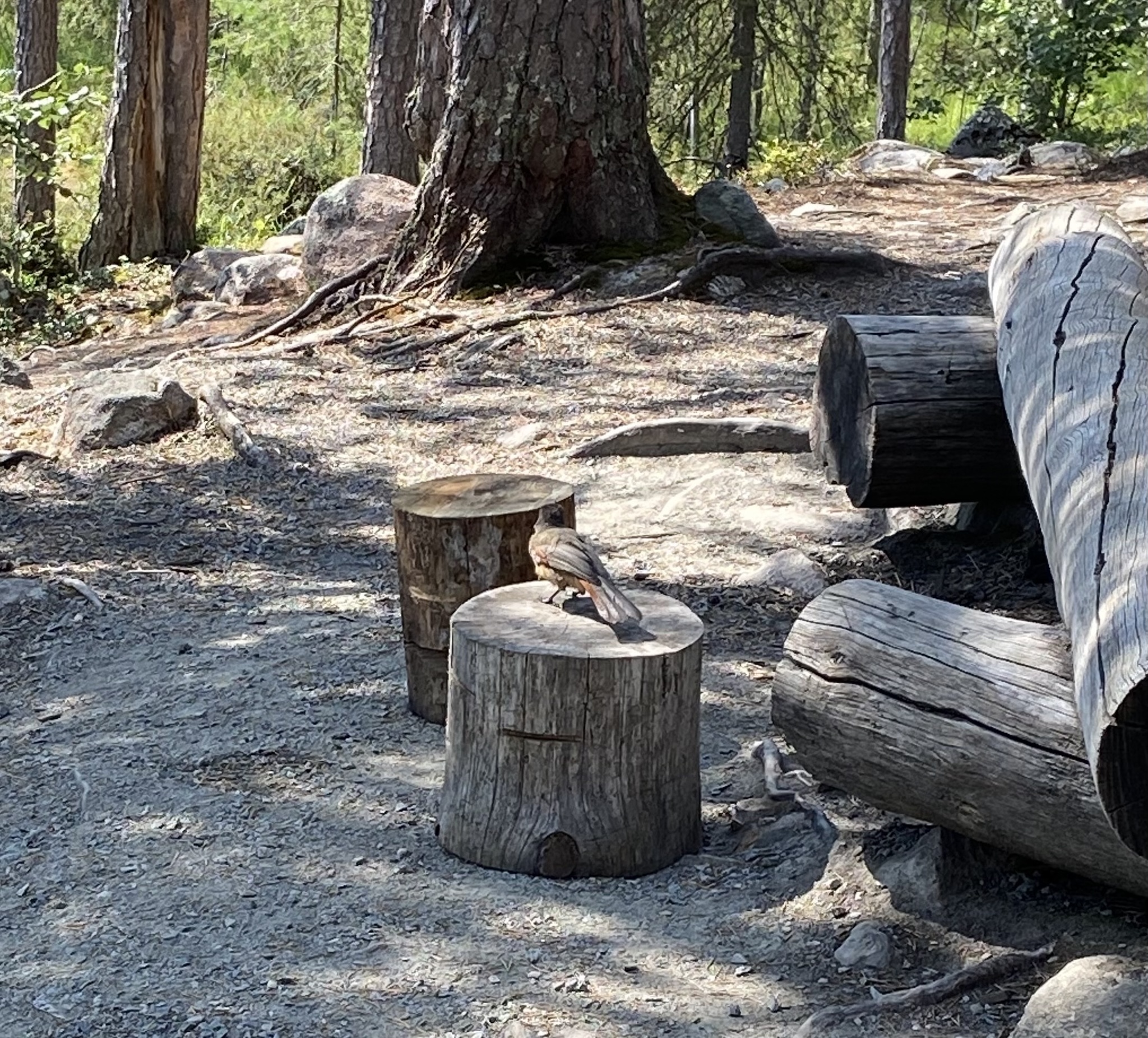
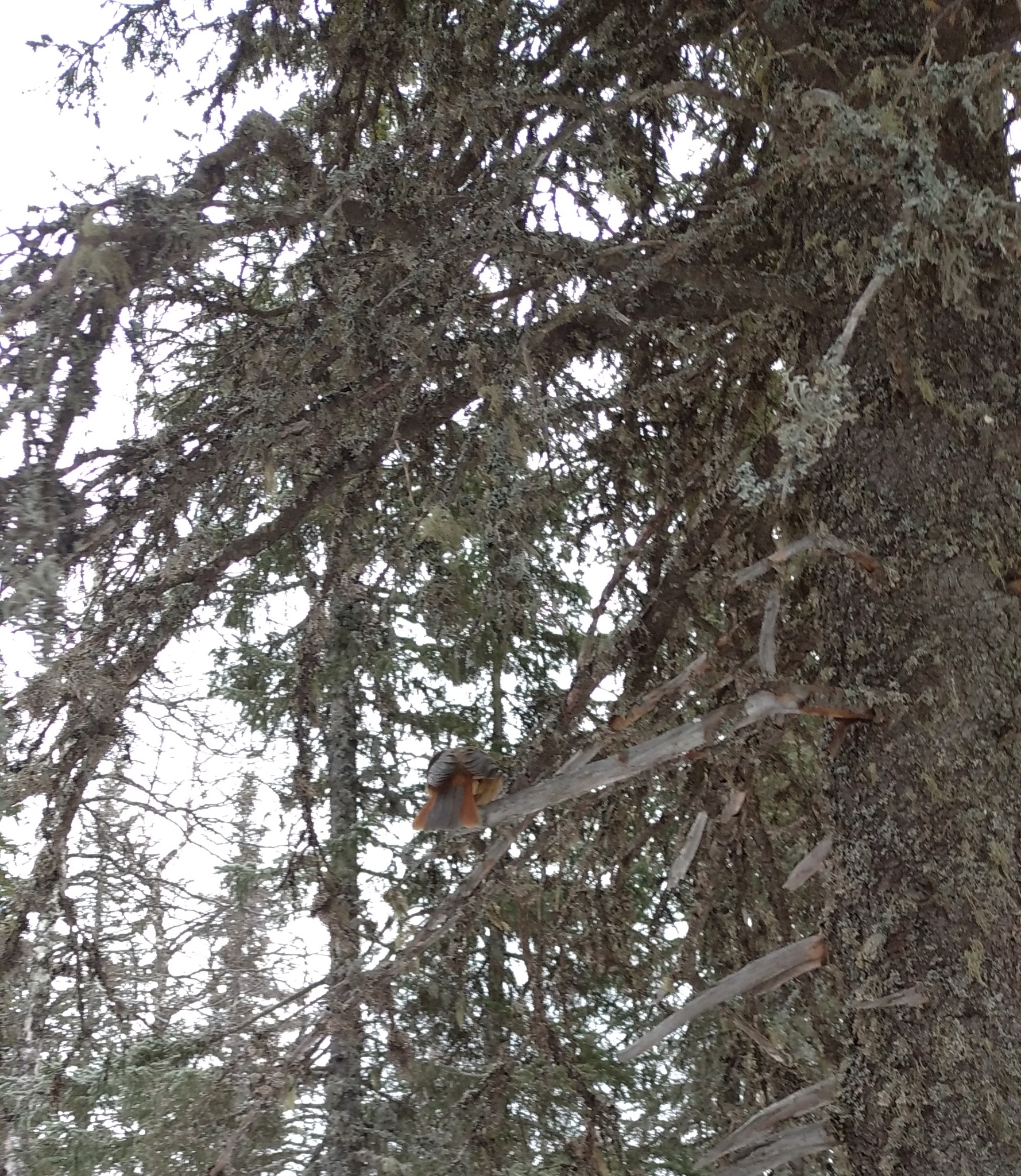
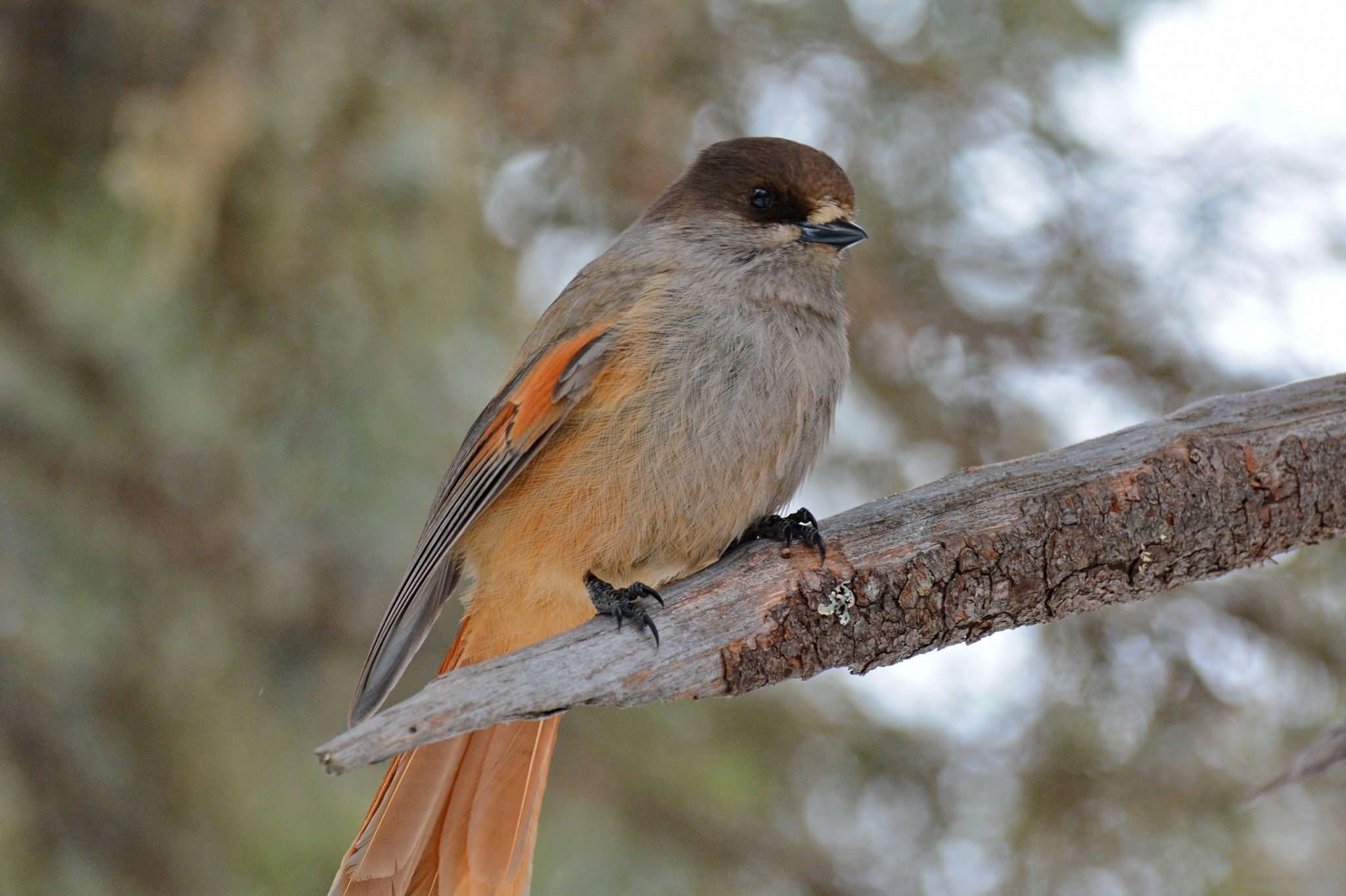
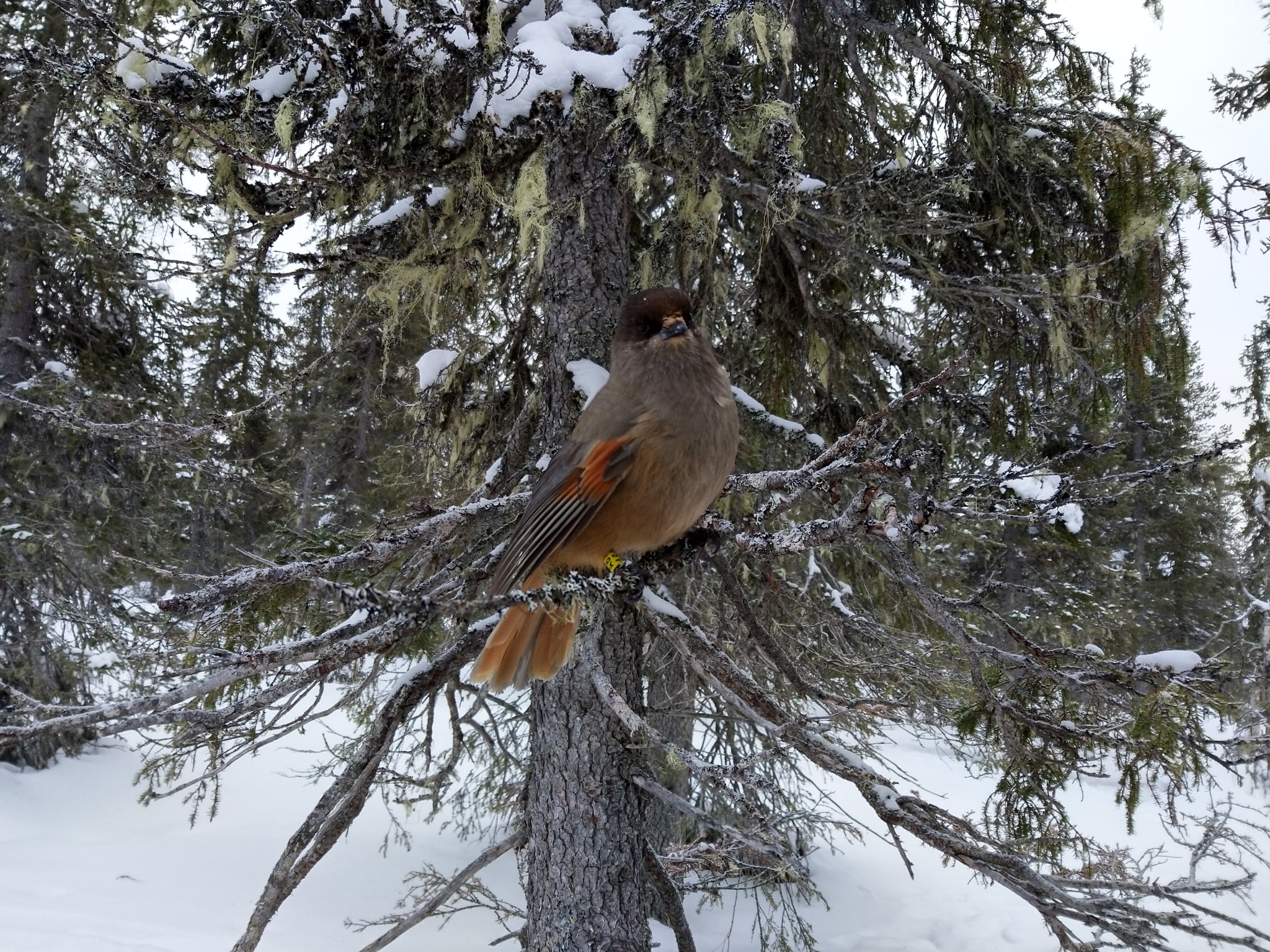
The smallest of the western Palearctic corvids, weighing 75-90 g and measuring about 30 cm in length. Plumage is greyish brown overall with a dark brown head, paler forehead and buff breast. The rump is yellowish and the chin and throat are grey. Rusty-red coloring appears in a panel near the wing-bend, on the undertail coverts and on the sides of the tail. Rufous streaking marks the outer feathers. Bill and legs are black. Plumage is soft and downy for insulation against extreme cold. Sexes are similar in appearance. Cryptic coloration conceals them within forest habitat.
Identification
Small jay with grey-brown upperparts and dark brown crown. Key identifying features are the rusty-red panels at the wing-bend, undertail coverts and tail sides. Paler throat distinguishes it from darker-crowned similar species. Much smaller than other jays in its range. The combination of grey-brown plumage with these rusty-red patches and yellowish rump is diagnostic. Appears rather cumbersome in flight, especially compared to more agile jays.
Distribution & Habitat
Resident across northern boreal forests from Scandinavia and northern Europe through Russia and Siberia to Mongolia, Kazakhstan and northeast China. Native to Norway, Sweden, Finland, Russia, Mongolia, Kazakhstan and China. Vagrant to Belarus, Estonia, Latvia, Poland, Slovakia and Ukraine. Some southward winter movement occurs in eastern parts of range. Strongly associated with dense, mature spruce forest habitat in lowland and foothill areas, requiring closed canopy and ample vegetation cover. Territories typically comprise old dense spruce swamp with structurally diverse vegetation including scrub, groves and flood meadows.
Behavior & Ecology
Omnivorous diet includes berries, seeds, insects, spiders, and occasionally eggs, nestlings, small mammals and carrion. Strictly monogamous with pairs holding territories of 1-4 km² for life. Complex social structure involves flocks of 2-7 individuals including breeding pair, retained offspring and unrelated immigrants. No cooperative breeding occurs despite group living. Nest is built 4-6 m high in conifers within dense foliage, constructed from twigs and lined with lichens, feathers, fur and cobwebs. Eggs laid late March to late April, clutch size 1-5, incubated about 19 days by female. Fledging occurs 18-24 days after hatching. Mostly silent but produces loud screech similar to buzzards, plus varied songs including whistles, creaks and trills. Performs nepotistic alarm calls warning kin of predators. Winter survival dependent on cached food stores hidden behind bark or in lichens using sticky saliva.
Conservation
IUCN status: Least Concern due to very large range exceeding 19 million km². World population estimated at 4-8 million mature individuals, though declining. Strongest declines in southern parts of range. Primary threats include habitat degradation from forestry practices, particularly forest thinning and clearcutting which reduce foliage cover needed for nesting concealment. Replacement of spruce with pine reduces habitat quality. Road building, settlements and agriculture fragment habitat. Destruction of winter food caches during felling also impacts survival. Increased predator populations due to human activities compound pressure. Gene flow likely reduced among sedentary subpopulations due to dispersal barriers created by habitat fragmentation.
Culture
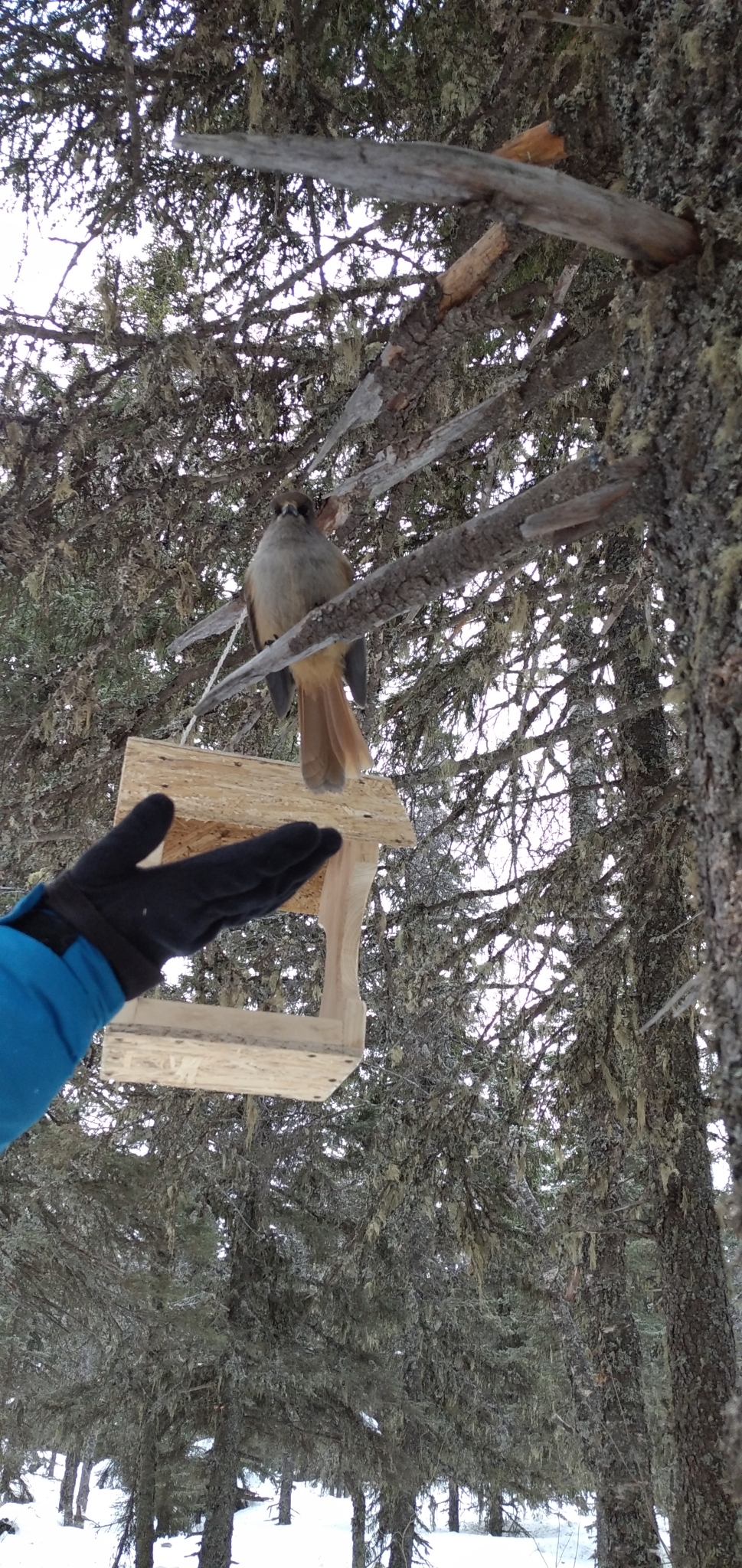
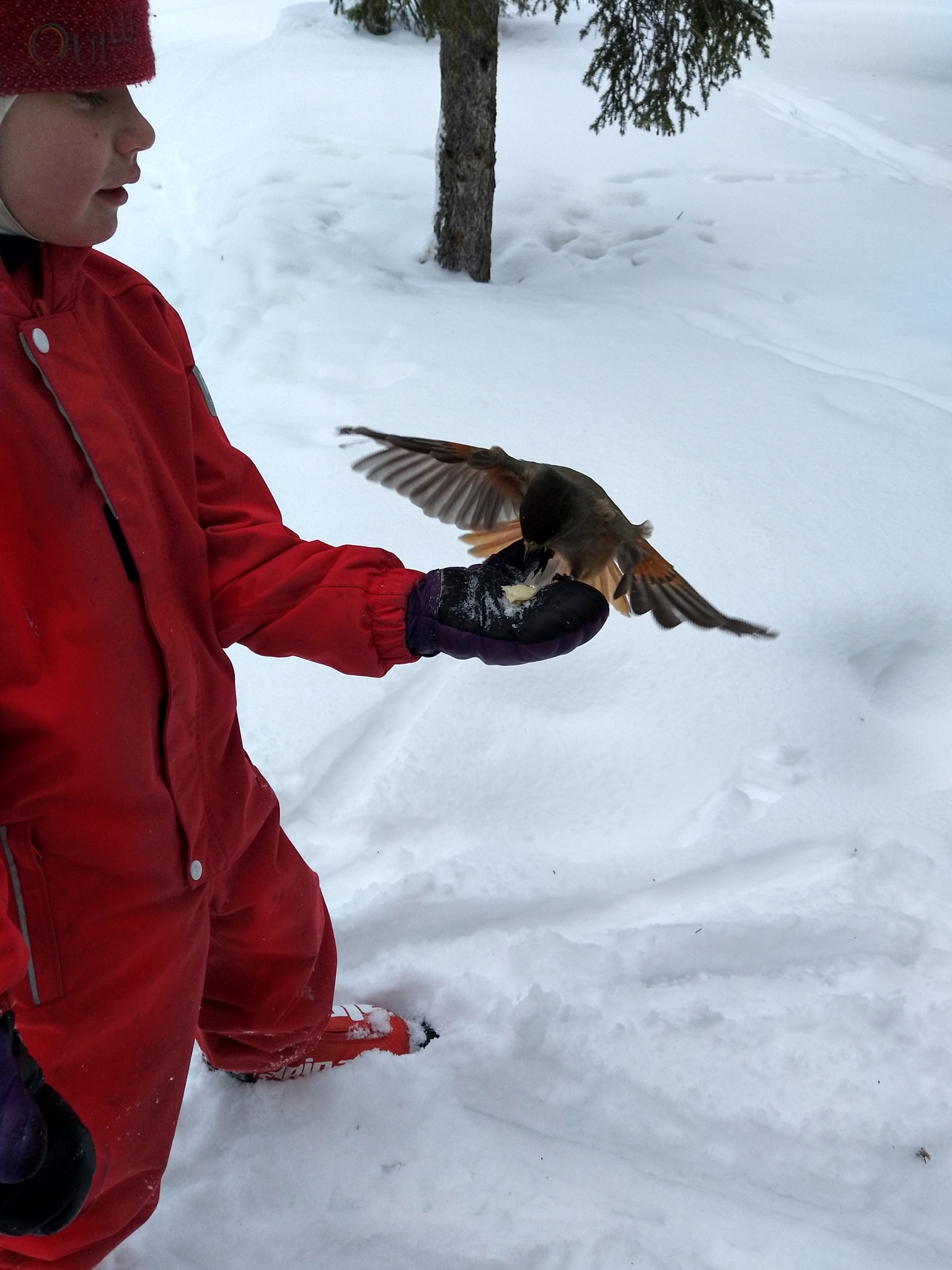
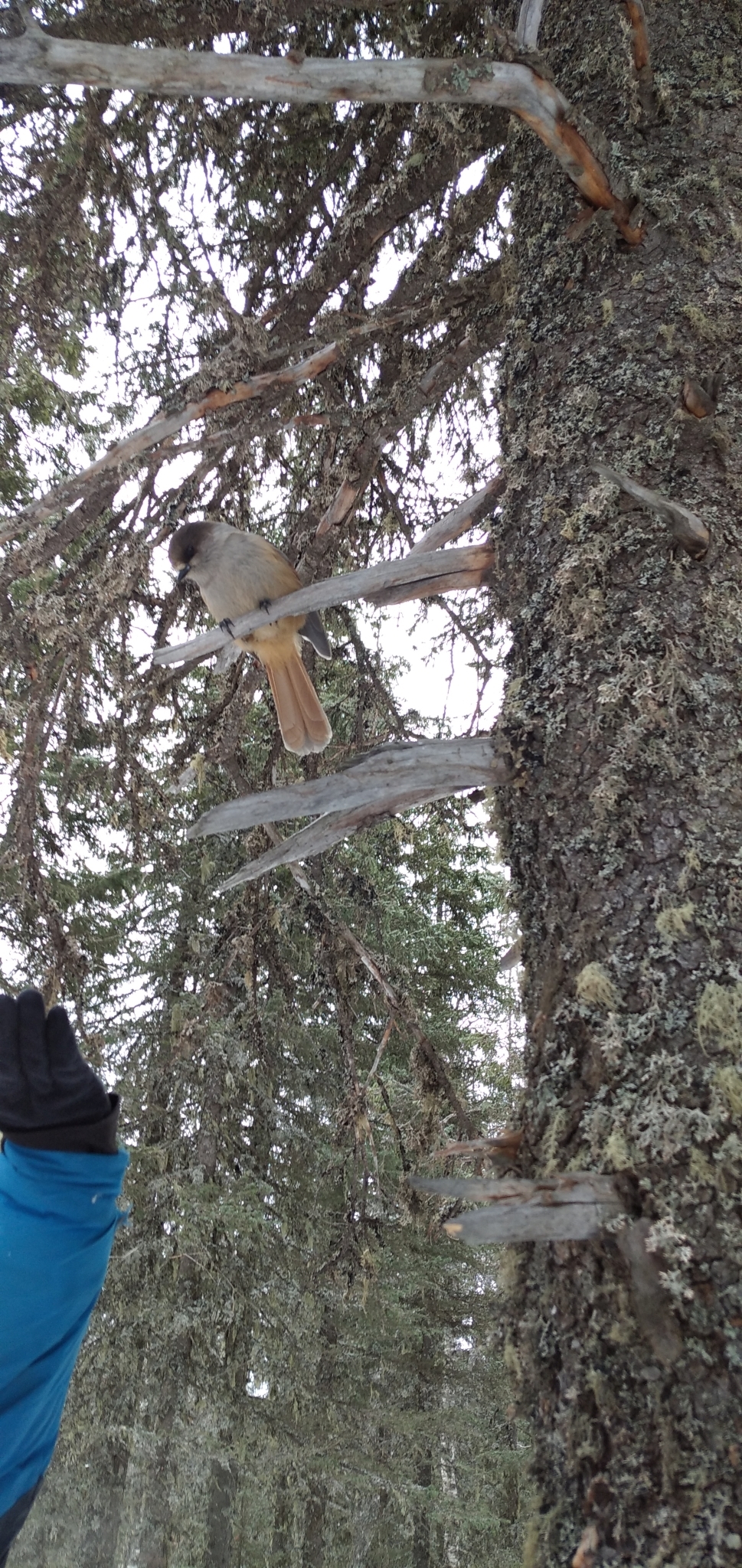
Reportedly fearless around humans, becoming tame enough to take food from the hand with repeated feeding. Historically, forestry workers left food scraps around campfires and in forests, and jays would take these offerings. Has gained flagship species status in conservation due to threats from modern forestry and because active territories indicate high-quality biodiverse forest. The specific epithet 'infaustus' means 'unlucky' in Latin, as the species was formerly considered a bad omen.
Source: Wikipedia · CC BY-SA 3.0
Taxonomy
- Order
- Passeriformes
- Family
- Corvidae
- Genus
- Perisoreus
- eBird Code
- sibjay1
Vocalizations
Subspecies (5)
-
Perisoreus infaustus infaustus
Scandinavia to western Siberia
-
Perisoreus infaustus maritimus
southeastern Siberia and northeastern China
-
Perisoreus infaustus opicus
Altai and Sayan mountains
-
Perisoreus infaustus rogosowi
northeastern European Russia to north-central Siberia
-
Perisoreus infaustus sibericus
central Siberia and northern Mongolia
Data Sources
Species description from Wikipedia, licensed under CC BY-SA 3.0.
Bird images and sounds sourced from GBIF, contributed by citizen scientists worldwide under Creative Commons licenses.
Taxonomy data from AviList 2025.