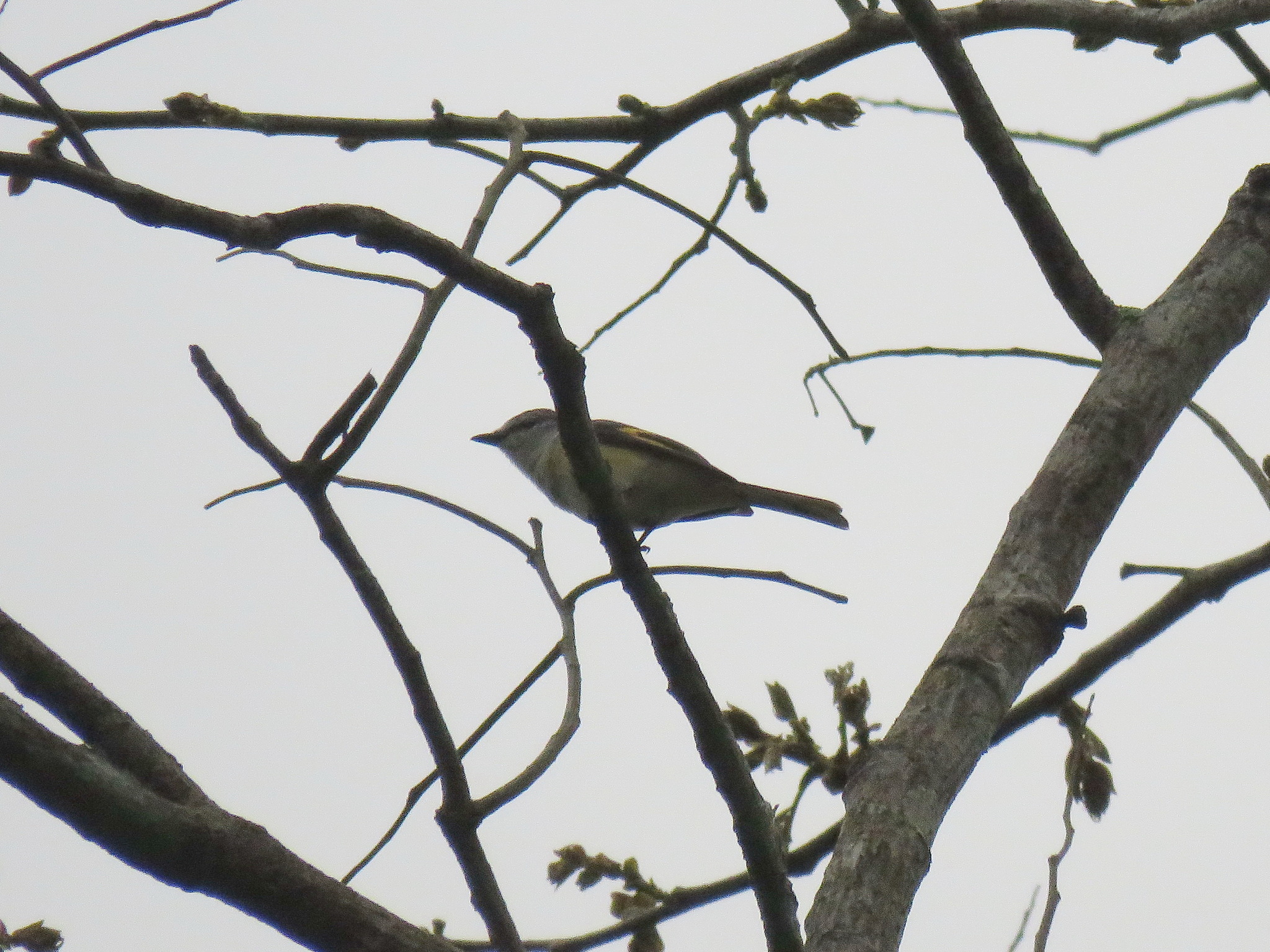
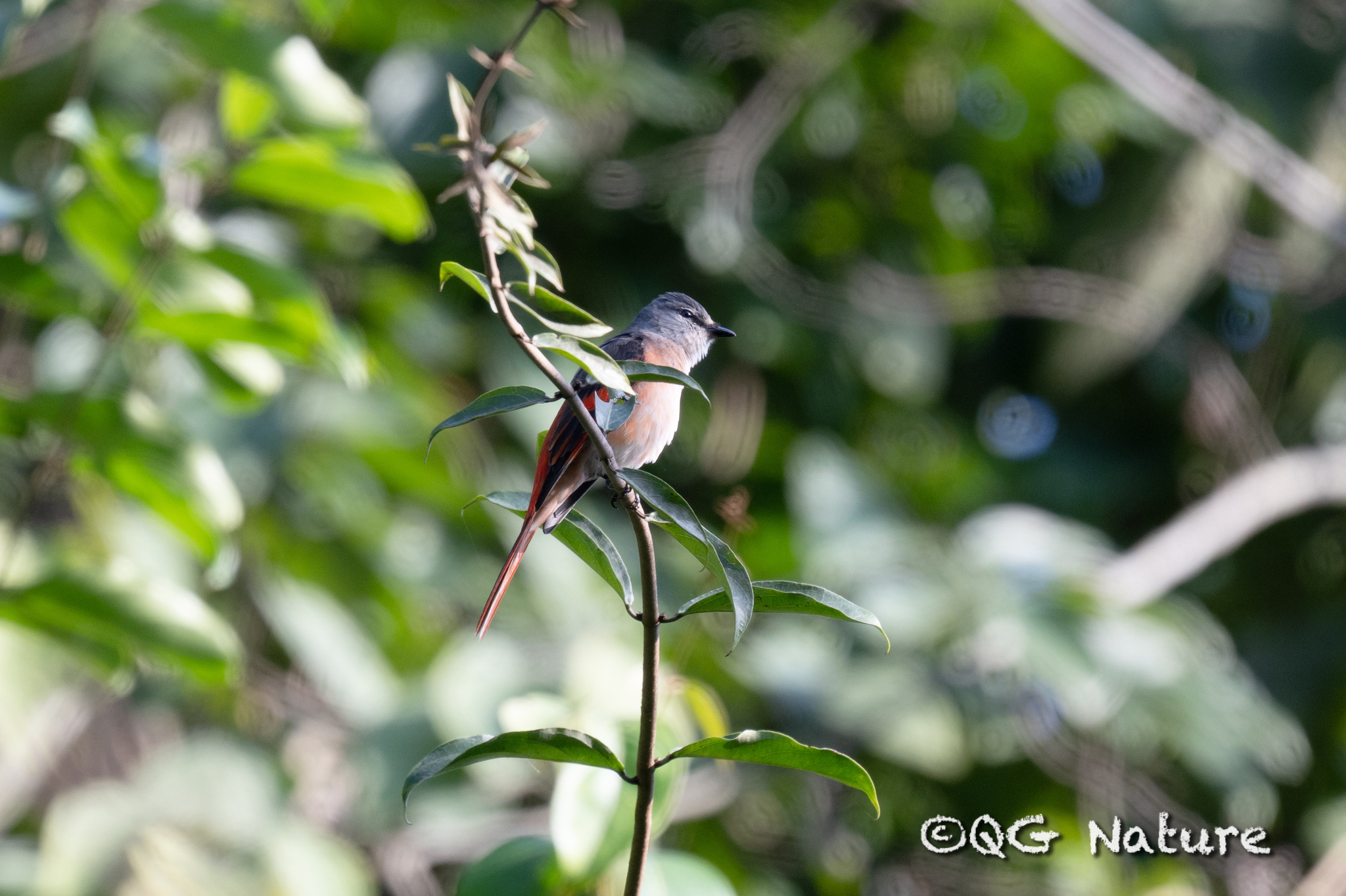
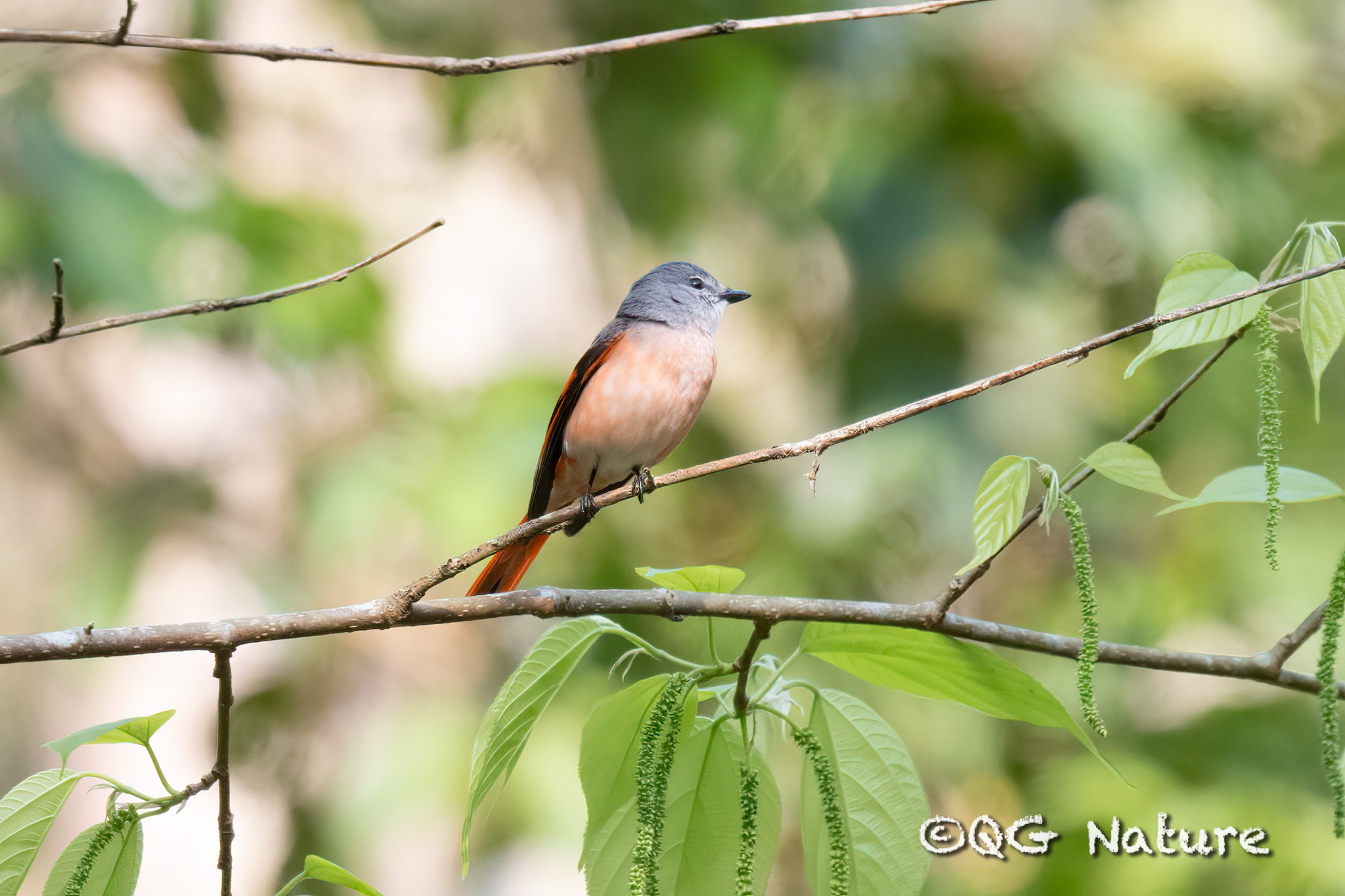
Rosy Minivet
Pericrocotus roseus
粉红山椒鸟
Introduction
A bird in the family Campephagidae. It is omnivorous. Its range extends across Afghanistan, Bangladesh, Bhutan, China, India, Laos, Myanmar, Nepal, Pakistan, Thailand, and Vietnam. In India, it occurs in the Himalayas from west to east through Arunachal Pradesh, and in the hills of Nagaland and Manipur, moving to the peninsula in winter. Its natural habitats are subtropical or tropical moist lowland forest and subtropical or tropical moist montane forest.
Description
The male has a distinctive deep pink to light red shade in the wings and tail. The female has an olive to olive-yellow rump, unlike other minivets which have a bright yellow rump. Both sexes are grey above.
Identification
The male is distinguished from other minivets by the deep pink to light red coloration in the wings and tail. The female is identified by the olive to olive-yellow rump, which contrasts with the bright yellow rump characteristic of other minivet species.
Distribution & Habitat
Found in Afghanistan, Bangladesh, Bhutan, China, India, Laos, Myanmar, Nepal, Pakistan, Thailand, and Vietnam. In India, it occurs in the Himalayas from west to east to Arunachal Pradesh and the hills of Nagaland and Manipur, moving to the peninsula during winter. Inhabits subtropical or tropical moist lowland forest and subtropical or tropical moist montane forest.
Behavior & Ecology
Omnivorous. No additional behavioral information provided.
Source: Wikipedia · CC BY-SA 3.0
Taxonomy
- Order
- Passeriformes
- Family
- Campephagidae
- Genus
- Pericrocotus
- eBird Code
- rosmin1
Distribution
breeds Himalayas from Kashmir eastward to southeastern China, Myanmar, and northwestern Vietnam; winters from central India eastward to southern Vietnam
Data Sources
Species description from Wikipedia, licensed under CC BY-SA 3.0.
Bird images and sounds sourced from GBIF, contributed by citizen scientists worldwide under Creative Commons licenses.
Taxonomy data from AviList 2025.