Scarlet Minivet
Pericrocotus flammeus
赤红山椒鸟
Introduction
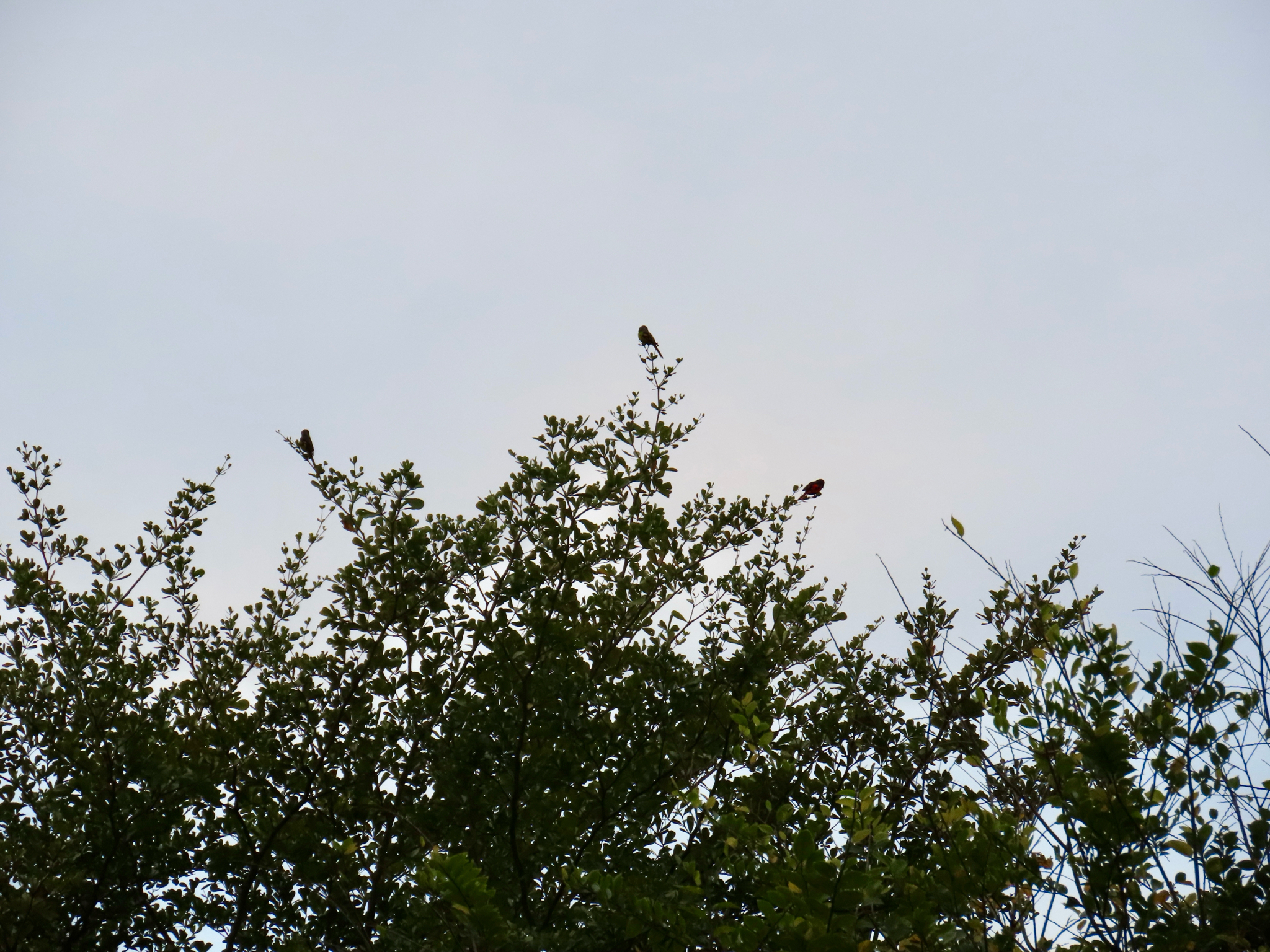
A small passerine bird in the cuckooshrike family Campephagidae. Found in tropical southern Asia from Northeast India to southern China, Indonesia, and the Philippines. Common resident breeding bird in forests and well-wooded habitats including gardens, especially in hilly country. Distinctive for gleaning insects from foliage and frequently joining mixed-species foraging flocks, typically foraging in small groups high in the forest canopy.
Description
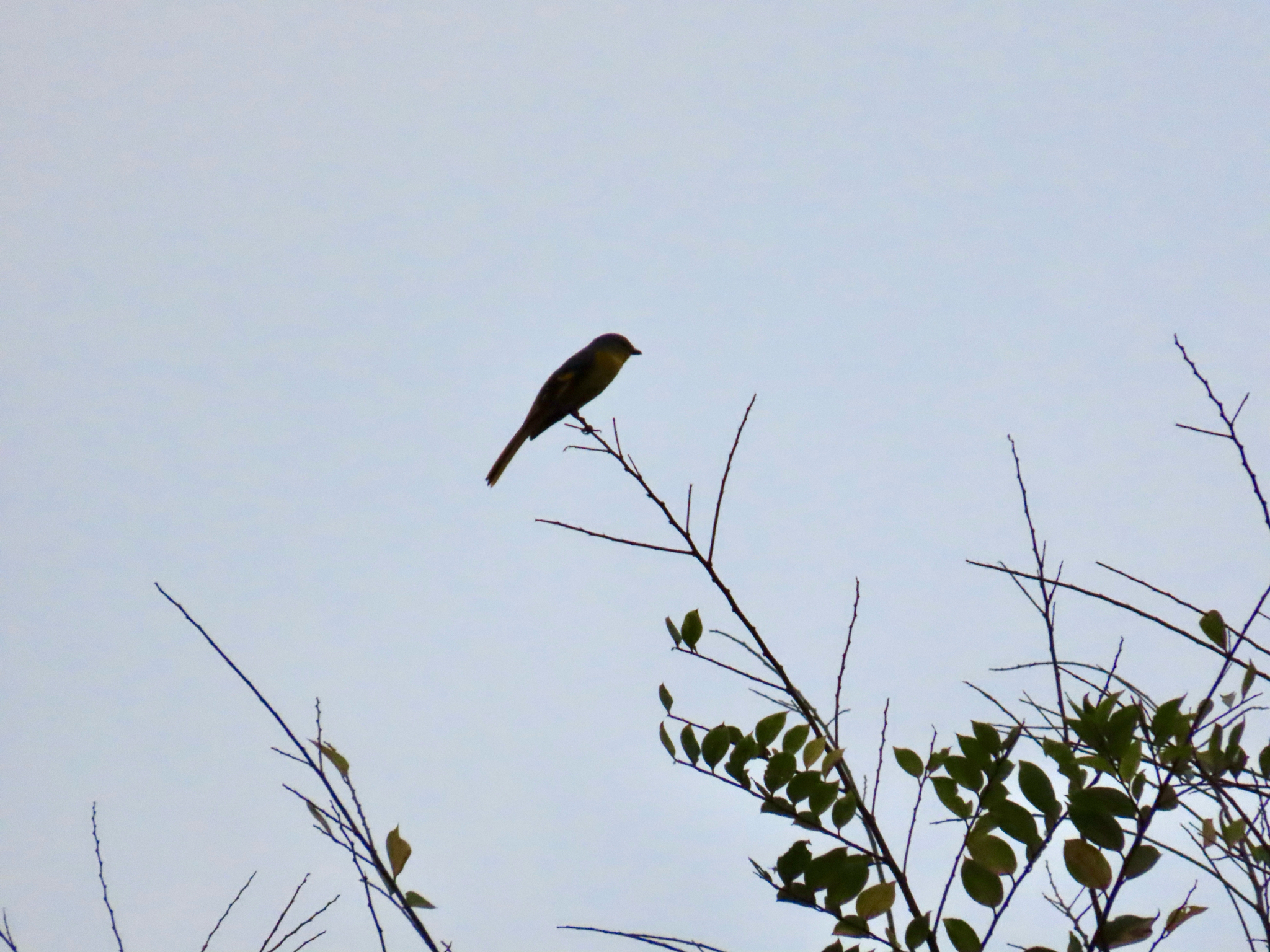
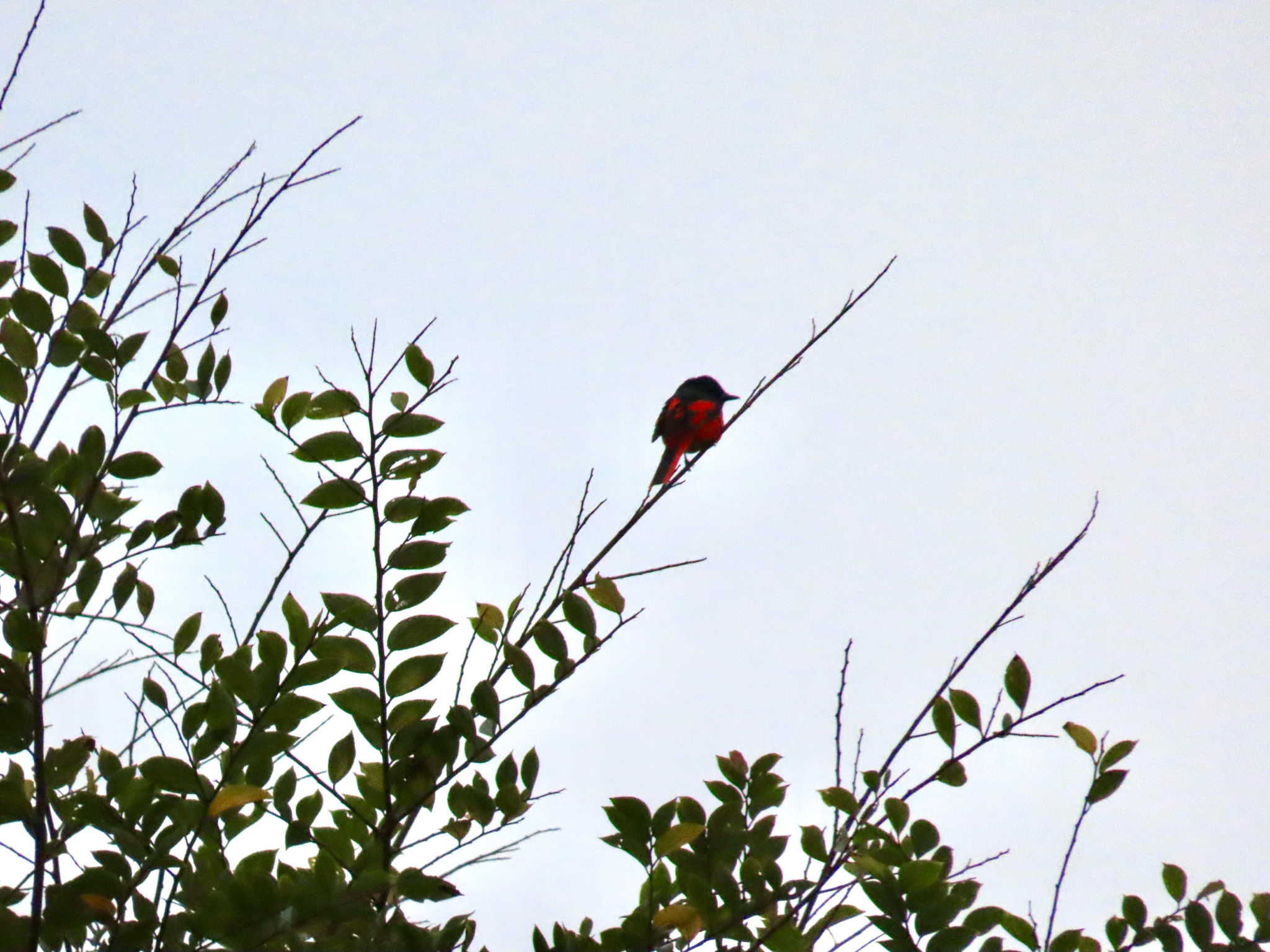
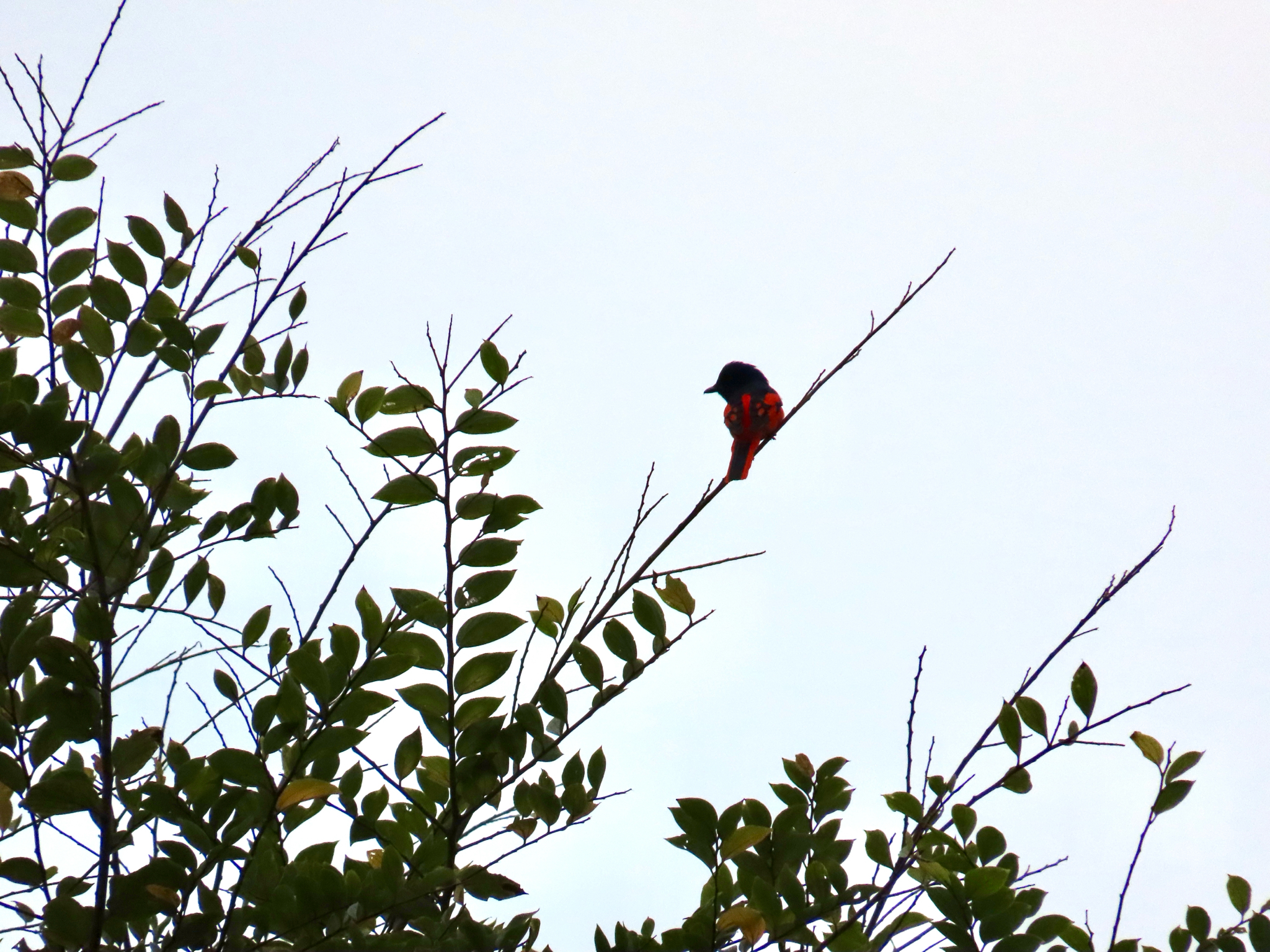
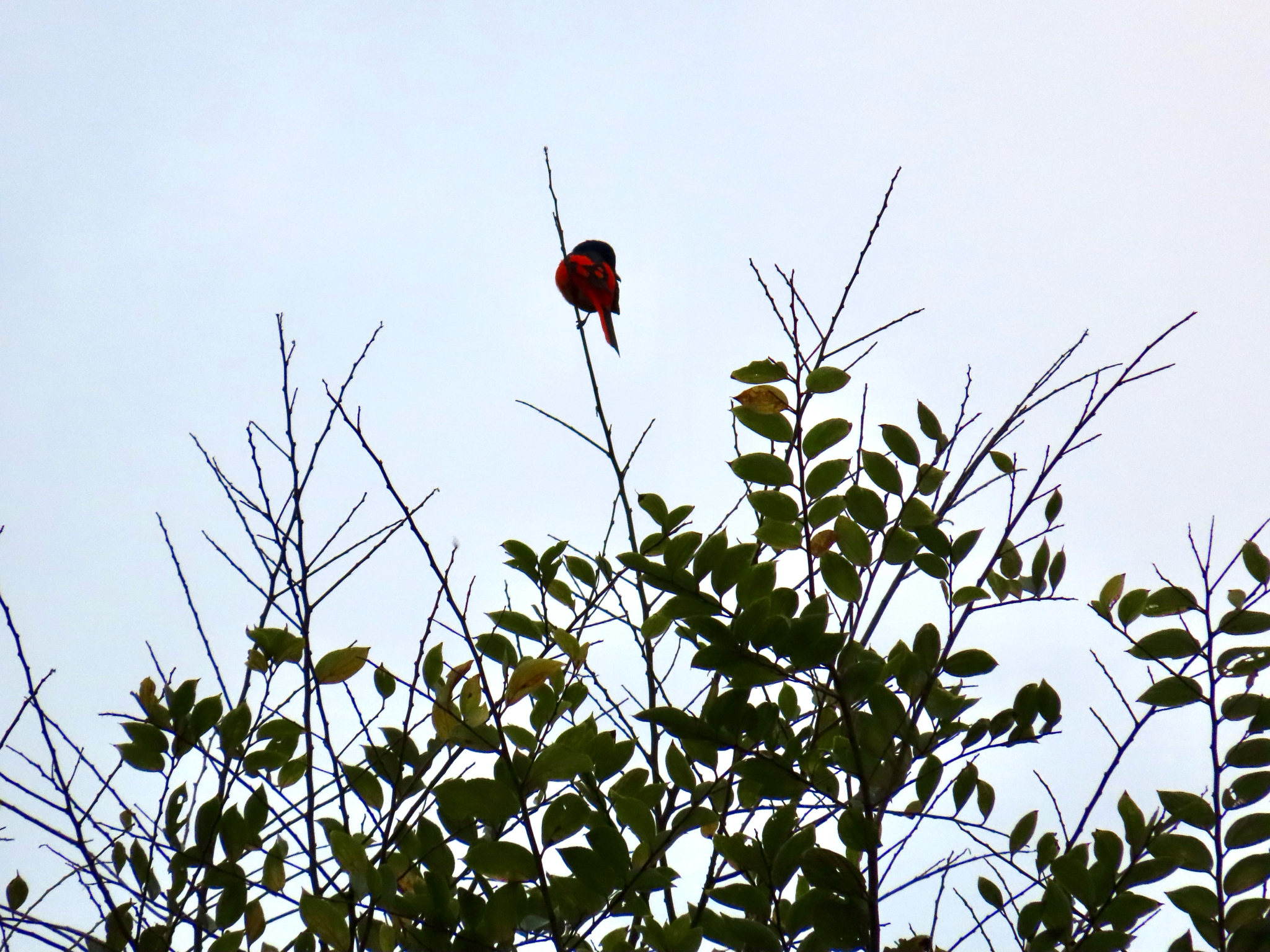
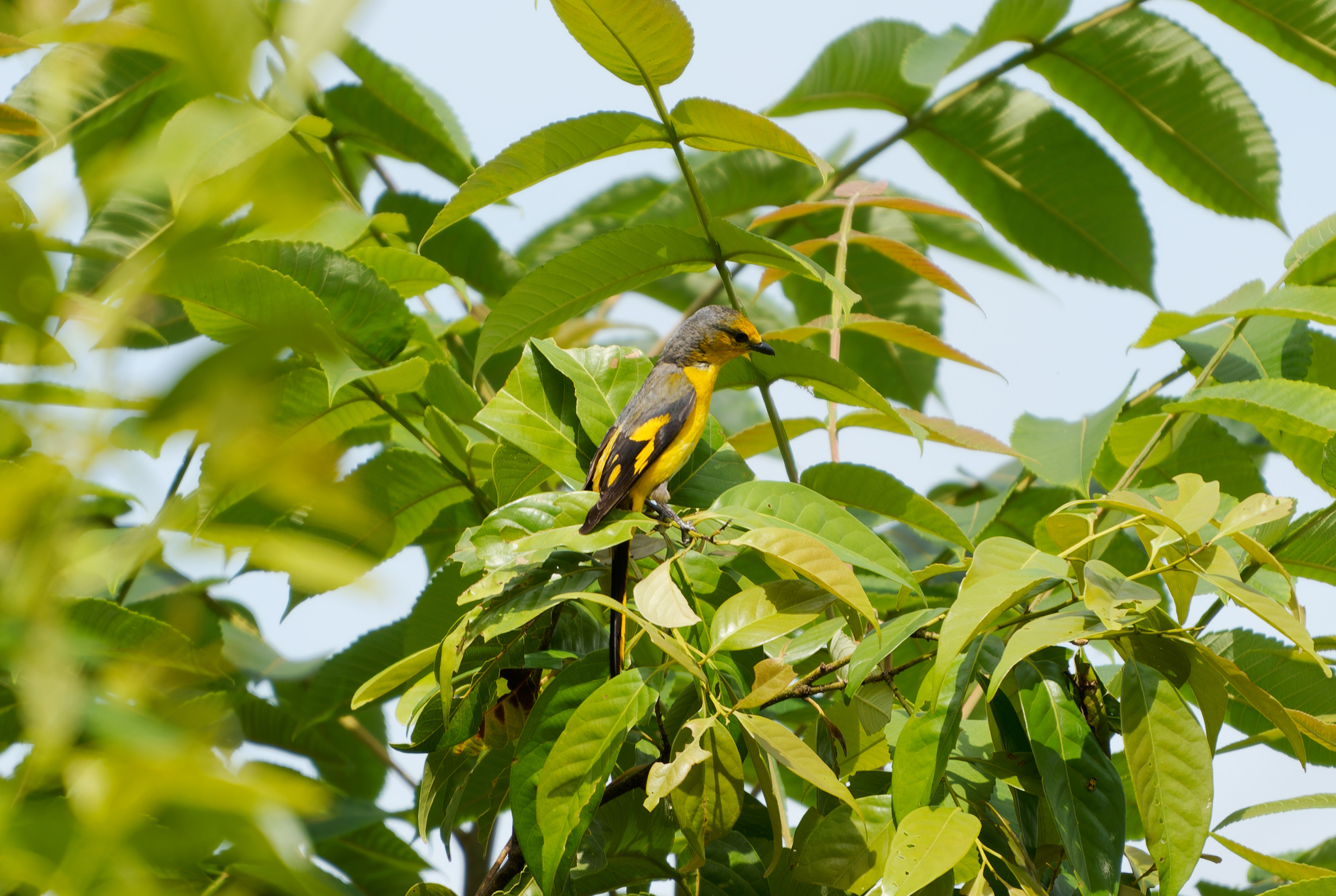
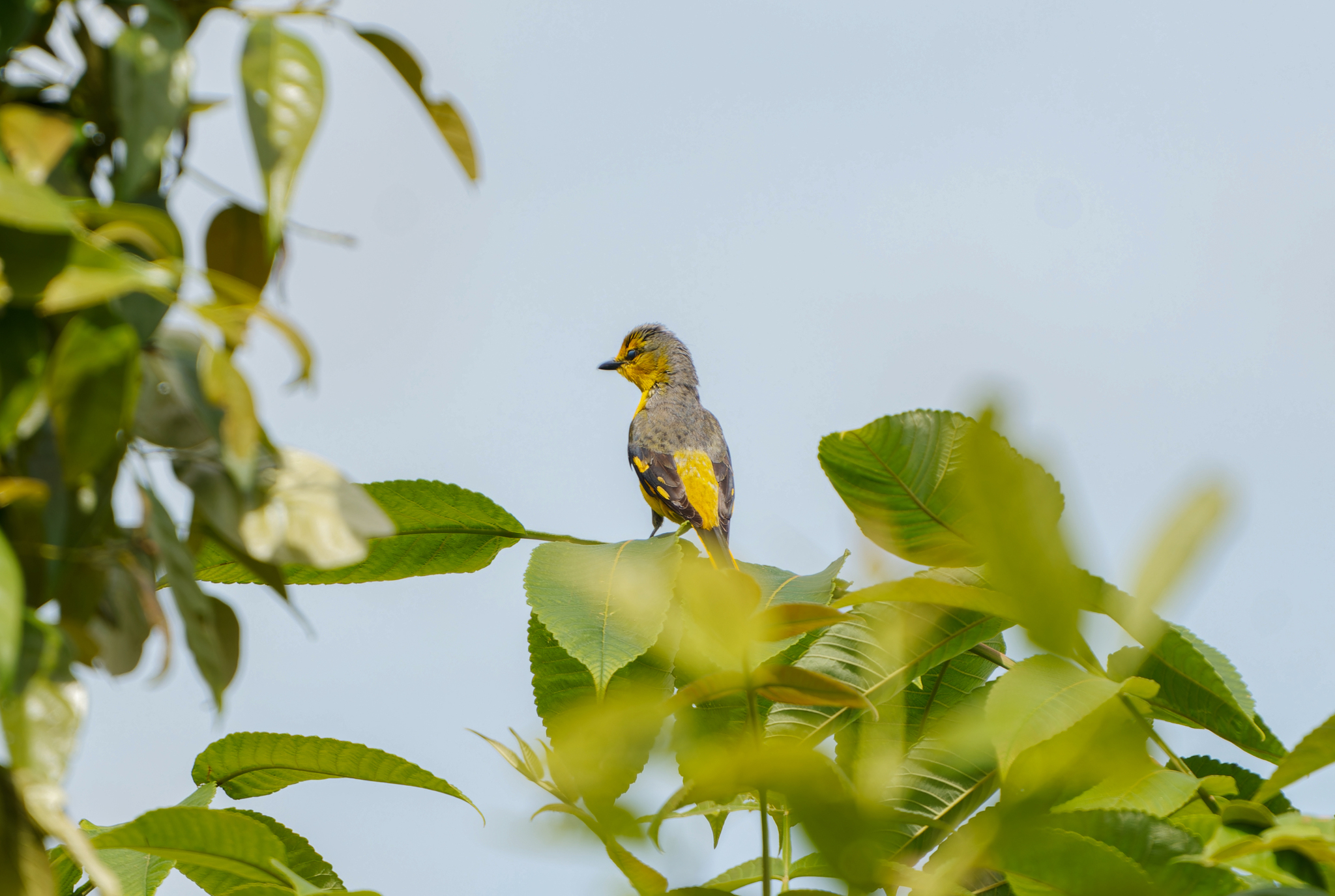
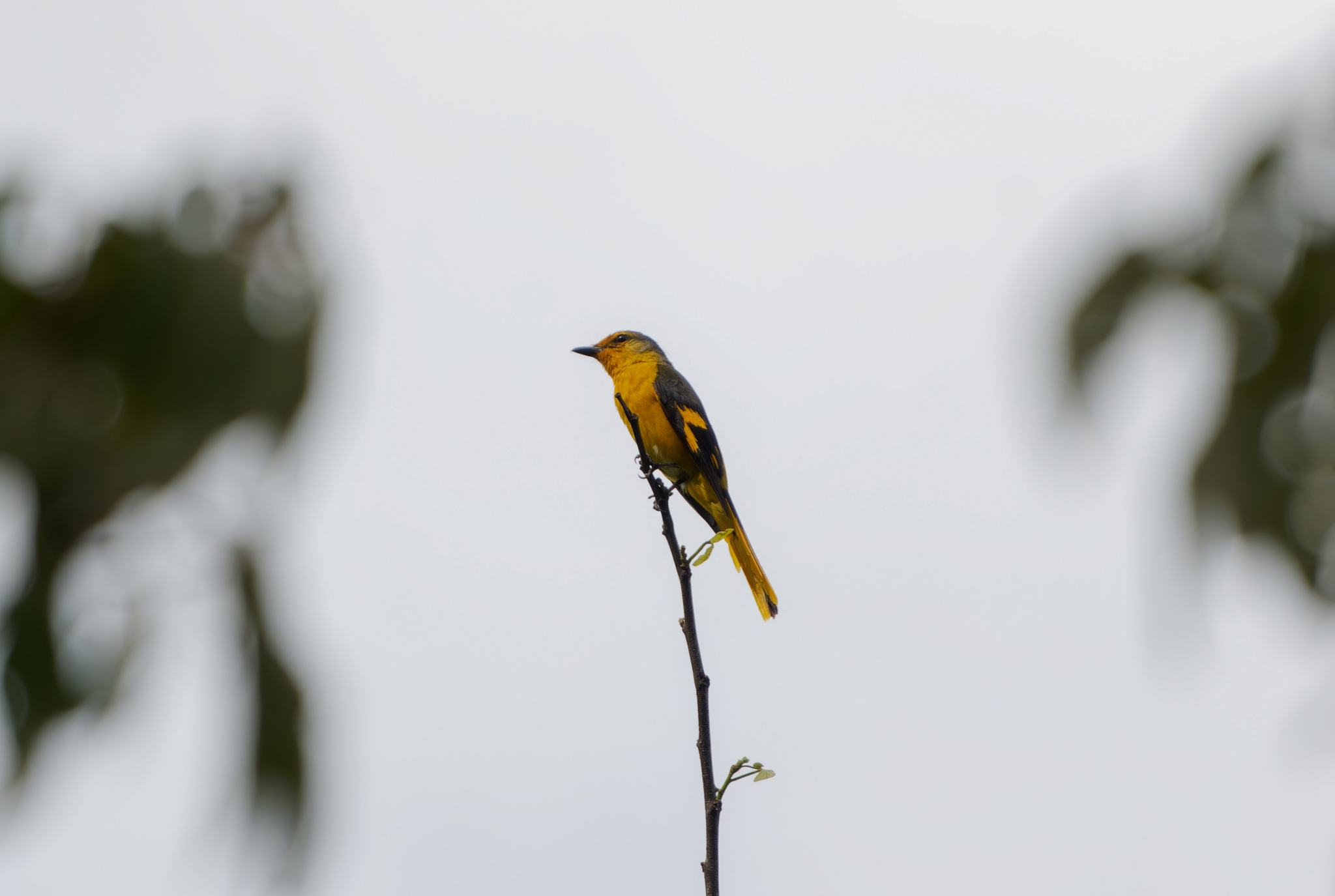
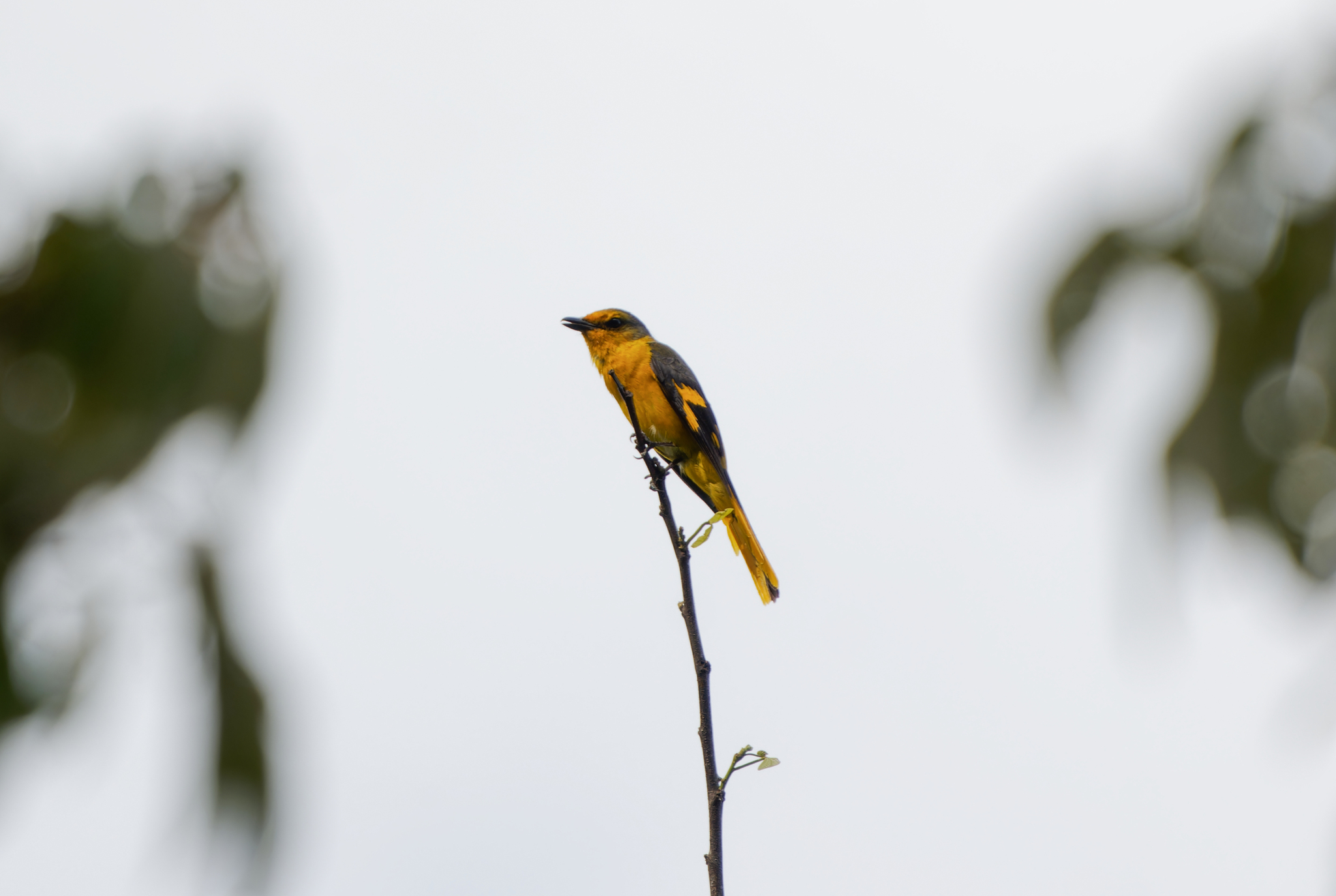
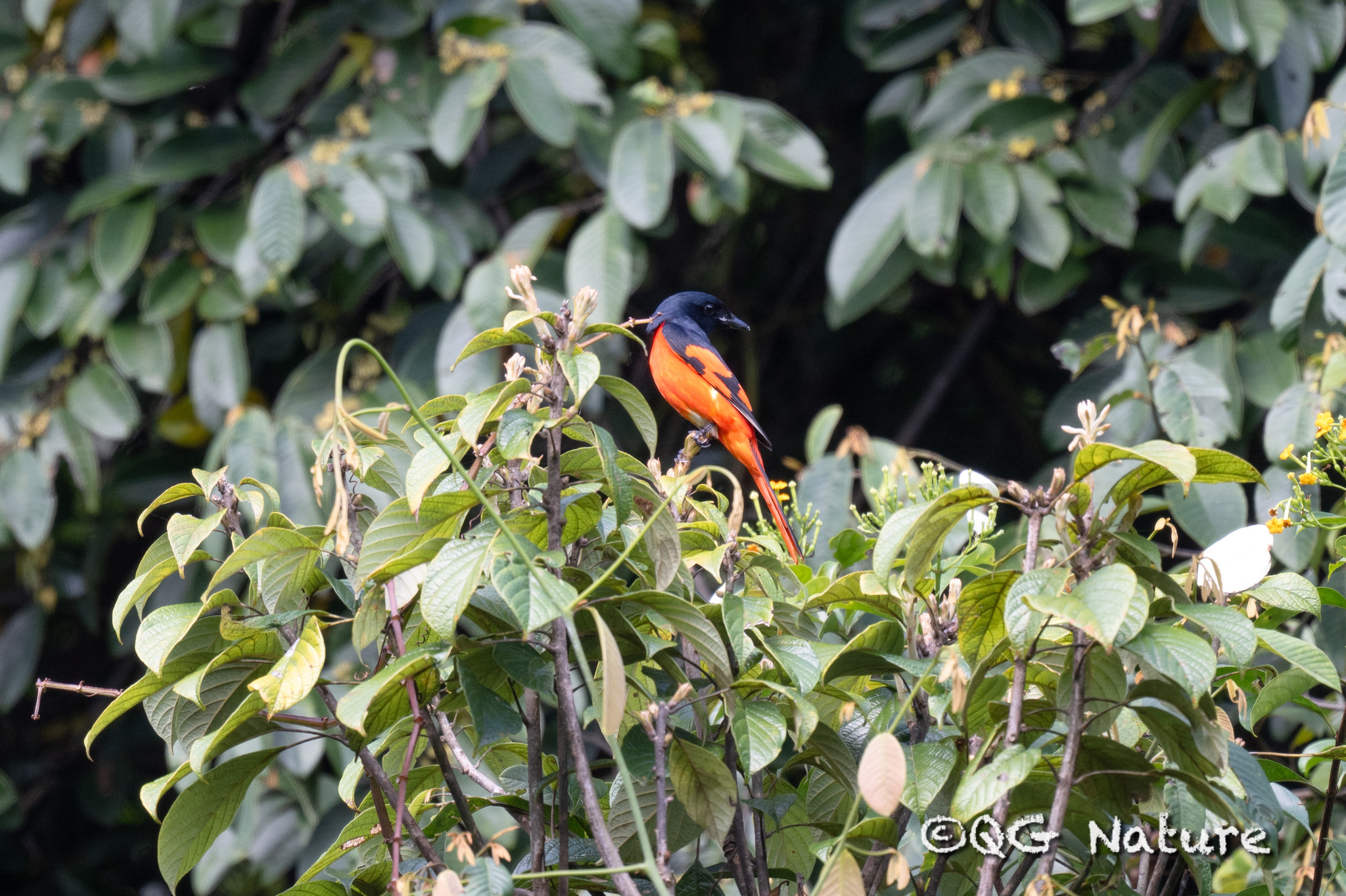
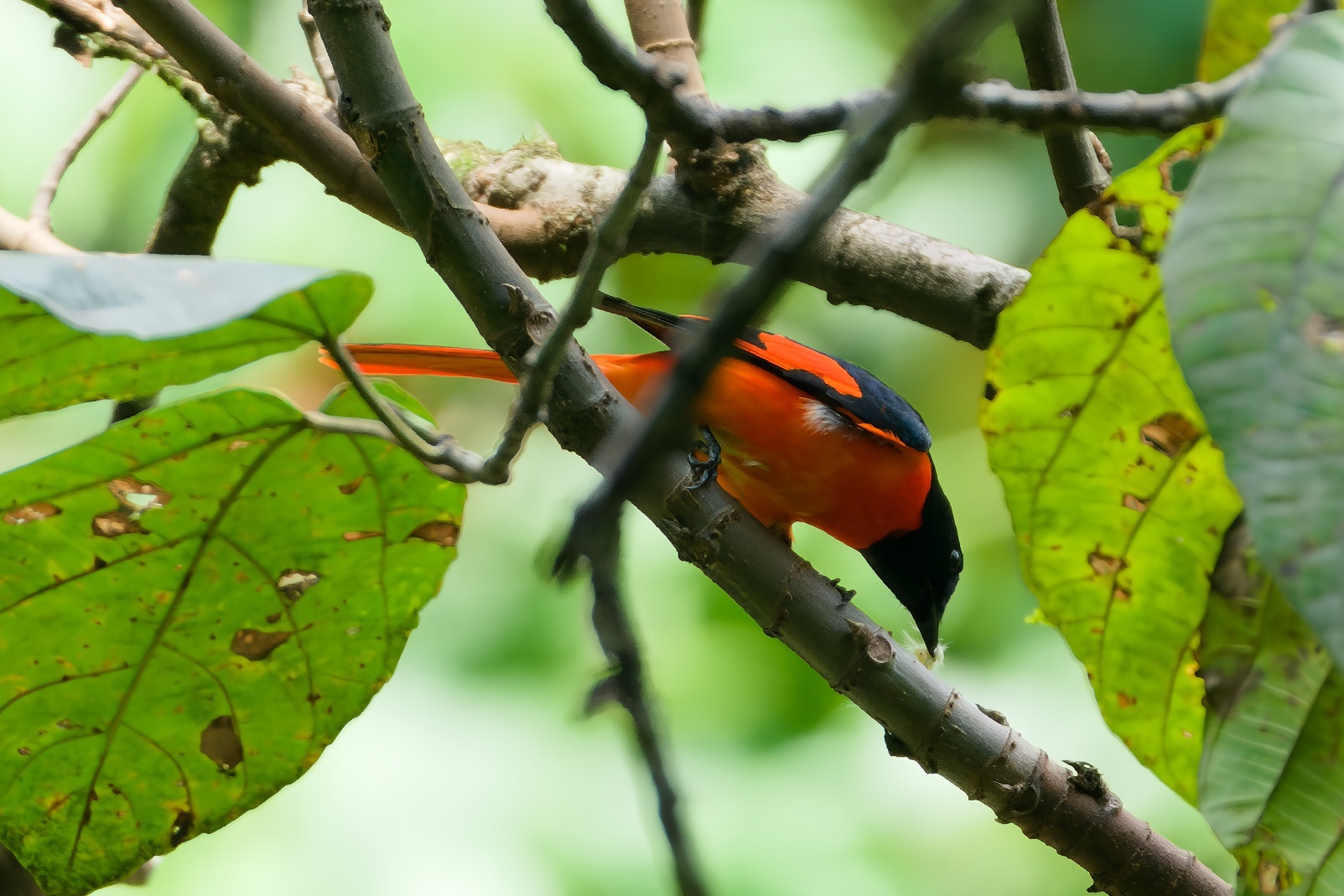
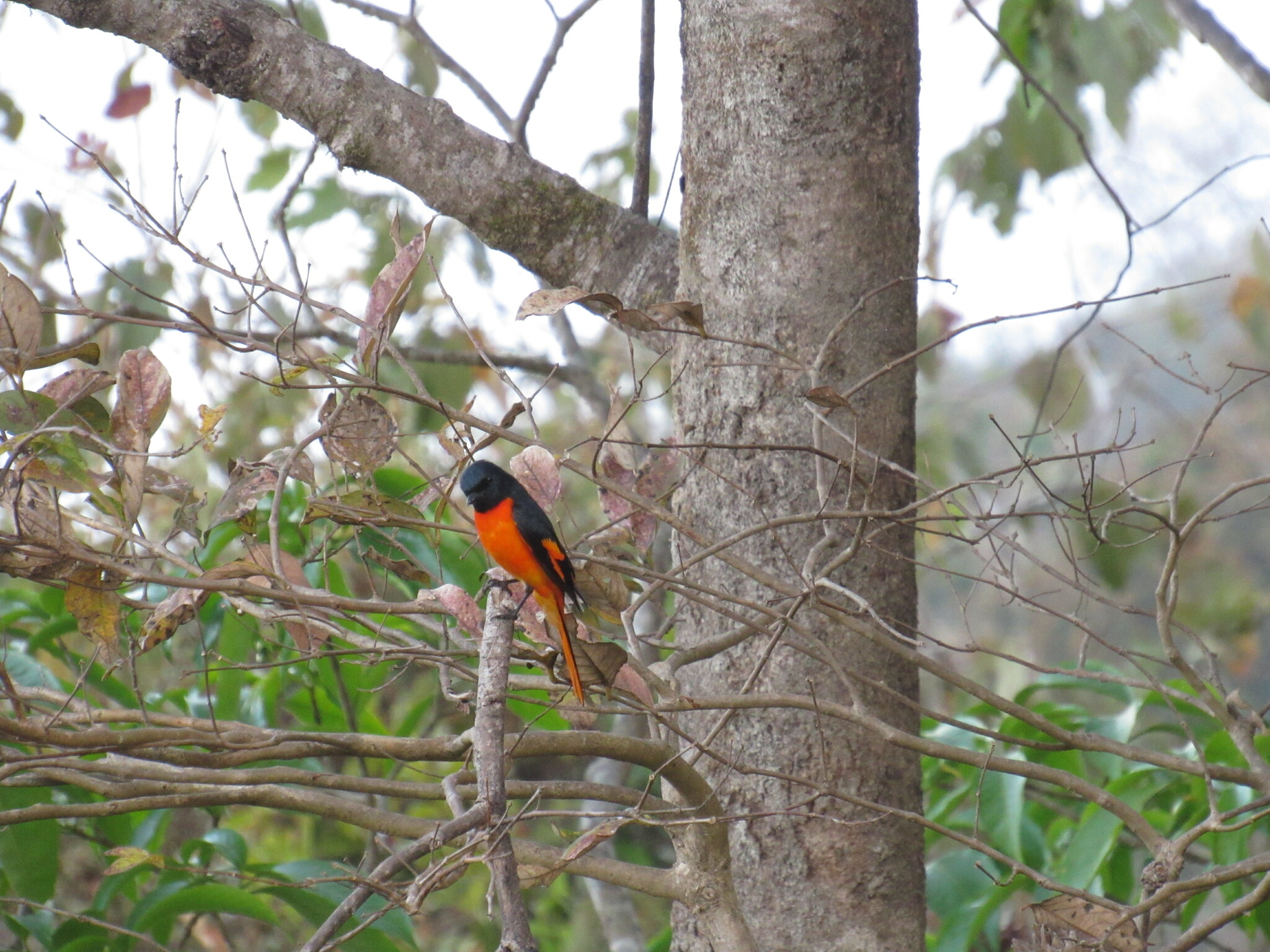
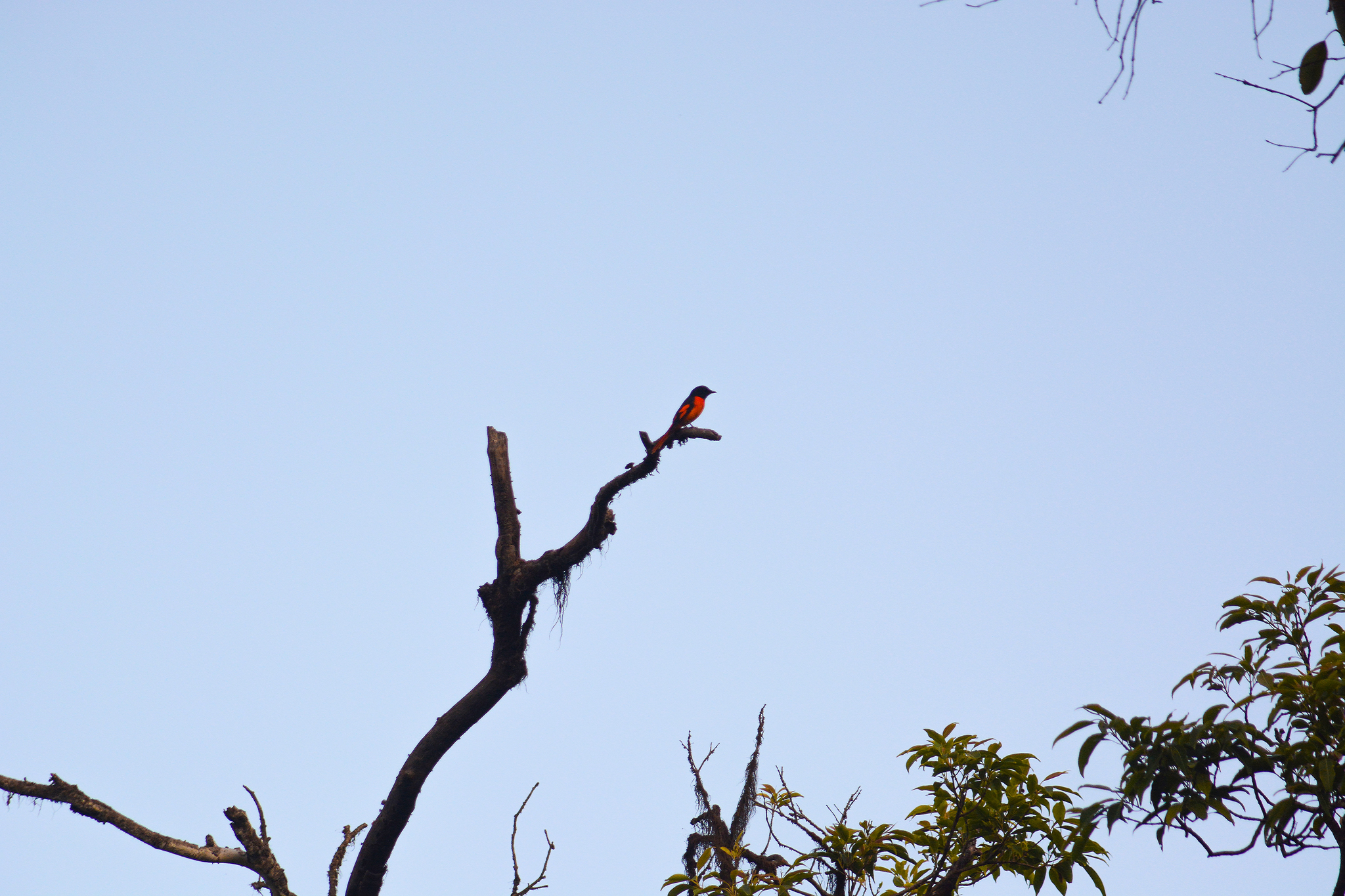
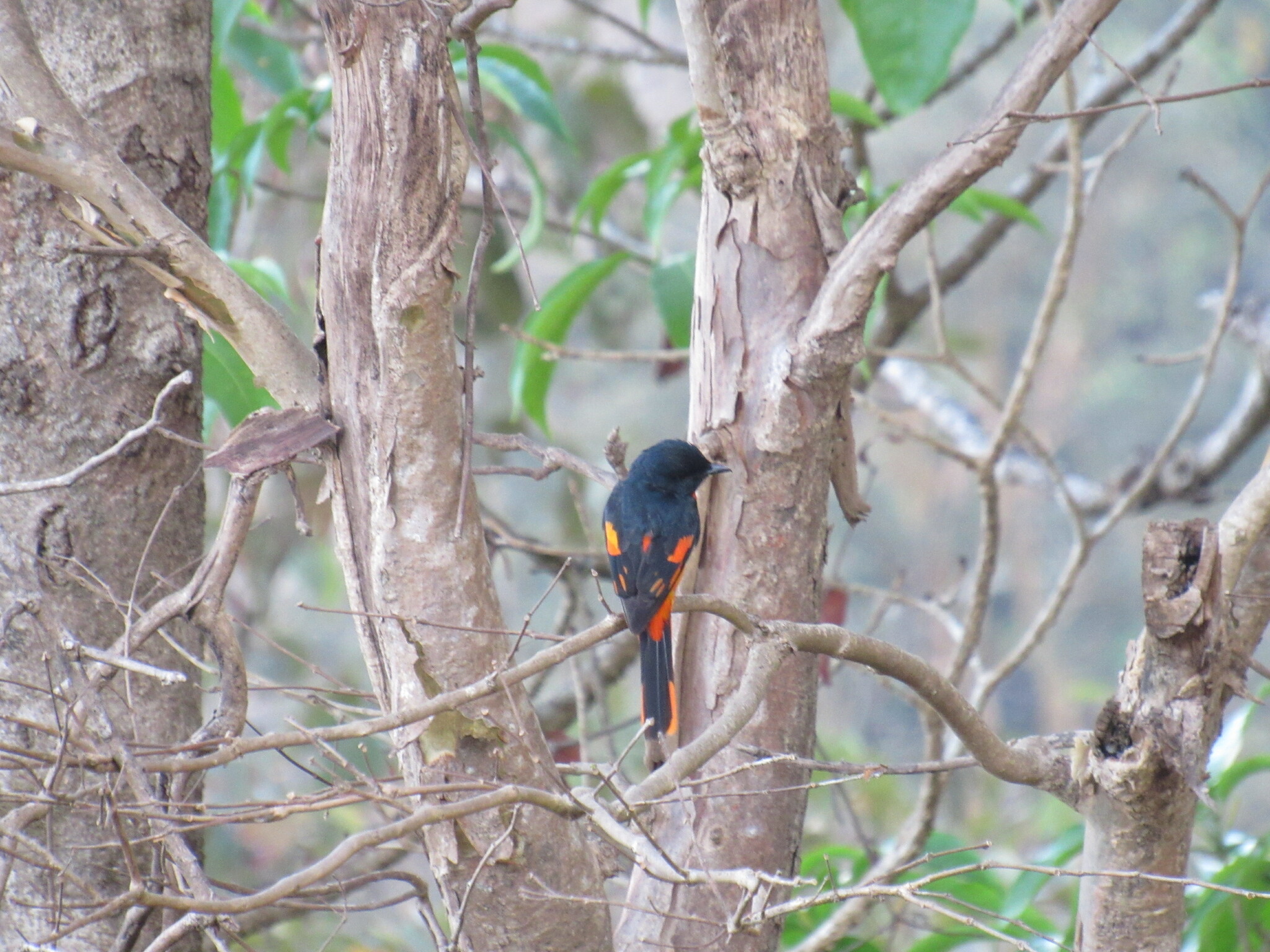
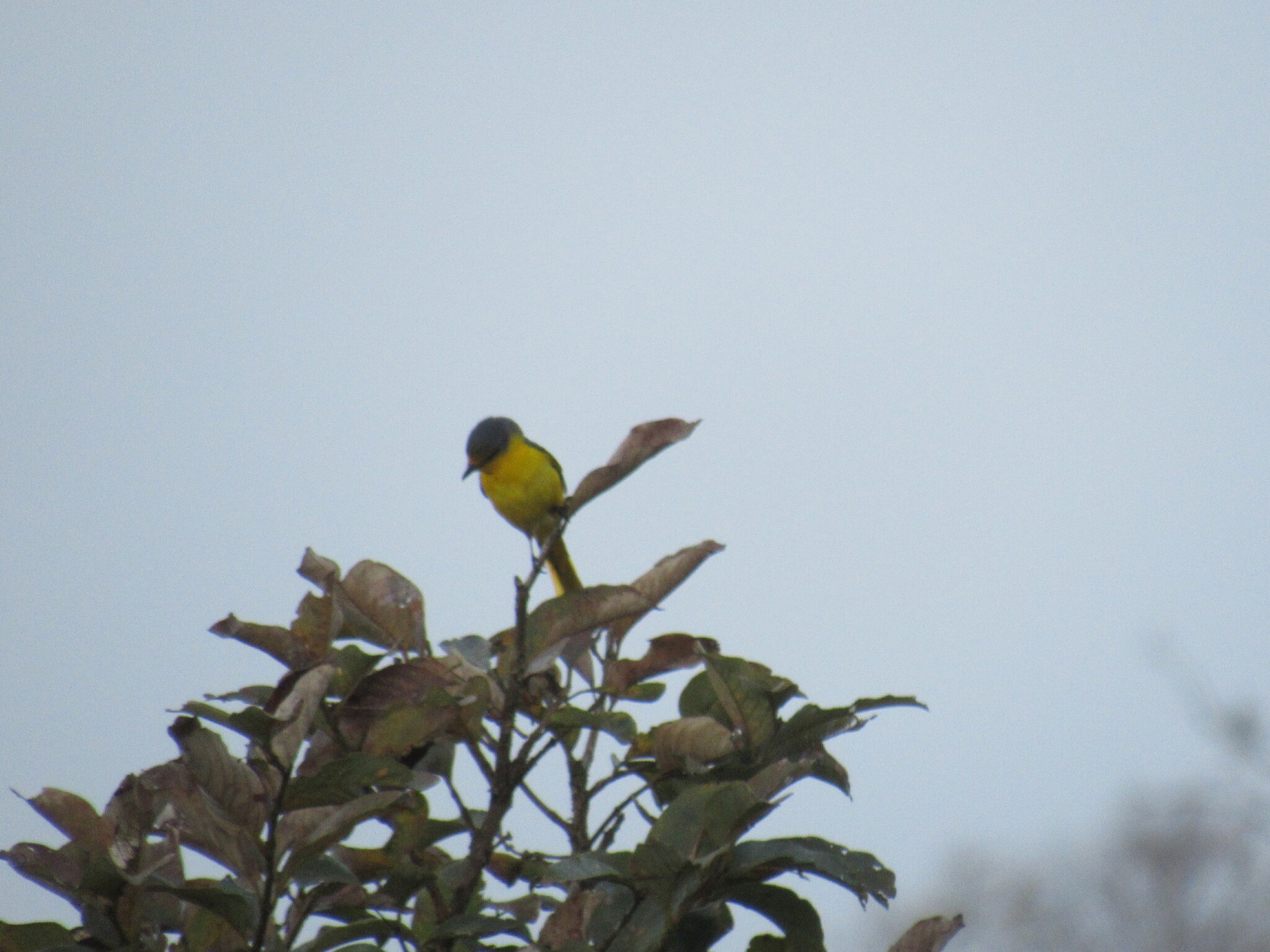
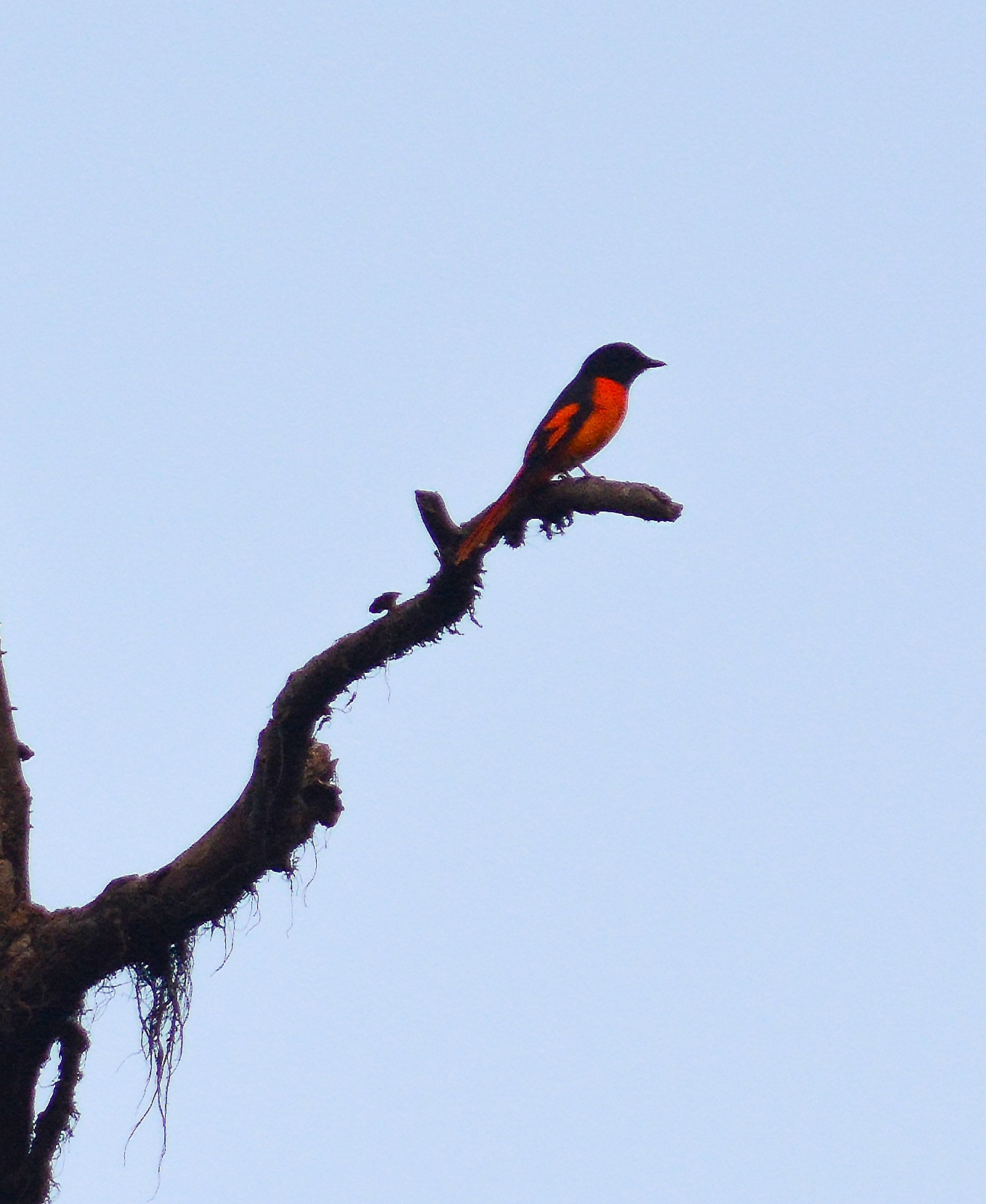
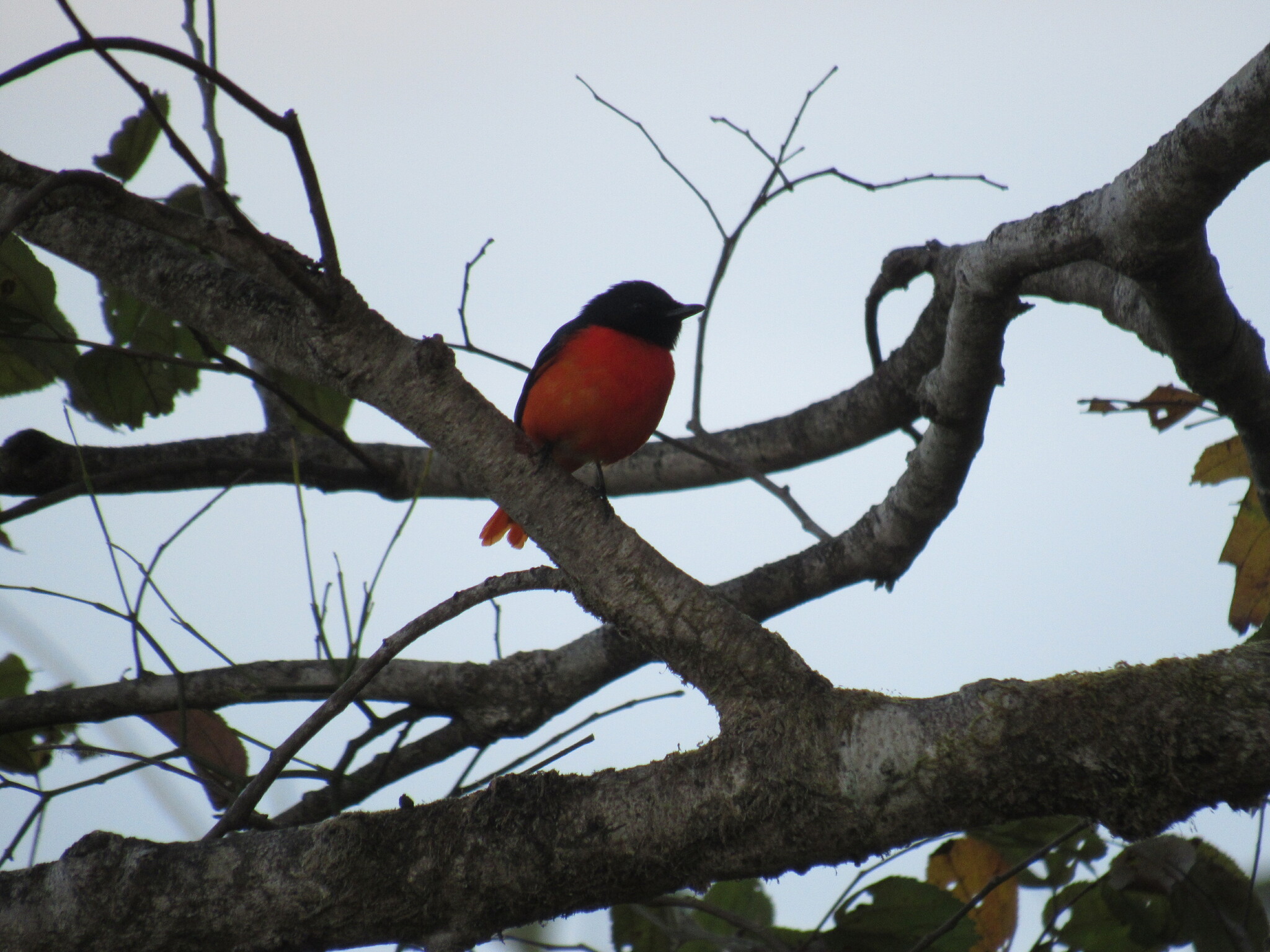
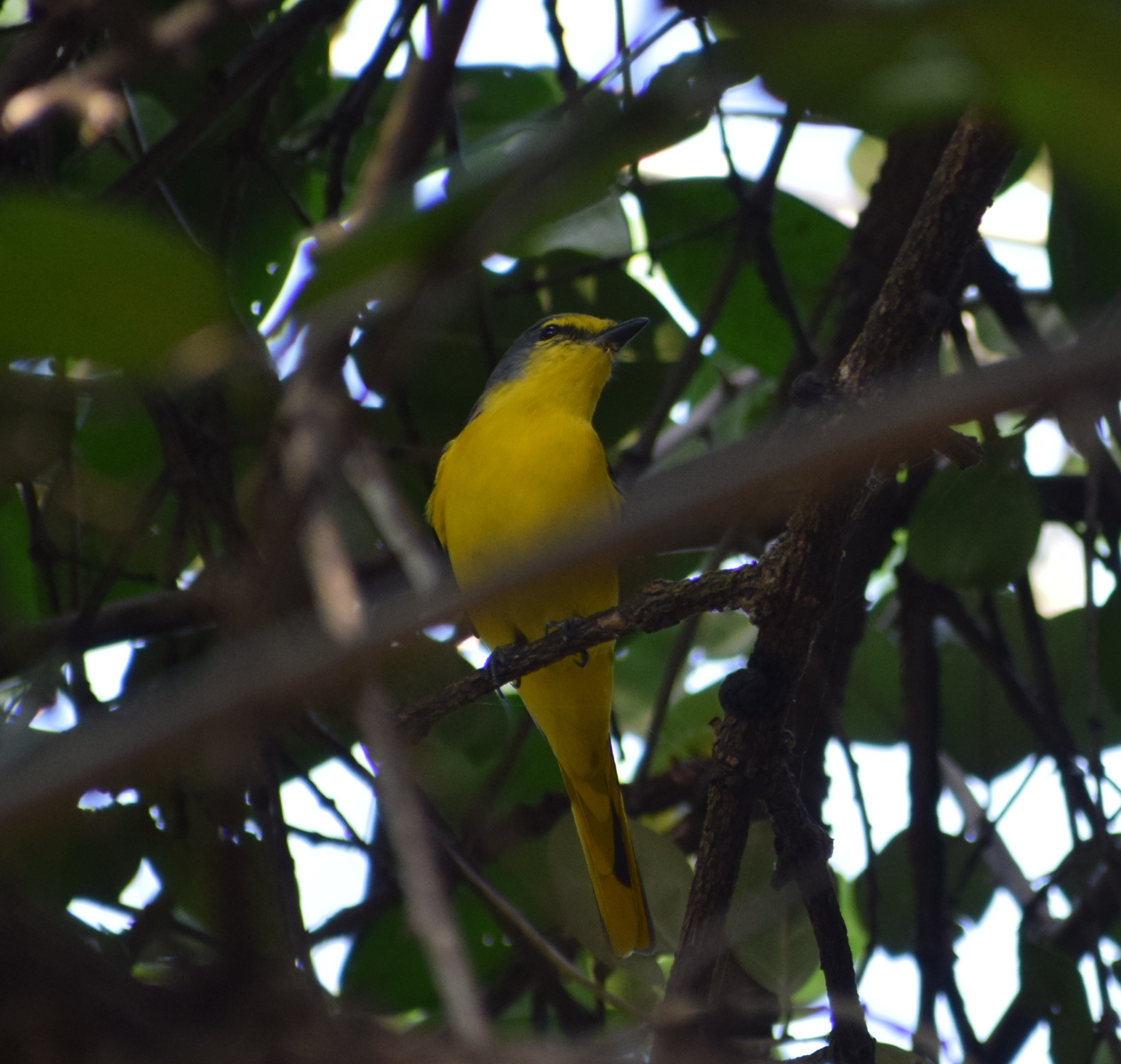
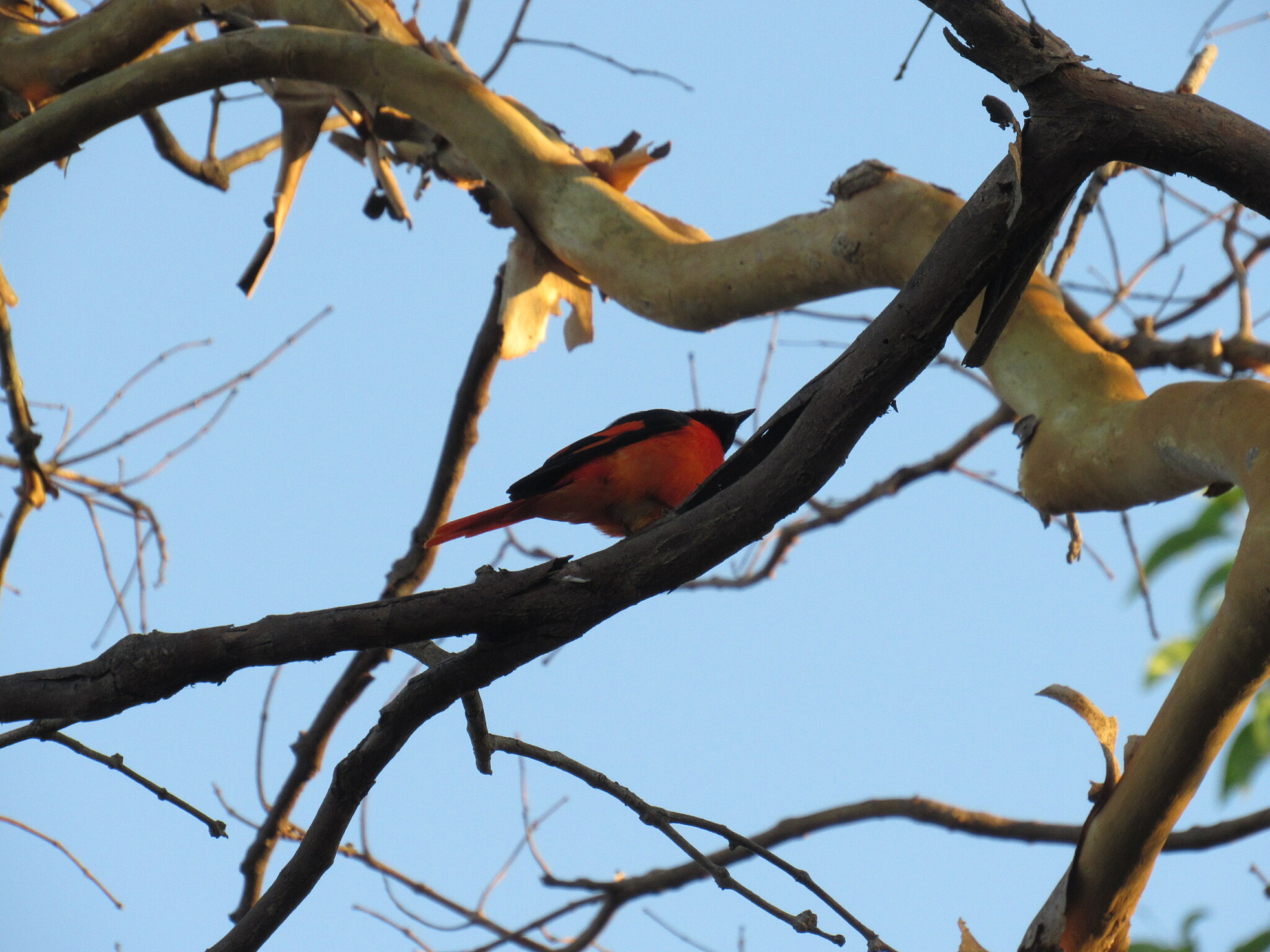
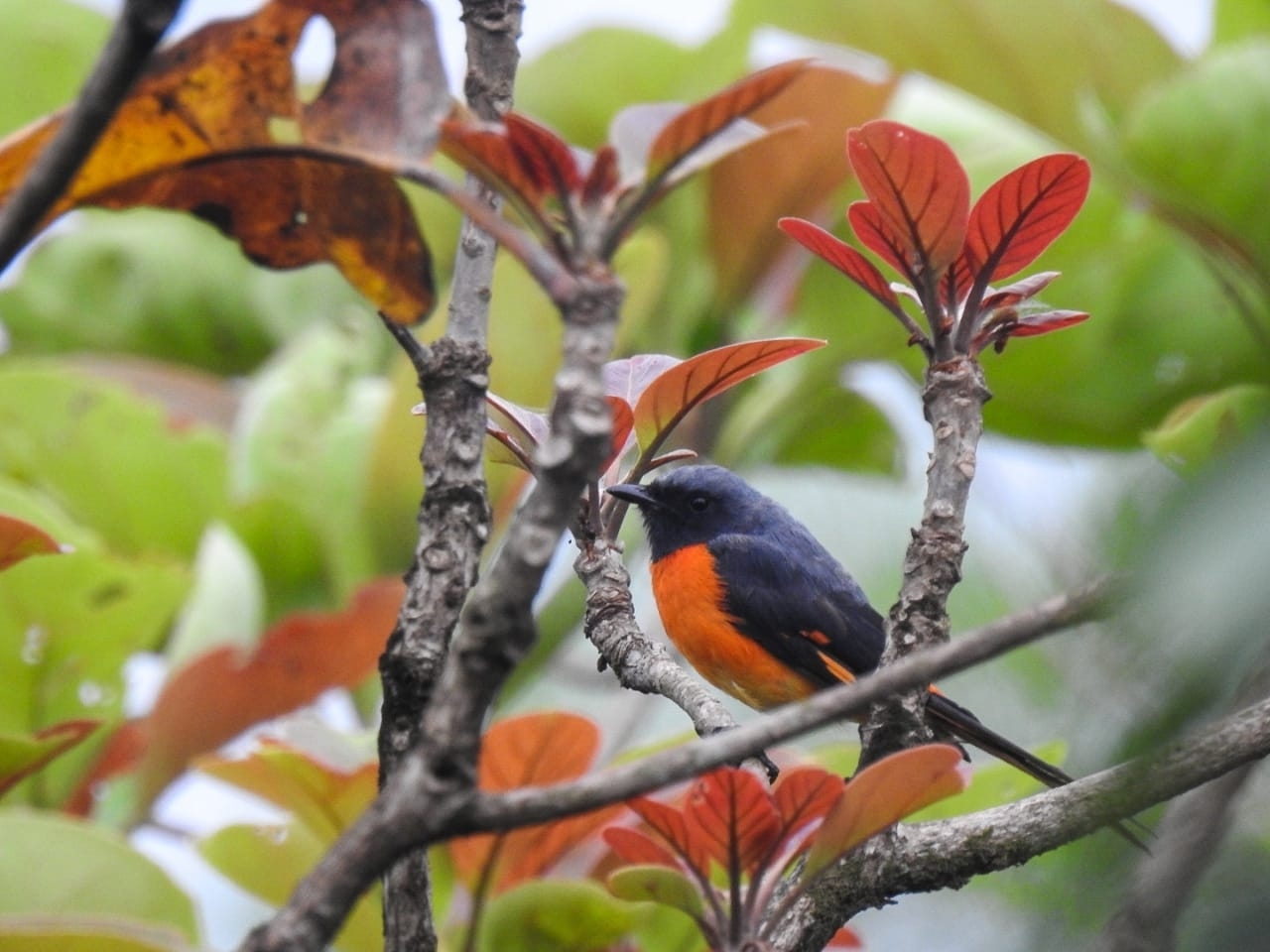
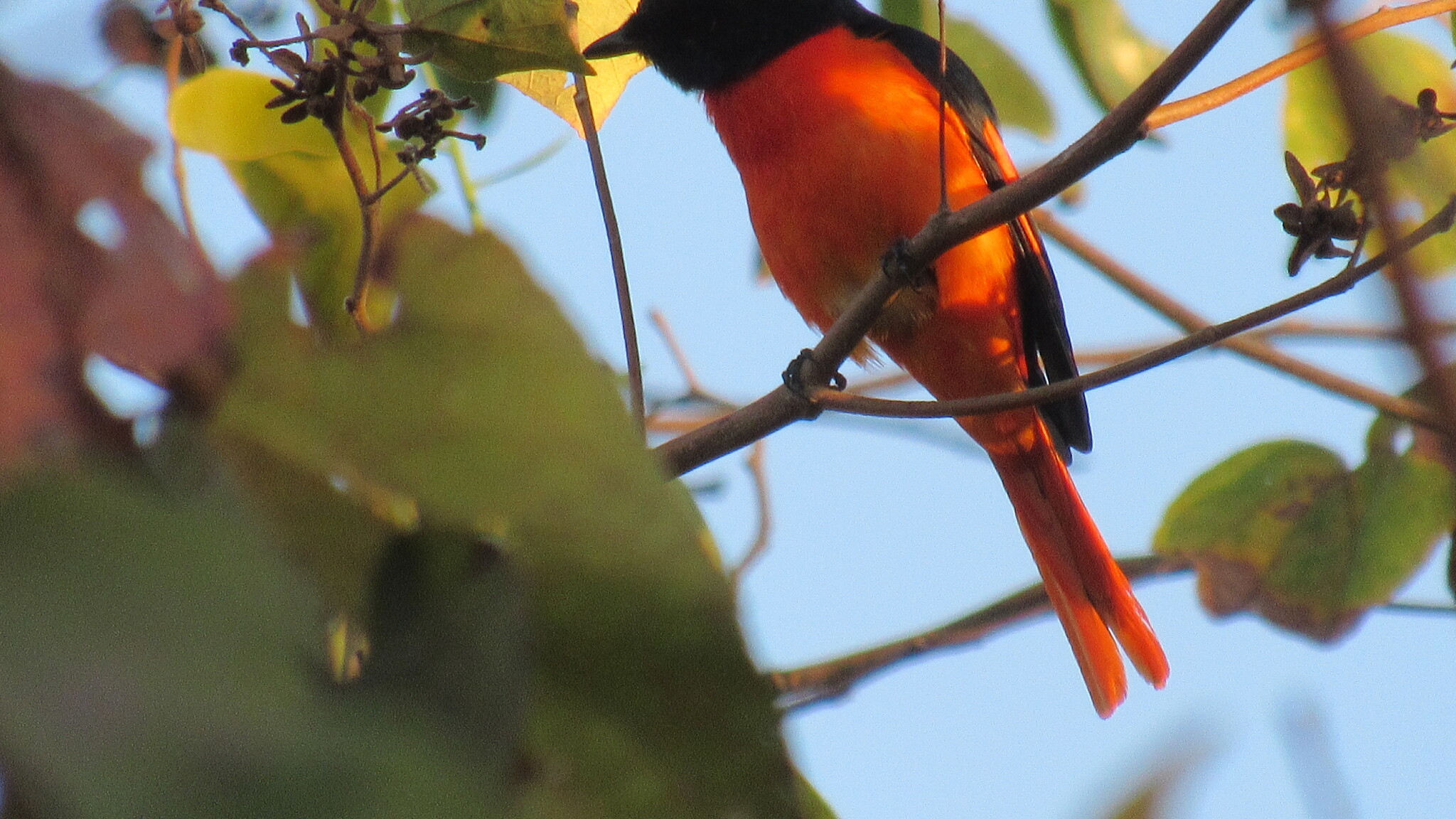
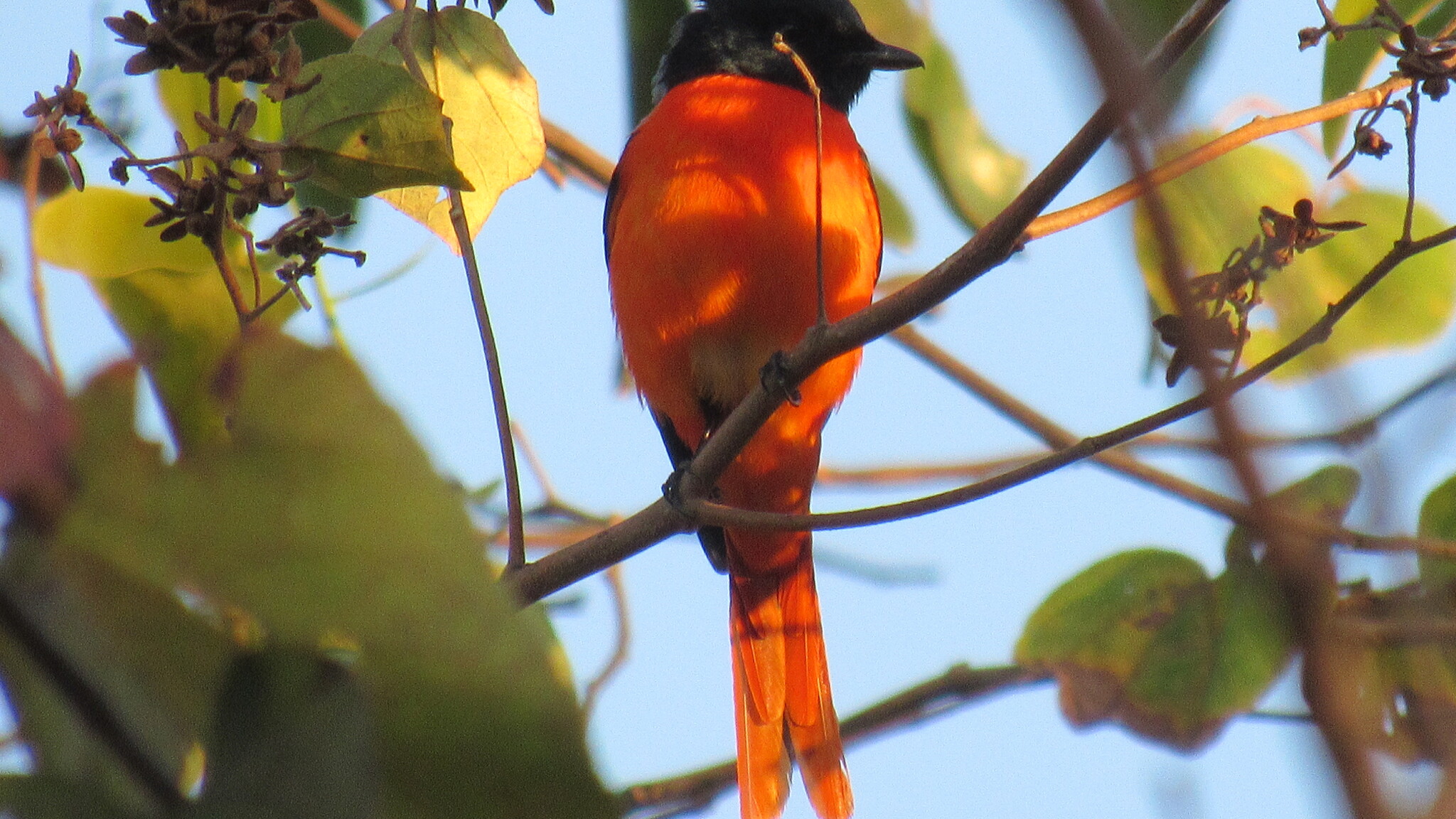
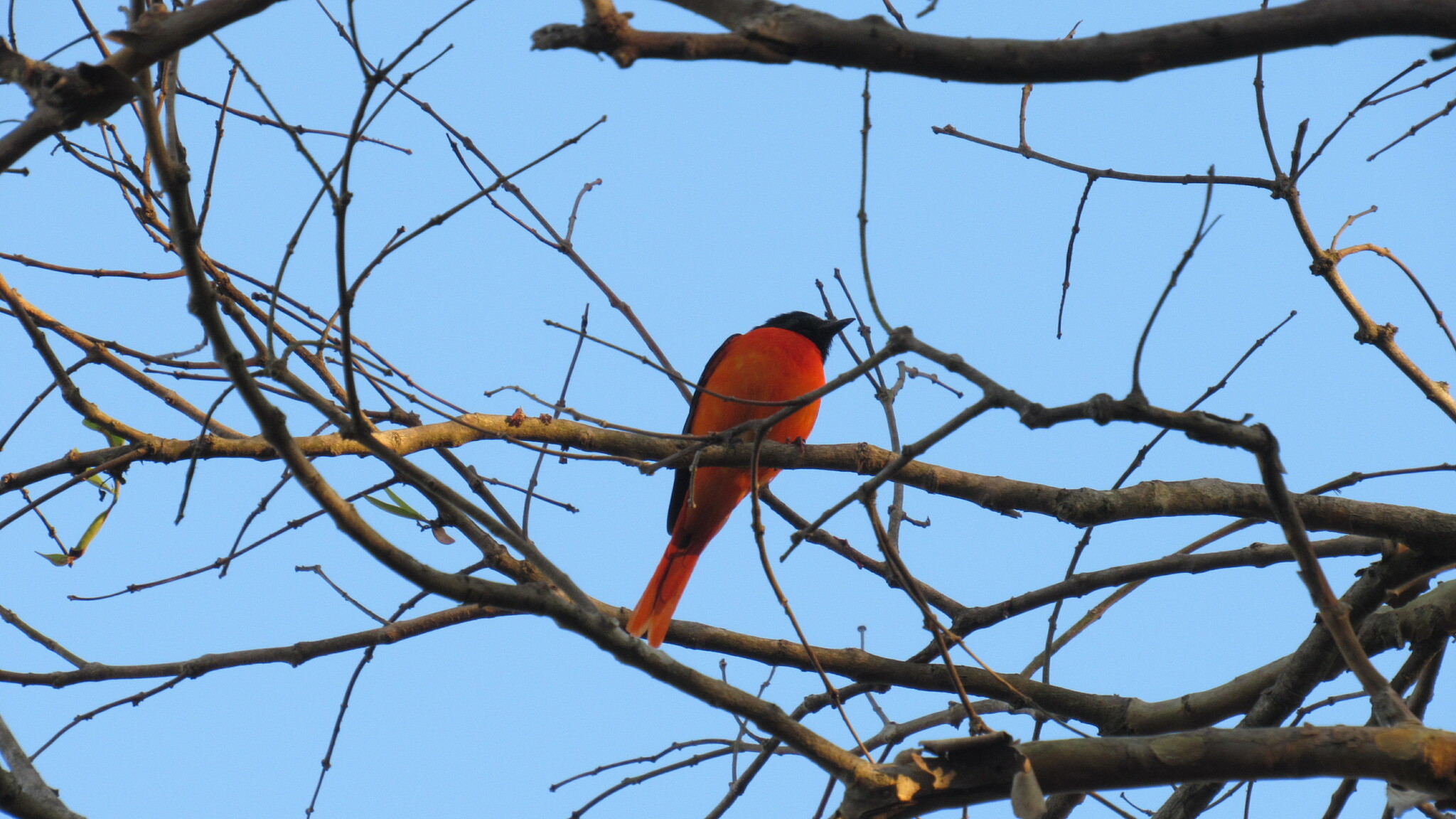
A small bird measuring 20-22 cm (7.9-8.7 in) in length with a strong dark beak and long wings. The male has black upperparts and head, with scarlet underparts, tail edges, rump and wing patches. Wing patch shape and colour varies across populations. Some subspecies from the southern Philippines have yellow instead of scarlet/orange. The female is grey above with yellow underparts including the face, along with yellow tail edges, rump and wing patches.
Distribution & Habitat
Ranges across tropical southern Asia from Northeast India through southern China to Indonesia and the Philippines. Inhabits forests and well-wooded habitats including gardens, with a preference for hilly country. A resident breeding species with no significant migration patterns.
Behavior & Ecology
Catches insects by flycatching or while perched, flushing prey from foliage by beating wings vigorously. Forms small flocks. Song is a pleasant whistling. Nests high in the treetops, building a cup-like structure woven with small twigs and spider webs for strength. Lays two or three spotted pale green eggs. Incubation is mainly performed by the female, though both parents help raise the young.
Conservation
No conservation assessment information provided in the source.
Culture
No cultural significance or folklore information provided in the source.
Source: Wikipedia · CC BY-SA 3.0
Taxonomy
- Order
- Passeriformes
- Family
- Campephagidae
- Genus
- Pericrocotus
Subspecies (19)
-
Pericrocotus flammeus andamanensis
Andaman Islands
-
Pericrocotus flammeus exul
Lombok (Lesser Sundas)
-
Pericrocotus flammeus flammeus
western peninsular India (southeastern Gujarat southward through the Western Ghats, and southwestern Eastern Ghats in Tamil Nadu), and Sri Lanka
-
Pericrocotus flammeus flammifer
southern Myanmar to southwestern Thailand and northern Malay Peninsula
-
Pericrocotus flammeus fohkiensis
southeastern China (Hunan, Fujian, Guangdong, and Guangxi)
-
Pericrocotus flammeus fraterculus
northeastern India (Assam south of the Brahmaputra River), northern Myanmar, southern China (Yunnan, Hainan), and northern Indochina
-
Pericrocotus flammeus gonzalesi
northern and eastern Mindanao (southern Philippines)
-
Pericrocotus flammeus insulanus
Borneo
-
Pericrocotus flammeus johnstoniae
Mount Apo, Mindanao (southern Philippines)
-
Pericrocotus flammeus leytensis
central Philippines (Samar and Leyte)
-
Pericrocotus flammeus marchesae
Jolo Group (Sulu Archipelago)
-
Pericrocotus flammeus minythomelas
Simeulue Island (off Sumatra)
-
Pericrocotus flammeus modiglianii
Enggano Island (off Sumatra)
-
Pericrocotus flammeus nigroluteus
southern Mindanao (southern Philippines)
-
Pericrocotus flammeus novus
northern Philippines (Luzon and Negros)
-
Pericrocotus flammeus semiruber
southeastern India (Eastern Ghats) to southern Myanmar, Thailand, and northern Indochina
-
Pericrocotus flammeus siebersi
Java and Bali
-
Pericrocotus flammeus speciosus
Himalayas (Kashmir to eastern Assam); winters northern India
-
Pericrocotus flammeus xanthogaster
southern Malaya, Sumatra, and Bangka and Belitung islands
Data Sources
Species description from Wikipedia, licensed under CC BY-SA 3.0.
Bird images and sounds sourced from GBIF, contributed by citizen scientists worldwide under Creative Commons licenses.
Taxonomy data from AviList 2025.