Grey Partridge
Perdix perdix
灰山鹑
Introduction
A gallinaceous bird in the pheasant family Phasianidae, order Galliformes. Native to farmland across most of Europe and western Palearctic, ranging east to southwestern Siberia. Non-migratory terrestrial species forming flocks of up to 30 outside breeding season. Distinctive for nesting in cereal field margins, particularly winter wheat, and for the prominent chestnut-brown horseshoe mark on the white belly of males. Globally common and evaluated as Least Concern on IUCN Red List, though populations have declined severely in intensive agricultural areas such as the United Kingdom due to habitat loss and reduced insect availability.
Description
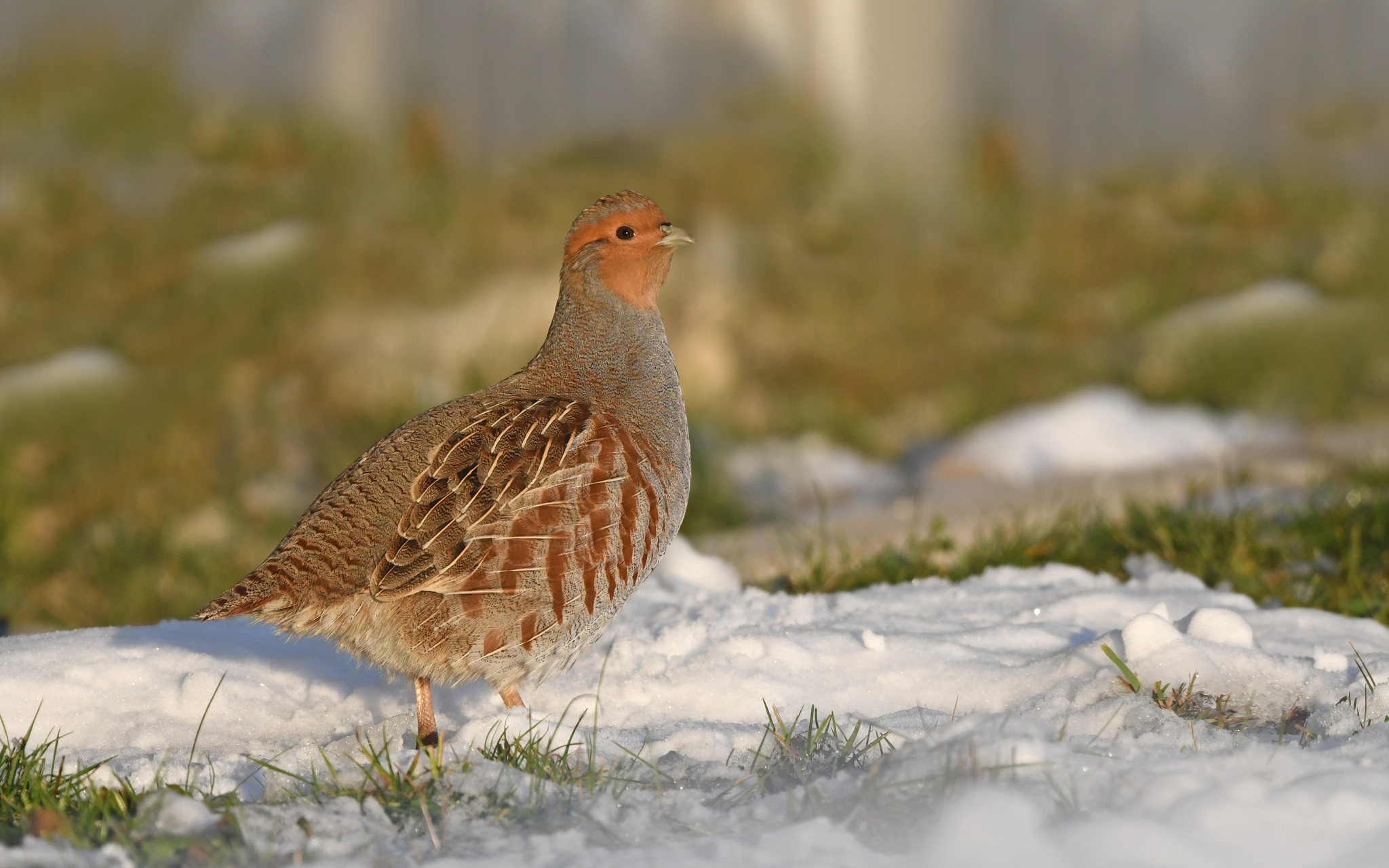
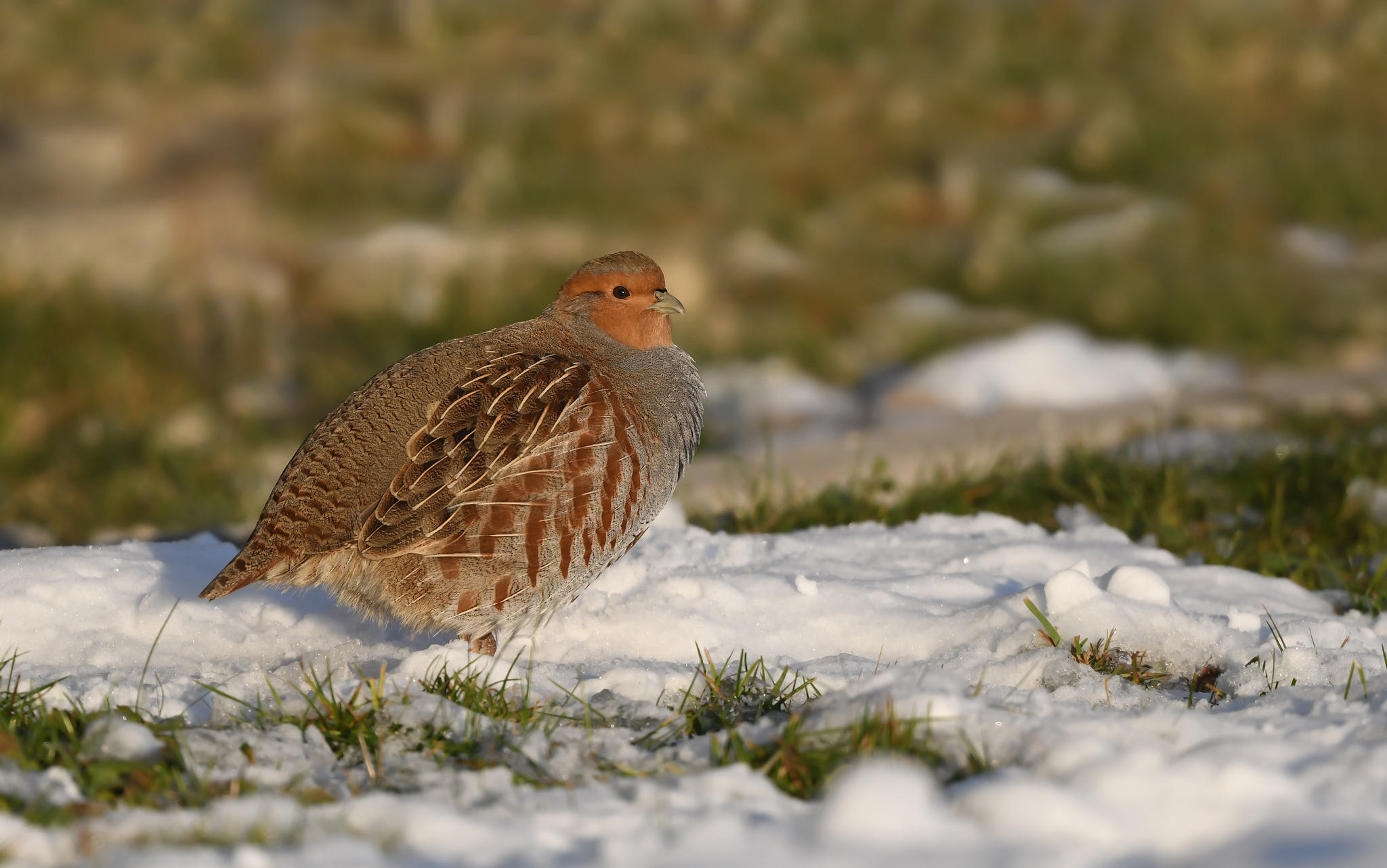
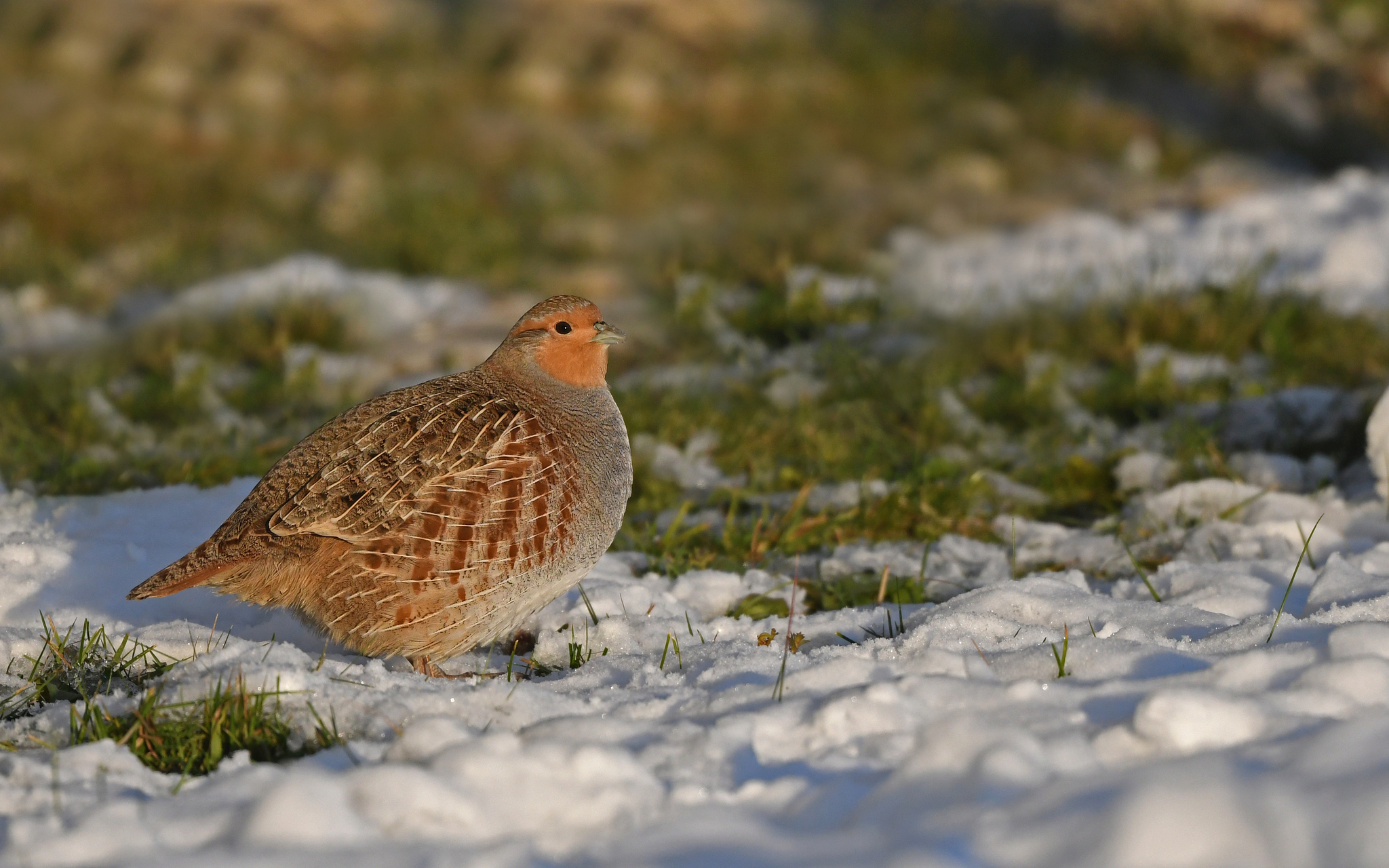
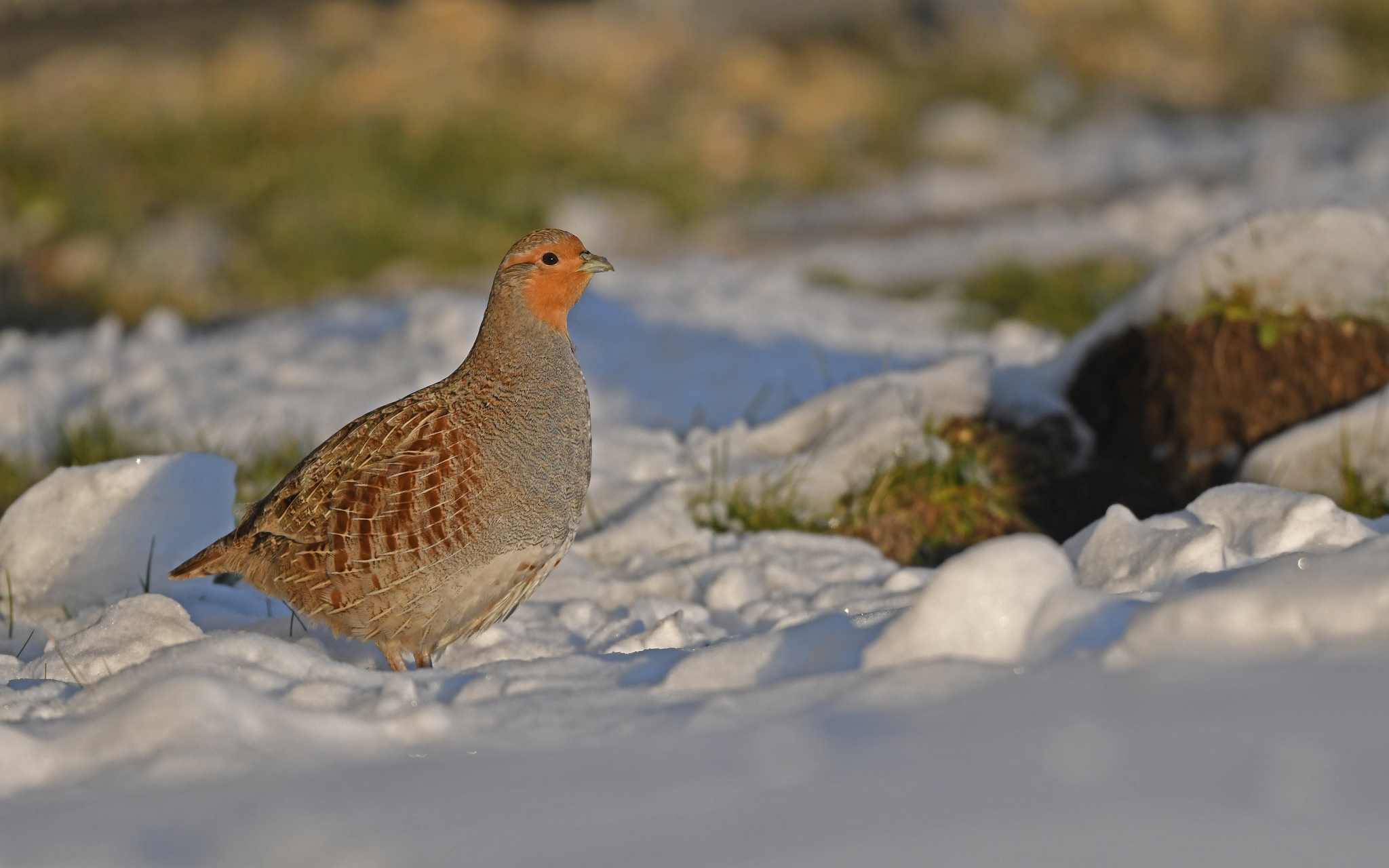
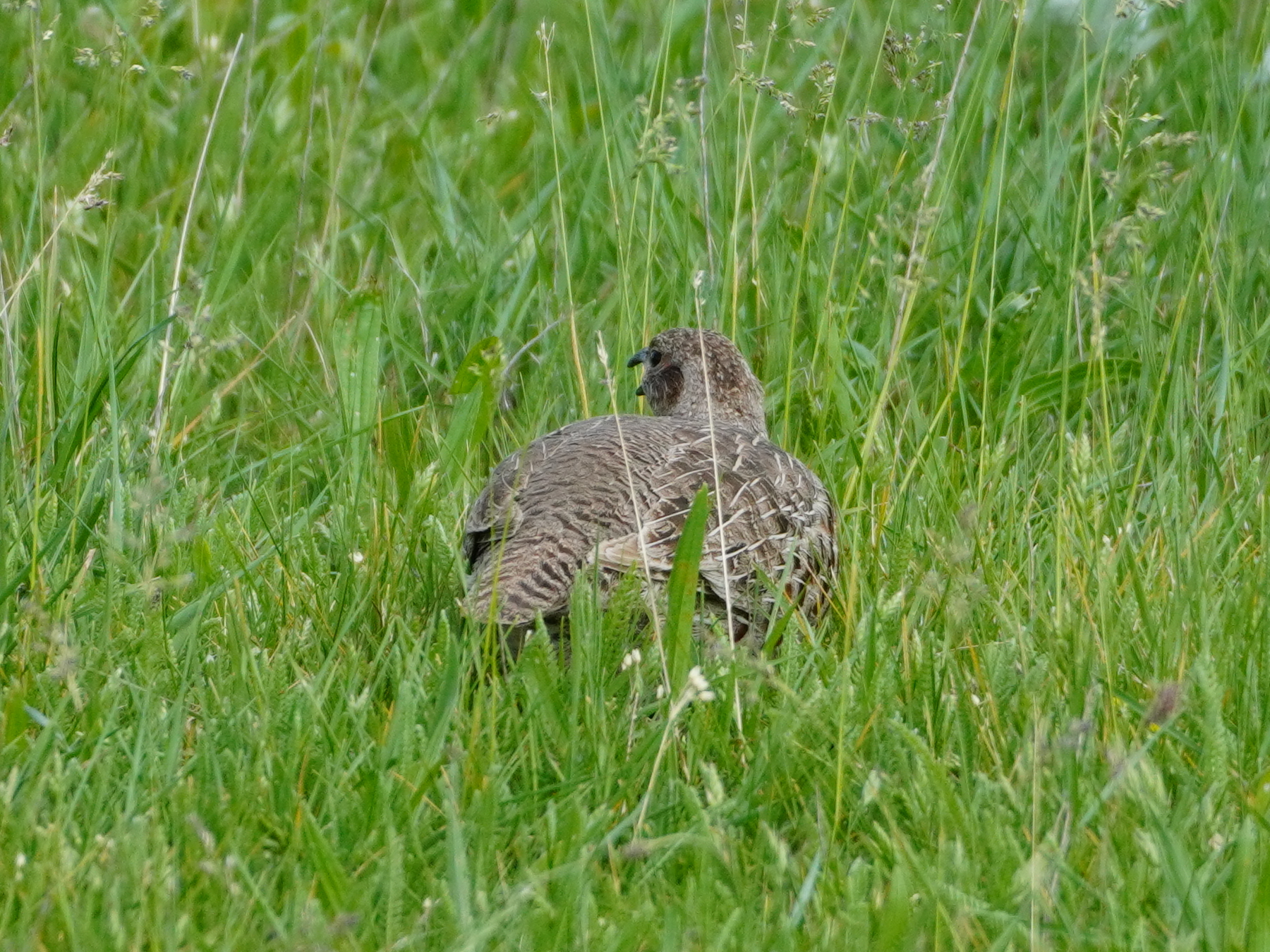
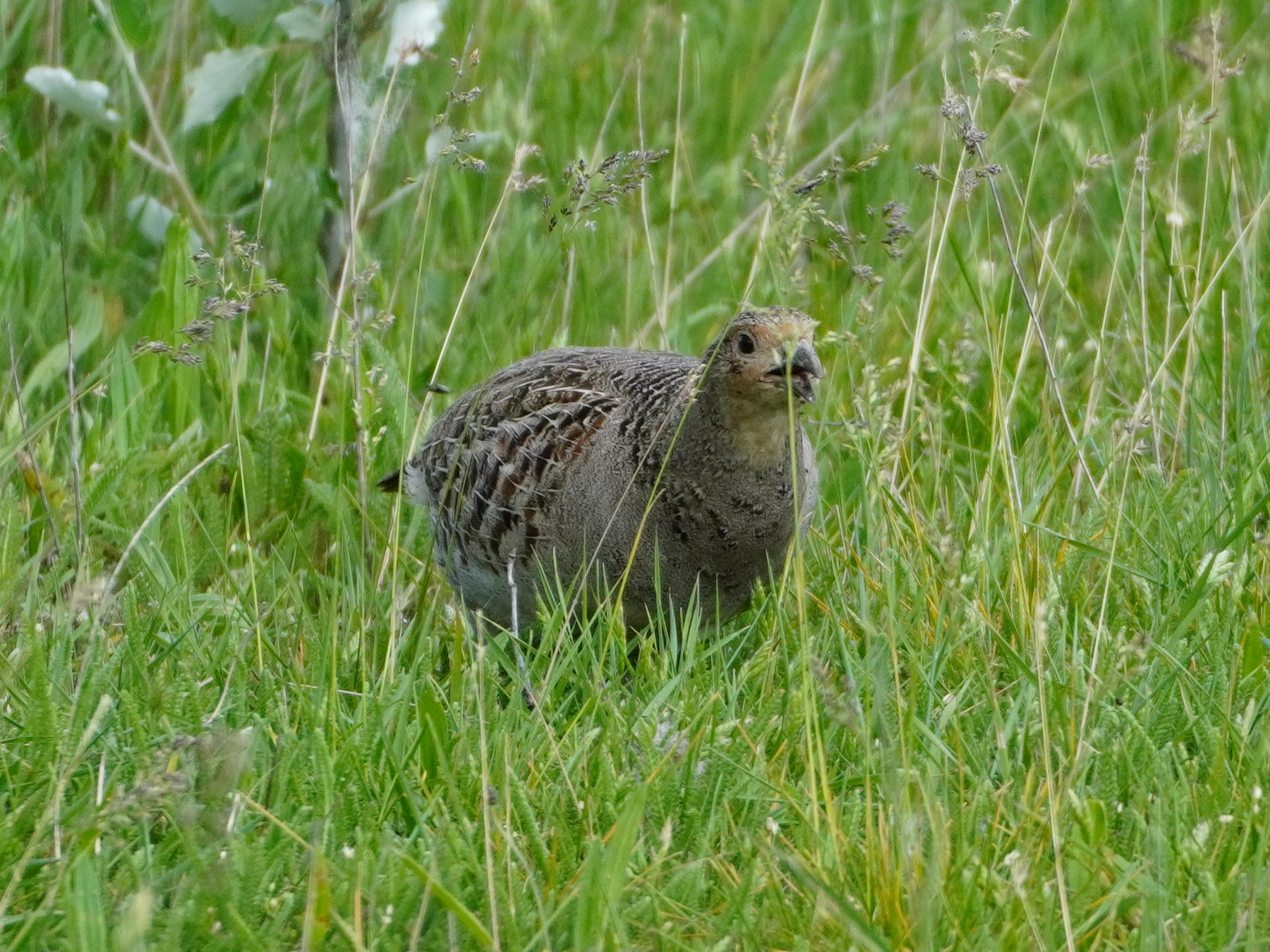
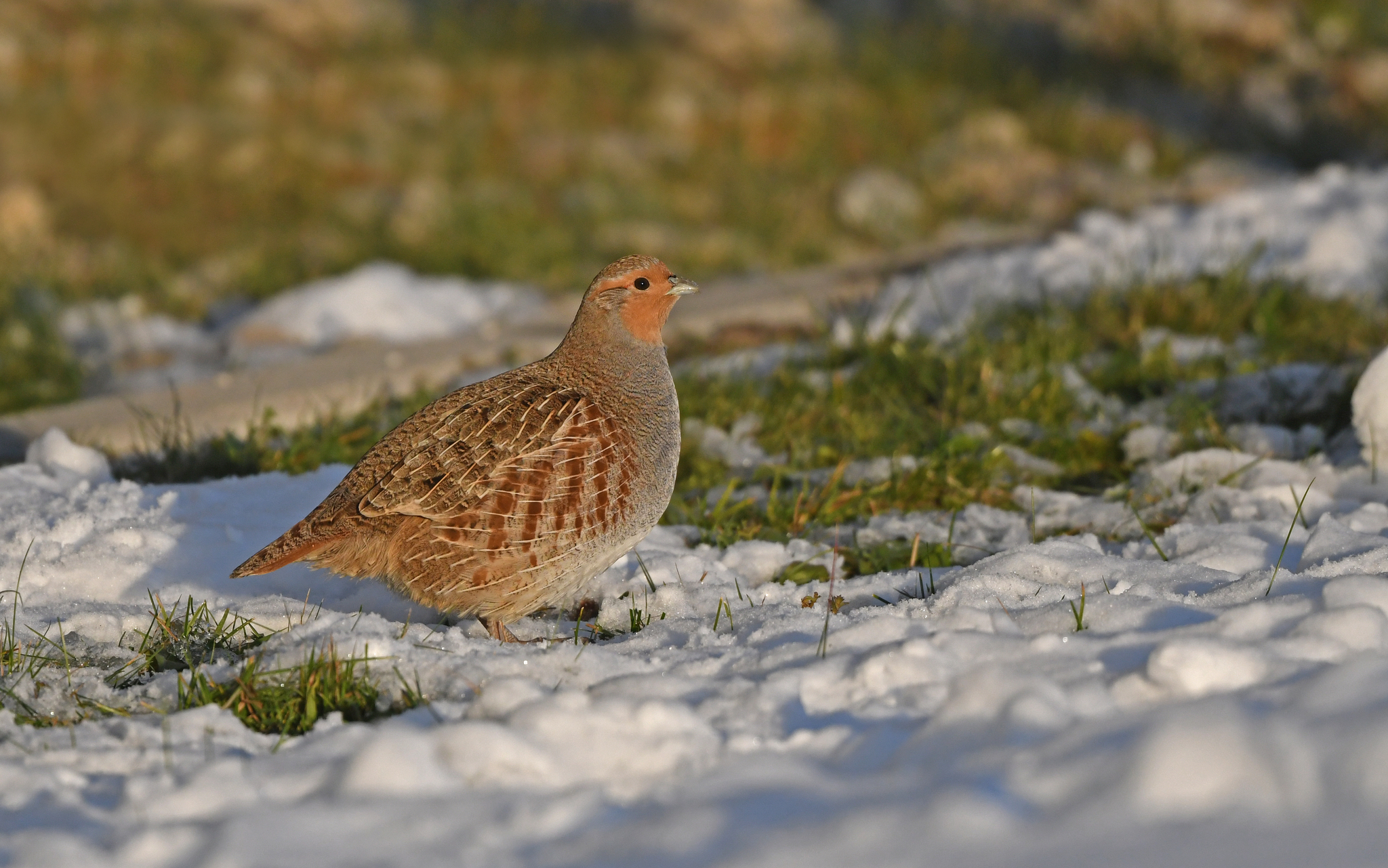
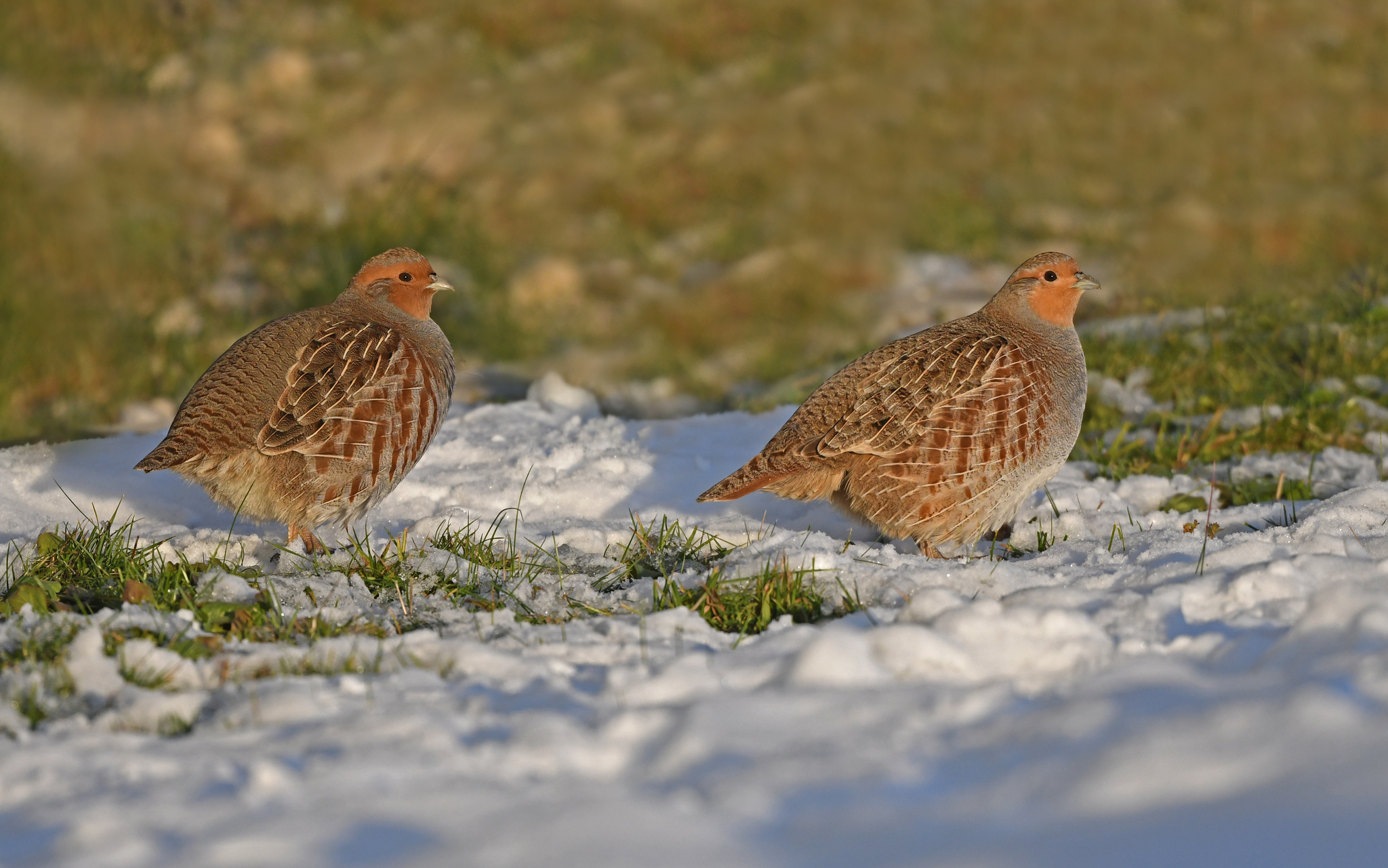
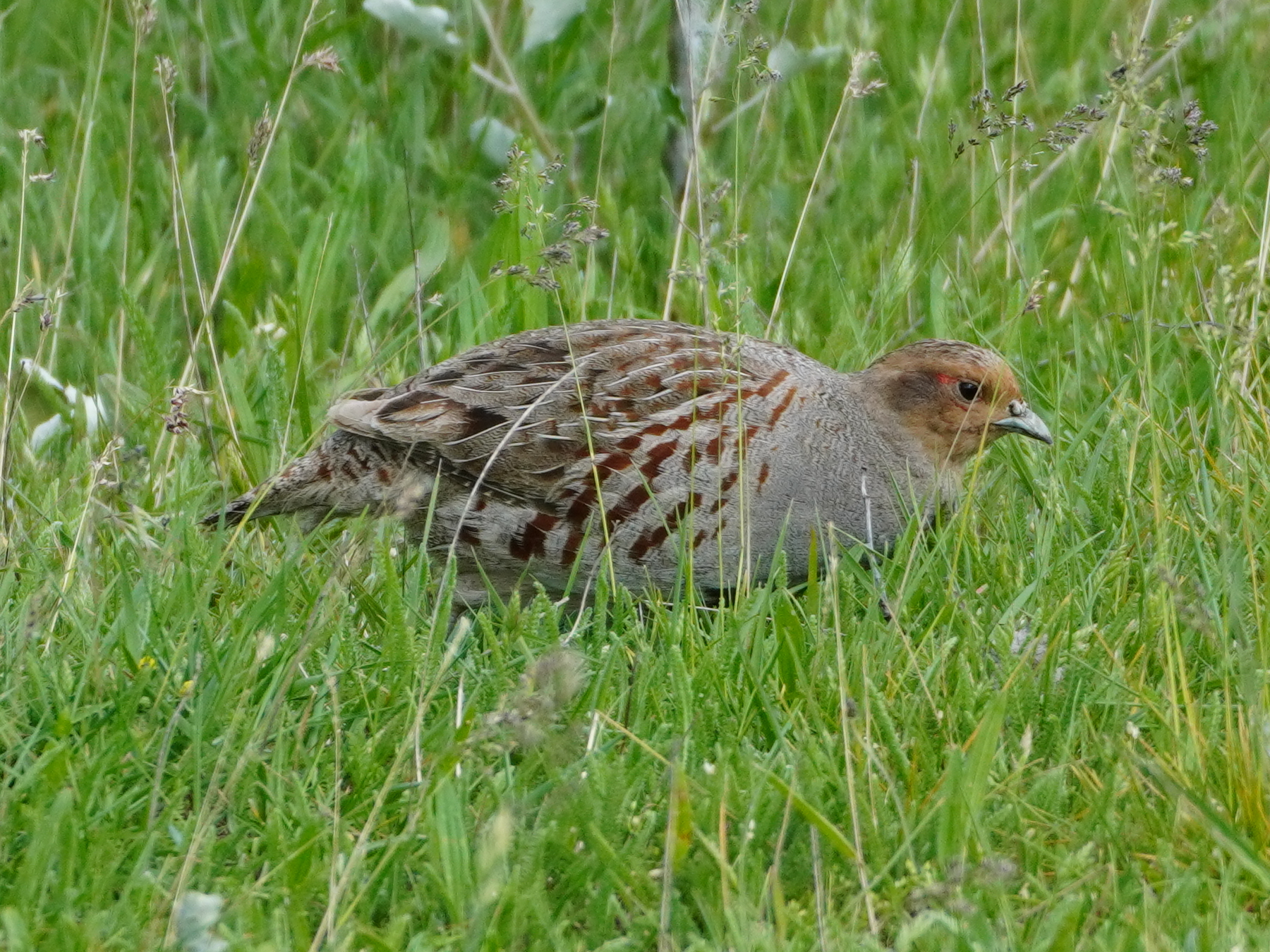
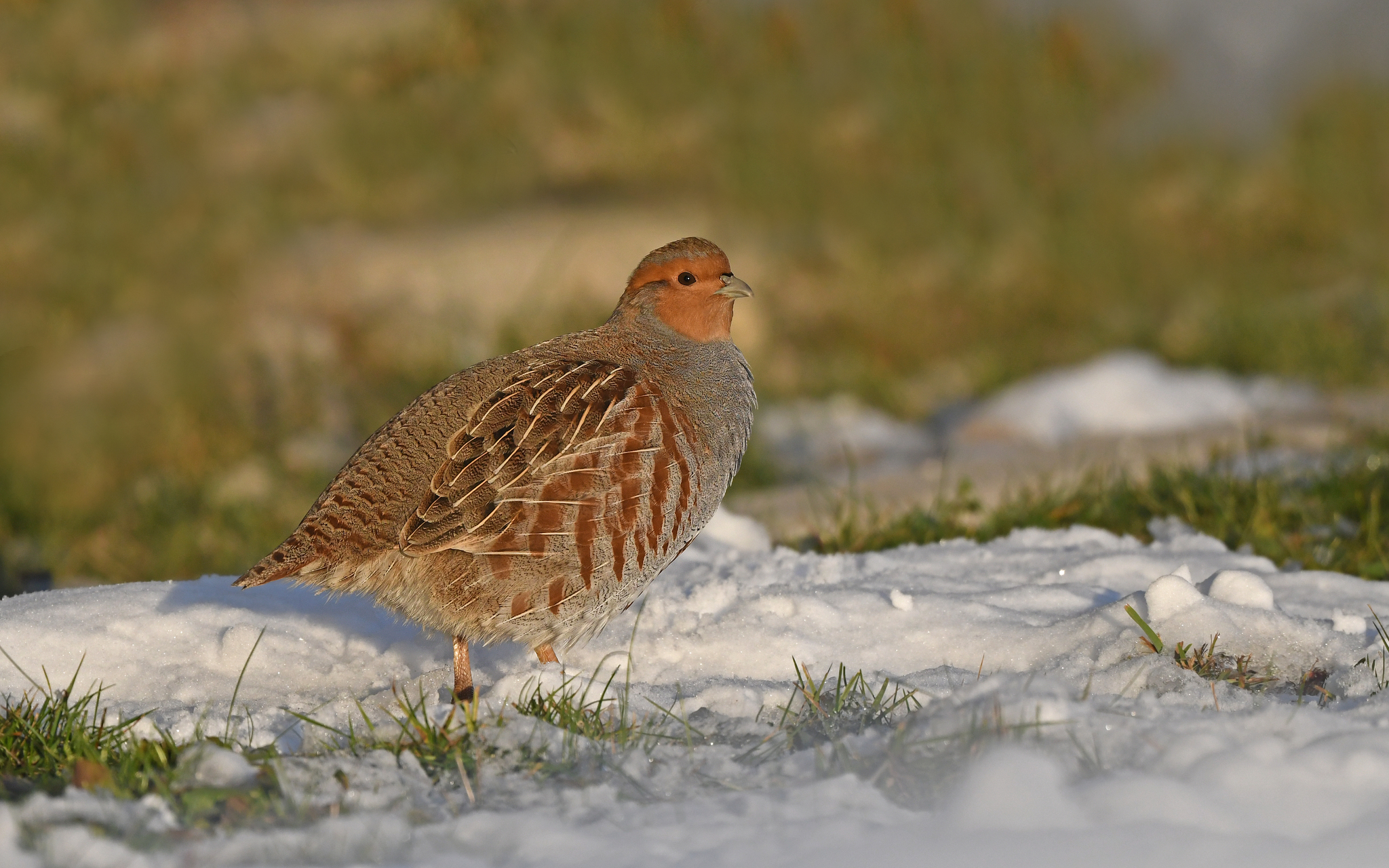
A rotund, brown-backed bird with grey flanks and chest. The white belly typically displays a large chestnut-brown horseshoe-shaped mark in males and in many females. Length ranges 29-31 cm with wingspan of 45-48 cm. Weights vary by subspecies: 320-455 g for the nominate race, 350-600 g for the larger P. p. robusta. Males and females are similar in size, though females appear slightly duller with a smaller dark belly patch. A key distinguishing feature is the 'cross of Lorraine' pattern on tertiary coverts: females show two transverse bars while males show one. Young birds are predominantly yellow-brown without the adult face and underpart markings.
Identification
The chestnut horseshoe mark on the belly is a key field mark, especially in males. The 'cross of Lorraine' pattern on the tertiary coverts provides reliable sexing in hand: two bars indicate female, one bar indicates male. In flight, shows rounded wings and gives a distinctive rick rick rick call. The harsh, high-pitched kieerr-ik song is also characteristic. Similar to other gamebirds but distinguished by the combination of grey flanks, brown back, and belly horseshoe marking.
Distribution & Habitat
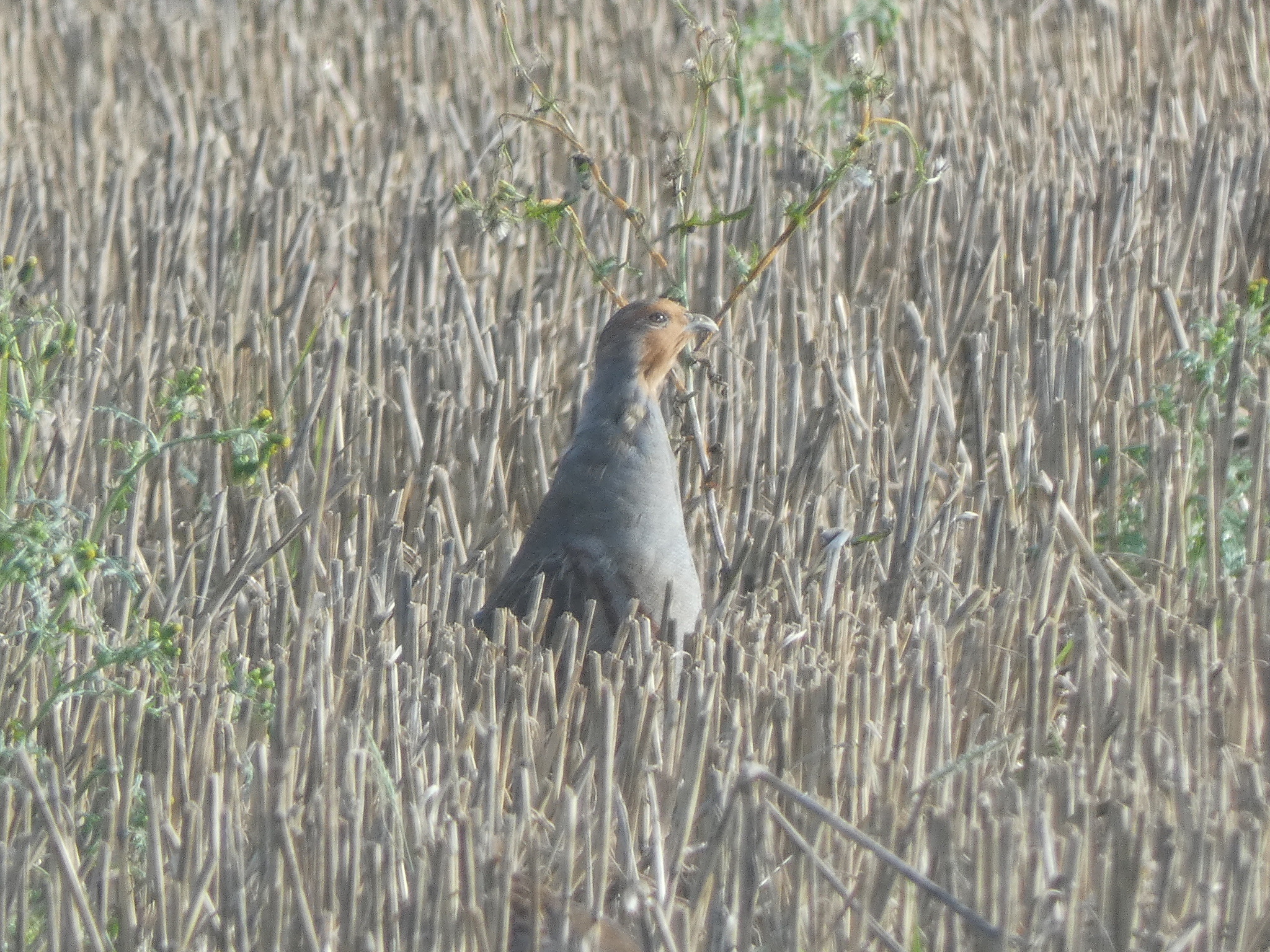
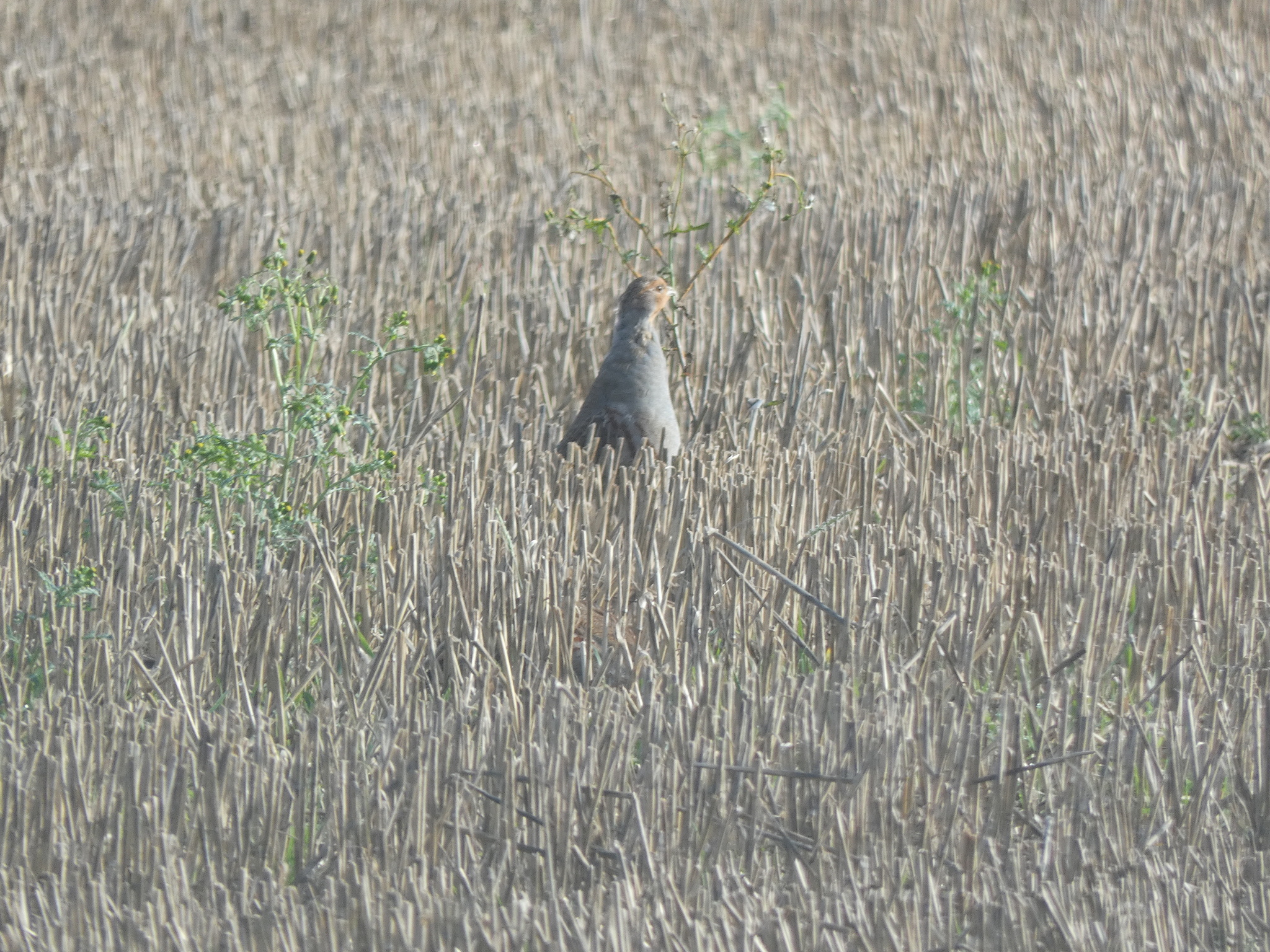
Breeds on farmland across most of Europe and western Palearctic to southwestern Siberia. Introduced widely as a gamebird to Canada, United States, South Africa, Australia, and New Zealand. In North America, often called 'Hungarian partridge' or 'hun'. Non-migratory species found year-round in breeding areas. Habitat consists primarily of cereal field margins and agricultural land. Outside breeding season, forms flocks of up to 30 birds.
Behavior & Ecology
Primarily seed-eating, though chicks require insects as essential protein during their first 10 days of life—during this period they can only digest insects. Parents lead chicks to field edges where insects are abundant. Breeding occurs in cereal field margins, most commonly winter wheat. Females lay up to 20 eggs in ground nests. Vocalizations include a harsh, high-pitched song (kieerr-ik) and a rick rick rick call given when disturbed. Flocks of up to 30 form outside breeding season.
Conservation
IUCN Red List status: Least Concern globally. However, populations have declined significantly in intensive agricultural areas, particularly the United Kingdom, where it appeared on the Birds of Conservation Concern Red List in 2015. Numbers have fallen by up to 85% in some areas over 25 years due to loss of breeding habitat and insecticides reducing insect populations. A UK Biodiversity Action Plan species since 1995. Conservation efforts include creating conservation headlands. In Ireland, populations are now largely confined to Lough Boora reserve in County Offaly, where numbers have been boosted to approximately 900 through targeted conservation.
Culture
Widely hunted as a gamebird throughout its range. In North America, it is known colloquially as 'Hungarian partridge' or 'hun' due to introductions from Hungary. A popular gamebird in large areas of North America. The species has no significant folklore traditions noted in available sources.
Source: Wikipedia · CC BY-SA 3.0
Taxonomy
- Order
- Galliformes
- Family
- Phasianidae
- Genus
- Perdix
- eBird Code
- grypar
Subspecies (8)
-
Perdix perdix armoricana
locally in France
-
Perdix perdix canescens
Türkiye eastward to the Caucasus, Transcaucasia, and northwestern Iran
-
Perdix perdix hispaniensis
central Pyrenees (northeastern Portugal and northern Spain)
-
Perdix perdix italica
Italy
-
Perdix perdix lucida
Finland eastward to Ural Mountains and southward to Black Sea and northern Caucasus
-
Perdix perdix perdix
Britain and southern Scandinavia to Greece and Bulgaria; introduced to western Canada and USA
-
Perdix perdix robusta
Ural Mountains to southwestern Siberia and northwestern China
-
Perdix perdix sphagnetorum
moors of northern Holland and northwestern Germany
Data Sources
Species description from Wikipedia, licensed under CC BY-SA 3.0.
Bird images and sounds sourced from GBIF, contributed by citizen scientists worldwide under Creative Commons licenses.
Taxonomy data from AviList 2025.