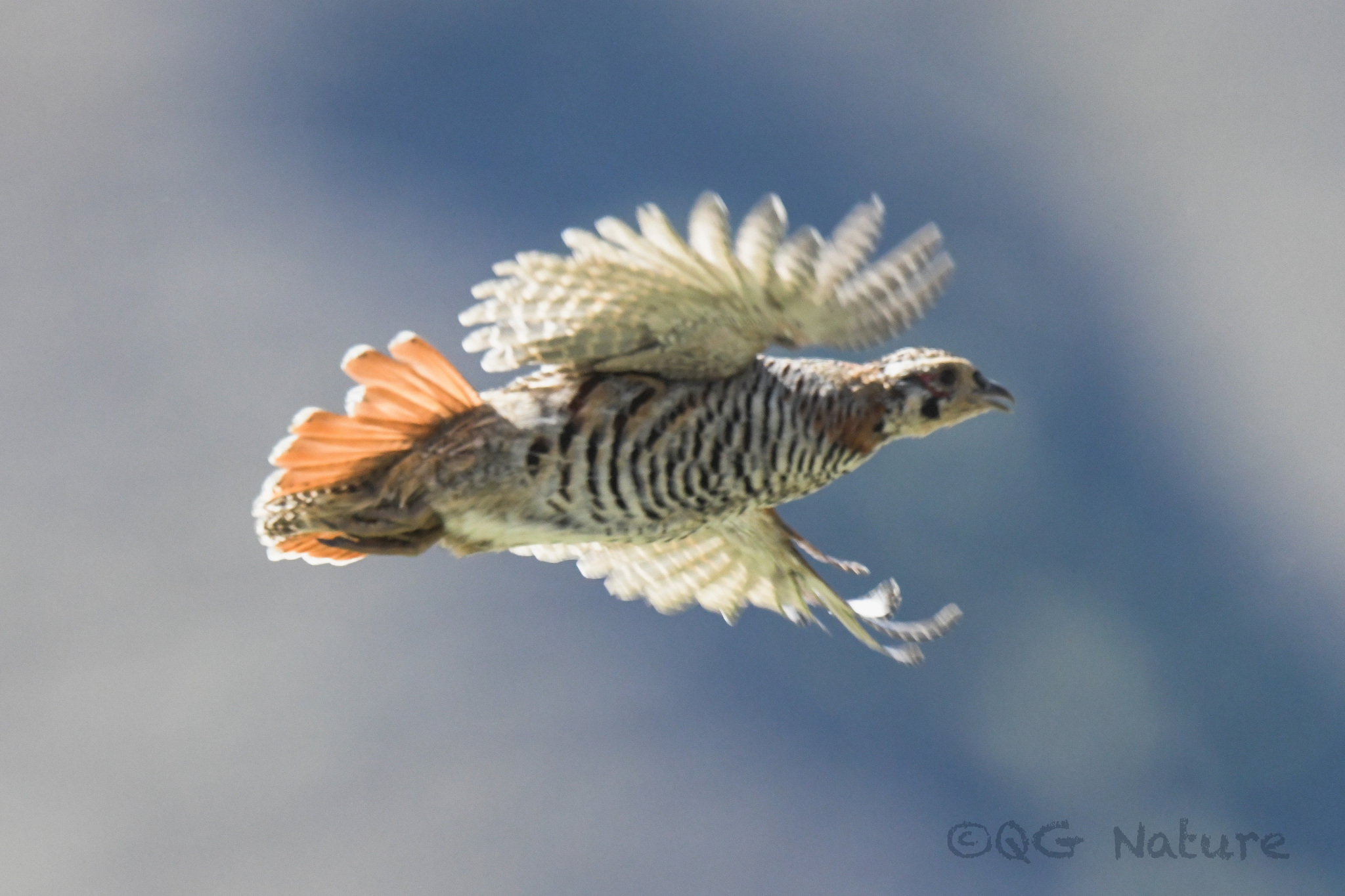
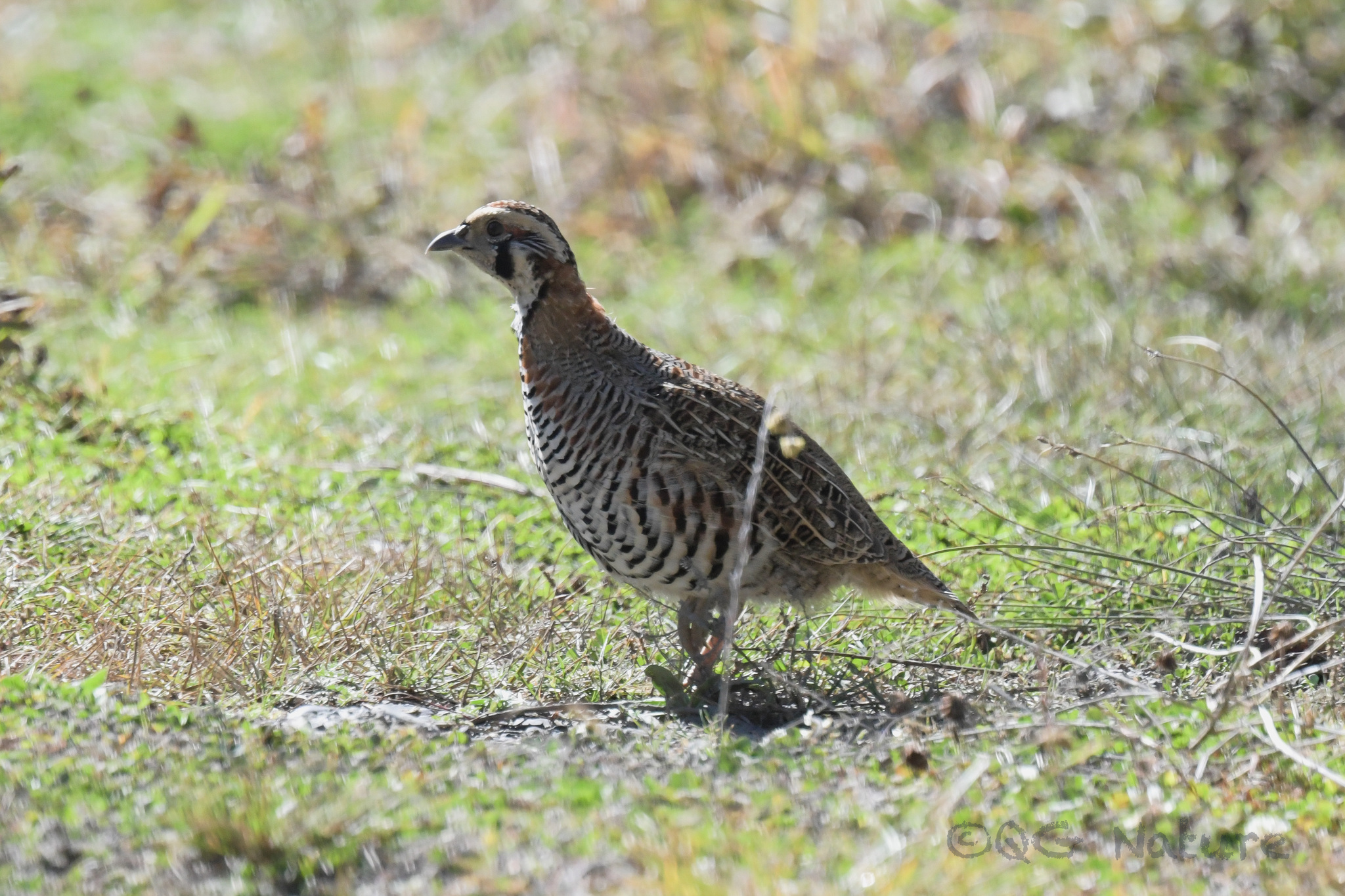

Tibetan Partridge
Perdix hodgsoniae
高原山鹑
Introduction
A gamebird in the pheasant family Phasianidae of the order Galliformes. Found widely across the Tibetan Plateau, from Tibet and Northern Pakistan through Kashmir into northwestern India, northern Nepal, Sikkim, Bhutan, and western China. Inhabits mountain slopes and high meadows with Rhododendron bushes, dwarf juniper, or other scrubs at elevations of 3,600-4,250 m (11,800-14,000 ft). Distinctive for its striking black and white face pattern contrasting with a rufous collar; neither males nor females have leg spurs. The species appears secure in its extensive and often inaccessible range on the Tibetan Plateau.
Description
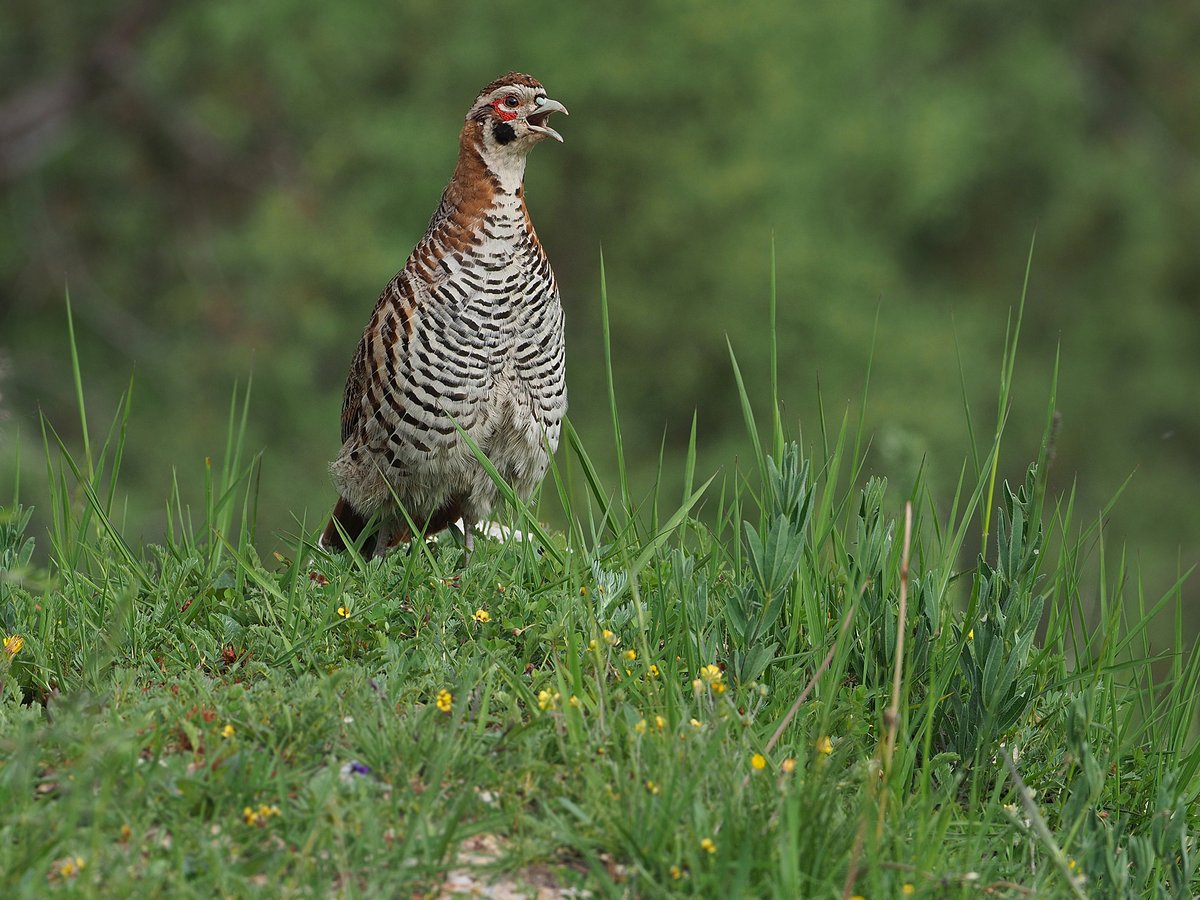
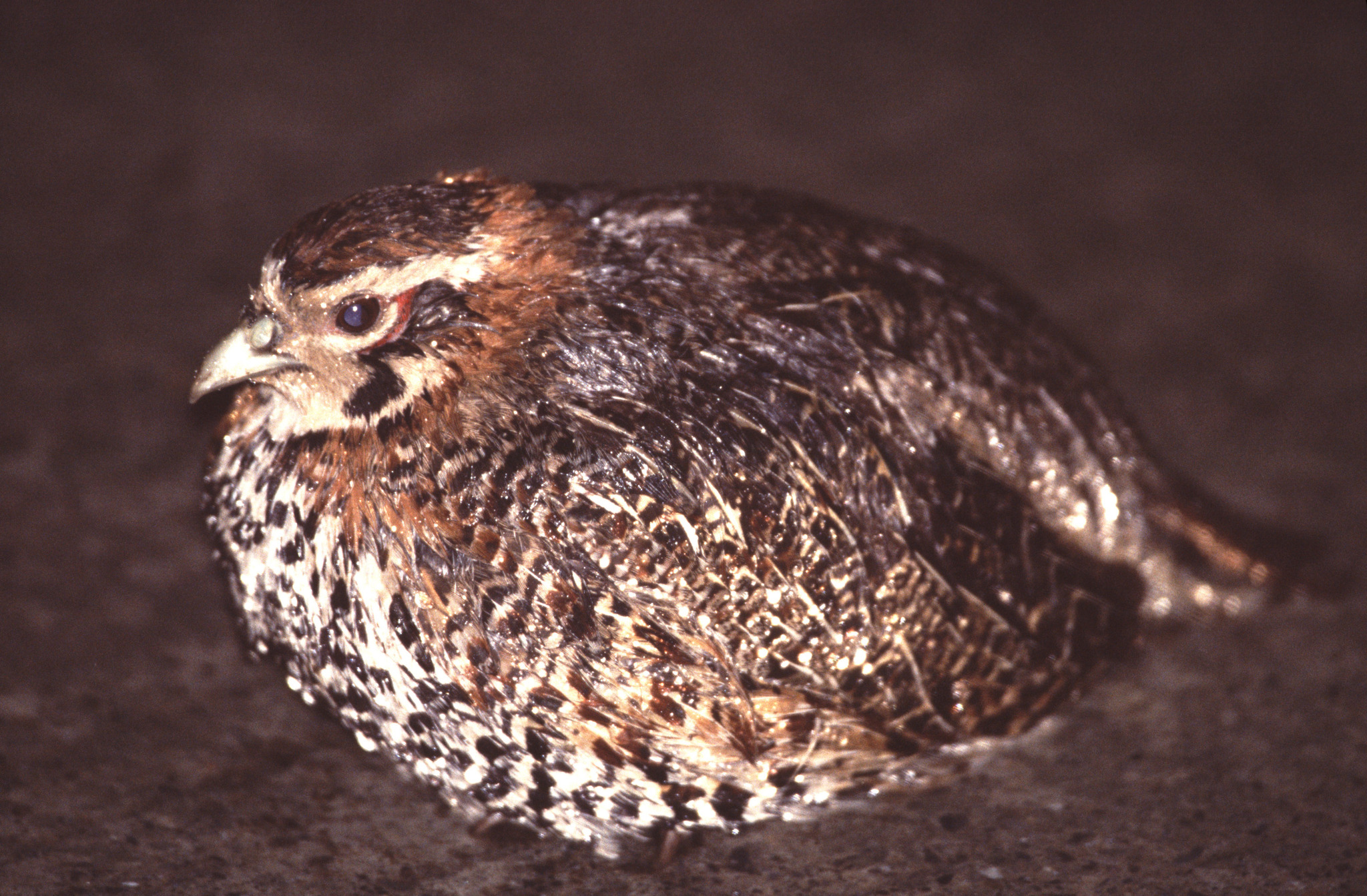
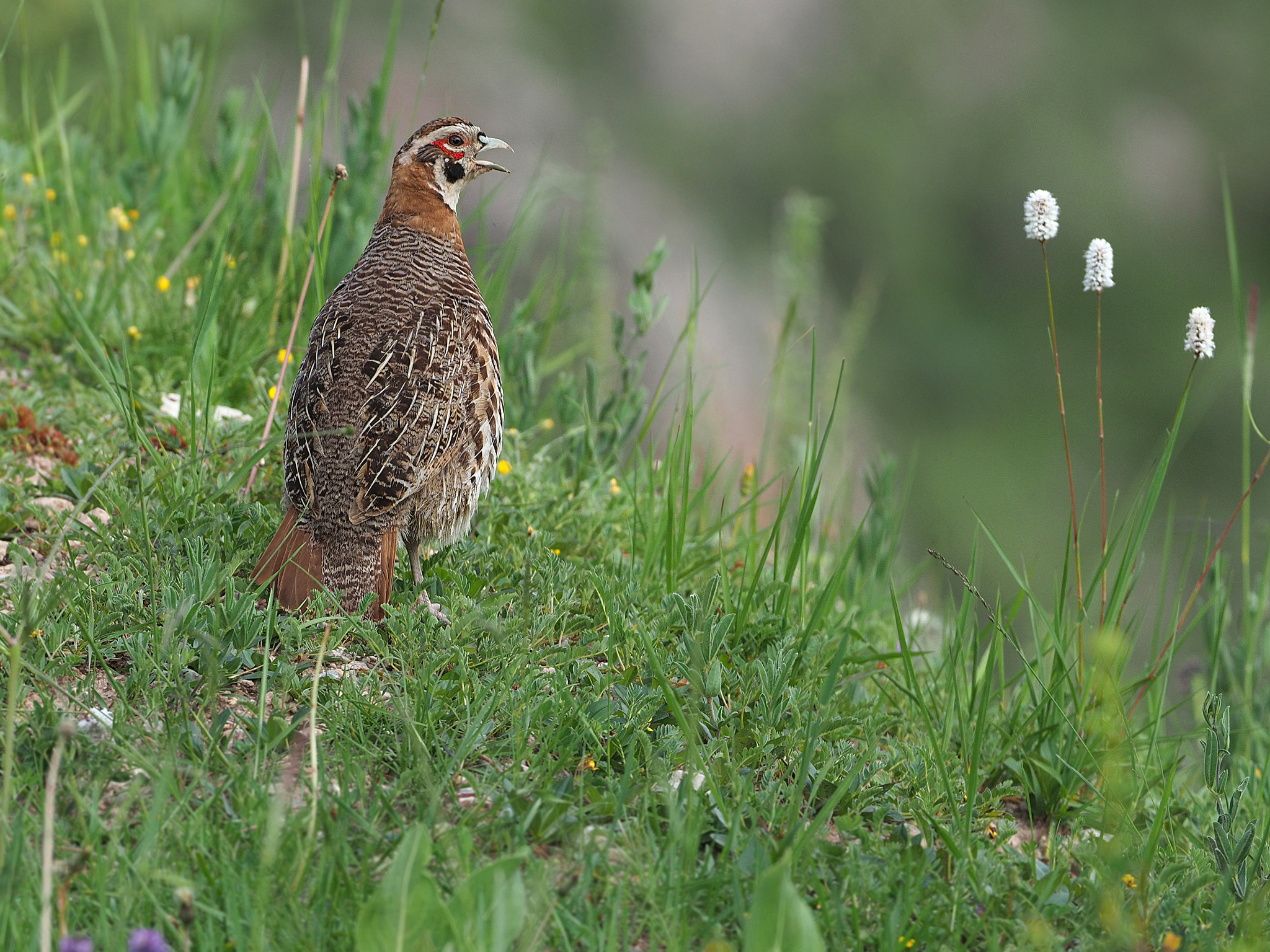
A partridge measuring 28-31 cm in length with brown upperparts barred with rufous and black, and a blackish belly patch. The face pattern is striking: the forehead, broad supercilium, face, and throat are white, with a broad black stripe running below the eyes. A broad chestnut hind neck collar contrasts with the white face. The tail feathers are chestnut, tipped with white, and there are 16 tail feathers (unlike other Perdix species which have 18). The lower plumage is pale buff closely barred with black, with broad chestnut bars on the flanks. Males have a black belly patch that is barred in females; females are duller overall. Juveniles are uniformly buff-brown without the adult facial and underpart markings. Neither sex has leg spurs.
Identification
Readily distinguished from other Perdix species (grey and Daurian partridges) by its distinctive black and white face pattern with a chestnut hind neck collar. The broad black stripe running from below the eyes and the white forehead, supercilium, face, and throat create a striking contrast. Despite this bold head pattern, the overall coloration provides effective cryptic camouflage against the rocky terrain.
Distribution & Habitat
Breeds across the Tibetan Plateau in Tibet, Northern Pakistan through Kashmir into northwestern India, northern Nepal, Sikkim, Bhutan, and western China. Inhabits mountain slopes and high meadows with Rhododendron bushes, dwarf juniper, or other scrub cover. Non-migratory but makes seasonal altitudinal movements, descending to lower altitude desert plains in winter and ascending to the snowline in summer.
Behavior & Ecology
A seed-eating species, though young birds require insects for protein. Outside the breeding season forms flocks of 10-15 birds that prefer running to flying. When disturbed, flies short distances on rounded wings, scattering noisily before regrouping downhill. Pairs form in mid-March for monogamous breeding. Nests in grass-lined depressions on rocky plateaus, near bushes, or in standing crops; clutches of 8-10 brownish-buff eggs are laid May to June. Males assist with chick care. The typical call is a rattling scherrrrreck-scherrrrreck, heard mainly in mornings; the flight call is a shrill chee chee chee.
Conservation
Appears secure in its extensive and often inaccessible range on the Tibetan Plateau.
Culture
The scientific name hodgsoniae commemorates Anne Scott, first wife of Brian Houghton Hodgson, who described the species. The original genus was based on the Tibetan name Sakpha for this bird.
Source: Wikipedia · CC BY-SA 3.0
Taxonomy
- Order
- Galliformes
- Family
- Phasianidae
- Genus
- Perdix
- eBird Code
- tibpar1
Subspecies (3)
-
Perdix hodgsoniae caraganae
Ladakh (far northwestern India) through far eastern Uttarkhand
-
Perdix hodgsoniae hodgsoniae
Himalayas (western Nepal to Assam and eastern Tibet)
-
Perdix hodgsoniae sifanica
eastern Tibet to west-central China
Data Sources
Species description from Wikipedia, licensed under CC BY-SA 3.0.
Bird images and sounds sourced from GBIF, contributed by citizen scientists worldwide under Creative Commons licenses.
Taxonomy data from AviList 2025.