Daurian Partridge
Perdix dauurica
斑翅山鹑
Introduction
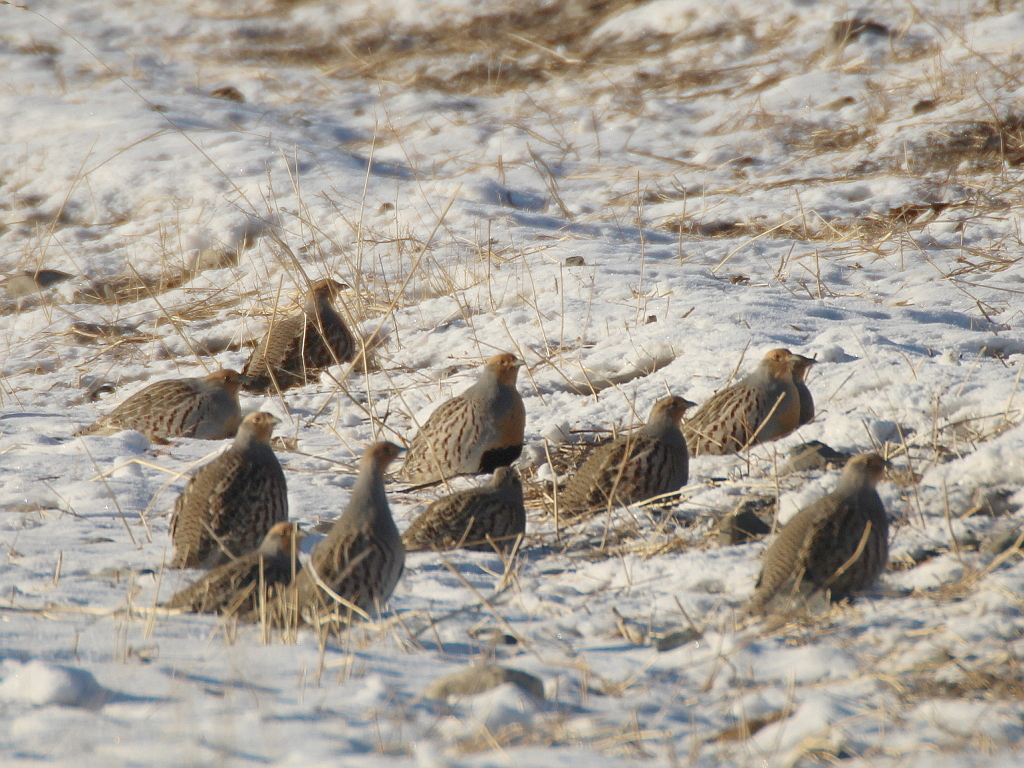
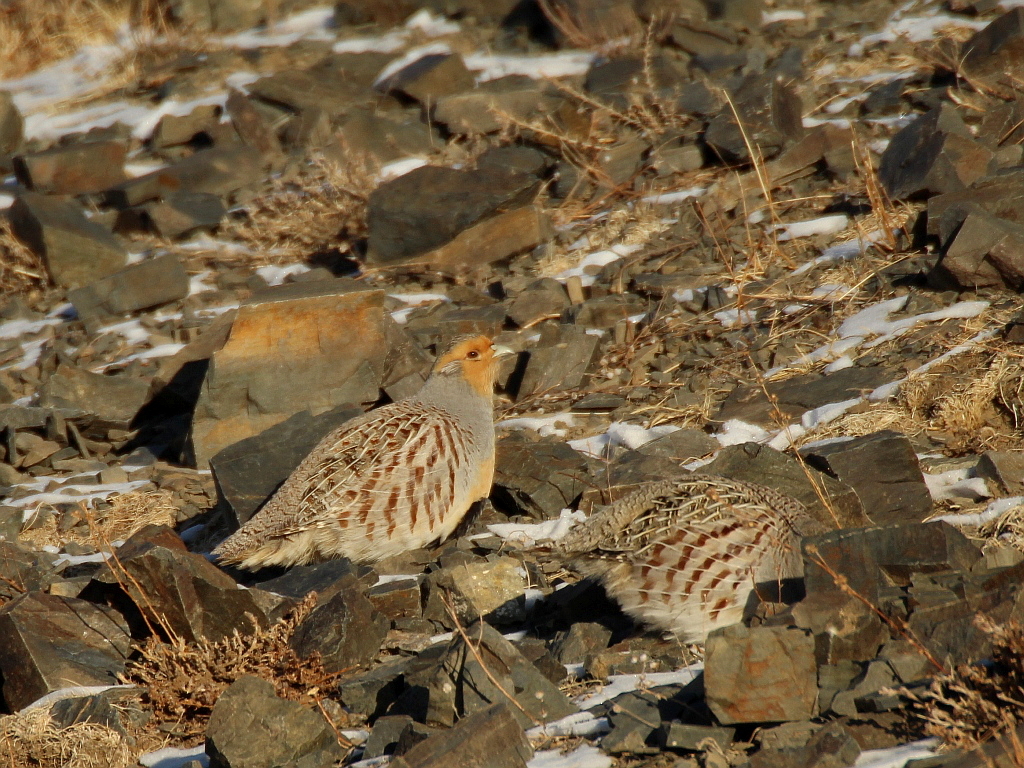
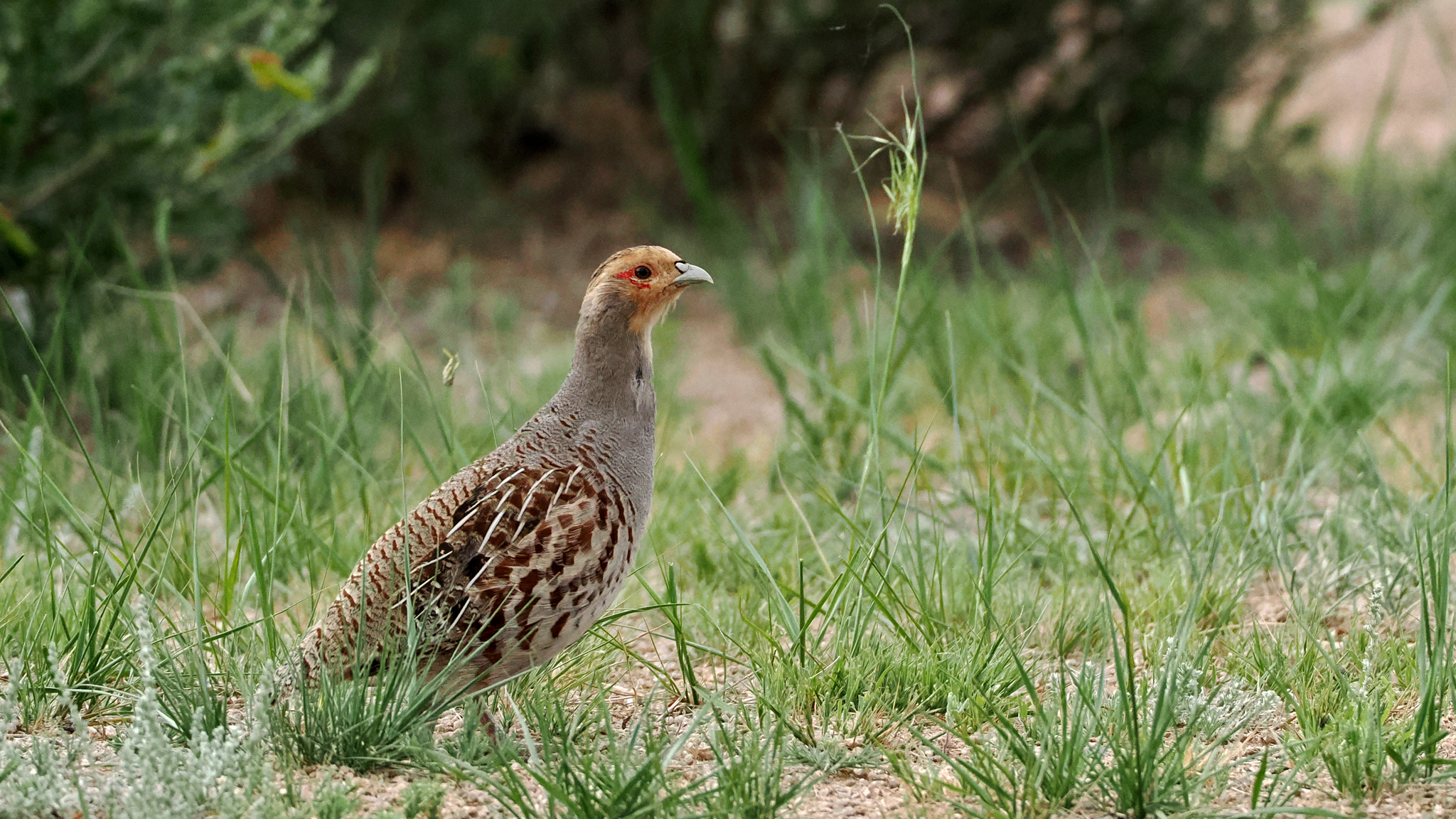
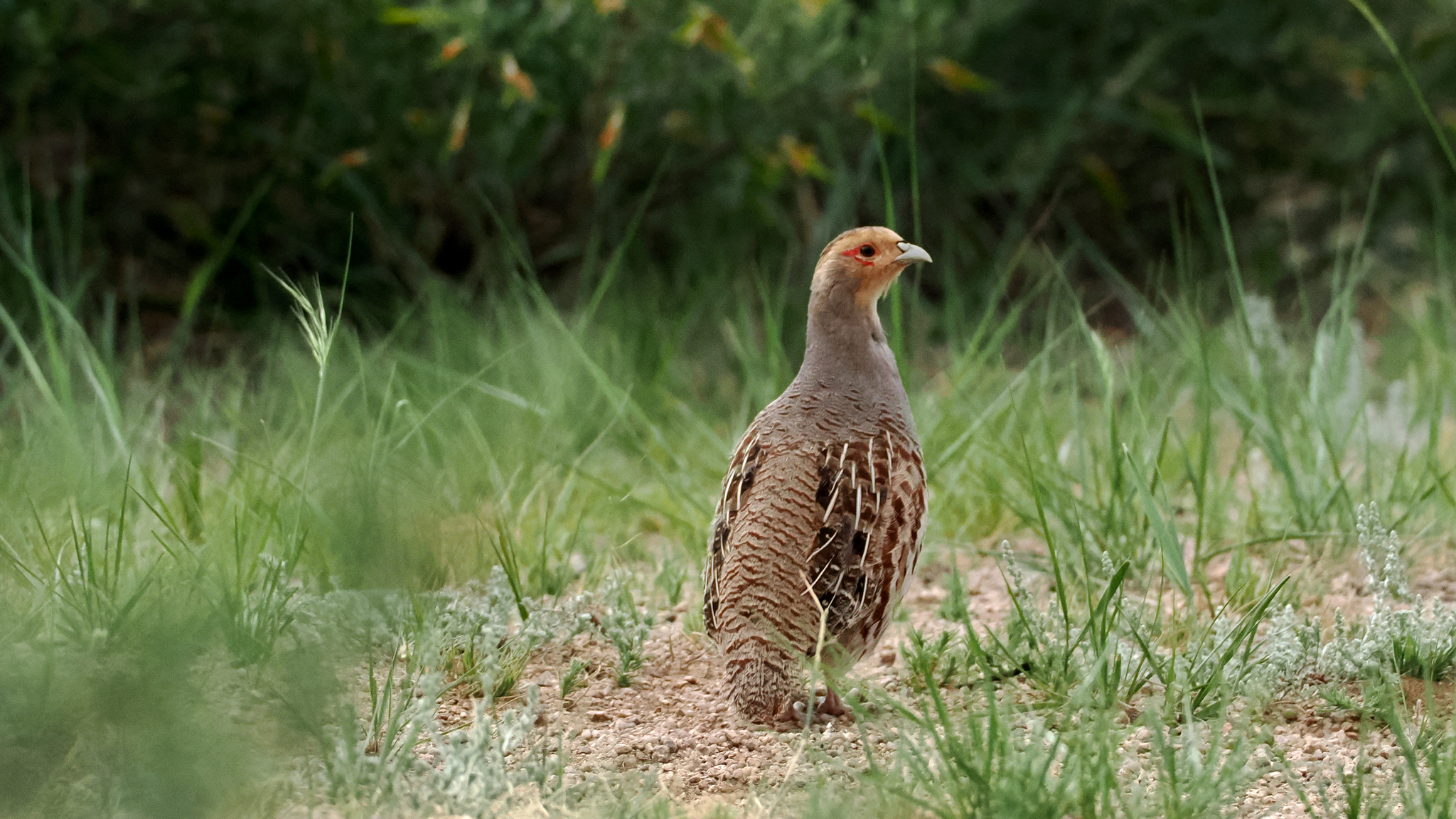
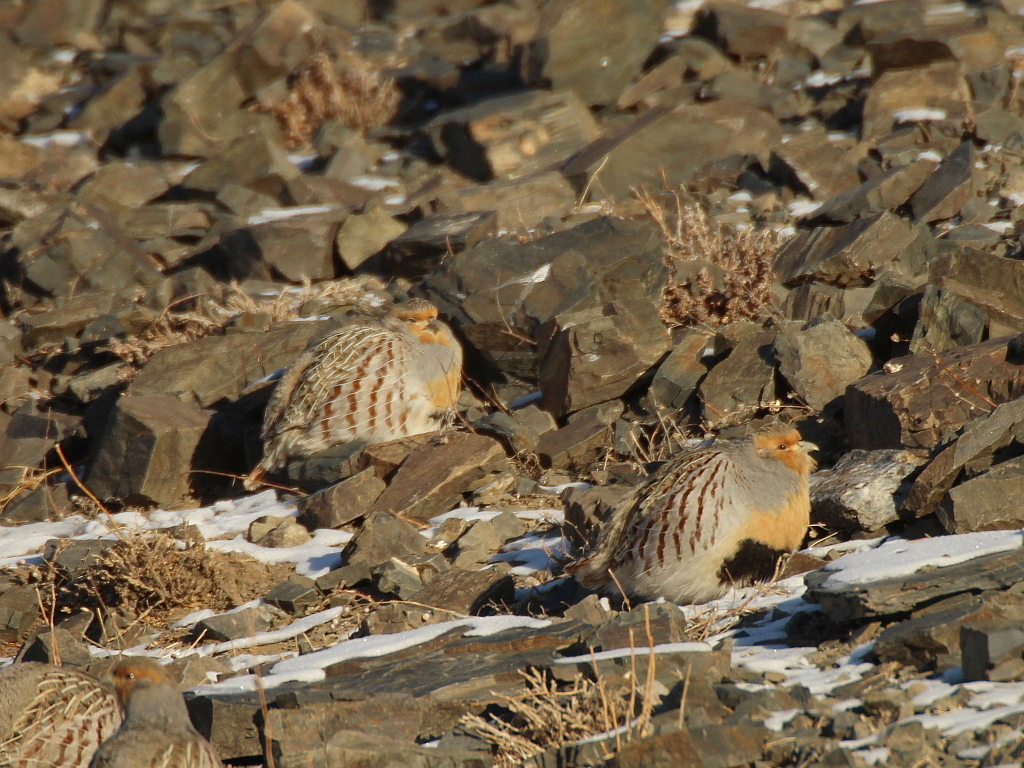
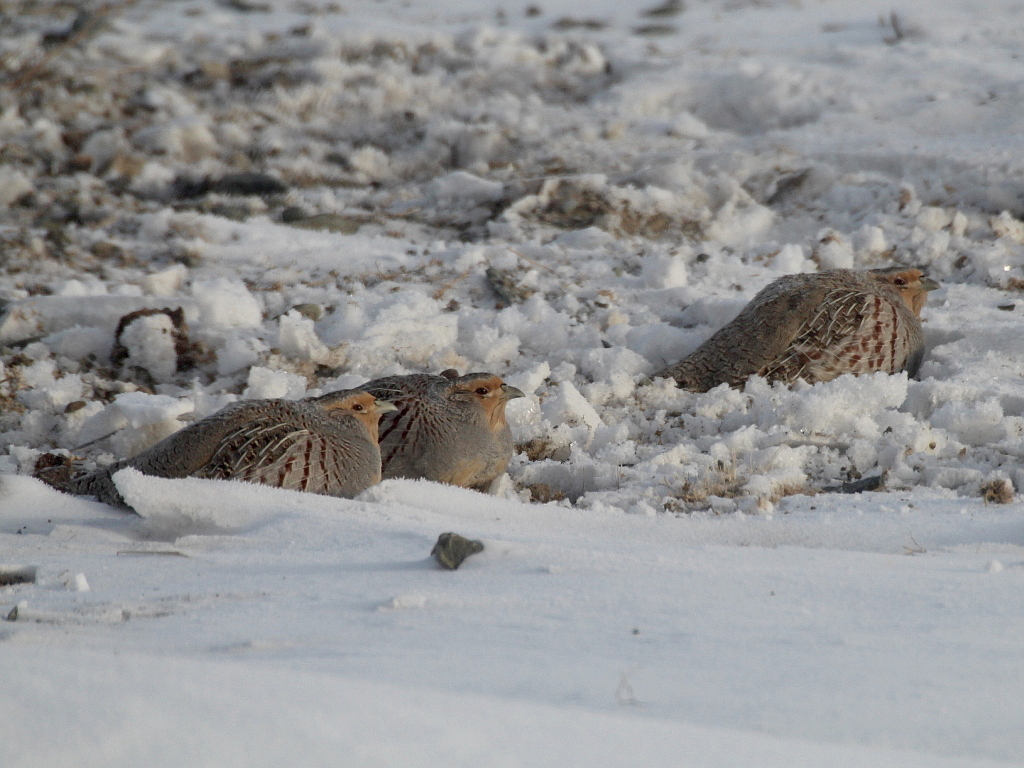
Gamebird in the pheasant family Phasianidae of the order Galliformes. Inhabits open grassland and steppe including farmland across temperate East Asia from Kyrgyzstan eastward to China and Mongolia. A non-migratory, rotund bird distinguished by its sandy-orange face and distinctive 'beard' of long feathers under the beak. Forms flocks outside the breeding season. Not globally threatened, though local populations may face hunting pressure.
Description
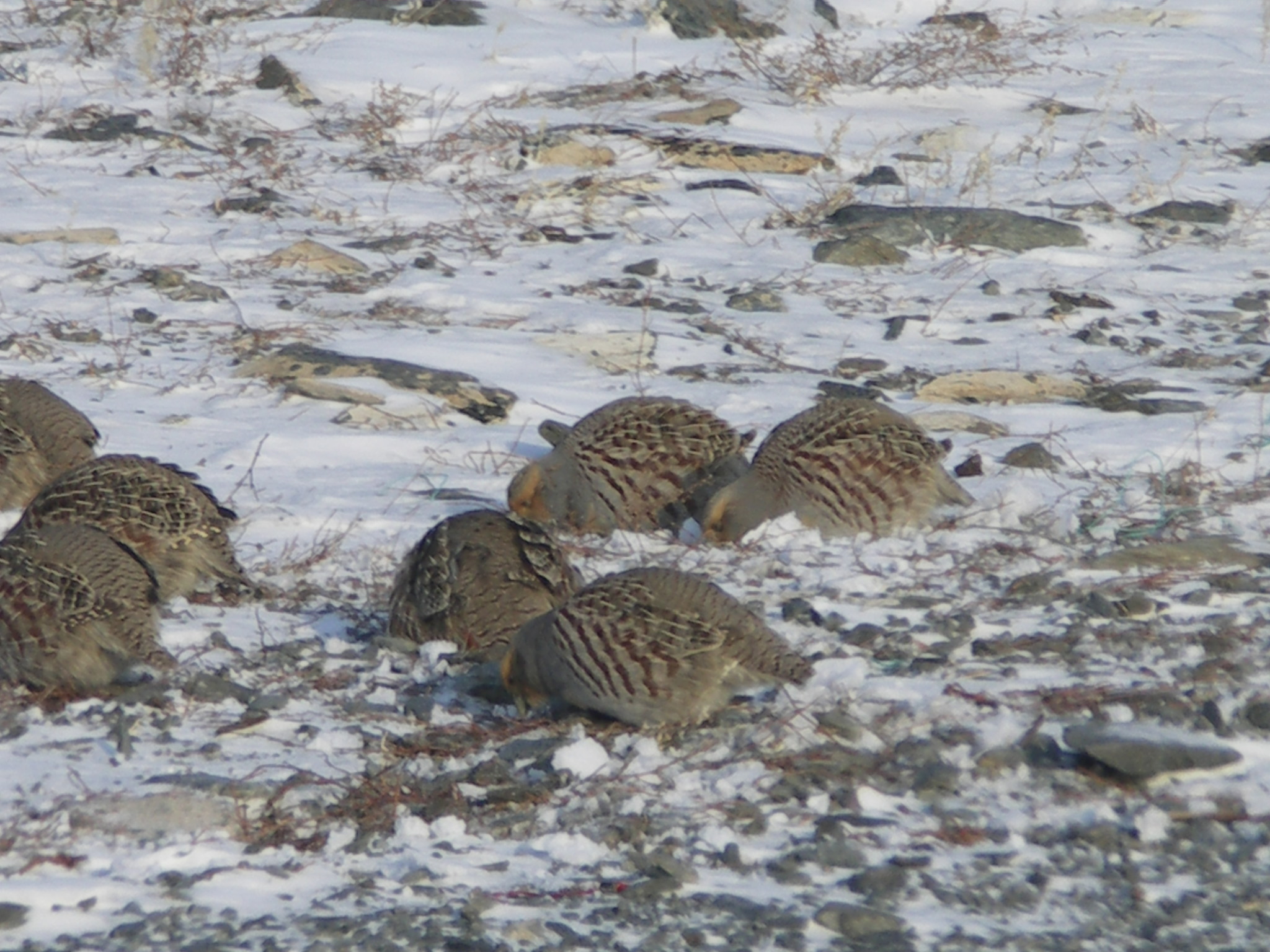
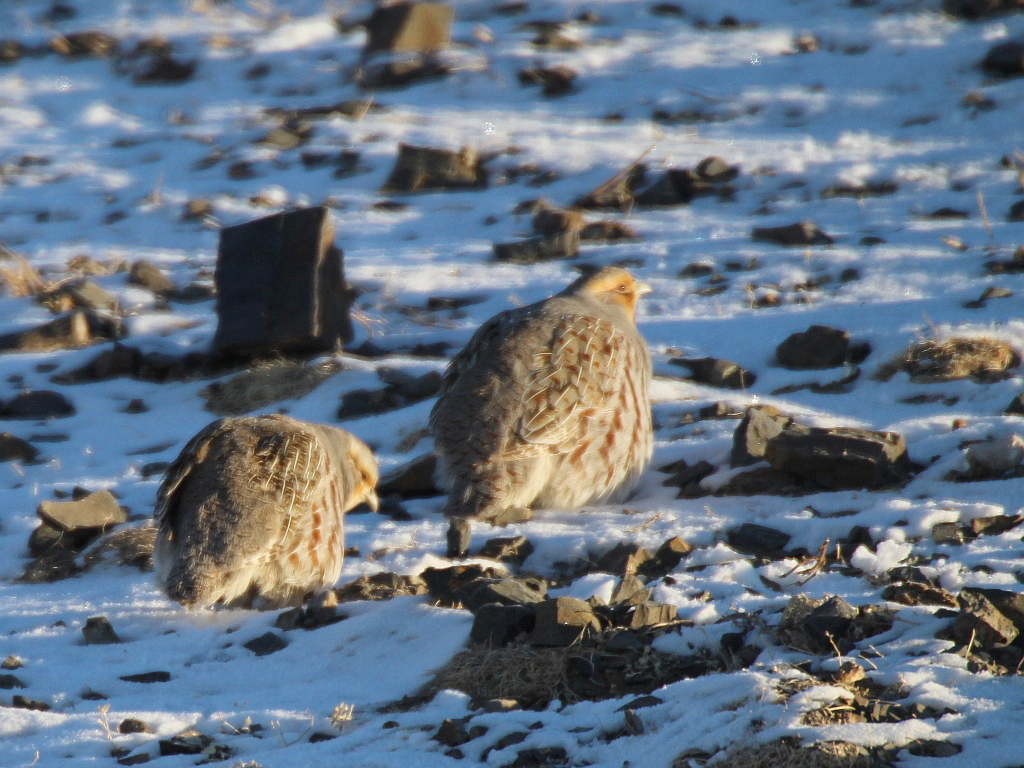
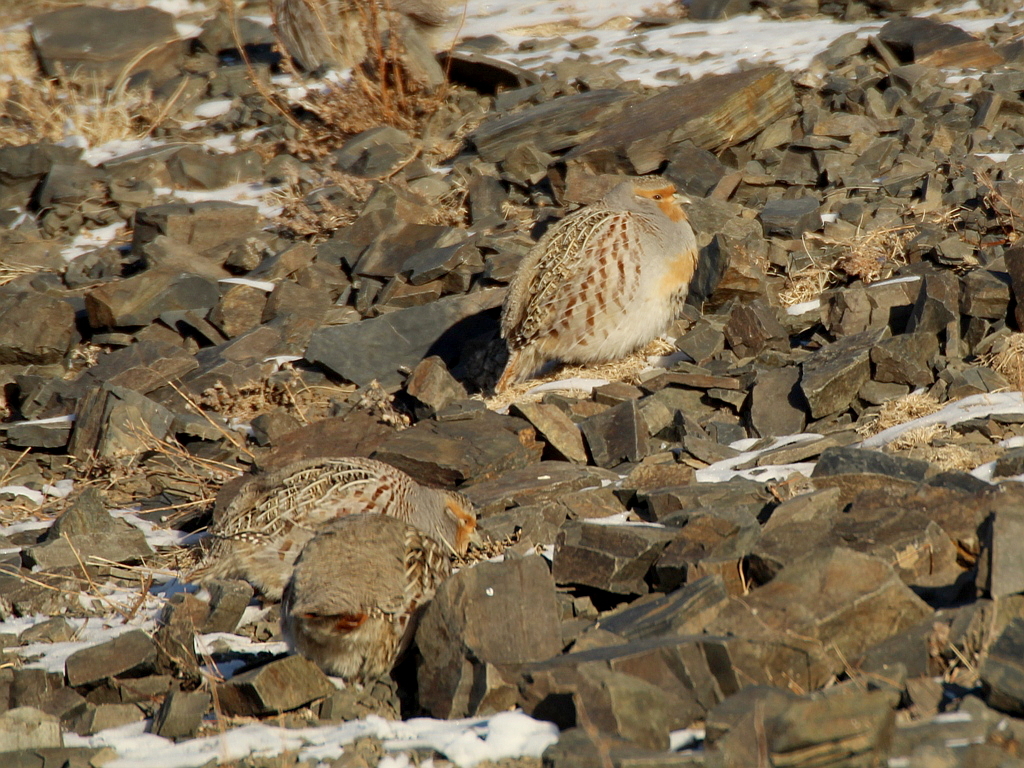
Rotund bird measuring 28-30 cm (11-12 in) long. Males weigh 200-340 g (7.1-12.0 oz) and females 290-330 g (10-12 oz). Features a sandy-orange face with prominent 'beard' feathers under the beak. Head and underparts are pale slate-grey with a buff line on the chest and a black belly patch. The female has a smaller belly patch and appears slightly duller overall. Subspecies show progressive darkening and increased rufous plumage toward the east.
Identification
Song is a higher-pitched, sped-up version of the grey partridge's call—a shrill, grating 'kieerr-ik!'. Overlaps in range with the very similar and closely related grey partridge, with which it forms a superspecies. Best distinguished by voice and the distinctive facial 'beard' feature.
Distribution & Habitat
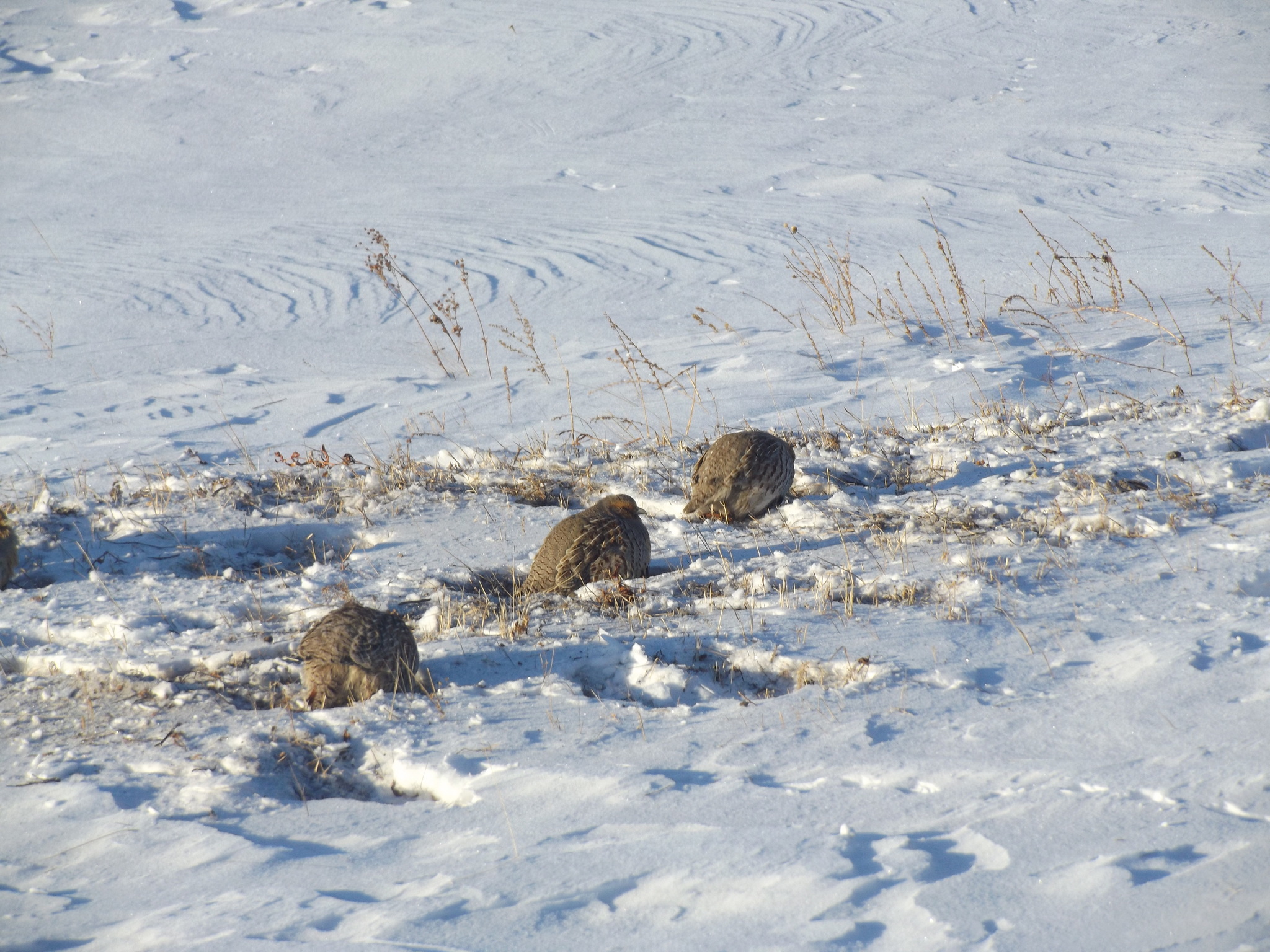
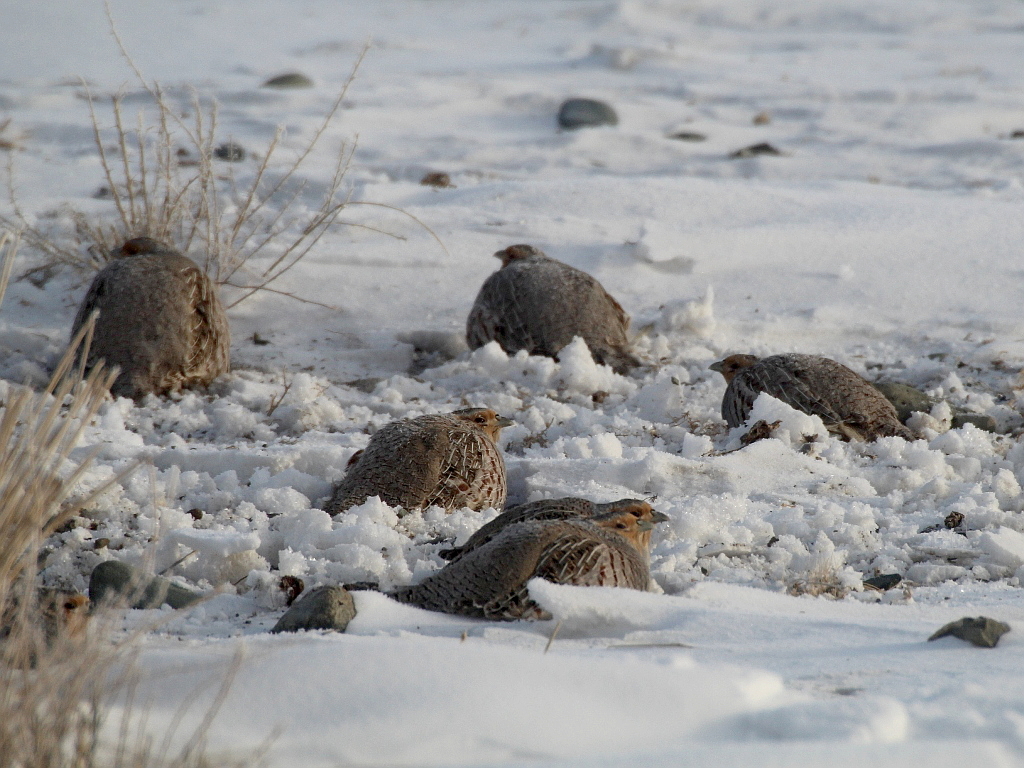
Breeds across temperate East Asia from Kyrgyzstan through Mongolia to China. Inhabits open country, ideally with adjacent bushes or open woodland, including farmland steppe. Non-migratory; forms flocks in autumn and winter outside the breeding season.
Behavior & Ecology
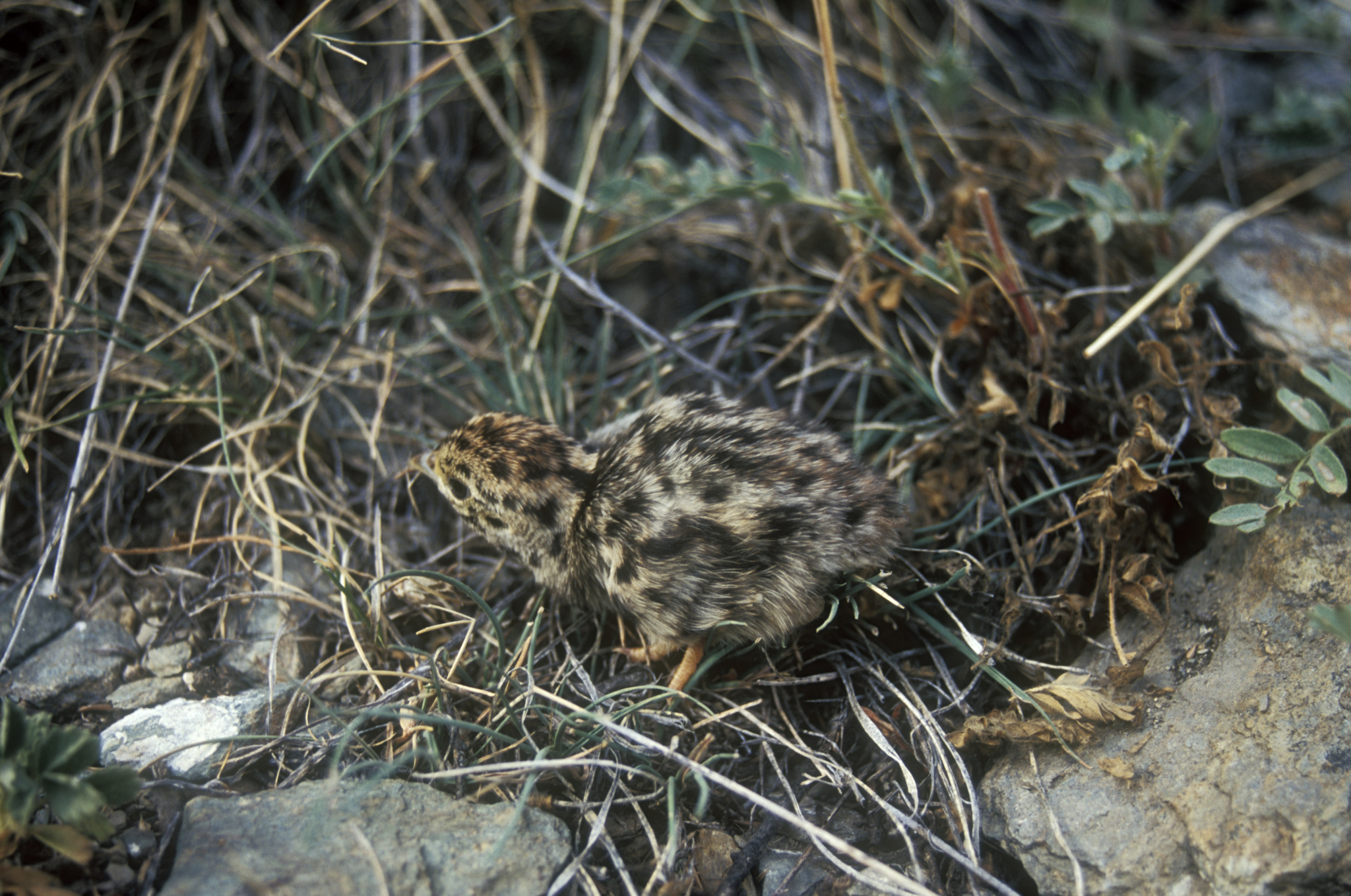
Forages most actively during morning and evening hours, resting at midday depending on weather. Egg-laying typically occurs the second to third week of May. Nest is lined with grasses and twigs on the ground under a bush or in tall grass, with a clutch of 13-20 olive-brown eggs. Chicks are pale yellow-brown dappled with dark brown and rufous. Primarily seed-eating, though chicks require insects for protein. Capable of short flights at about two weeks of age. Disturbed birds spring upward with whirring wings in an explosive takeoff, then fly to cover while giving an alarmed staccato call. Vocalizations include a grating 'kieerr-ik!' song and 'hek-hek-hek!' alarm.
Conservation
IUCN assessment: Not globally threatened. Local populations may be affected by hunting pressure in parts of its range.
Source: Wikipedia · CC BY-SA 3.0
Taxonomy
- Order
- Galliformes
- Family
- Phasianidae
- Genus
- Perdix
- eBird Code
- daupar1
Subspecies (2)
-
Perdix dauurica dauurica
steppes of Mongolia and northern China (Xinjiang)
-
Perdix dauurica suschkini
steppes of Manchuria to western China (Gansu and Qinghai)
Data Sources
Species description from Wikipedia, licensed under CC BY-SA 3.0.
Bird images and sounds sourced from GBIF, contributed by citizen scientists worldwide under Creative Commons licenses.
Taxonomy data from AviList 2025.