Spot-billed Pelican
Pelecanus philippensis
斑嘴鹈鹕
Introduction
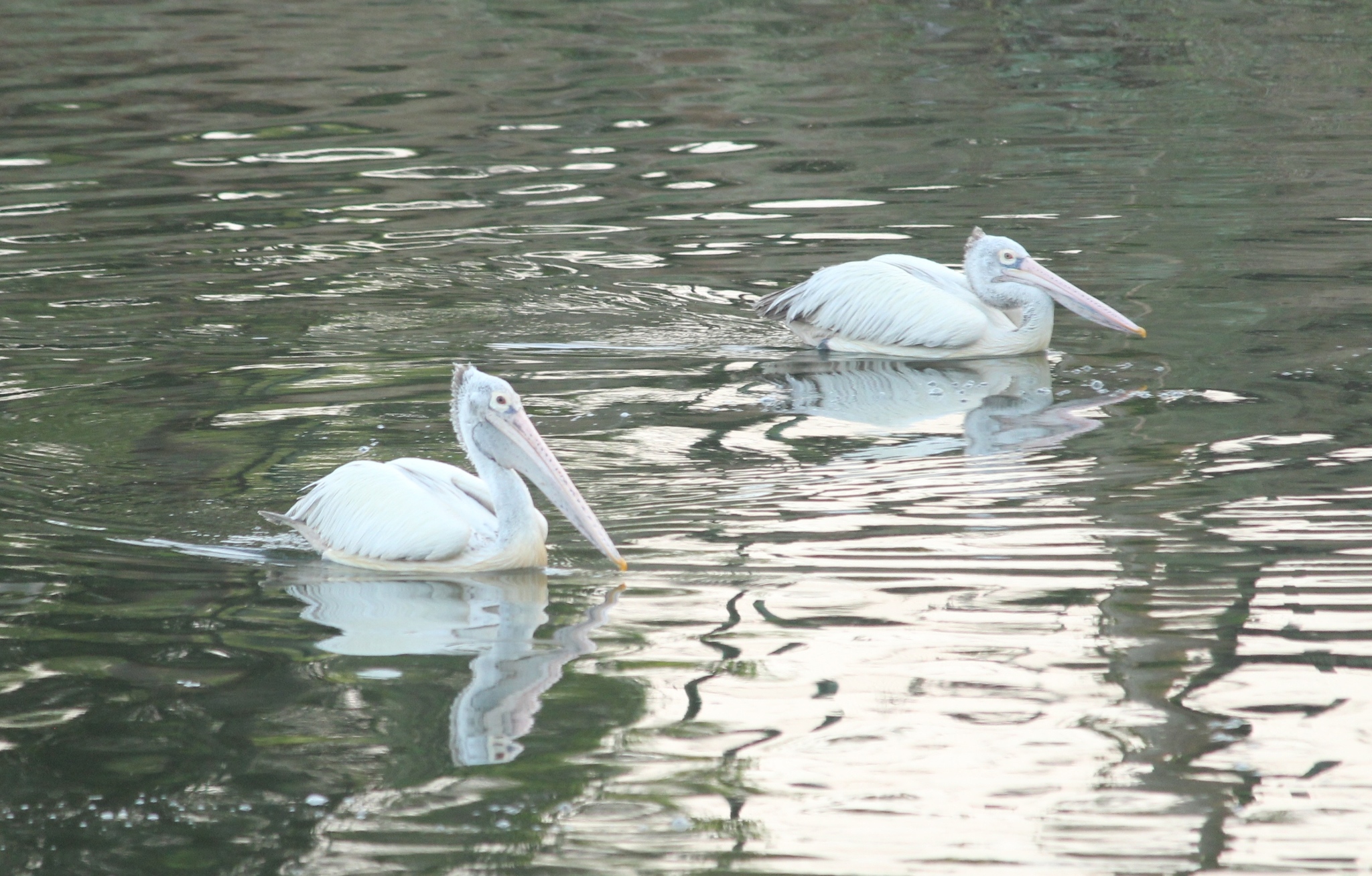
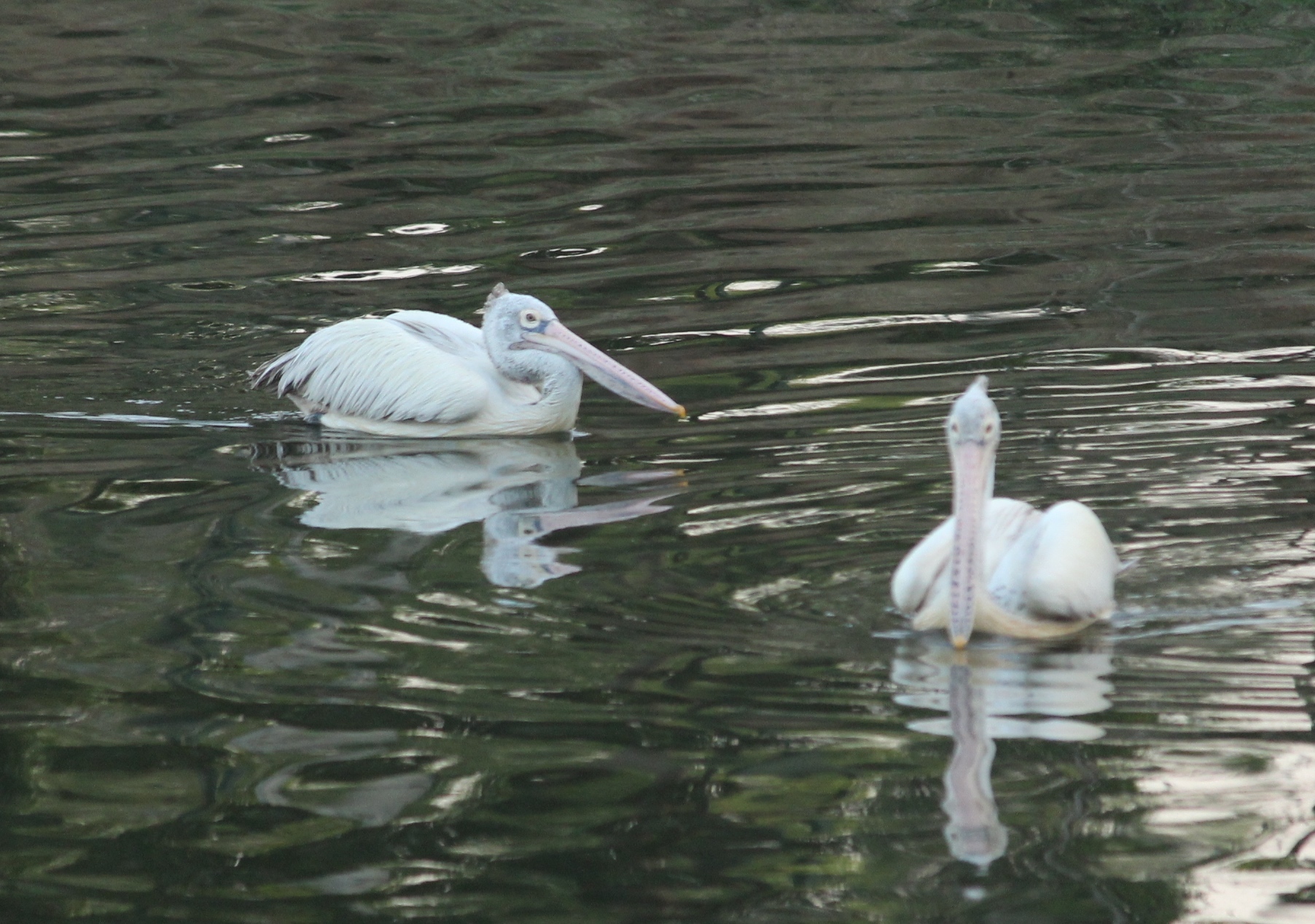
A member of the pelican family found in southern Asia from southern Iran across India east to Indonesia. Inhabits large inland and coastal waters, especially large lakes. At close range distinguished by spots on the upper mandible, lack of bright colors, and greyer plumage compared to other regional pelicans. Not migratory but makes local movements, being more widely distributed in non-breeding season. Often nests in large colonies close to human habitations. Conservation status changed from vulnerable to near threatened in the 2007 IUCN Red List due to population recovery from increased protection.
Description
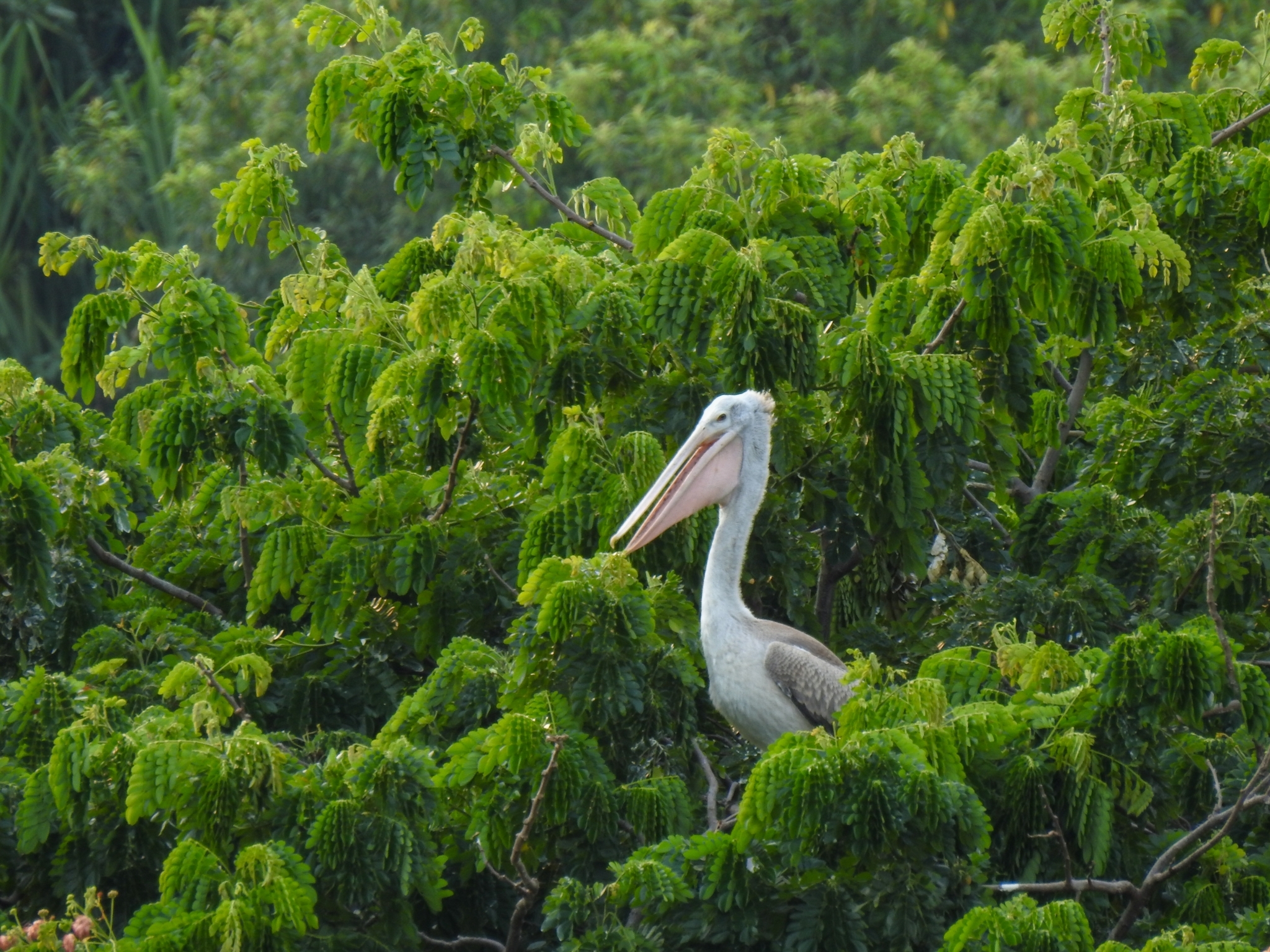
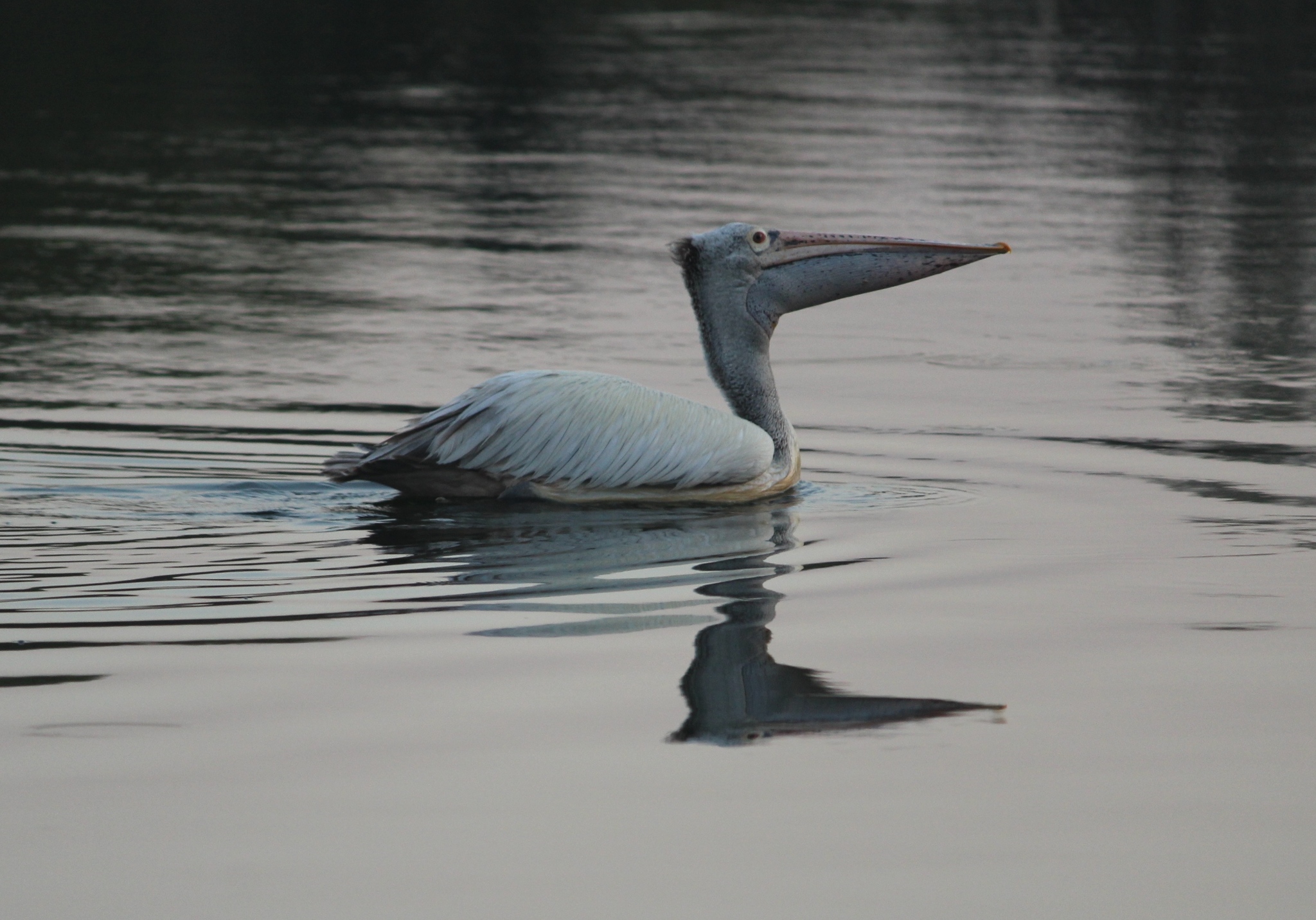
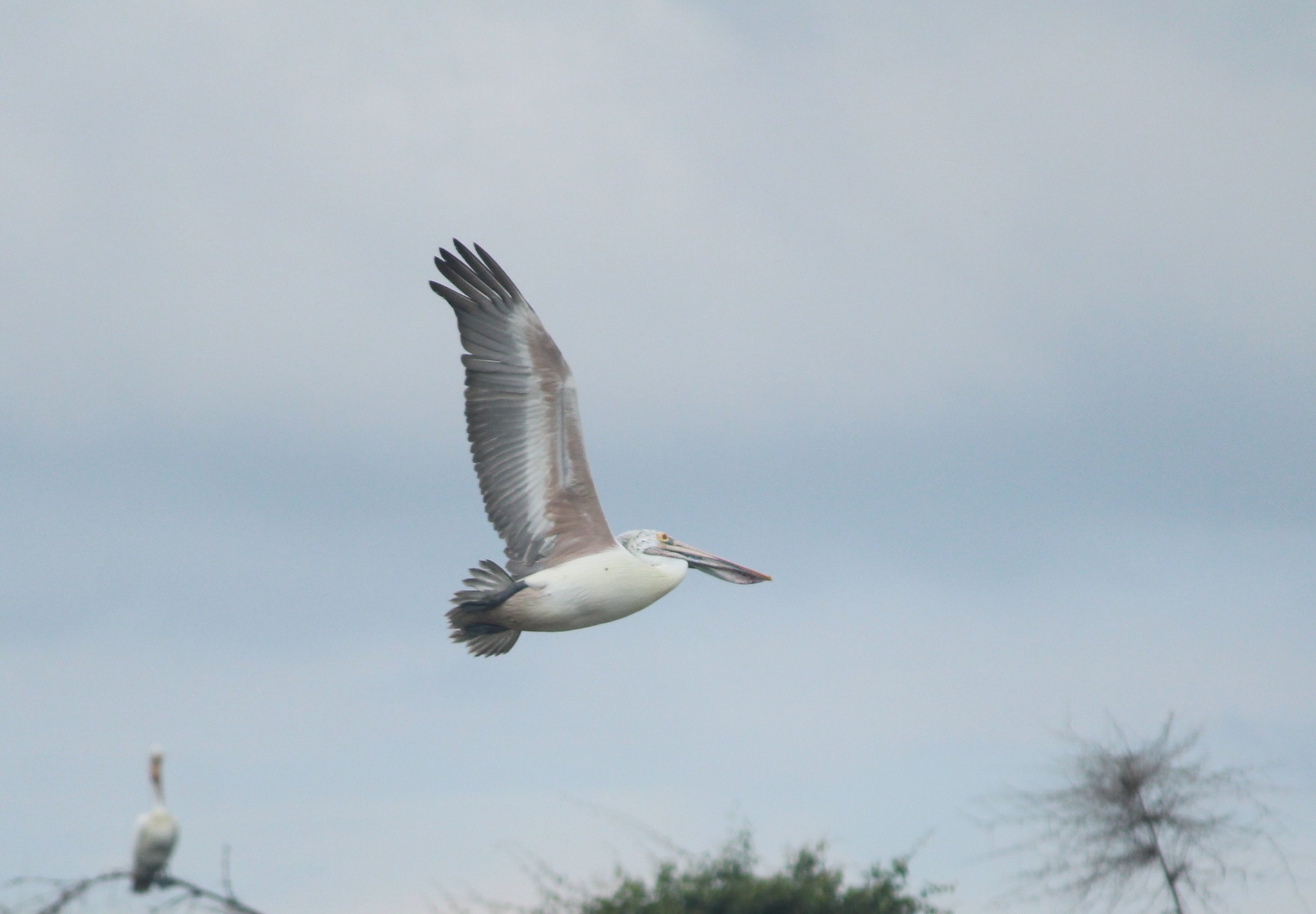
A rather large water bird, 125-152 cm long and weighing 4.1-6 kg, with a wingspan of 213-250 cm and a large beak measuring 285-355 mm. Mainly white plumage with grey crest, hindneck, and brownish tail. The curly feathers on the hind neck form a greyish nape crest. The pouch is pink to purplish with large pale spots, and the sides of the upper mandible are also spotted. The bill tip is yellow to orange. In breeding plumage, the skin at the base of the beak is dark and the orbital patch is pink. In flight, the tail appears rounder and there is a pale band along the greater coverts. Juveniles are greyish speckled, with adult breeding plumage appearing in their third year.
Identification
At distance, difficult to differentiate from other pelicans in the region. Smaller than other regional pelicans is a useful field mark. At close range, the spots on the upper mandible, lack of bright colors, and generally greyer plumage are distinctive. In flight, appears similar to the Dalmatian pelican but has darker tertials and inner secondaries, and a pale band along the greater coverts.
Distribution & Habitat
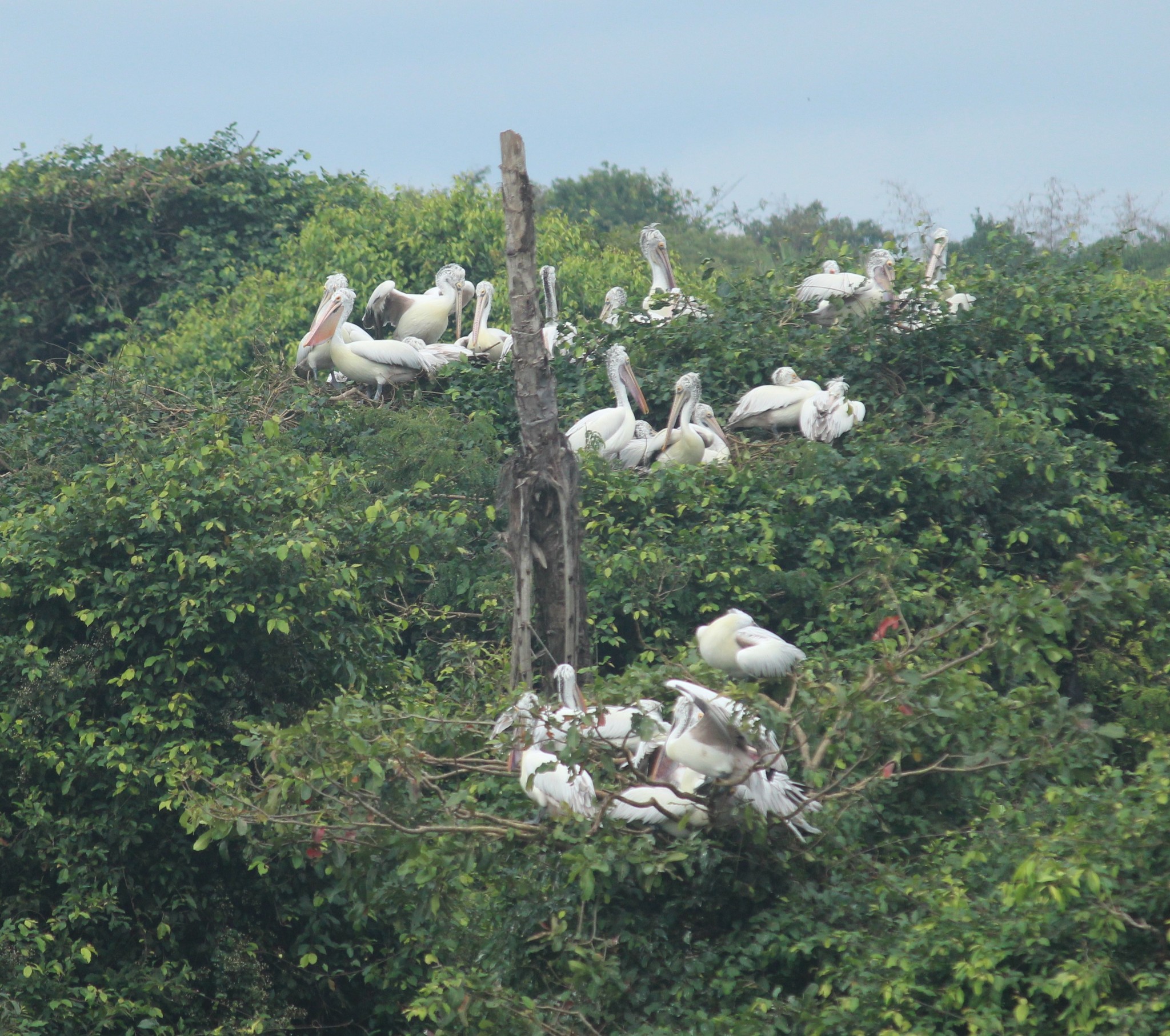
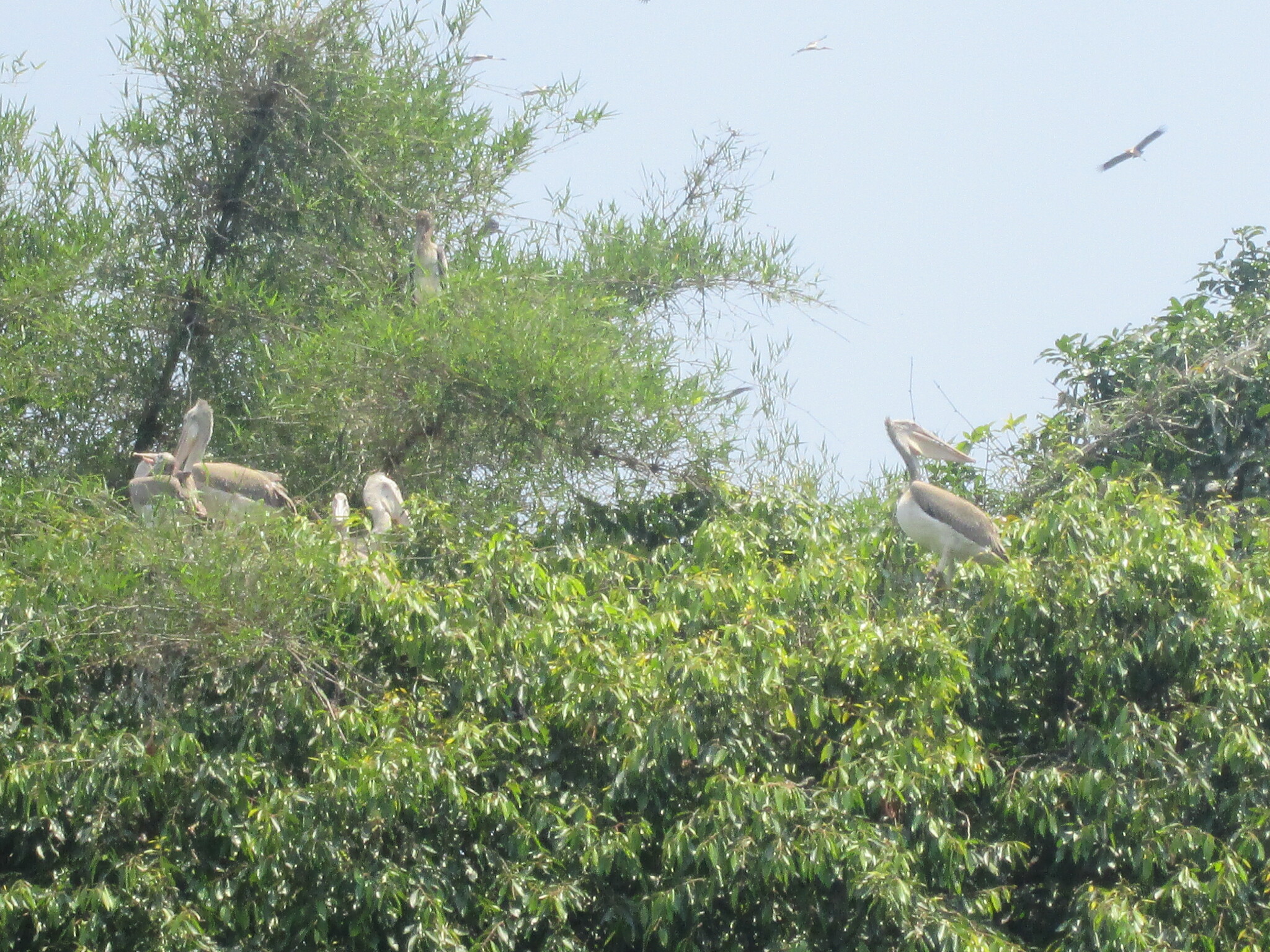
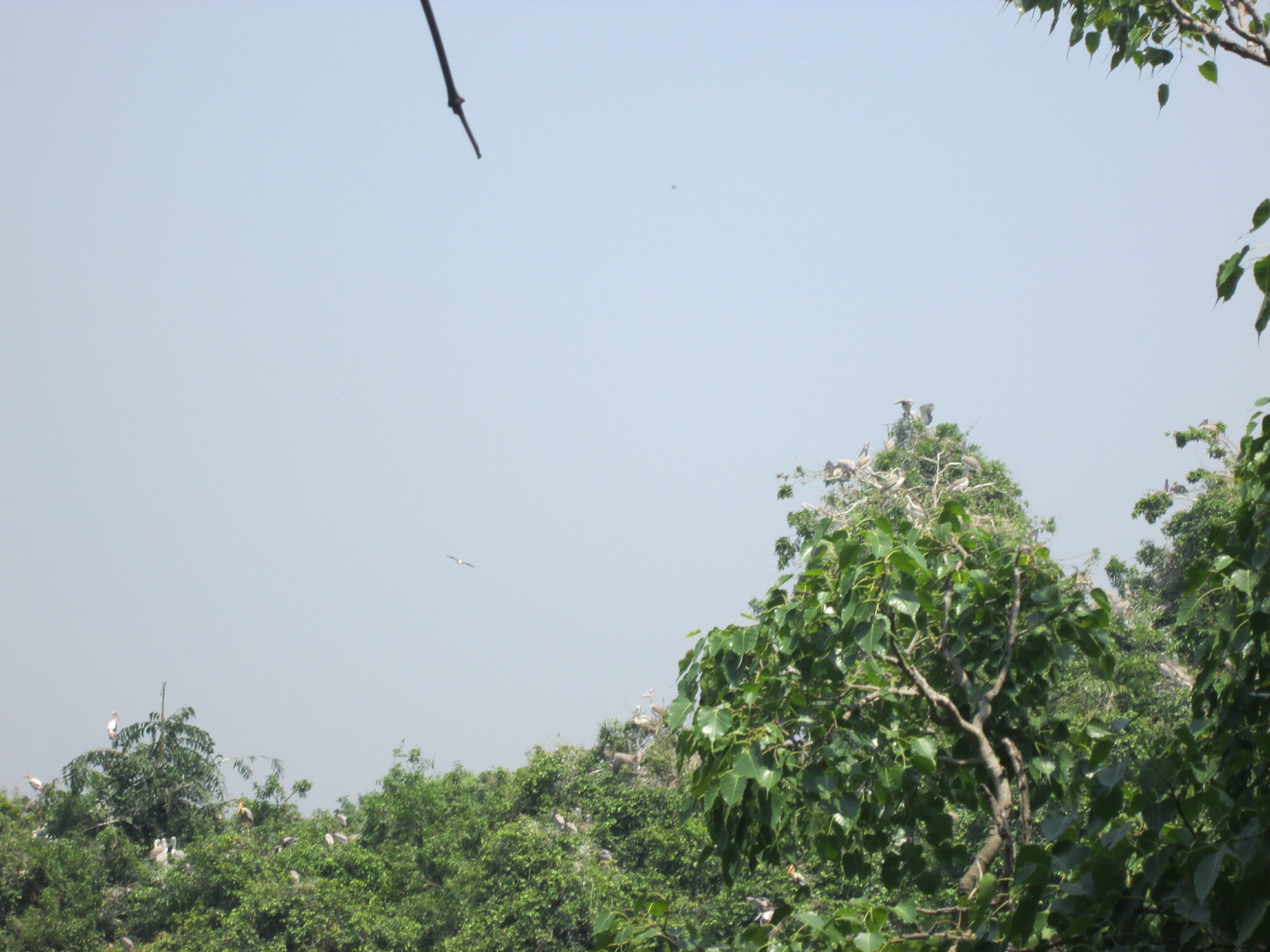
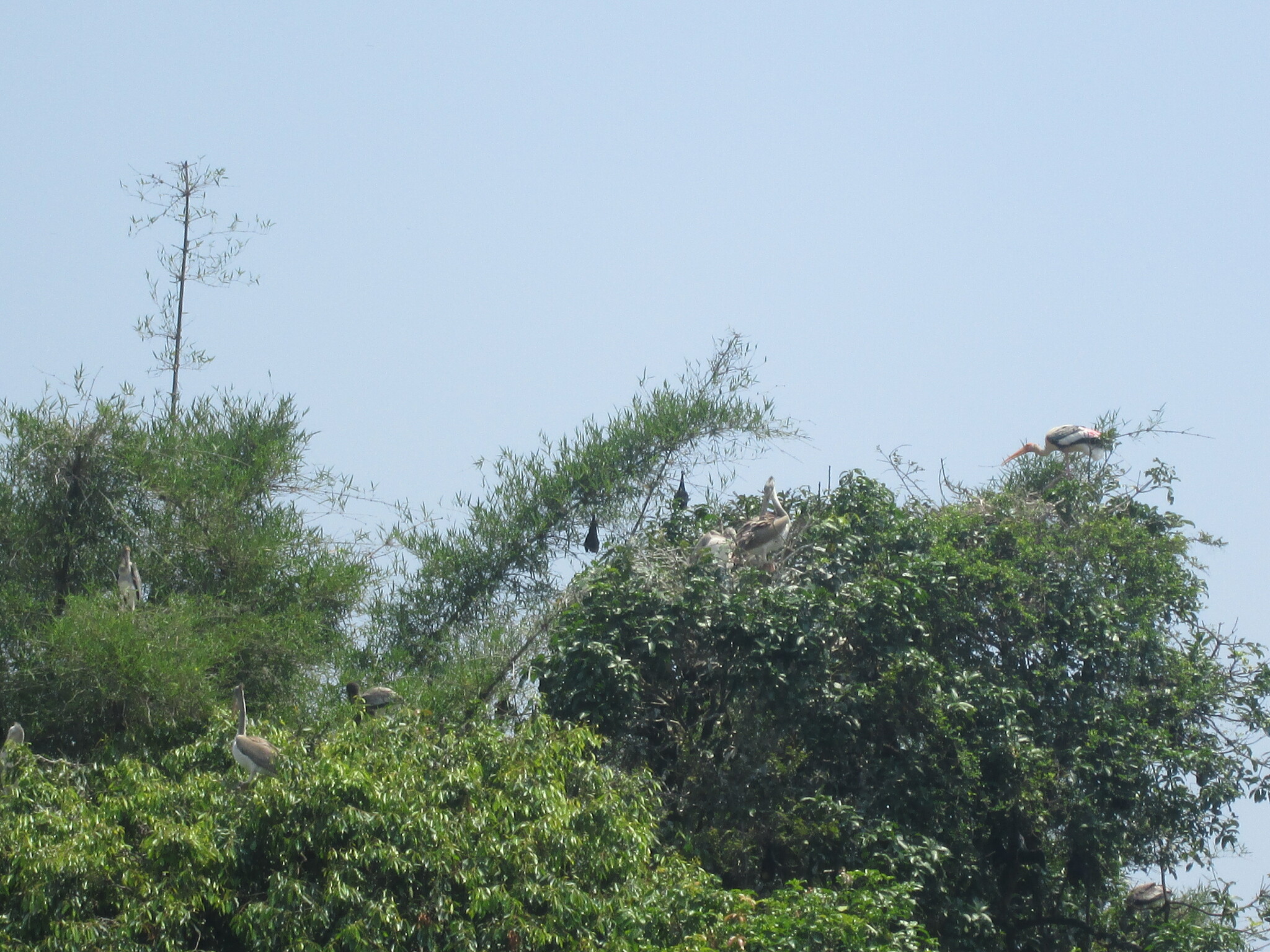
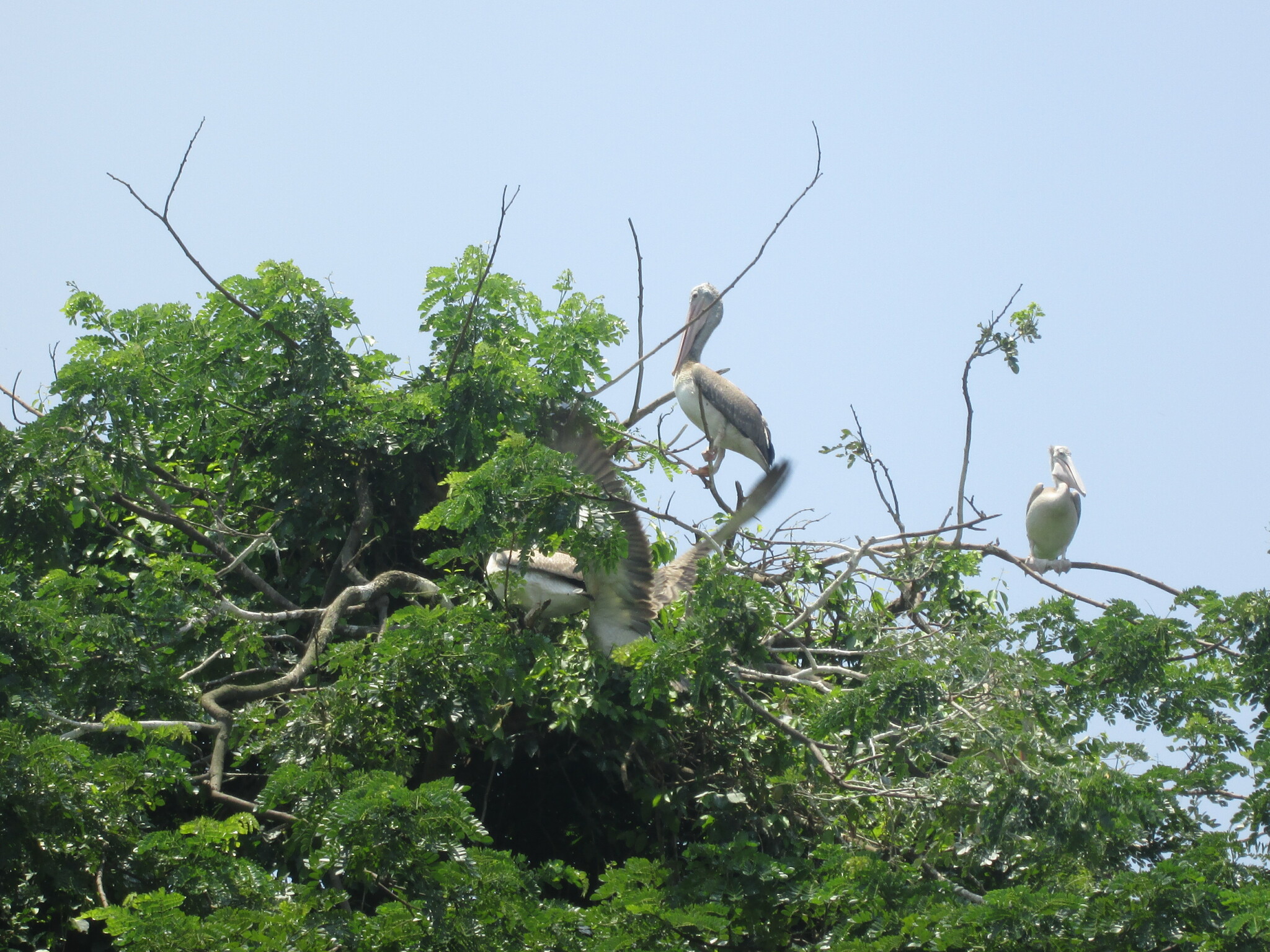
Breeds only in peninsular India, Sri Lanka, and Cambodia. A few birds from India winter in the Gangetic plains, but reports from the Maldives, Pakistan, and Bangladesh are questionable. Main habitat consists of shallow lowland freshwaters. Not migratory but makes local movements and is more widely distributed in the non-breeding season. Nests on low trees near wetlands, sometimes near human habitations. Colonial breeder, often associating with other waterbirds such as painted storks.
Behavior & Ecology
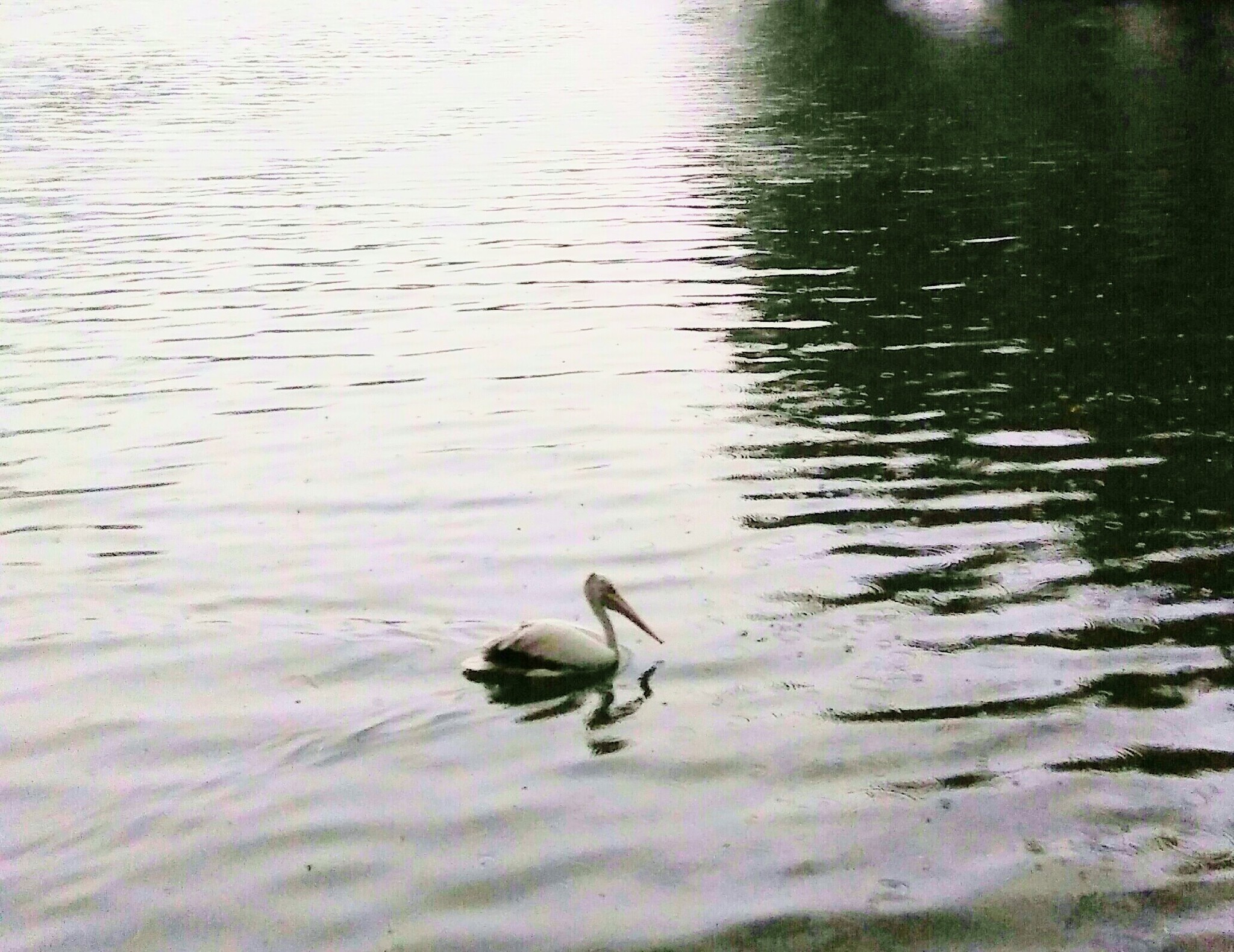
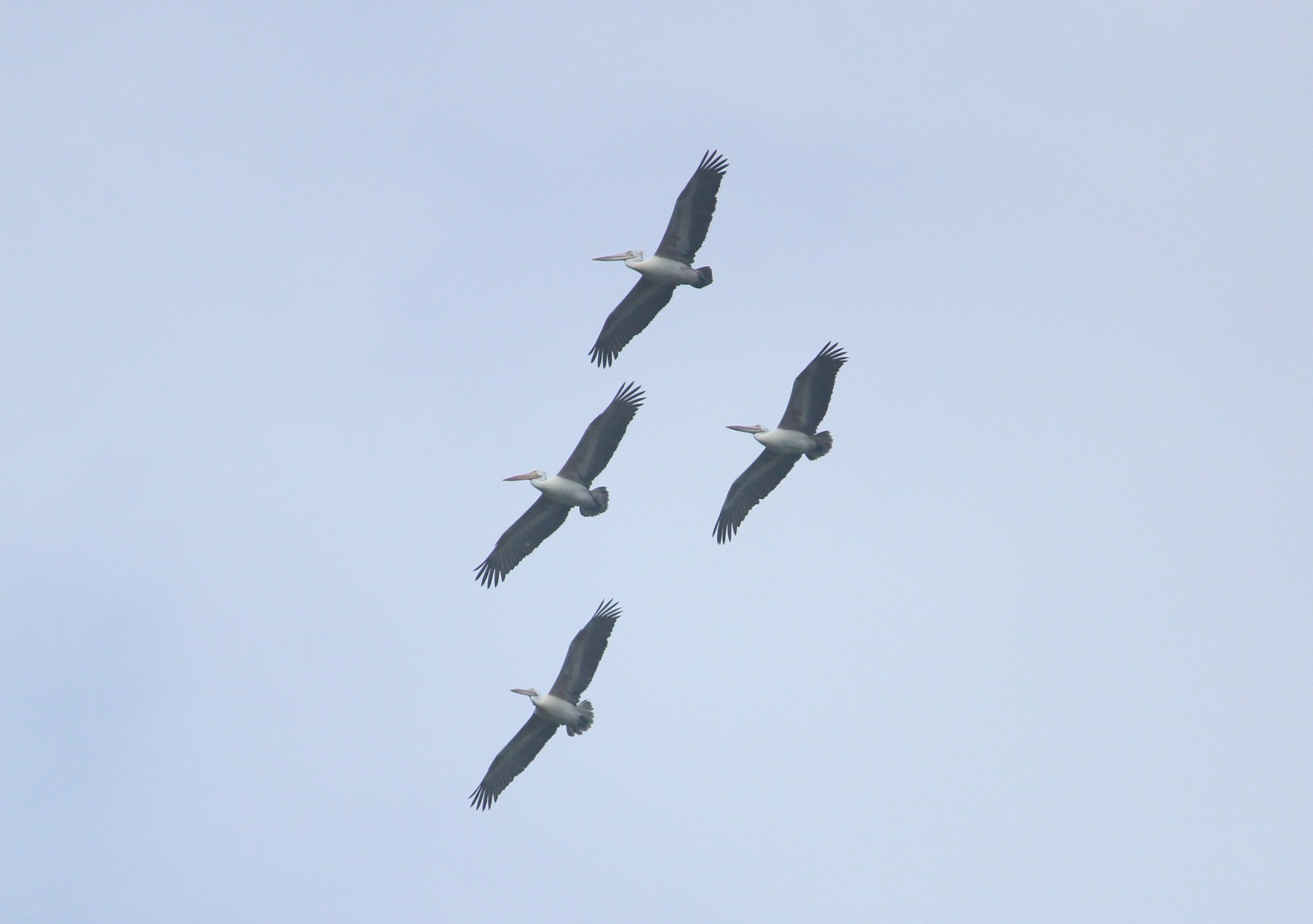
Very silent at rest but at nests produces hisses, grunts, and bill snaps. Catches fish in the huge bill pouch while swimming at the surface. Does not form large feeding flocks like the great white pelican, usually fishing singly or in small flocks, though groups may line up to drive fish toward shallows. Forages at night to some extent. Flies in small groups with steady flapping, and soars on thermals during hot midday hours. Breeding season varies from October to May, following the northeast monsoon in Tamil Nadu. Nests are thick platforms of twigs on low trees, built alongside other colonial waterbirds. Clutch consists of three to four chalky white eggs, hatching in 30-33 days. Young remain near the nest for three to five months.
Conservation
Assessed as Near Threatened on the 2007 IUCN Red List, having been changed from Vulnerable due to population recovery from increased protection. Numbers have declined due to habitat loss and human disturbance. Many populations in Southeast Asia, including parts of China, are now extinct. The species became locally extinct in the Philippines during the 1960s despite being abundant in the early 1900s. Populations in southern India are thought to be increasing. Large historic breeding colonies have disappeared, including colonies at Sittang River in Burma and Kolleru Lake in India.
Culture
Formerly used by fishermen in eastern Bengal as decoys for certain fish, based on the belief that an oily secretion attracted fish such as Colisa and Anabas. The propensity to nest close to human habitations has been noted since the 1800s. Several villages have developed colonies that have become tourist attractions, including Kokrebellur, Koothankulam, and Uppalapadu. Some traditional communities have regarded these birds with reverence; in Kundakulam, Tirunelveli district, villagers considered the birds semi-sacred.
Source: Wikipedia · CC BY-SA 3.0
Taxonomy
- Order
- Pelecaniformes
- Family
- Pelecanidae
- Genus
- Pelecanus
- eBird Code
- spbpel1
Distribution
lowlands of India to southeastern Asia and Philippines
Data Sources
Species description from Wikipedia, licensed under CC BY-SA 3.0.
Bird images and sounds sourced from GBIF, contributed by citizen scientists worldwide under Creative Commons licenses.
Taxonomy data from AviList 2025.