Great White Pelican
Pelecanus onocrotalus
白鹈鹕
Introduction
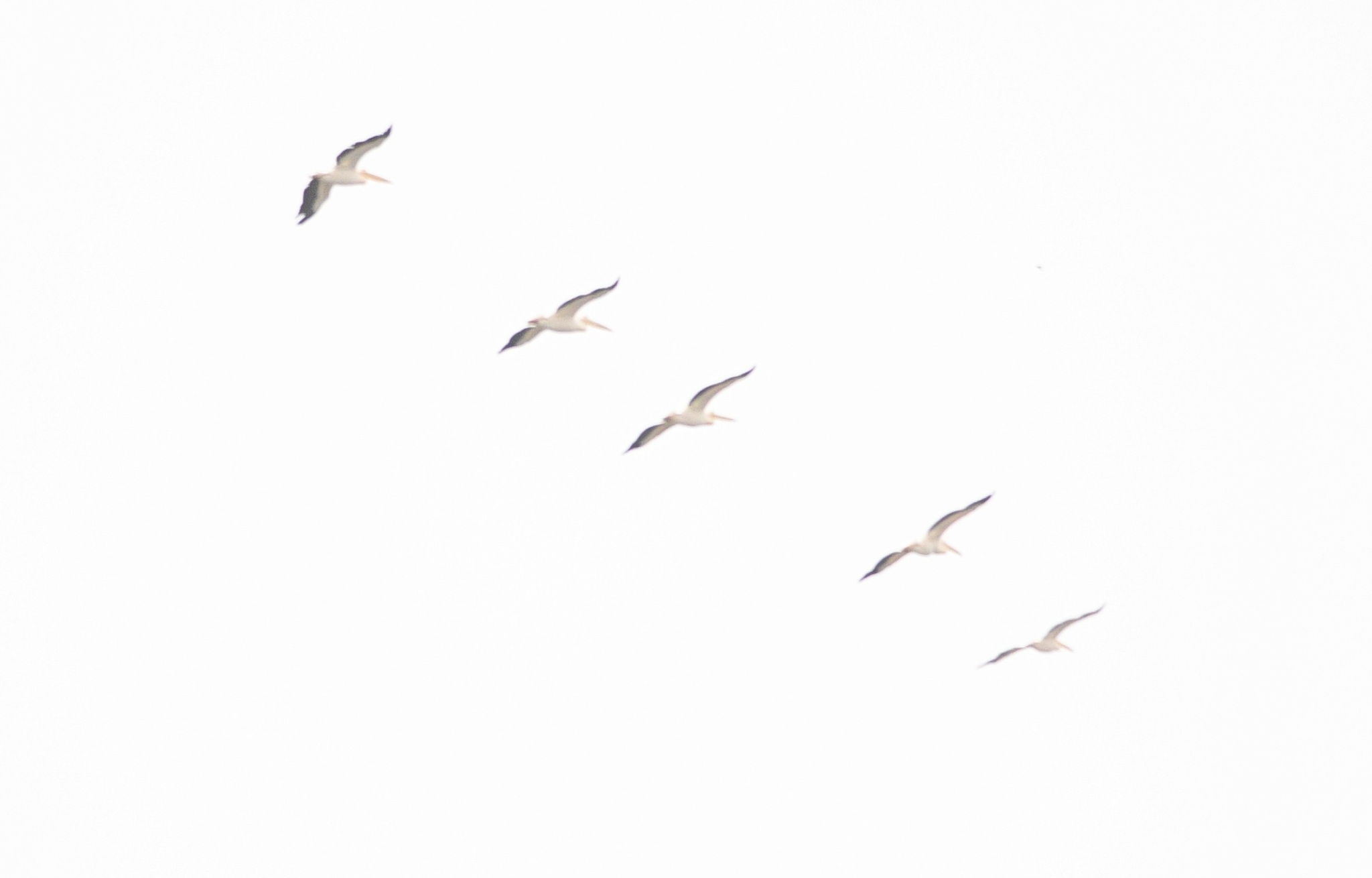
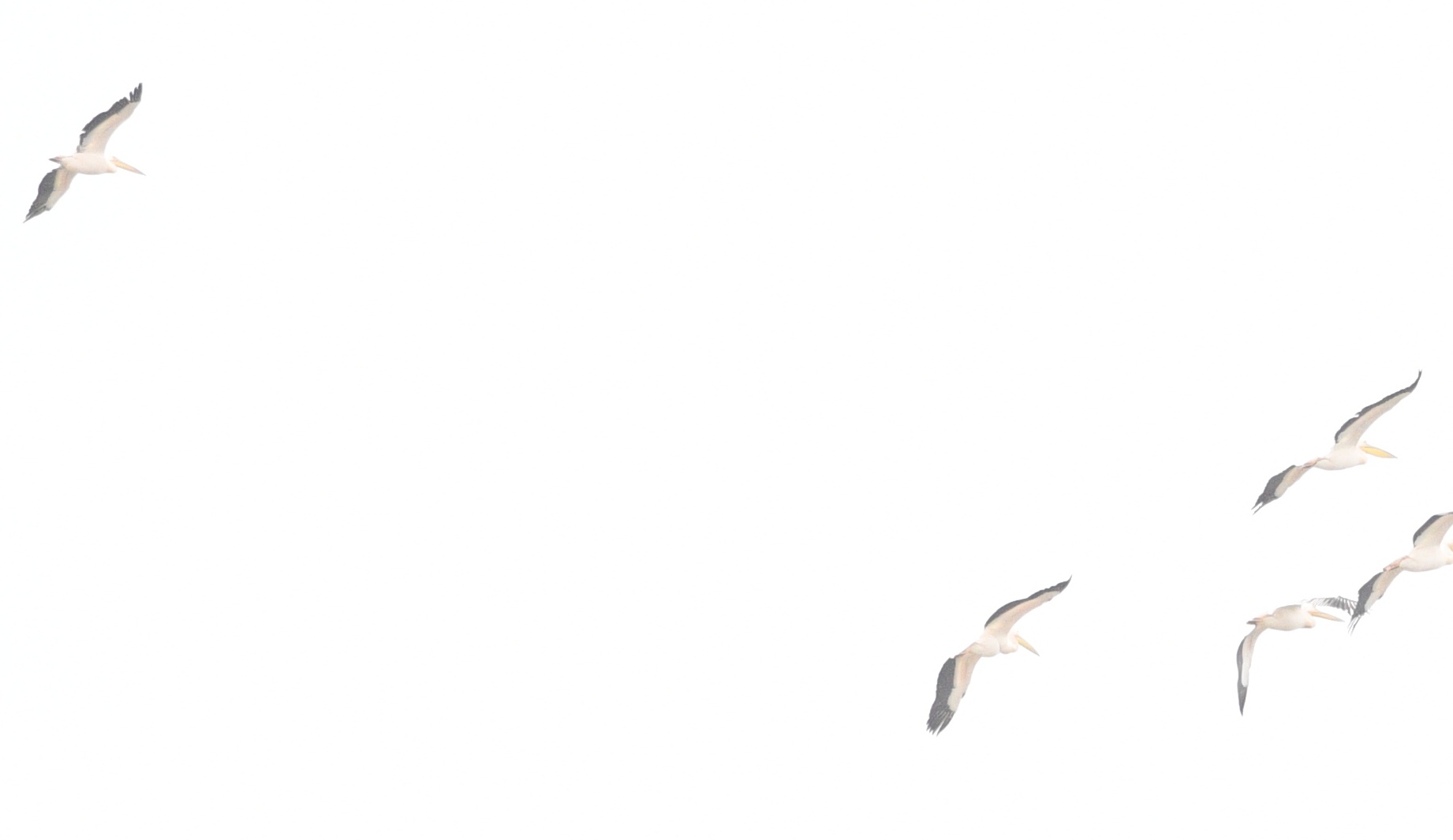
Pelecanus onocrotalus is a large waterbird in the pelican family. It breeds from southeastern Europe through Asia and Africa in swamps and shallow lakes. This species forms large, conspicuous flocks and is highly sociable, gathering in spectacular linear, circular, or V-formation groups during flight. It is one of the largest flying birds, with a wingspan reaching up to 360 cm—the highest among extant flying animals outside the great albatross. Since 1998, it has been rated as least concern on the IUCN Red List due to its large range exceeding 20,000 km² and population not declining rapidly enough to warrant a vulnerable rating. It is listed under Appendix I of CMS, Annexure I of the EU Birds Directive, and Appendix II of the Berne Convention, with protection across 108 Special Protection Areas in the EU and 43 Important Bird Areas in Europe.
Description
A massive bird measuring 140-180 cm in length with a 226-360 cm wingspan. The enormous bill ranges from 28.9-47.1 cm with a pale-yellow gular pouch. Males average 175 cm and 9-15 kg, while females average 148 cm and 5.4-9 kg, making this one of the most sexually dimorphic pelican species. Plumage is predominantly white with black remiges, a faint pink neck tinge, and yellowish coloration at the foreneck base. The head has pinkish facial skin surrounding dark eyes with brown-red to dark brown irises. Legs are yellow-flesh to pinkish-orange. During breeding, males develop pinkish skin and females show orangey facial skin. The bill is bluish-grey with a red tip and reddish maxilla edges. Juveniles are darker with brownish underparts, brown upperparts, and greyish facial skin and bill.
Identification
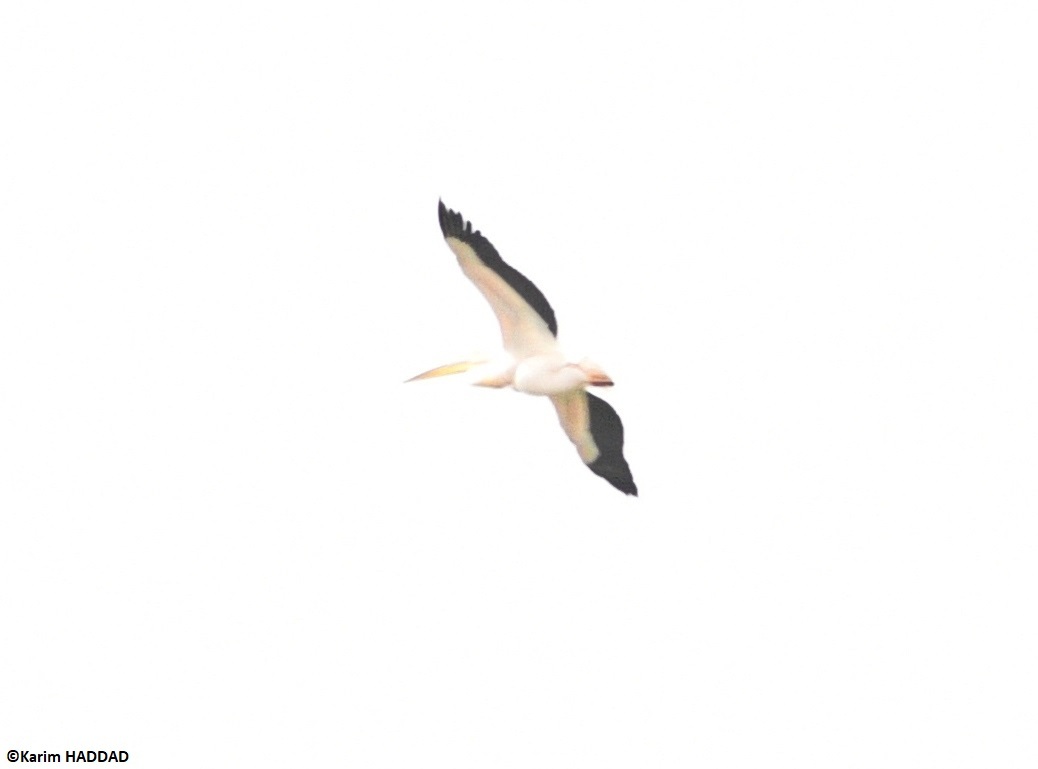
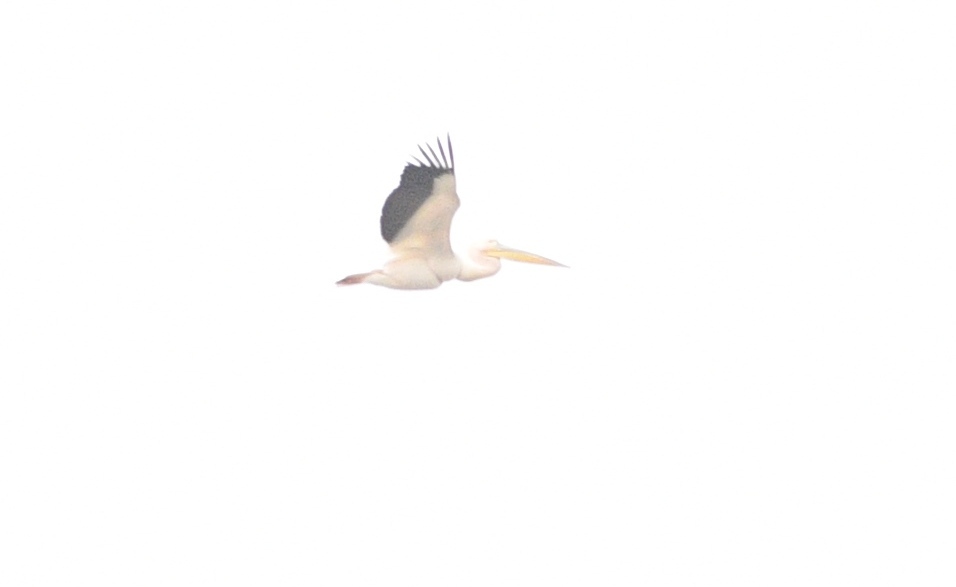
The only pelican with entirely white plumage and a bare, pink facial patch around the eye. The forehead feathering tapers to a fine point at the culmen, unlike other pelican species with fully feathered foreheads. In flight, adults show white underwing coverts contrasting with black flight feathers—similar only to the American white pelican, which has white inner secondary feathers. Distinguished from the Dalmatian pelican by pure white (not greyish-white) plumage and pinkish legs. Larger than the spot-billed pelican, which has greyish-tinged white plumage and a duller bill. Pink-backed pelicans are smaller with brownish-grey plumage and a pink-washed back. Males have a downward-bending neck and longer bill than females.
Distribution & Habitat
Breeds from southeastern Europe through Asia to Africa, with over 50% of Eurasian populations breeding in Romania's Danube Delta. European population is estimated at 7,345-10,000 breeding pairs, with 4,000 pairs in Russia. The African population numbers approximately 75,000 pairs. Migratory populations breed from Eastern Europe to Kazakhstan, arriving at the Danube in late March or early April and departing September to November. Wintering areas include northeastern Africa through Iraq to north India, with large numbers in Pakistan and Sri Lanka; northern populations migrate to China, India, and Myanmar, with stragglers reaching Java and Bali. Found in shallow warm fresh waters including lakes, deltas, lagoons, and marshes, often with dense reed beds. In Africa, also occurs around alkaline lakes and coastal estuarine areas, with nesting on flat islands and inselbergs. Ranges up to 1,372 m elevation in East Africa and Nepal.
Behavior & Ecology
Highly sociable, forming large flocks and breeding colonies. Feeds mainly on large fish (500-600 g to 1.8 kg), consuming 0.9-1.4 kg daily per bird. Flies over 100 km to forage, leaving roosts early morning. Uses cooperative feeding technique: 6-8 pelicans form a horseshoe formation, dipping bills in unison to trap fish. Eats common carp in Europe, mullets in China, cichlids in Africa. Opportunistic predation includes seabird chicks—on South Africa's southwest coast, pelicans prey on Cape gannet chicks up to 2 kg. Also robs other birds of prey and eats gulls and ducklings during starvation. Breeding season varies by region: April-May in temperate zones, year-round in Africa, February-April in India. Nests in ground scrapes lined with vegetation; females lay 1-4 eggs (average 2), incubated 29-36 days. Chicks fledge at 65-75 days, with 64% reaching adulthood. Sexual maturity at 3-4 years. Mostly silent but produces low-pitched lowing, grunting, growling calls, a deep croak in flight, and moooo calls at breeding colonies.
Conservation
Rated as least concern on the IUCN Red List since 1998 due to large range and population not declining 30% over ten years or three generations. However, overall population status is unknown, and while widespread, it is not abundant anywhere. Major threats include overfishing reducing food availability, human disturbance causing temporary colony abandonment leaving chicks vulnerable, and habitat loss at foraging and breeding sites. Direct exploitation targets the pouch for tobacco bags, skin for leather, guano for fertilizer, and chick fat for traditional medicine in China and India. In Ethiopia, birds are shot for meat. Pollution also contributes to declines, particularly in the Palaearctic region where notable decreases have occurred. Protected under AEWA, CMS Appendix I, EU Birds Directive Annexure I, and Berne Convention Appendix II.
Culture
A colony at St. James's Park in London, dating to 1664, was established when Charles II received birds as a diplomatic gift from the Russian ambassador. This initiated a tradition of ambassadors donating pelicans to the park. The colony continues today and is known for occasionally preying on local pigeons despite being well-fed. The species is commonly kept in zoos and semi-wild colonies worldwide.
Source: Wikipedia · CC BY-SA 3.0
Taxonomy
- Order
- Pelecaniformes
- Family
- Pelecanidae
- Genus
- Pelecanus
- eBird Code
- grwpel1
Distribution
locally in south-central Eurasia, southern Asia, and Africa
Data Sources
Species description from Wikipedia, licensed under CC BY-SA 3.0.
Bird images and sounds sourced from GBIF, contributed by citizen scientists worldwide under Creative Commons licenses.
Taxonomy data from AviList 2025.