Stork-billed Kingfisher
Pelargopsis capensis
鹳嘴翡翠
Introduction
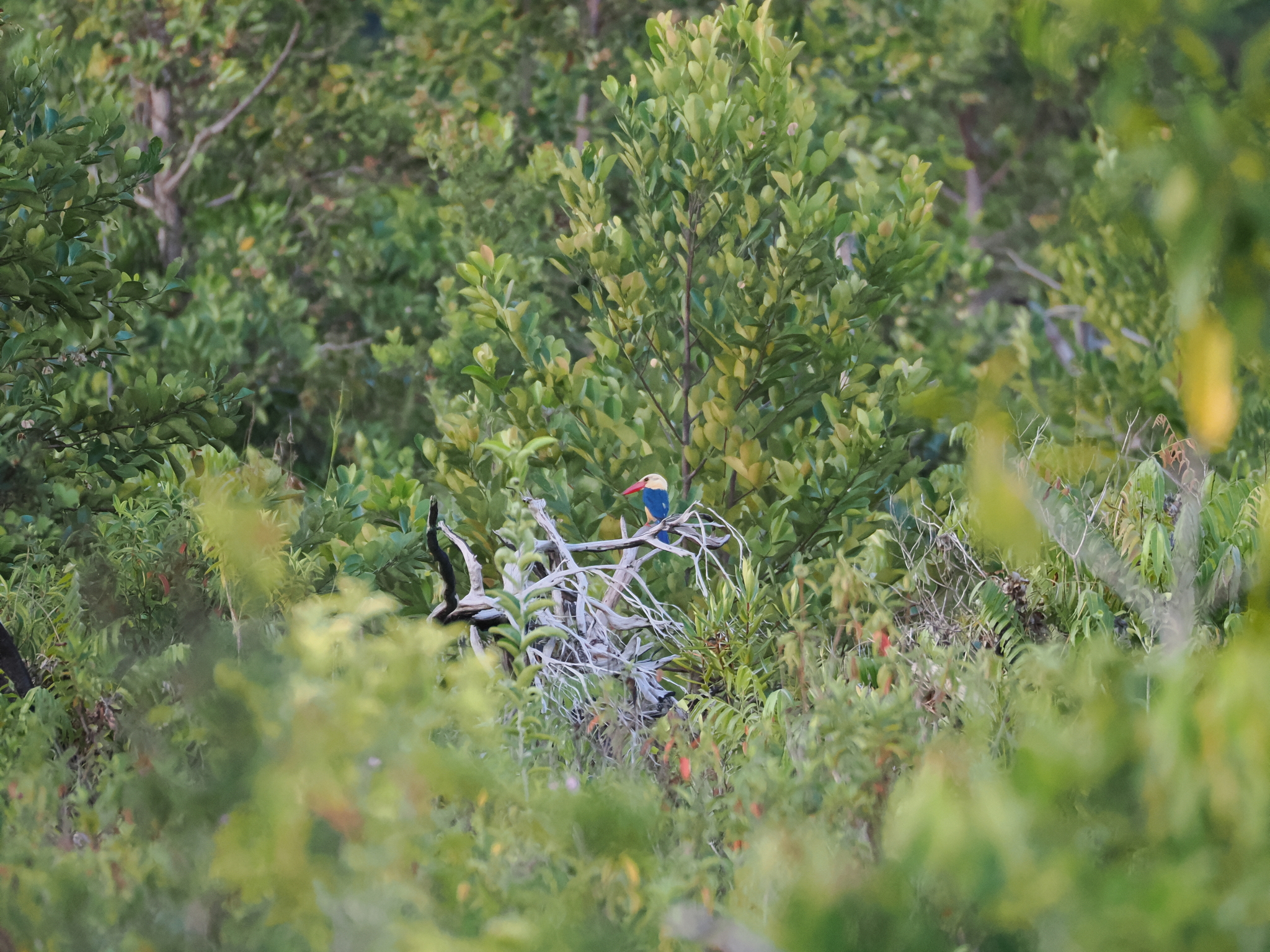
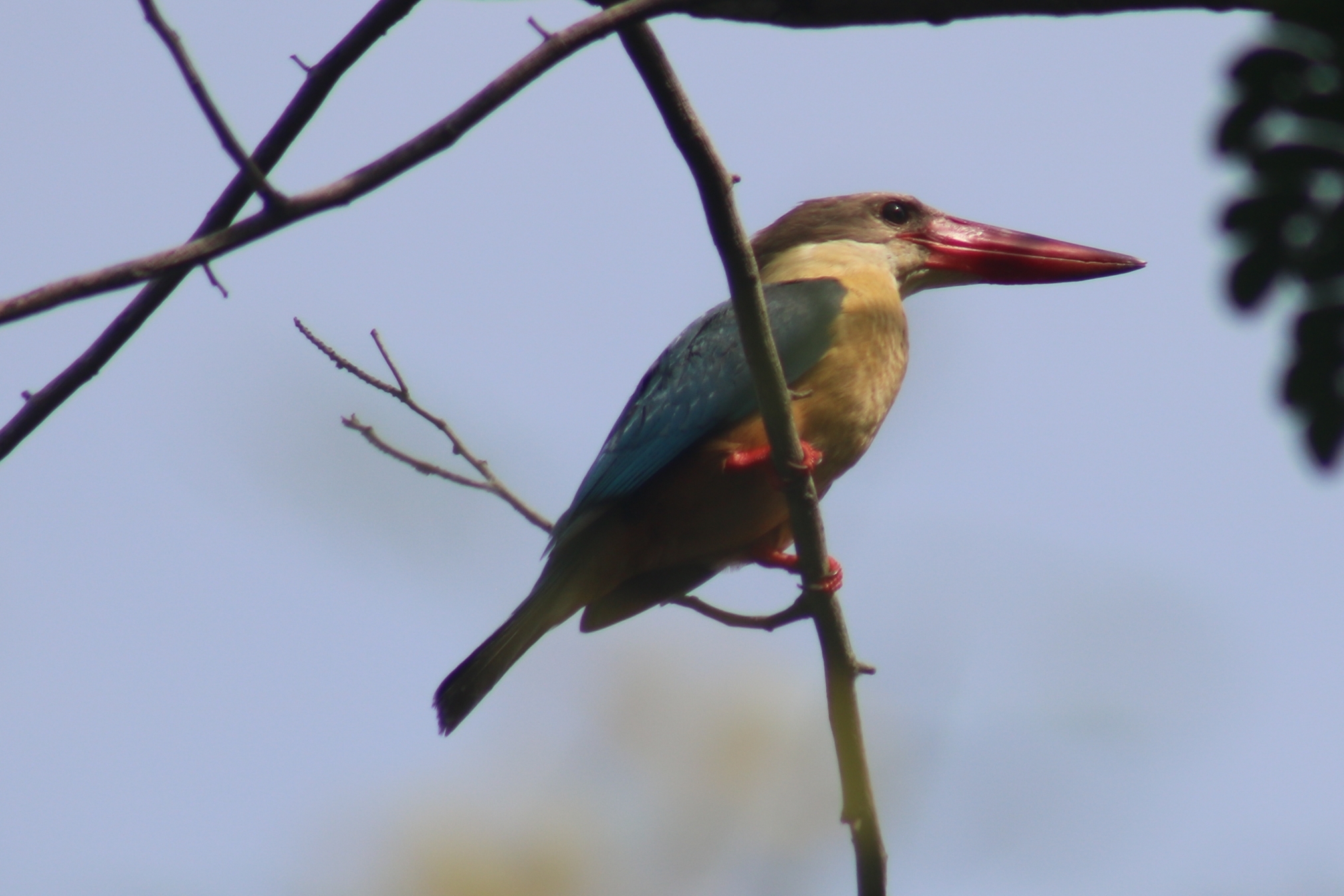
A tree kingfisher species (Pelargopsis capensis) widely but sparsely distributed across the tropical Indian subcontinent and Southeast Asia, ranging from India to Indonesia. Inhabits well-wooded habitats near lakes, rivers, or coasts, including streams and ponds in lowland areas with tree cover. Characterized by its very large size and heavy bright red bill. Thirteen subspecies are recognized, differing primarily in plumage details. The species is sedentary throughout its range, though capable of dispersal during dry weather. Adults are territorial and will aggressively defend their territory against eagles and other large predators.
Description
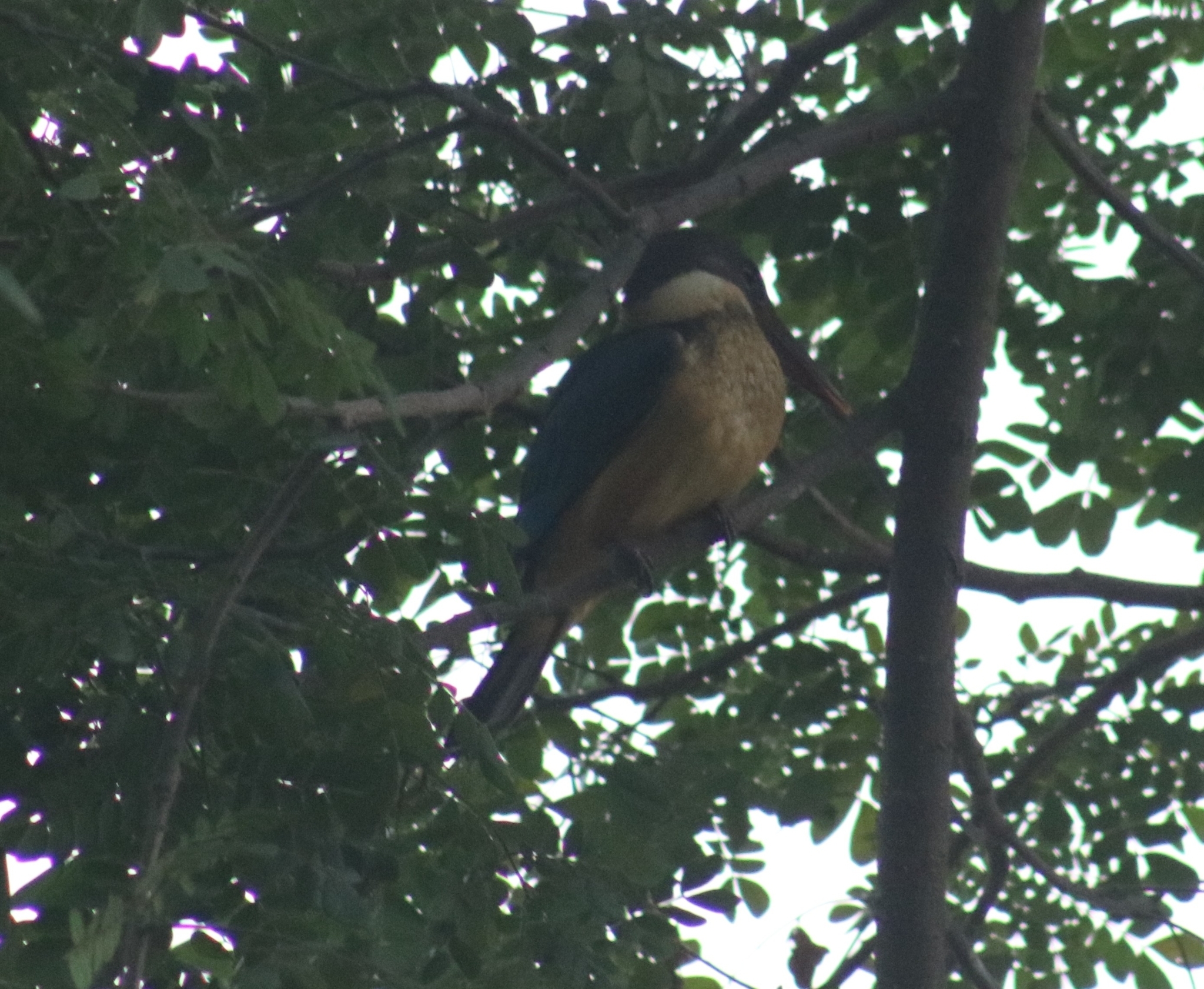
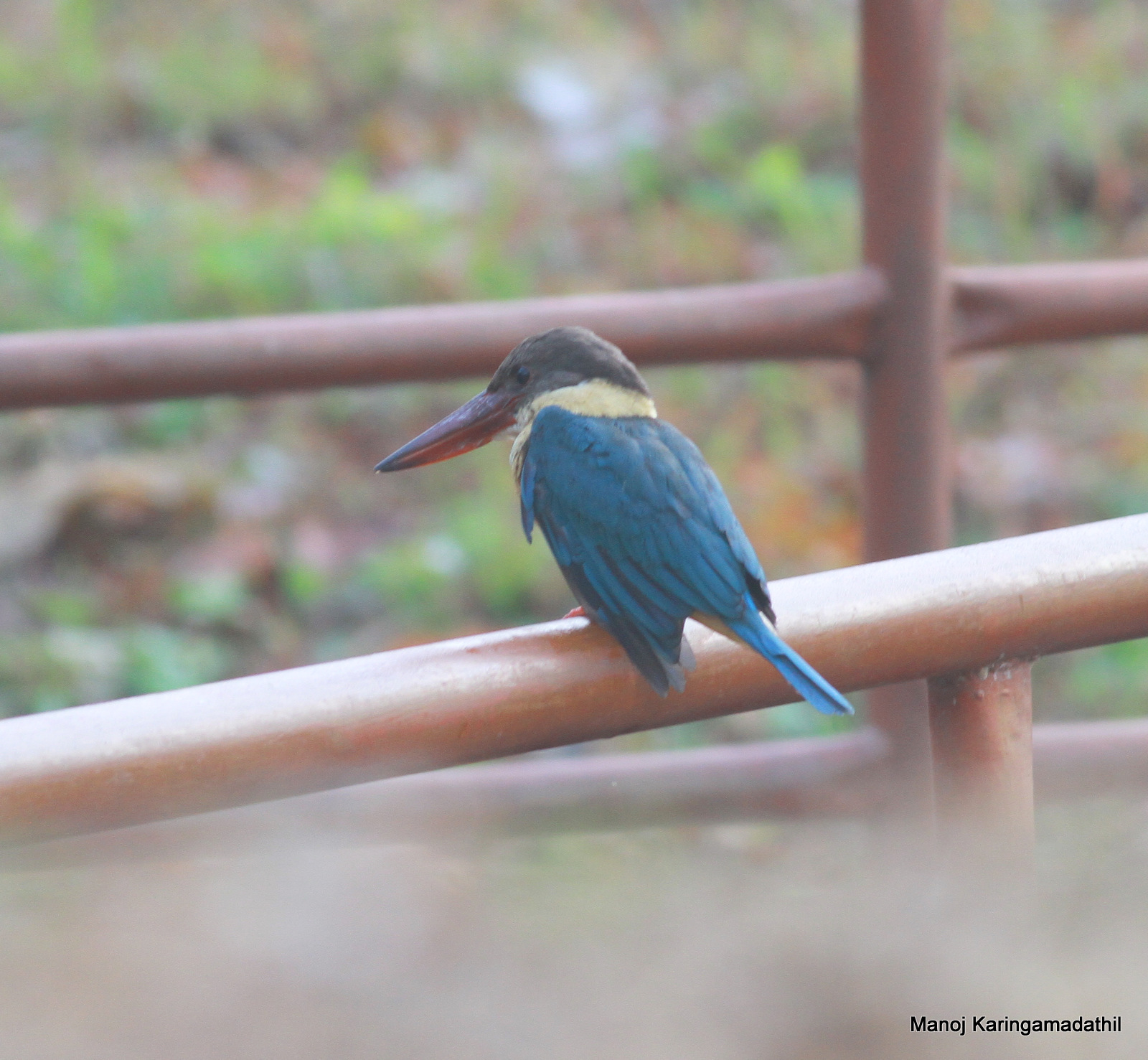
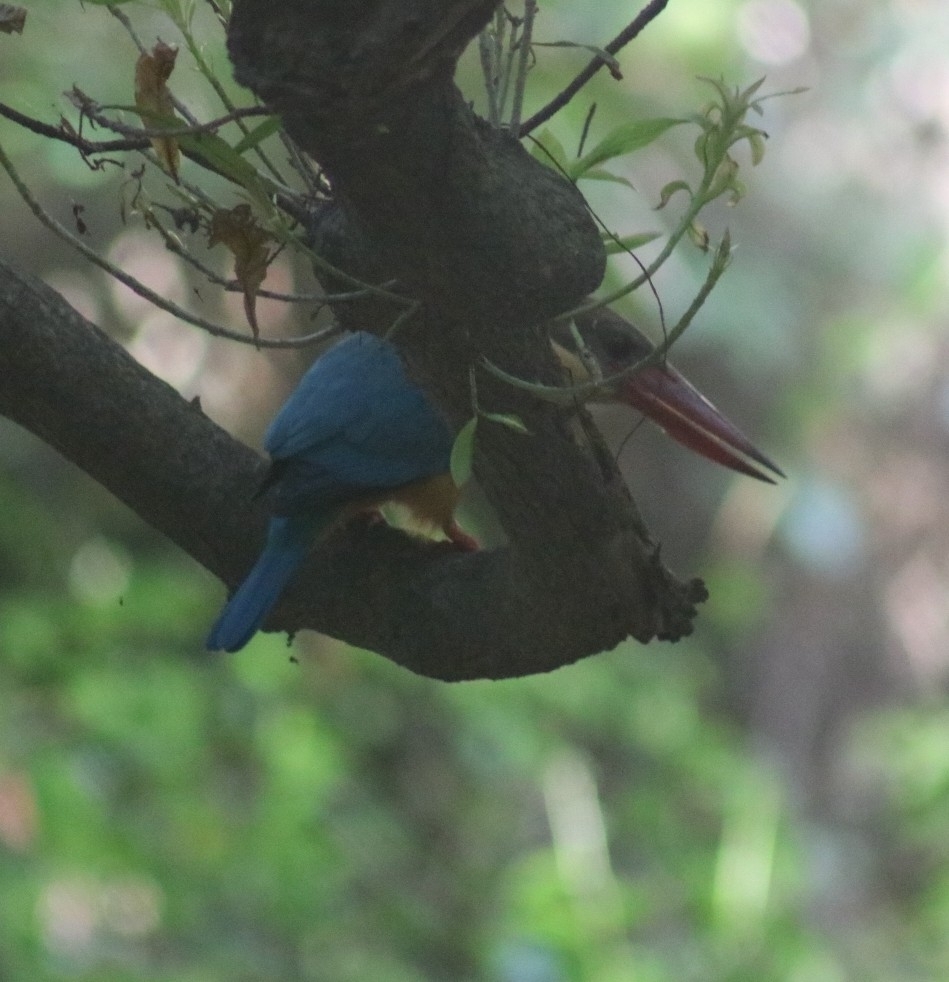
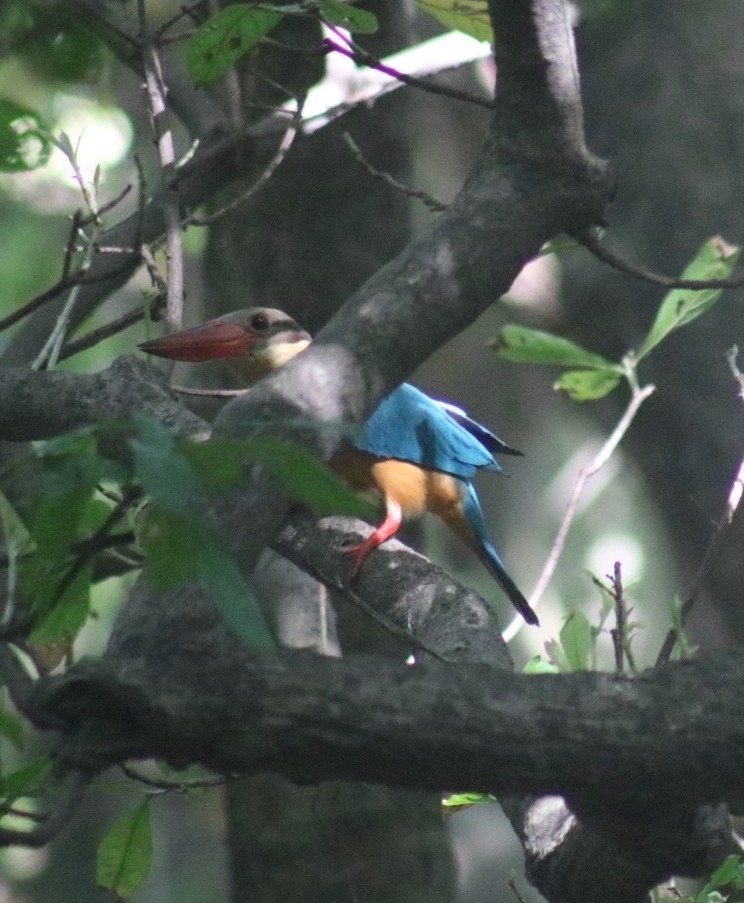
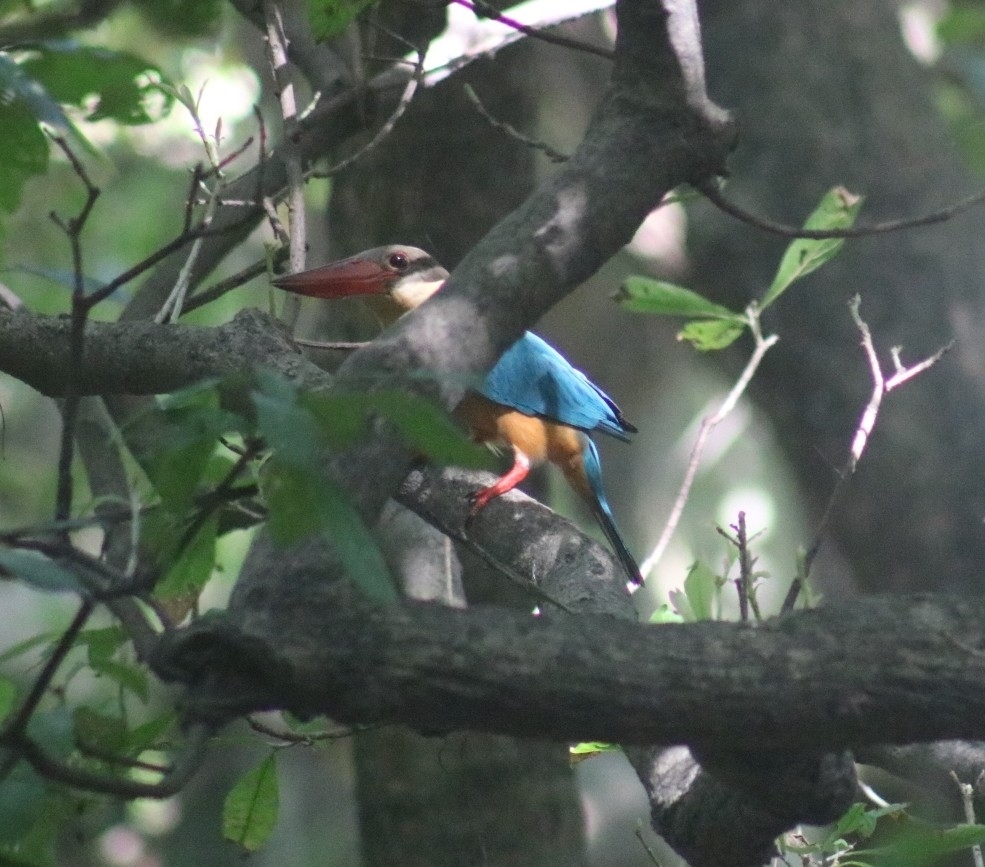
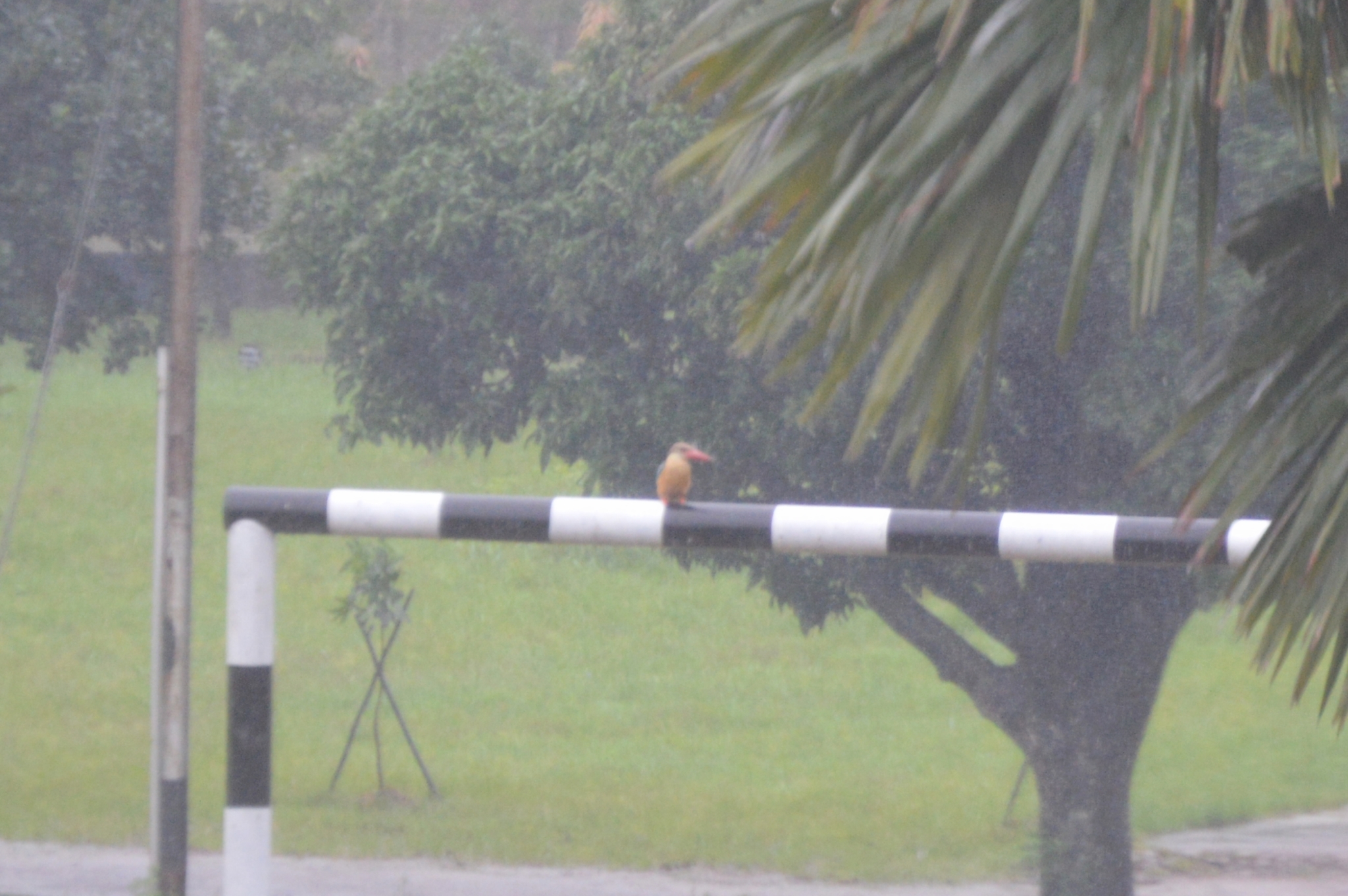
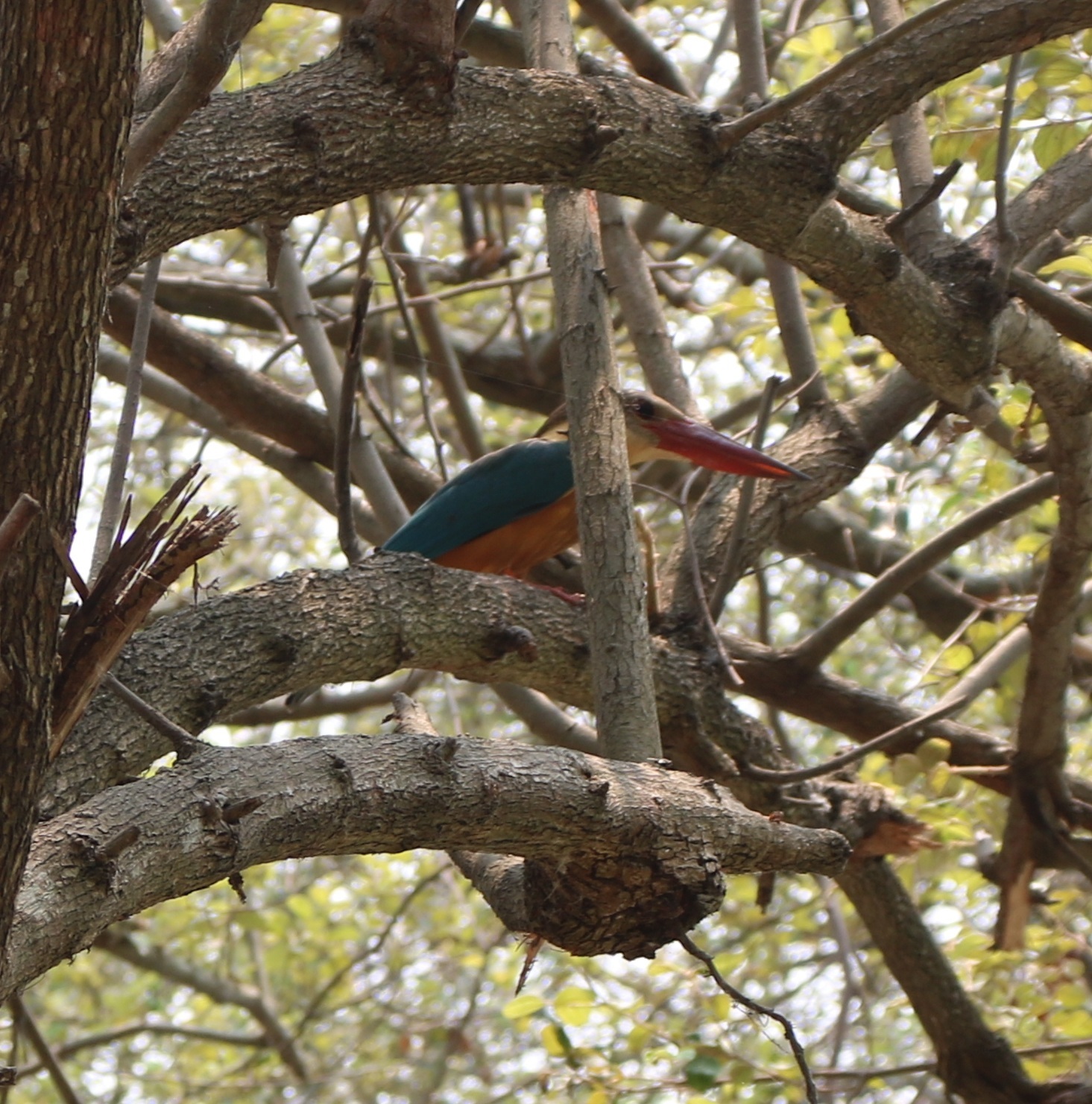
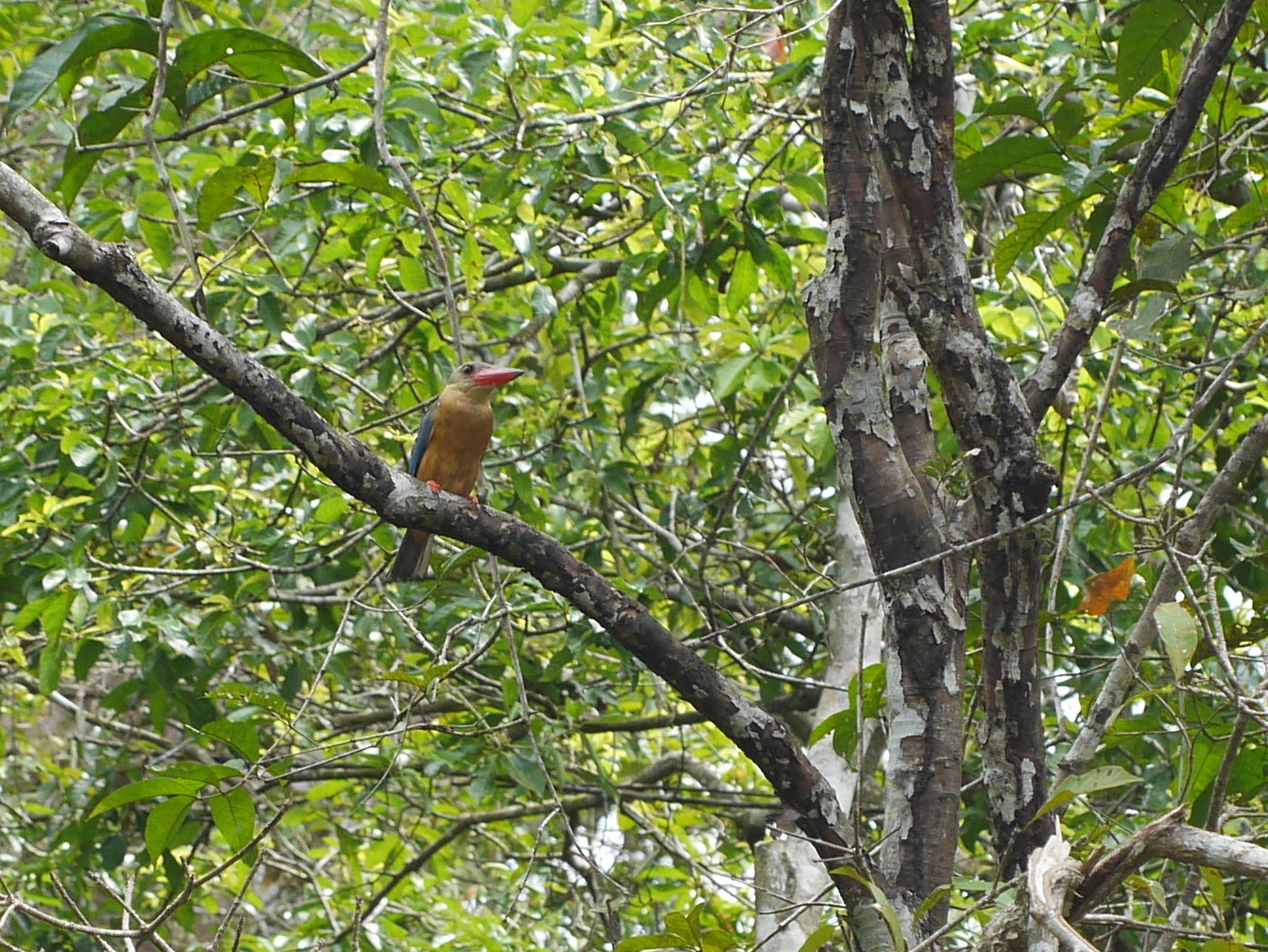
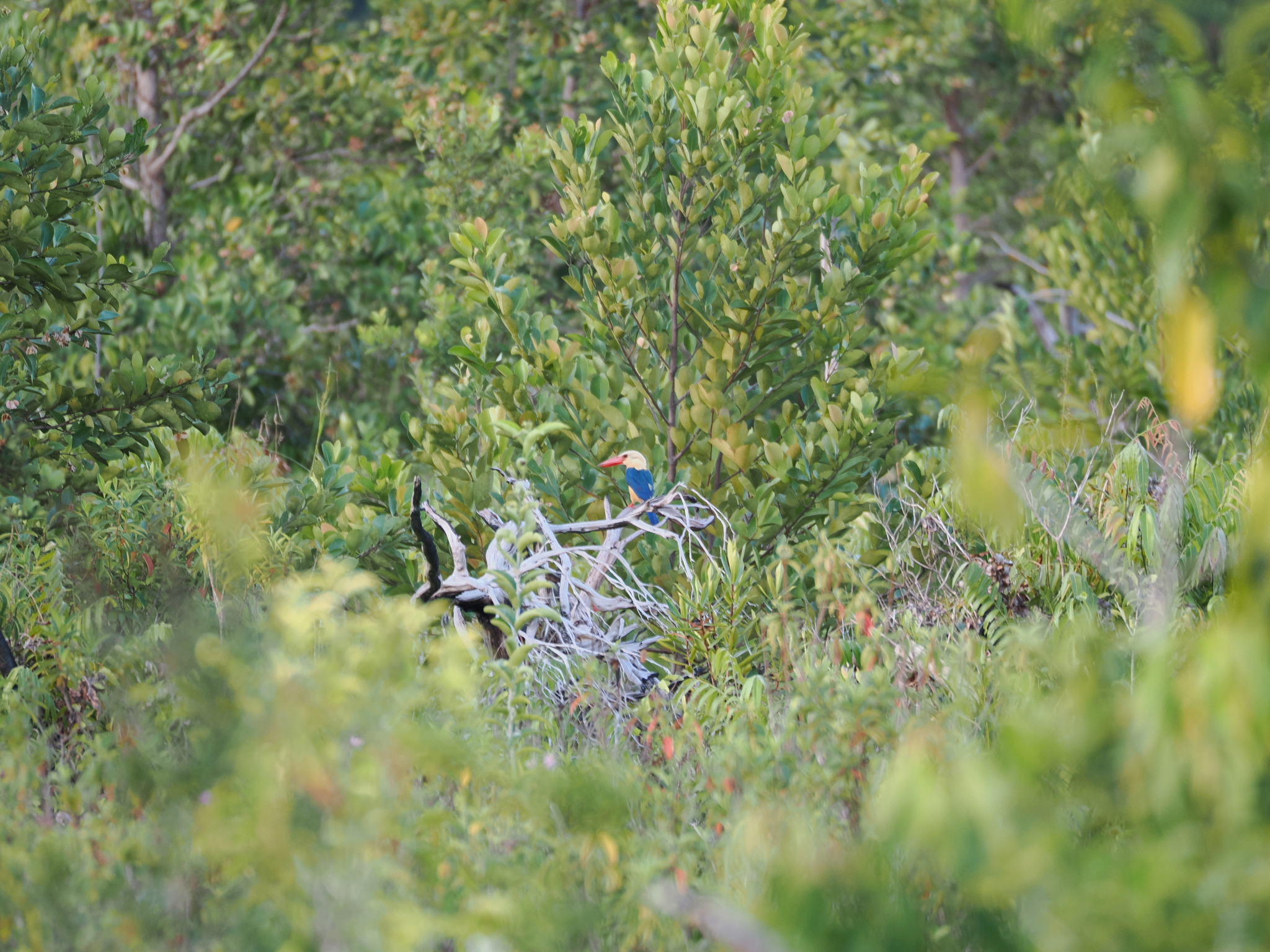
A very large kingfisher measuring 35 cm (14 in) in length. The adult has a green back, blue wings and tail, and olive-brown head. Underparts and neck are buff. The most distinctive features are the very large bill and legs, which are bright red. Sexes are similar in plumage. Thirteen races or subspecies are recognized, differing mostly in plumage detail. The subspecies P. c. gigantea of the Sulu Archipelago in the Philippines is distinctive with white head, neck, and underparts.
Distribution & Habitat
Occurs across the tropical Indian subcontinent and Southeast Asia from India to Indonesia. Subspecies P. c. capensis ranges from Nepal through India to Sri Lanka; P. c. osmastoni in the Andaman Islands; P. c. intermedia in the Nicobar Islands; P. c. burmanica from Myanmar to Indochina and south to the north Malay Peninsula; P. c. malaccensis in central and south Malay Peninsula, Riau Archipelago and Lingga Islands; P. c. cyanopteryx in Sumatra, Bangka Island and Belitung Island; P. c. simalurensis on Simeulue Island; P. c. sodalis on Banyak, Nias, Batu and Mentawai Islands; P. c. innominata in Borneo; P. c. javana in Java; P. c. floresiana from Bali to Flores in the Lesser Sunda Islands; P. c. gouldi in northern Philippines; and P. c. gigantea in central and south Philippines. Inhabits well-wooded habitats near water bodies including lakes, rivers, and coasts. Sedentary throughout its range but may disperse in search of water during dry weather.
Behavior & Ecology
Forages by perching quietly while seeking prey. Takes fish, frogs, crabs, rodents, young birds, and has been recorded feeding on fruits. Territorial species that will chase away eagles and other large predators. Breeding occurs in river banks, decaying trees, or tree termite nests. Both members of the pair participate in nest excavation, initially striking soil in flight to loosen it, then using a perch to cling and peck to excavate. A clutch consists of 2-5 round white eggs measuring 34-39 mm in length and 29-32 mm in width. Vocalizations include a low, far-reaching 'peer-por-por' call repeated about every 5 seconds, as well as cackling 'ke-ke-ke-ke-ke-ke' notes.
Conservation
The article does not contain specific information about conservation status, population trends, or threats.
Culture
The article does not contain information about cultural significance or folklore.
Source: Wikipedia · CC BY-SA 3.0
Taxonomy
- Order
- Coraciiformes
- Family
- Alcedinidae
- Genus
- Pelargopsis
- eBird Code
- stbkin1
Vocalizations
Subspecies (13)
-
Pelargopsis capensis burmanica
Myanmar to Thailand, Indochina, and southward to Isthmus of Kra
-
Pelargopsis capensis capensis
Nepal to India, Sri Lanka, and northwestern Myanmar
-
Pelargopsis capensis cyanopteryx
Sumatra, and Bangka and Billiton islands
-
Pelargopsis capensis floresiana
Lesser Sundas (Bali, Lombok, Sumbawa, and Flores)
-
Pelargopsis capensis gigantea
central and southern Philippines
-
Pelargopsis capensis gouldi
Philippines (Balabac, Culion, Lubang, Mindoro, Palawan, and Calauit)
-
Pelargopsis capensis innominata
Borneo
-
Pelargopsis capensis intermedia
Nicobar Islands
-
Pelargopsis capensis javana
Java
-
Pelargopsis capensis malaccensis
southern Malay Peninsula, Riau Archipelago, and Lingga Archipelago
-
Pelargopsis capensis osmastoni
Andaman Islands
-
Pelargopsis capensis simalurensis
Simeulue Island (off northwestern Sumatra)
-
Pelargopsis capensis sodalis
Banyak, Nias, Batu and Mentawai Islands (off northwestern Sumatra)
Data Sources
Species description from Wikipedia, licensed under CC BY-SA 3.0.
Bird images and sounds sourced from GBIF, contributed by citizen scientists worldwide under Creative Commons licenses.
Taxonomy data from AviList 2025.