Indian Peafowl
Pavo cristatus
蓝孔雀
Introduction
A species of peafowl in the family Phasianidae. Native to the Indian subcontinent, it has been introduced to many other parts of the world. Displays marked sexual dimorphism: the male has a metallic blue head with a fan-shaped crest and an elaborate train of elongated upper-tail covert feathers with colorful eyespots, while the female is predominantly brown with a white face and iridescent green lower neck. Inhabits open forests, cultivated lands, and bushy areas near water sources. Makes loud calls often used to indicate the presence of predators such as tigers. Roosts in tall trees at night but forages on the ground in small groups and rarely flies, preferring to escape on foot through undergrowth. Classified as Least Concern on the IUCN Red List. The national bird of India.
Description
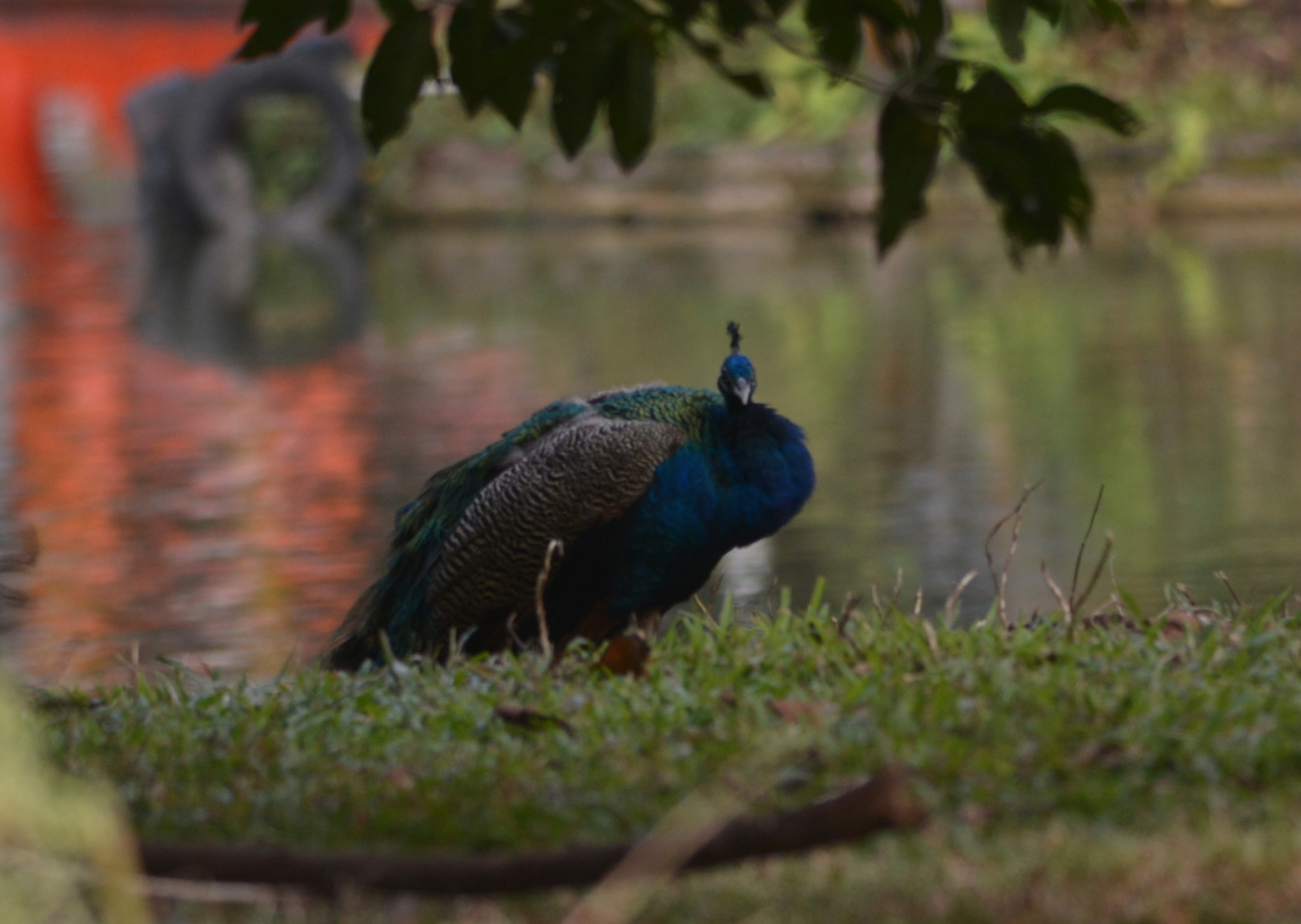
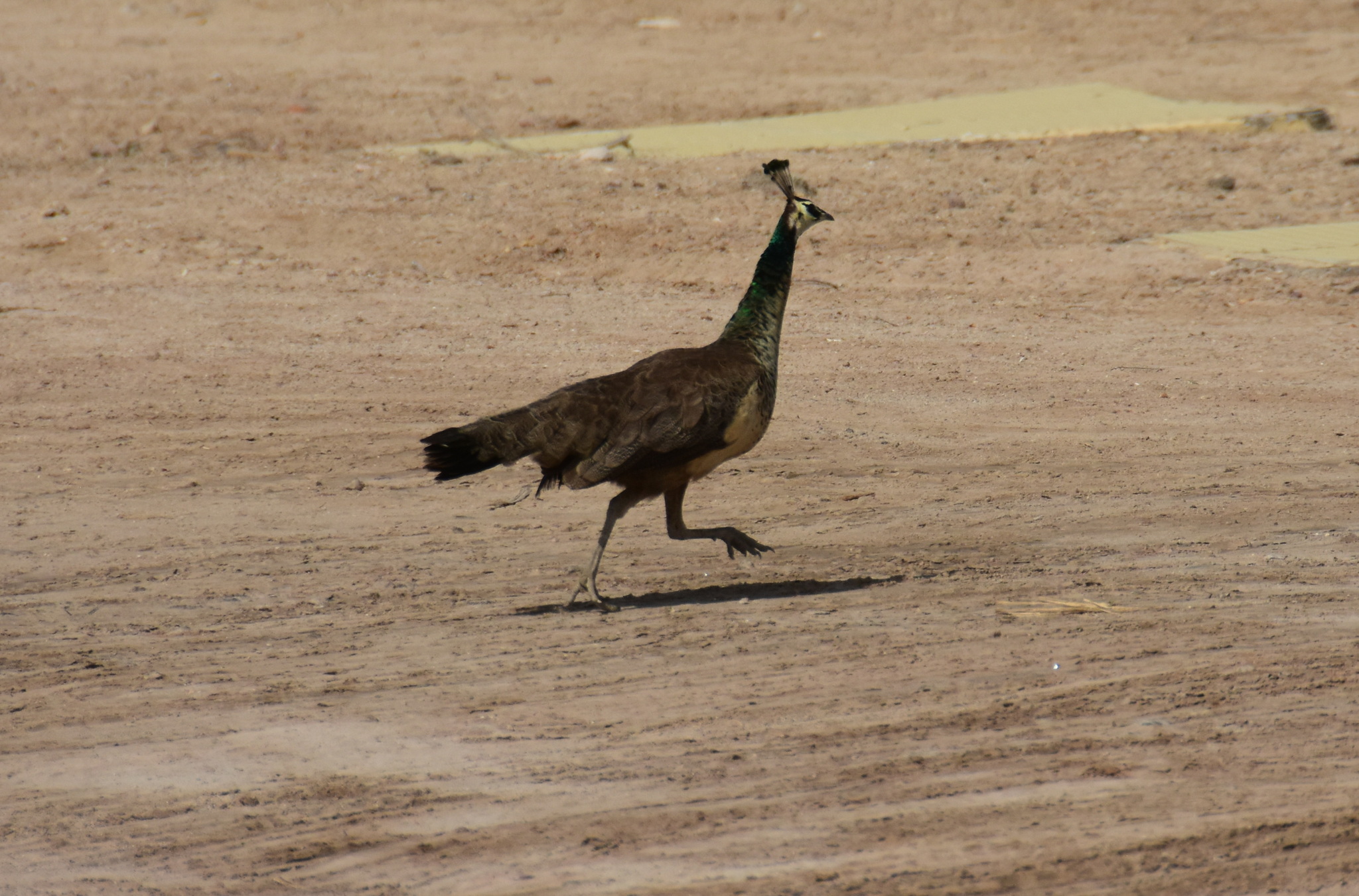
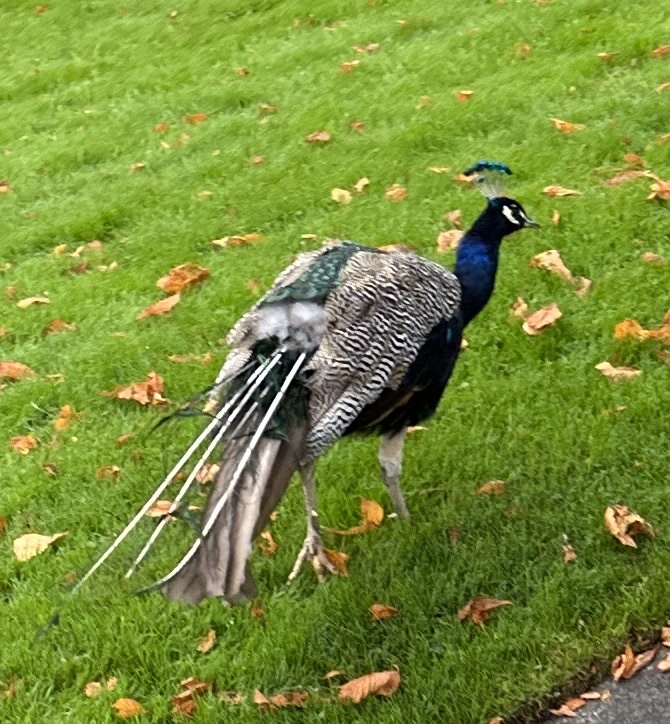
Males measure 100-120 cm from bill to tail, with trains extending total length to 200-230 cm, weighing 4.1-5.2 kg. The metallic blue crown has short curled blue-greenish feathers. A fan-shaped crest features bare black shafts tipped with bluish-green webbing. A white stripe above the eye and crescent-shaped white patch below the eye are distinctive. The long blue neck has scaly bronze-green feathers with black and copper markings. Wings are chestnut primary feathers with black secondaries. The train consists of elongated upper tail coverts with bronze-green coloration and elaborate eye-spots: a purplish-black heart-shaped nucleus surrounded by blue, copper, and alternating green and bronze rings. A tarsal spur is present. Females are smaller at 38 cm length and 2.7-4.1 kg, with rufous-brown head, brown upperparts, metallic green lower neck, and whitish underparts. Both sexes have dark brown eyes, brown beak and legs.
Identification
The metallic blue male with fan-shaped crest and massive eye-spotted train is unmistakable. The peahen's brown plumage with white face and green gloss on the lower neck distinguishes it from similar-sized pheasants. In flight, the chestnut wing feathers of males and dark brown wings of females are visible. The black-shouldered melanistic mutation has black wings in adult males. Differs from the green peafowl (Pavo muticus) in having blue rather than green neck and no facial skin modifications. Size and ground-dwelling habits help distinguish it from other pheasants within its range.
Distribution & Habitat
Resident breeder across most of India from the Indus valley in the northwest to Assam in the northeast, from the Himalayas south to the tip, absent only from the Sunderbans marshes. Found up to 1,500 m elevation in the north and 1,800 m in southern mountains. In Sri Lanka, inhabits drier lowland areas. Prefers open forests, small hills, bushy areas near water, and cultivated lands. Lives semi-domesticated near human habitations. Introduced to many parts of the world including Europe (possibly by Alexander the Great) and has established feral populations in various regions.
Behavior & Ecology
Forages in small groups called musters, typically one male with three to five females. Omnivorous diet includes grass, seeds, flower buds, fruits, insects, and small reptiles; also takes crops such as groundnut, tomato, paddy, chili, and bananas. Makes loud calls described as pia-ow or may-awe, with increased frequency before monsoon season. Alarm calls warn of predators including tigers. Other calls include rapid ka-aan..ka-aan series and explosive honk when agitated. Polygamous; breeding occurs year-round with peak during monsoon months. Males congregate at lek sites without guarding territories. Courtship display involves raising train into arched fan and quivering. Nests are shallow ground scrapes lined with debris; clutch size is 3-8 eggs incubated by female for 28-30 days. Males do not participate in rearing young.
Conservation
Listed as Least Concern on the IUCN Red List. Population estimated at over 100,000 individuals in 2002, with no evidence of decline. Threats include poaching for meat and feathers, accidental poisoning from pesticide-treated seeds, and hunting for folk remedies. Causes agricultural damage, with studies showing up to 40% yield decrease in paddy fields. Protected culturally and legally in India and Sri Lanka; Indian law permits only collection of naturally shed feathers. Management programs in urban areas aim to prevent damage while treating birds humanely. Several wildlife sanctuaries in India protect the species. Breeds readily in captivity worldwide.
Culture
National bird of India. Associated with many Hindu deities: Kartikeya uses a peacock as his vahana, and Krishna is depicted with peacock feathers on his crown. In the Ramayana, Indra sheltered under a peacock's wing and blessed it with fearlessness from serpents. Represents wisdom in Buddhist philosophy. In Greek mythology, the plumage originates from the tale of Hera and Argus. The Yezidi figure Melek Taus is depicted as a peacock. A golden peacock symbolizes Ashkenazi Jewish culture. In medieval Europe, knights took 'vow of the peacock' and decorated helmets with plumes. Peacock feathers were buried with Viking warriors. Motifs appear in architecture, textiles, and logos including NBC and SriLankan Airlines. The term 'peacocking' denotes pride and attention to appearance in English.
Source: Wikipedia · CC BY-SA 3.0
Taxonomy
- Order
- Galliformes
- Family
- Phasianidae
- Genus
- Pavo
- eBird Code
- compea
Distribution
forest and scrub of eastern Pakistan, India, and Sri Lanka; introduced locally almost worldwide
Data Sources
Species description from Wikipedia, licensed under CC BY-SA 3.0.
Bird images and sounds sourced from GBIF, contributed by citizen scientists worldwide under Creative Commons licenses.
Taxonomy data from AviList 2025.