
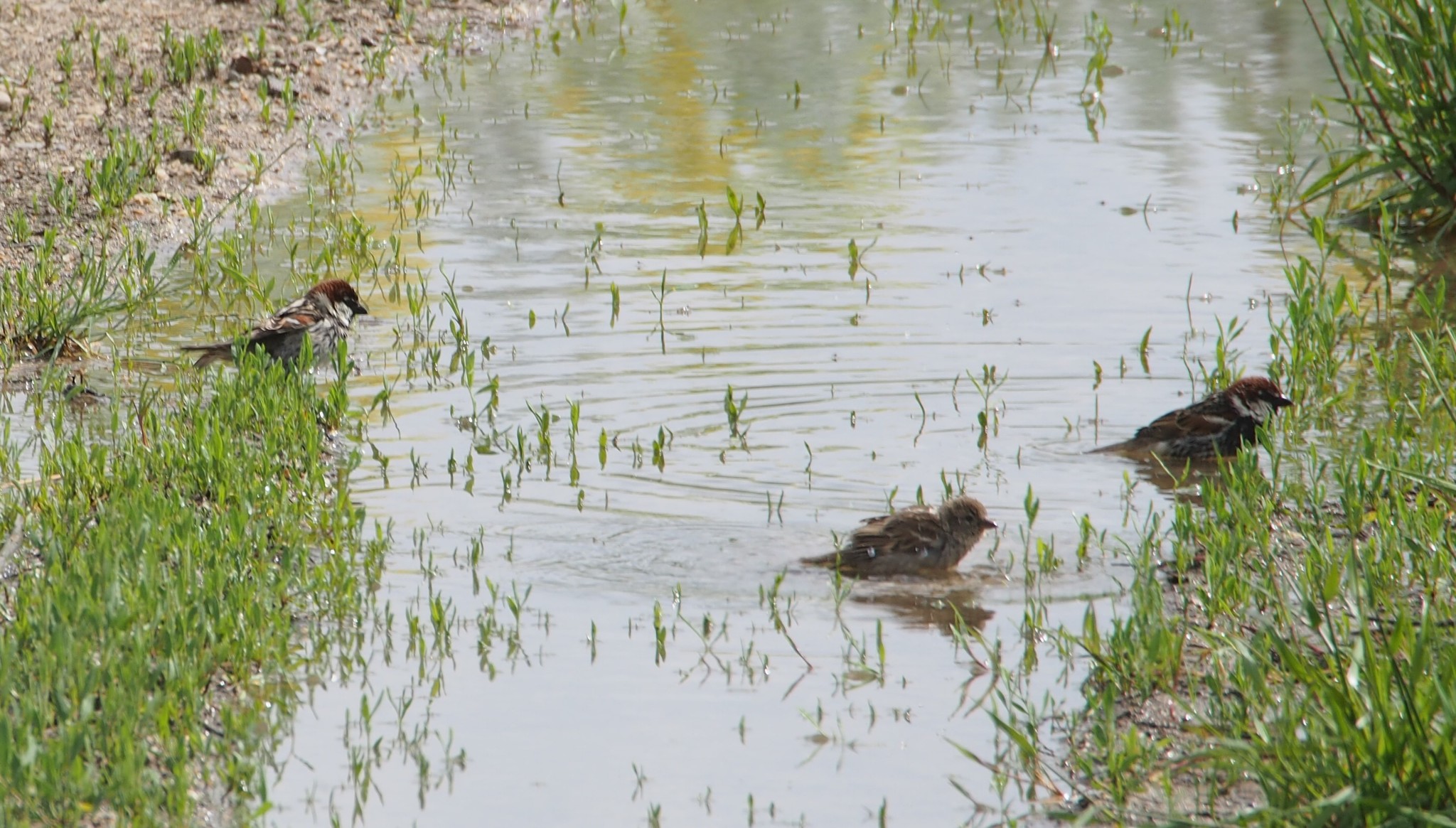
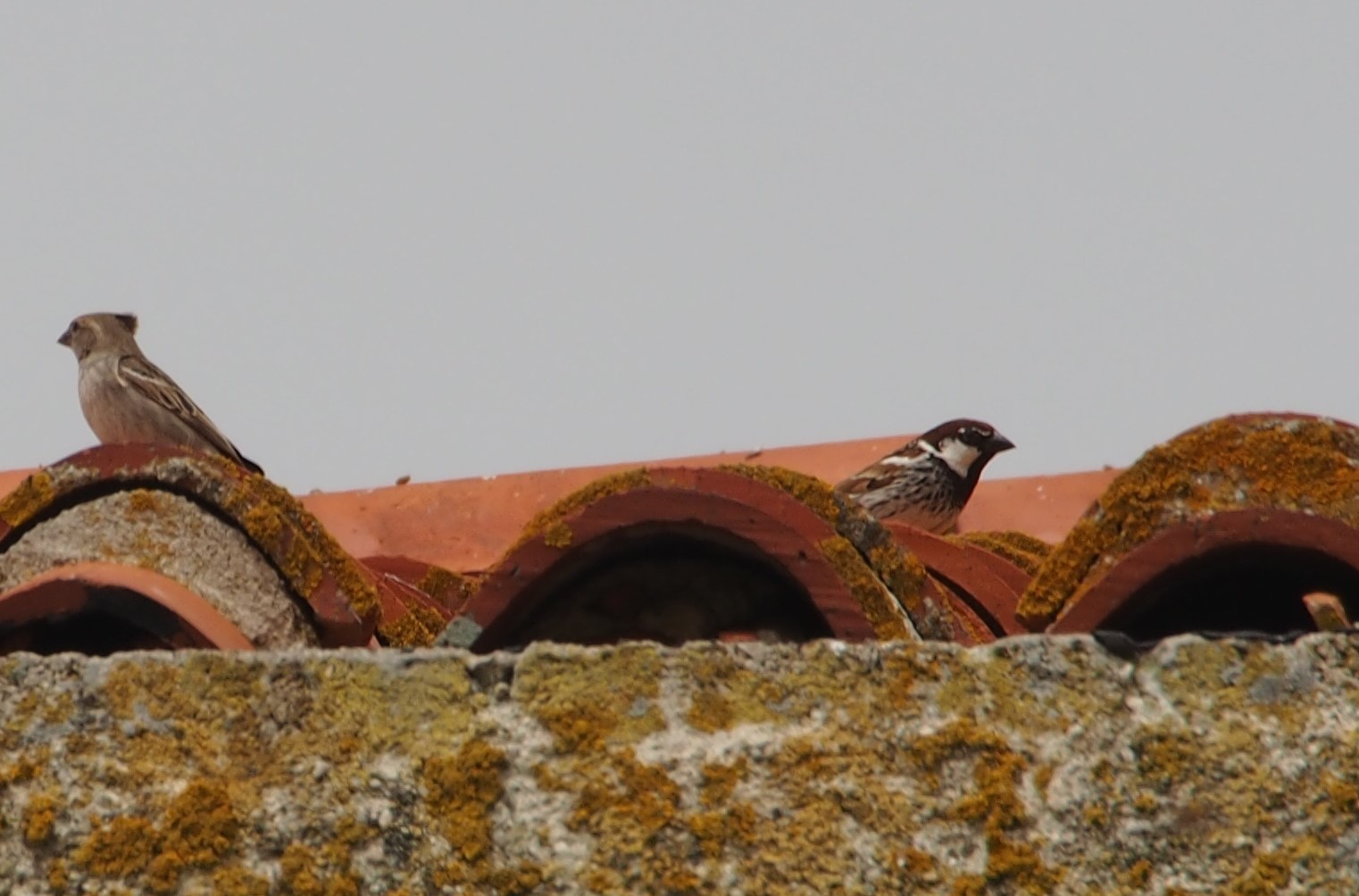
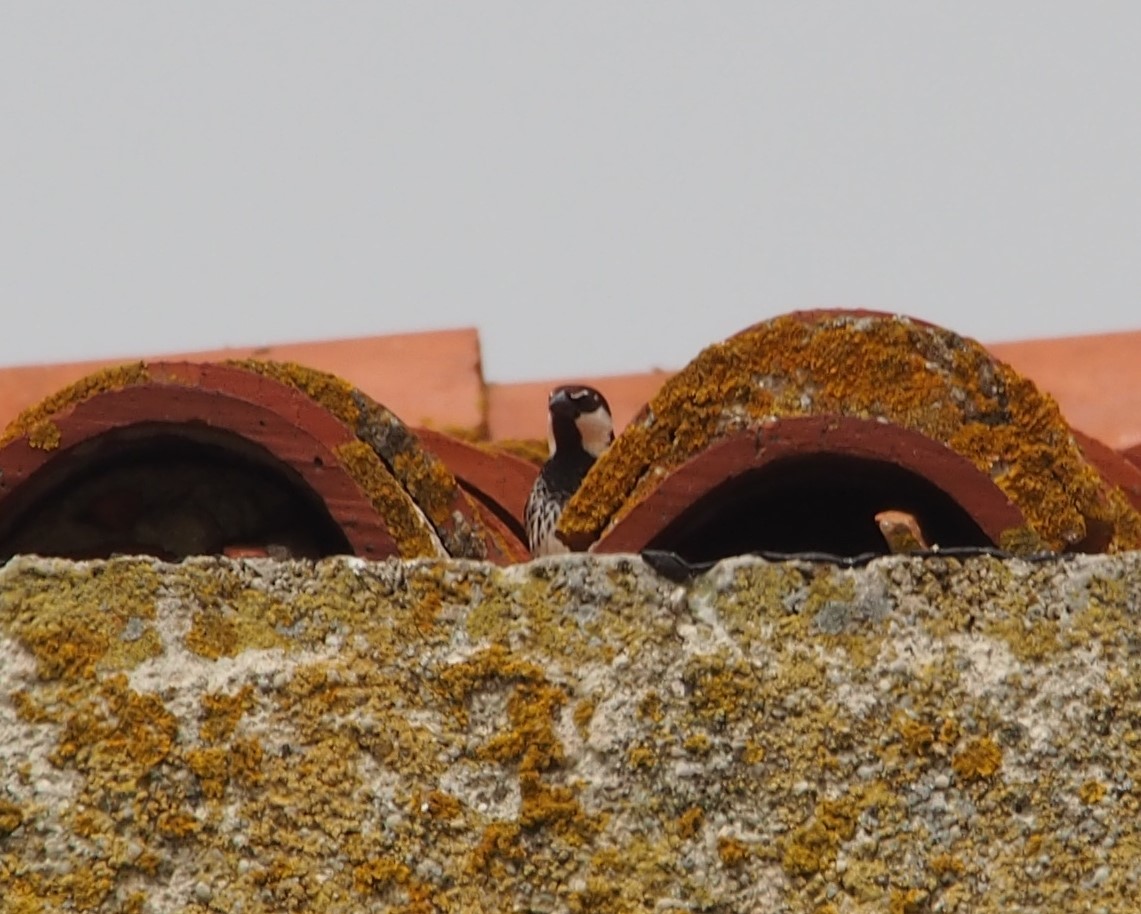

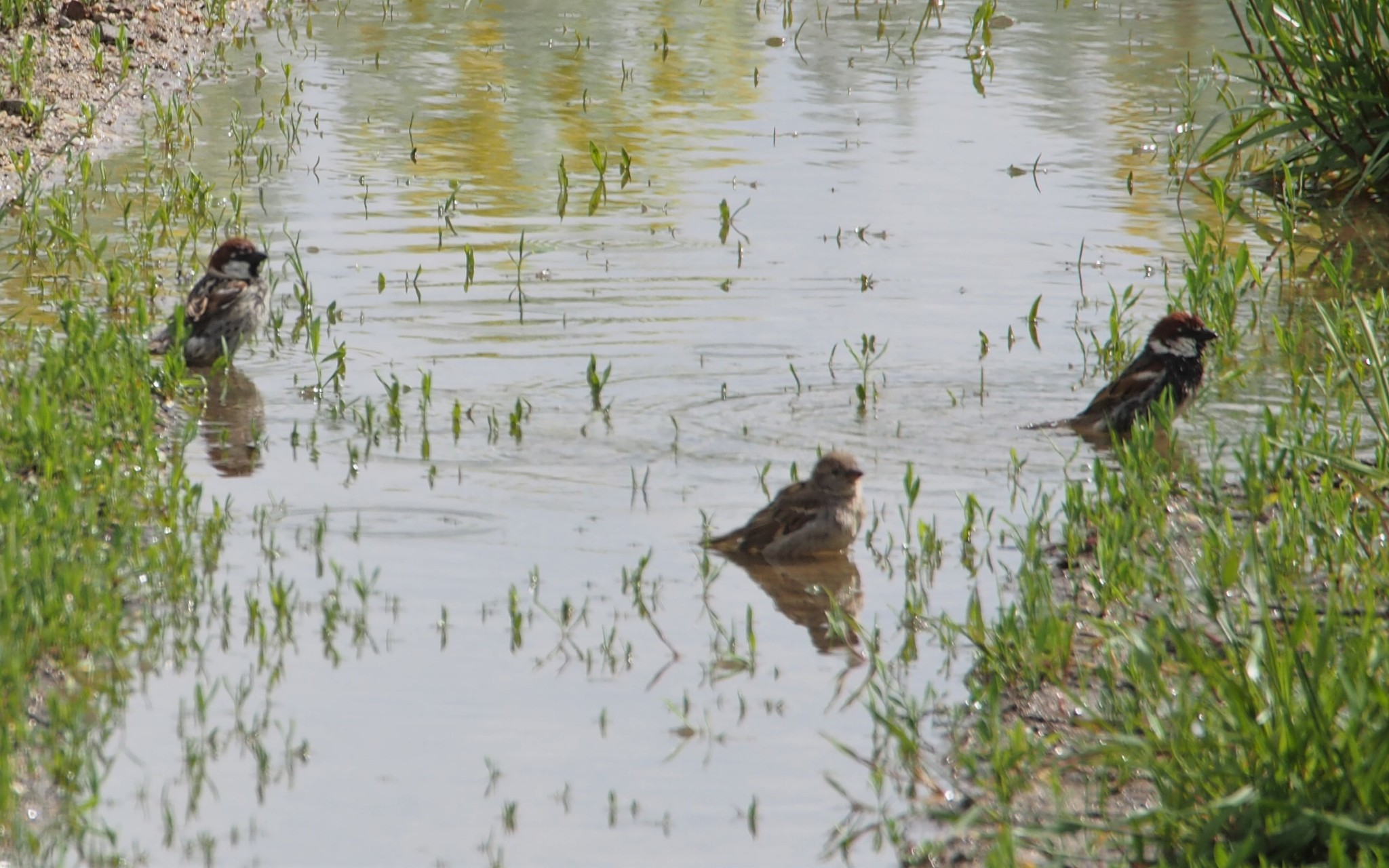

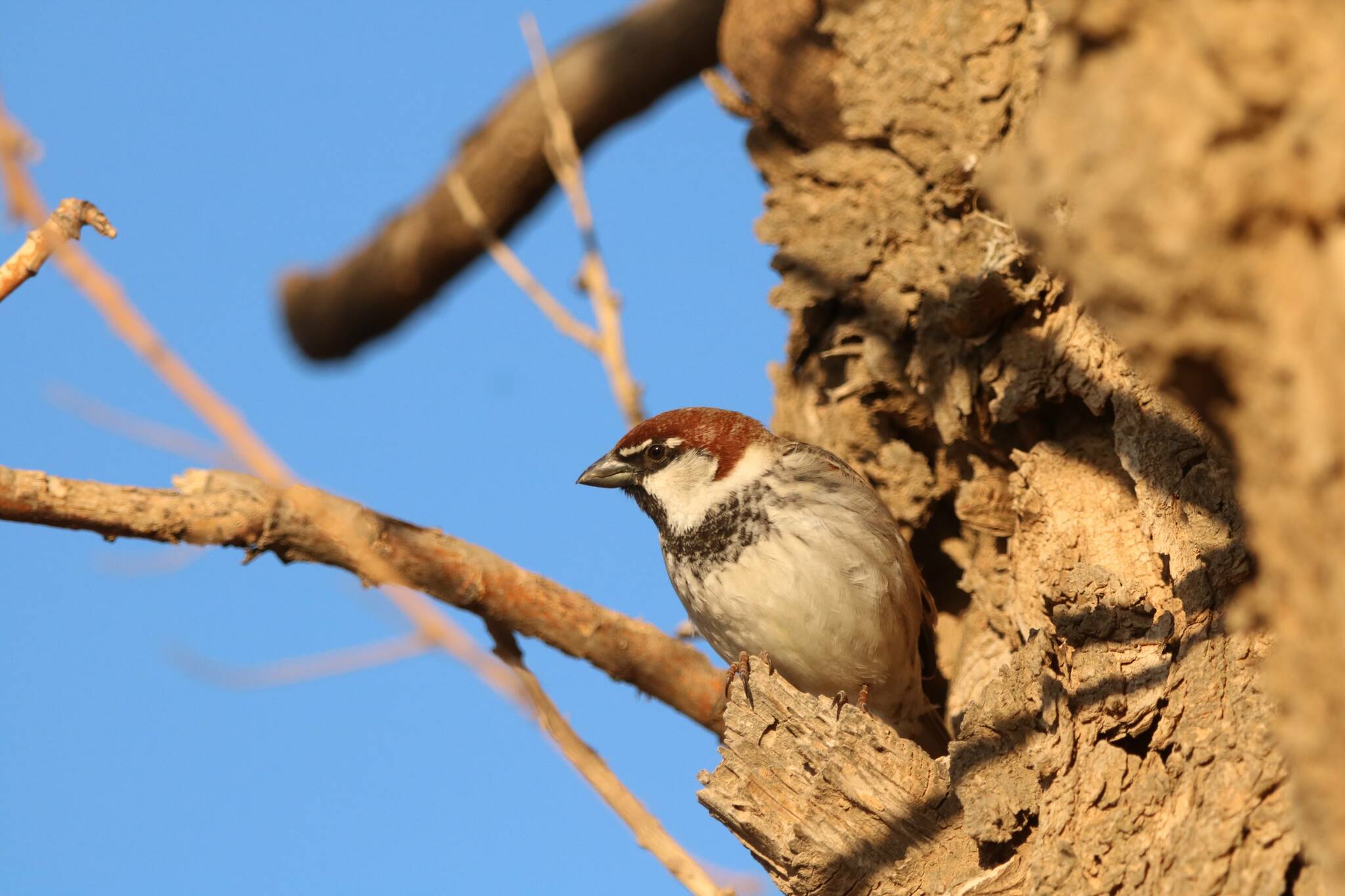
Spanish Sparrow
Passer hispaniolensis
黑胸麻雀
Introduction
A passerine bird of the sparrow family Passeridae. Found throughout the Mediterranean region, Macaronesia, and southwest to central Asia, breeding in a band of latitude approximately 15 degrees wide from the Danube Valley and Aral Sea in the north to Libya and central Iran in the south. Strongly gregarious species that nests in large colonies ranging from ten pairs to hundreds of thousands of pairs. Forms complex hybrid zones with the house sparrow throughout much of its Mediterranean range, including the distinctive Italian sparrow population in Italy and Corsica. Assessed as Least Concern on the IUCN Red List, with a global population estimated between 17 and 74 million individuals.
Description
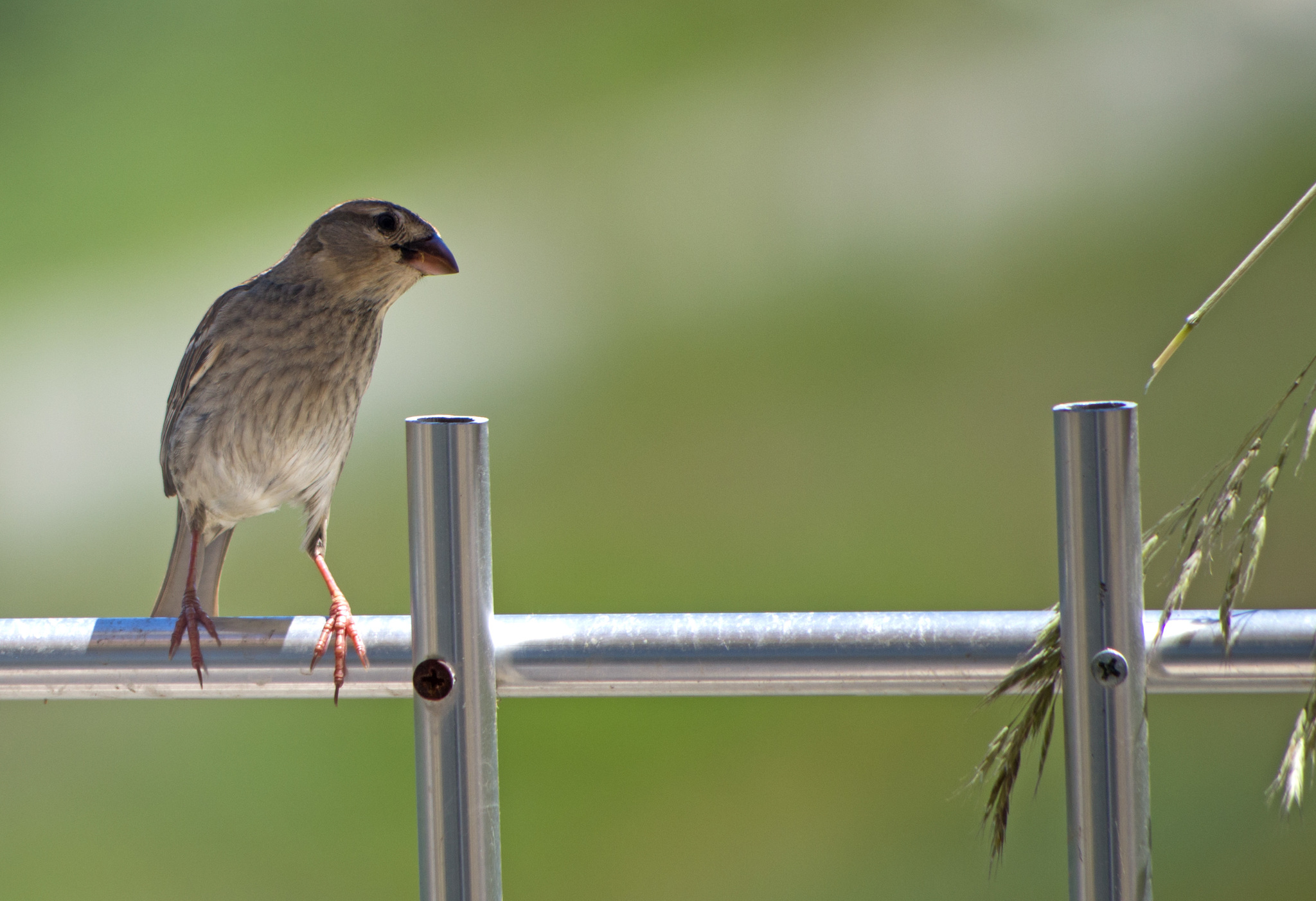
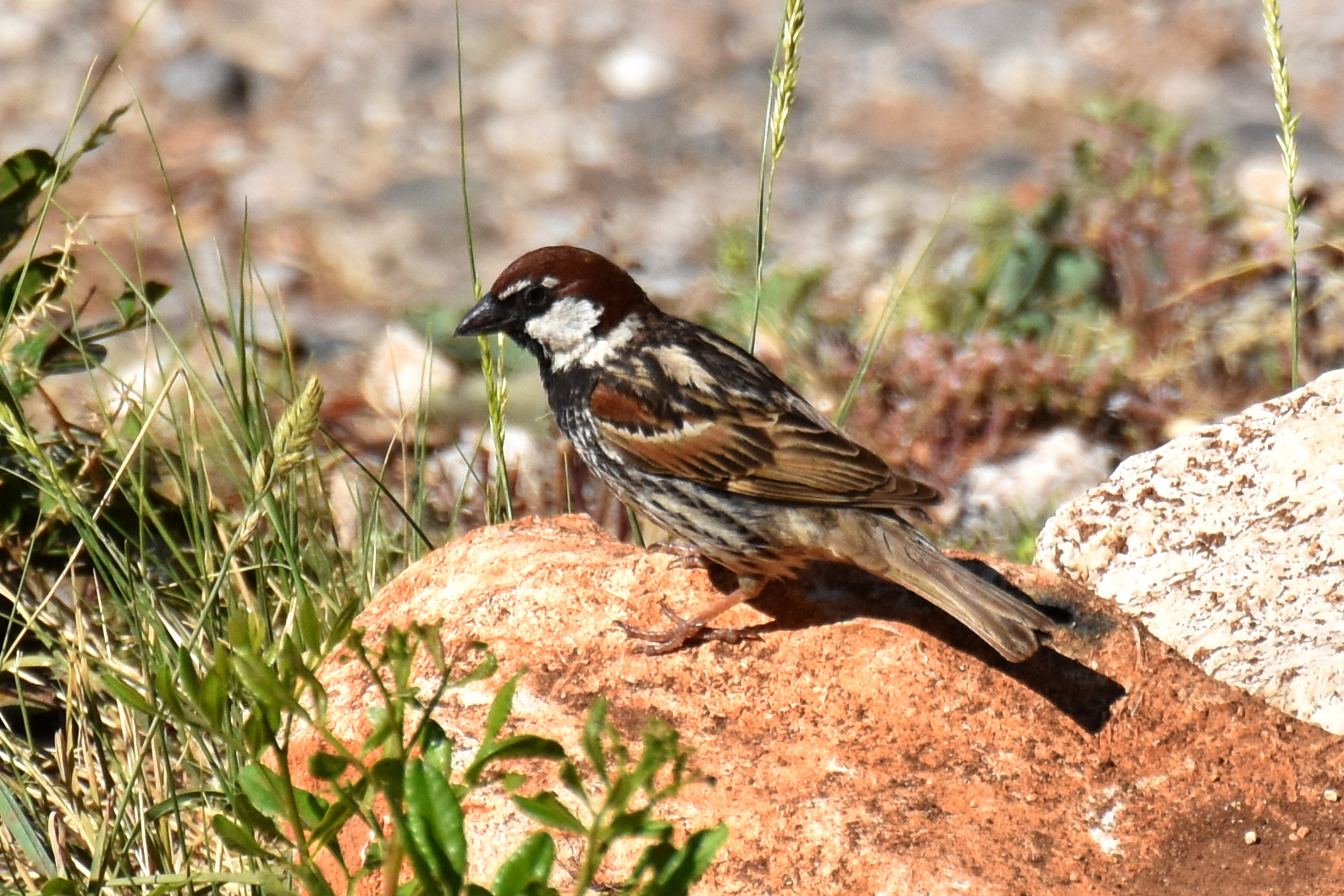
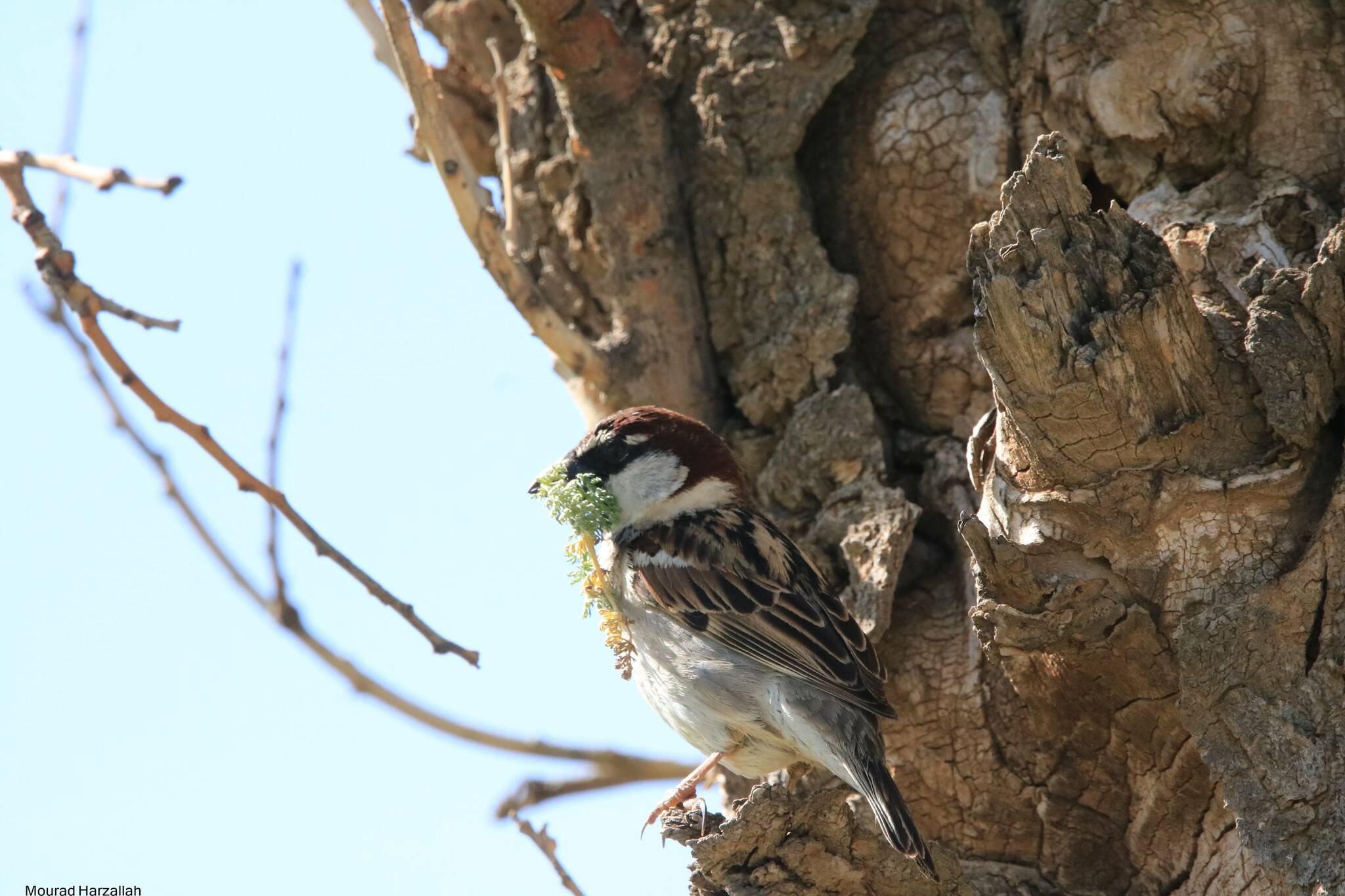
A relatively large sparrow measuring 15-16 cm (6-6.5 in) in length and weighing 22-36 g (0.78-1.27 oz). Larger and heavier than the house sparrow with a proportionally longer and stouter bill. Adult males have heavily streaked black underparts, a chestnut crown, and white cheeks, distinguishing them from the grey-crowned, grey-cheeked house sparrow. Females are grey-brown overall with bold markings, featuring light streaking on the sides, a pale cream supercilium, and broad cream streaks on the back. Two subspecies are recognized: the western P. h. hispaniolensis and the eastern P. h. transcaspicus, with the latter appearing paler with less chestnut in fresh winter plumage.
Identification
Very similar to the house sparrow and often difficult to distinguish in the field. Males are best identified by their heavily streaked underparts, chestnut crown, and white cheeks versus the grey crown and cheeks of male house sparrows. Females are practically inseparable from female house sparrows by plumage alone. Subspecies are more reliably distinguished in fresh winter plumage, with eastern birds (transcaspicus) appearing paler with reduced chestnut coloration. In hybrid zones, individuals may show intermediate characteristics between the two species.
Distribution & Habitat
Breeds throughout the Mediterranean region, Macaronesia, and east through the Middle East and Central Asia to western China. Western subspecies breeds in Iberia, North Africa, the Balkans, and Atlantic islands; eastern subspecies occurs from Anatolia and Cyprus through the Middle East to Central Asia and western China. The range has expanded naturally over the last two centuries, particularly in the Balkans (reaching Romania, Serbia, and Moldova from the 1950s) and Macaronesia (Canary Islands and Madeira). Winters in the plains of the Indian subcontinent and Persian Gulf. Vagrants occur regularly as far north as Scotland and Norway.
Behavior & Ecology
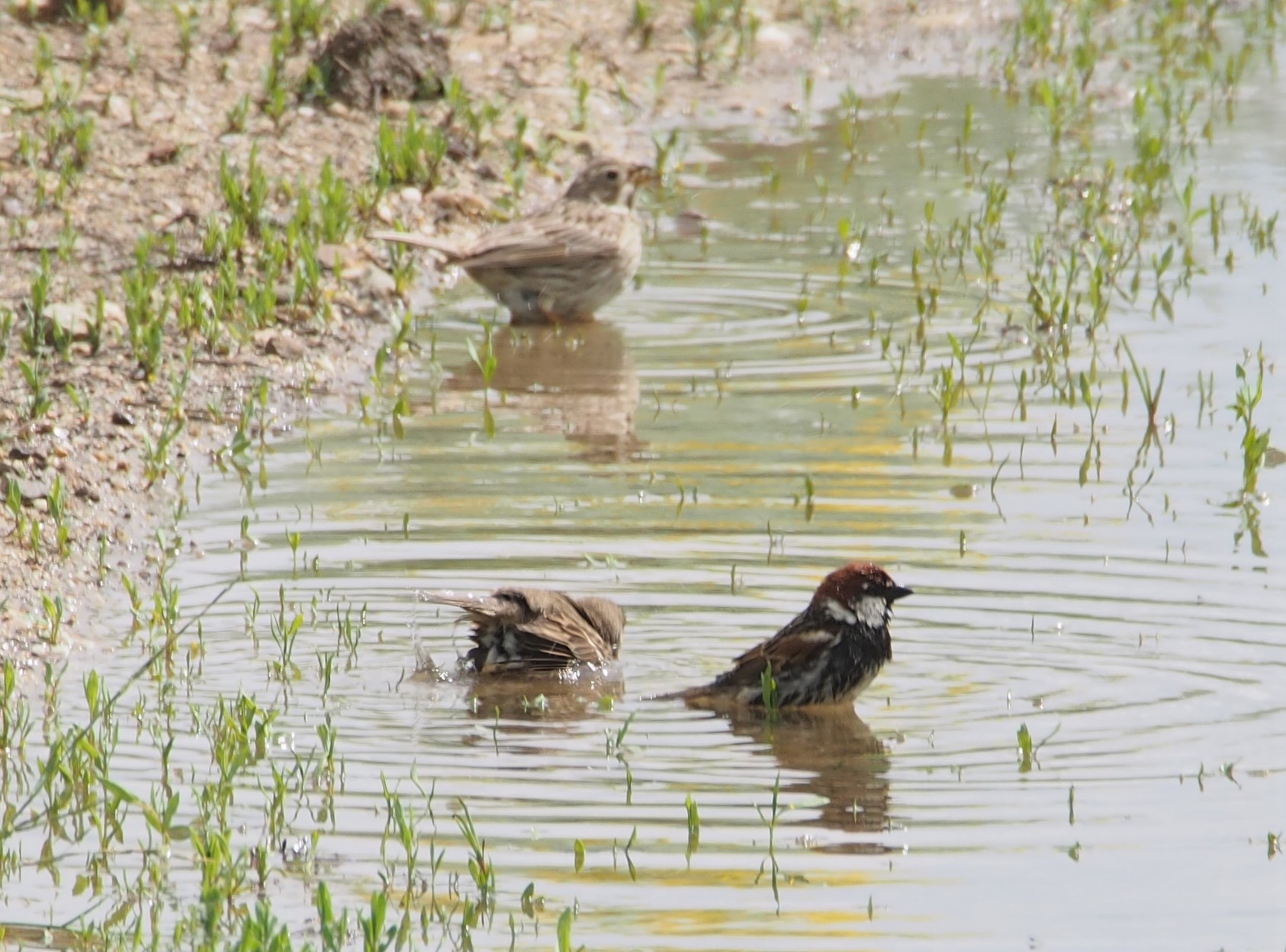
Strongly gregarious, forming large colonies and feeding in flocks. Diet consists primarily of seeds from grains and grasses, supplemented with leaves, fruits, and insects; nestlings are fed almost exclusively on insects (75-90% of diet) for their first few days. Breeding occurs in large colonies with nests placed in trees, bushes, or beneath white stork nests. Each pair lays 3-8 eggs that hatch in 12 days, with chicks fledging after approximately 14 days. Males contribute more to nest construction than females. Vocalizations resemble the house sparrow but are louder and higher-pitched, with the advertising call transcribed as chweeng-chweeng or cheela-cheeli. Maximum recorded age is 11 years.
Conservation
Assessed as Least Concern on the IUCN Red List due to its extremely large range and substantial population. The European population comprises 2,800,000-6,200,000 breeding pairs (8,400,000-18,600,000 individuals), contributing to a global population estimated at 17-74 million individuals. Population trends vary regionally, with decreases in some European areas balanced by increases elsewhere. The species has actually expanded its range significantly in recent decades, colonizing new areas including parts of the Balkans and Atlantic islands.
Culture
The scientific name Passer hispaniolensis derives from the Latin Passer (sparrow) and Neo-Latin hispaniolensis (Spanish), referencing the species' type locality in southern Spain. The alternative common name 'willow sparrow' refers to its preference for moist habitats and has been used particularly when the Italian sparrow is considered conspecific. No significant folklore or cultural traditions are associated with this species.
Source: Wikipedia · CC BY-SA 3.0
Taxonomy
- Order
- Passeriformes
- Family
- Passeridae
- Genus
- Passer
- eBird Code
- spaspa1
Vocalizations
Subspecies (2)
-
Passer hispaniolensis hispaniolensis
Cape Verde Islands, Canary Islands, Madeira, southern Europe, and North Africa
-
Passer hispaniolensis transcaspicus
Iran and Transcaspia to eastern Kazakhstan and Afghanistan
Data Sources
Species description from Wikipedia, licensed under CC BY-SA 3.0.
Bird images and sounds sourced from GBIF, contributed by citizen scientists worldwide under Creative Commons licenses.
Taxonomy data from AviList 2025.