
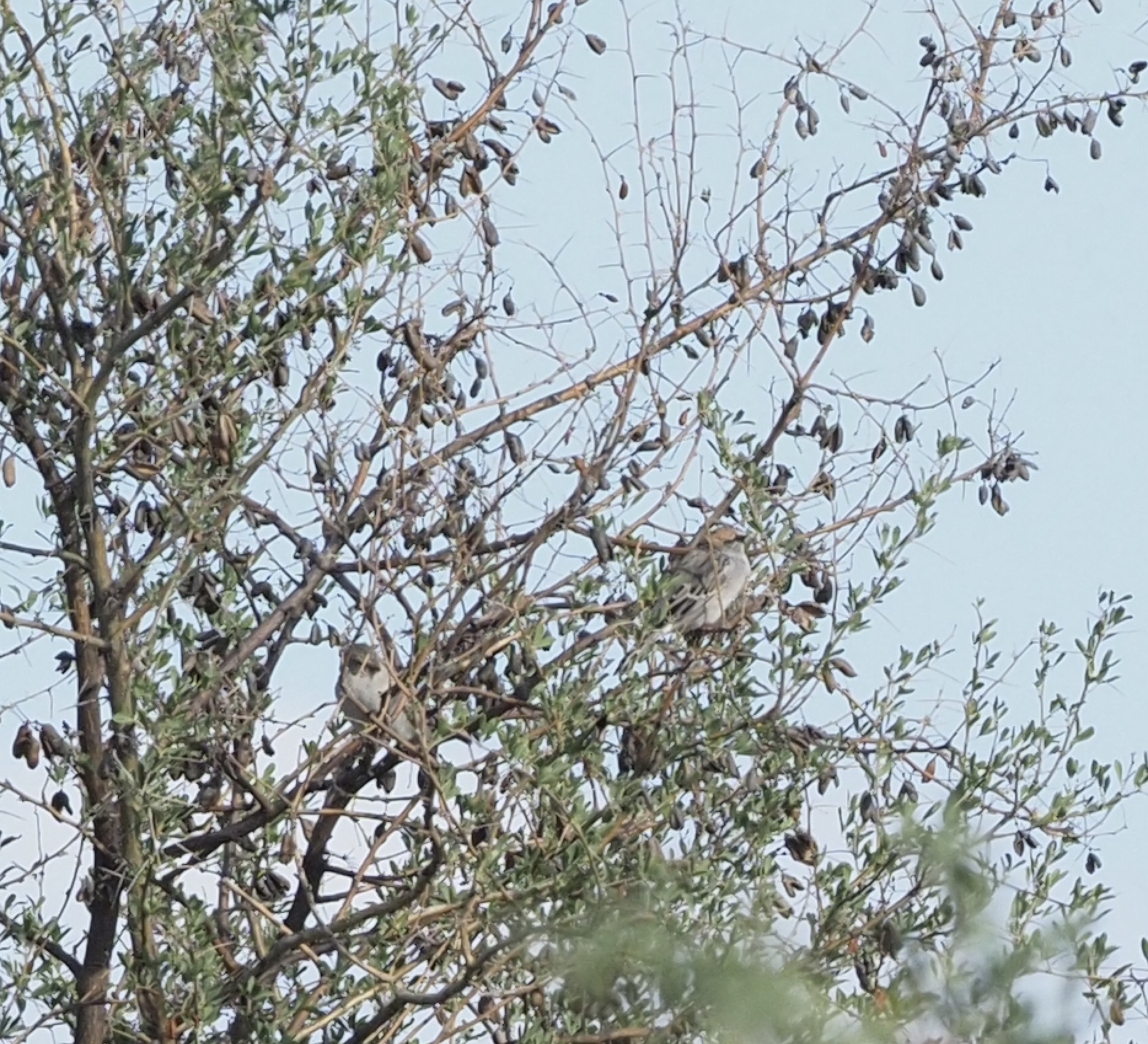
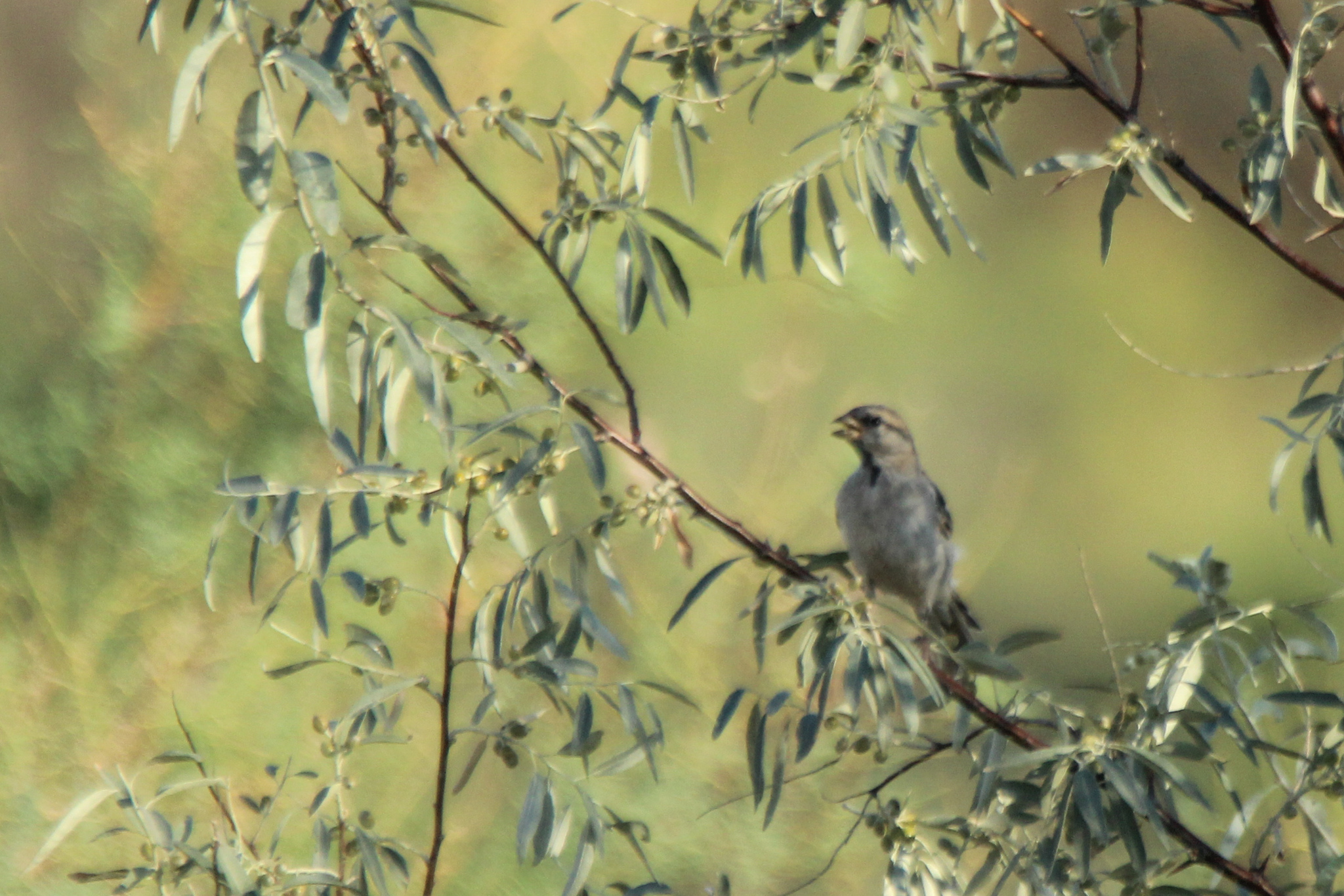

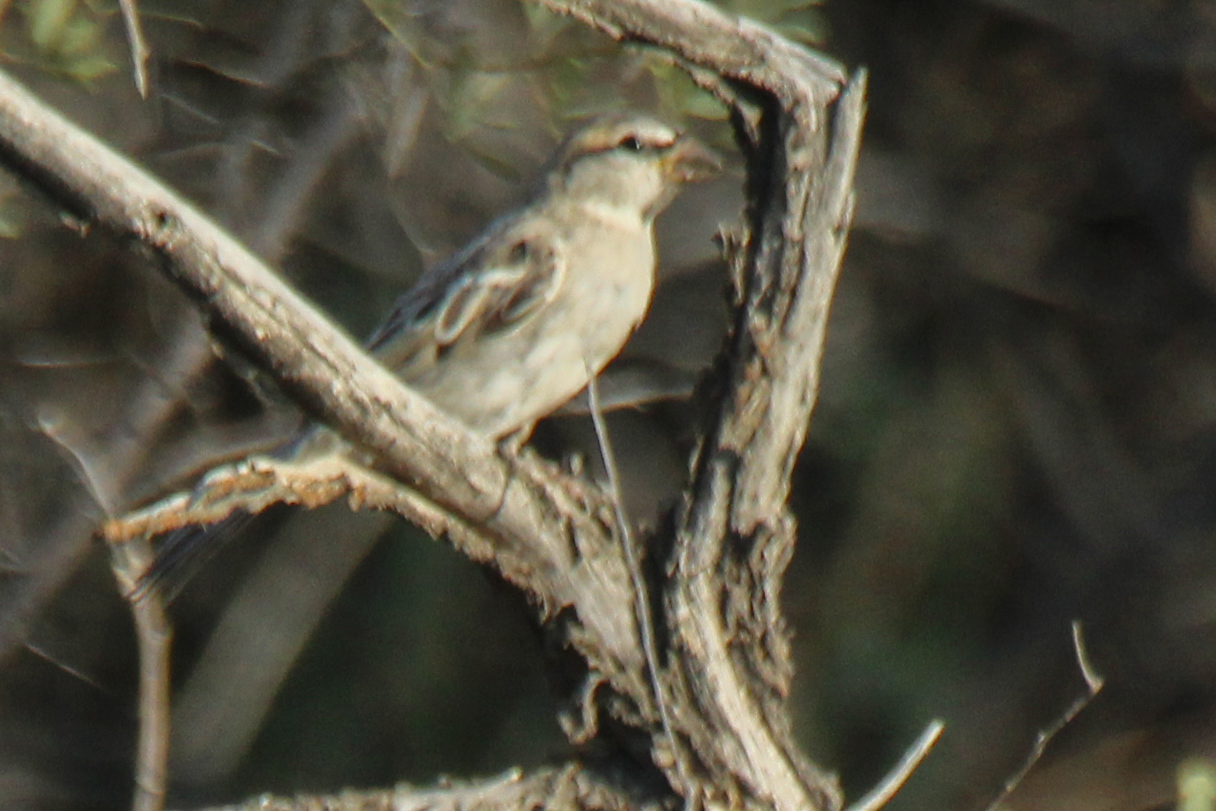
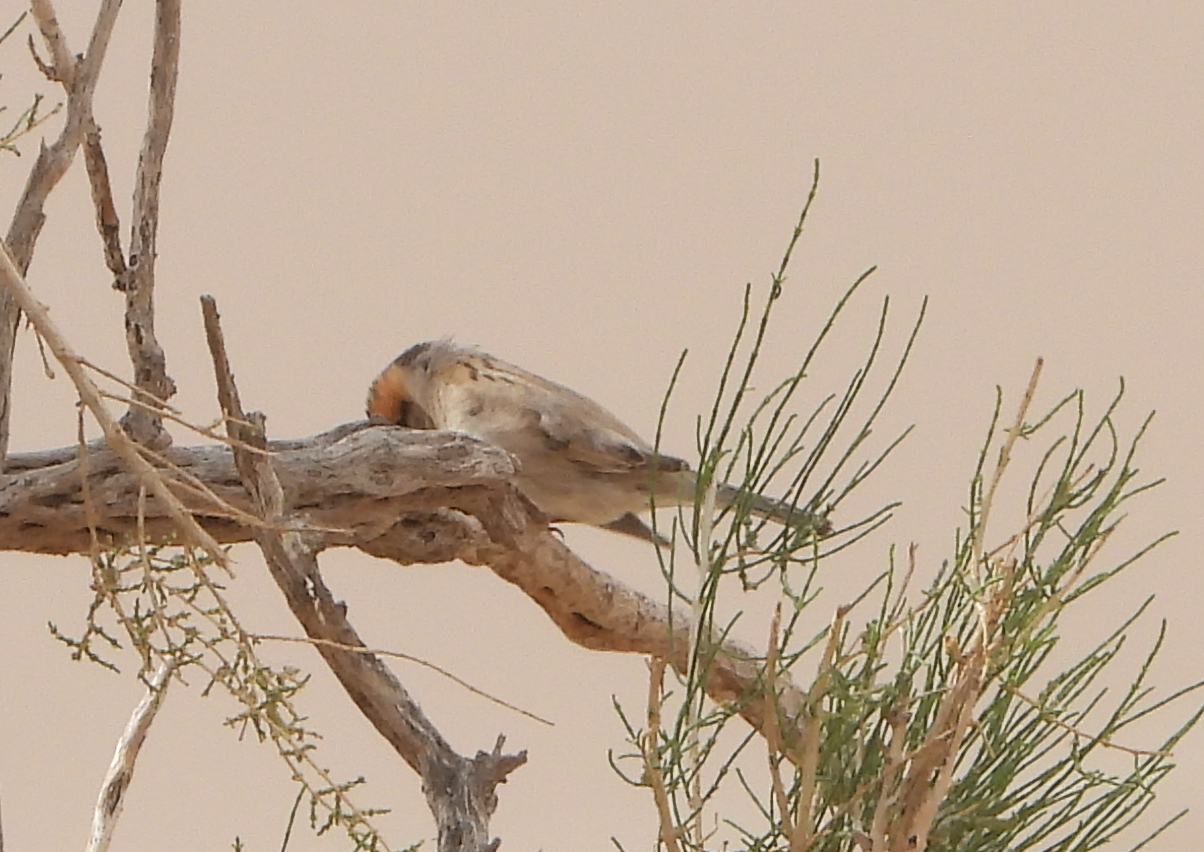

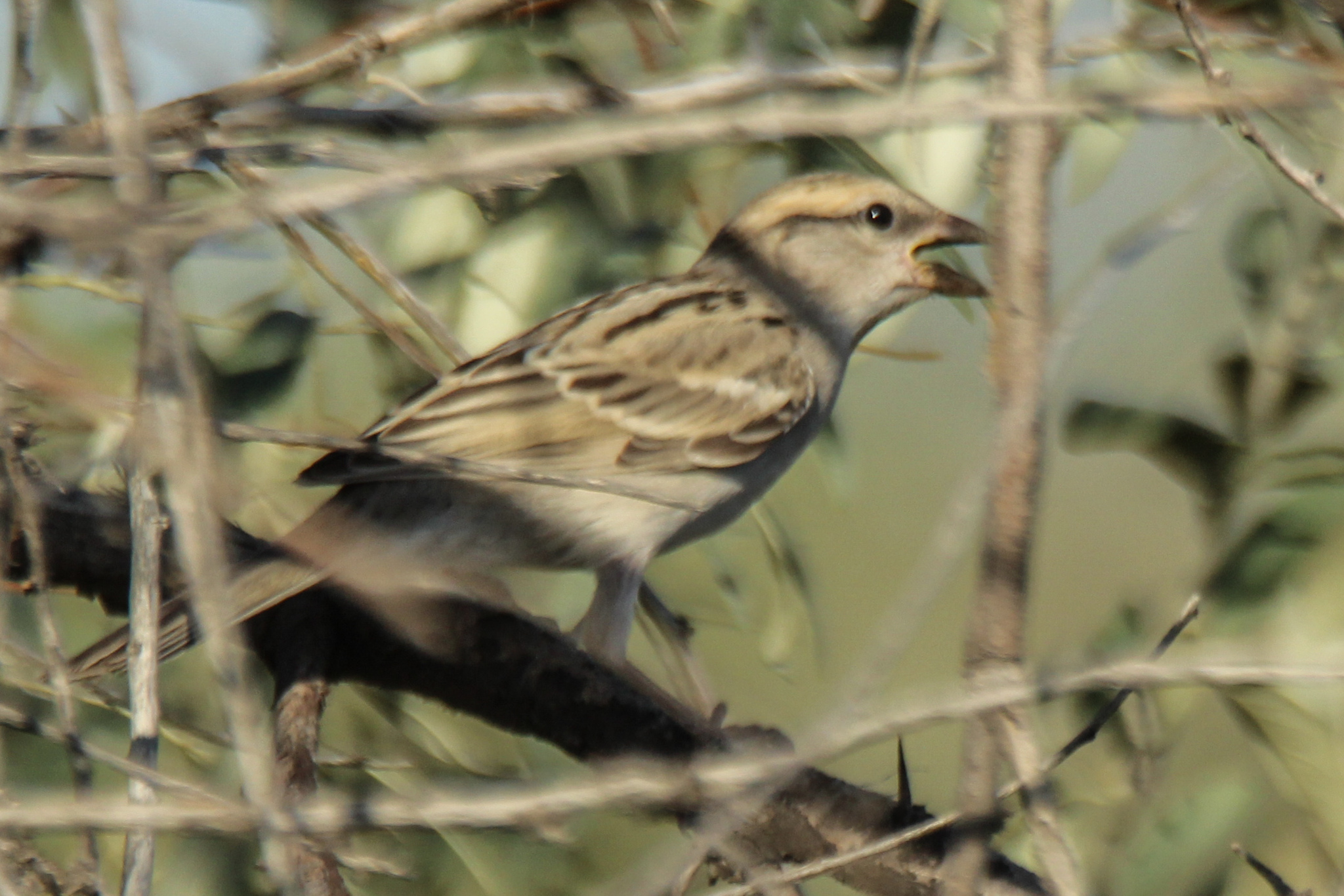
Saxaul Sparrow
Passer ammodendri
黑顶麻雀
Introduction
A passerine bird of the sparrow family (Passeridae) found in six probably disjunct areas across Central Asia, from central Turkmenistan to northern Gansu, China. Inhabits deserts, particularly around rivers and oases where shrubs such as saxaul (Haloxylon), poplar, and tamarisk grow. This species is among the larger sparrows, with distinctive head markings that make it unlikely to be confused with any other bird. While it has lost parts of its range to habitat destruction from agriculture and desertification caused by overgrazing, it is not seriously threatened and is assessed as Least Concern on the IUCN Red List.
Description
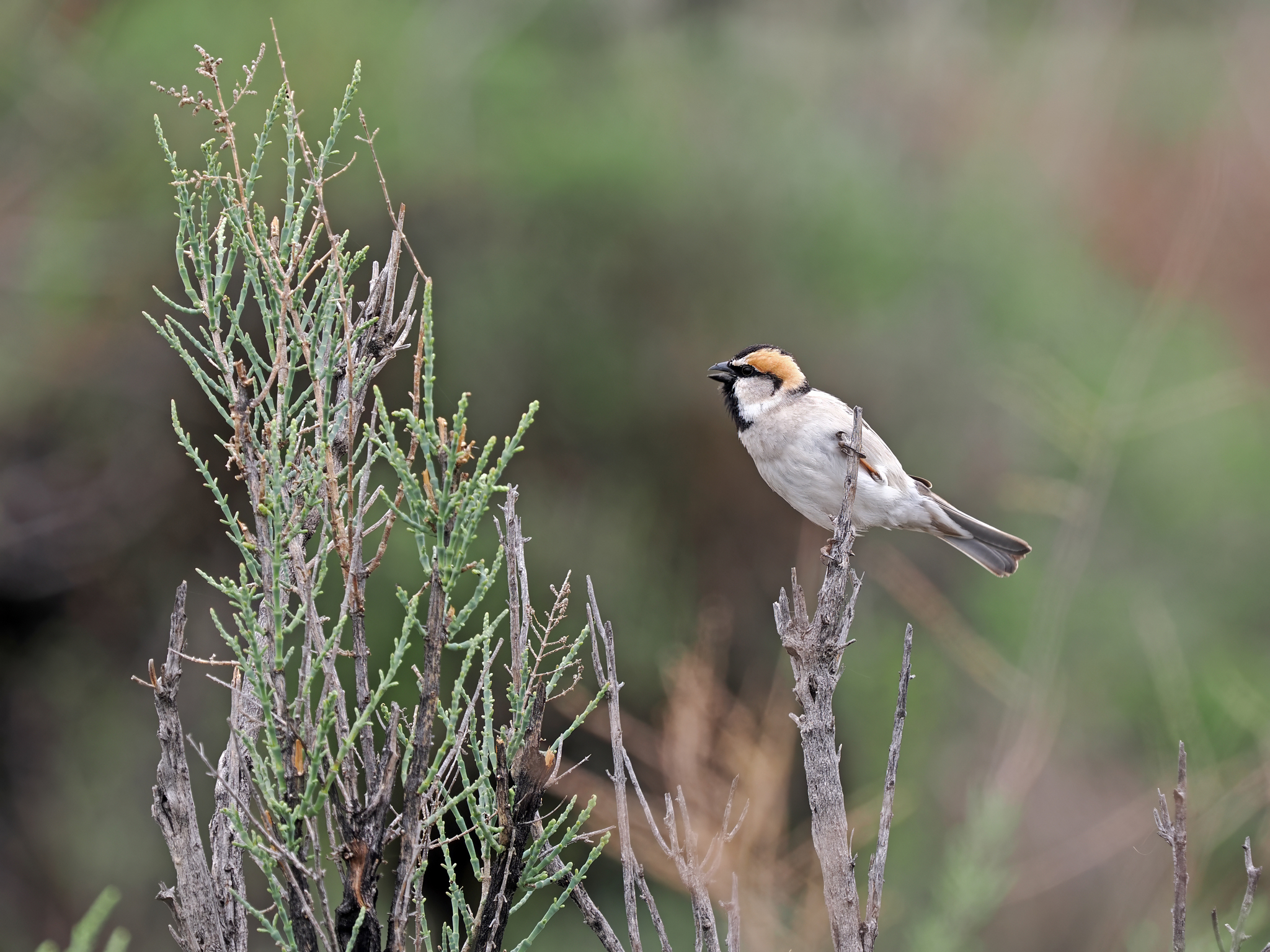
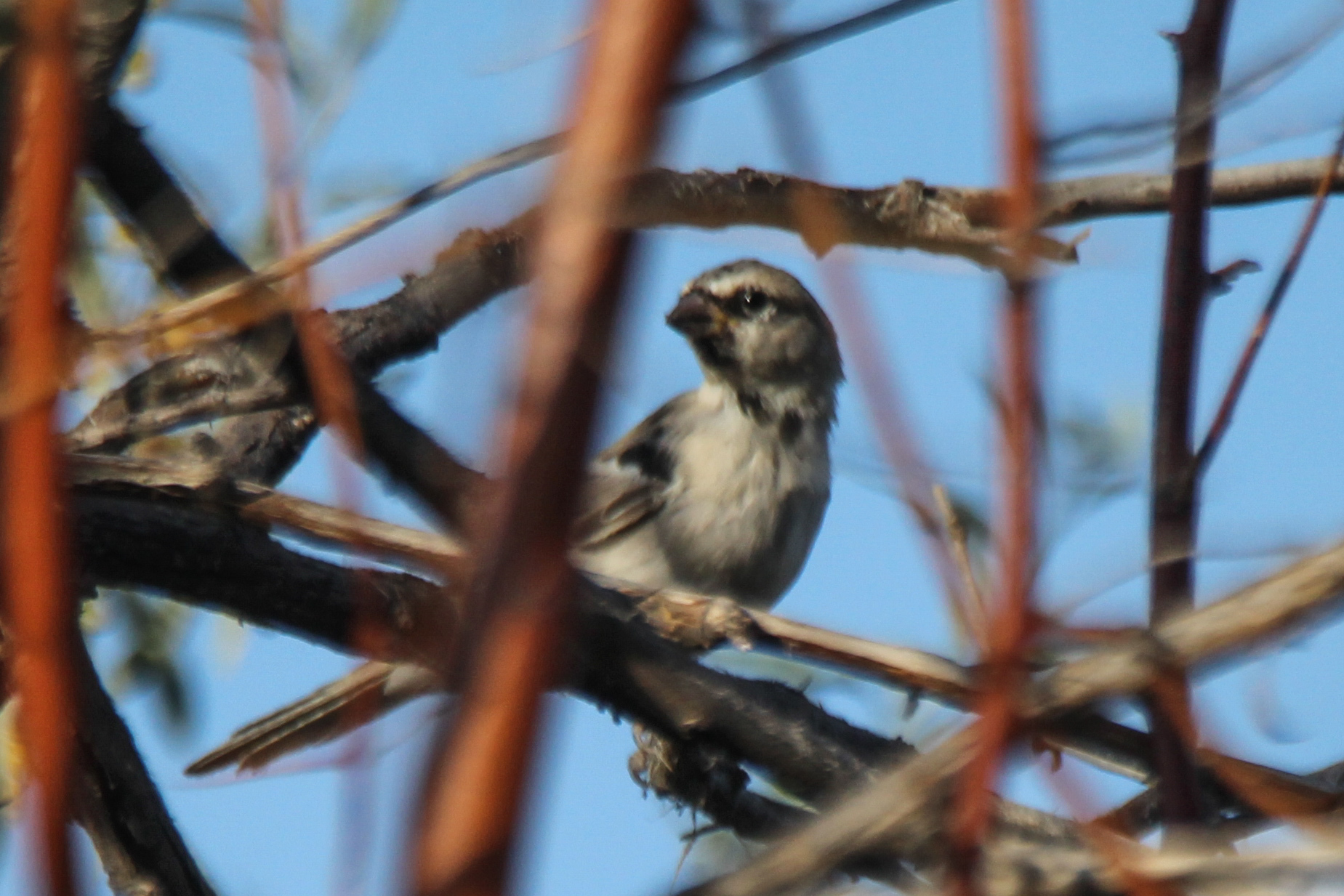
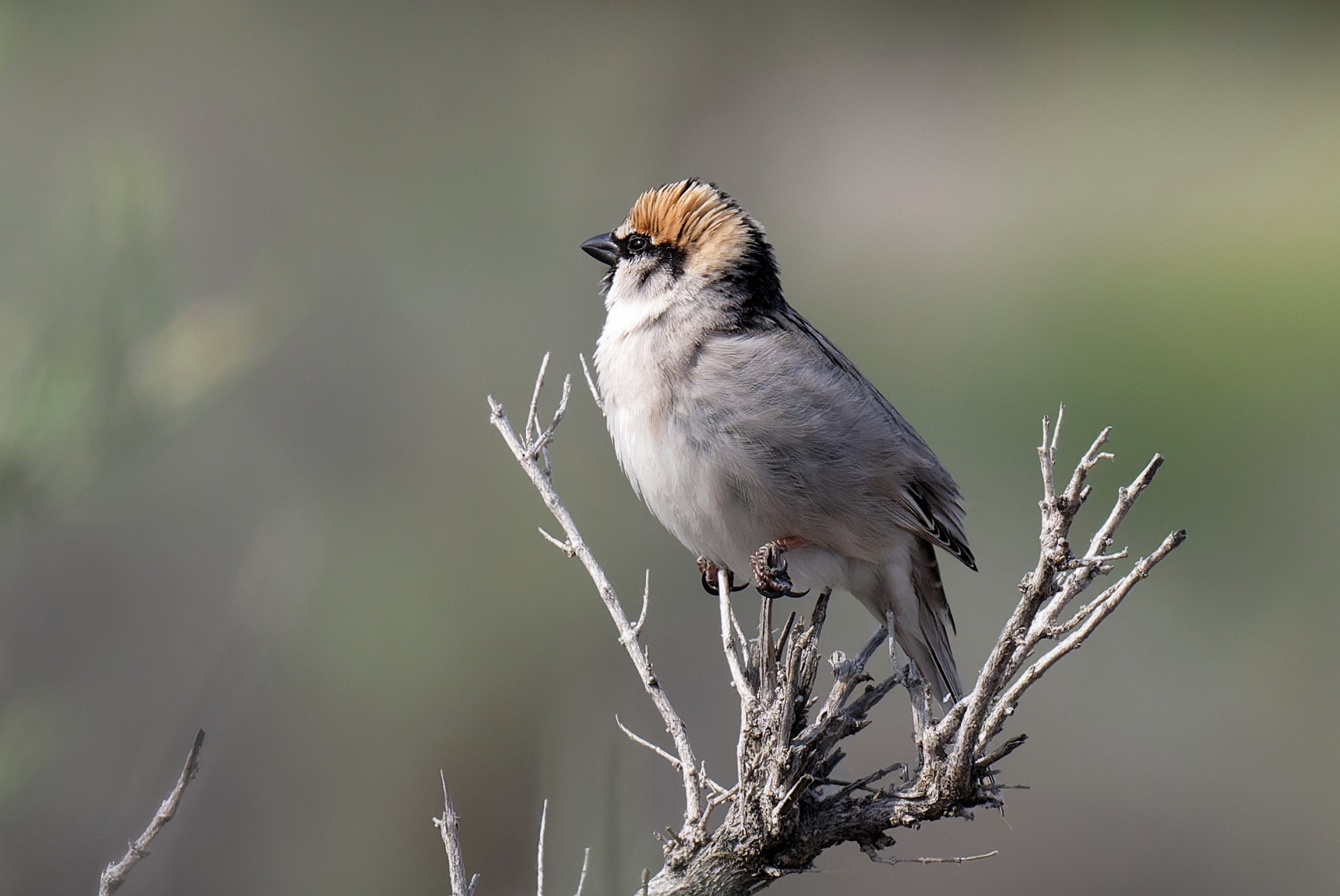
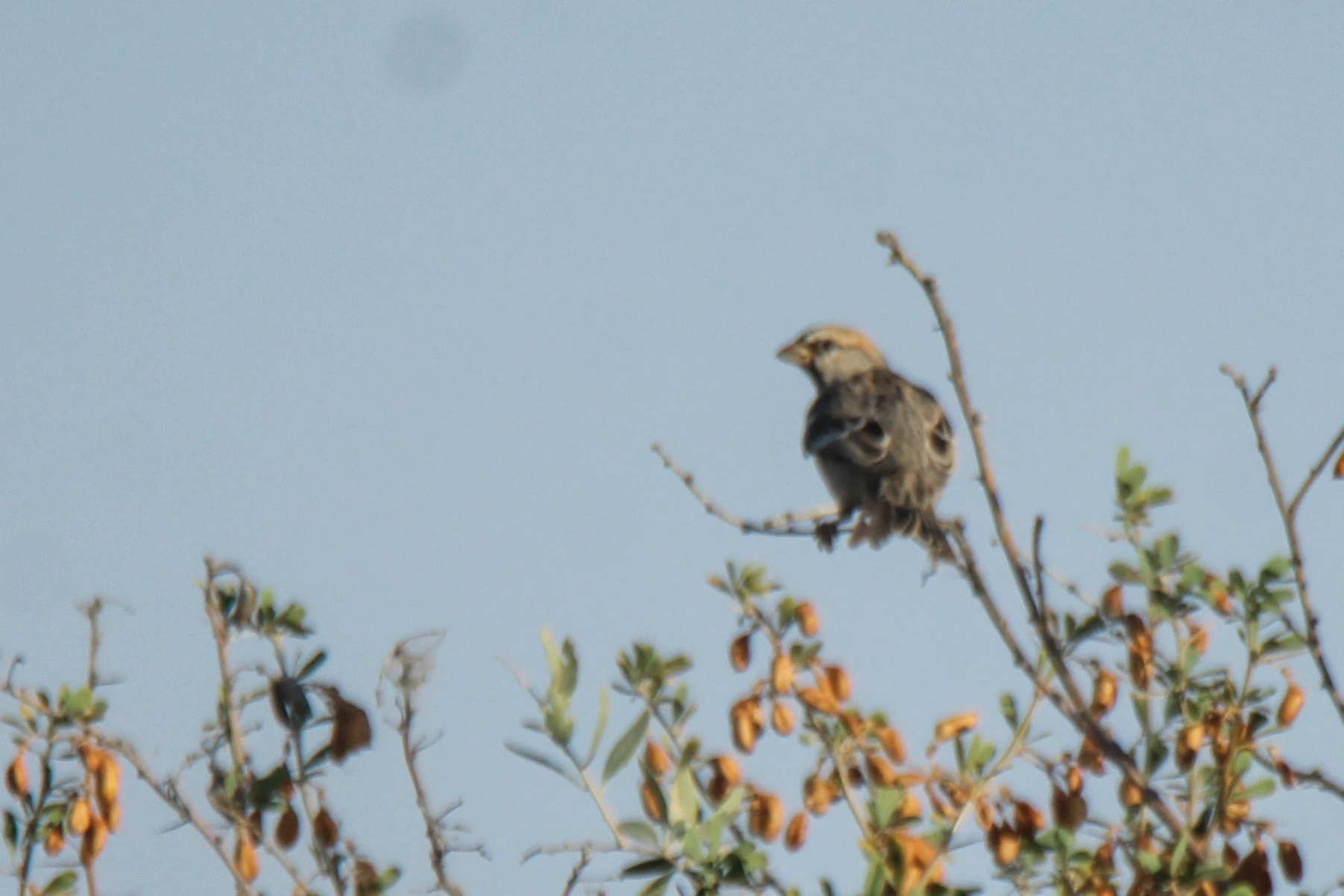
A relatively large sparrow measuring 14–16 cm in length and weighing 25–32 g. Wing length ranges from 7.1–8.1 cm, with a short tail of 6.3–6.95 cm. The legs are pale or pinkish brown, and the bill measures 1.0–1.3 cm. Plumage varies from dull grey to warm sandy brown depending on subspecies and individual. Males display bold head markings: a black stripe along the crown, another through the eye, and a black bib on the throat and upper belly. The crown and nape have a russet patch. The back is grey or warm brown with variable black streaking. Females are paler and duller overall, lacking the male's bold head pattern. Three subspecies are recognized, differing in overall plumage tone.
Identification
The distinctive head markings make this species unlikely to be confused with any other sparrow. Males show a black crown stripe, black eye stripe, and black throat bib, with russet on the crown and nape. Females are more uniformly colored without bold head stripes. The dull grey to sandy brown plumage and pale legs are characteristic. Compared to the house sparrow, the saxaul sparrow has softer, more melodious calls and occupies more remote desert habitats.
Distribution & Habitat
Occurs in six probably disjunct areas across Central Asia, from central Turkmenistan through Kazakhstan, Uzbekistan, and northern China (Xinjiang, Gansu, Inner Mongolia). Inhabits desert regions, particularly around rivers, oases, and areas with saxaul, poplar, and tamarisk shrubs. Sometimes found near settlements and grain fields, especially in winter. The nominate subspecies ammodendri occurs in the west, stoliczkae in the east separated by the Tian Shan mountains, and nigricans in the Manasi River valley of northern Xinjiang.
Behavior & Ecology
Forages in trees and on the ground, feeding mainly on seeds including those of saxaul, and insects during breeding. Weevils, grasshoppers, and caterpillars are commonly eaten, with beetles comprising the majority of nestling diet. Breeding season runs May to July, with two clutches of five or six eggs typical per season. Nests are dome-shaped bundles of plant material lined with feathers, built in tree cavities, earth banks, rocky slopes, and man-made structures. Both parents share nest-building and chick-rearing duties. The call is a soft, melodious cheerp cheerp, softer than the house sparrow. Outside breeding season, forms flocks of up to fifty birds.
Conservation
Assessed as Least Concern on the IUCN Red List due to its relatively wide range and reported local commonness. However, it has lost significant parts of its range to agricultural intensification and desertification from overgrazing. Large trees in its habitat are being removed, forcing increased use of man-made structures for nesting. The disjunct nature of its population makes it vulnerable to local habitat changes.
Culture
No significant cultural or folklore information available.
Source: Wikipedia · CC BY-SA 3.0
Taxonomy
- Order
- Passeriformes
- Family
- Passeridae
- Genus
- Passer
- eBird Code
- saxspa1
Vocalizations
Subspecies (3)
-
Passer ammodendri ammodendri
Aral Sea to Kazakhstan, Uzbekistan, and Iran border
-
Passer ammodendri nigricans
northwestern China (northern Xinjiang to Manas River valley)
-
Passer ammodendri stoliczkae
western China (western Xinjiang to northern Gansu) and southern Mongolia
Data Sources
Species description from Wikipedia, licensed under CC BY-SA 3.0.
Bird images and sounds sourced from GBIF, contributed by citizen scientists worldwide under Creative Commons licenses.
Taxonomy data from AviList 2025.