Black-hooded Oriole
Oriolus xanthornus
黑头黄鹂
Introduction
A passerine bird in the oriole family (Oriolidae). Resident breeder in tropical southern Asia, ranging from India and Sri Lanka east to Indonesia. Inhabits open woodland and cultivation areas. Builds nests in trees, typically containing two eggs. Forages primarily in tree canopies using foliage-gleening, wood-gleening, and sallying methods. Diet consists of insects and fruit, especially figs.
Description
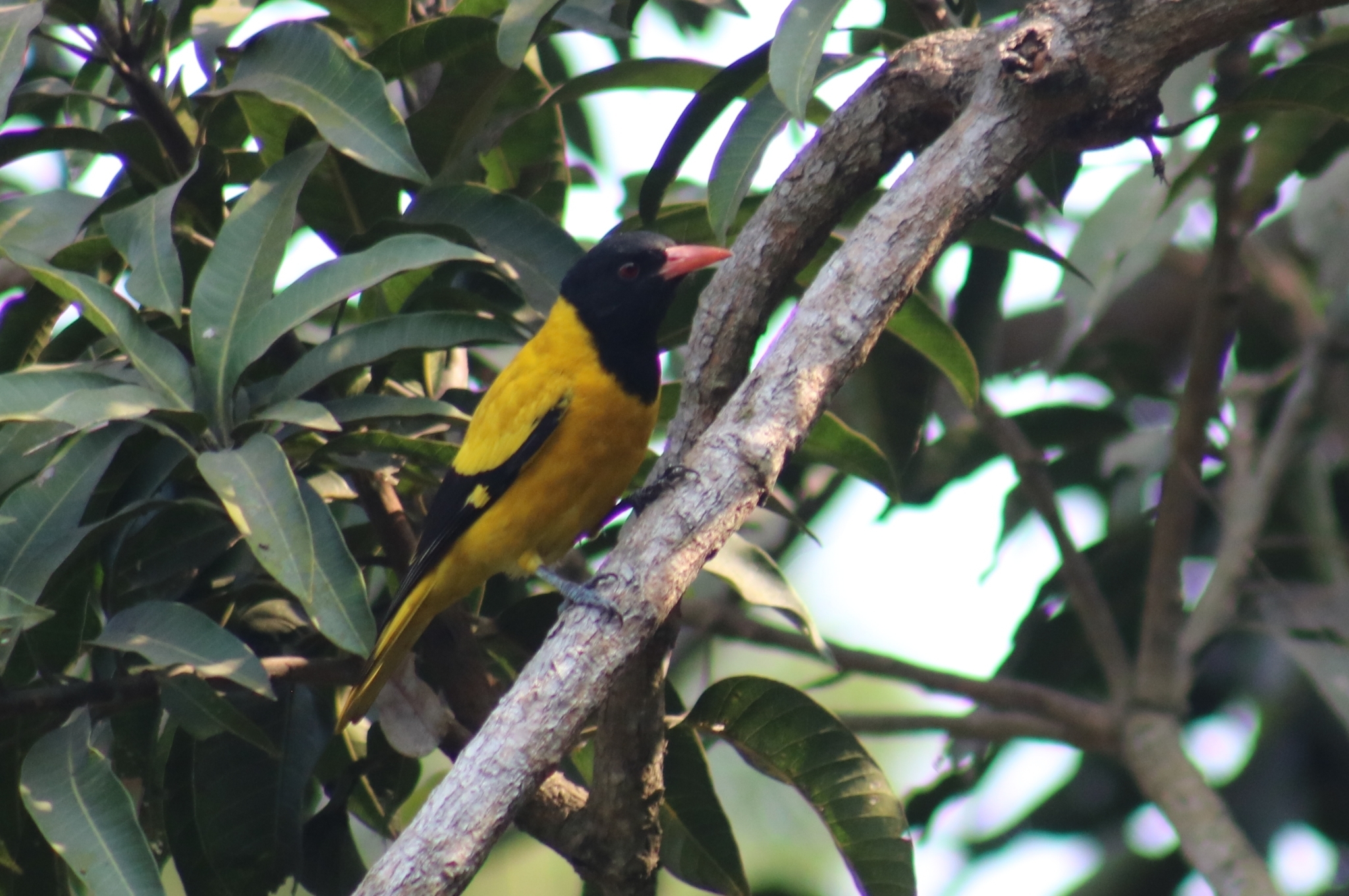
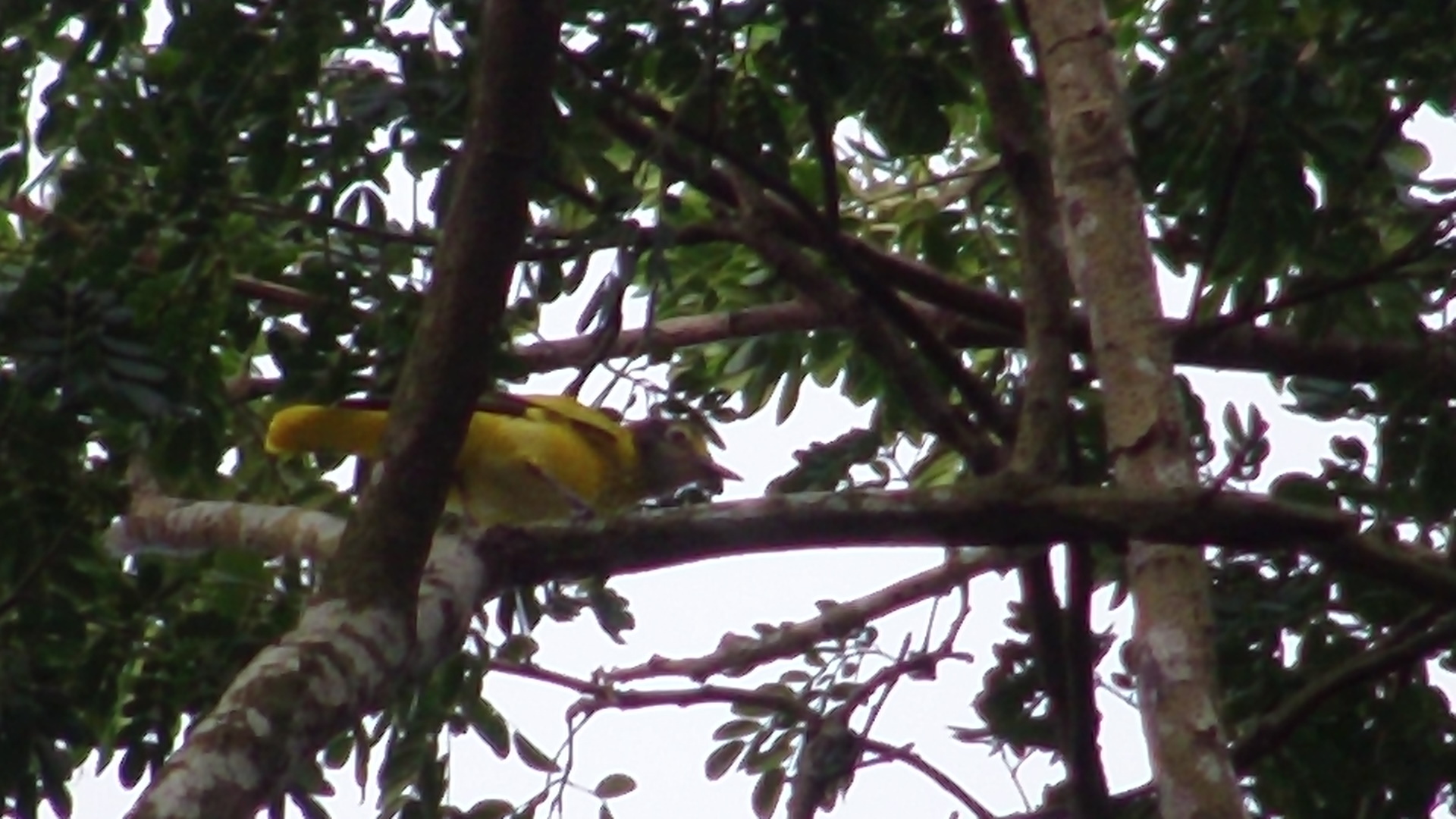
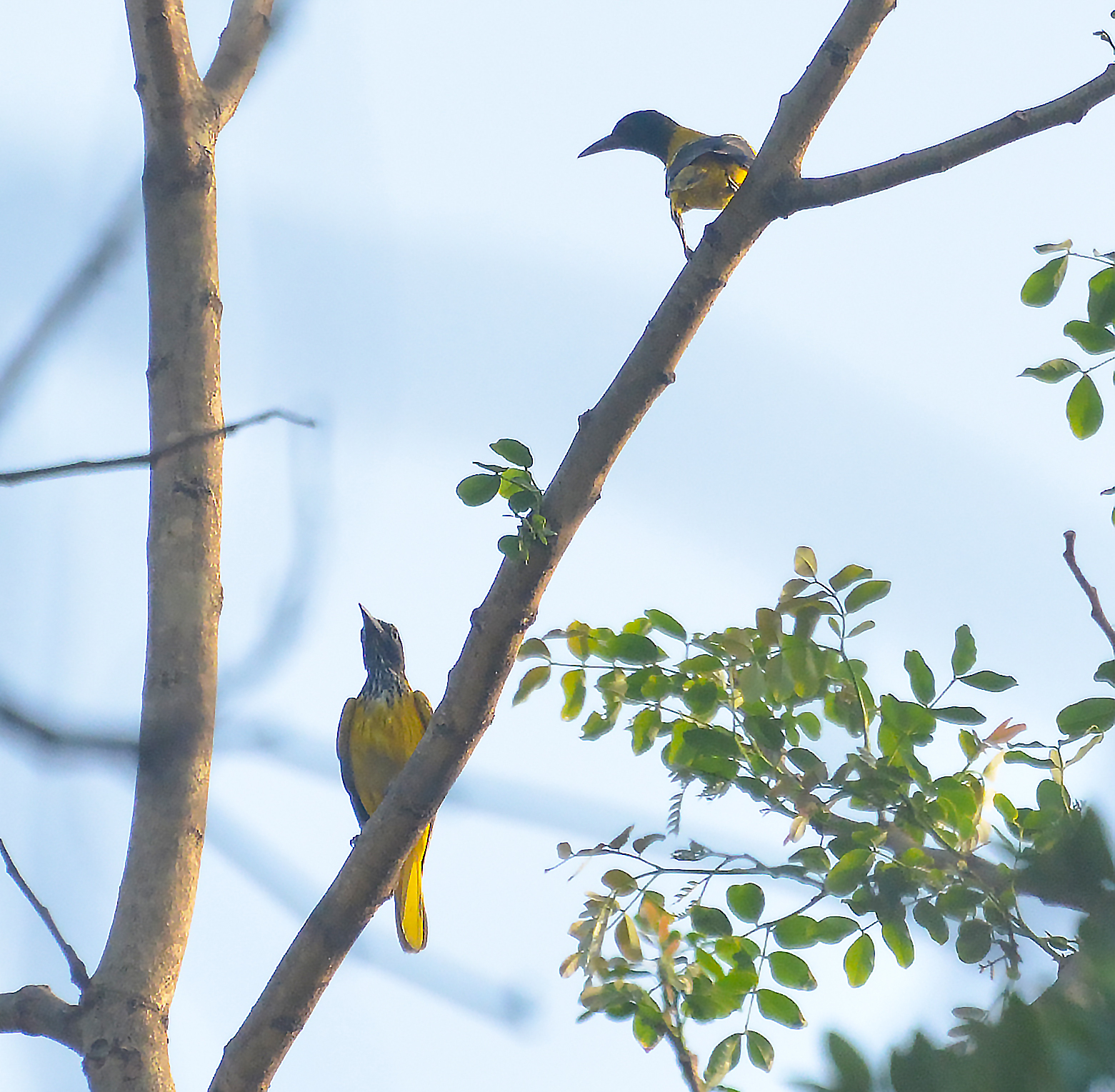
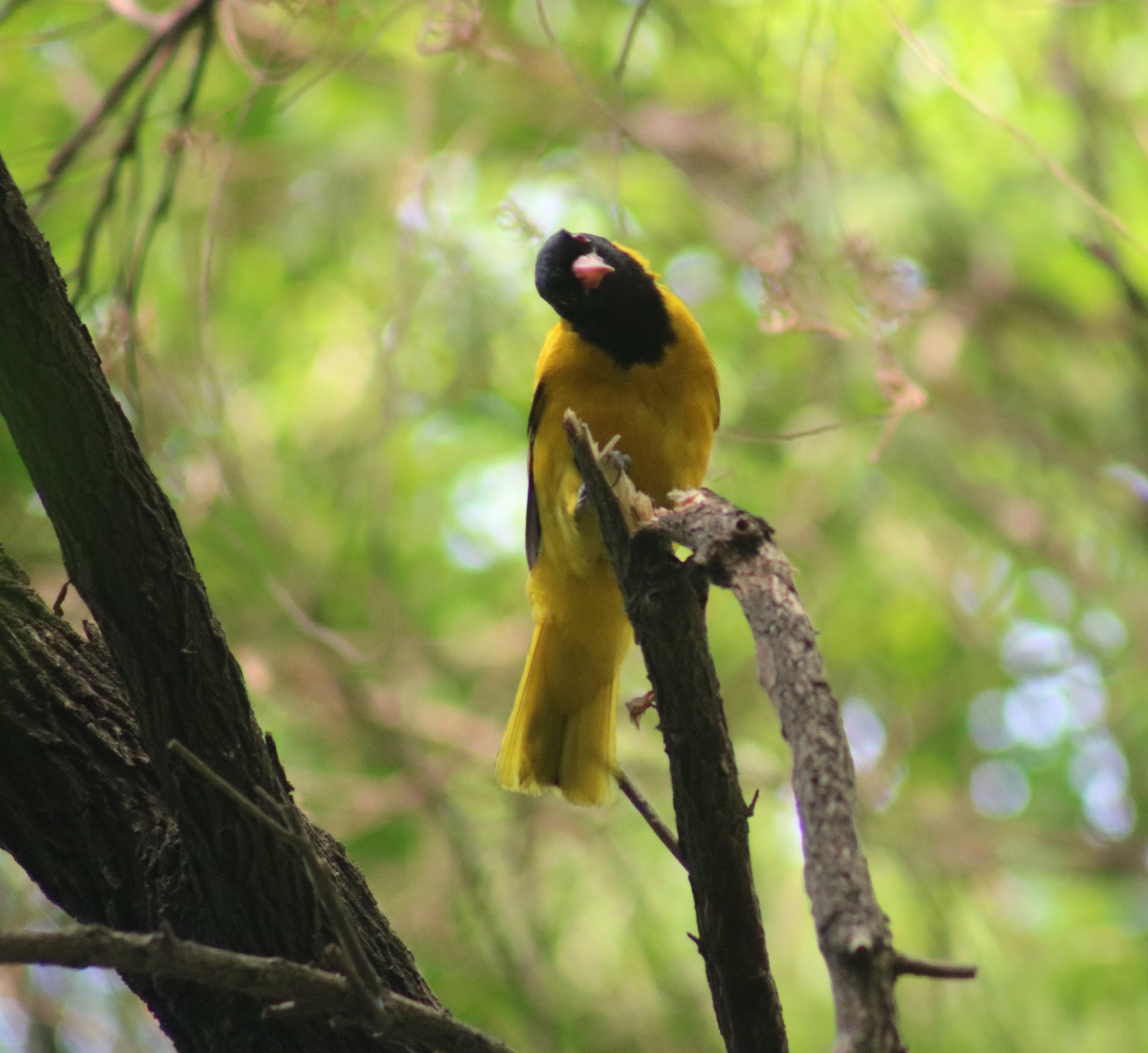
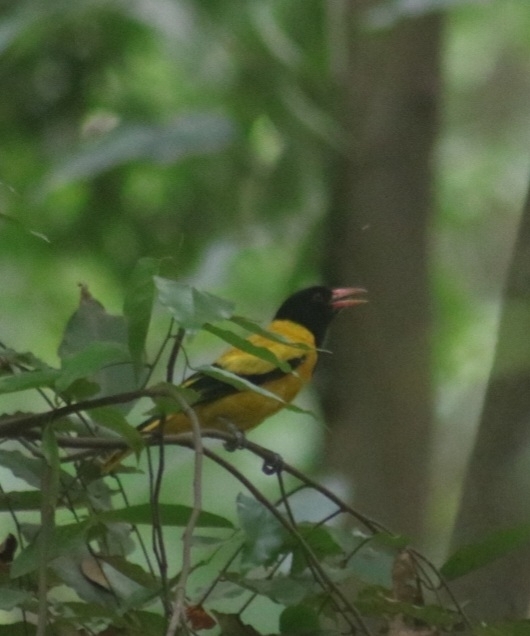
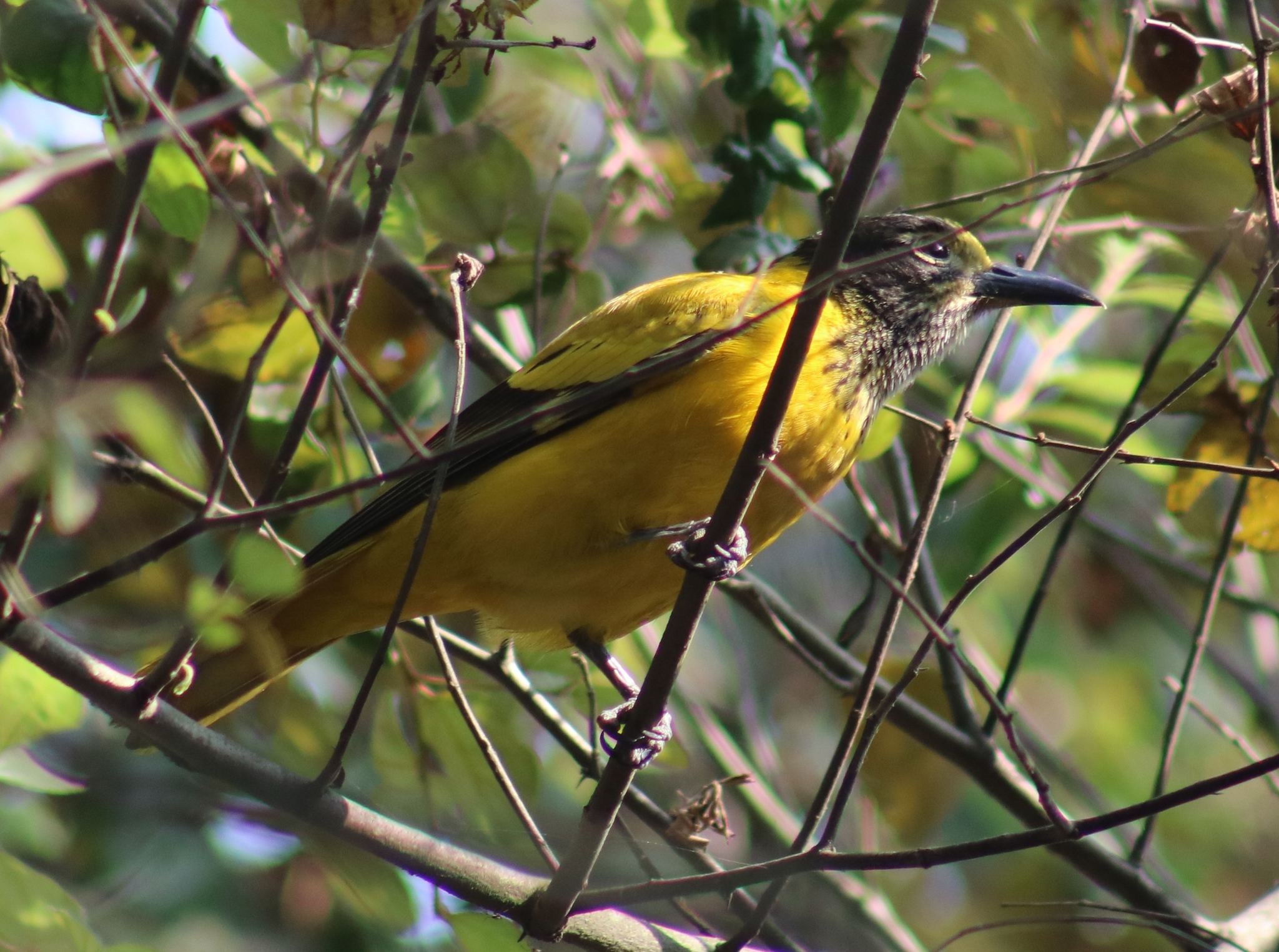
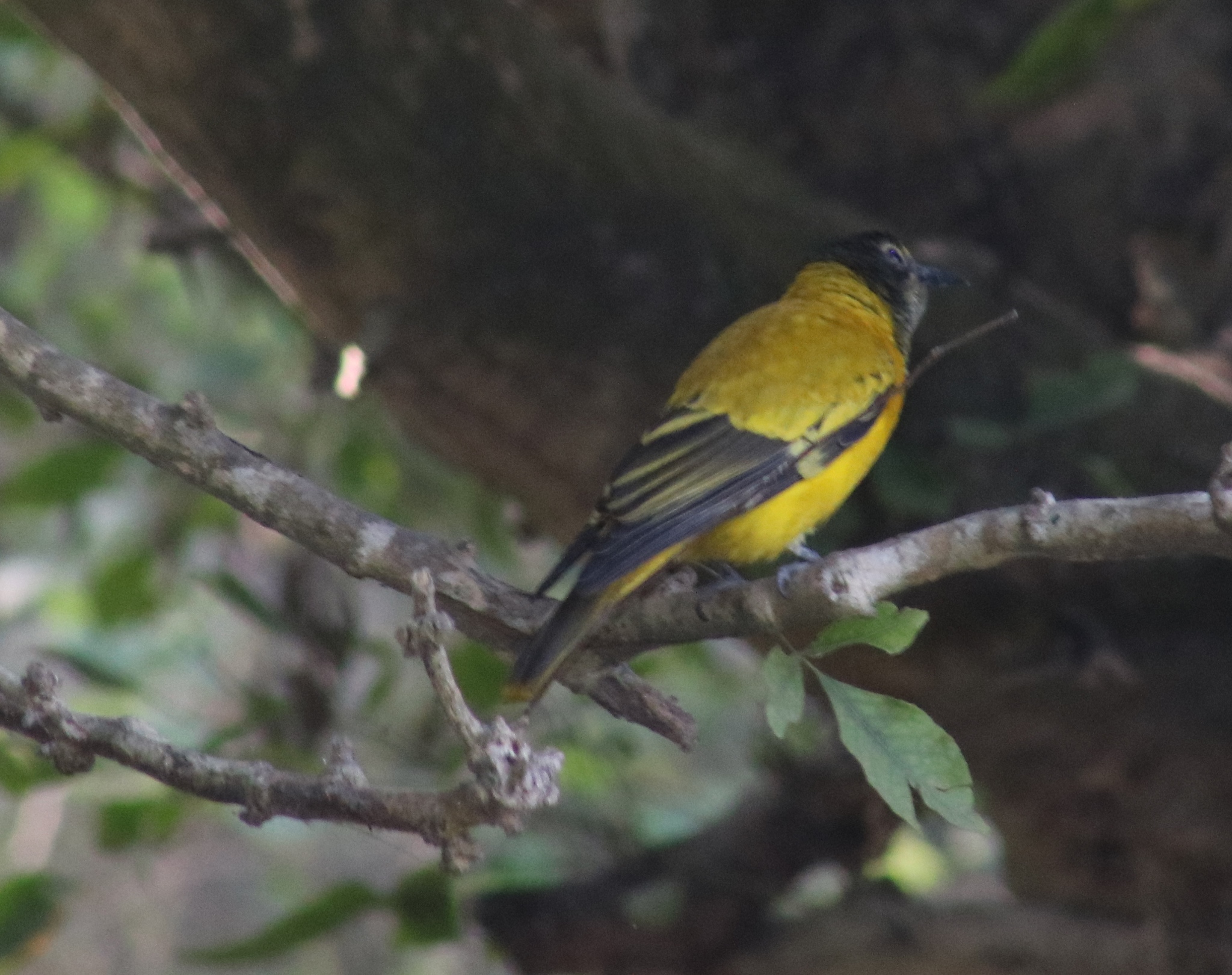
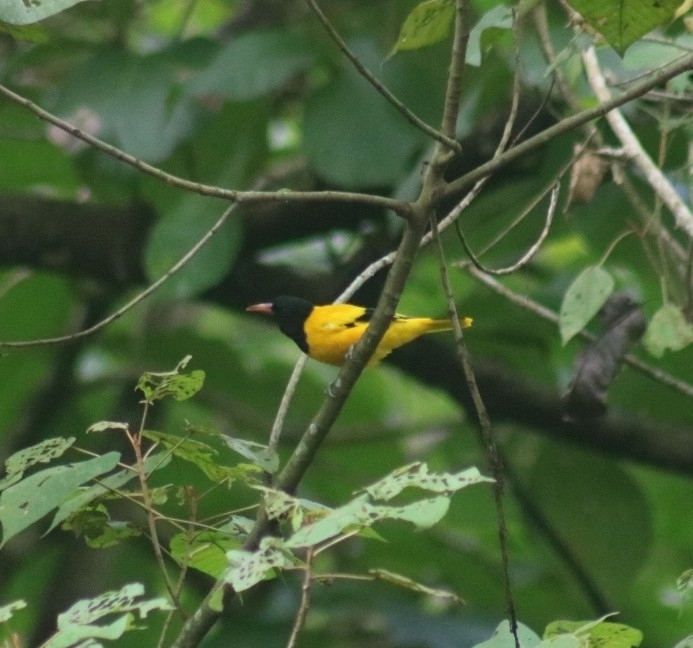
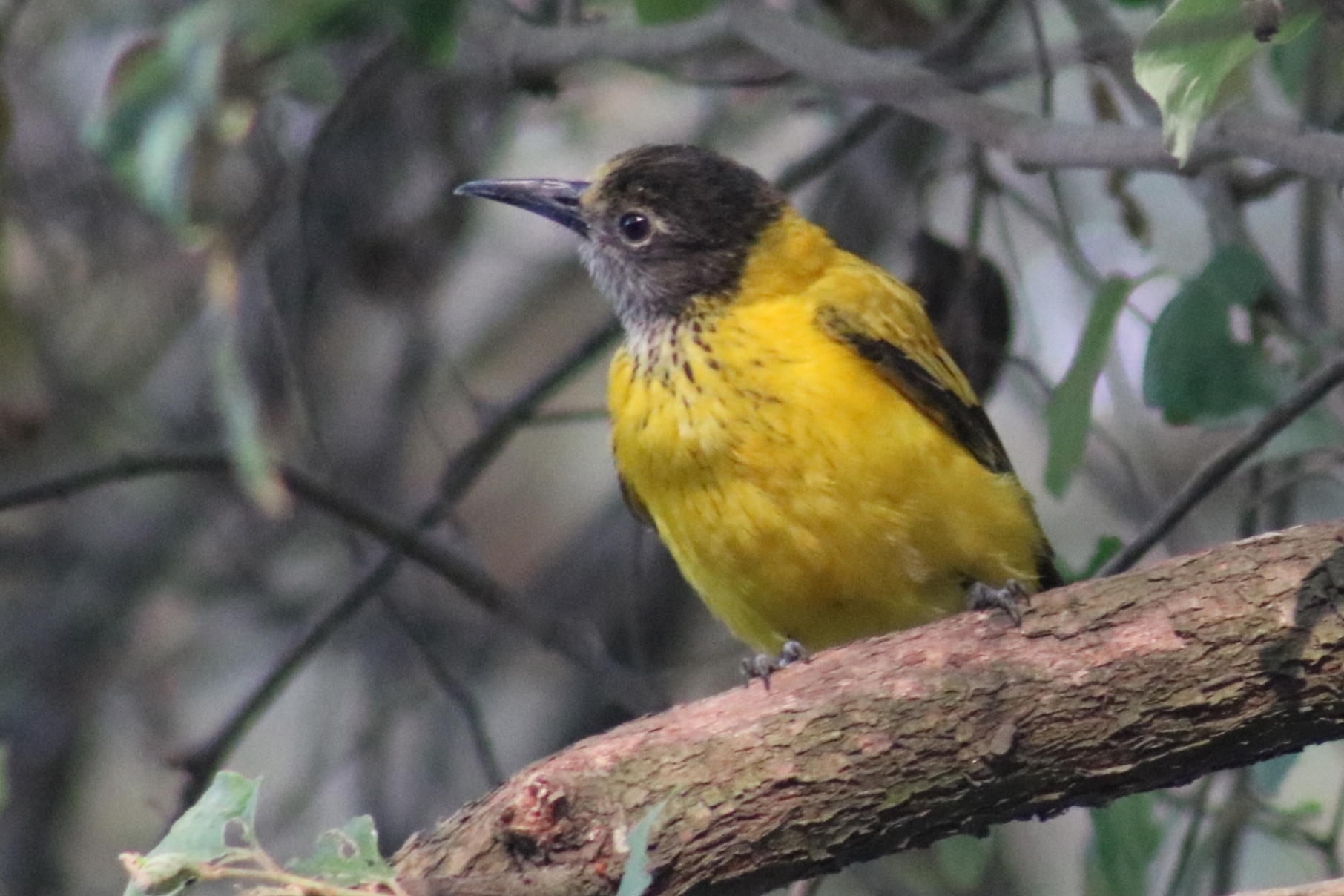
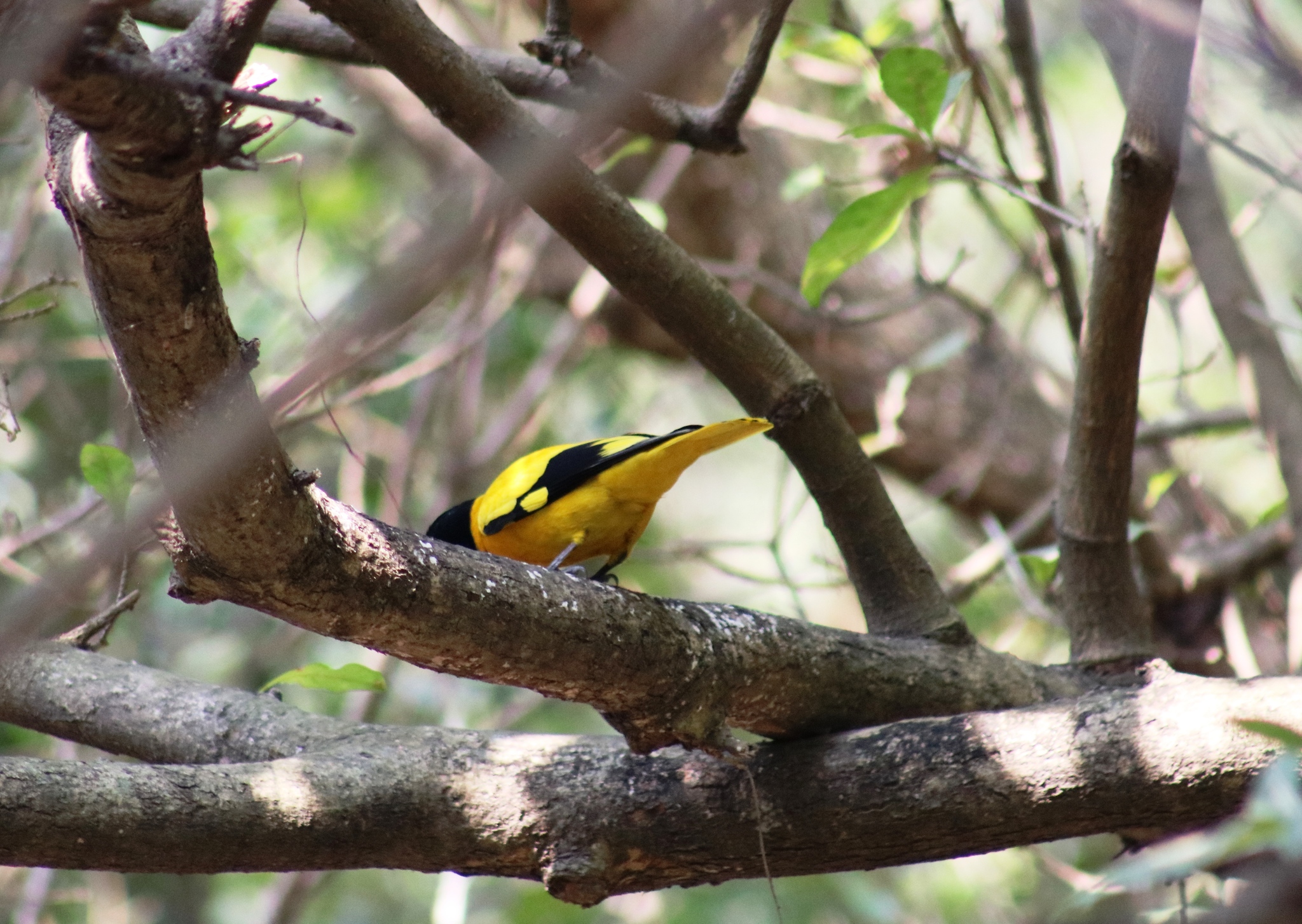
The male has striking black and yellow plumage, with predominantly yellow body plumage, a solid black hood, and black in the wings and tail centre. The female is drabber with greenish underparts but retains the black hood. juveniles resemble females but have dark streaking on the underparts and an incomplete black hood, particularly on the throat. Flight is strong and direct, resembling a thrush, with shallow dips over longer distances.
Identification
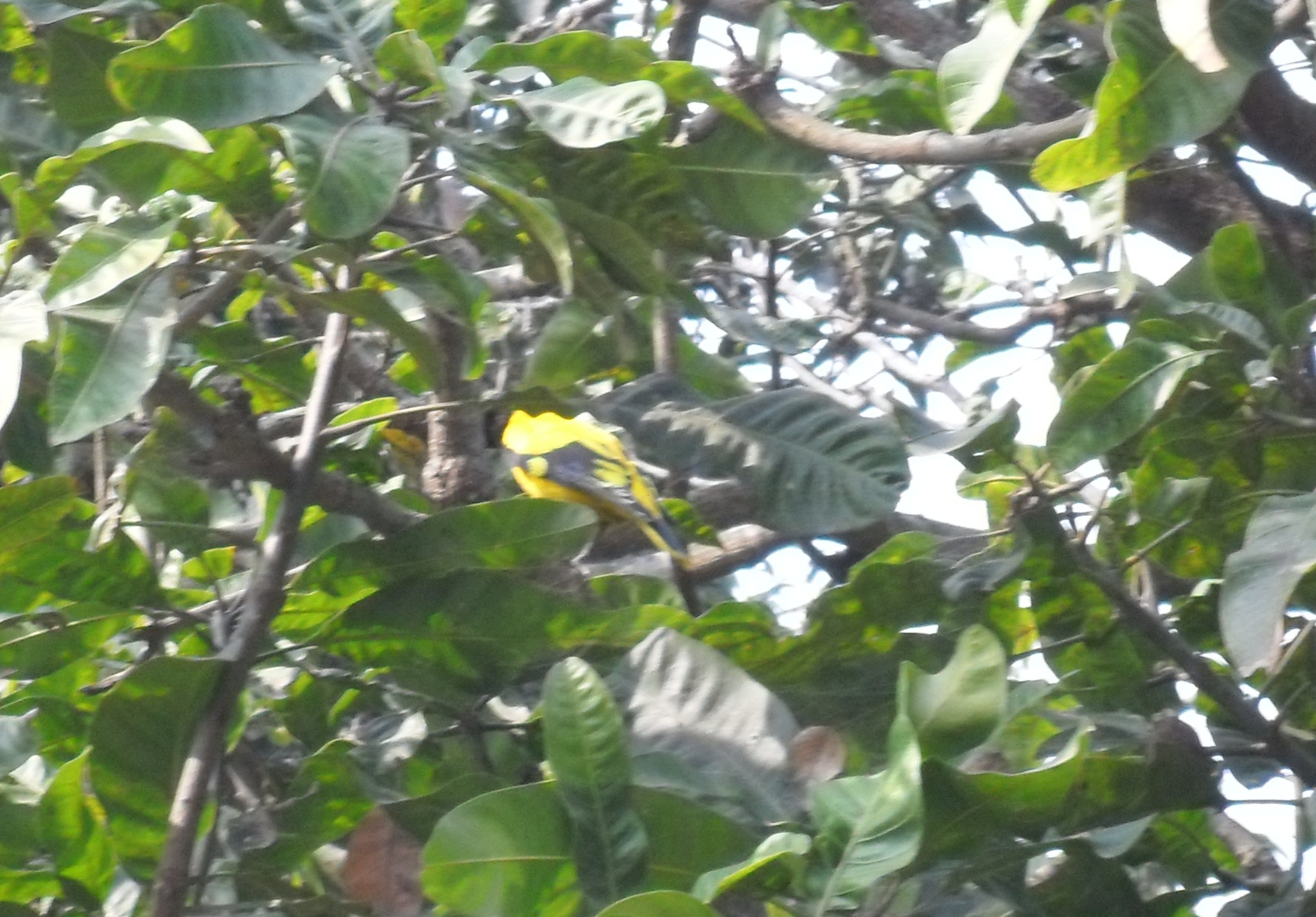
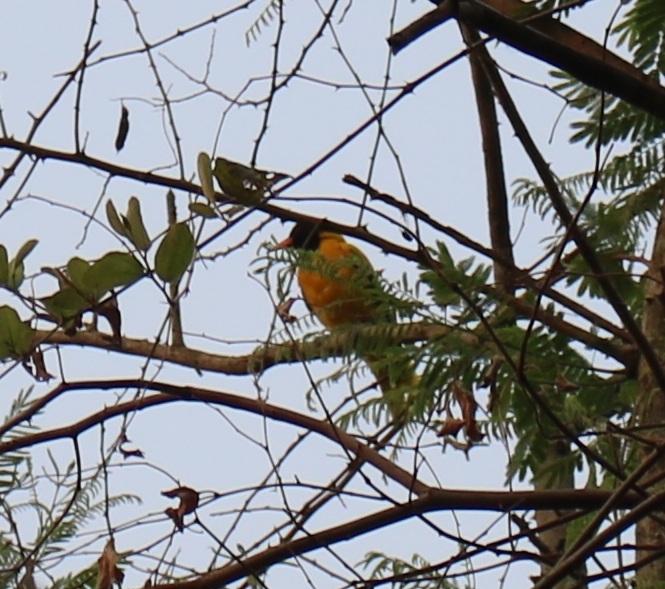
The solid black head distinguishes this species from the Indian golden oriole, which visits northern India in summer. Despite the male's bright plumage, orioles can be shy and difficult to observe in the dappled yellow and green foliage of the canopy. Both sexes share the characteristic black hood.
Distribution & Habitat
Resident breeder across tropical southern Asia from India and Sri Lanka east through Indochina and the Malay Peninsula to Indonesia. Five subspecies are recognized: O. x. xanthornus (northern India to northern Malay Peninsula and Indochina), O. x. maderaspatanus (central and southern India), O. x. ceylonensis (Sri Lanka), O. x. reubeni (Andaman Islands), and O. x. tanakae (north-eastern Borneo). Inhabits open woodland and cultivation.
Behavior & Ecology
Feeds on insects and fruit, particularly figs. Forages by foliage-gleening, wood-gleening, or sallying in tree canopies. Breeding season involves nest building in trees, with typical clutch size of two eggs. Spends much time in upper canopy layers. Can be secretive and difficult to observe.
Culture
Features in Bengali folklore, specifically a tale of a merchant's daughter-in-law abused by her mother-in-law who smeared herself with turmeric paste, covered herself with a sooty pot, and killed herself before being resurrected as the bird by a goddess. Bengali names include 'benebou' (merchant's wife) and 'haldi pakhi' (turmeric bird). Lives in close association with humans in rural and urban areas of India.
Source: Wikipedia · CC BY-SA 3.0
Taxonomy
- Order
- Passeriformes
- Family
- Oriolidae
- Genus
- Oriolus
- eBird Code
- blhori1
Vocalizations
Subspecies (5)
-
Oriolus xanthornus ceylonensis
Sri Lanka
-
Oriolus xanthornus maderaspatanus
southern peninsular India
-
Oriolus xanthornus reubeni
Andaman Islands
-
Oriolus xanthornus tanakae
coastal northeastern Borneo and adjacent offshore islands
-
Oriolus xanthornus xanthornus
northern India to Myanmar, Thailand, and northwestern Thai-Malay Peninsula; winters to Thai-Malay Peninsula and Sumatra
Data Sources
Species description from Wikipedia, licensed under CC BY-SA 3.0.
Bird images and sounds sourced from GBIF, contributed by citizen scientists worldwide under Creative Commons licenses.
Taxonomy data from AviList 2025.