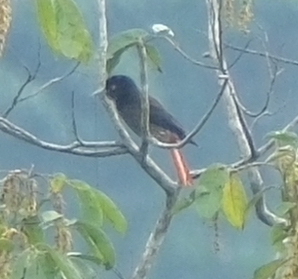
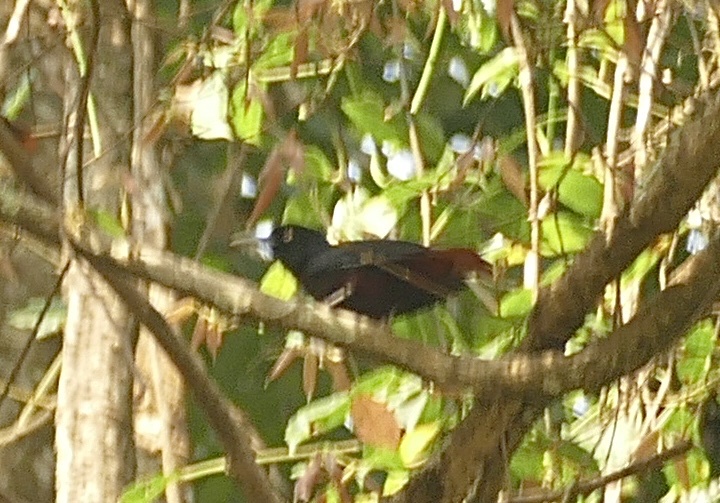
Maroon Oriole
Oriolus traillii
朱鹂
Introduction
A species of bird in the family Oriolidae, found throughout Southeast Asia including Bangladesh, Bhutan, Cambodia, India, Laos, Myanmar, Nepal, Taiwan, Thailand, Tibet, and Vietnam. In India, its range extends from Himachal Pradesh east to Arunachal Pradesh and the hills of Manipur. Inhabits subtropical or tropical moist lowland forests. Four subspecies are recognized: O. t. traillii from the Himalayas to southern China and northern Indochina, O. t. ardens in Taiwan, O. t. nigellicauda on Hainan, and O. t. robinsoni in southern Indochina. Distinguished by its maroon and black plumage, with males displaying glossy crimson-maroon coloration.
Description
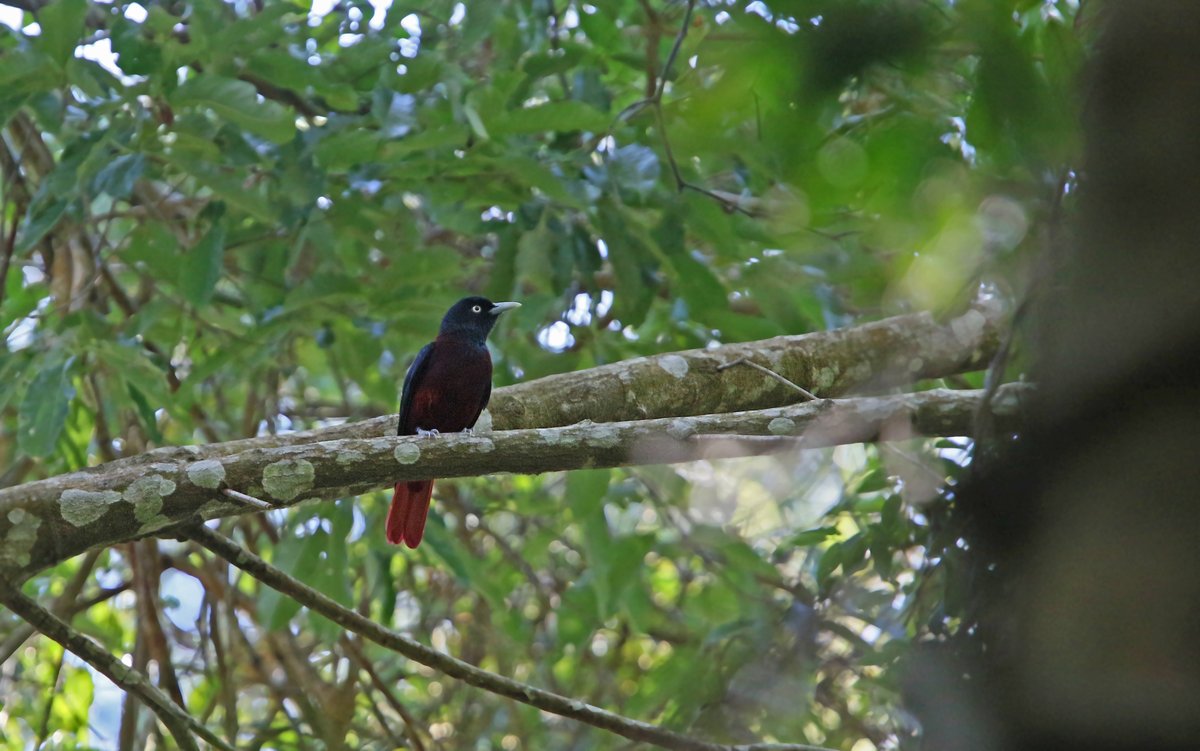
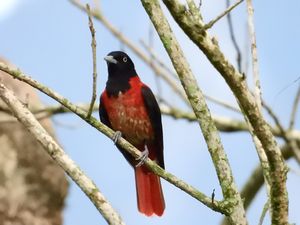
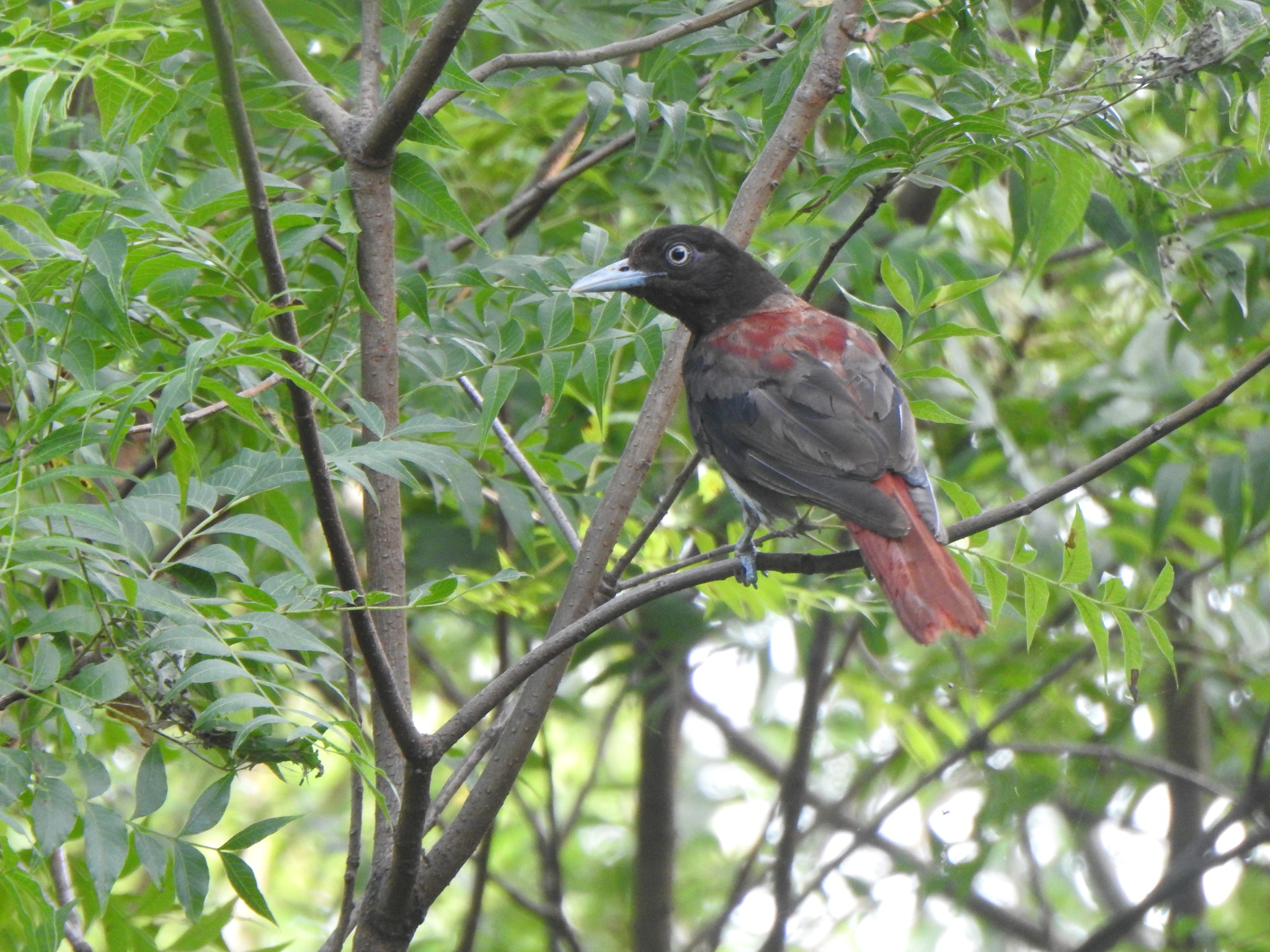
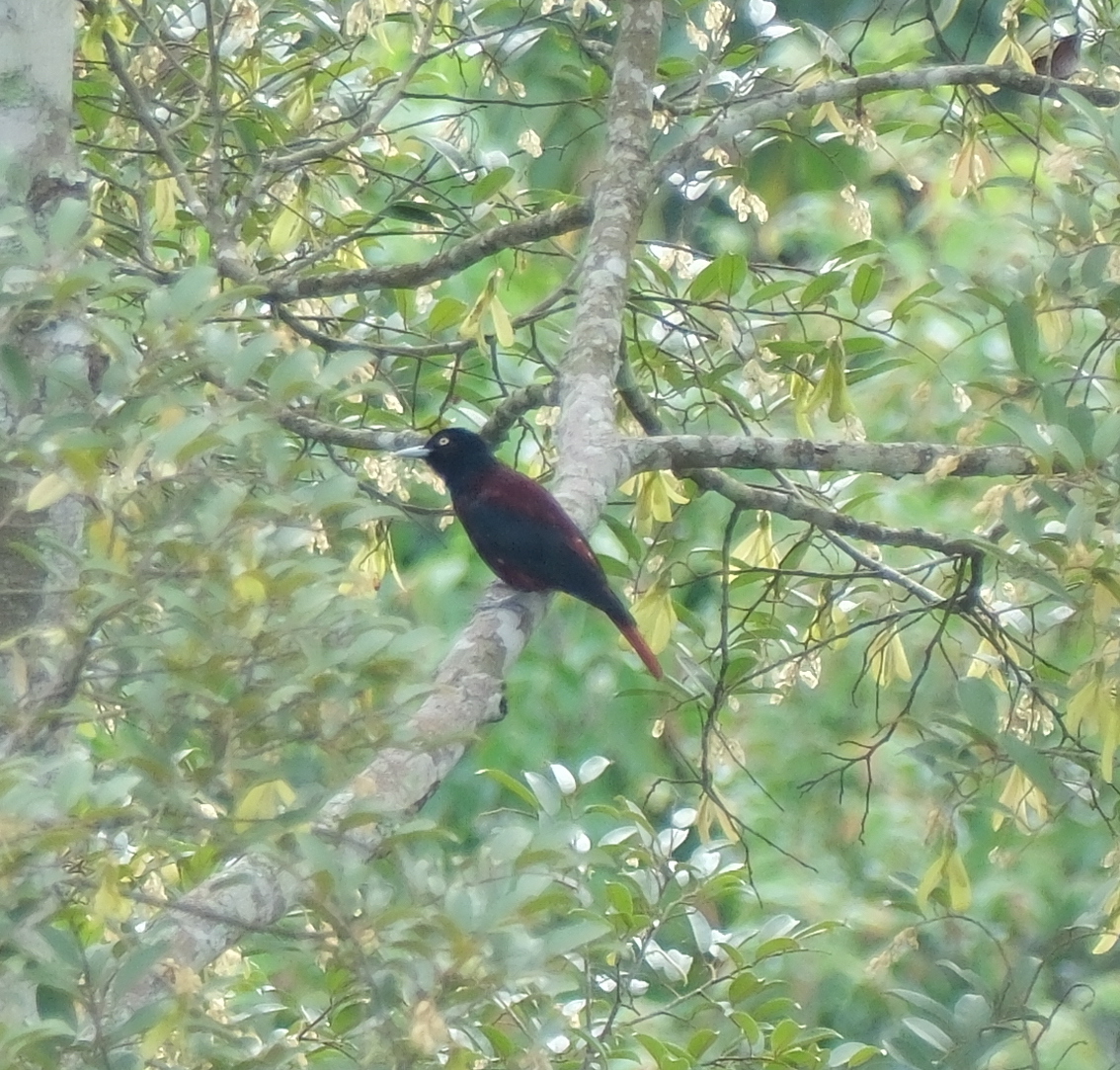
Medium-sized oriole with distinctive maroon and black plumage. Adult males are glossy crimson-maroon overall with black head, neck, and wings, while the tail is chestnut-maroon. The beak is bluish. Females and immature males have greyish-white underparts marked with black streaks. Females typically have slightly darker bodies than juveniles, which are lighter overall. Geographic color variation exists: populations in the Indian Subcontinent display duller coloration, while those in Southeast Asia show brighter plumage with reddish tones.
Identification
Males are unmistakable with their glossy crimson-maroon body contrasting with entirely black head, neck, and wings. Females and immatures can be identified by their greyish-white underparts with black streaking, distinguishing them from other oriole species. The bluish beak is a helpful识别特征 (identification feature). The overall dark plumage pattern helps separate it from more brightly colored oriole species.
Distribution & Habitat
Range encompasses Bangladesh, Bhutan, Cambodia, India, Laos, Myanmar, Nepal, Taiwan, Thailand, Tibet, and Vietnam. In India, found from Himachal Pradesh east through Arunachal Pradesh to the hills of Manipur. Inhabits subtropical or tropical moist lowland forests throughout its range. The four subspecies show distinct geographic distributions: traillii across the mainland range, ardens endemic to Taiwan, nigellicauda confined to Hainan Island, and robinsoni restricted to southern Indochina.
Behavior & Ecology
Lives solitarily or in pairs. Breeding season occurs from April to May. Nest construction involves building a deep, massive cup made of bast fibre, bound together with cobwebs. Both male and female share parental duties including incubation and feeding young. Diet consists of wild figs, berries, insects, and nectar, indicating omnivorous feeding habits typical of orioles.
Conservation
Information not available in source text.
Culture
Information not available in source text.
Source: Wikipedia · CC BY-SA 3.0
Taxonomy
- Order
- Passeriformes
- Family
- Oriolidae
- Genus
- Oriolus
- eBird Code
- marori2
Vocalizations
Subspecies (4)
-
Oriolus traillii ardens
Taiwan
-
Oriolus traillii nigellicauda
Hainan; some winter to Indochina and southeastern Thailand
-
Oriolus traillii robinsoni
southern Laos and southern Vietnam
-
Oriolus traillii traillii
Himalayan foothills to Myanmar, northern Thailand, and northern Indochina
Data Sources
Species description from Wikipedia, licensed under CC BY-SA 3.0.
Bird images and sounds sourced from GBIF, contributed by citizen scientists worldwide under Creative Commons licenses.
Taxonomy data from AviList 2025.