Eurasian Golden Oriole
Oriolus oriolus
金黄鹂
Introduction
A species of passerine bird in the family Oriolidae. It is the only Old World oriole breeding in Northern Hemisphere temperate regions. The species breeds across Europe and the Palearctic, from western Europe and Scandinavia east to China, and migrates to central and southern Africa for the winter. In Western Europe it inhabits open broadleaf forests, plantations, copses, riverine forests, and orchards; in Eastern Europe it occupies continuous, mixed, and coniferous forests. The species exhibits striking sexual dimorphism with males displaying brilliant black and yellow plumage while females are dull green. It is evaluated as Least Concern due to its extremely large range and large, apparently stable populations.
Description
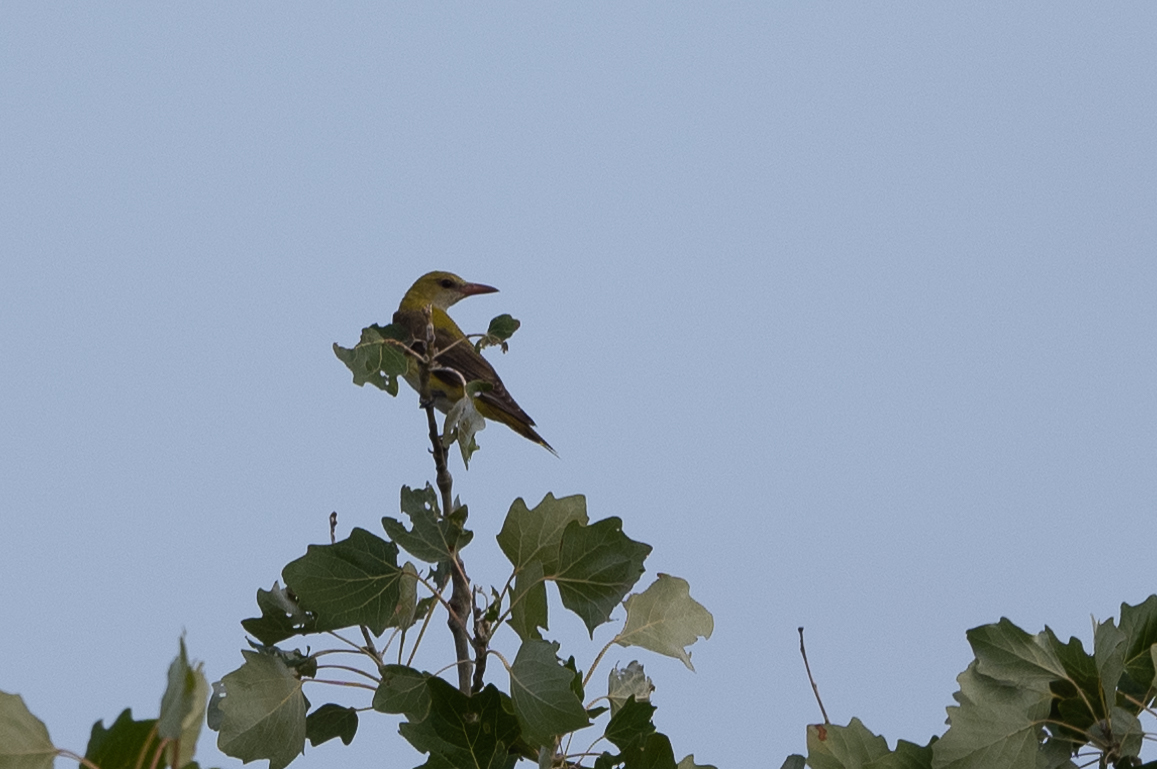
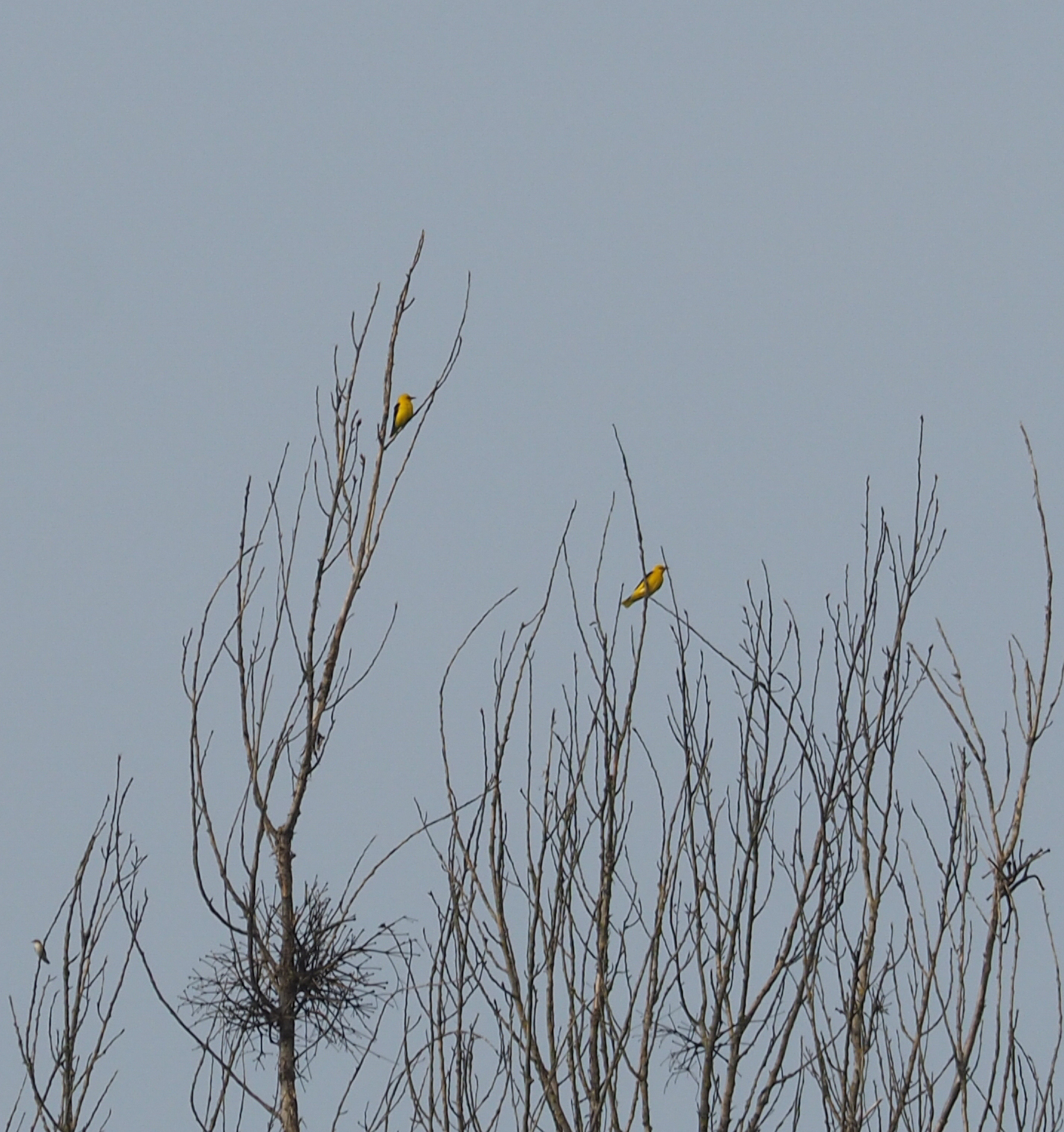
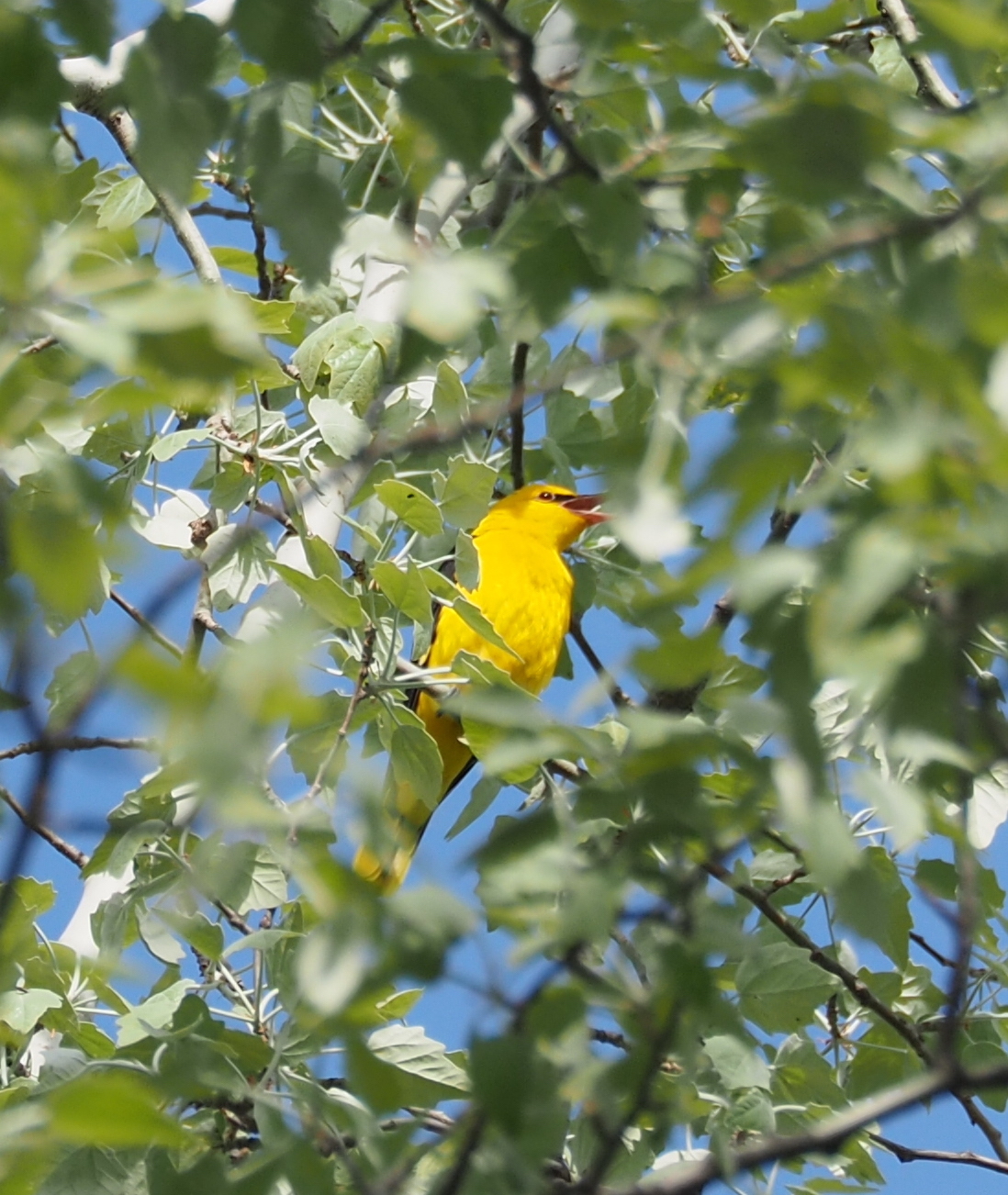
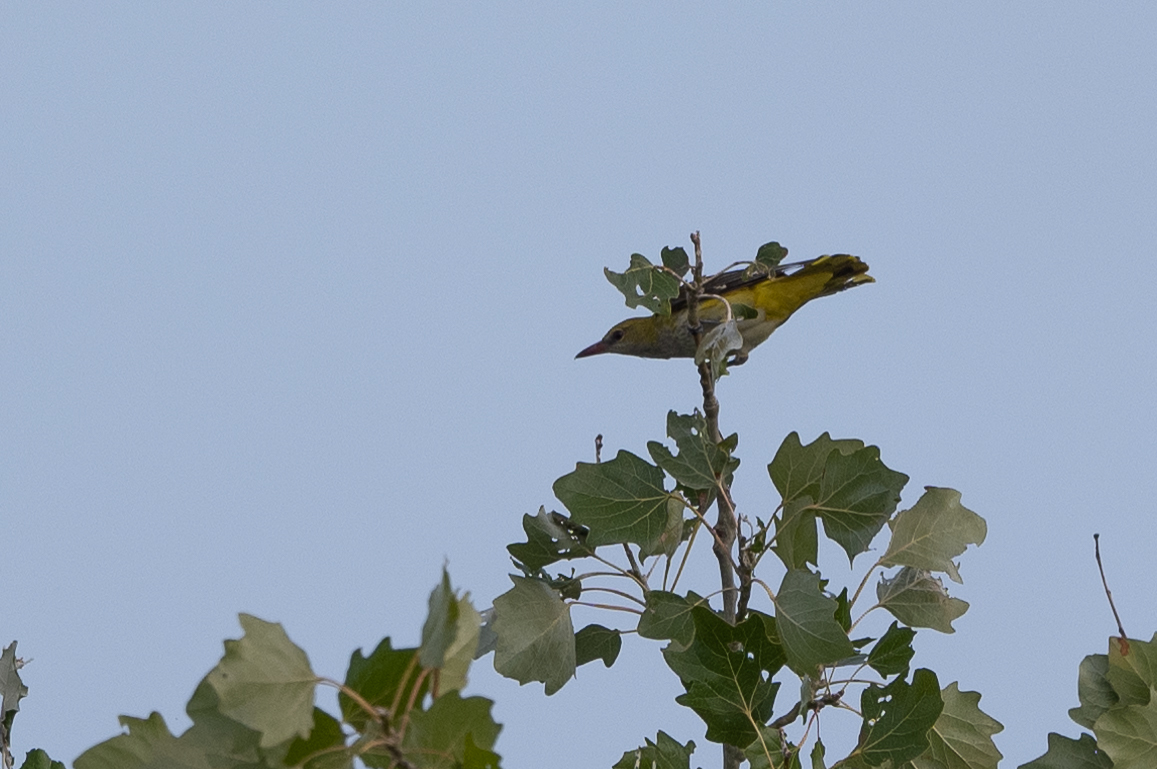
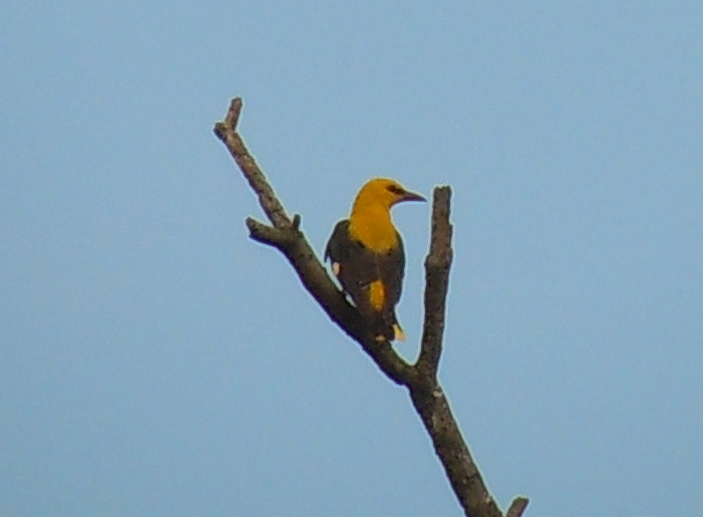
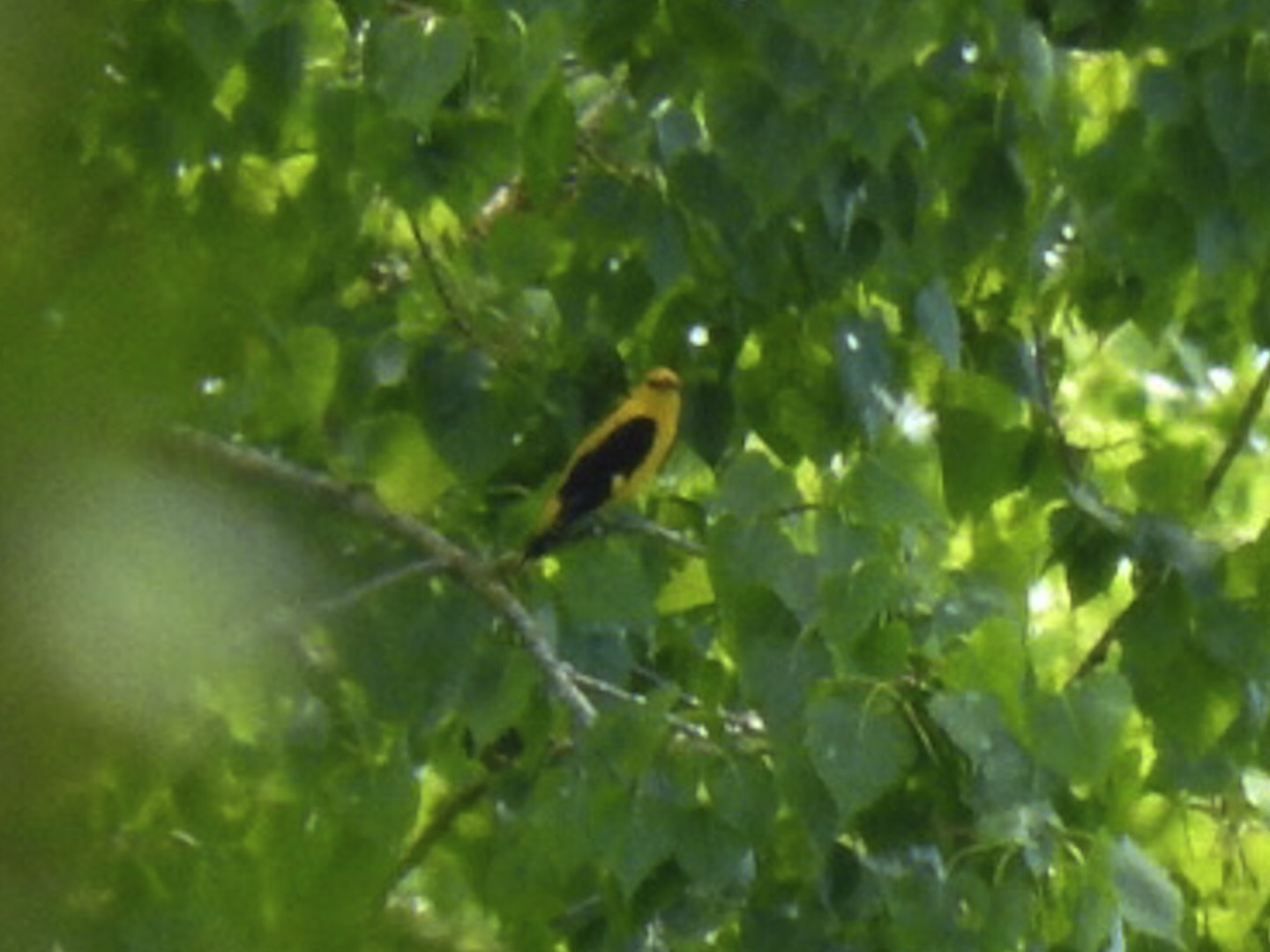
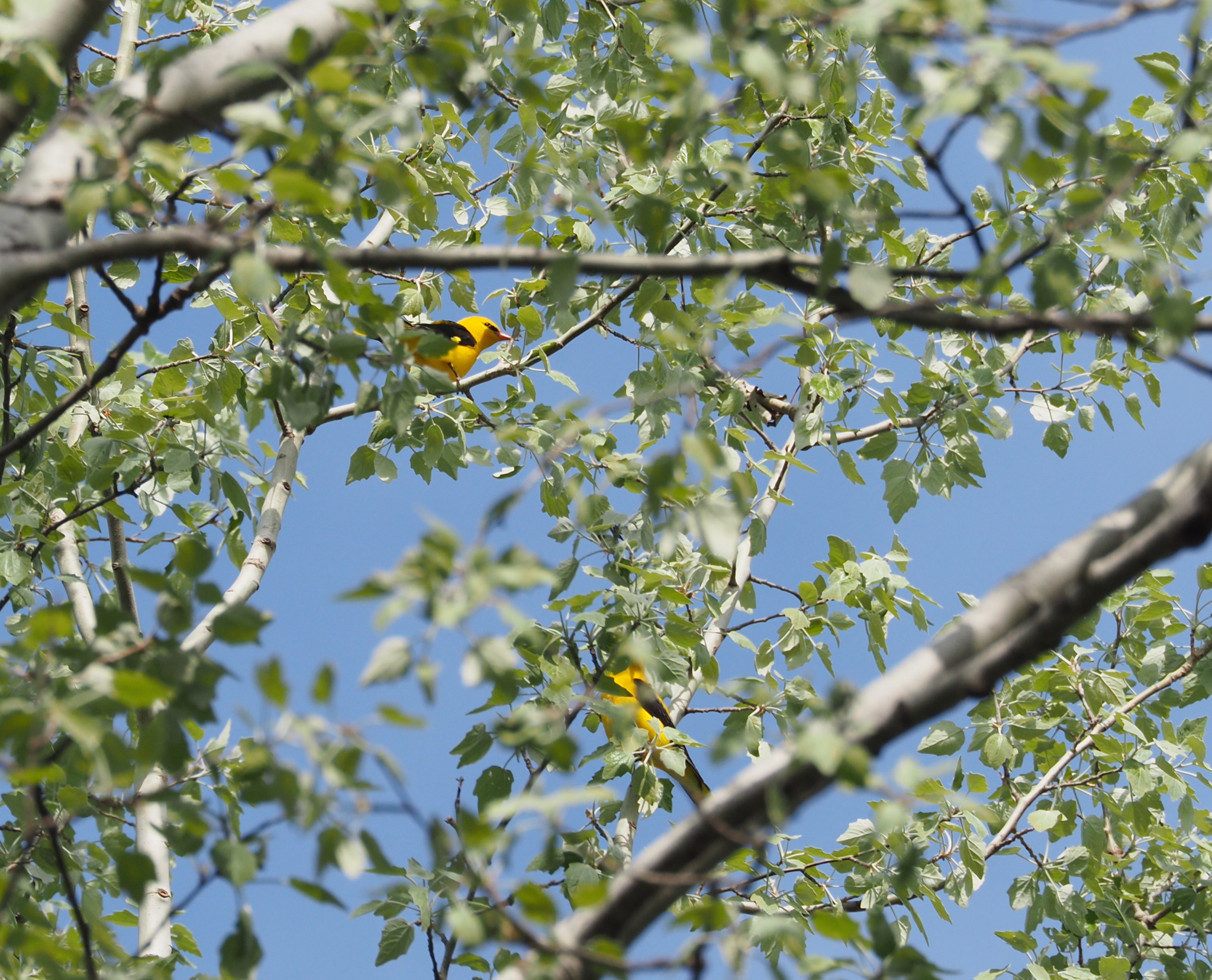
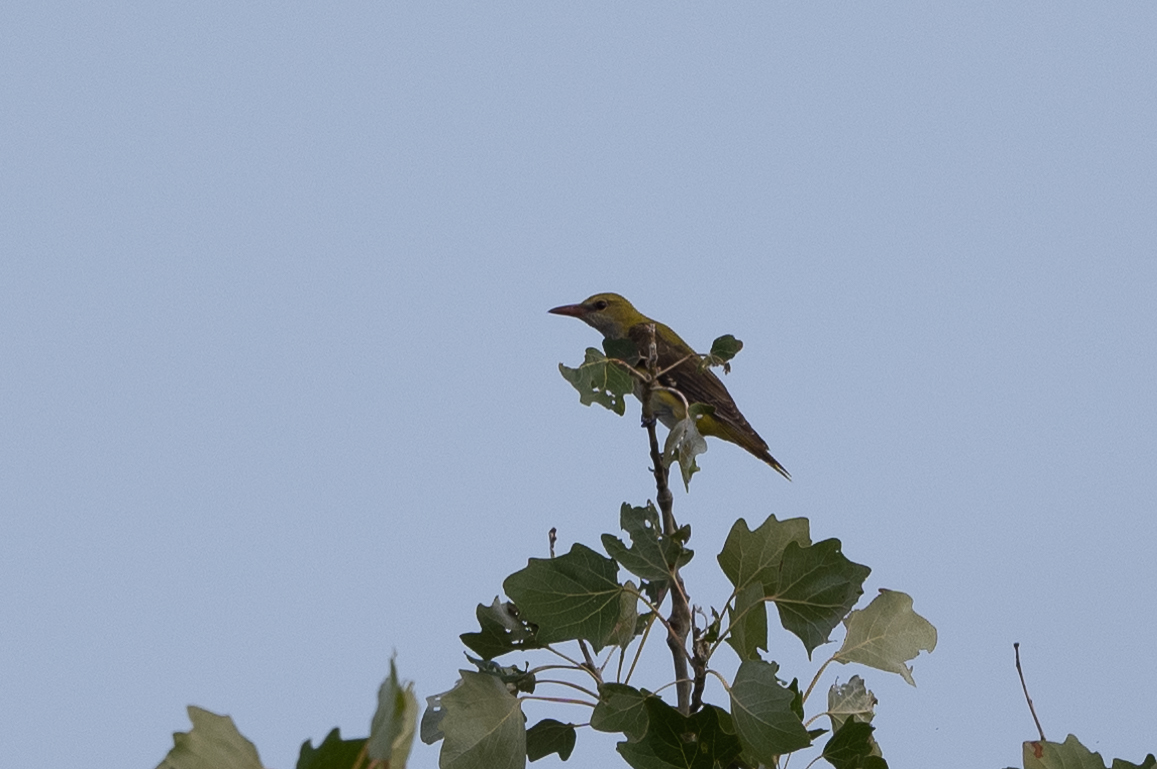
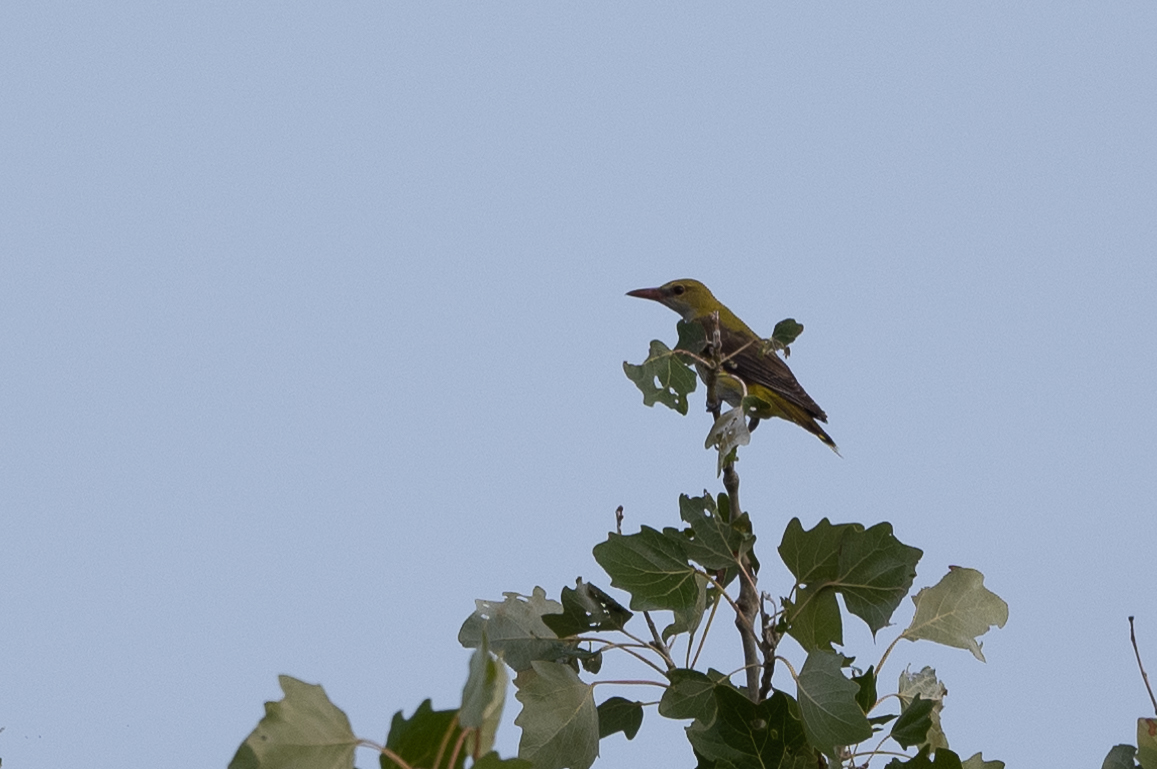
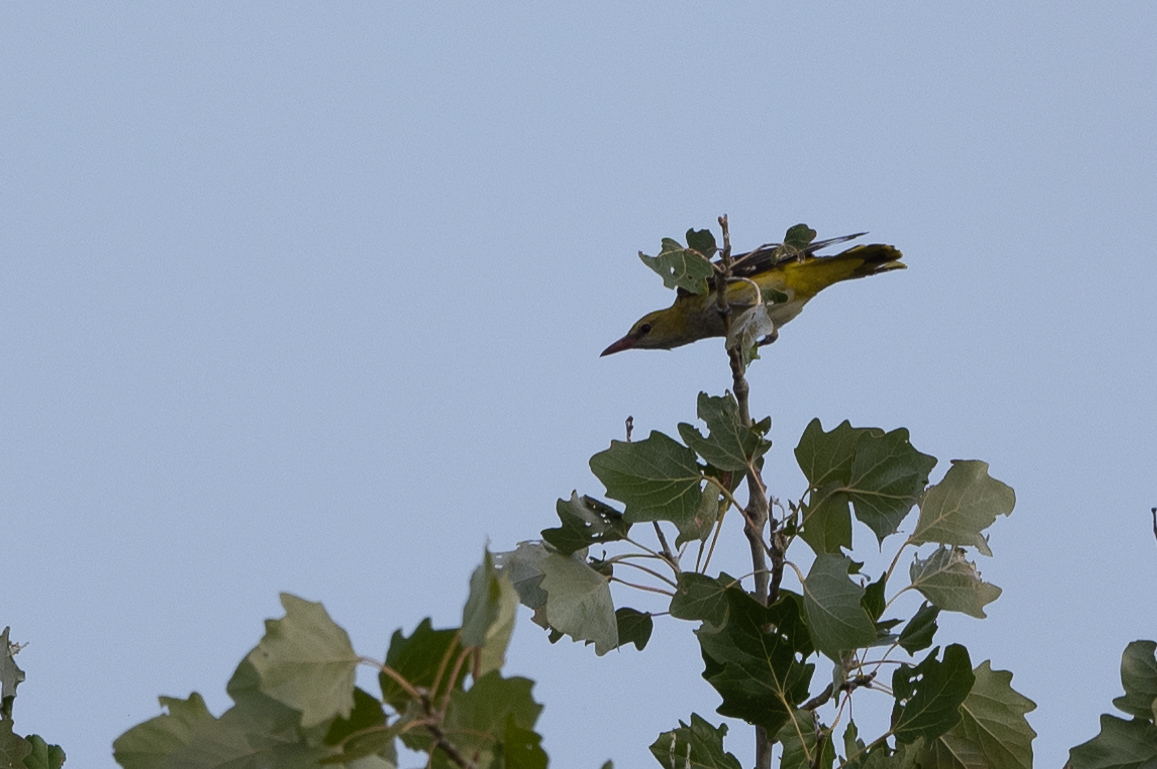
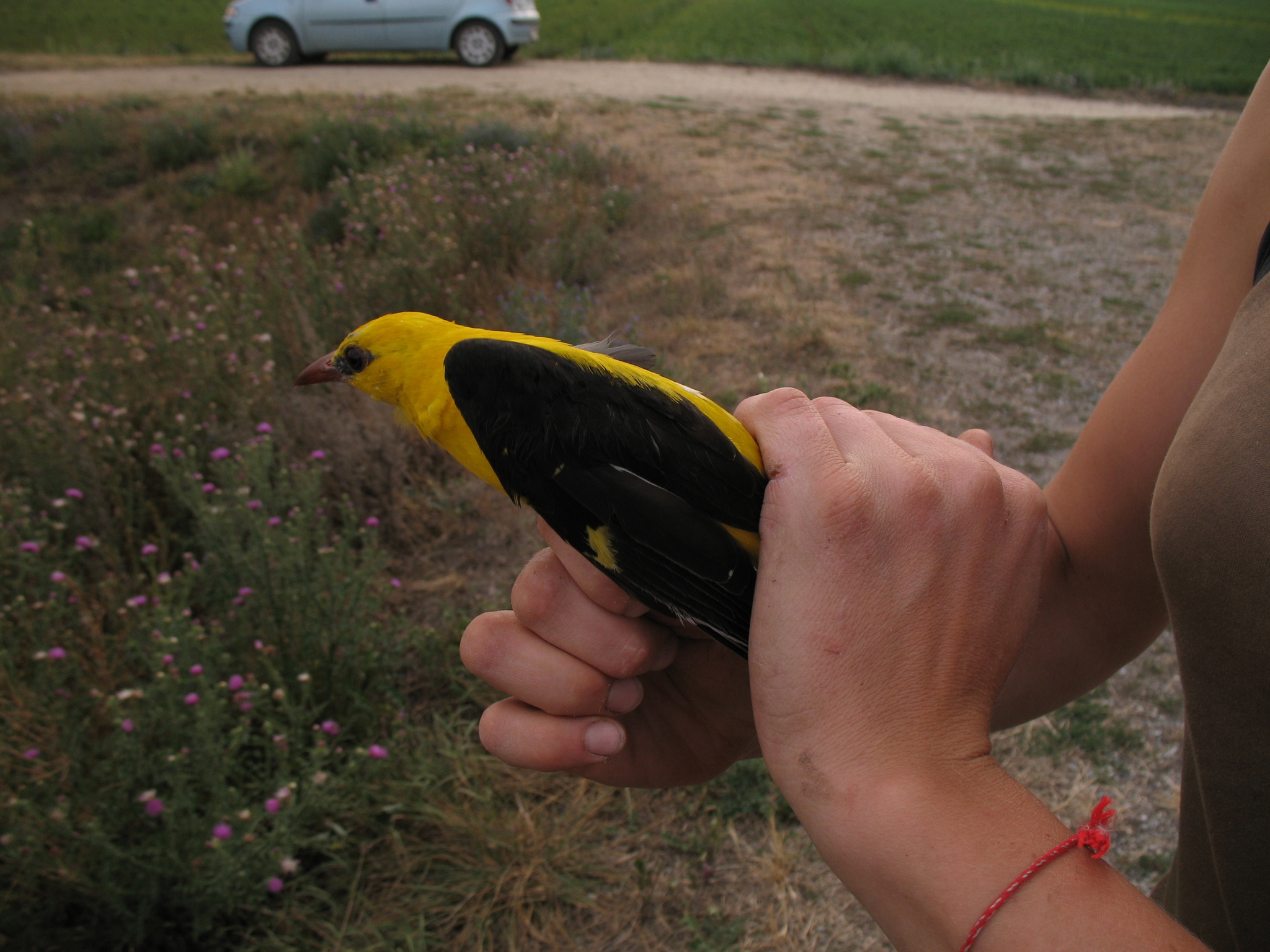
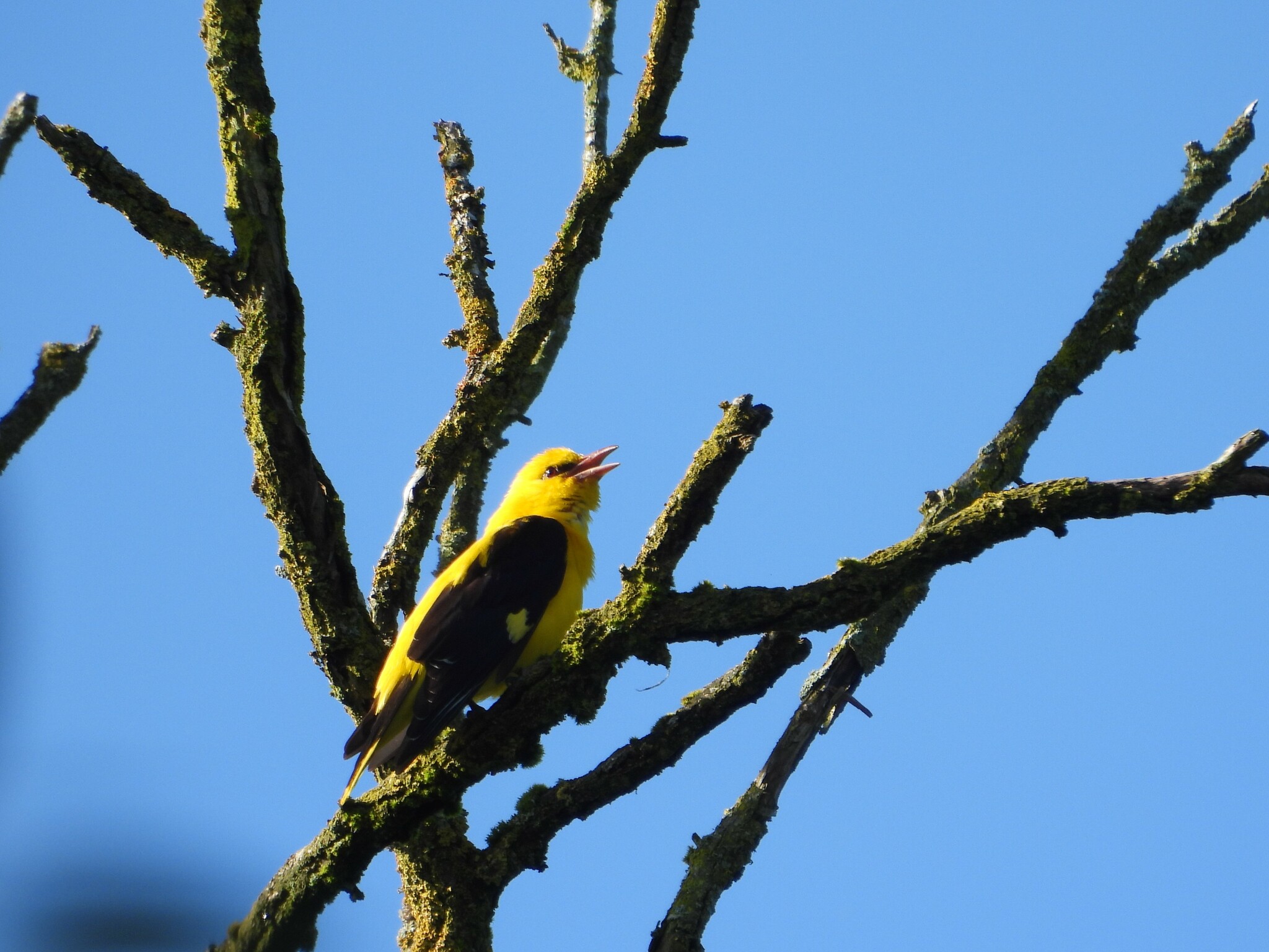
A medium-sized passerine, the male displays the typical oriole black and yellow plumage with a black eye-stripe and yellow head, body, and tail. The female is a much drabber green bird overall with streaked underparts. The wings are black with yellow edges. The species has a strong, deep bill suited for picking insects from crevices. In flight it resembles a thrush, flying strongly and directly with some shallow dips over longer distances. Despite the male's bright plumage, both sexes are remarkably shy and difficult to detect in the dappled yellow and green canopy foliage.
Identification
The male's striking black and yellow plumage is diagnostic when seen well. The female can be distinguished from similarly sized greenish birds by her streaked underparts and the yellowish edges to her wing feathers. The species is most reliably identified by its fluting song. The similar Indian golden oriole has a male with a black eye-stripe extending behind the eye, a longer and paler red bill, and more extensive yellow in the plumage.
Distribution & Habitat
Breeds from western Europe and Scandinavia east through the Palearctic to China. The wintering range covers central and southern Africa. The species generally migrates at night, though spring migration may occur during the day. Autumn migration follows an Eastern Mediterranean route where the birds feed on fruit, sometimes causing them to be considered agricultural pests. It formerly bred regularly in Great Britain, with the last confirmed breeding record in 2009 in East Anglia. In Western Europe it prefers open broadleaf forests, plantations, riverine forests, and orchards; in Eastern Europe it occupies continuous, mixed, and coniferous forests.
Behavior & Ecology
The diet consists of insects and fruit, with birds using their bills to pick insects from crevices in bark and foliage. They may delay breeding until 2-3 years of age. Males arrive at breeding areas several days before females. The nest is a deep cup suspended below a horizontal fork of thin branches, placed high in a tree towards the crown edge and lined with fine grass, feathers, and wool. The clutch consists of 3-5 eggs, laid at daily intervals and incubated primarily by the female for 16-17 days. Both parents feed the young, which fledge after 16-17 days. The call is a harsh "kweeaahk," while the song is a distinctive fluting "weela-wee-ooo" or "or-iii-ole" with subtle variations between phrases. The oldest recorded individual reached 10 years and 1 month of age.
Conservation
Evaluated as Least Concern by BirdLife International due to an extremely large range and large, apparently stable populations. No significant range-wide threats are currently identified, though localized habitat changes may affect local populations. In some regions during migration, they are considered agricultural pests due to fruit consumption.
Culture
The name "oriole" derives from the Latin genus name, itself derived from "aureolus" meaning golden, and entered European languages in the 12th and 13th centuries. Albertus Magnus used the Latin form "oriolus" around 1250 and erroneously claimed it was onomatopoeic based on the bird's song. In medieval England, the bird was known as the "woodwele," also derived from its distinctive vocalizations.
Source: Wikipedia · CC BY-SA 3.0
Taxonomy
- Order
- Passeriformes
- Family
- Oriolidae
- Genus
- Oriolus
- eBird Code
- eugori2
Distribution
breeds Western Palearctic to eastern Siberia; winters to Africa
Data Sources
Species description from Wikipedia, licensed under CC BY-SA 3.0.
Bird images and sounds sourced from GBIF, contributed by citizen scientists worldwide under Creative Commons licenses.
Taxonomy data from AviList 2025.