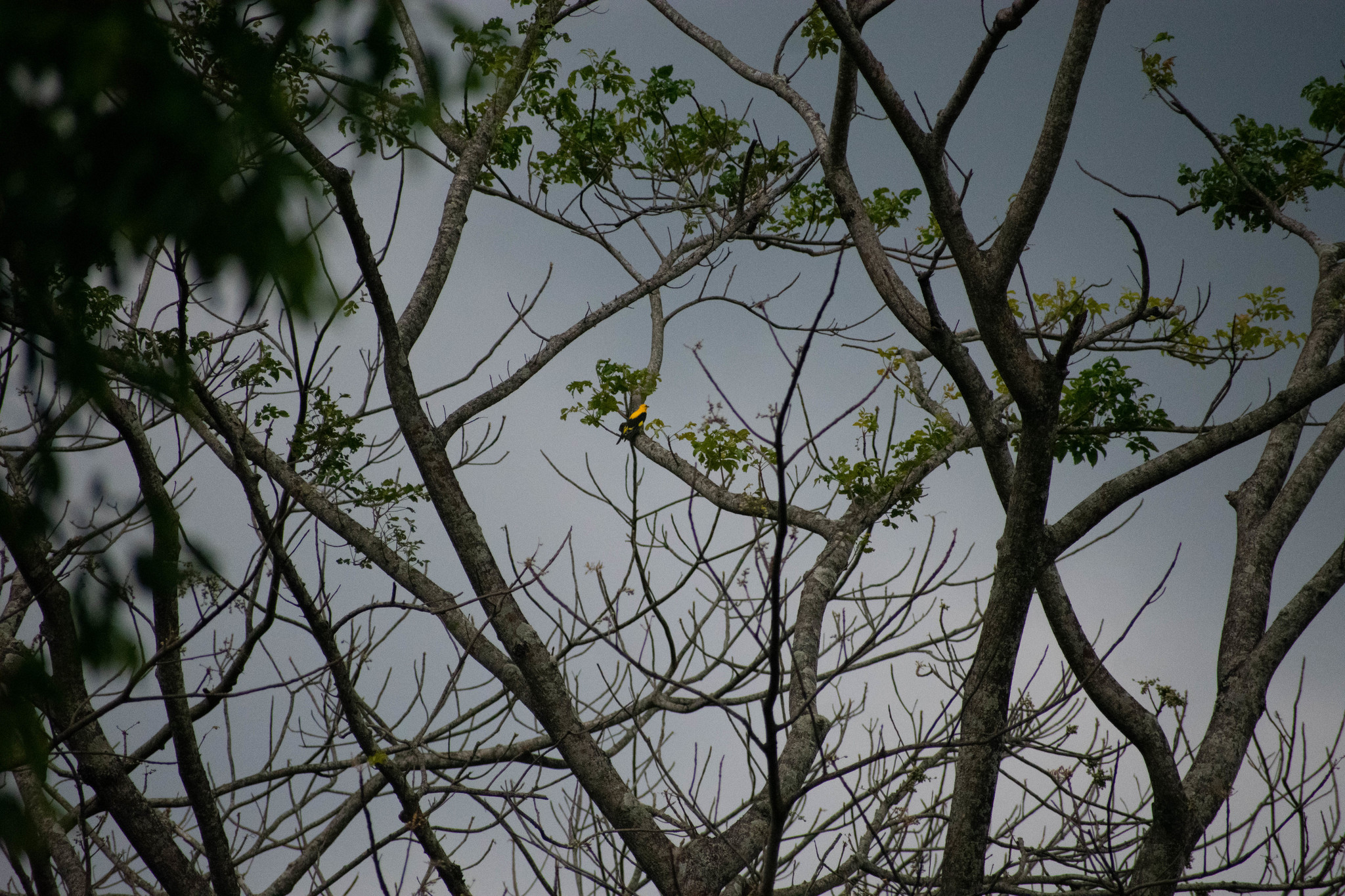
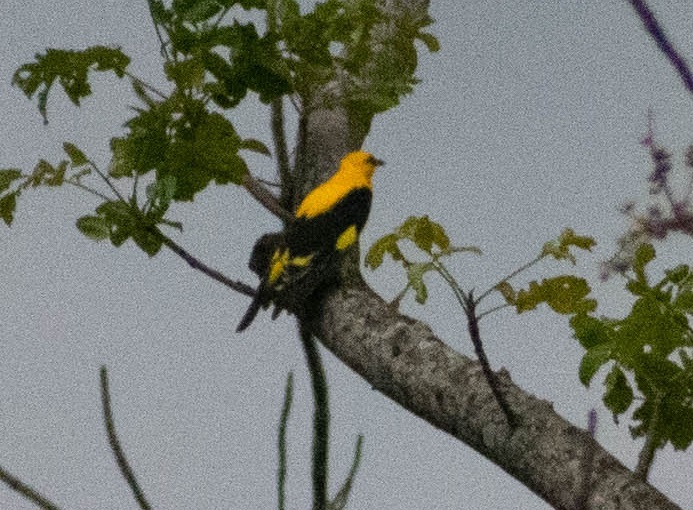
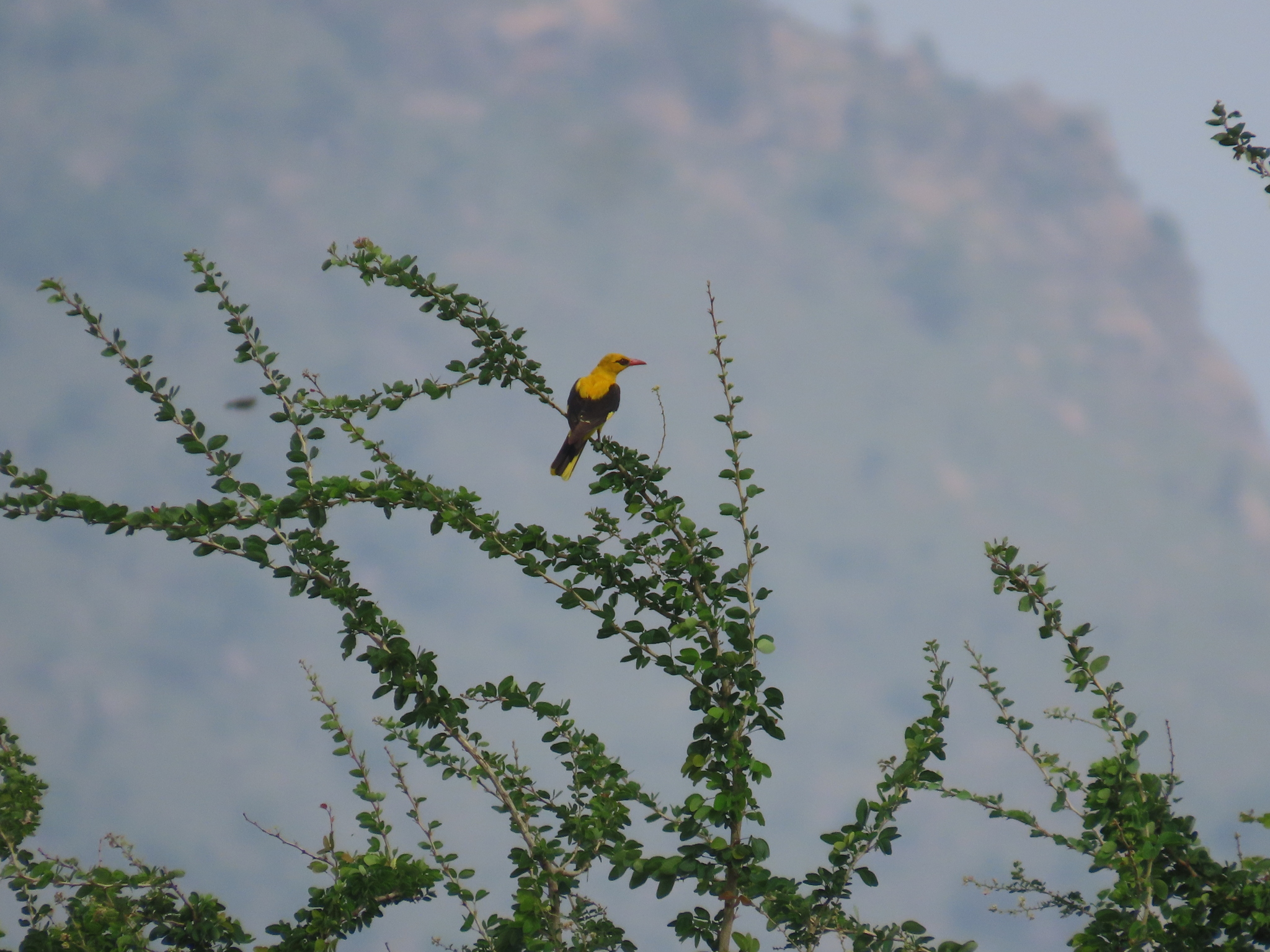
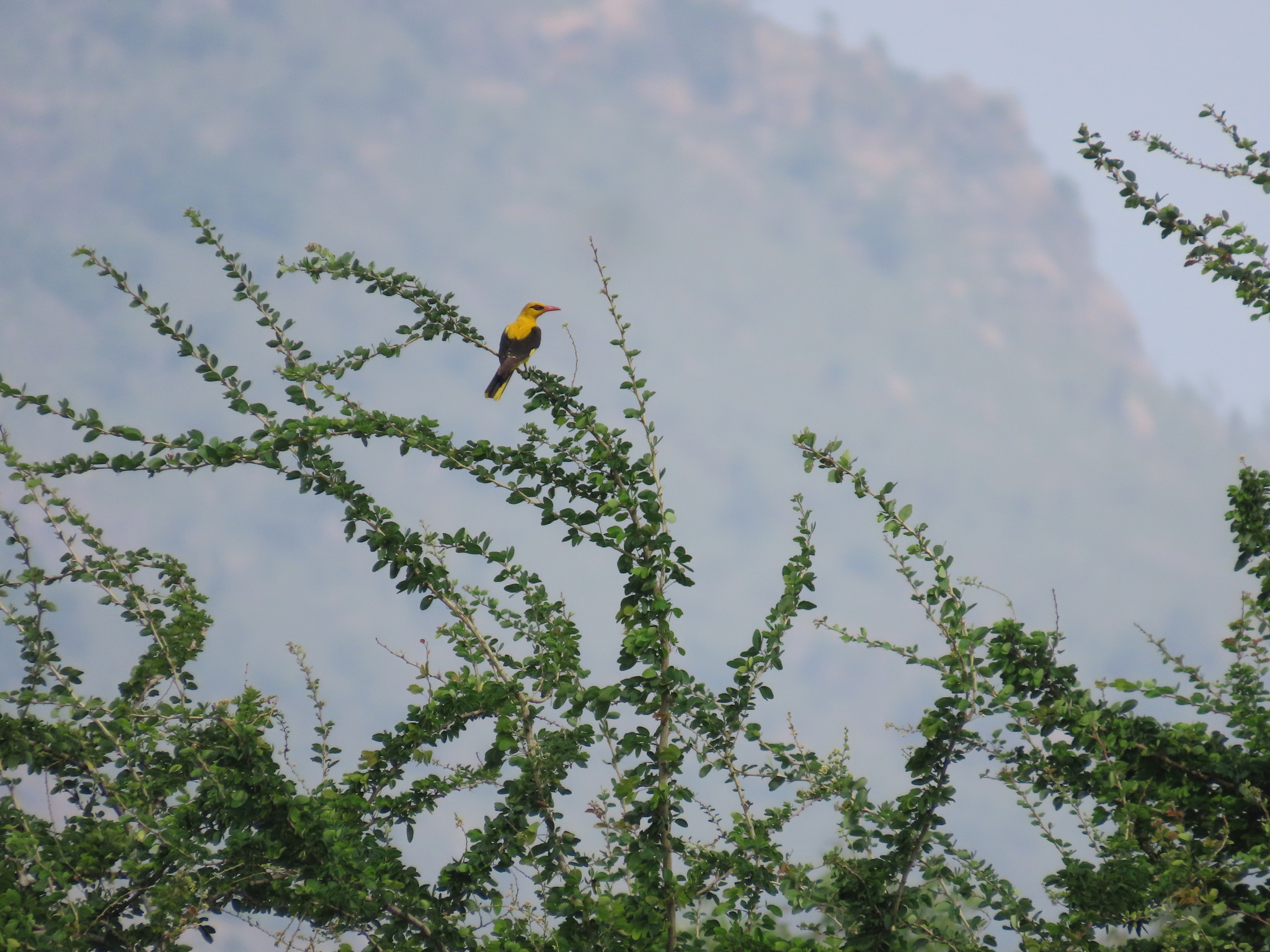
Indian Golden Oriole
Oriolus kundoo
印度金黄鹂
Introduction
A species of oriole (family Oriolidae) found across the Indian subcontinent and Central Asia. Formerly classified as a subspecies of the Eurasian golden oriole, it was elevated to full species status in 2005 based on differences in morphology, plumage, vocalizations, and limited intergradation. Distinguished from the Eurasian golden oriole by the black eye stripe that extends behind the eye. Inhabits diverse woodland habitats including open deciduous forests, mangroves, and human-modified landscapes such as parks and orchards. Northern populations are migratory, wintering in southern India and Sri Lanka, while Indian populations are largely resident.
Description
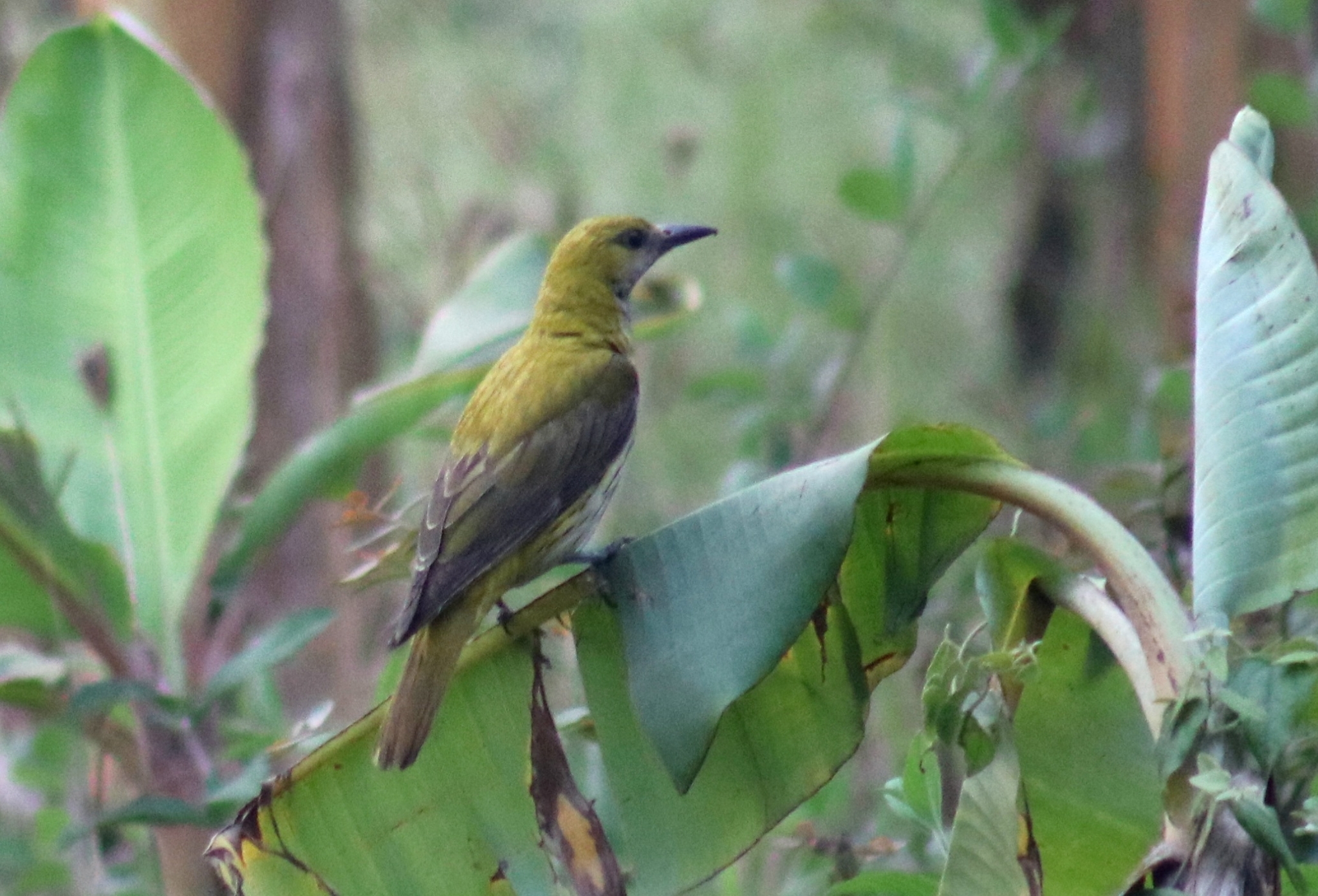
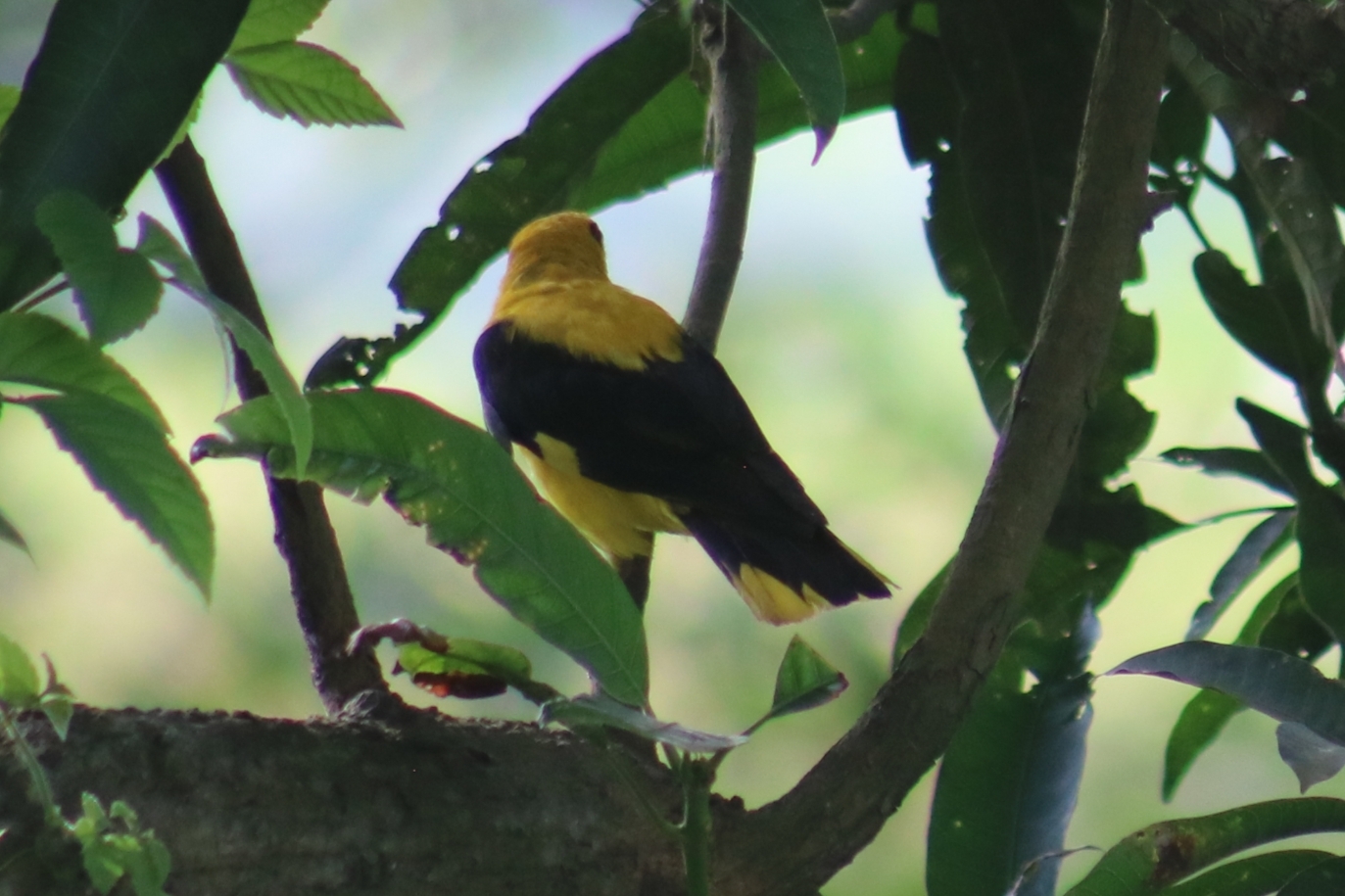
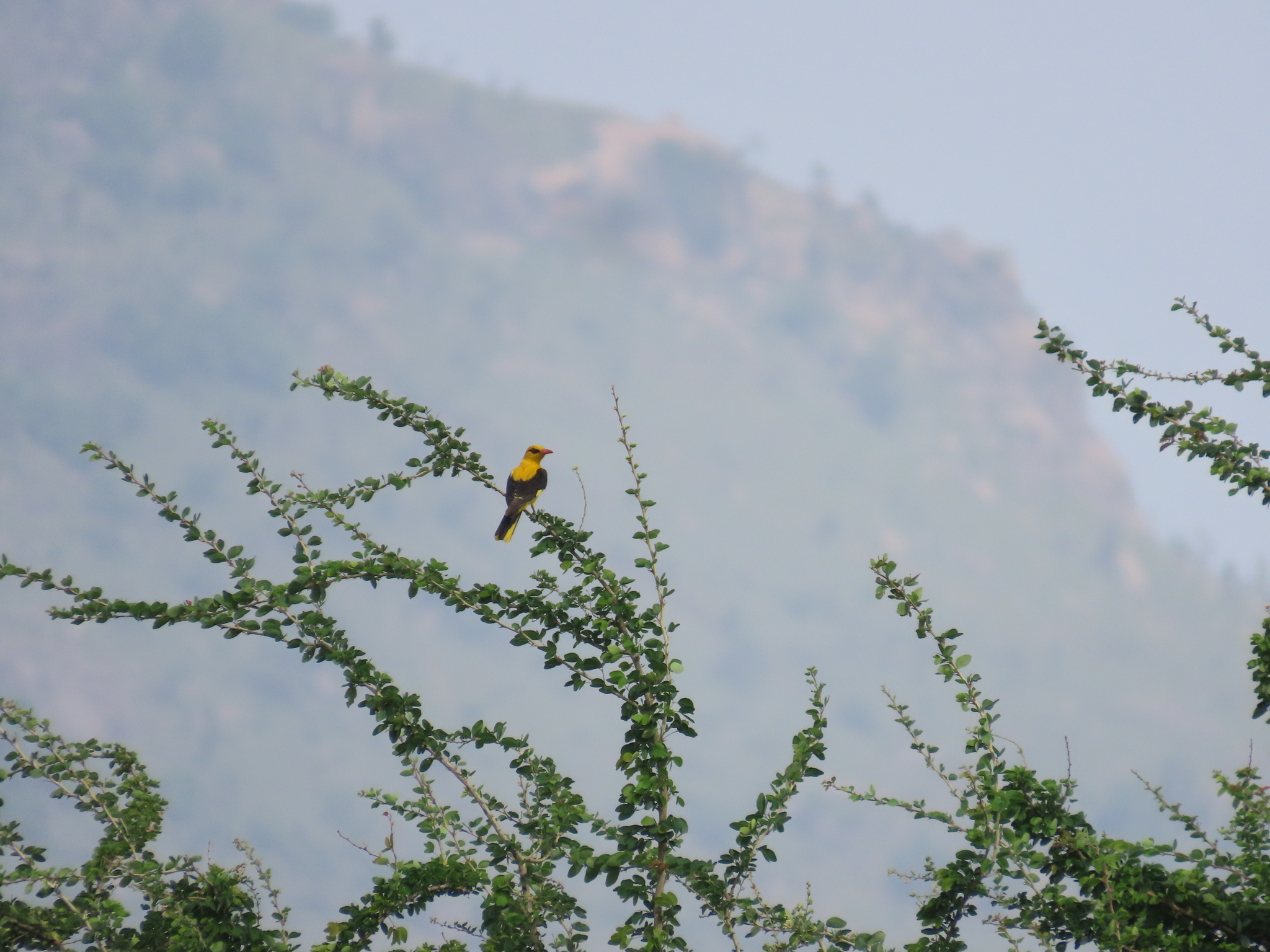
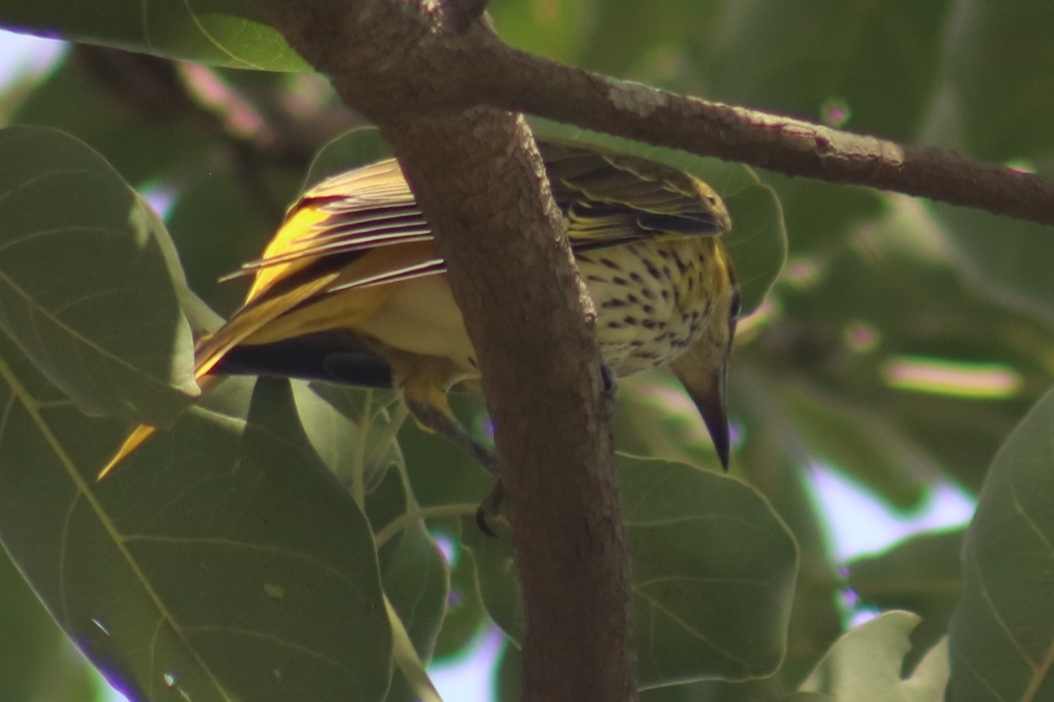
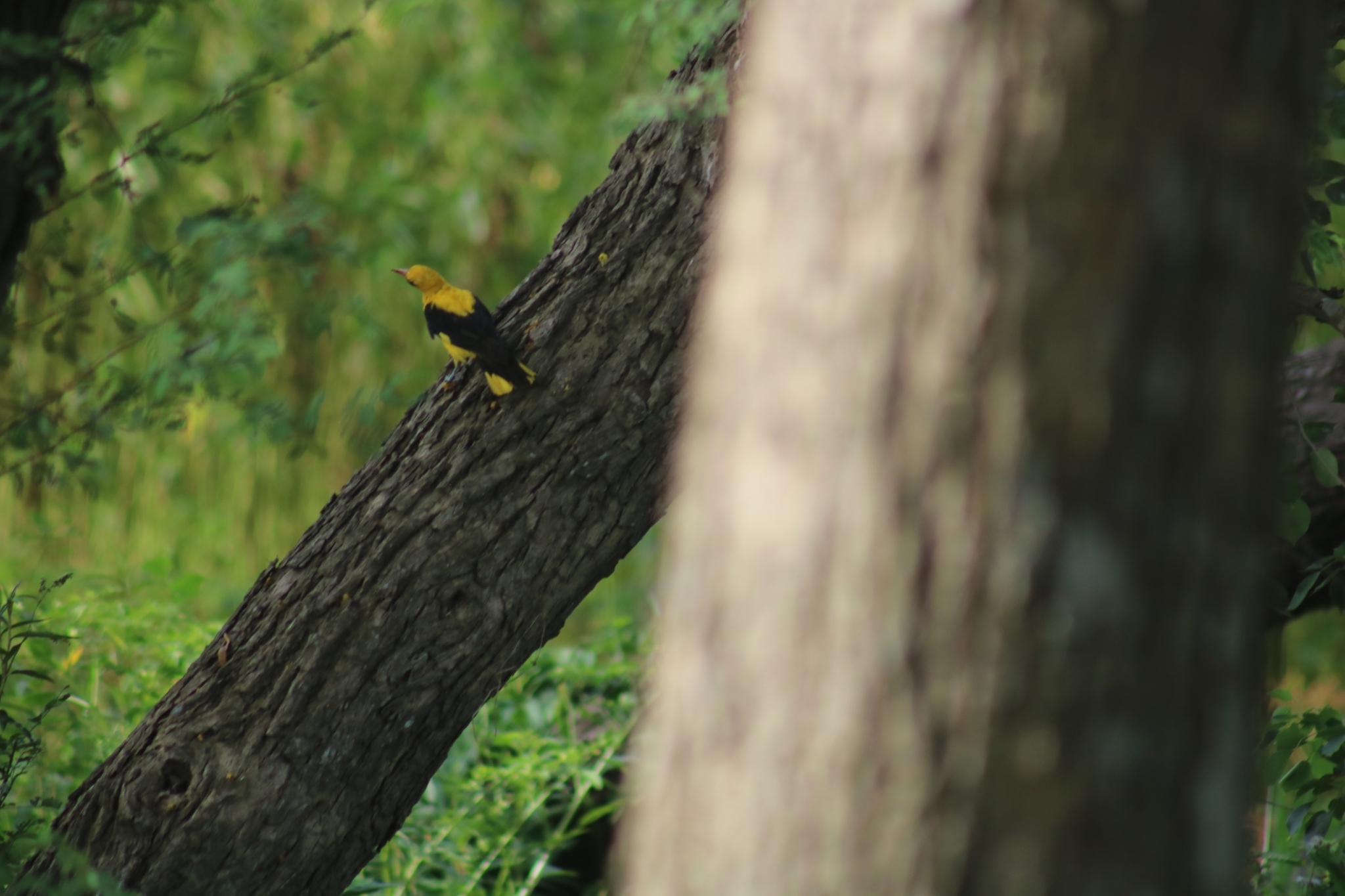
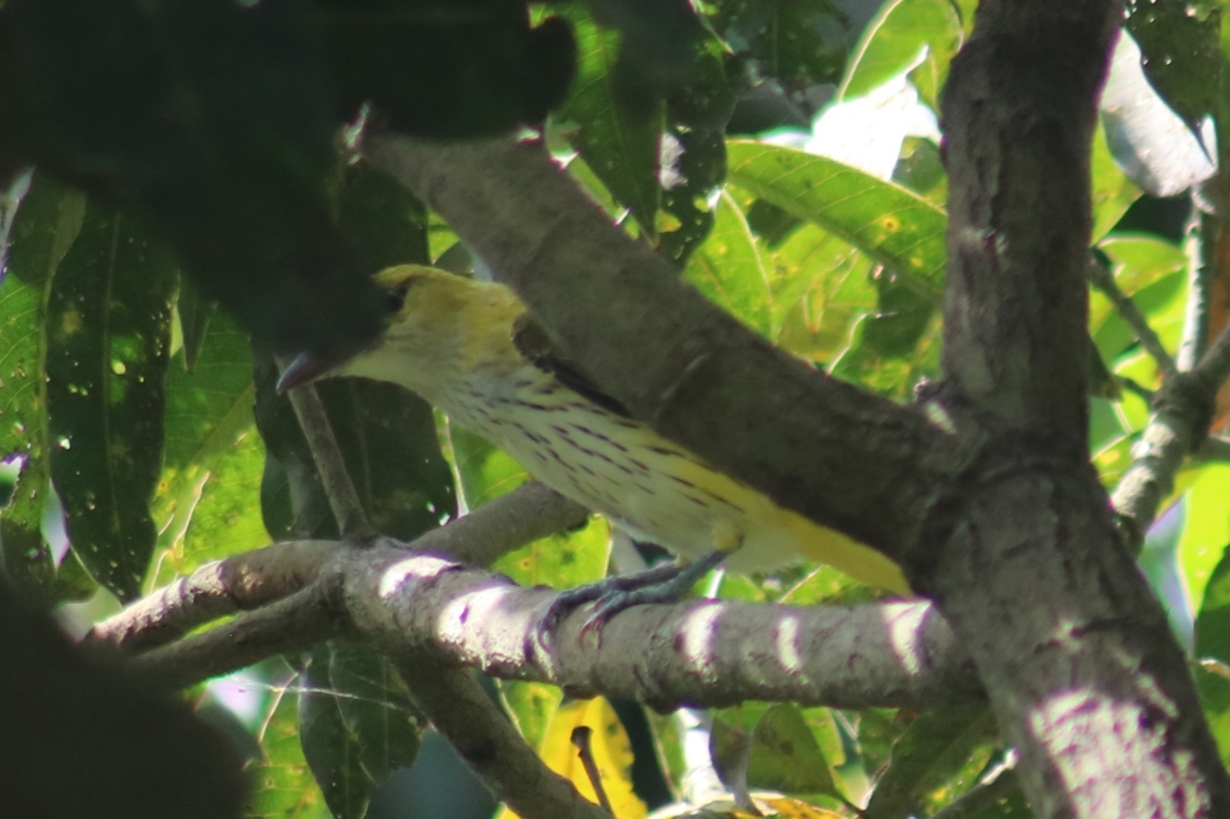
A medium-sized oriole with a body length of approximately 24-25 cm. Males have golden-yellow plumage with a black eye stripe extending behind the eye, a prominent carpal patch on the wing, and wide yellow tips to the secondaries and tertiaries. The tail shows more yellow than the Eurasian golden oriole. Females have olive-green upperparts and yellowish underparts with sharper, more defined streaks. The iris and bill are a paler red compared to the Eurasian species. Wing length in males measures 136-144 mm, smaller than the European species.
Identification
Key distinguishing feature is the black eye stripe that continues behind the eye, which does not occur in the Eurasian golden oriole. Other differences include more yellow in the tail feathers, paler red iris and bill, and sharper streaking on the female's underparts. Smaller overall size with wing length 136-144 mm versus 149-162 mm in the European species. The wing formula differs: primary 5 is longer than primary 2, whereas the reverse is true in the Eurasian species.
Distribution & Habitat
Breeds from Baluchistan and Afghanistan eastward along the Himalayan range to Nepal, with isolated populations in peninsular India. Northern populations migrate south for winter, reaching southern India and Sri Lanka. Also occurs in the Maldives and Andaman Islands, though these populations require further study. Inhabits a variety of wooded habitats including open deciduous forests, semi-evergreen forests, mangroves, forest edges, and human-modified areas such as parks, gardens, orchards, and plantations with scattered trees.
Behavior & Ecology
Flight is dipping but strong, capable of speeds around 40 km/h. Bathes by repeatedly flying into small pools of water. Breeding occurs from April to August. The nest is a small cup constructed in a fork near the end of a branch, often built near black drongo nests for protection. Clutch consists of 2-3 white eggs with reddish, brown, and black speckling. Both parents share incubation and chick-rearing duties, defending the nest against shikras and crows. Diet includes fruits, nectar, and insects; known to disperse seeds of berry-bearing plants including invasive Lantana camara. Has been recorded preying on southern flying lizards.
Conservation
Not assessed in the provided text.
Culture
Not addressed in the provided text.
Source: Wikipedia · CC BY-SA 3.0
Taxonomy
- Order
- Passeriformes
- Family
- Oriolidae
- Genus
- Oriolus
- eBird Code
- ingori1
Distribution
breeds southern Kazakhstan eastward to eastern China and southward to central Afghanistan, northern Pakistan, Nepal, and central India; witners to southern India and Sri Lanka
Vocalizations
Data Sources
Species description from Wikipedia, licensed under CC BY-SA 3.0.
Bird images and sounds sourced from GBIF, contributed by citizen scientists worldwide under Creative Commons licenses.
Taxonomy data from AviList 2025.