Pied Wheatear
Oenanthe pleschanka
白顶䳭
Introduction
A small insectivorous passerine bird (family Muscicapidae, formerly Turdidae) breeding across central Asia from extreme southeast Europe to China, with wintering grounds in India and northeastern Africa. Very rare vagrant to western Europe. Occurs in open, stony, sparsely vegetated regions at elevations up to 3,000 meters. Distinguished by bold white-and-black plumage in males and characteristic white tail with black inverted 'T' pattern. Population considered stable across extensive range.
Description
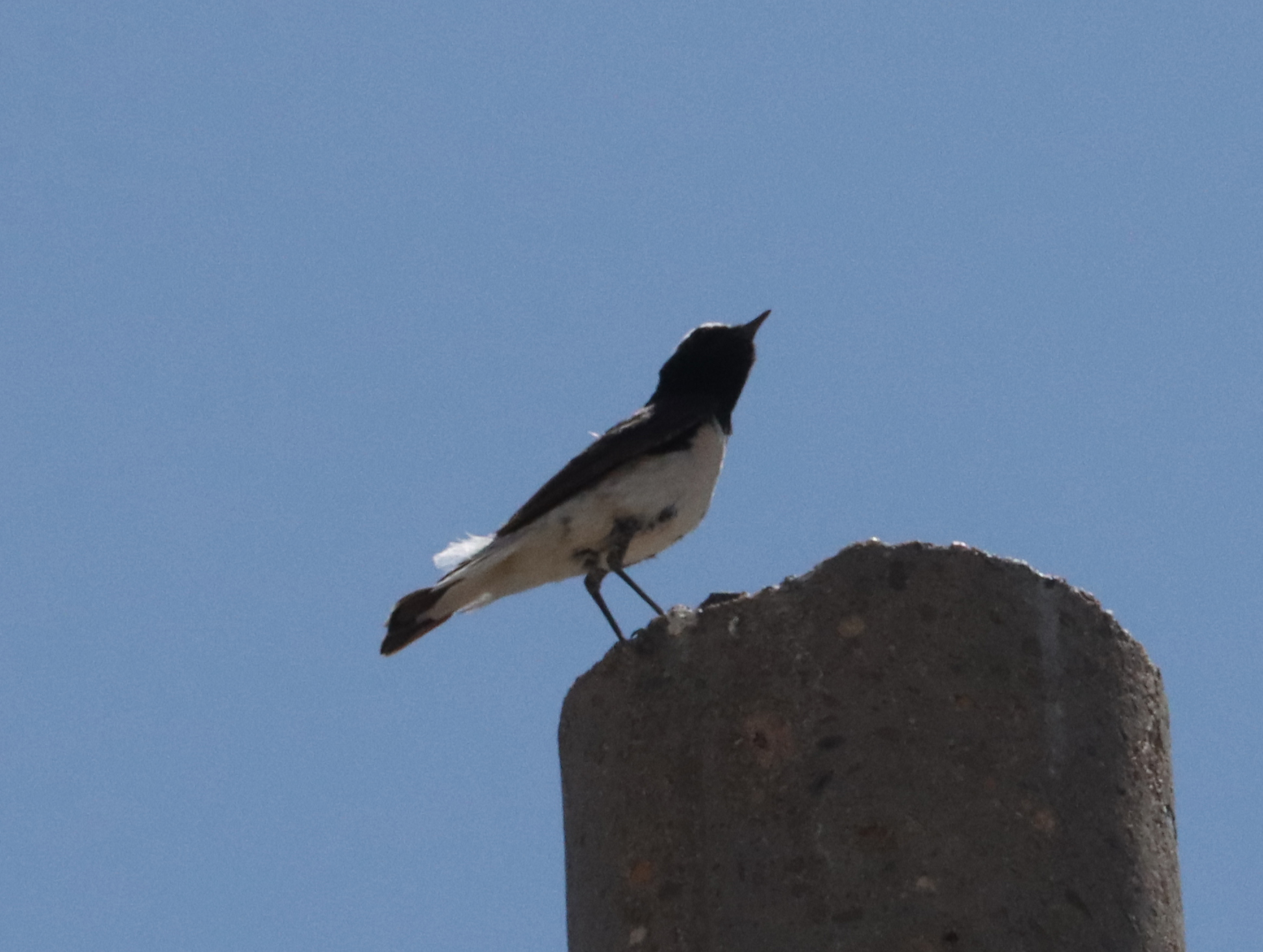
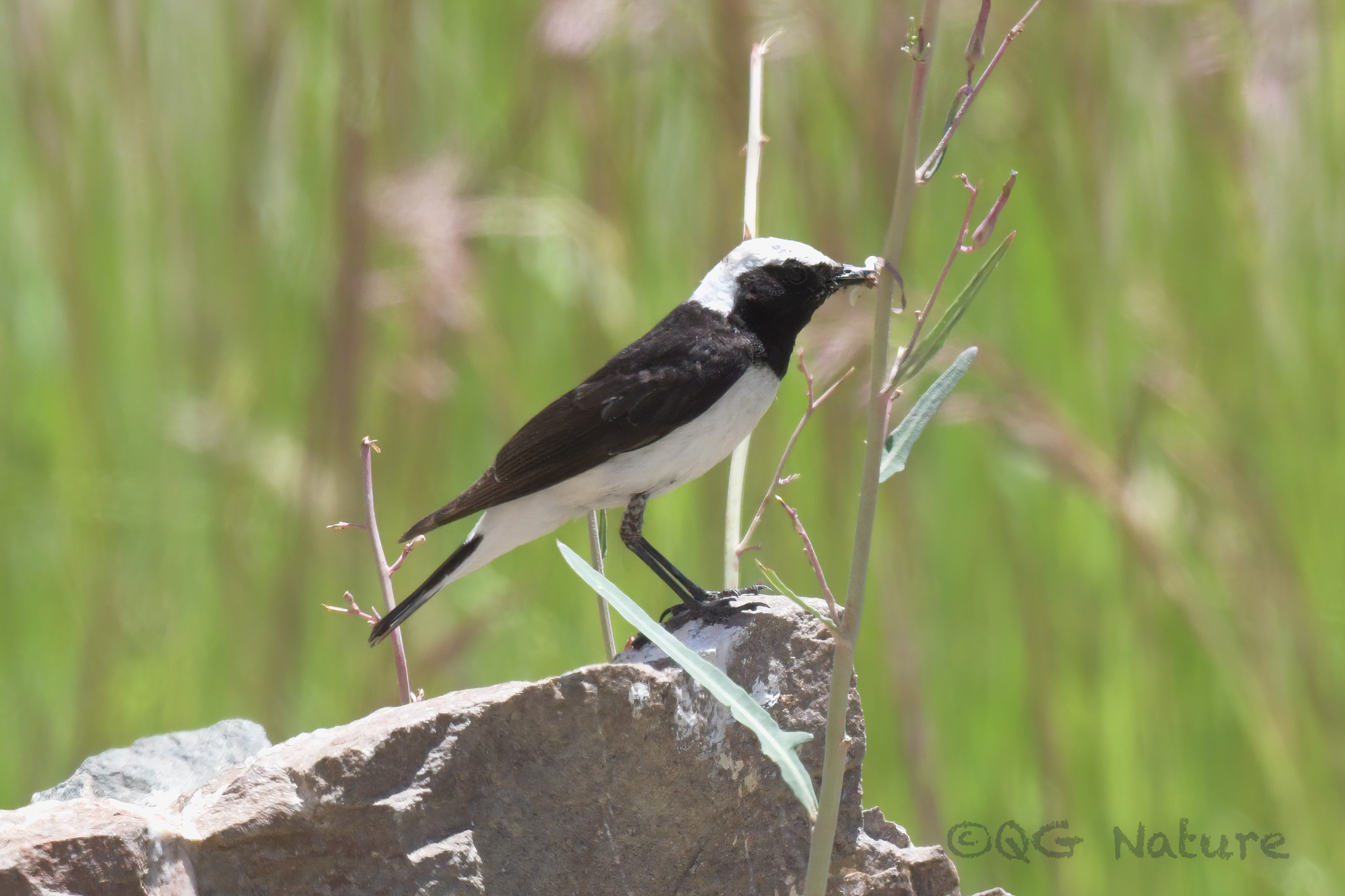
Adult male has pale brown crown, nape and neck with pale tips and white bases, black mantle and scapulars with buff tips, creamy-white back and rump. Face, throat and upper breast black, rest of breast buff, belly creamy-buff. Central tail feathers black with white bases, remaining feathers white with black tips forming inverted 'T' pattern. Wing feathers black with creamy-buff tips and edges. Beak, legs and feet black, eyes dark brown. Adult female similar but with brown mantle and scapulars, brown and white tail feathers. Slightly smaller than male. Length approximately 146 mm (5.75 inches).
Identification
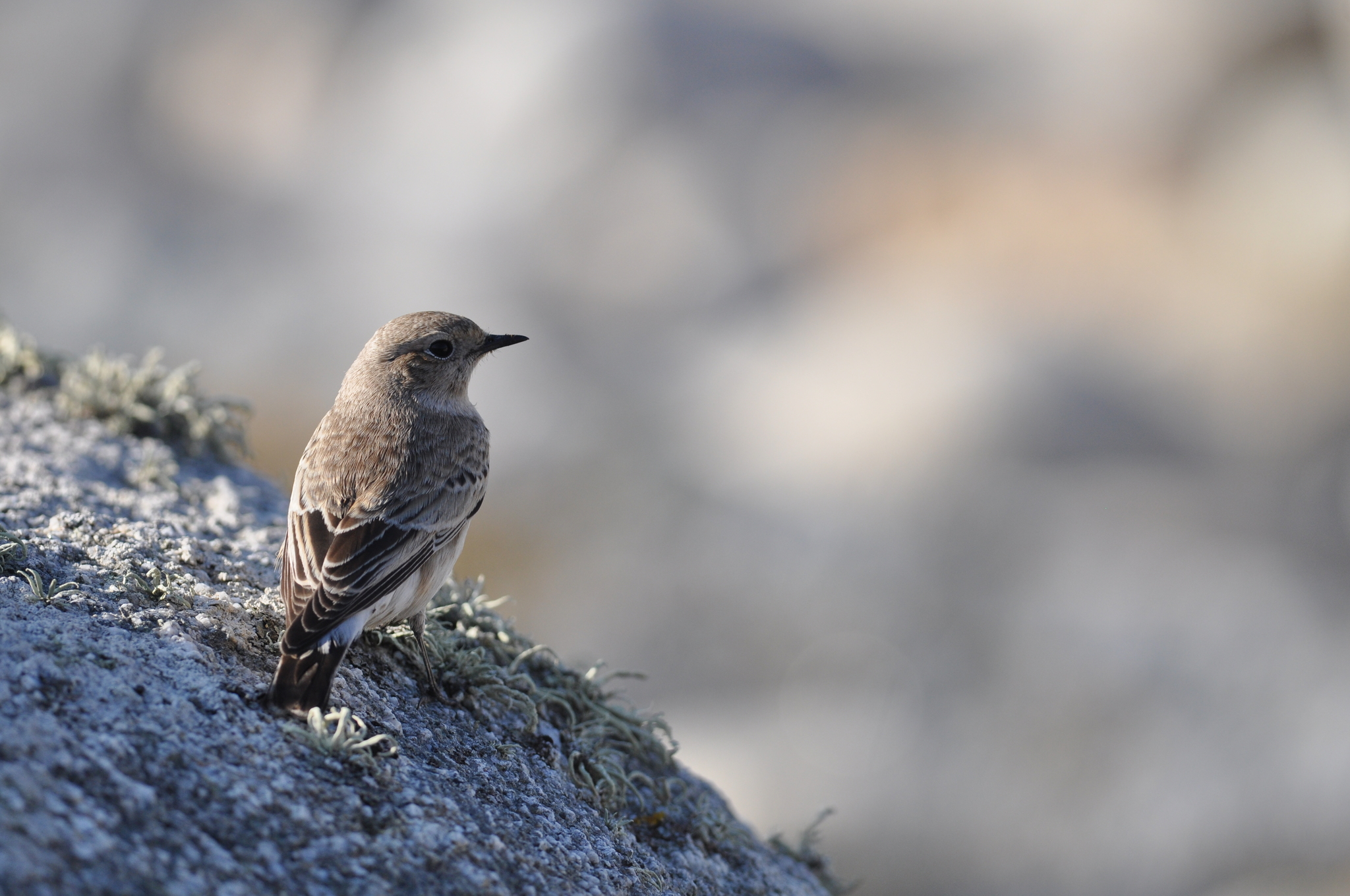
Male's bold white-and-black plumage with brown-tinged white crown, black face and throat, and characteristic white rump distinguish it from other wheatears. Female is browner with sandy-buff head wash, darker than female northern wheatear, appears smaller with less white on rump. Tail pattern of black inverted 'T' on white resembles western black-eared wheatear but overall plumage pattern differs.
Distribution & Habitat
Breeding range extends from Romania and Bulgaria across Siberia, Altai and Mongolia to Caucasus, Transcaspia, Turkestan, Iran and Afghanistan. Occurs at elevations up to 2,000 meters in Altai and 3,000 meters in Tien Shan. Migrates to Northeast Africa via Southwest Asia. Inhabits rough open country, steppes with scant vegetation, stony slopes and hilly country during breeding; similar rocky habitats with thorny scrub on wintering grounds. Vagrant records from Italy, Heligoland and Scotland.
Behavior & Ecology
Shy and inconspicuous though conspicuous when spotted. Solitary or in pairs in rocky countryside. Perches on bushes or rocks, bobbing tail up and down while alert. Drops to ground to capture prey before returning to perch. Diet consists of small invertebrates including ants, grasshoppers, beetles, flies, moths and larvae, spiders and mites; seeds also eaten. Voice is harsh 'zack zack' call. Song is low-pitched and musical, delivered from perch or in flight, consisting of variable imitative notes sometimes lark-like or whistling. Nests in holes in riverbanks, under stones or in crevices, lined with grass, roots and feathers. Four to six greenish-blue eggs with rust-colored spots laid from early May, measuring 19.3 by 15.1 mm.
Conservation
Rated as Least Concern by BirdLife International. European population estimated at 96,000-420,000 individuals, representing 5-24% of global range. Total world population potentially 400,000-8,400,000 individuals. Population considered stable with no significant threats identified across extensive range.
Culture
Genus name Oenanthe derives from Ancient Greek oenos 'wine' and anthos 'flower', referring to northern wheatear's return to Greece in spring coinciding with grapevine blossom. Species name pleschanka is the Russian name meaning 'bald spot', referring to the white crown. The English name 'wheatear' is a 16th-century linguistic corruption of 'white' and 'arse', referencing the prominent white rump.
Source: Wikipedia · CC BY-SA 3.0
Taxonomy
- Order
- Passeriformes
- Family
- Muscicapidae
- Genus
- Oenanthe
- eBird Code
- piewhe1
Distribution
breeds stony south-central Eurasia; winters to Arabia, Iran, and northeastern Africa
Data Sources
Species description from Wikipedia, licensed under CC BY-SA 3.0.
Bird images and sounds sourced from GBIF, contributed by citizen scientists worldwide under Creative Commons licenses.
Taxonomy data from AviList 2025.