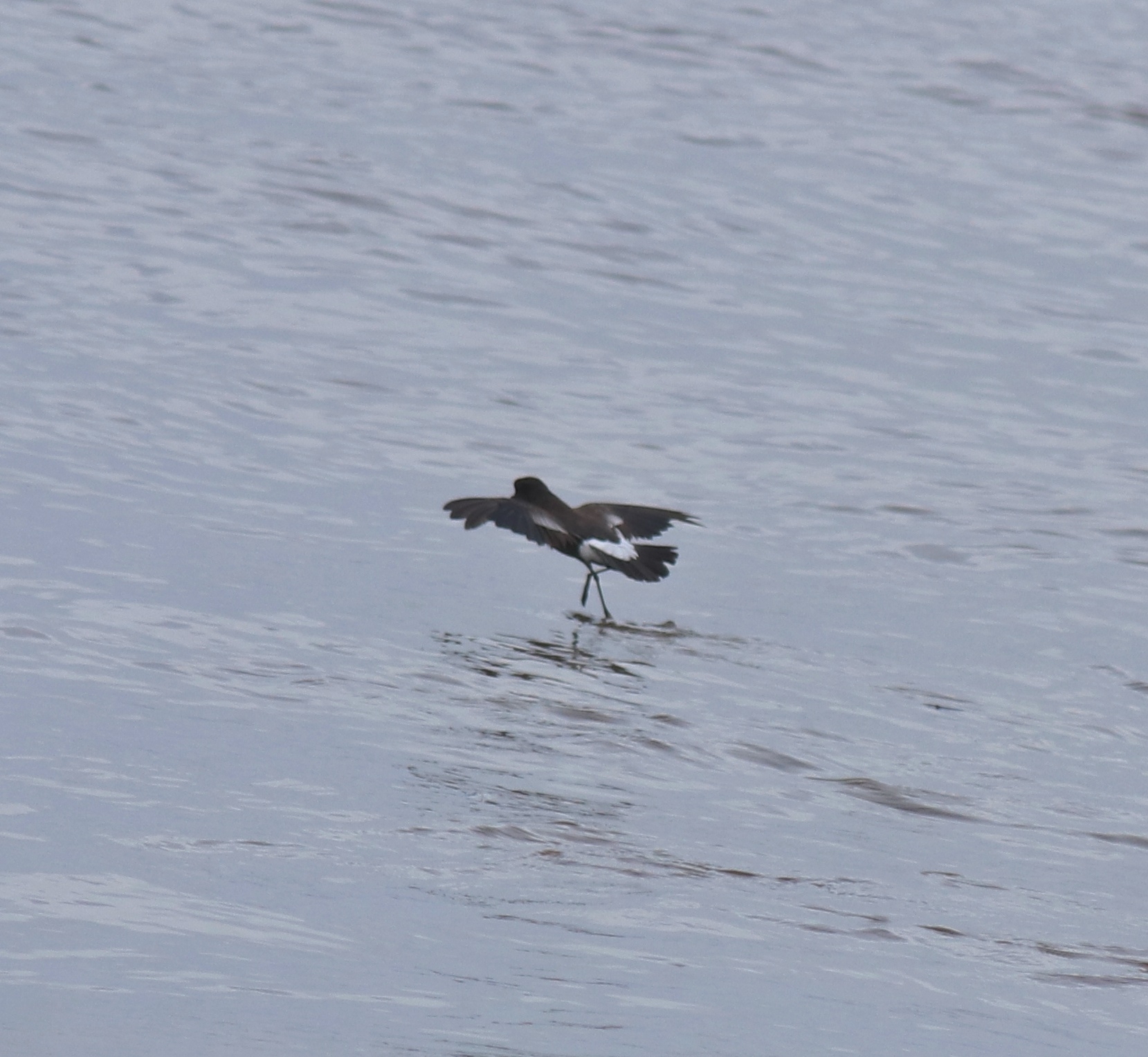
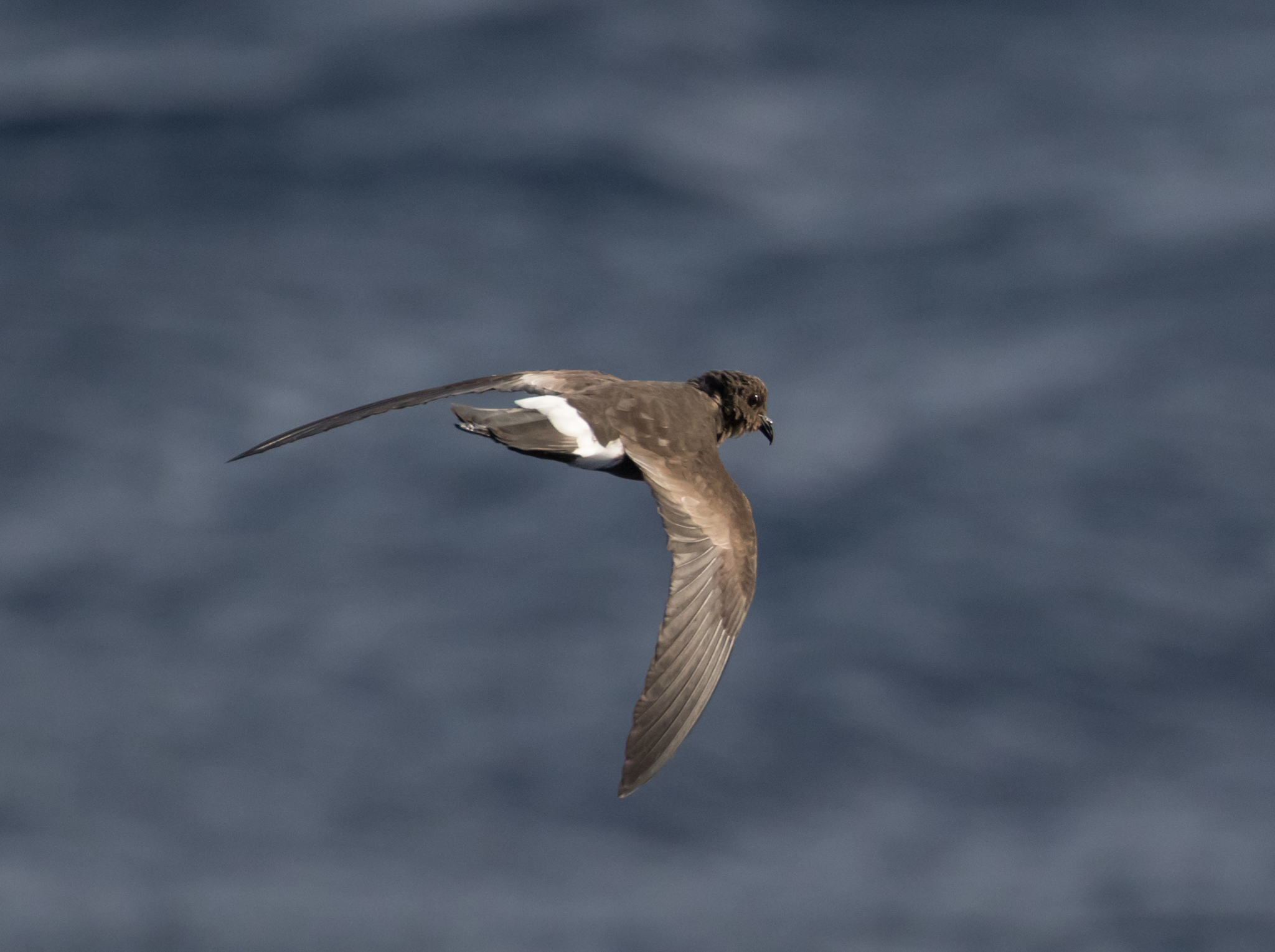
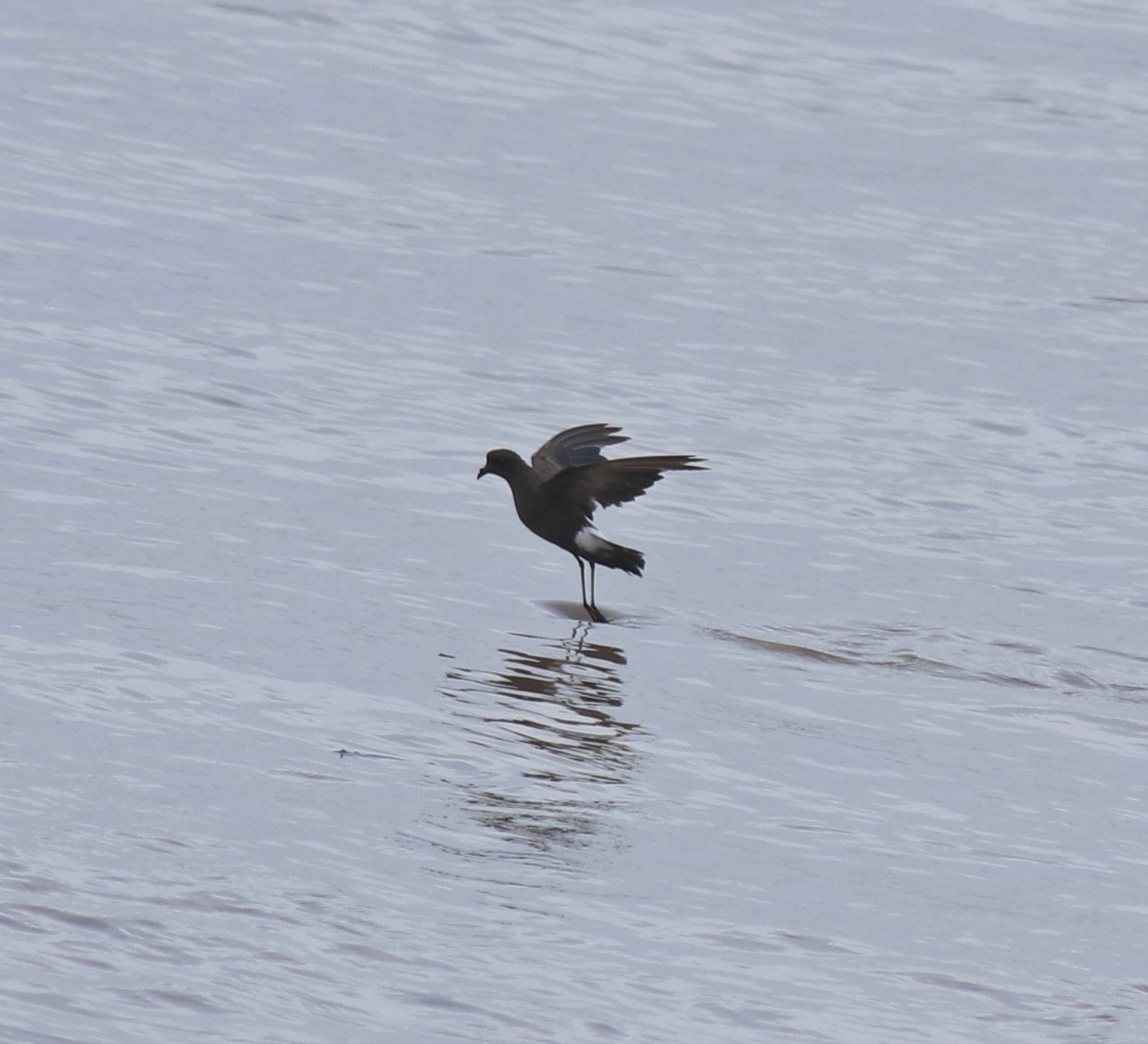
Wilson's Storm Petrel
Oceanites oceanicus
黄蹼洋海燕
Introduction
Small seabird of the austral storm petrel family Oceanitidae. One of the most abundant bird species in the world with a circumpolar distribution mainly in the seas of the southern hemisphere, extending northwards during the northern hemisphere summer. The world population was estimated in 2022 as stable at 8 to 20 million birds (previously estimated at 12–30 million in 2010, and more than 50 million pairs in 1998). At 40 g average, it is the smallest warm-blooded animal that breeds in the Antarctic region.
Description
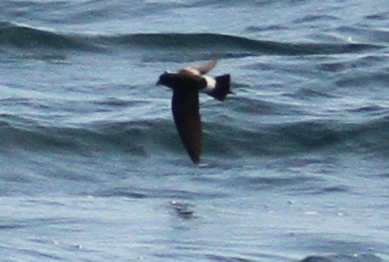
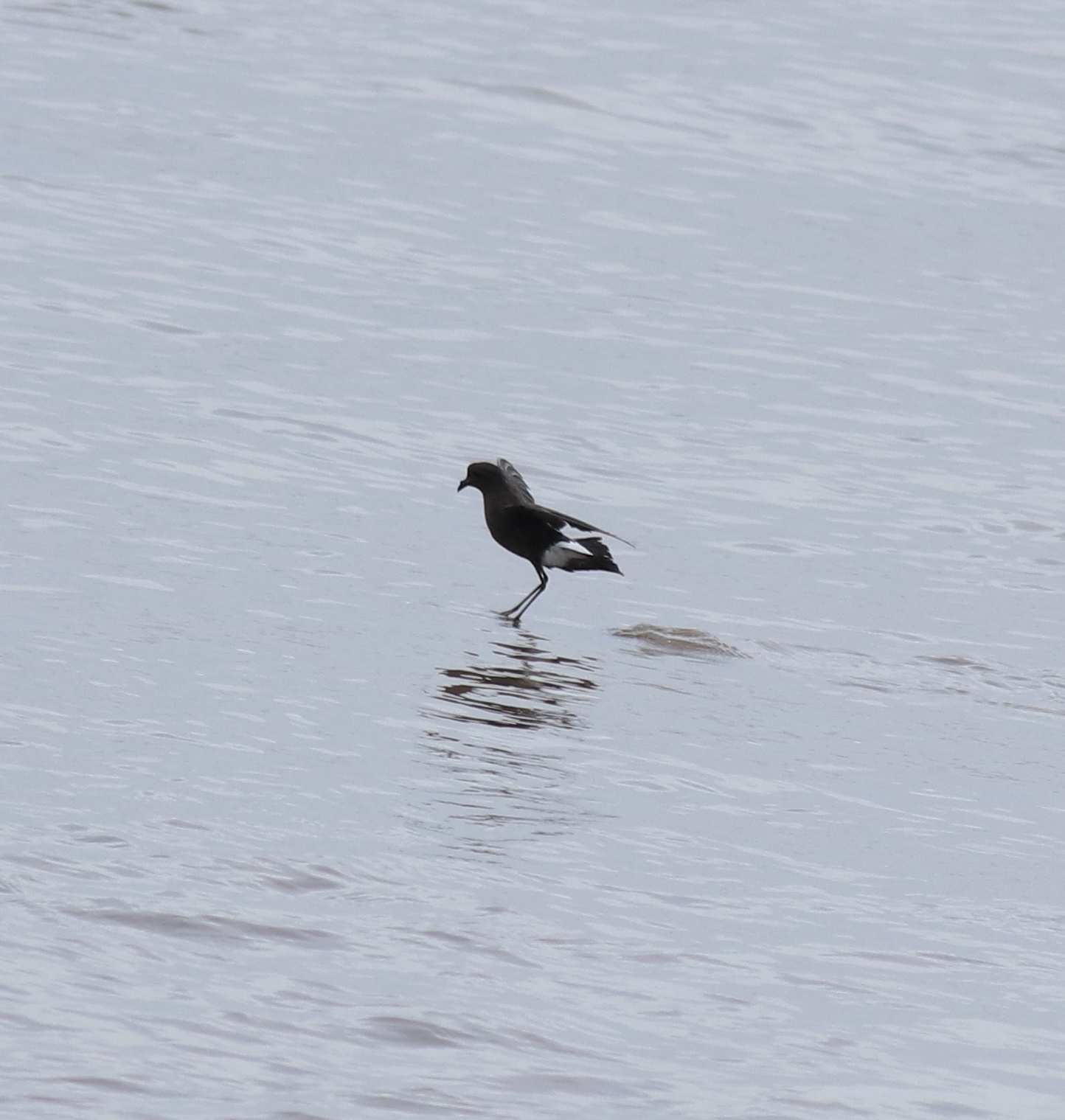
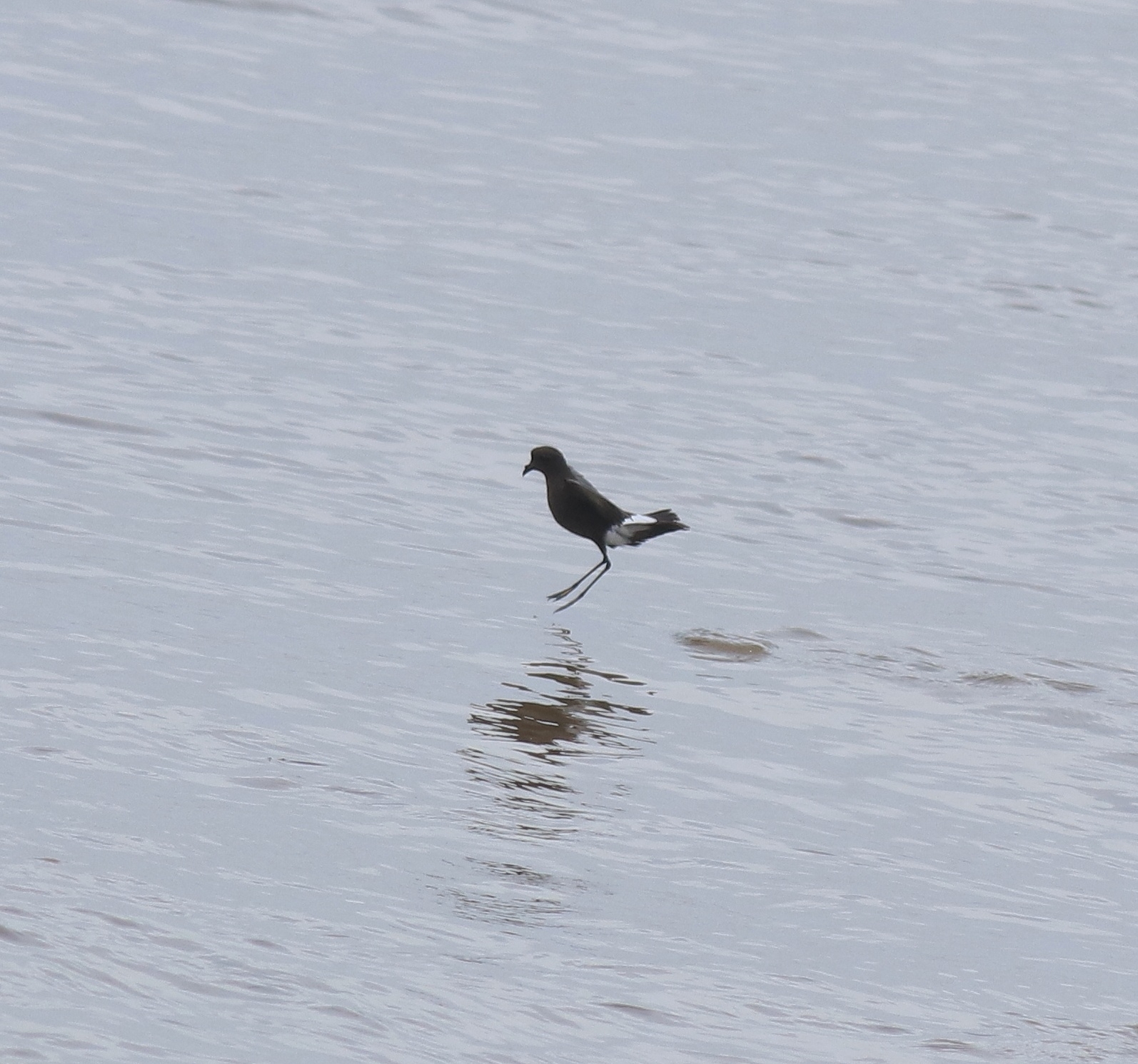
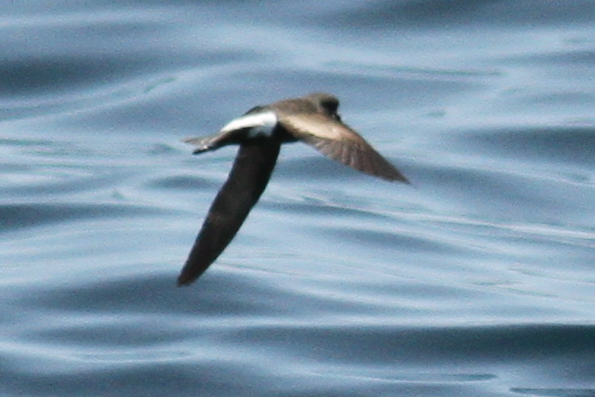
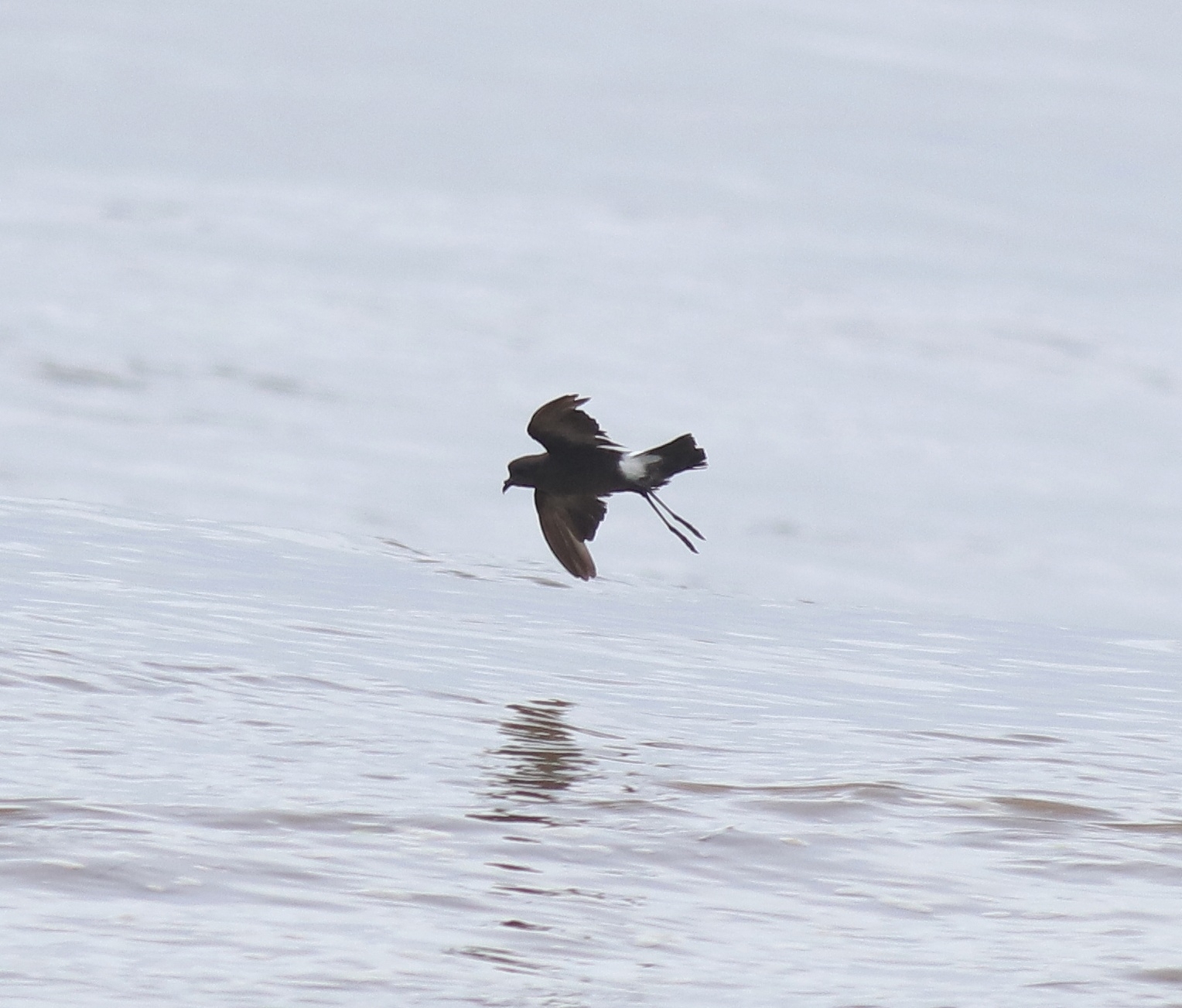
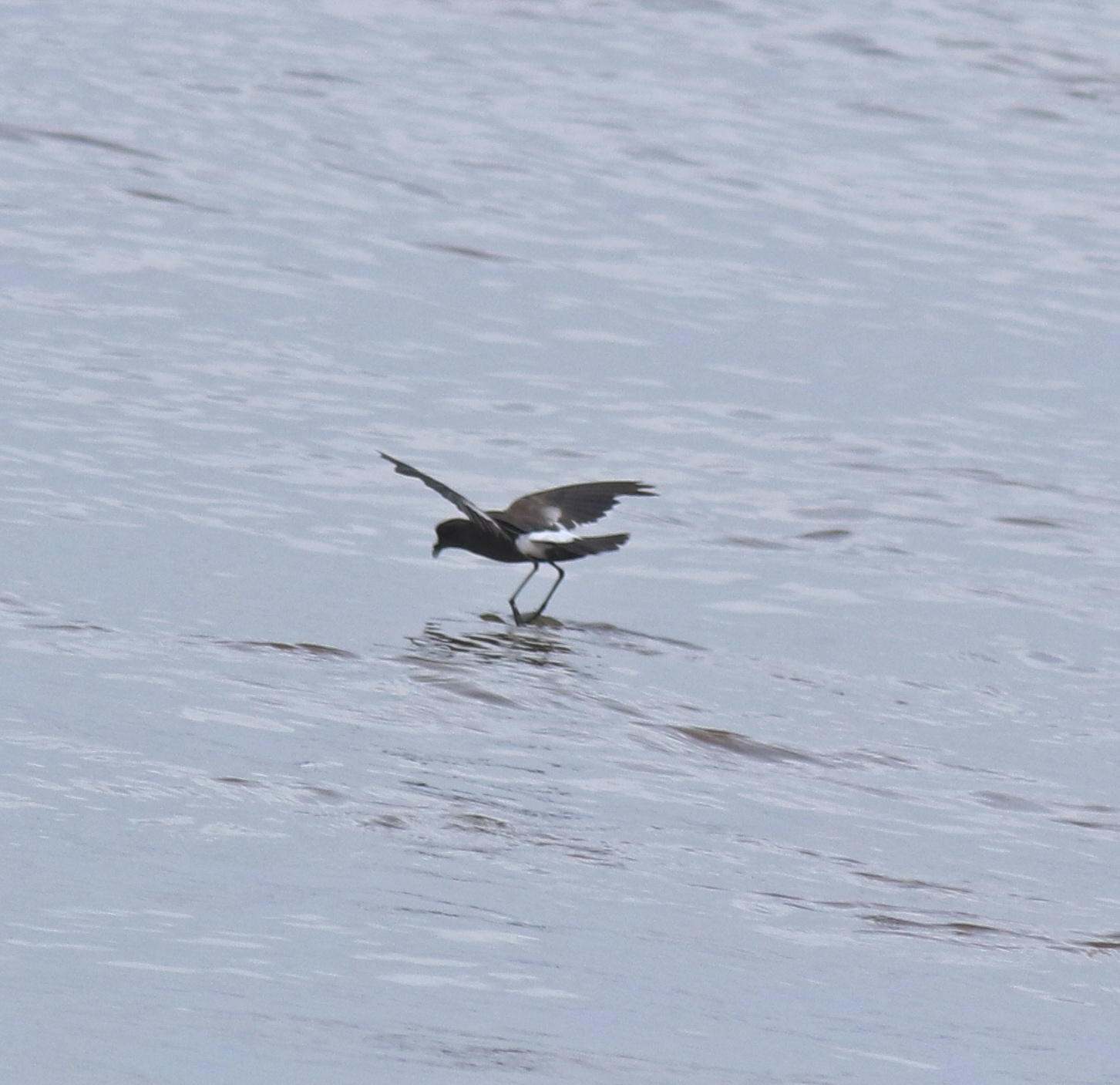
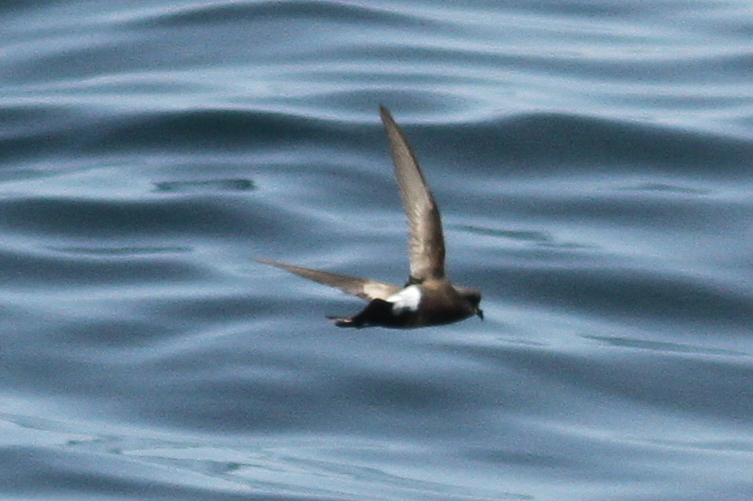
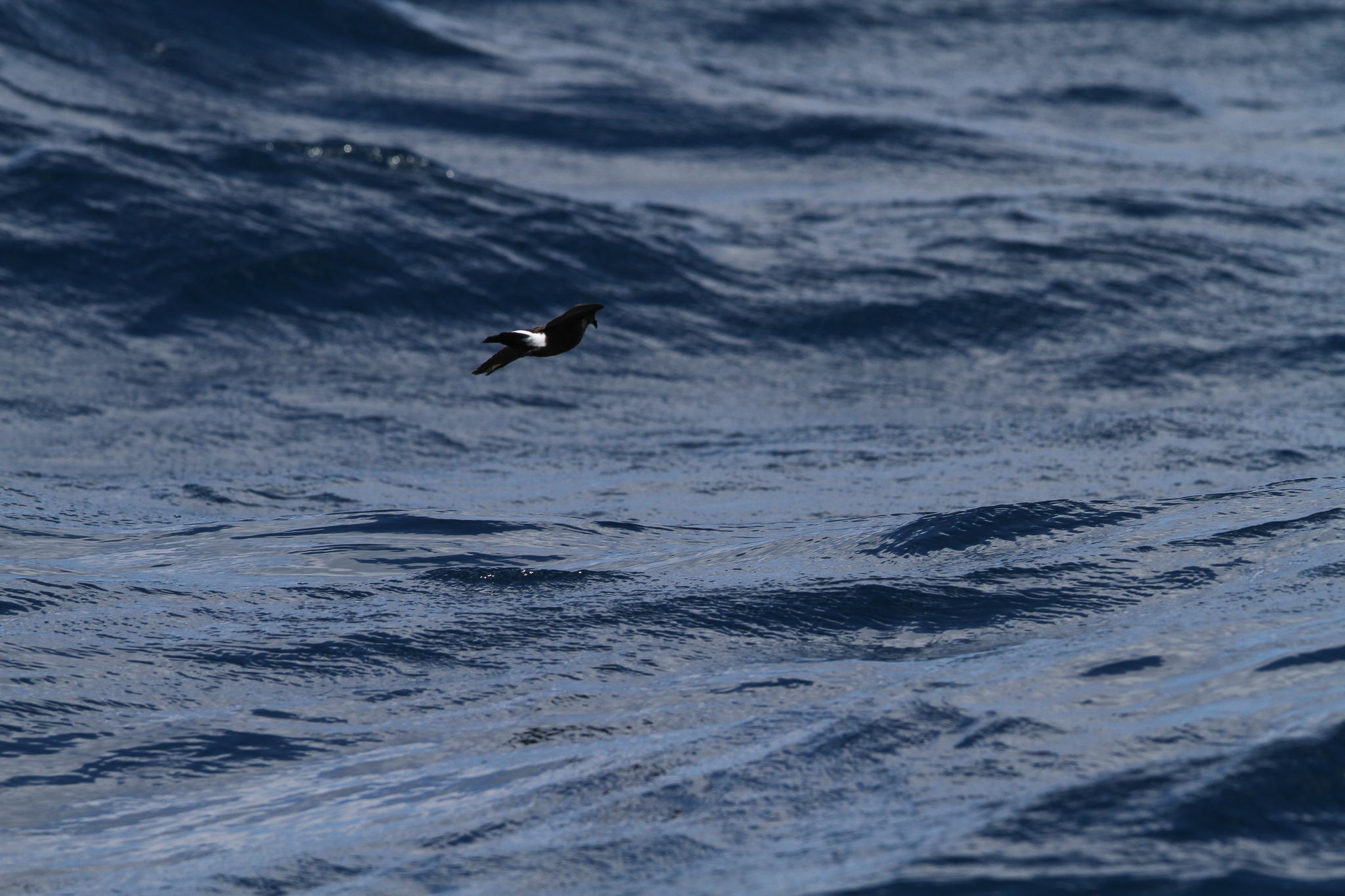
A small seabird measuring 16–18.5 cm in length with a 38–42 cm wingspan. Slightly larger than the European storm petrel, it is essentially dark brown in all plumages with a white rump and flanks. The feet extend just beyond the square-ended tail in flight. The species shows a diffuse pale band along the upper wing coverts and lacks the distinctive white underwing lining seen in the European storm petrel. The webbing between the toes is yellow with black spots in pre-breeding age individuals.
Identification
Larger than the European storm petrel with a more direct gliding flight. The lack of white underwing lining distinguishes it from the European species, which shows a very distinct whitish lining. Wilson's has a diffuse pale band on the upper wing coverts while the European has a nearly all-dark upperwing. The yellow-webbed feet with black spots are visible in hand.
Distribution & Habitat
Breeds on Antarctic coastlines and nearby islands including the South Shetland Islands during the southern hemisphere summer. Spends the rest of the year at sea, moving into northern oceans during the southern hemisphere's winter. Much more common in the north Atlantic than the Pacific. Common off eastern North America in the northern summer and found in European waters, particularly around the Isles of Scilly and Great Britain. Strictly pelagic outside the breeding season and rarely seen from land except during storms.
Behavior & Ecology
More direct gliding flight than other small petrels, flying low over the sea surface with a unique fluttering and hovering flight, wings often held high. Highly gregarious, follows ships and fishing boats. Feeds predominantly on planktonic invertebrates close to the surface, rarely diving, though may take 3–8 cm fish of the family Myctophidae. Emits soft peeping sounds while feeding. Nests in colonies in rock crevices or small burrows, laying a single white egg. Strictly nocturnal at breeding sites to avoid predation by gulls and skuas. Both parents tend the nest and feed the single chick for approximately 60 days on krill, fish, and amphipods. Adults identify nest burrows in the dark and mates by olfactory cues.
Conservation
Evaluated as Least Concern on the IUCN Red List. Widespread throughout its very large range with a stable population estimated at 8–20 million birds. Population estimates in Antarctica suggest between 10^5 and 10^6 breeding pairs. No major threats identified, though nests in the Antarctic may sometimes get snowed over, leading to nest or chick loss.
Culture
Known historically as Mother Carey's chicken in early literature, a term often applied to several petrel species. The generic name stormy petrel derived from the belief that their appearance foretold stormy weather. Also called the yellow-webbed storm-petrel by F.M. Littler and others.
Source: Wikipedia · CC BY-SA 3.0
Taxonomy
- Order
- Procellariiformes
- Family
- Oceanitidae
- Genus
- Oceanites
- eBird Code
- wispet
Subspecies (3)
-
Oceanites oceanicus chilensis
range incompletely known; breeds Tierra del Fuego; ranges north to Peru
-
Oceanites oceanicus exasperatus
breeds South Shetland Islands, South Sandwich Islands, and adjacent Antarctic coast; migrates north to pelagic waters of Northern Hemisphere
-
Oceanites oceanicus oceanicus
breeds subantarctic islands from Cape Horn to Heard and Kerguelen islands; migrates north to pelagic waters of Northern Hemisphere
Data Sources
Species description from Wikipedia, licensed under CC BY-SA 3.0.
Bird images and sounds sourced from GBIF, contributed by citizen scientists worldwide under Creative Commons licenses.
Taxonomy data from AviList 2025.