Fire-tailed Myzornis
Myzornis pyrrhoura
火尾绿鹛
Introduction
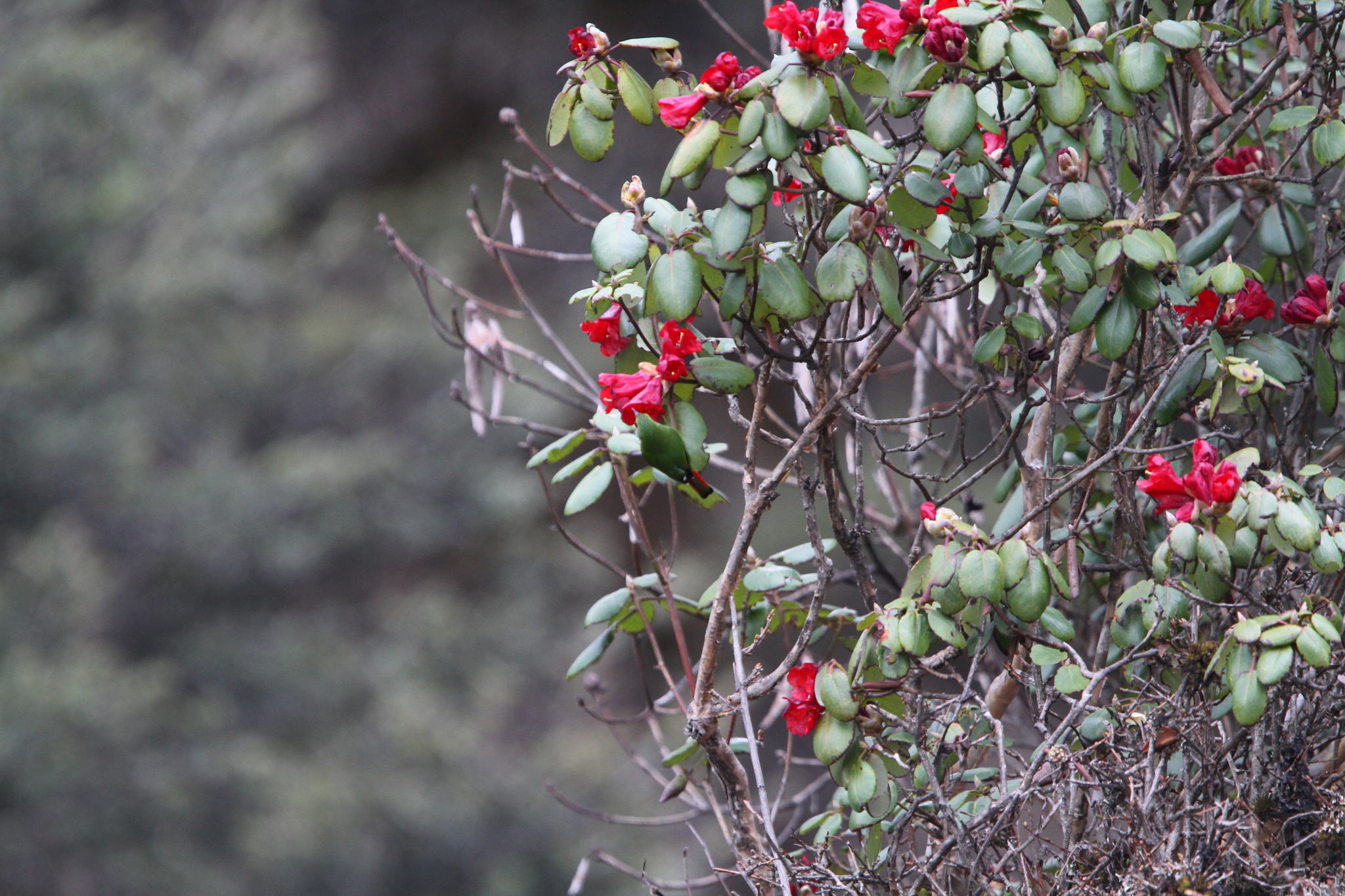
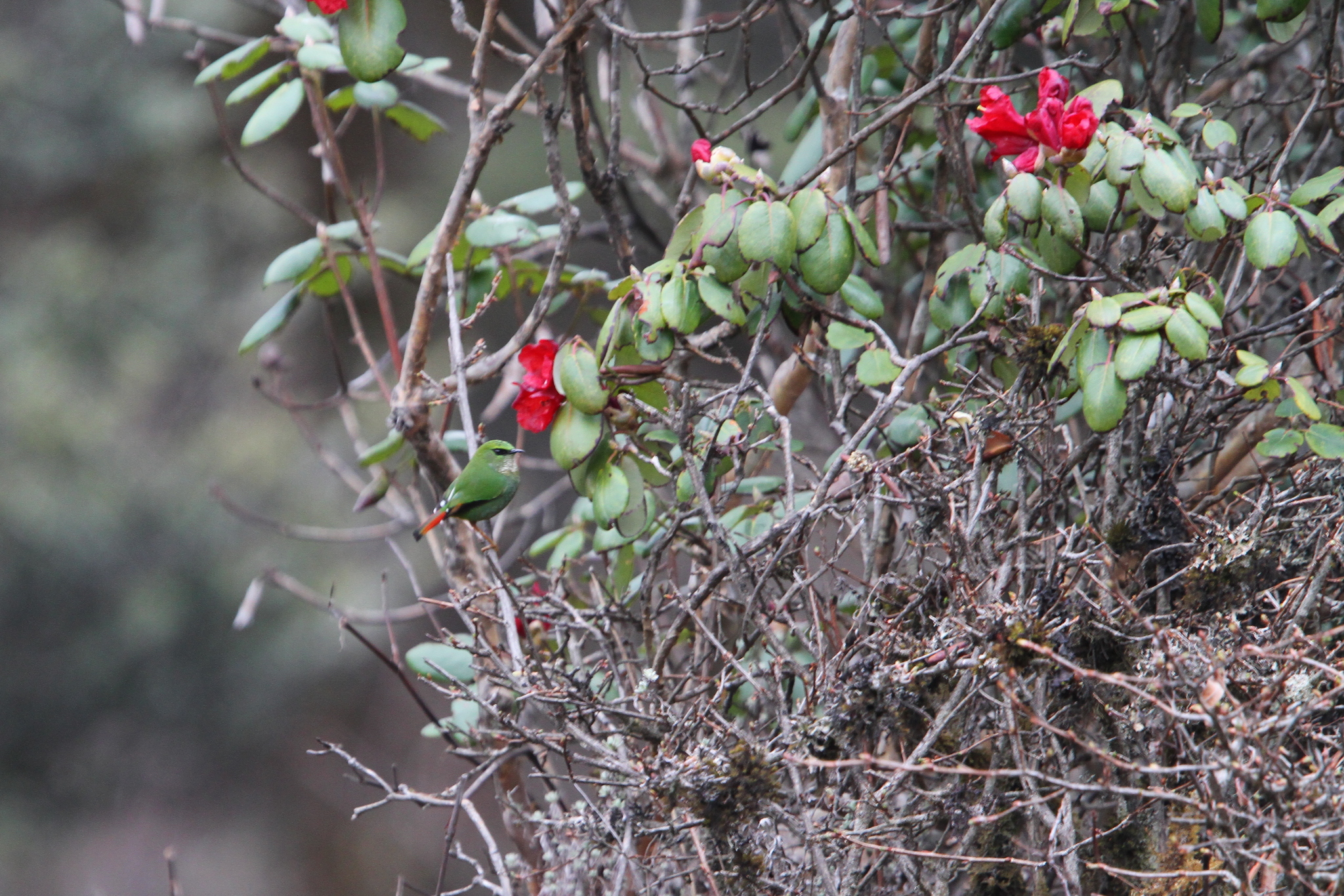
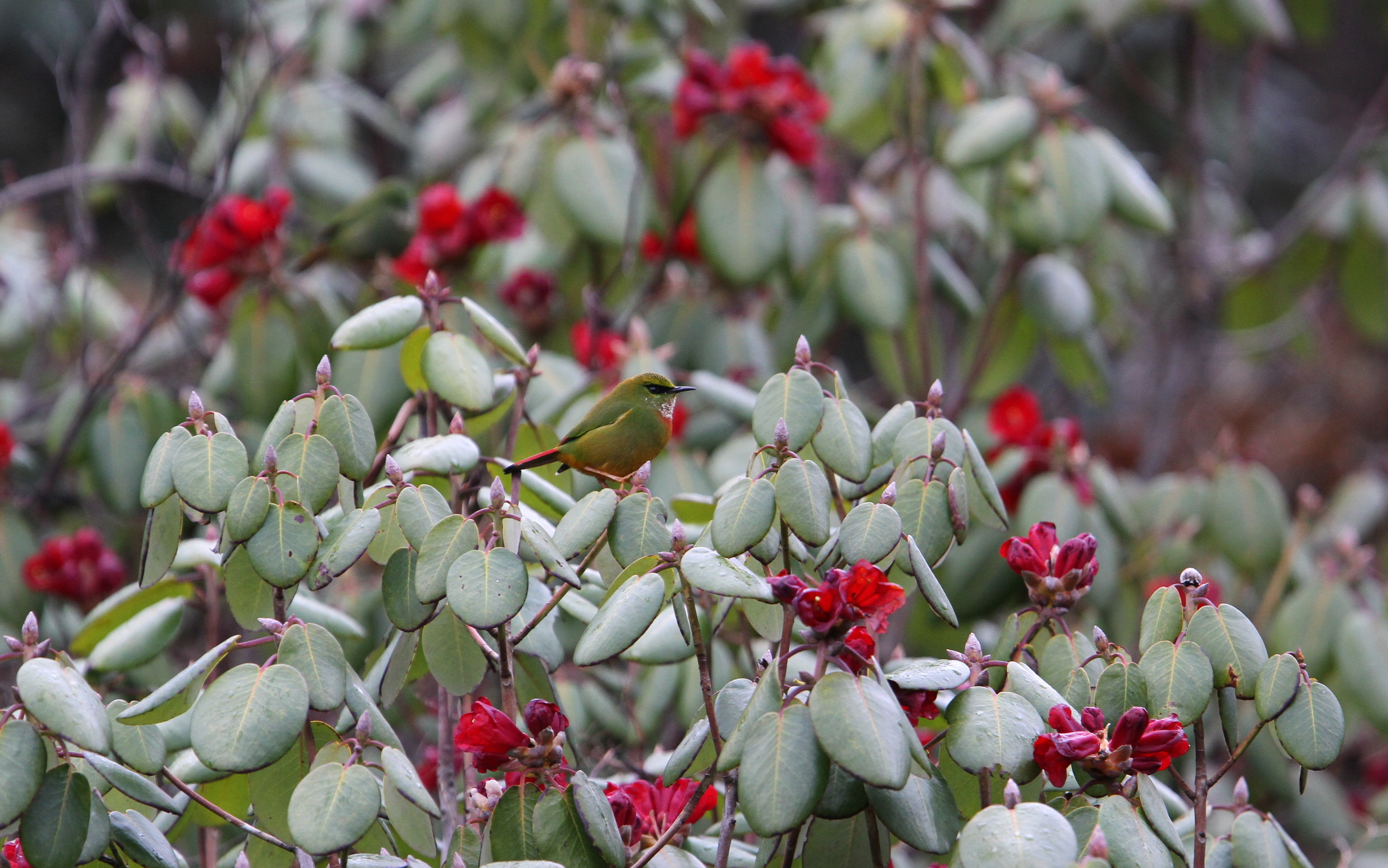
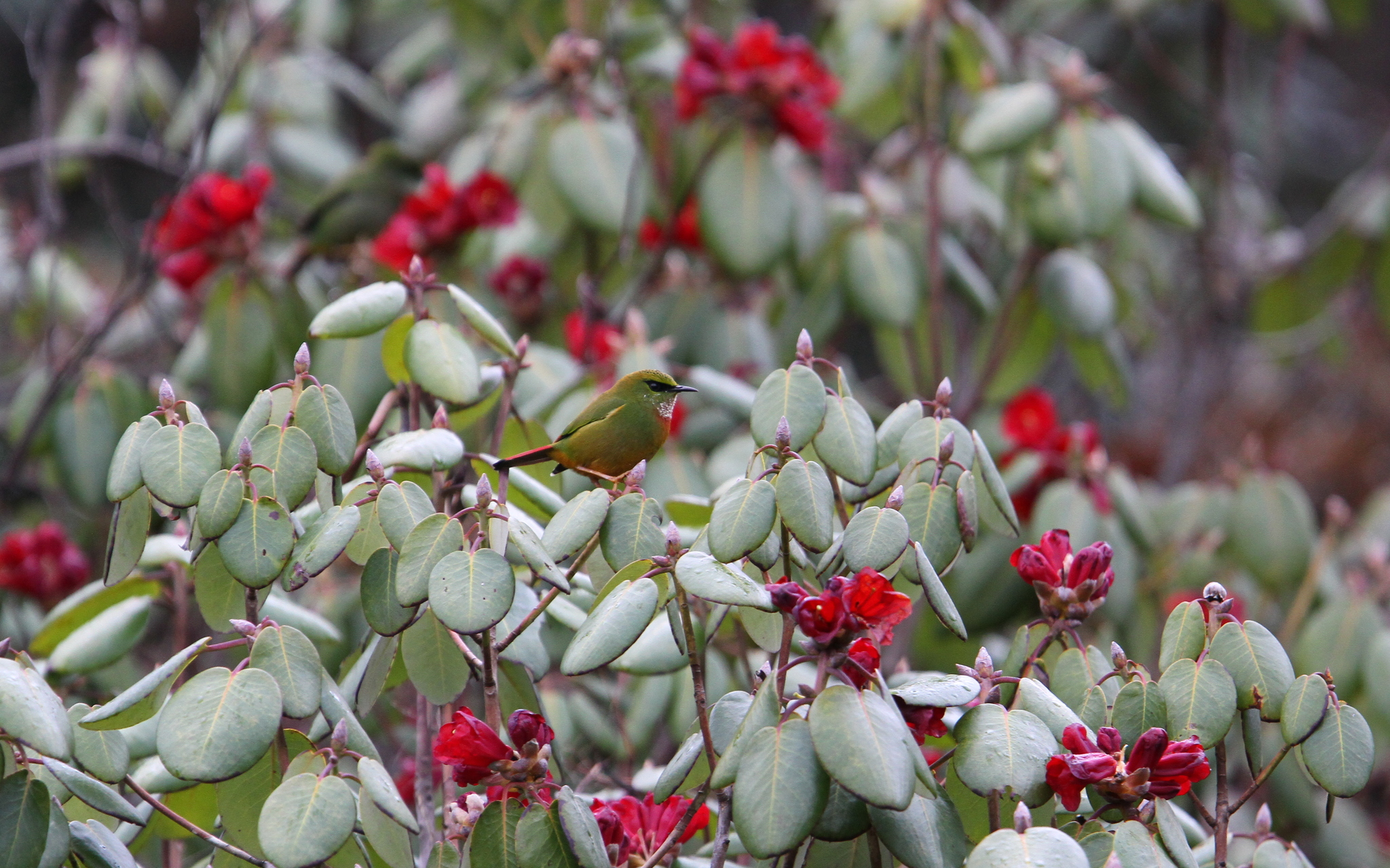
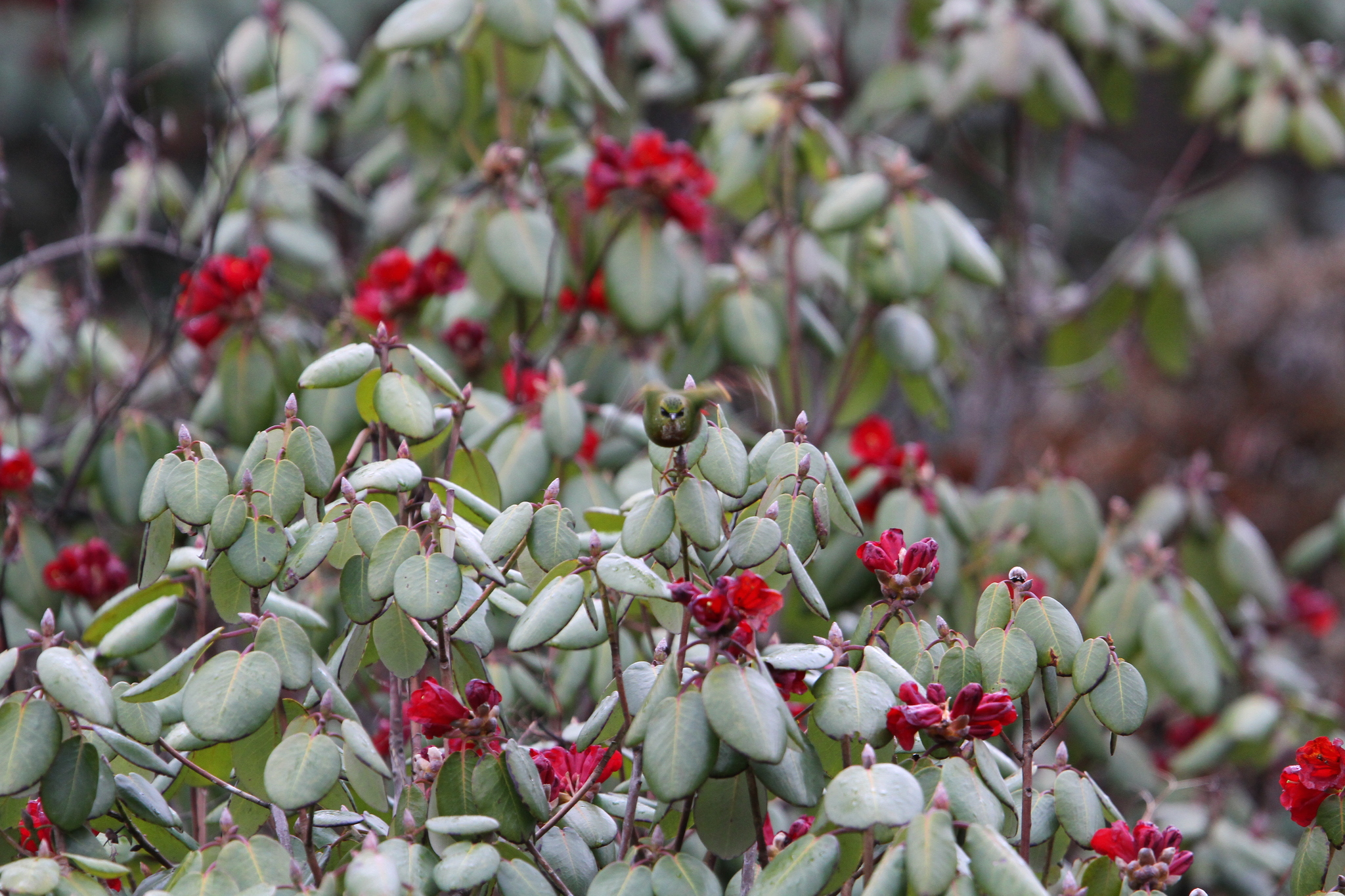
A monotypic species in the family Paradoxornithidae. Found in Bhutan, China, India, Myanmar, and Nepal. Inhabits subtropical or tropical moist montane forests, particularly common in the upper ridges of the Sikkim and Arunachal Himalayas between 9,000 and 13,000 ft elevation. Prefers bamboo thickets, Rhododendron shrubs, birches, and junipers. Exhibits seasonal movement, descending to lower altitudes in autumn. Characterized by bright green plumage with distinctive red streaking on wings and tail sides.
Description
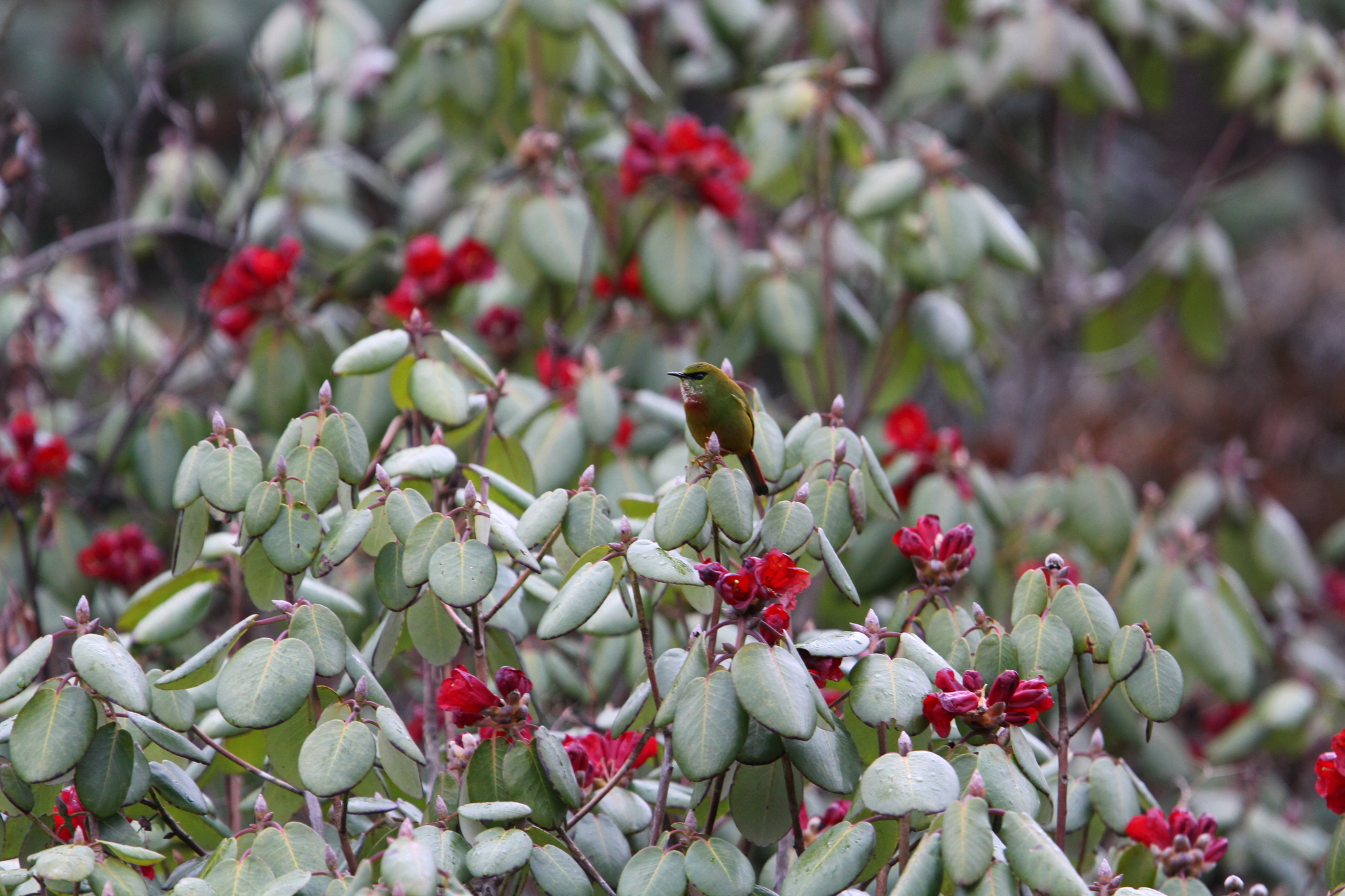
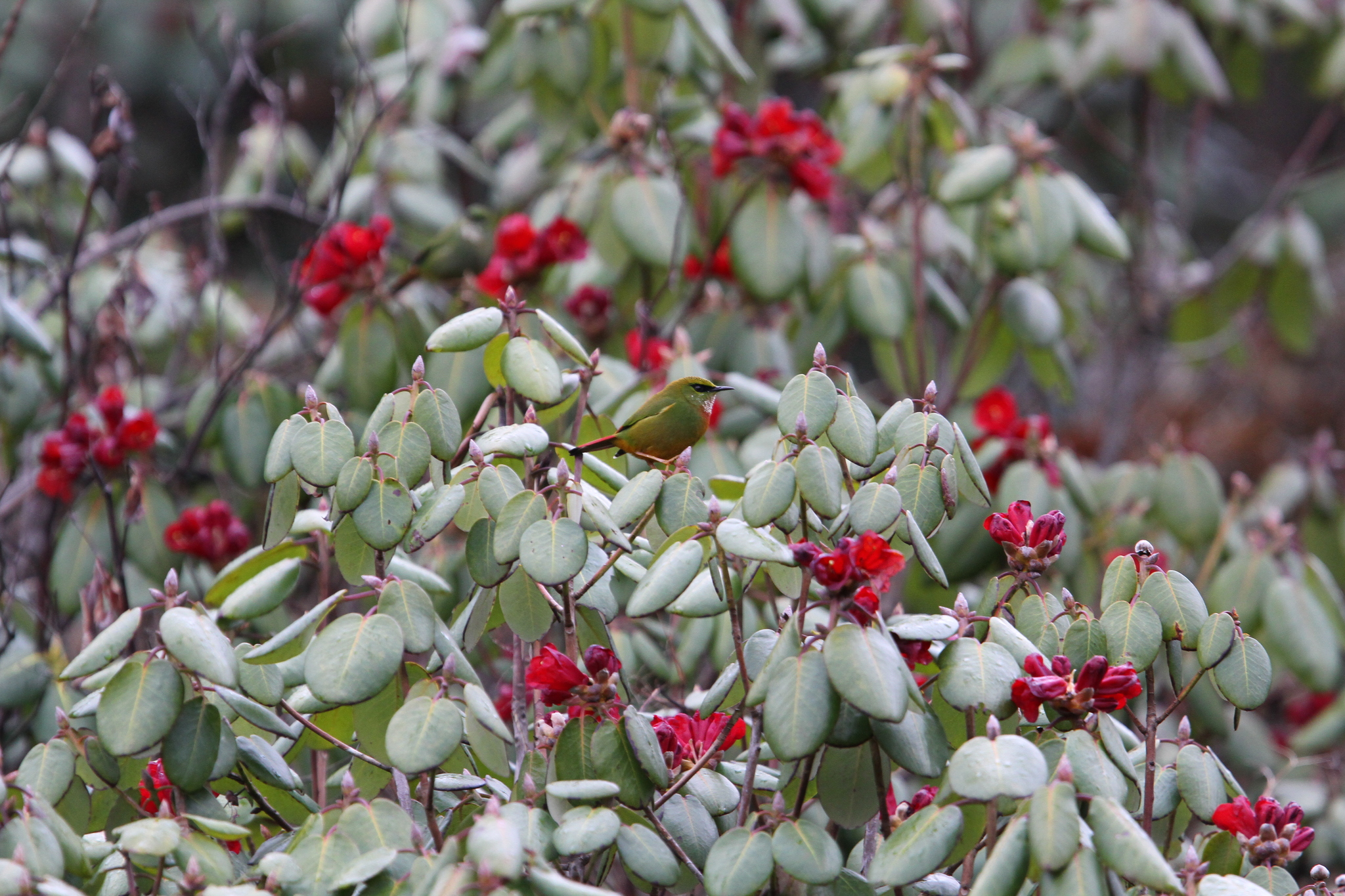
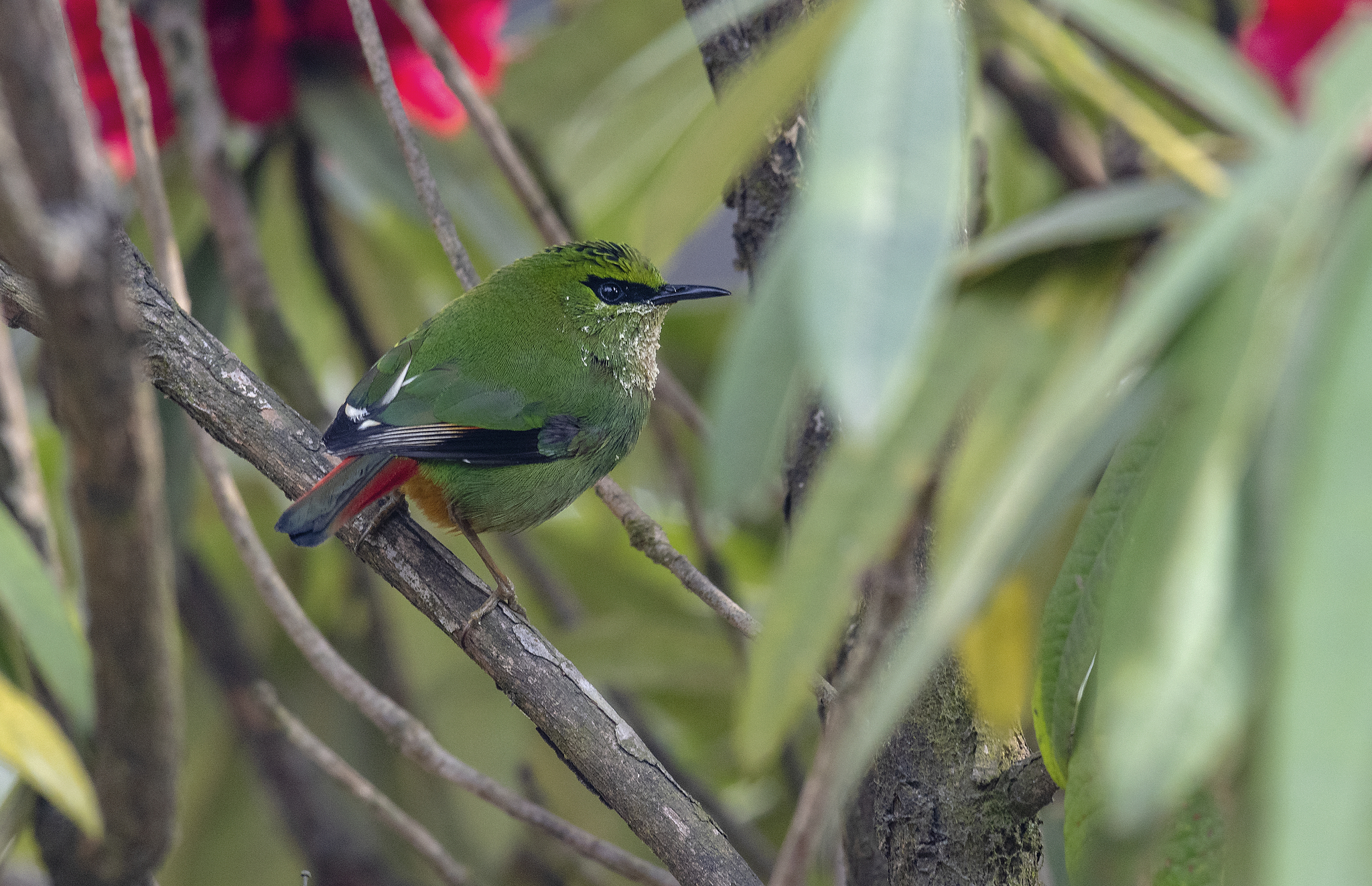
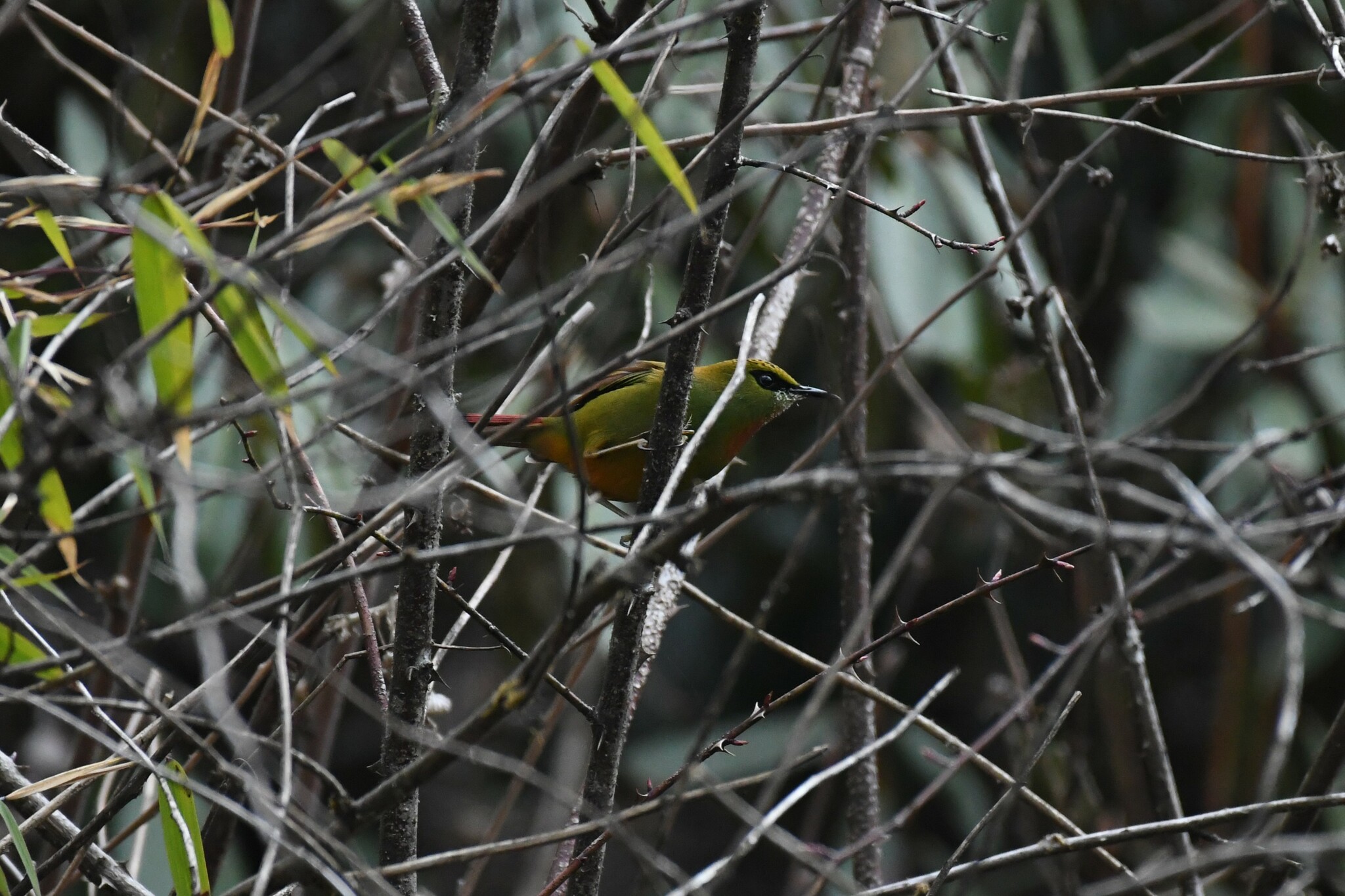
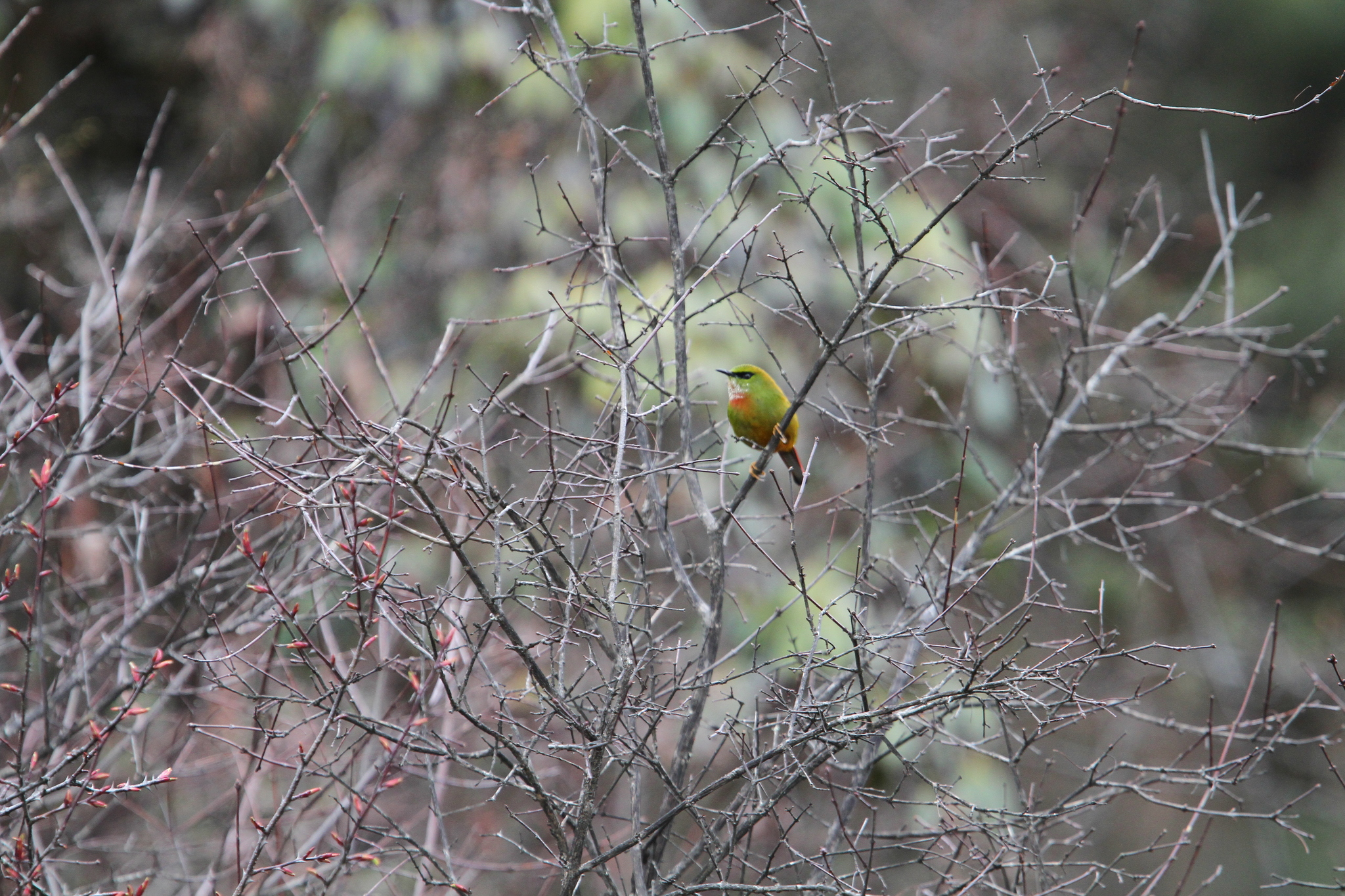
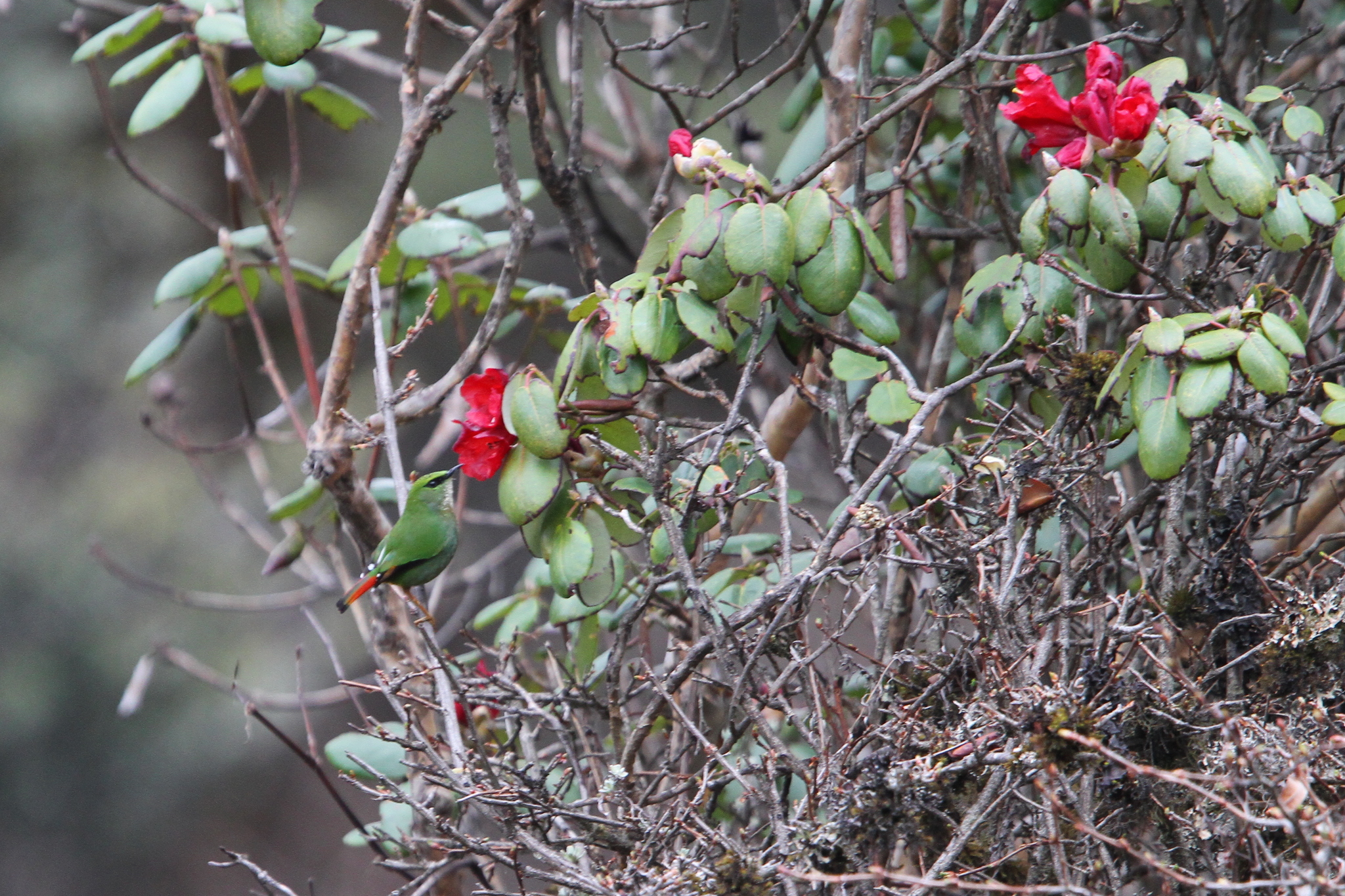
A small warbler measuring 11-13 cm in length and weighing 10-13 g. The plumage is bright green overall, with a black mask surrounding the eyes and black scalloping on the crown. The wings are black and white with a conspicuous bright red streak. The tail has red coloration on the sides. The bill is long, slightly curved, and black.
Distribution & Habitat
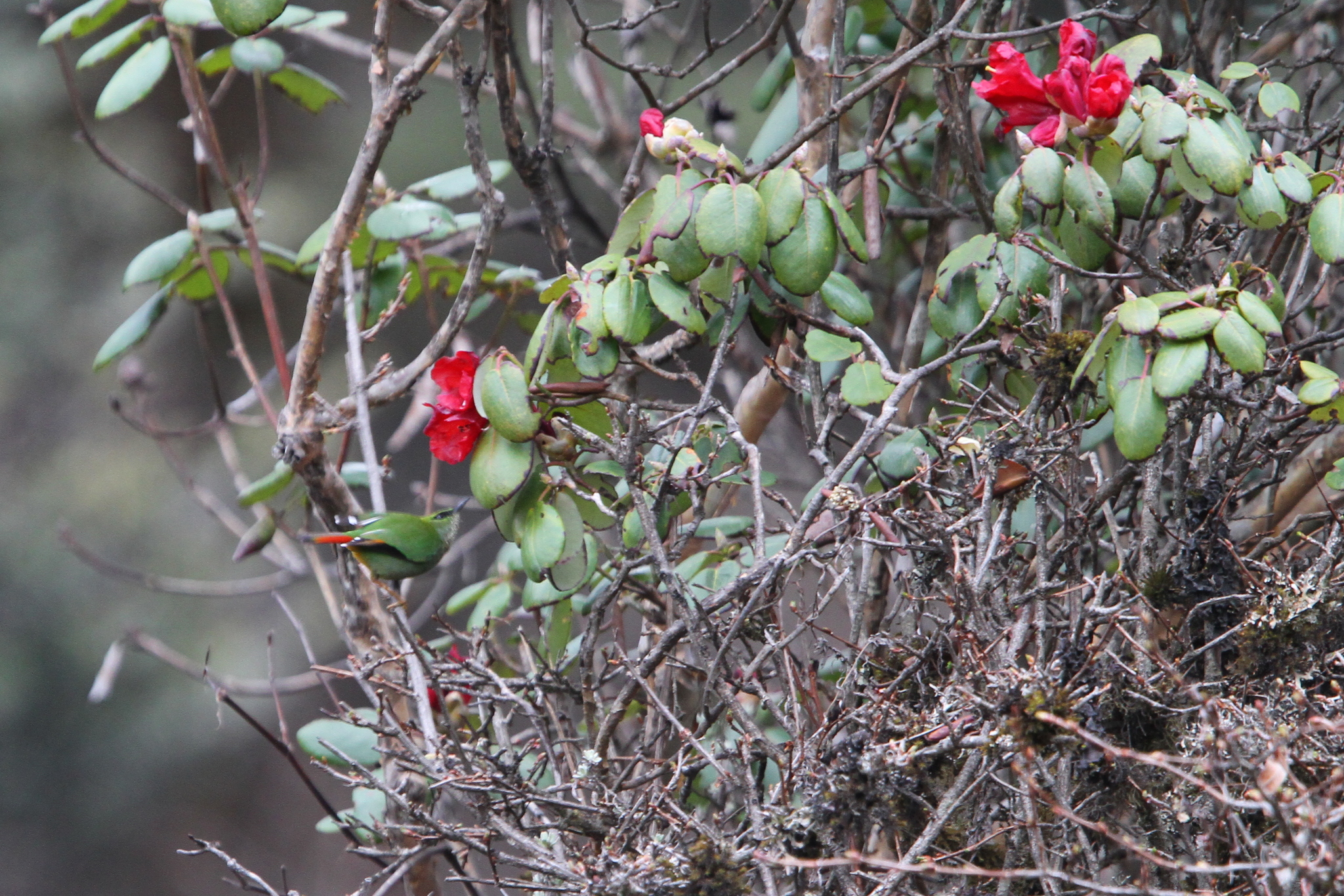
Occurs in Bhutan, China, India, Myanmar, and Nepal. Inhabits subtropical or tropical moist montane forests. Common in the upper ridges of the Sikkim and Arunachal Himalayas, typically between 9,000 and 13,000 feet elevation depending on climate and season. Found in bamboo thickets, Rhododendron shrubs, birches, and junipers. Makes seasonal movements to lower altitudes during autumn.
Behavior & Ecology
Feeds on insects, spiders, and small arthropods, supplementing the diet with fruit, nectar, and tree sap. Breeding season in India and Nepal occurs from April to June. The breeding season may extend longer in Bhutan, where juveniles have been observed as late as mid-September.
Source: Wikipedia · CC BY-SA 3.0
Taxonomy
- Order
- Passeriformes
- Family
- Paradoxornithidae
- Genus
- Myzornis
- eBird Code
- fitmyz1
Distribution
Nepal to southeastern Tibet, southern China (Yunnan), and northeastern Myanmar
Data Sources
Species description from Wikipedia, licensed under CC BY-SA 3.0.
Bird images and sounds sourced from GBIF, contributed by citizen scientists worldwide under Creative Commons licenses.
Taxonomy data from AviList 2025.