Painted Stork
Mycteria leucocephala
彩鹳
Introduction
A large wader in the stork family (Ciconiidae). Found in wetlands across tropical Asia south of the Himalayan ranges, from the Indian subcontinent east through Southeast Asia. Bounded west by the Indus River system where rare, extending eastward through Bangladesh, Myanmar, Thailand, Cambodia, Vietnam, and Malaysia. Absent from desert regions, dense forests, and high hills. Prefers freshwater wetlands but also uses irrigation canals and flooded rice fields. Distinguished by pink-tipped tertial feathers and unique tactile feeding behavior where half-open beaks are swept side-to-side in shallow water to detect prey by touch. Non-migratory but makes short-distance movements in response to weather, food availability, or breeding requirements.
Description
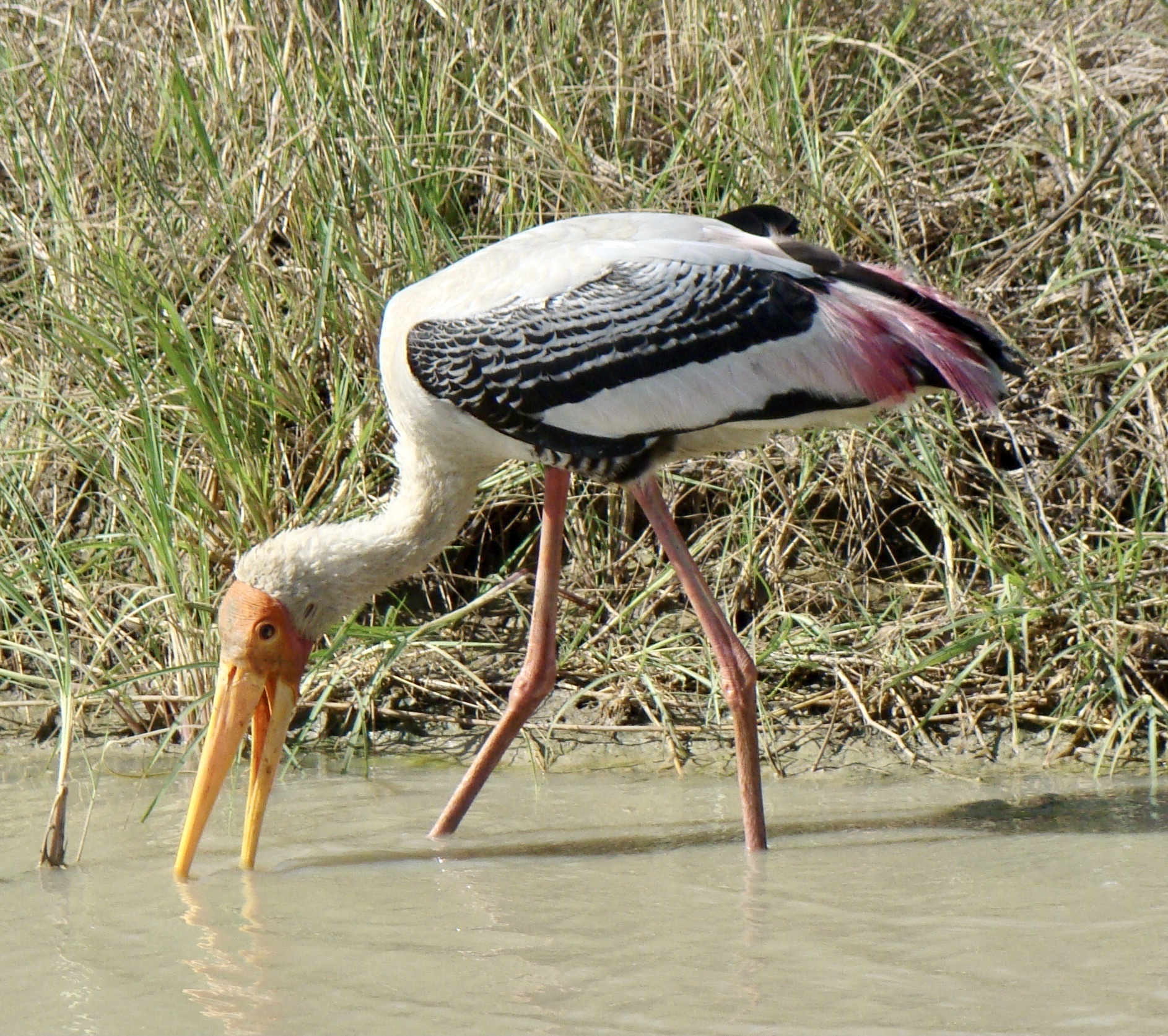
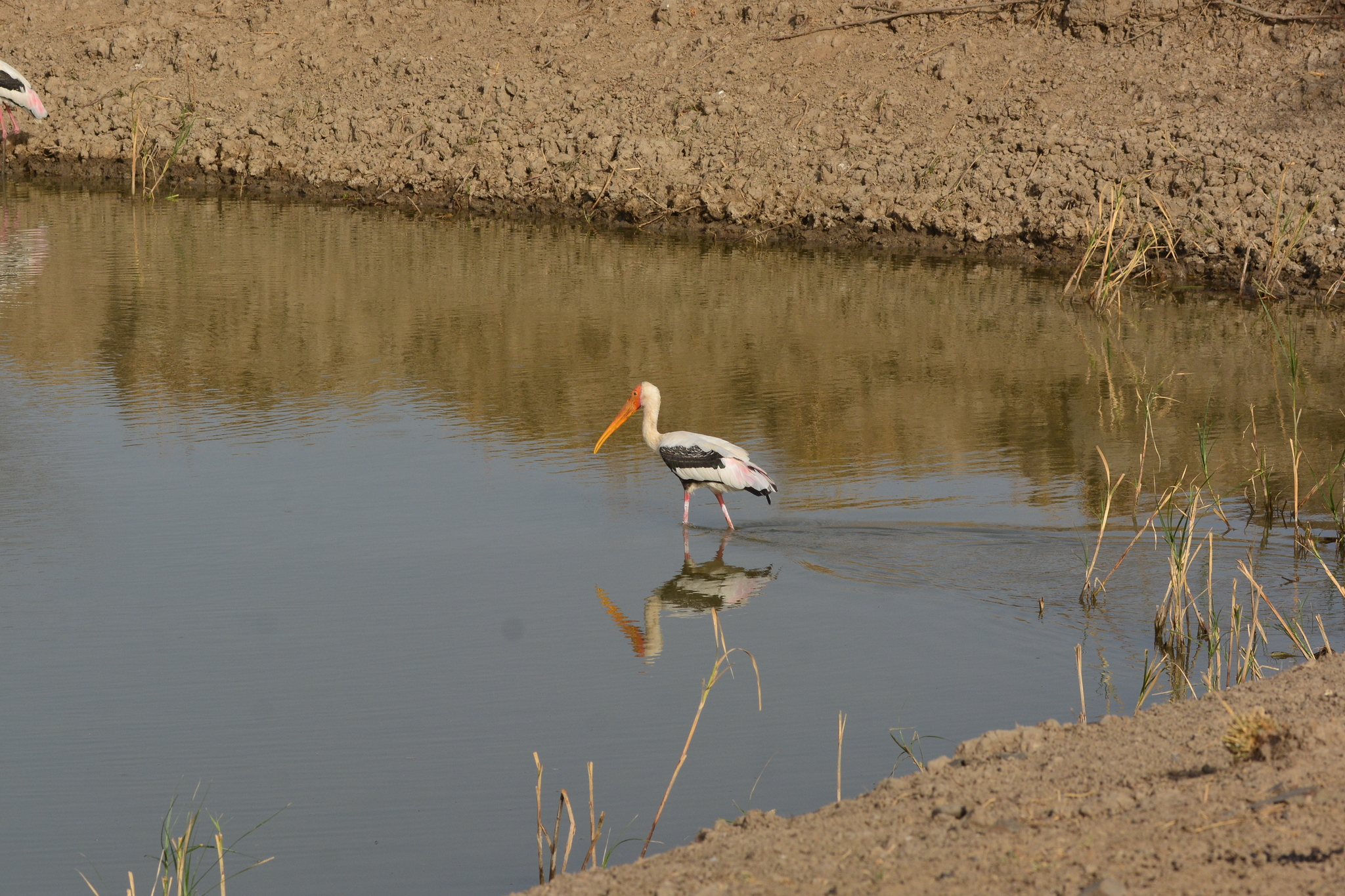
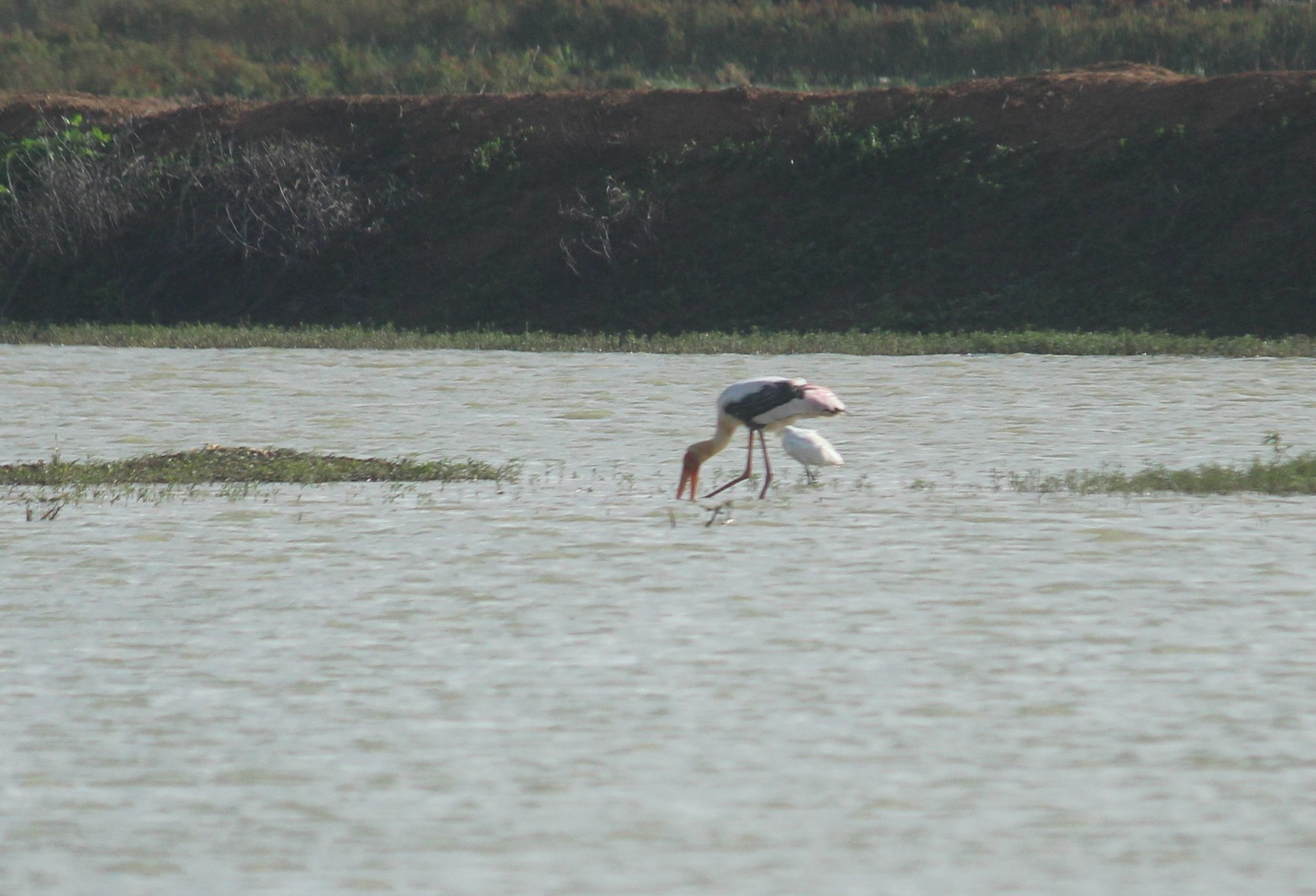
Feeds mainly on small fish detected by touch while slowly sweeping half-open bills side-to-side in submerged water. Also takes frogs, snakes, crabs, and large insects. Walks slowly while foraging, disturbing water with feet to flush hiding prey. Maximum foraging success at 7 cm water depth. Forages mainly during the day but may feed at night under exceptional conditions. Flock sizes typically under 5 birds in agricultural landscapes but can exceed 50. Breeds colonially on large trees, often in mixed colonies with other waterbirds. Breeding season varies by region: mid-August onward in northern India, October-February in southern India, and February-March in Bengaluru. Clutch size 1-5 eggs, with larger clutches in early breeders. Incubation period about one month; fledging period nearly two months. Produces weak moans and bill clattering at nest. Lives up to 28 years in captivity.
Identification
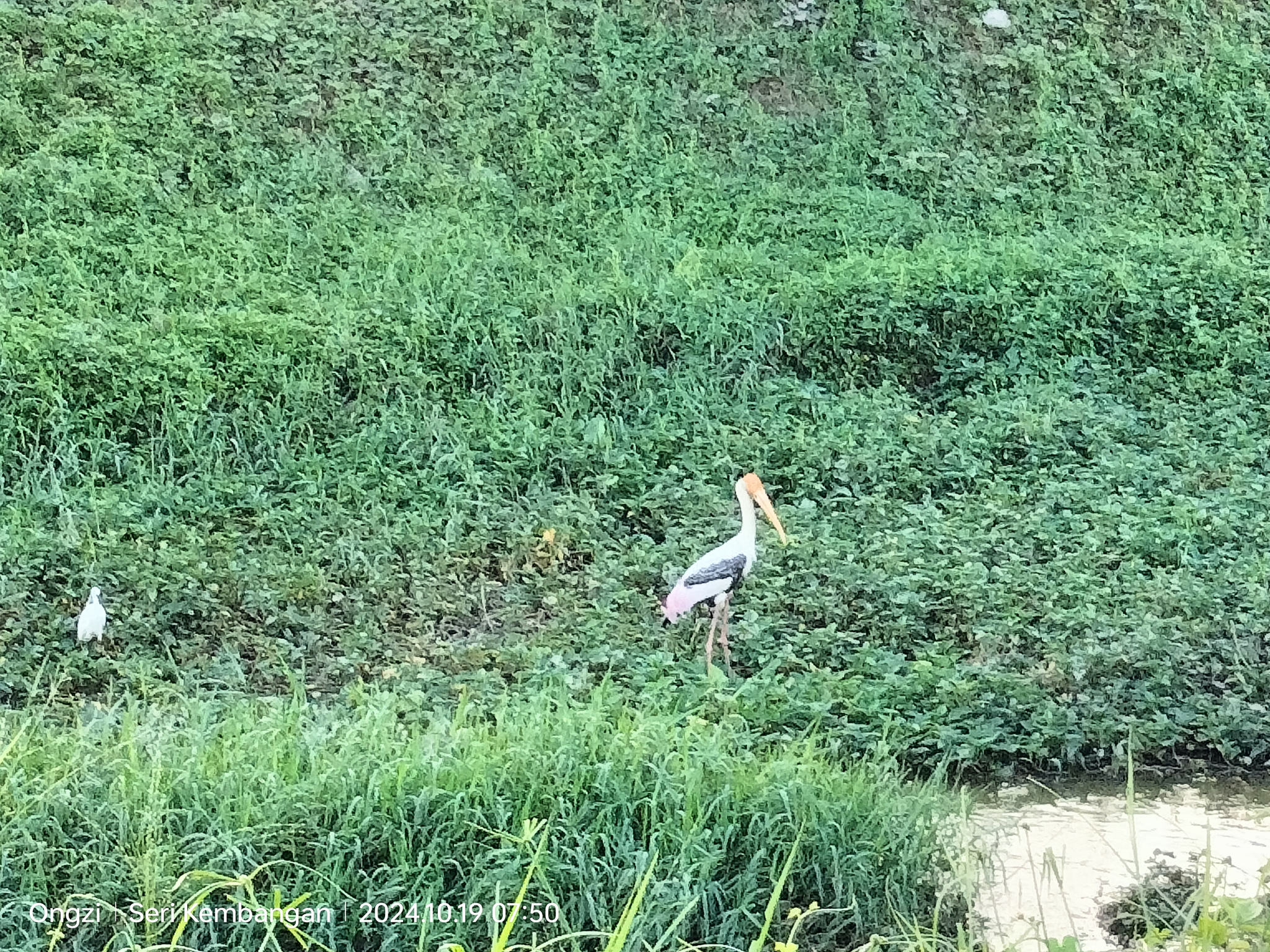
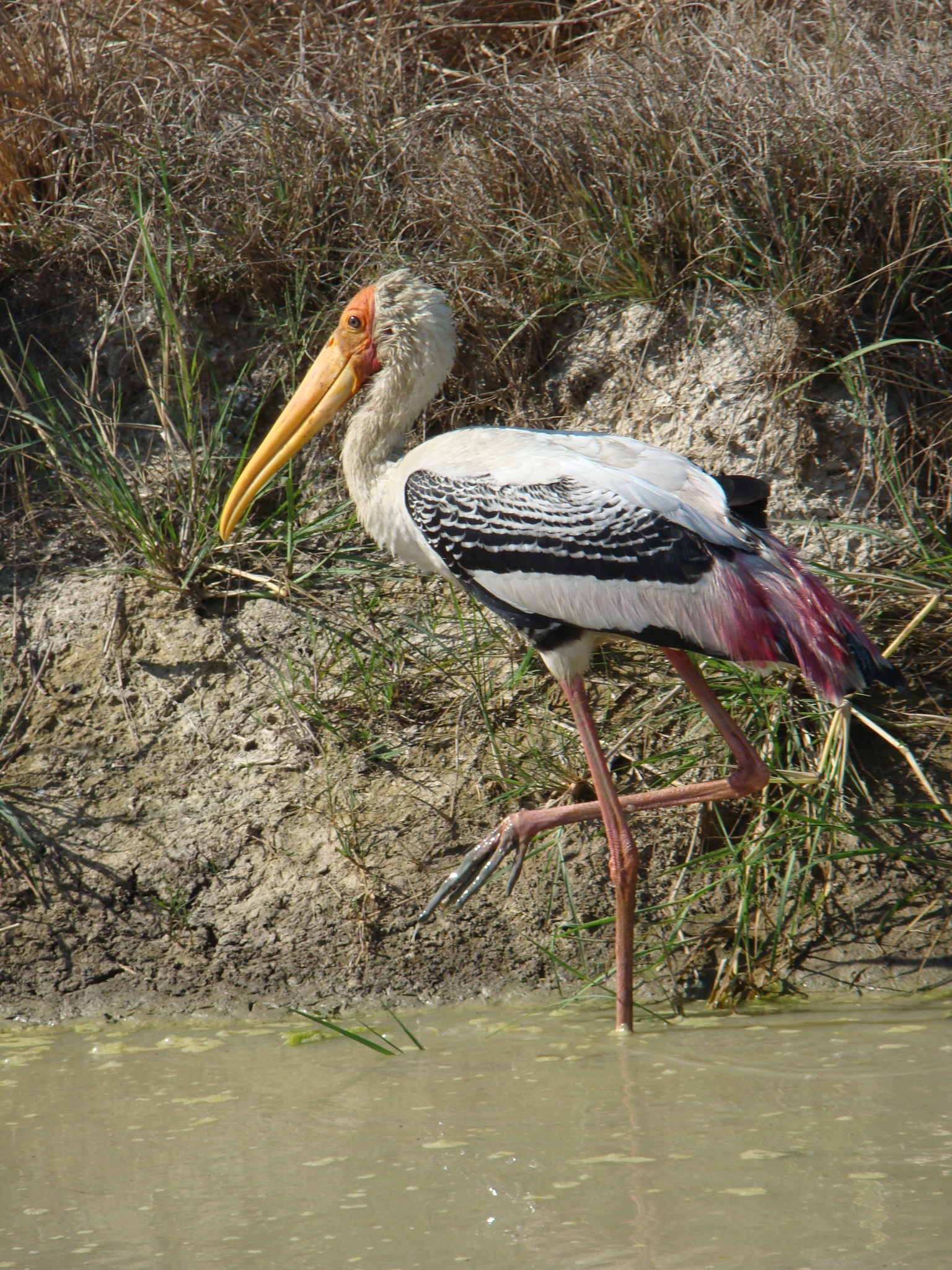
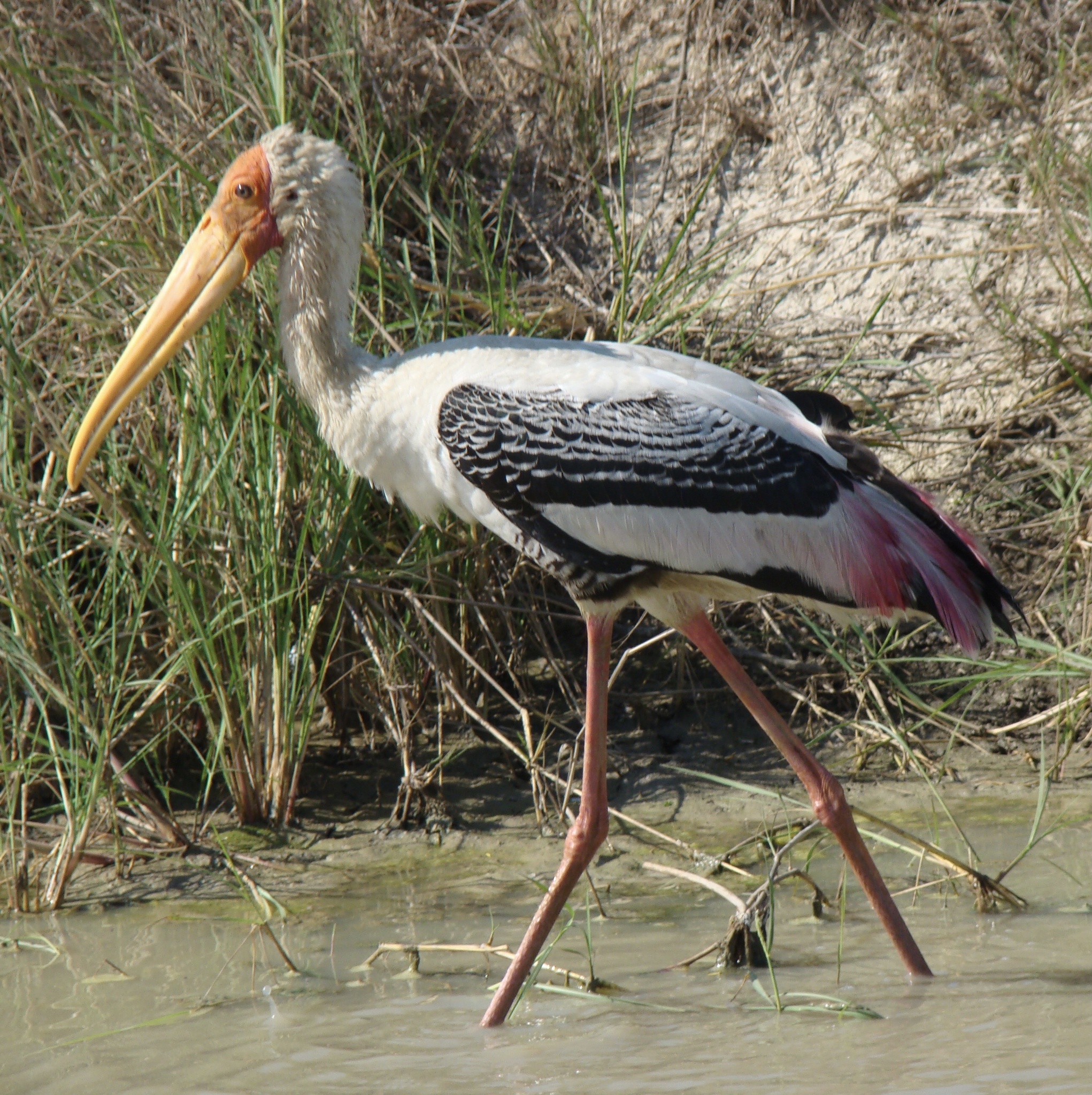
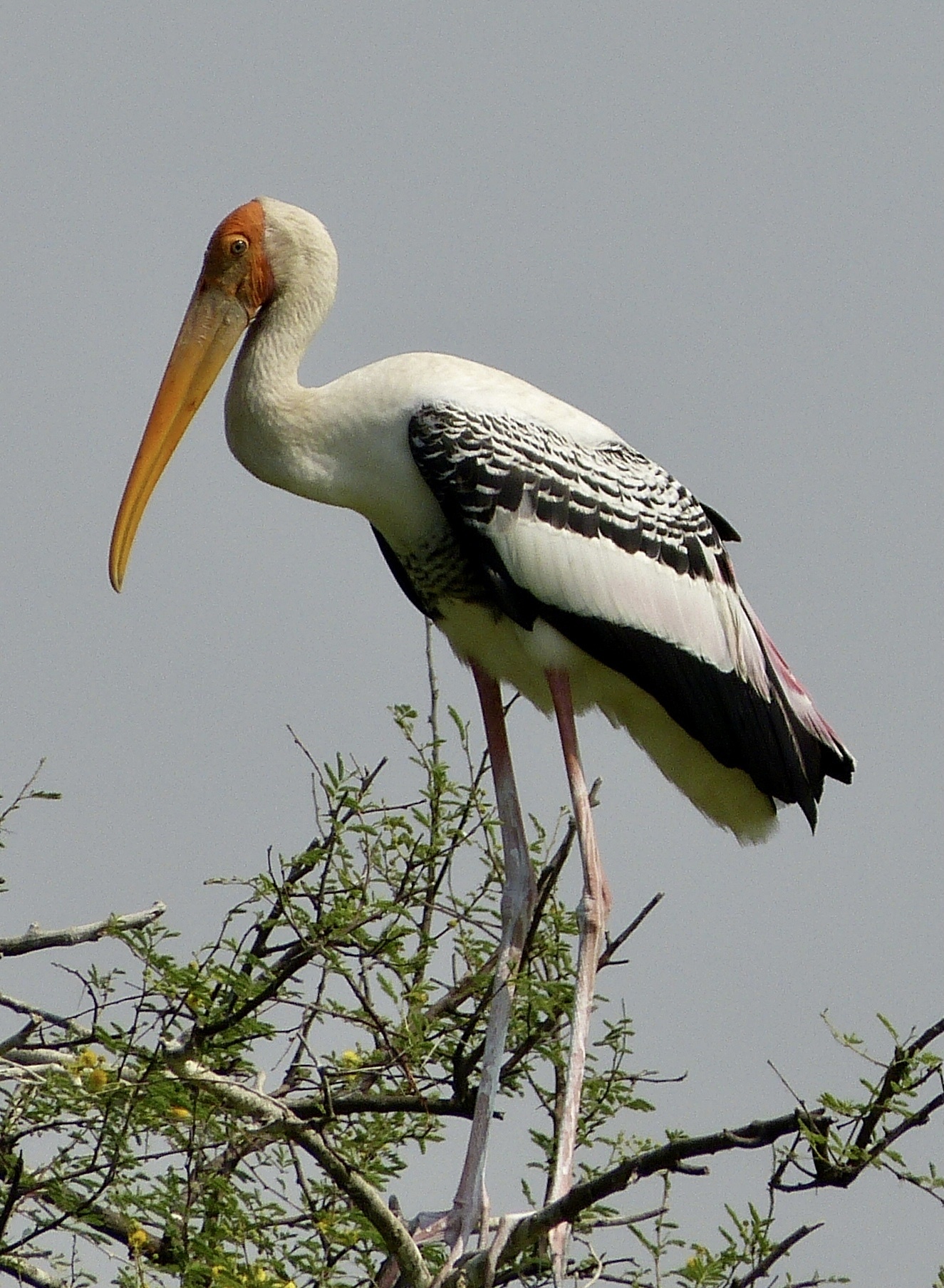
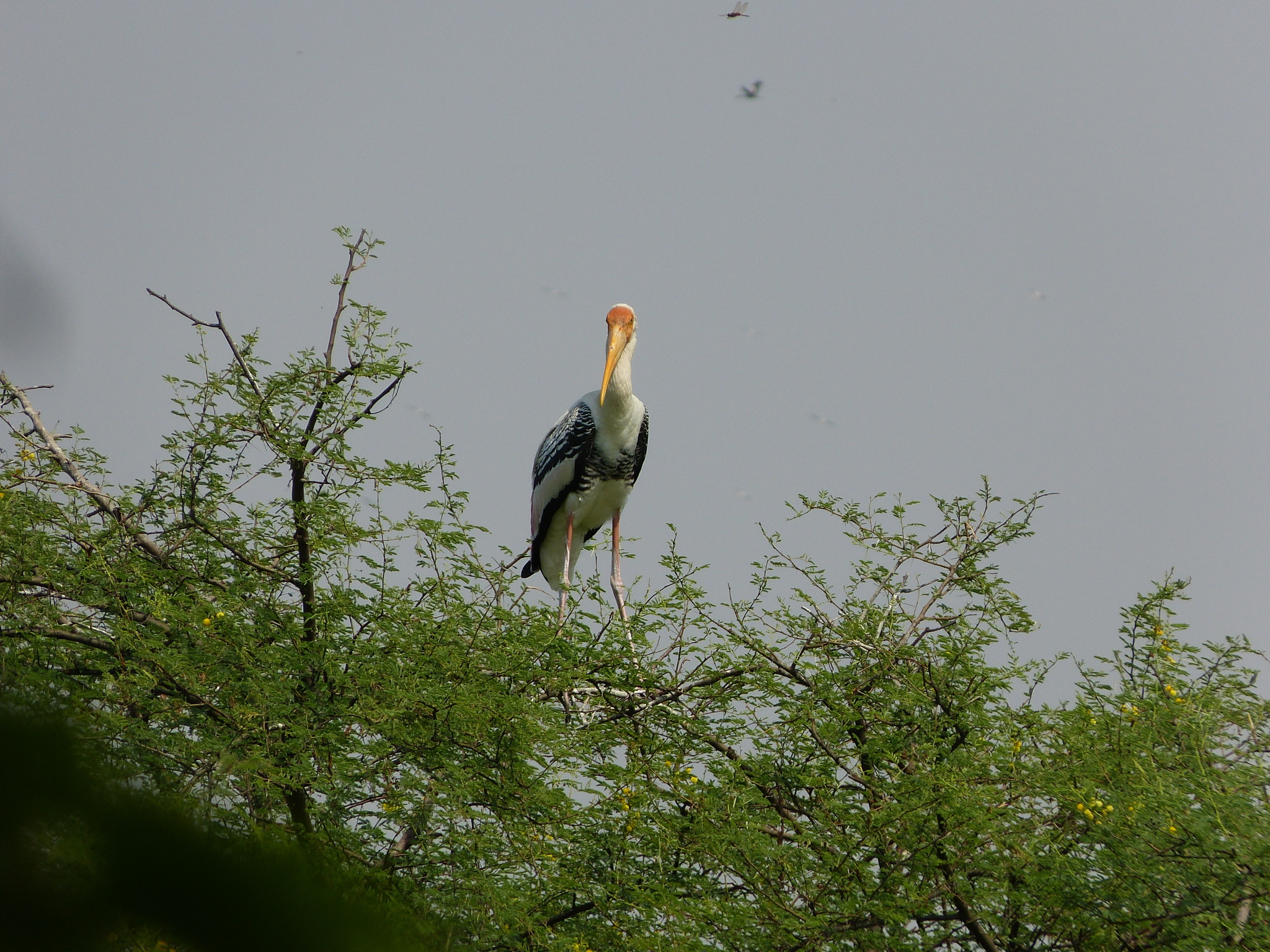
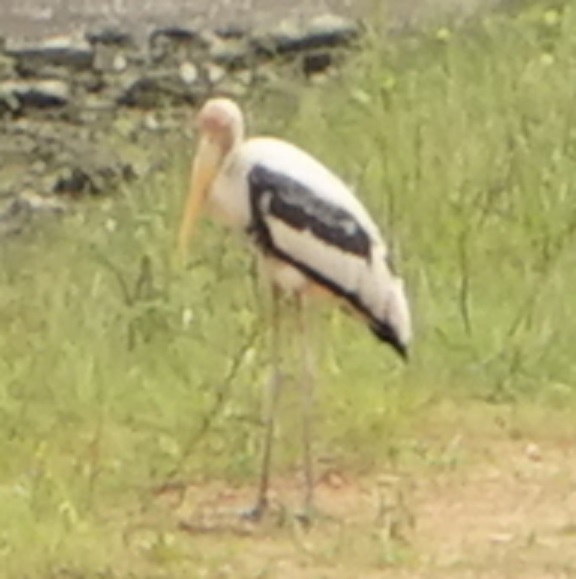
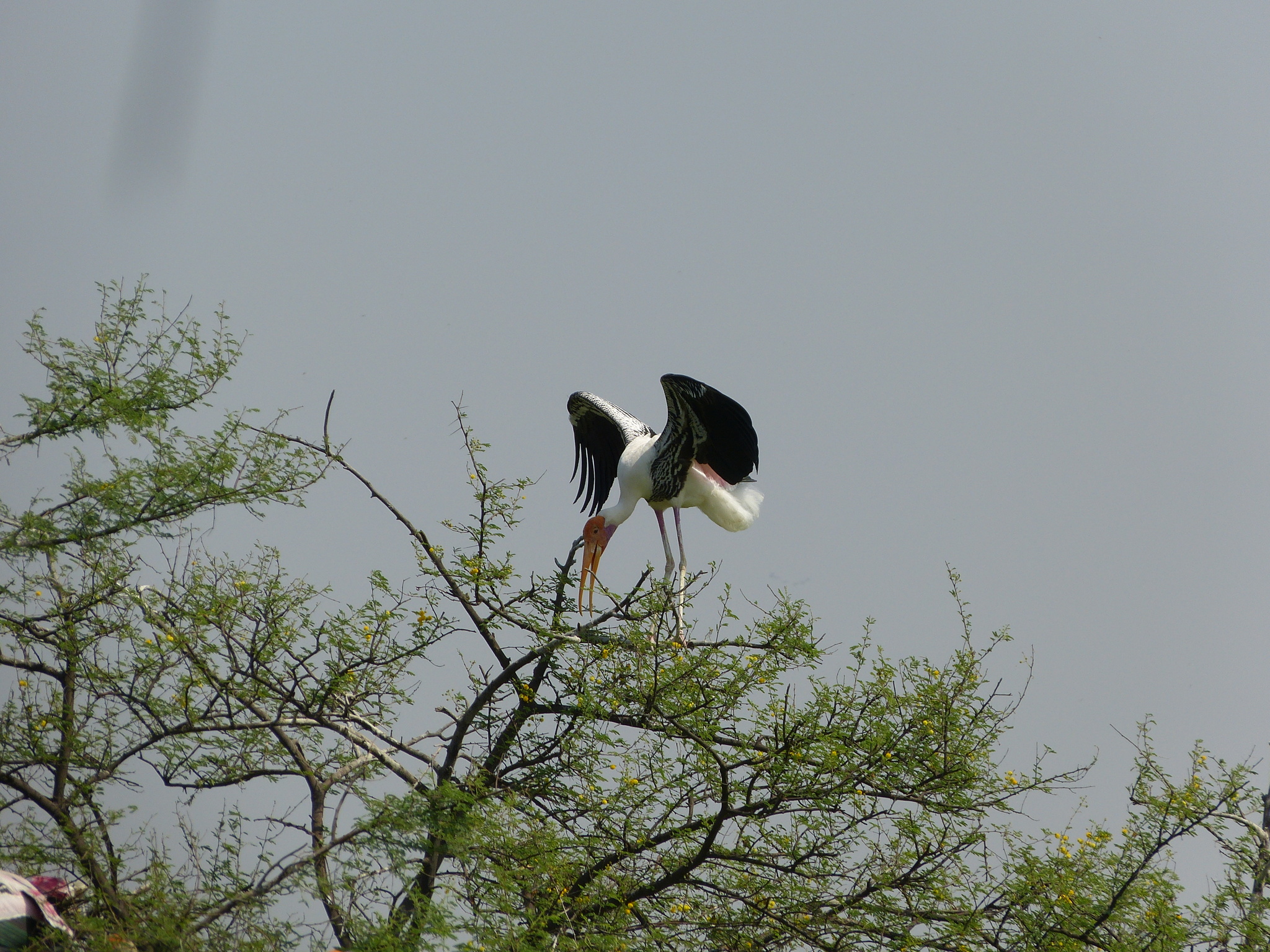
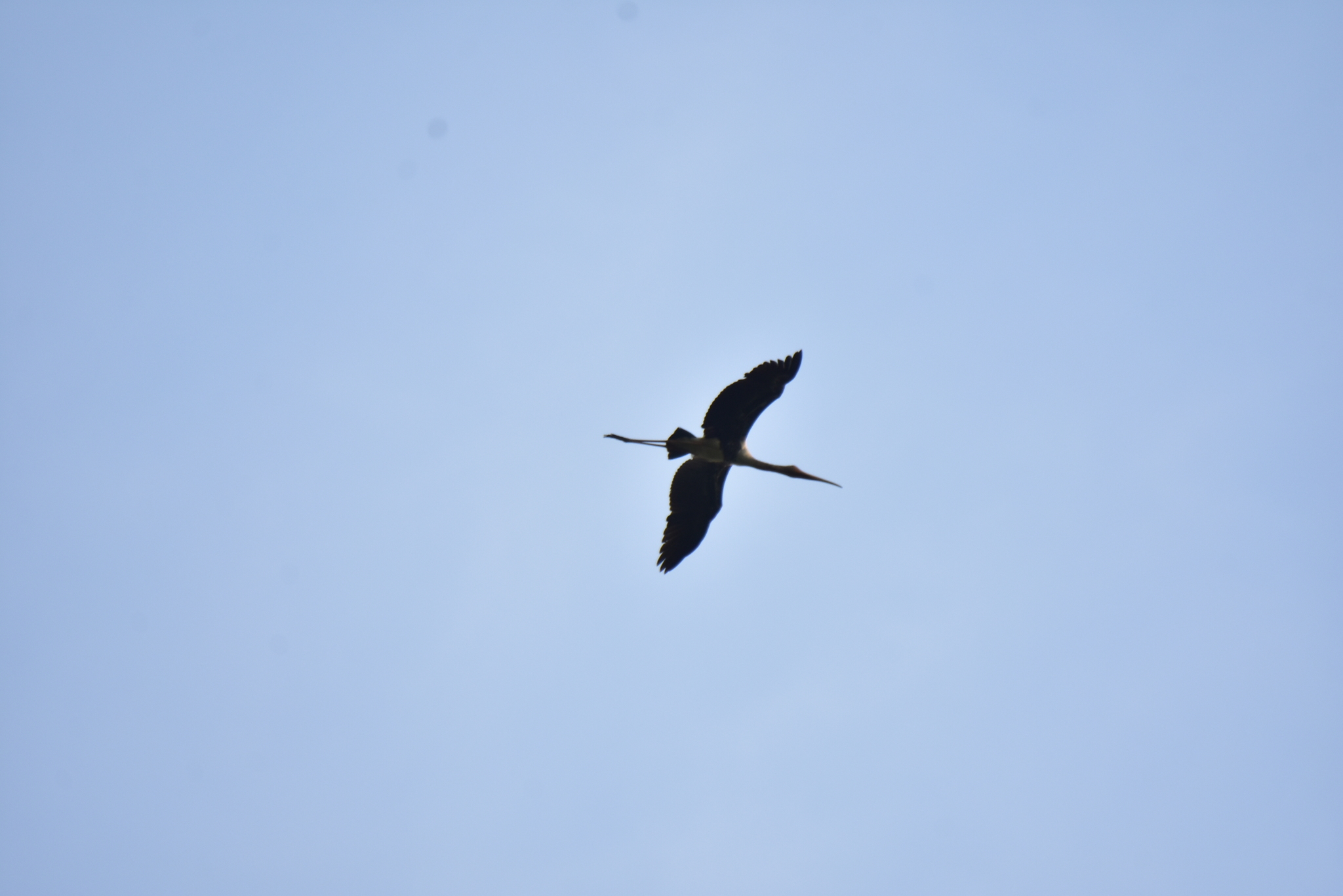
Yellow beak with pronounced downward curve distinguishes this species from other storks. The pink-tipped tertials are visible when the bird is at rest. The black breast band with white scaly markings is diagnostic. White-striped appearance on under-wing linings visible in flight. Often appears with white legs due to urohidrosis behavior. In flight, the outstretched neck and black-and-white wing pattern distinguish it from herons and egrets. The wood-stork (Mycteria americana) is a similar species but occurs only in the Americas.
Distribution & Habitat
Widely distributed over the plains of Asia south of the Himalayan ranges. Western limit is the Indus River system where the species is rare; extends eastward through the Indian subcontinent, Bangladesh, Myanmar, Thailand, Cambodia, Vietnam, and into Malaysia. Population in Sri Lanka and expansion into Kerala occurred only in the 1990s. Absent from very dry or desert regions, dense forests, and higher hill regions. Prefers freshwater wetlands in all seasons but uses irrigation canals and flooded rice fields during monsoons. Resident in most regions with seasonal movements. Young birds disperse widely; one juvenile ringed at Keoladeo National Park was recovered 800 km away at Chilka in eastern India.
Conservation
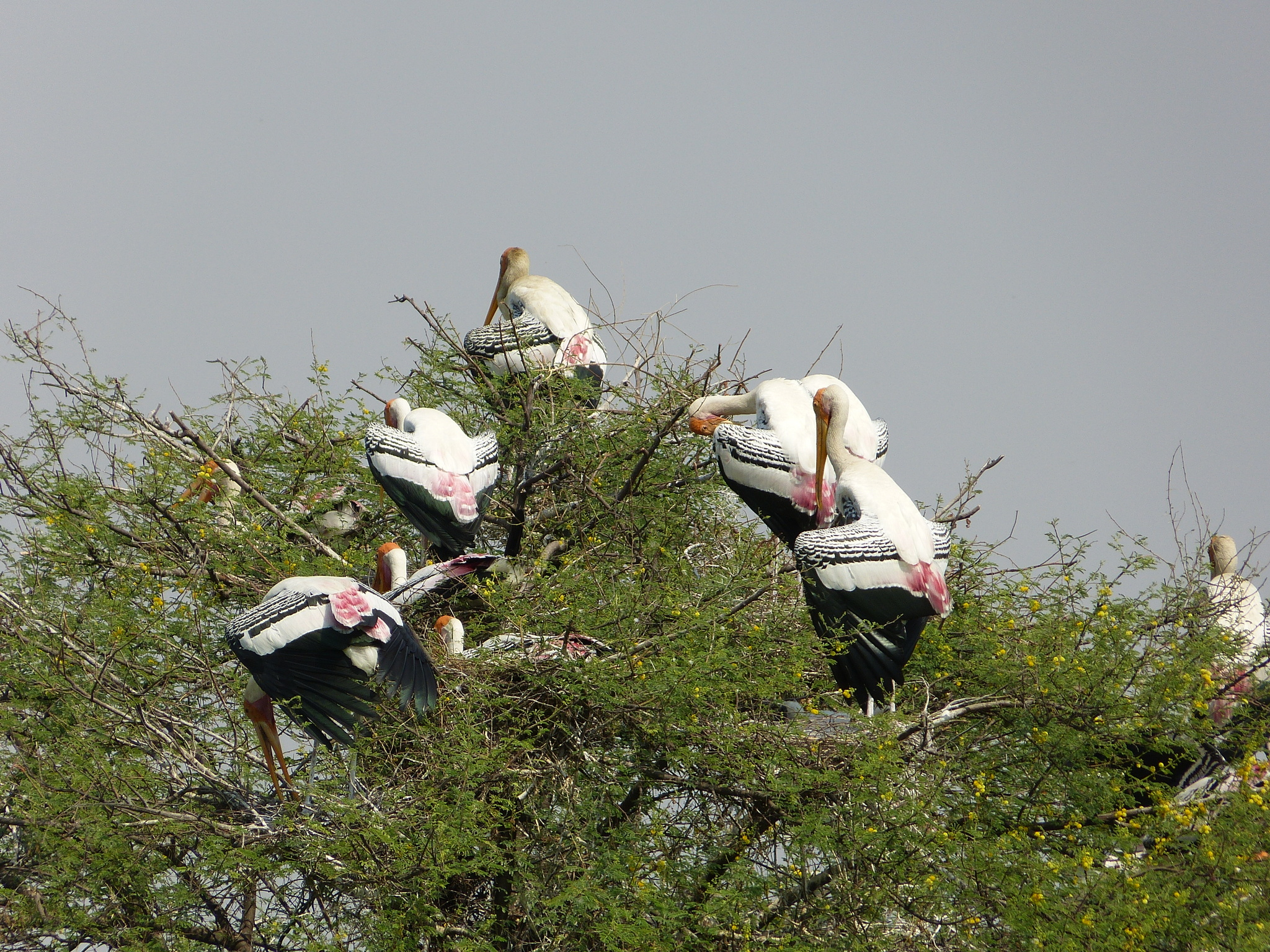
Largest secure population is in India, with approximately 2,500 nests in Keoladeo-Ghana National Park. Populations in Pakistan along the Indus River system are endangered, with chicks taken for the bird trade. Near-decimated in Thailand; small populations persist in Cambodia and Vietnam. Painted storks from Sri Lanka were captive-bred and released in Malaysia, where the population grows 10-13% annually. Colonies at Kokrebellur and Delhi Zoological Park provide protection, with 300-600 birds at the Delhi zoo. Concerns exist regarding hybridization with milky storks in zoos and the wild (recorded in Cambodia and several Southeast Asian zoos), and with lesser adjutant storks (recorded at Colombo Zoo). Nesting colonies attract ecotourism, providing local conservation incentives.
Culture
Colonies in villages like Kokrebellur and Veerapura in south India have become tourist attractions due to their large size and colorful plumage. At Kokrebellur, birds nest within village trees alongside spot-billed pelicans, with local communities providing security during the brief October-December nesting season. The Delhi Zoological Park colony has been studied since the 1960s and includes 300-600 wild birds using artificial islands within the zoo. Historically called the 'Pelican Ibis' by T.C. Jerdon due to its ibis-like beak. In Greek mythology, related genera were named after Tantalus, who was punished to stand in a pool of water.
Source: Wikipedia · CC BY-SA 3.0
Taxonomy
- Order
- Ciconiiformes
- Family
- Ciconiidae
- Genus
- Mycteria
- eBird Code
- paisto1
Distribution
lowlands of Indian subcontinent to southern China and southeastern Asia
Data Sources
CBR Notes: IUCN红色名录等级由NT降为LC
Species description from Wikipedia, licensed under CC BY-SA 3.0.
Bird images and sounds sourced from GBIF, contributed by citizen scientists worldwide under Creative Commons licenses.
Taxonomy data from AviList 2025.