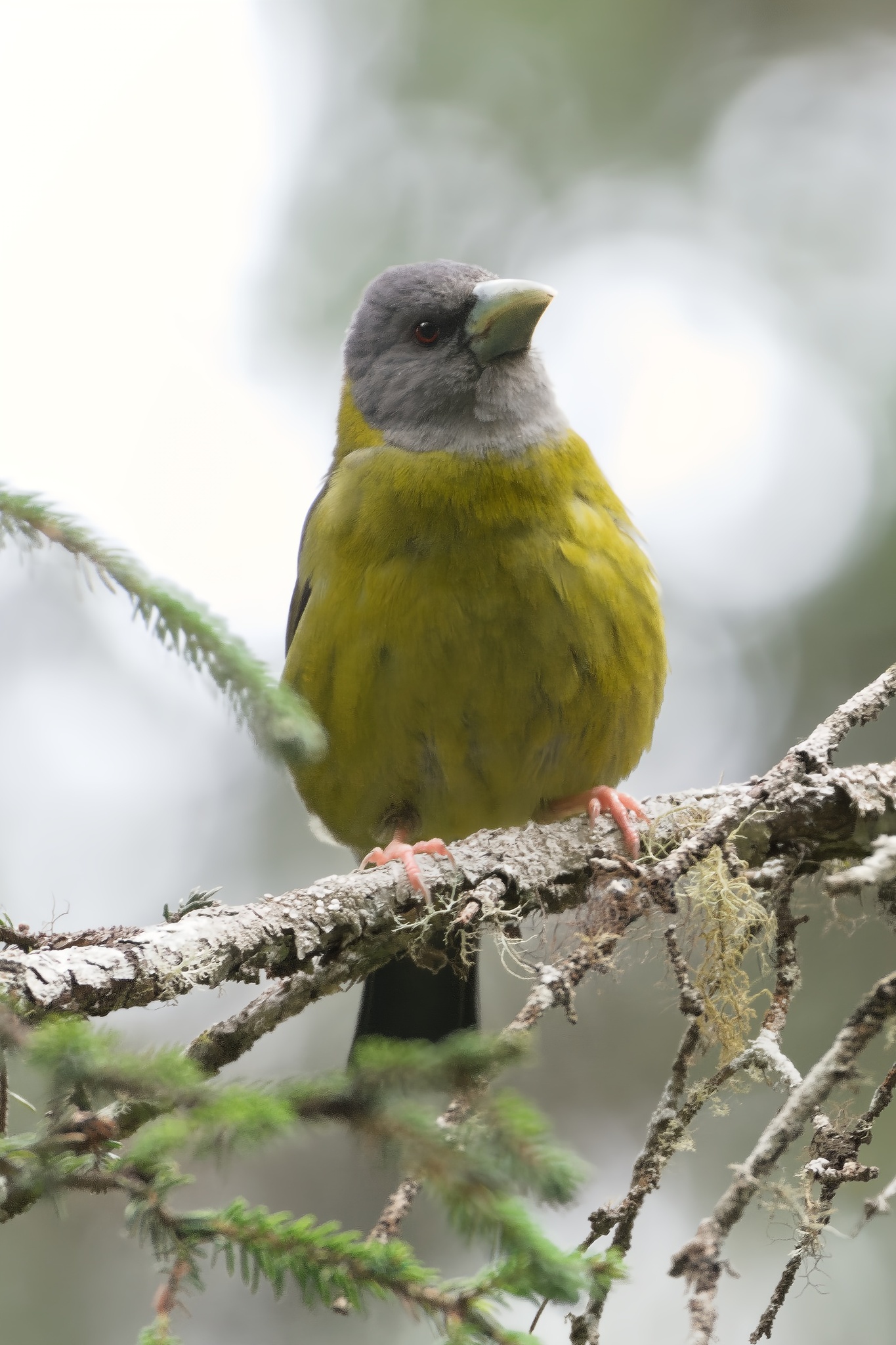
Collared Grosbeak
Mycerobas affinis
黄颈拟蜡嘴雀
Introduction
A large finch species in the Fringillidae family. Inhabits mountainous deciduous and mixed forests across the northern Indian subcontinent, including Bhutan, India, Myanmar, Nepal, and Thailand. Notable for altitudinal migration, moving from summer breeding elevations of 2,700-4,200m to wintering areas as low as 1,060-1,800m. Occurs in mixed and coniferous forest stands including maple, oak, and rhododendron, and in summer may be found in dwarf juniper above the tree line. Considered fairly common to scarce within its range. The species exhibits distinctive flight calls and maintains large body size relative to most finches.
Description
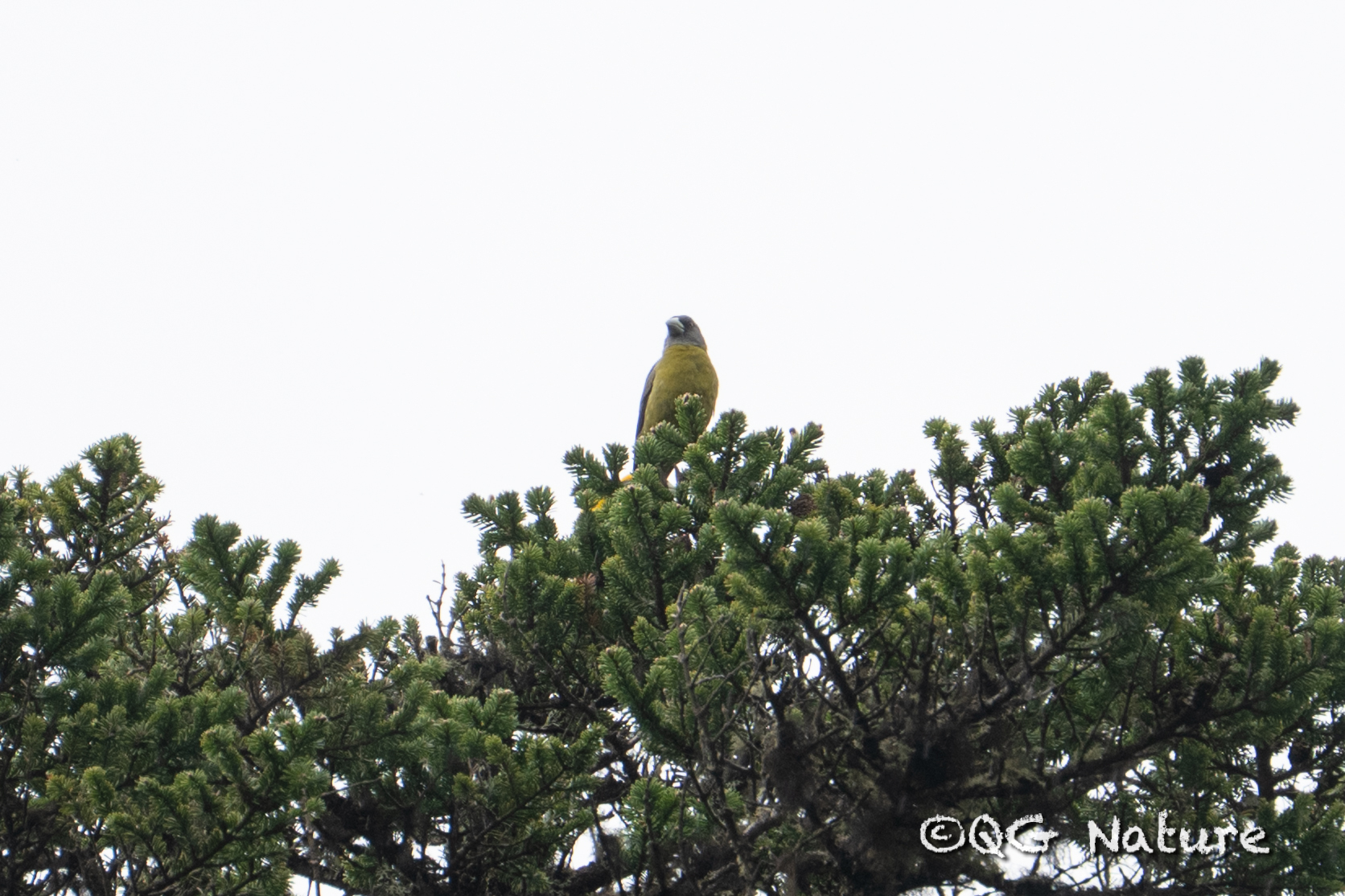
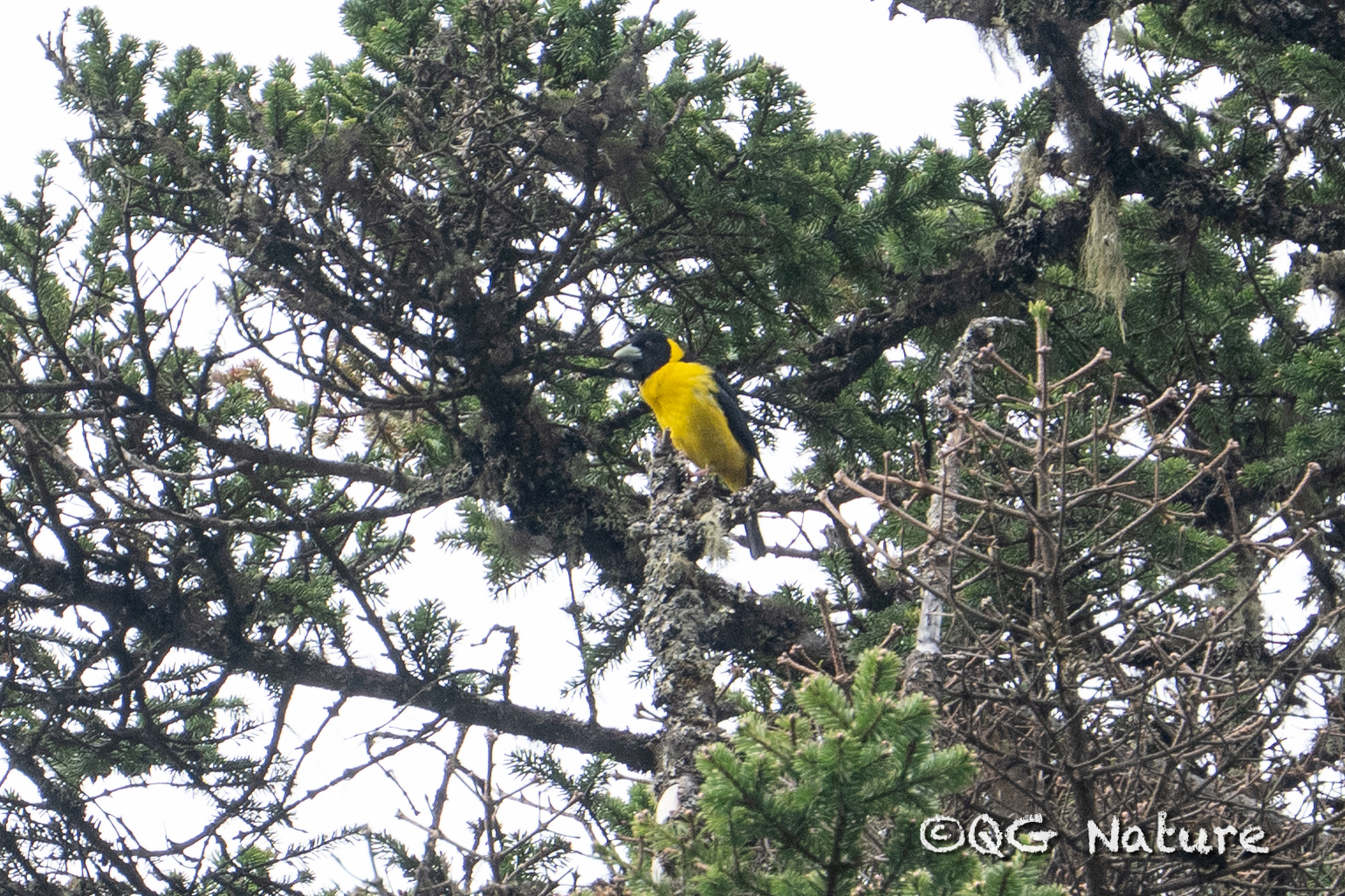
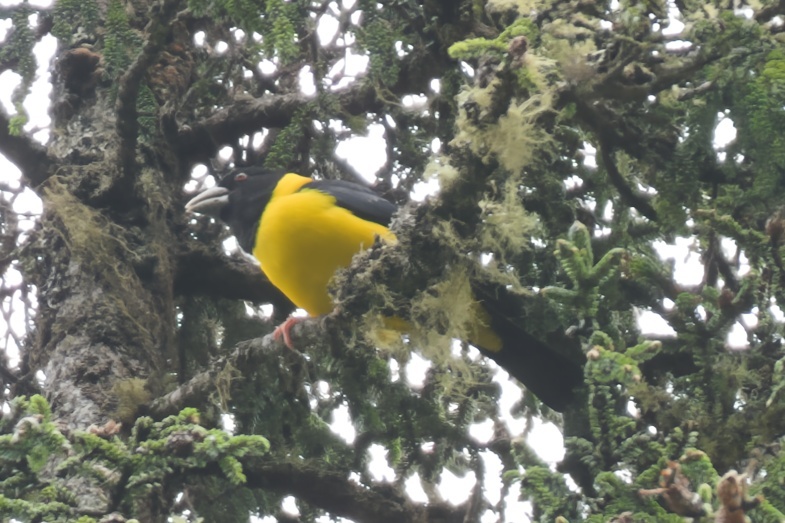
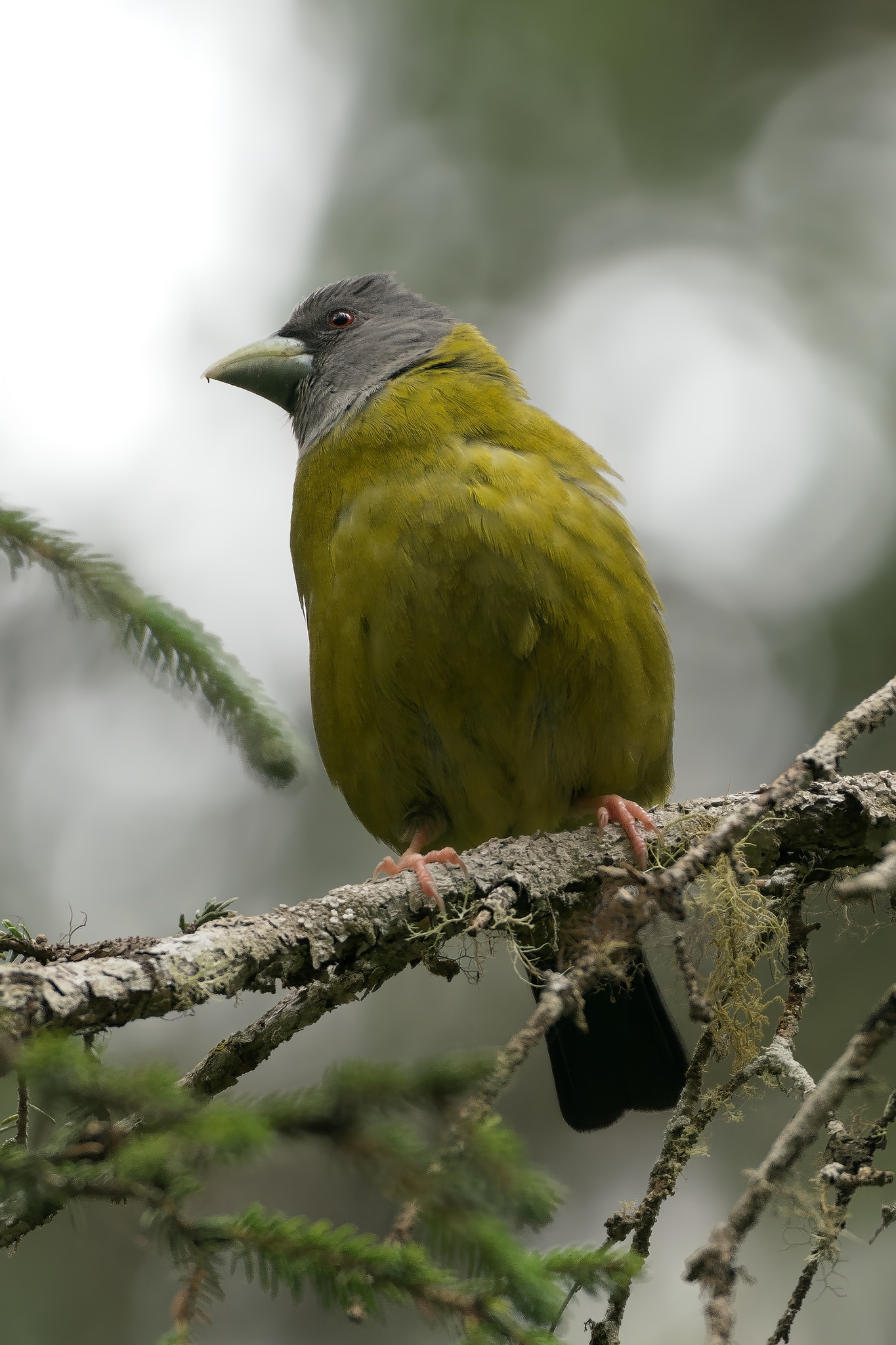
A very large finch, among the largest in the family. Body length ranges from 22 to 24 cm. Wing chord measures 12.1 to 13.8 cm, tail 8.7 to 9.7 cm, bill 2.7 to 2.9 cm, and tarsus 2.6 to 2.9 cm. Males weigh 69-72 g, females approximately 83 g. Adult males have glossy black head, upper wings, and tail with an earthy brownish collar contrasting against the black head; the remainder of the plumage is rich deep yellow. Females are olive-green on the back and yellowish below with no black about the face. Juveniles resemble adult females.
Identification
Males are unmistakable with their combination of glossy black head and wings, brown collar, and bright yellow underparts. Females are olive-green above and yellowish below, lacking the black facial markings of males. Large size and heavy bill distinguish this species from similar finches in its range. Flight call is a mellow but rapid series of notes; alarm call is a sharp kurr. Male song is a clear, loud, rising whistle of five to six notes.
Distribution & Habitat
Ranges across the Himalayas and adjoining regions including Bhutan, India, Myanmar, Nepal, and Thailand. Inhabits mountainous deciduous and mixed coniferous forests, commonly around maple, oak, and rhododendron stands. Summer breeding range extends from 2,700 to 4,200 m elevation. Performs altitudinal migration, wintering at lower elevations from 1,060 to 1,800 m. In summer, may also occur in dwarf juniper above the tree line.
Behavior & Ecology
Occurs in pairs or small parties, typically perching near tops of tall trees but foraging in lower vegetation or on the ground. Flies in tight flocks with a fast, direct but sometimes undulating flight style. Diet consists of seeds, pine cones, buds, shoots, nuts, and fruits including crab apples; also consumes insects such as caterpillars and snails. Uses the strong bill to process tough plant material. Breeding behavior remains poorly documented. Vocalizations include a mellow flight call, sharp alarm call, and a clear rising song of five to six notes; antagonistic interactions produce a creaky groan.
Conservation
Range-wide population status not formally assessed. Described as fairly common to scarce within its range across the Himalayas and adjoining regions.
Culture
No cultural information documented.
Source: Wikipedia · CC BY-SA 3.0
Taxonomy
- Order
- Passeriformes
- Family
- Fringillidae
- Genus
- Mycerobas
- eBird Code
- colgro1
Distribution
mountains of northern Pakistan to southeastern Tibet, northeastern Myanmar, and central China
Data Sources
Species description from Wikipedia, licensed under CC BY-SA 3.0.
Bird images and sounds sourced from GBIF, contributed by citizen scientists worldwide under Creative Commons licenses.
Taxonomy data from AviList 2025.