
Spotted Flycatcher
Muscicapa striata
斑鹟
Introduction
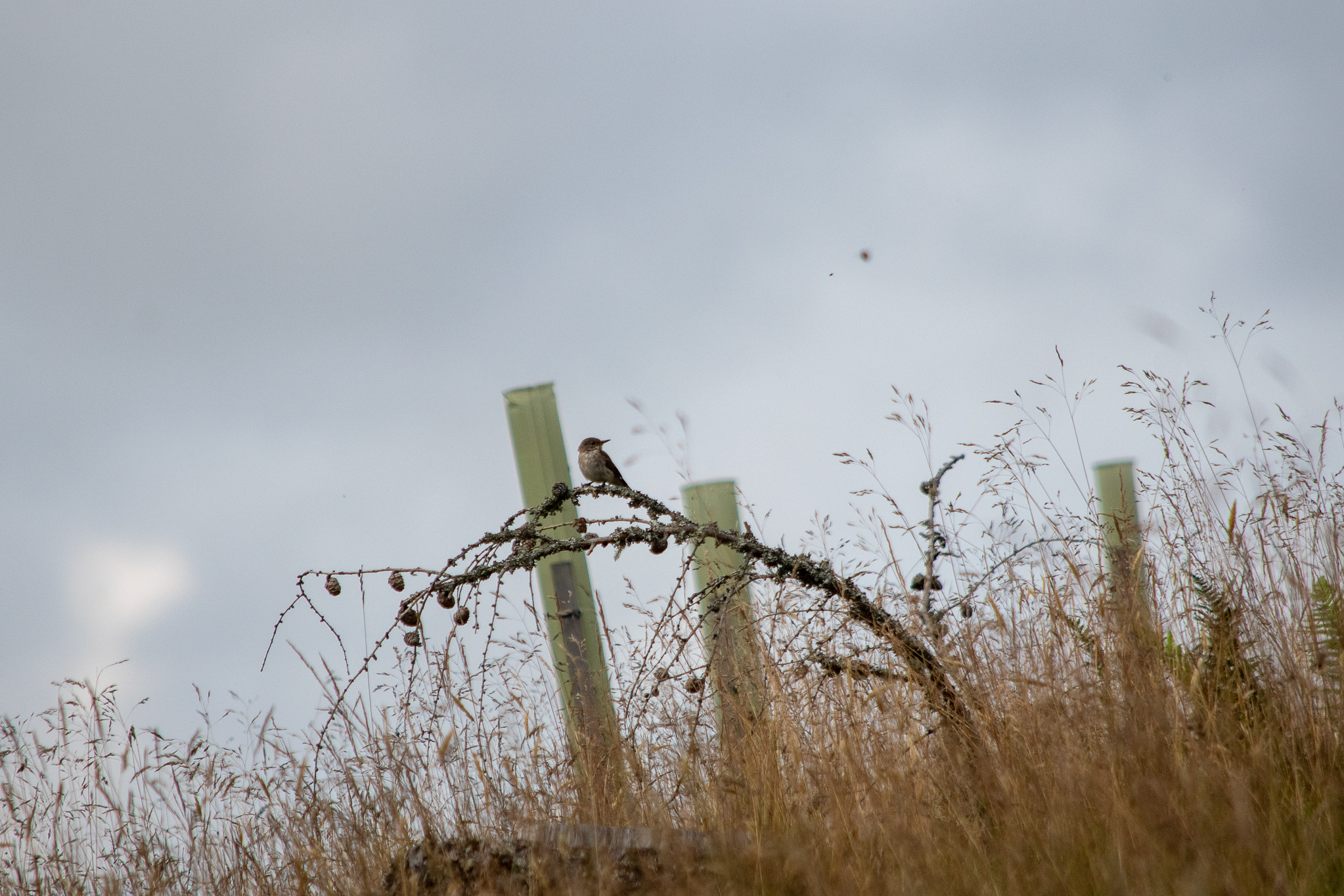
Small passerine bird in the Old World flycatcher family. Breeds throughout most of Europe and the Palearctic to Siberia, migrating to winter in Africa and southwestern Asia. Characterized by hunting flying insects from conspicuous perches and making sallies to catch prey, often returning to the same perch. Unusual among passerines for replacing outer flight feathers before those nearer the body during molt. Population declining in parts of its range.
Description
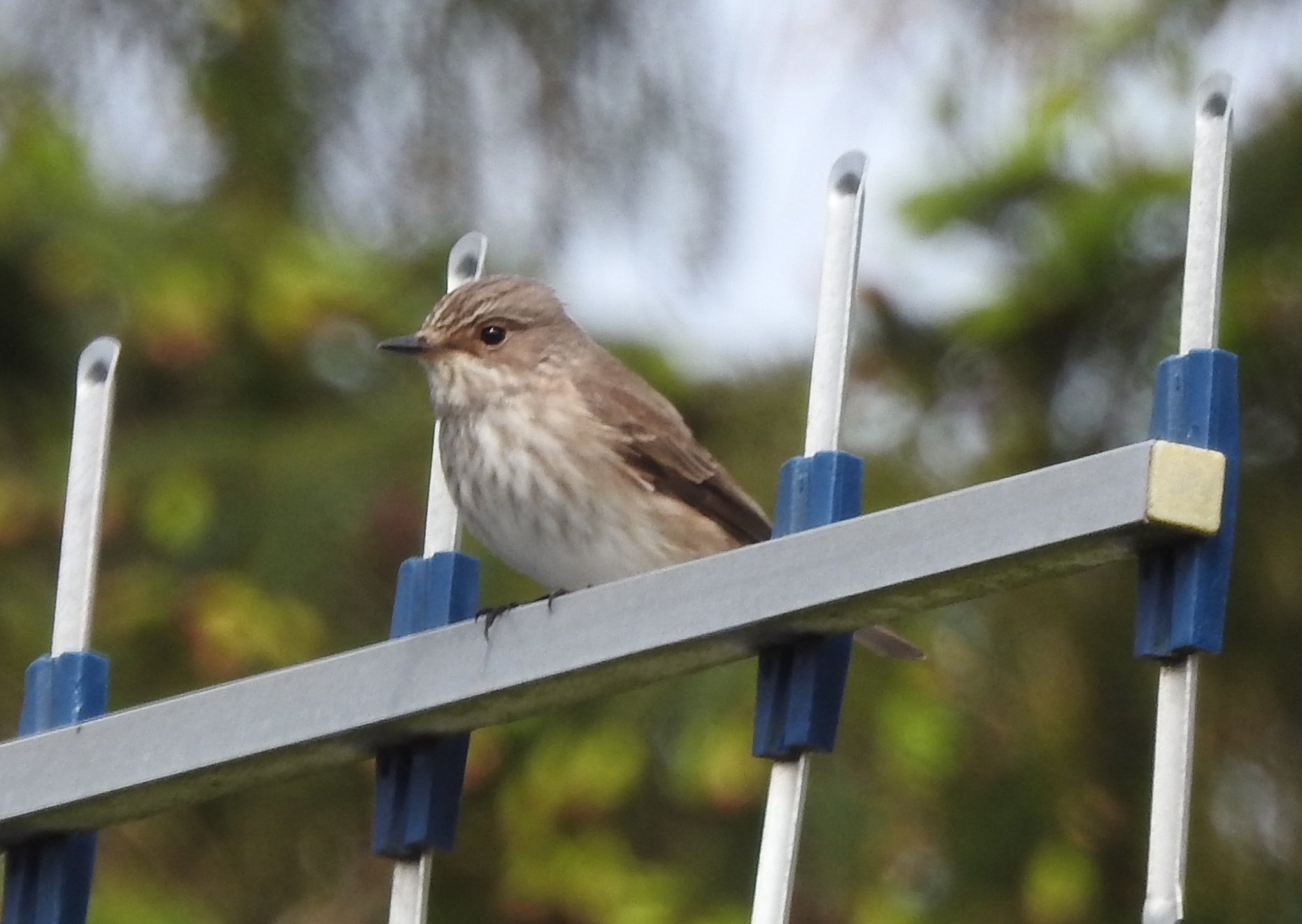
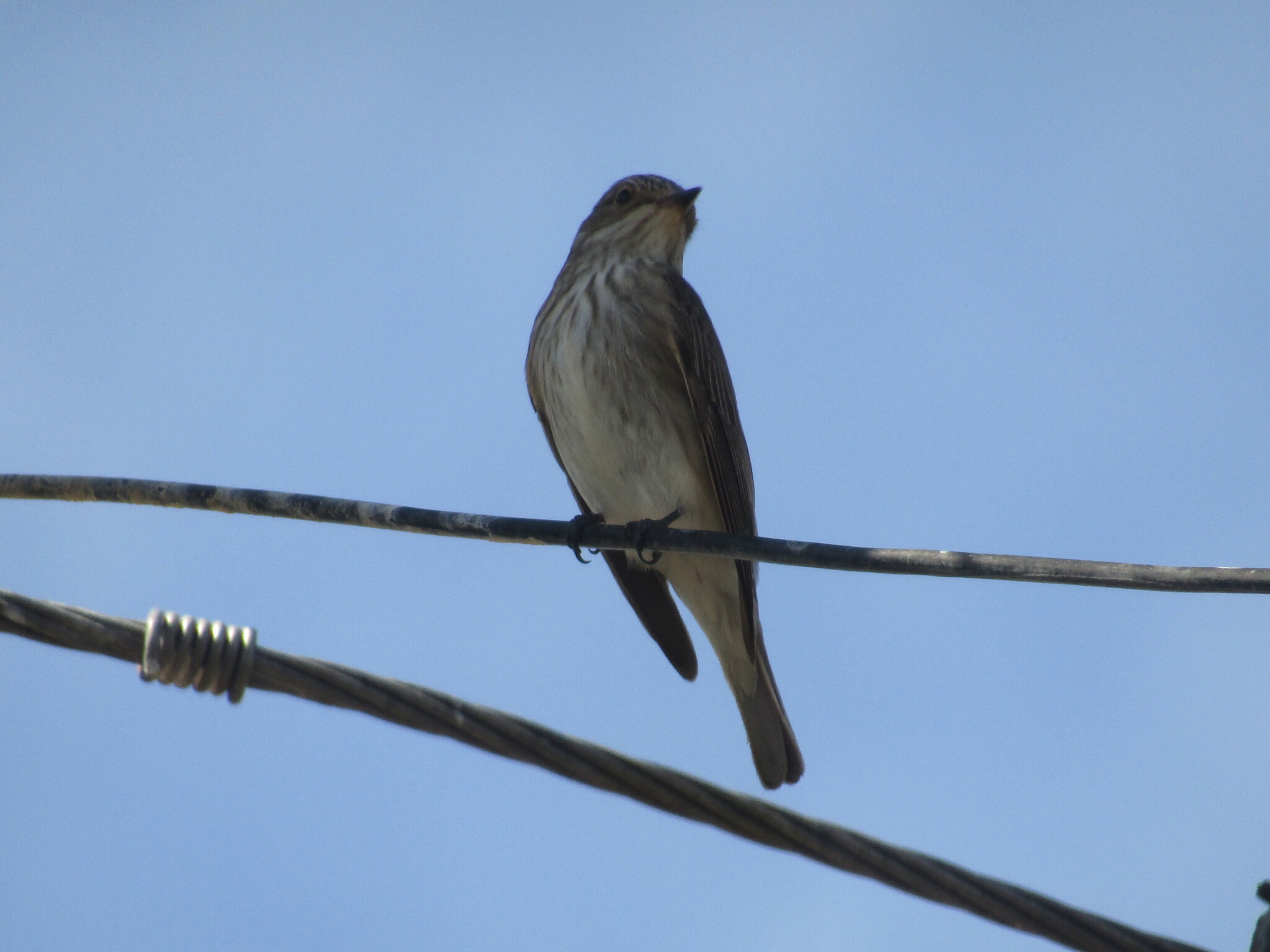
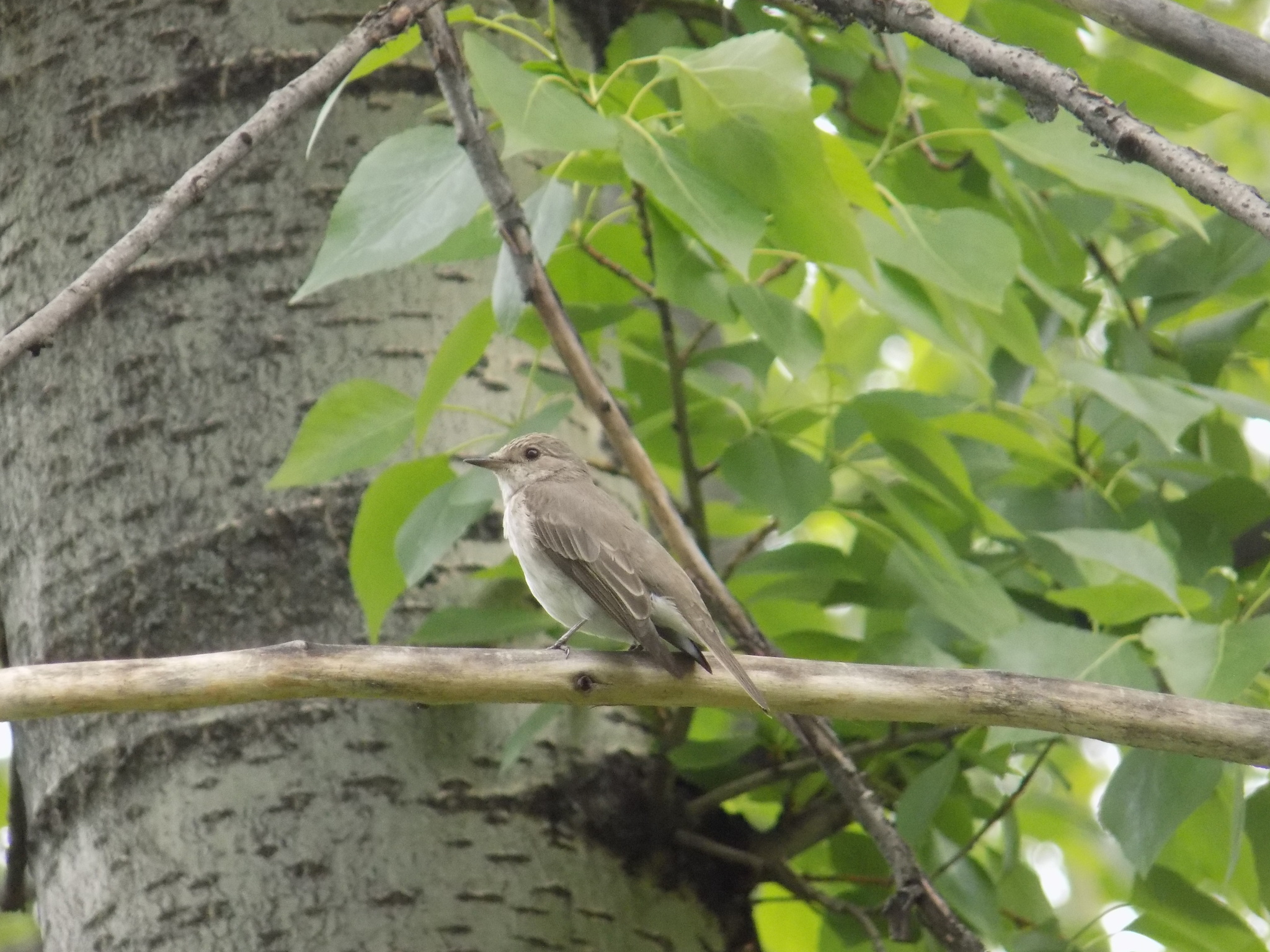
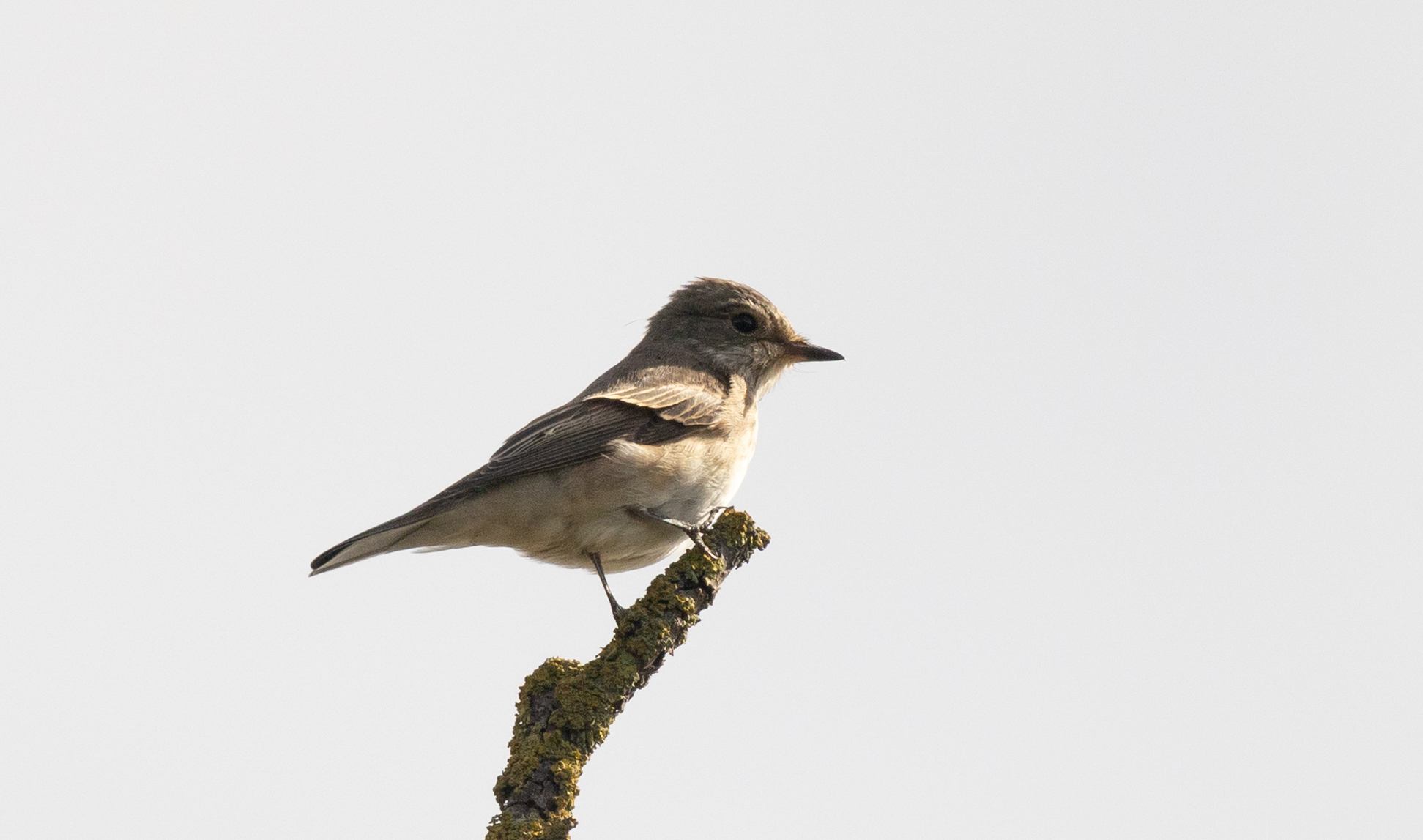
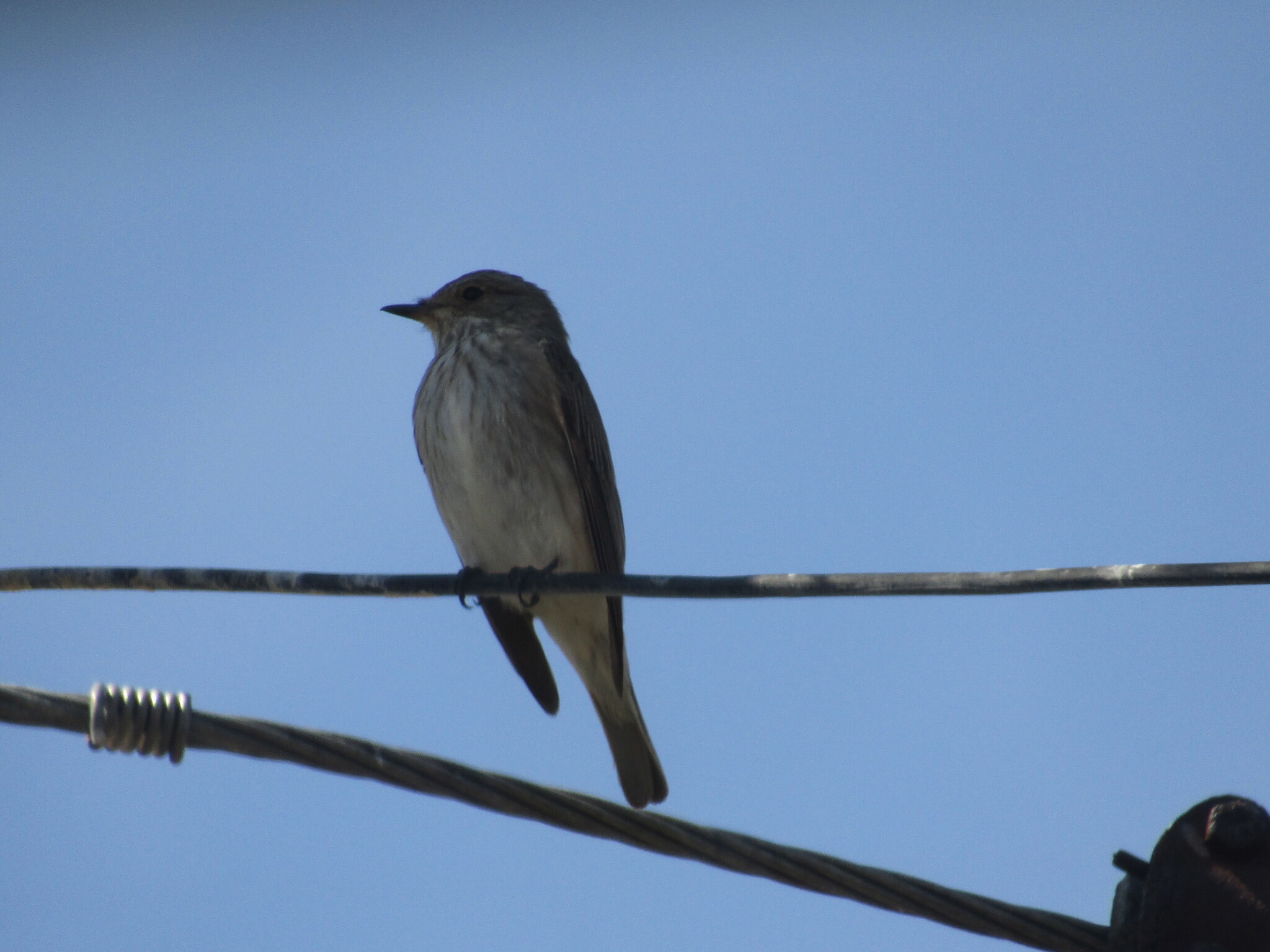
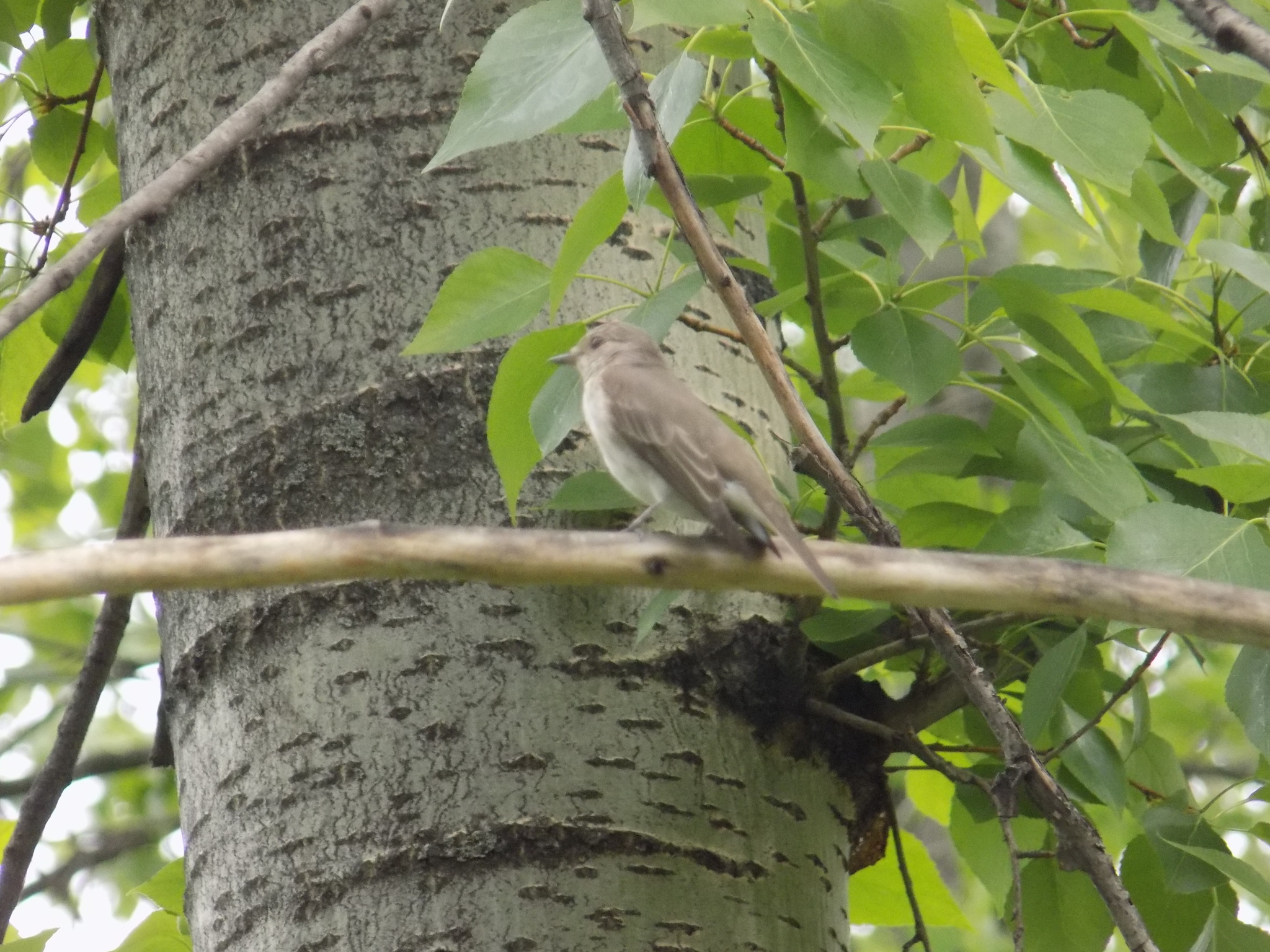
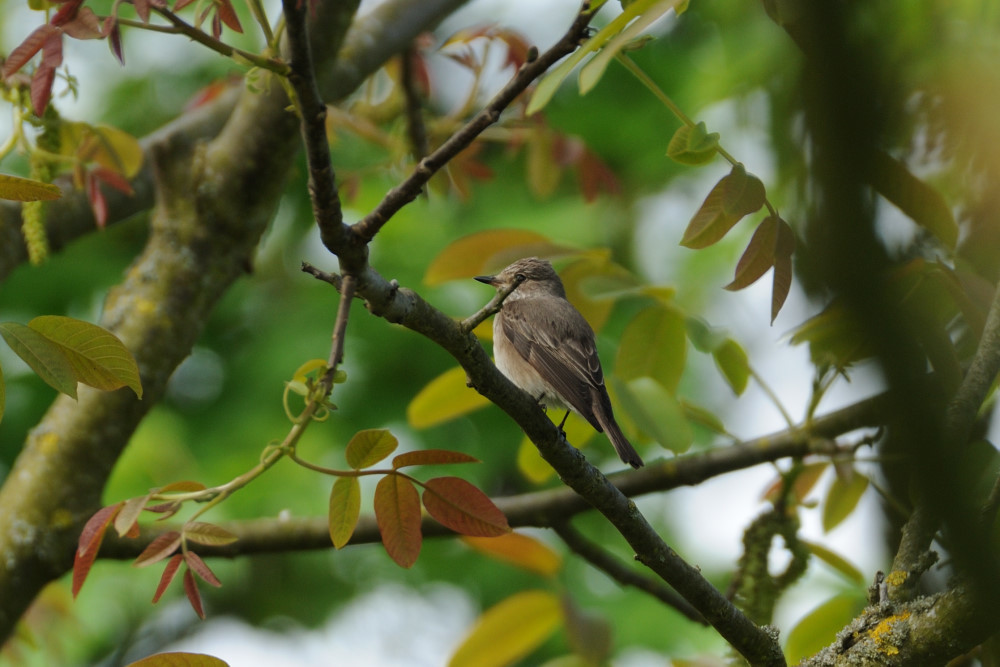
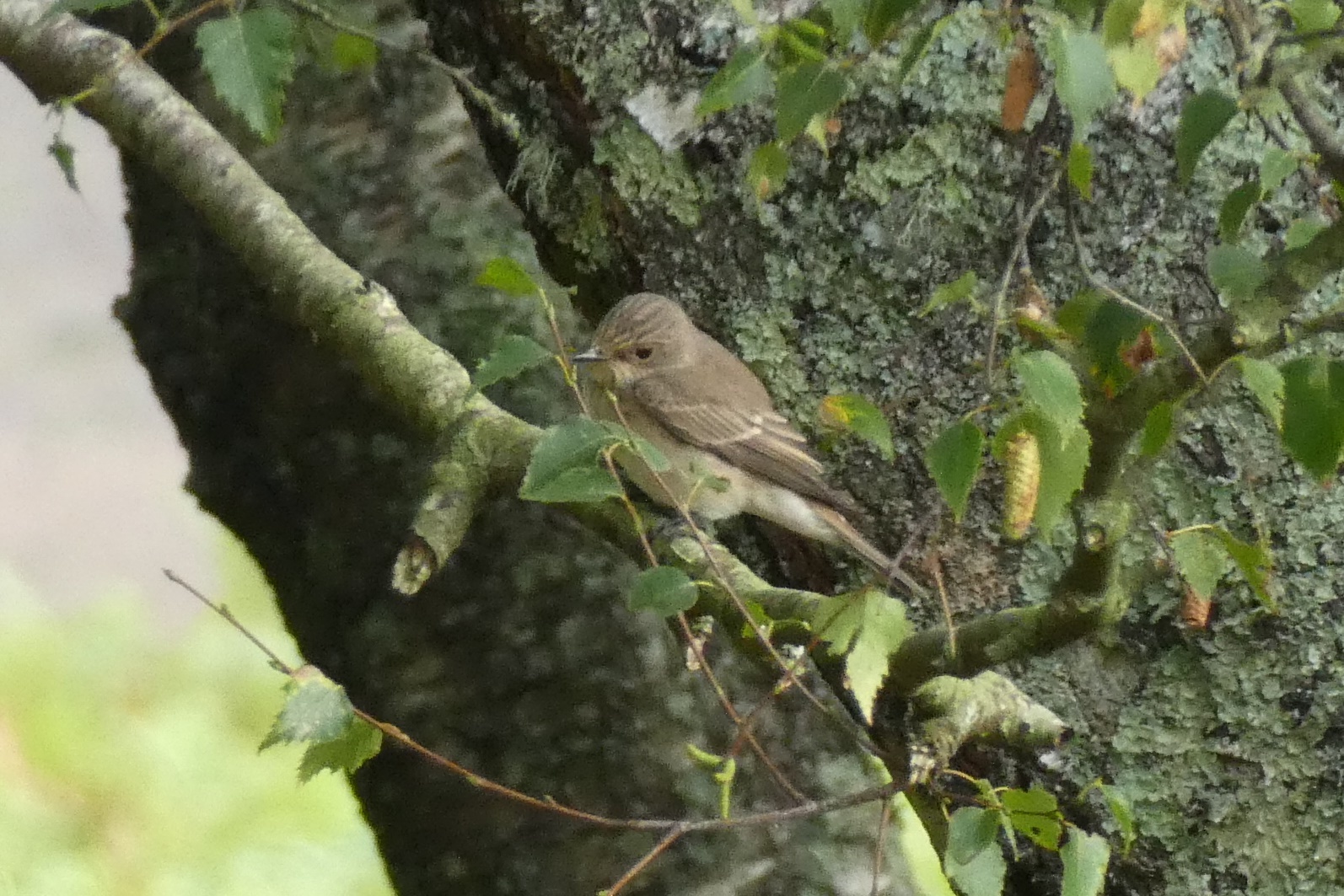
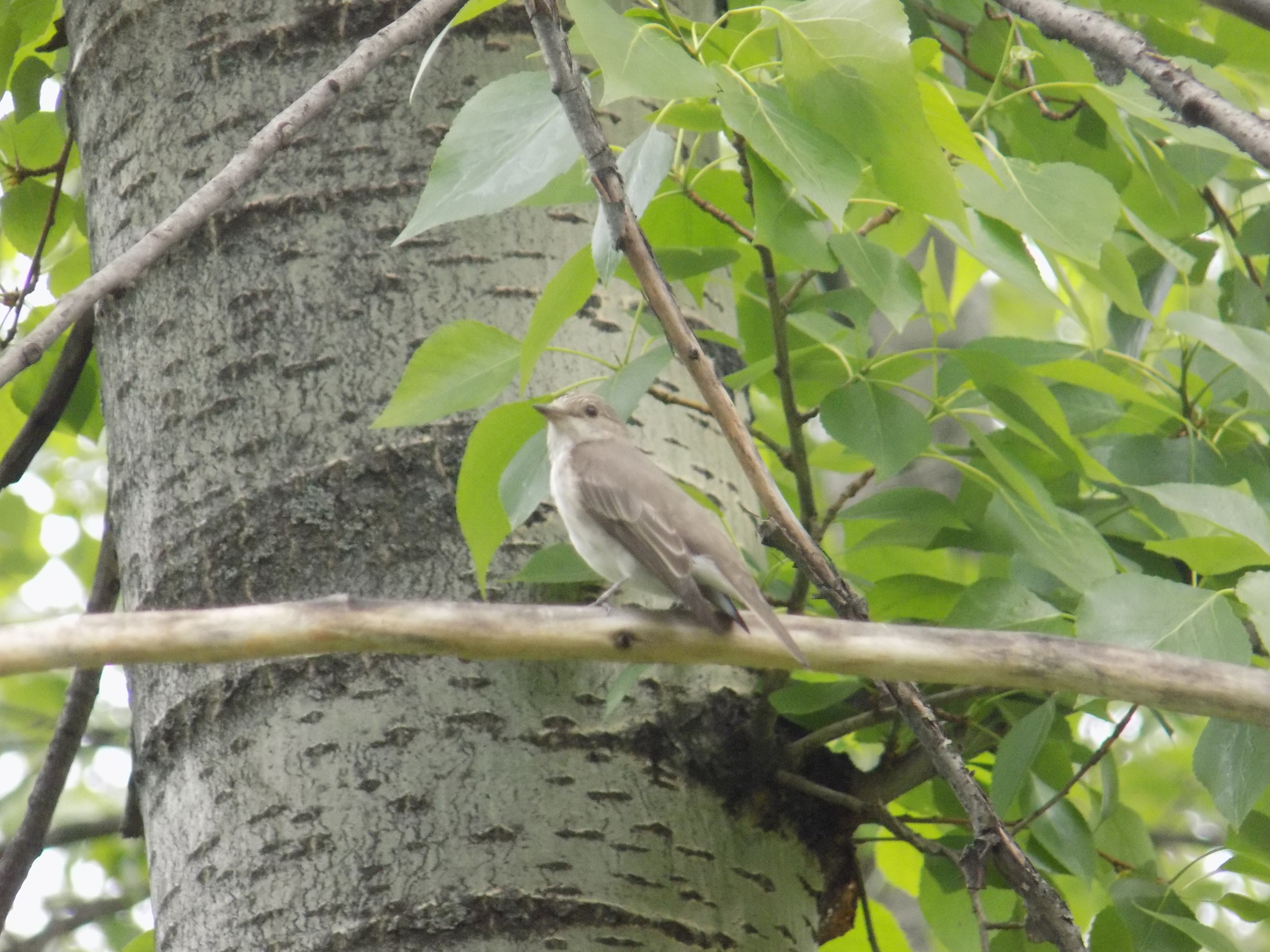
Small slim bird approximately 14.5 cm in length weighing 14-20 g. Has dull grey-brown upperparts and off-white underparts. Crown, throat, and breast are streaked with brown, while wings and tail feathers have paler thin margins. Legs are short and black, and the bill is black, broad but pointed, typical of aerial insectivores. Sexes appear alike. Juveniles display ochre-buff spots on upperparts and scaly brown spots below. The subspecies M. s. tyrrhenica shows paler, warmer plumage on upperparts with more diffuse head and breast markings.
Identification
An undistinguished looking bird with long wings and tail. Upright posture is characteristic when perched. Adults display grey-brown upperparts, whitish underparts, and distinctive streaked crown and breast. Juveniles are browner than adults with spots on the upperparts. The broad but pointed bill shape is typical of aerial insectivores and helps distinguish it from similar species.
Distribution & Habitat
Breeds across most of Europe and the Palearctic region to western Siberia. Migratory, with all subspecies wintering in southern Africa. Inhabits deciduous woodlands, parks, and gardens, showing preference for open areas amongst trees. The five recognized subspecies have slightly different breeding ranges: M. s. striata breeds from Europe to western Siberia; M. s. inexpectata in Crimea; M. s. neumanni from Aegean islands through Middle East, Caucasus, northern Iran to central Siberia; M. s. sarudnyi from eastern Iran and Turkmenistan to central Asia mountains and north Pakistan; M. s. mongola in Mongolia and south-central Siberia.
Behavior & Ecology
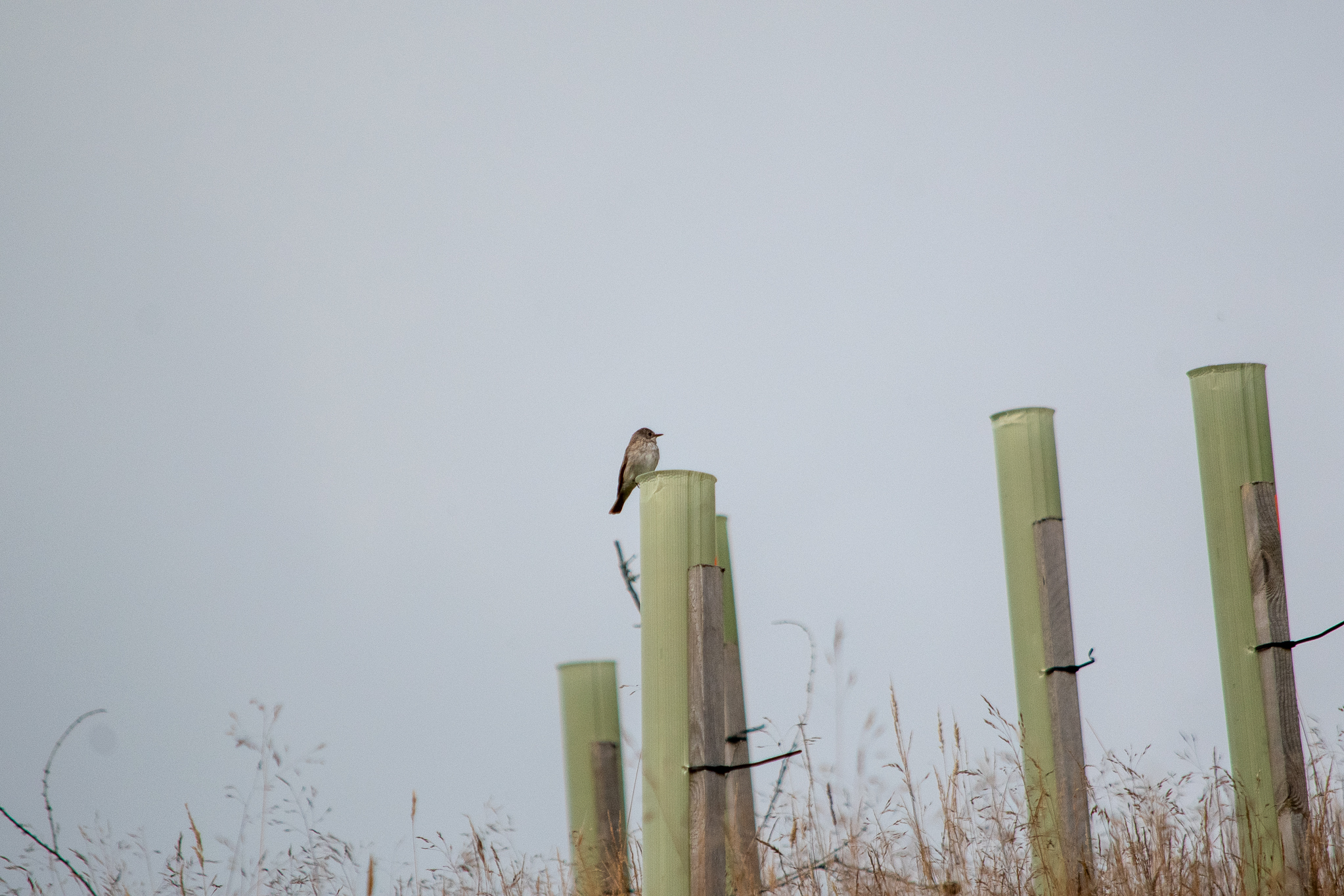
Hunts from conspicuous perches, making sallies after passing flying insects and often returning to the same perch. Upright posture is characteristic. Builds open nests in suitable recesses, often against walls, and readily uses open-fronted nest boxes. Lays 4-6 eggs. Shows excellent egg recognition, likely having evolved as defense against common cuckoo parasitism to the point of no longer being victimized. Vocalization is a thin, drawn-out soft high-pitched tssssseeeeeppppp, slightly descending in pitch.
Conservation
Populations are declining in parts of the species' range, particularly noted in Europe. A study in southern England found one third of nests were predated. The Eurasian jay was the most common aerial predator, consuming both eggs and chicks, while domestic cats predated a small fraction of nests. The Mediterranean flycatcher (previously considered subspecies M. s. tyrrhenica and M. s. balearica) has been split as a separate species by the International Ornithologists' Union.
Culture
No cultural significance or folklore mentioned in the available sources.
Source: Wikipedia · CC BY-SA 3.0
Taxonomy
- Order
- Passeriformes
- Family
- Muscicapidae
- Genus
- Muscicapa
- eBird Code
- spofly1
Subspecies (7)
-
Muscicapa striata balearica
Balearic Islands; winters to western and southwestern Africa
-
Muscicapa striata inexpectata
Crimean Peninsula
-
Muscicapa striata mongola
southeastern Altai to northern Mongolia to southeastern Transbaikalia
-
Muscicapa striata neumanni
eastern Siberia to Caucasus, southern China, and southern Asia; winters to eastern Africa
-
Muscicapa striata sarudnyi
Caucasus Mountains to northern Iran and Afghanistan; winters to East Africa
-
Muscicapa striata striata
Europe to northern Africa, Türkiye, and Siberia; winters to southern Africa
-
Muscicapa striata tyrrhenica
Corsica and Sardinia
Data Sources
Species description from Wikipedia, licensed under CC BY-SA 3.0.
Bird images and sounds sourced from GBIF, contributed by citizen scientists worldwide under Creative Commons licenses.
Taxonomy data from AviList 2025.