Brown-breasted Flycatcher
Muscicapa muttui
褐胸鹟
Introduction
A small passerine bird in the flycatcher family Muscicapidae. The species breeds in northeastern India, central and southern China, and northern Burma and Thailand, migrating to southern India and Sri Lanka for the winter. It forages for insects below the forest canopy, typically close to the forest floor. No formal conservation status is mentioned.
Description
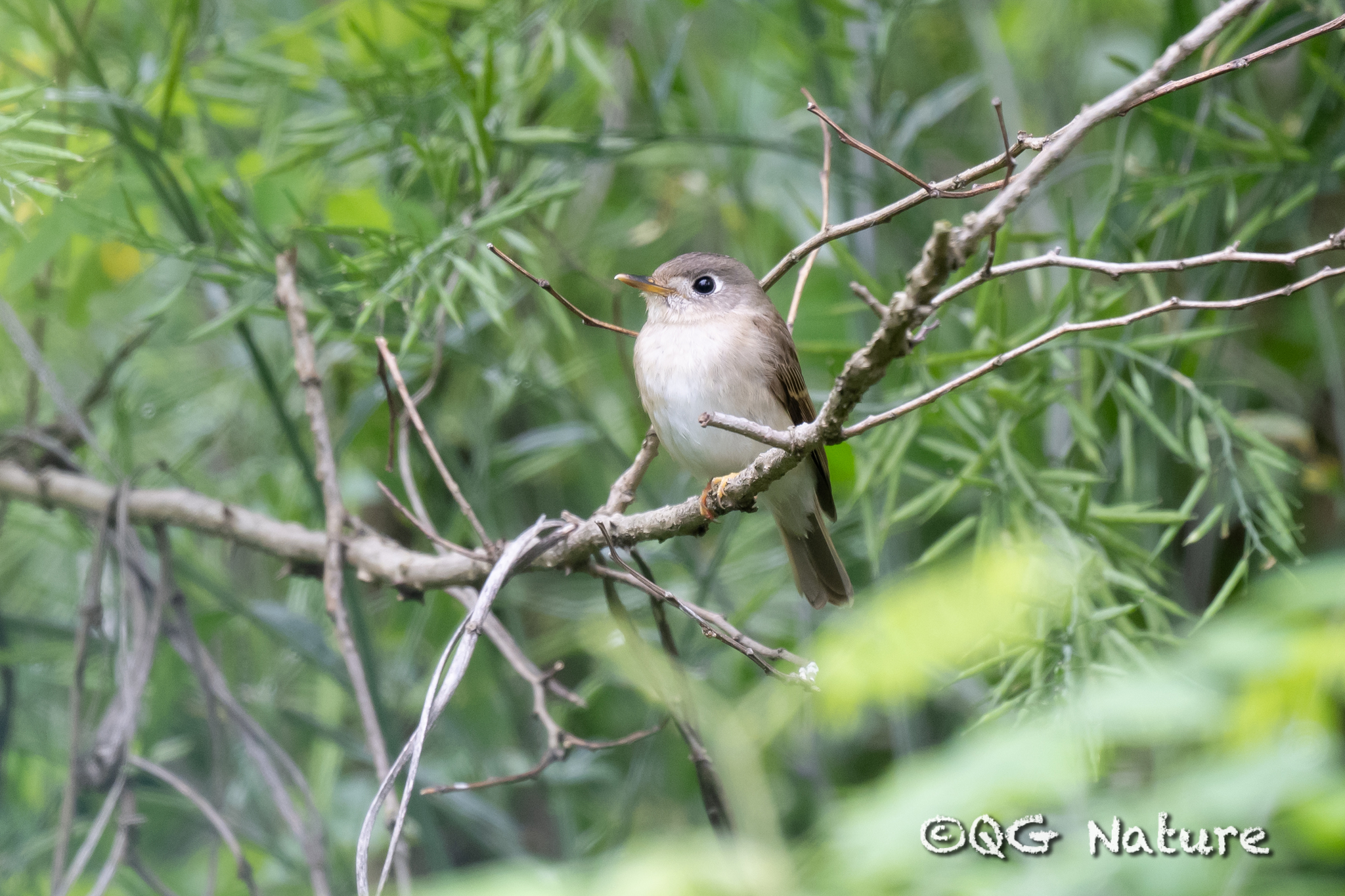
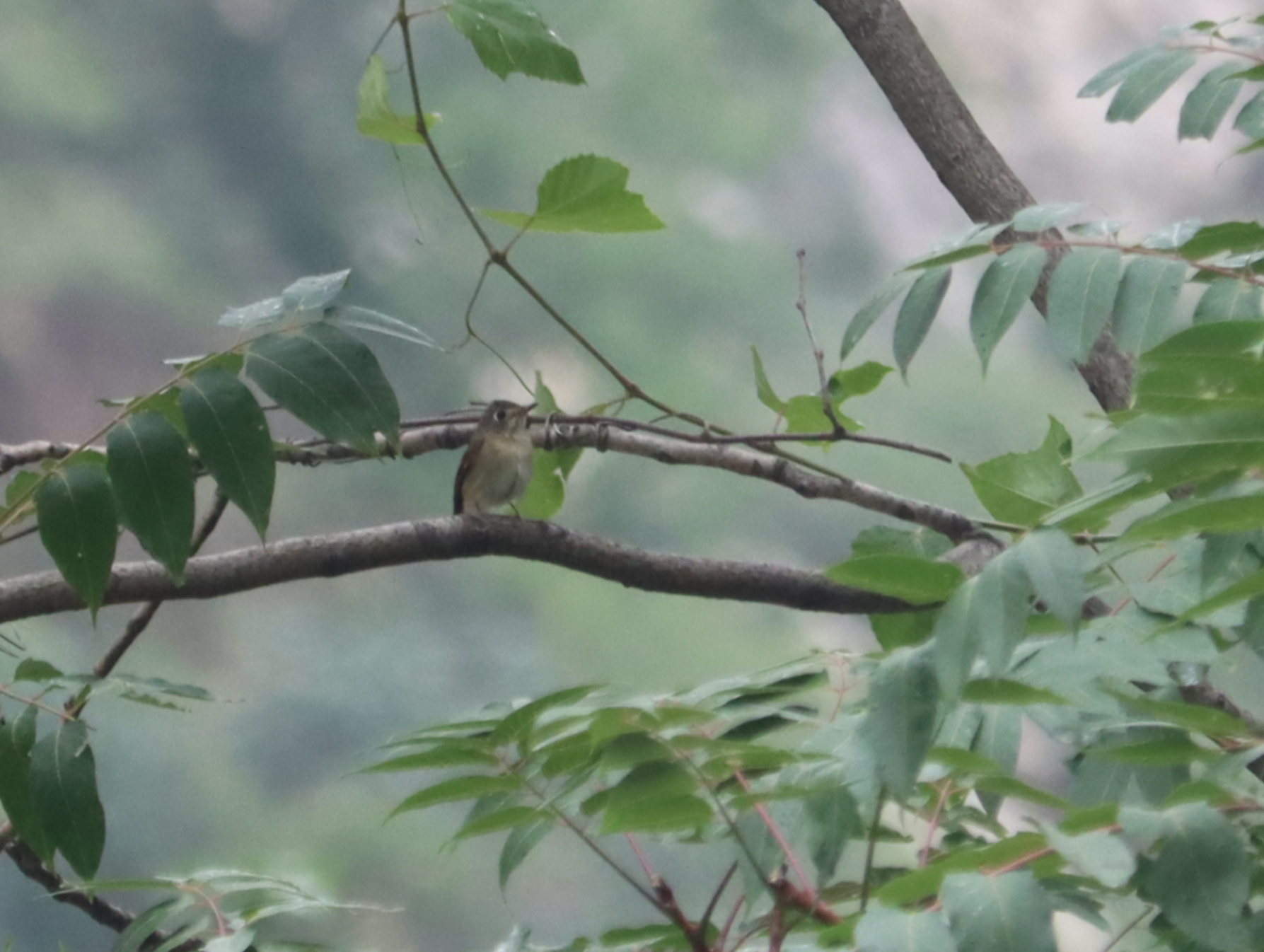
A small flycatcher measuring 13-14 cm in length and weighing 10-14 g. The upperparts are olive brown with darker feather shafts. The upper tail coverts and edges of the flight feathers are brighter rufous, with rufous also present on the outer webs of the tail feathers. The lores are pale and the eye ring is conspicuous. The chin and throat are white, while the breast and body sides are pale brown. The center of the body from the breast to the vent is buffy white. Submoustachial stripes are faint but define the boundary of the pale chin. The legs and lower mandible are pale flesh colored.
Identification
Most similar to the Asian brown flycatcher, which differs in having black legs rather than pale flesh-colored legs. The brown-breasted flycatcher is best distinguished by its pale leg color when observed alongside similar species.
Distribution & Habitat
Breeds in northeastern India, central and southern China, and northern Burma and Thailand. Winters in southern India and Sri Lanka. While no ringing evidence exists to confirm migration routes, wintering populations in southern India and Sri Lanka are thought to originate from breeding populations in northeastern India and northern Thailand. A subspecies stötzneri was described from Szechwan in 1922 but is generally not recognized as valid.
Behavior & Ecology
Forages for insects below the forest canopy, typically near the forest floor. The usual call is a very faint tseet, audible only at close range, or a series of chi-chi-chi-chi notes ending with a low chit-chit. No additional breeding or social behavior information is provided.
Culture
The species was named by Layard after Muttu, his servant who collected and provided the specimen. No other cultural significance or folklore is documented.
Source: Wikipedia · CC BY-SA 3.0
Taxonomy
- Order
- Passeriformes
- Family
- Muscicapidae
- Genus
- Muscicapa
- eBird Code
- brbfly2
Distribution
breeds northeastern India to southern China and northern Vietnam; winters to Sri Lanka
Data Sources
Species description from Wikipedia, licensed under CC BY-SA 3.0.
Bird images and sounds sourced from GBIF, contributed by citizen scientists worldwide under Creative Commons licenses.
Taxonomy data from AviList 2025.