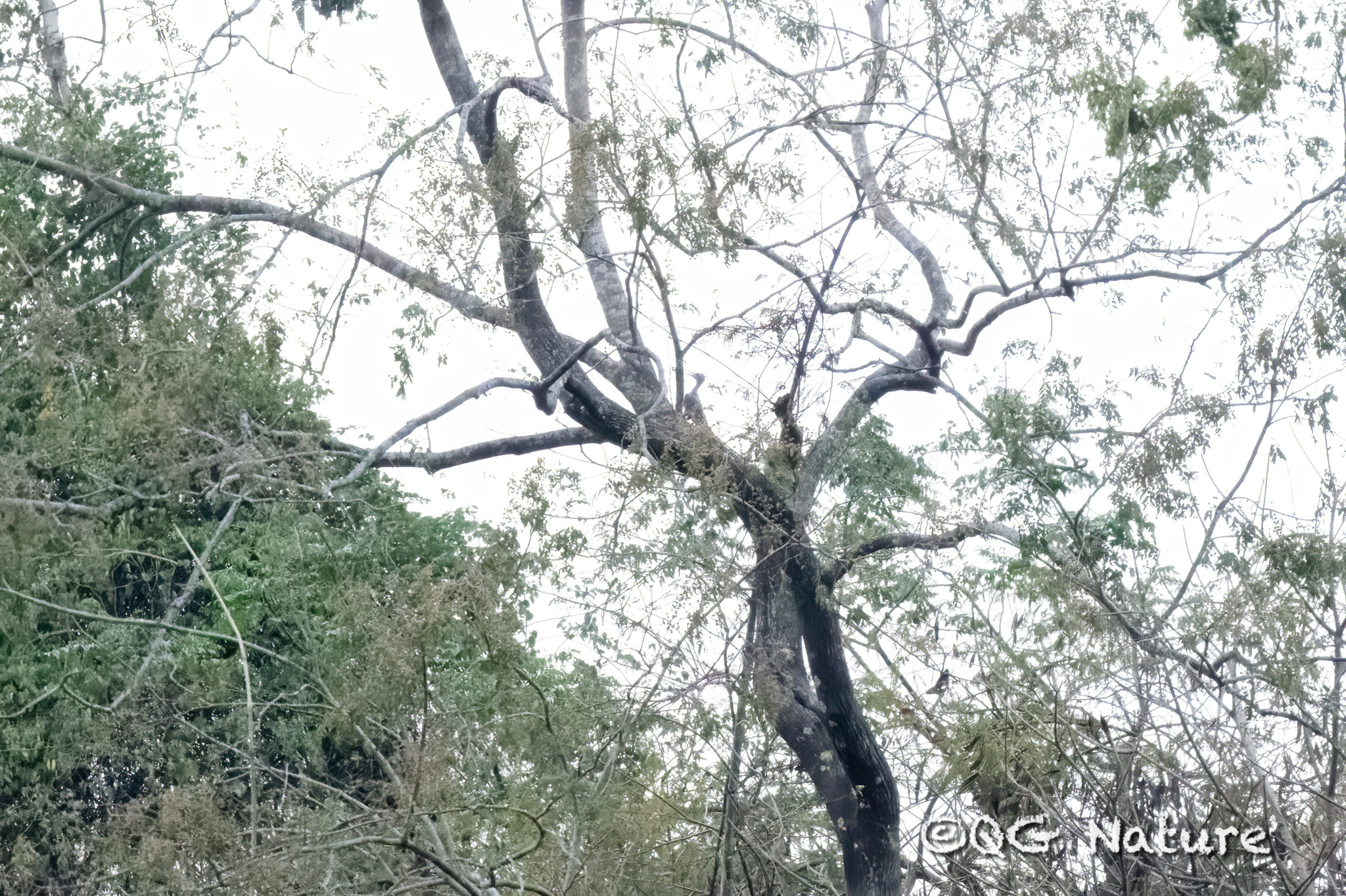
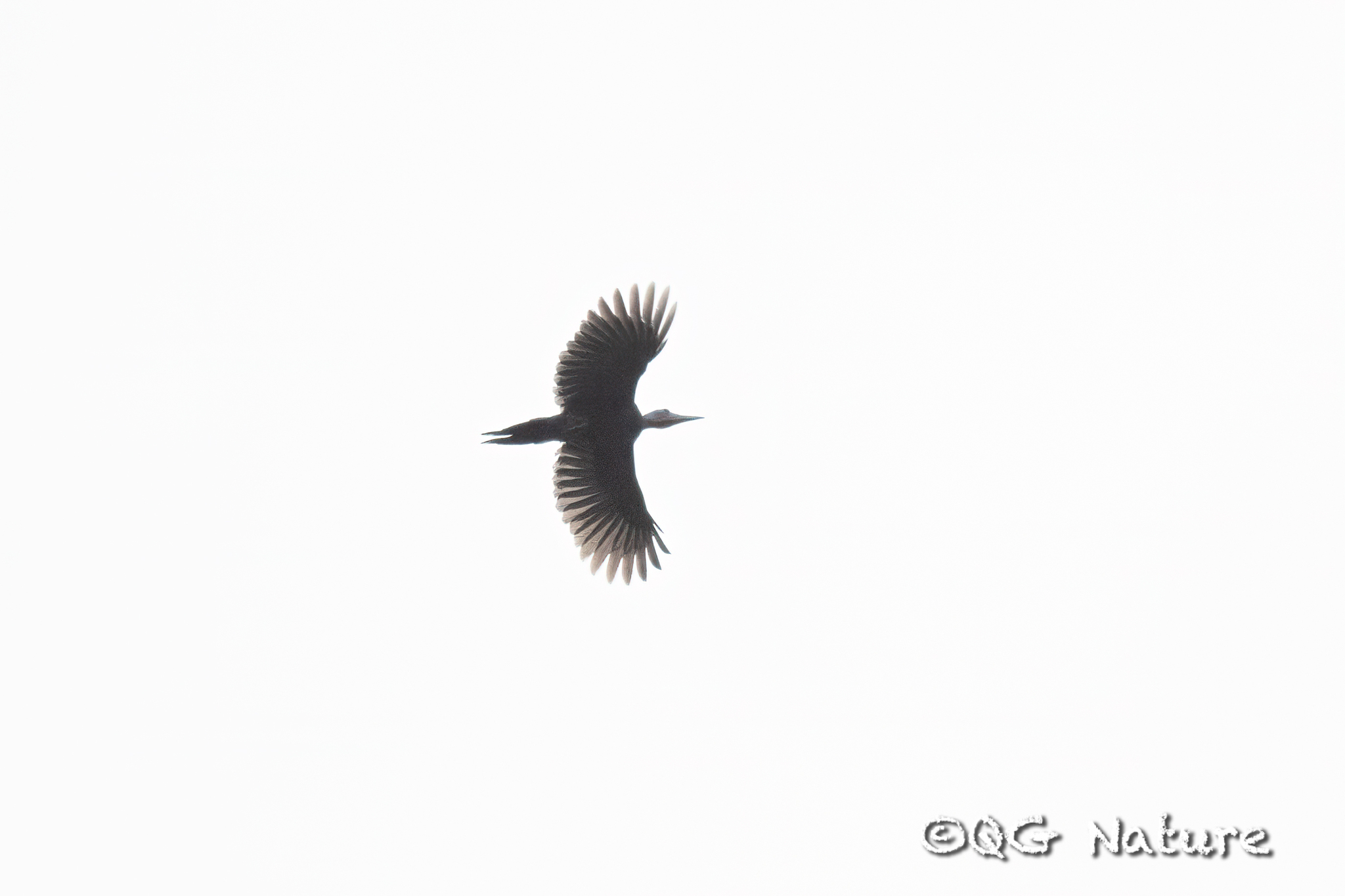
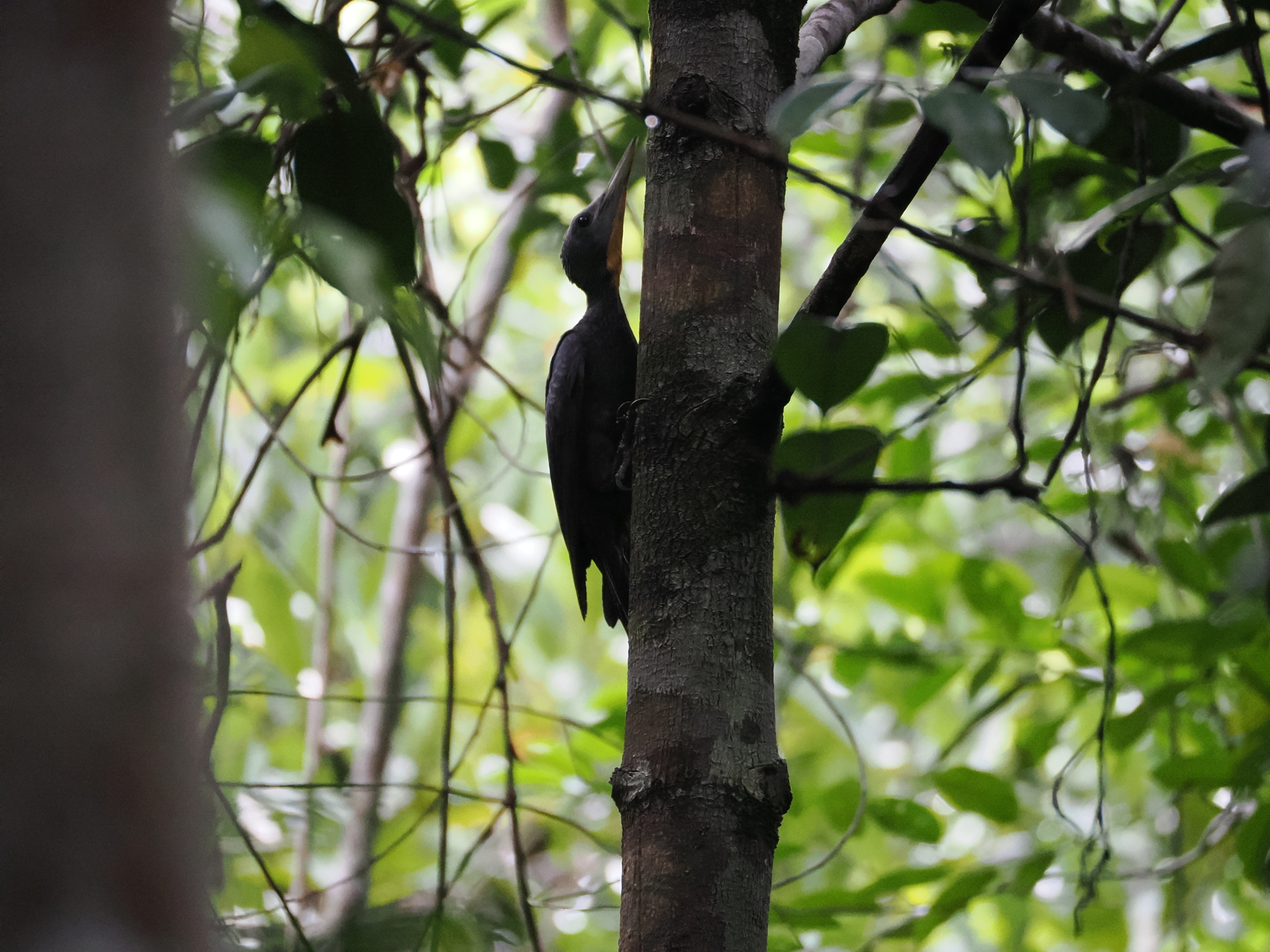
Great Slaty Woodpecker
Mulleripicus pulverulentus
大灰啄木鸟
Introduction
A species of bird in the family Picidae found across the Indian subcontinent and Southeast Asia. Ranges across Bangladesh, Bhutan, Brunei, Cambodia, India, Indonesia, Laos, Malaysia, Myanmar, Nepal, the Philippines, Singapore, Thailand and Vietnam. Found in the Greater Sundas but does not inhabit Bali. Inhabits primary semi-open, moist deciduous and tropical evergreen forest, adjacent secondary forests, clearings with scattered tall trees, dipterocarp and teak stands, mature sal forests, swamp forest and mangroves. Usually occurs below 600m elevation but locally in montane areas up to 1,100m, occasionally up to 2,000m. With the extinctions of the imperial woodpecker and ivory-billed woodpecker, this species is now the largest woodpecker in the world. Classified as Vulnerable on the IUCN Red List since 2010 due to habitat loss from logging of old-growth forest throughout its range.
Description
Body length 48-58 cm with weight 360-563 g (average 430 g). Wing chord measures 21.5-25 cm, tail 13.4-16.2 cm, bill 6-6.5 cm and tarsus 3.6-4.1 cm. Features a very long, strong chisel-tipped bill, elongated neck and long tail. A slight crest may occasionally be evident. Plumage is almost entirely dark grey or blackish slate-grey overlaid with small white spots. Throat is paler grey and males have a small red moustache. The nominate subspecies is the darkest, most slaty gray race. M. p. harterti has a more pale throat with greater whitish feather tips and appears paler below, sometimes almost whitish on the belly.
Identification
Size and structure readily distinguish this bird from almost any other species, including other woodpeckers. At first glance, may be mistaken for a hornbill, though such resemblance is slight at best. The voice is weak and quiet compared to other large woodpeckers, which tend to have loud, booming voices. The call is a whinnying cackle of 2-5 (usually 4) notes: woikwoikwoikwoik. Single dwot calls are sometimes given while perched or in flight. Breeding pairs communicate with soft mew calls, while antagonistic situations produce sharp taw-whit or dew-it calls.
Distribution & Habitat
Range spans the Indian subcontinent and Southeast Asia including Bangladesh, Bhutan, Brunei, Cambodia, India, Indonesia, Laos, Malaysia, Myanmar, Nepal, Philippines, Singapore, Thailand and Vietnam. Found in the Greater Sundas but not on Bali. Inhabits primary semi-open, moist deciduous and tropical evergreen forest, secondary forests, clearings with scattered tall trees, dipterocarp and teak stands, mature sal forests, swamp forest and mangroves. Usually occurs below 600m elevation but locally in montane areas up to 1,100m, occasionally ranging up to 2,000m.
Behavior & Ecology
Forages in groups of 3-6 individuals consisting of a breeding pair and their young from prior years. Diet consists mainly of social insects including ants, termites, wood-boring beetles and stingless bees; ants are generally favored. Females spend more time searching for feeding sources while males with slightly larger bills spend more time opening sources. Preferred feeding sources are found in large branches or trunks of large, living trees. Home ranges are quite large as groups travel considerable distances to access feeding trees. Foraging methods include gleaning, probing, pecking, prising off bark and powerful hammering. Gleaning is the most important method, with the long neck and bill reaching into cracks and crevices. Flies high over trees for long distances between foraging patches, with feather rustle noisily in flight. Engages in less dipping than other woodpeckers with a crow-like flying style. Breeding pairs roost in separate tree holes but vocalize to stay in contact; the pair bond appears lifelong. Displays for territorial purposes include head-swinging, whinnying calls and wing and tail displays. Nests are located 9-45m high in very large trees, with both parents excavating but the male doing most work. Nest hole entrance is approximately 10cm across but wider inside. In Malaysia, the nesting season is from March to August. Clutch consists of 2-4 eggs incubated and brooded by both parents. Young likely stay with parents until the next breeding season.
Conservation
Classified as Vulnerable on the IUCN Red List since 2010. Global population is in decline due to loss of forest cover and logging of old-growth forest throughout its range. Density reductions exceed 80% in logged forests because of dependence on large old trees for feeding and breeding. Habitat loss is particularly rapid in Myanmar, Cambodia and Indonesia, which still hold the majority of the global population.
Culture
No significant cultural information available.
Source: Wikipedia · CC BY-SA 3.0
Taxonomy
- Order
- Piciformes
- Family
- Picidae
- Genus
- Mulleripicus
- eBird Code
- grswoo1
Vocalizations
Subspecies (3)
-
Mulleripicus pulverulentus harterti
northeastern India south of the Brahmaputra River to northern Myanmar, southwestern China, and Indochina
-
Mulleripicus pulverulentus mohun
northern India and Nepal to northern Arunachal Pradesh
-
Mulleripicus pulverulentus pulverulentus
Malay Peninsula to Sumatra, Java, Borneo, and Palawan group
Data Sources
Species description from Wikipedia, licensed under CC BY-SA 3.0.
Bird images and sounds sourced from GBIF, contributed by citizen scientists worldwide under Creative Commons licenses.
Taxonomy data from AviList 2025.