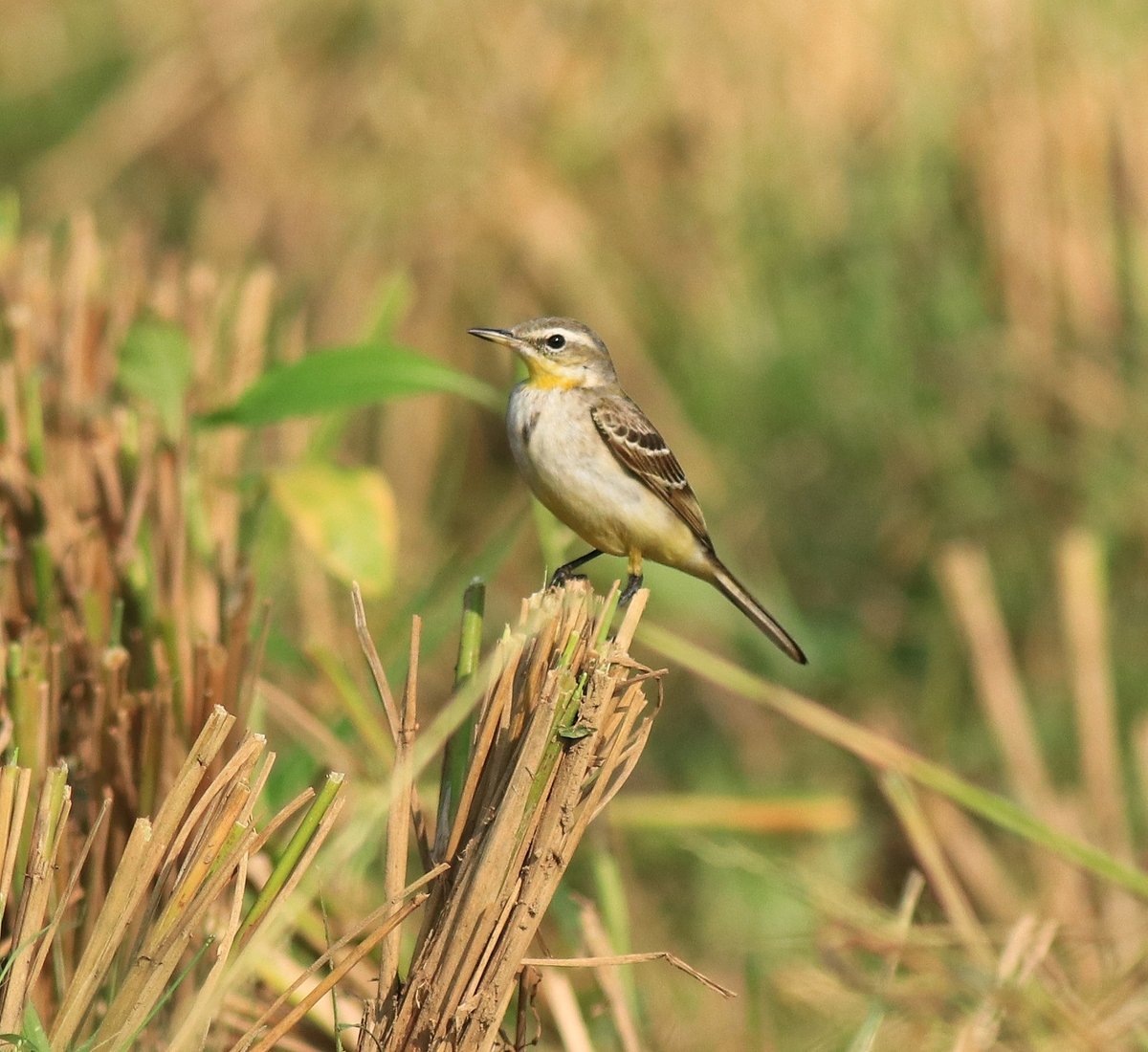
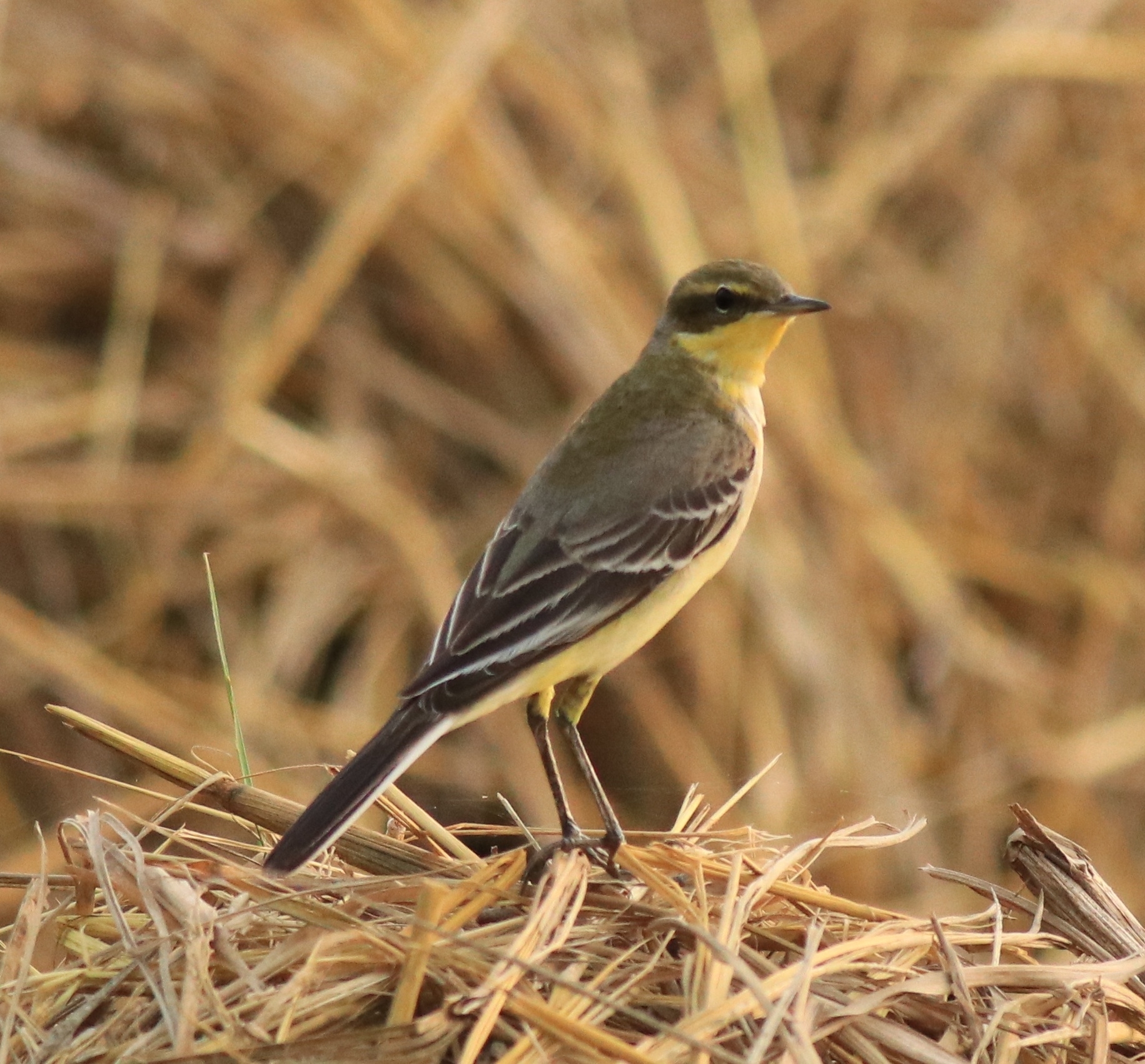
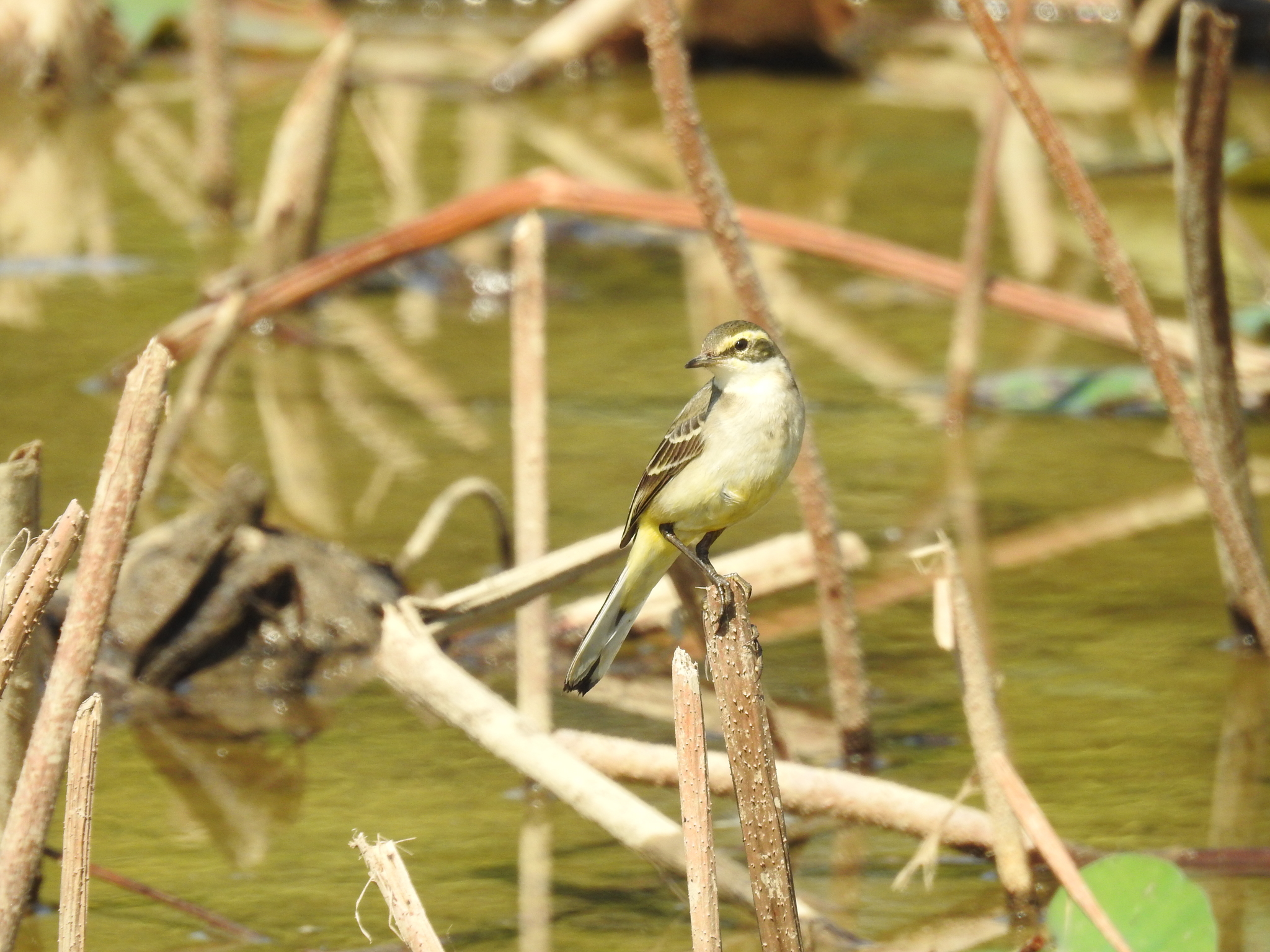
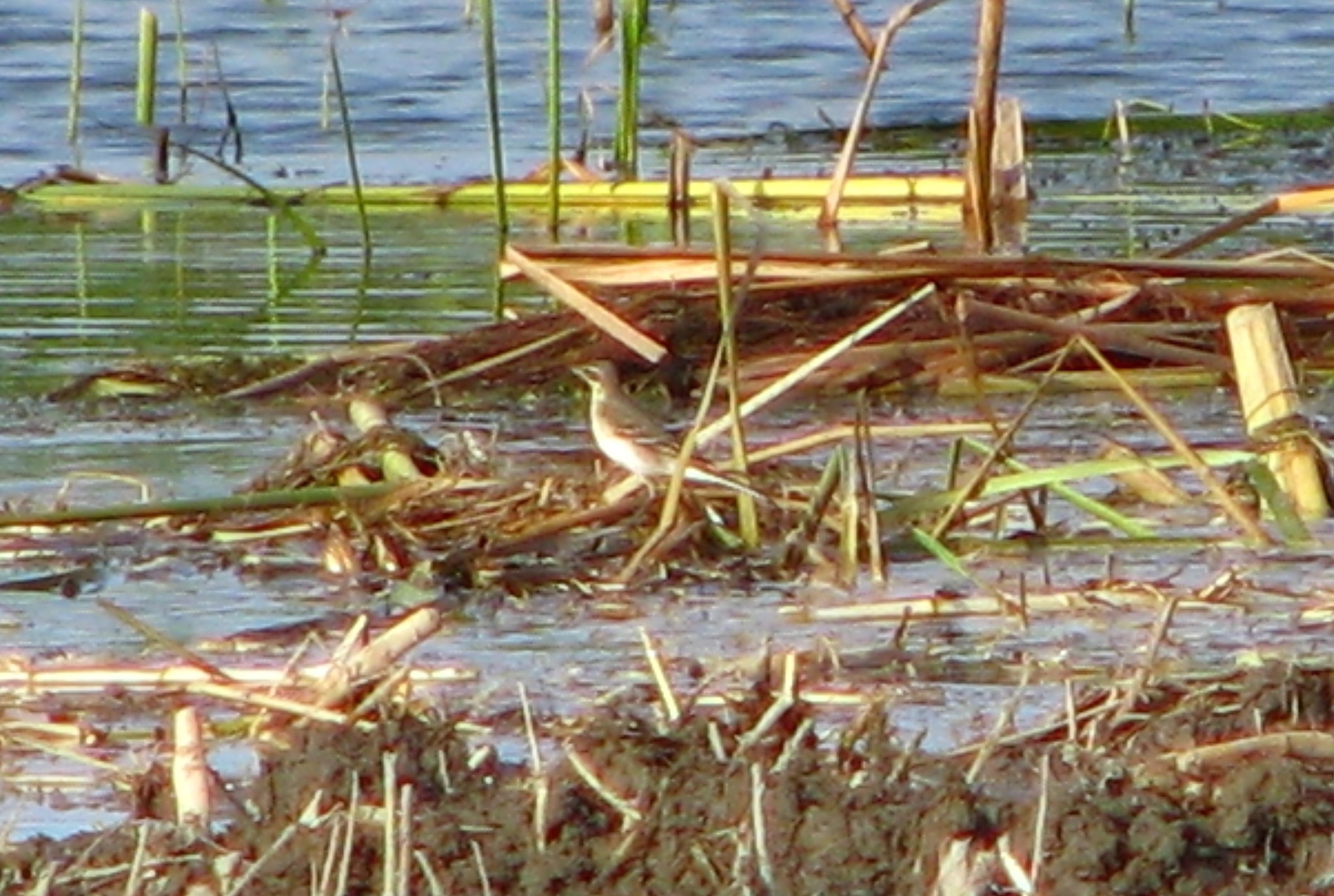
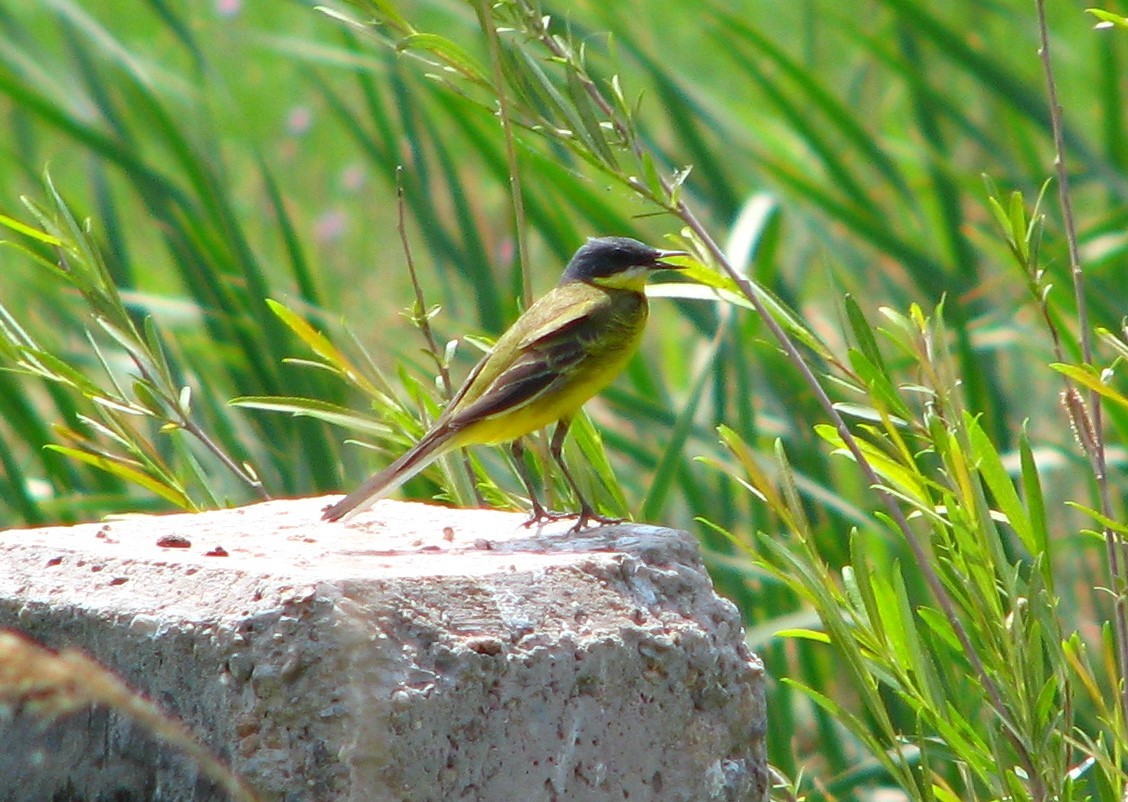
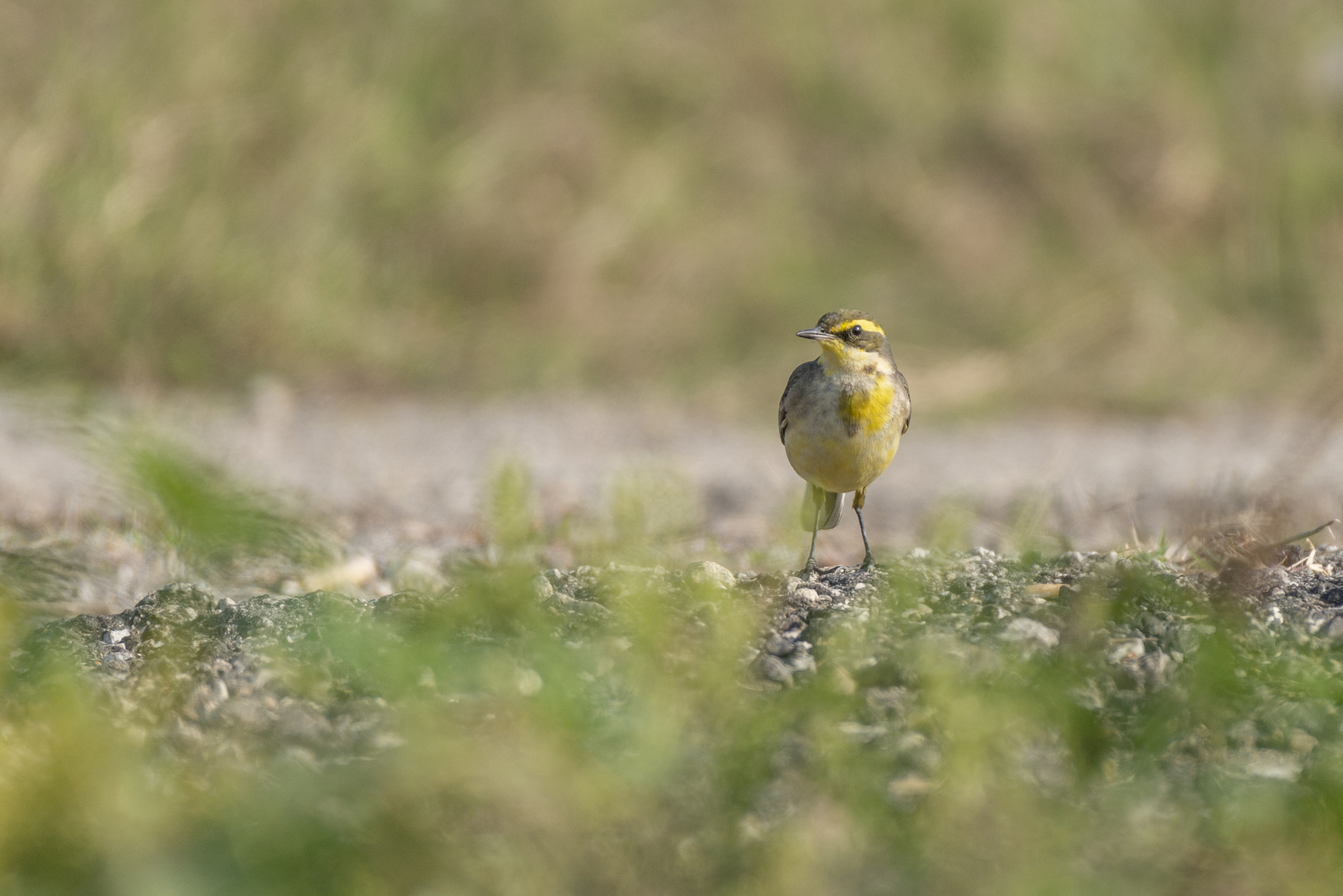
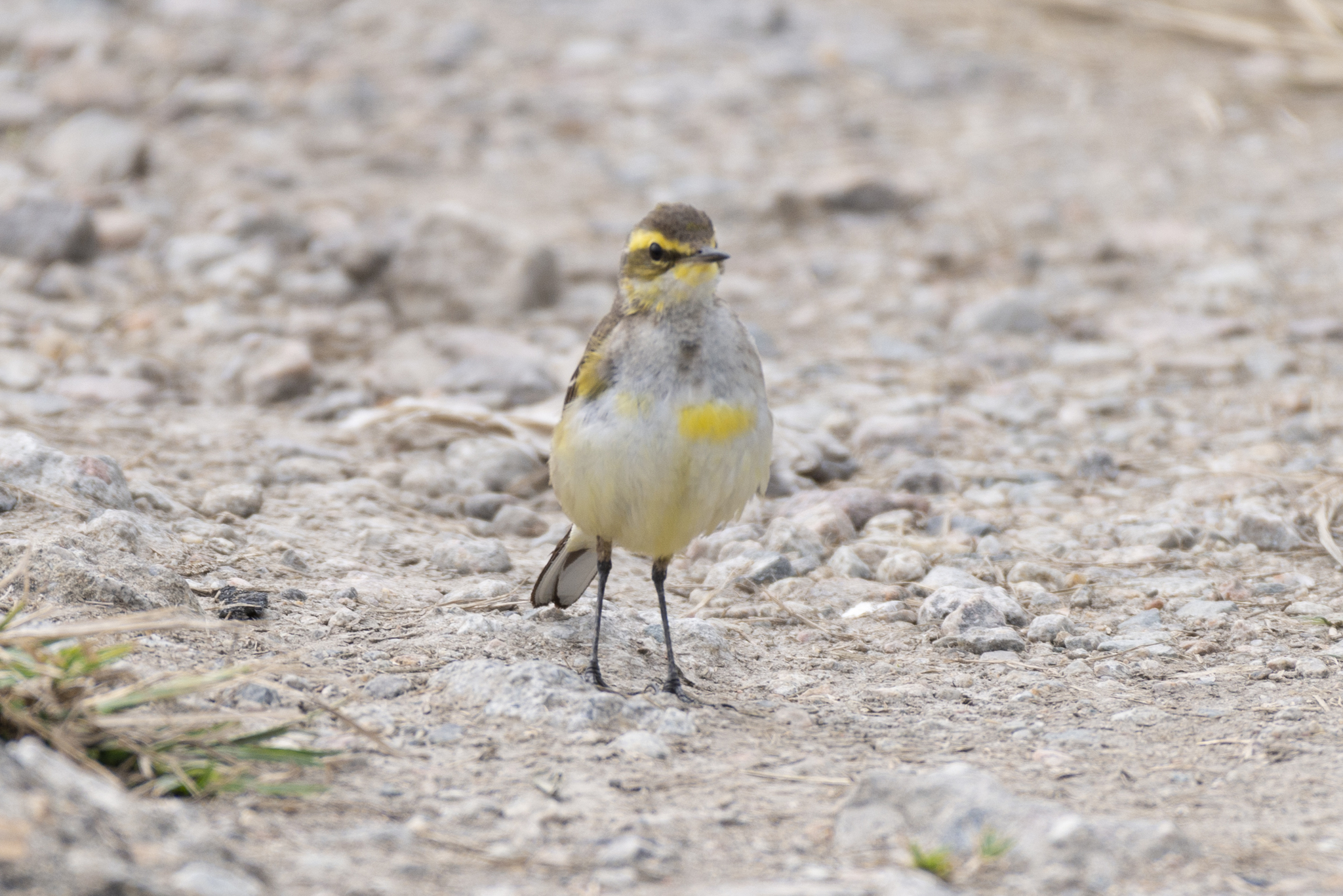
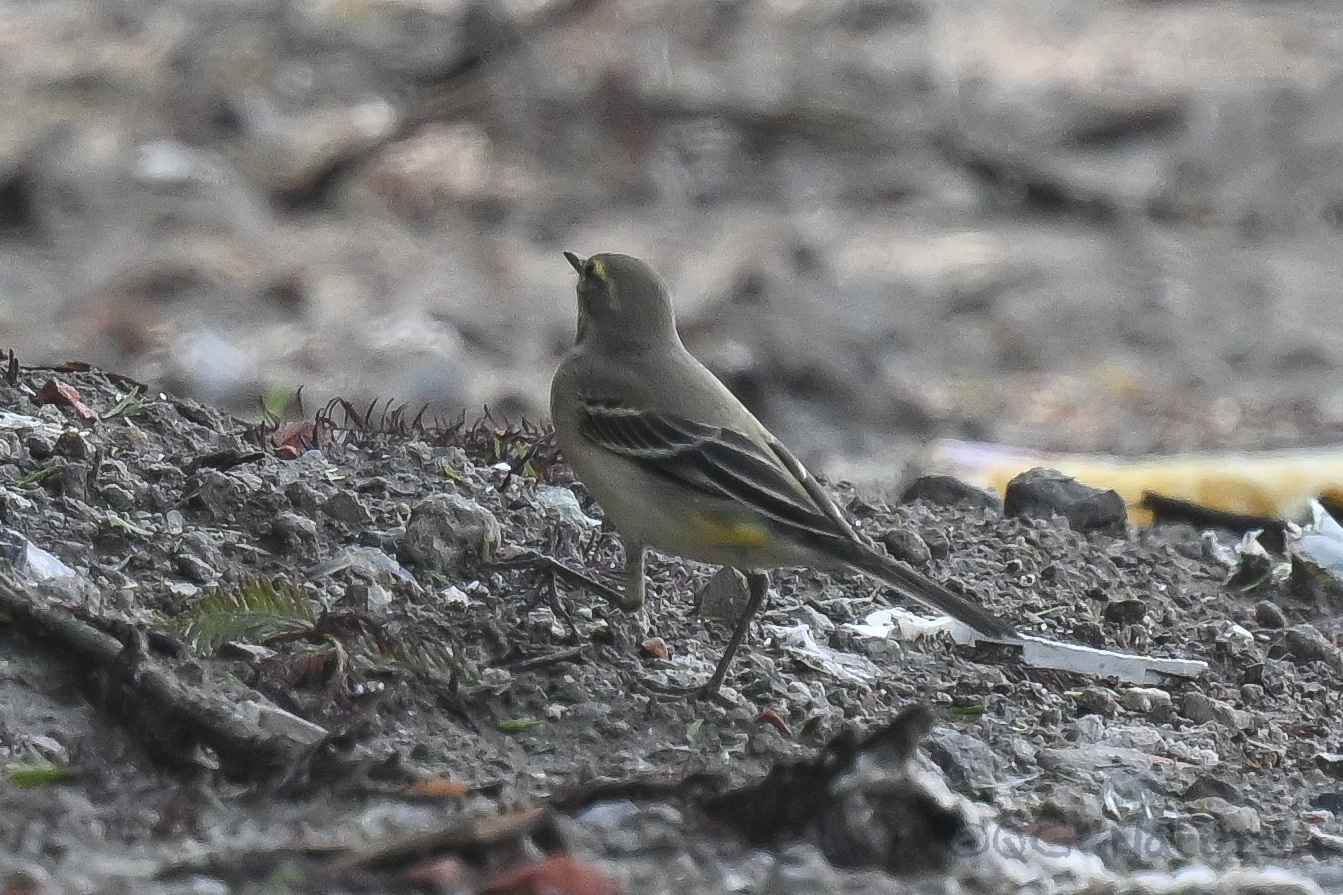
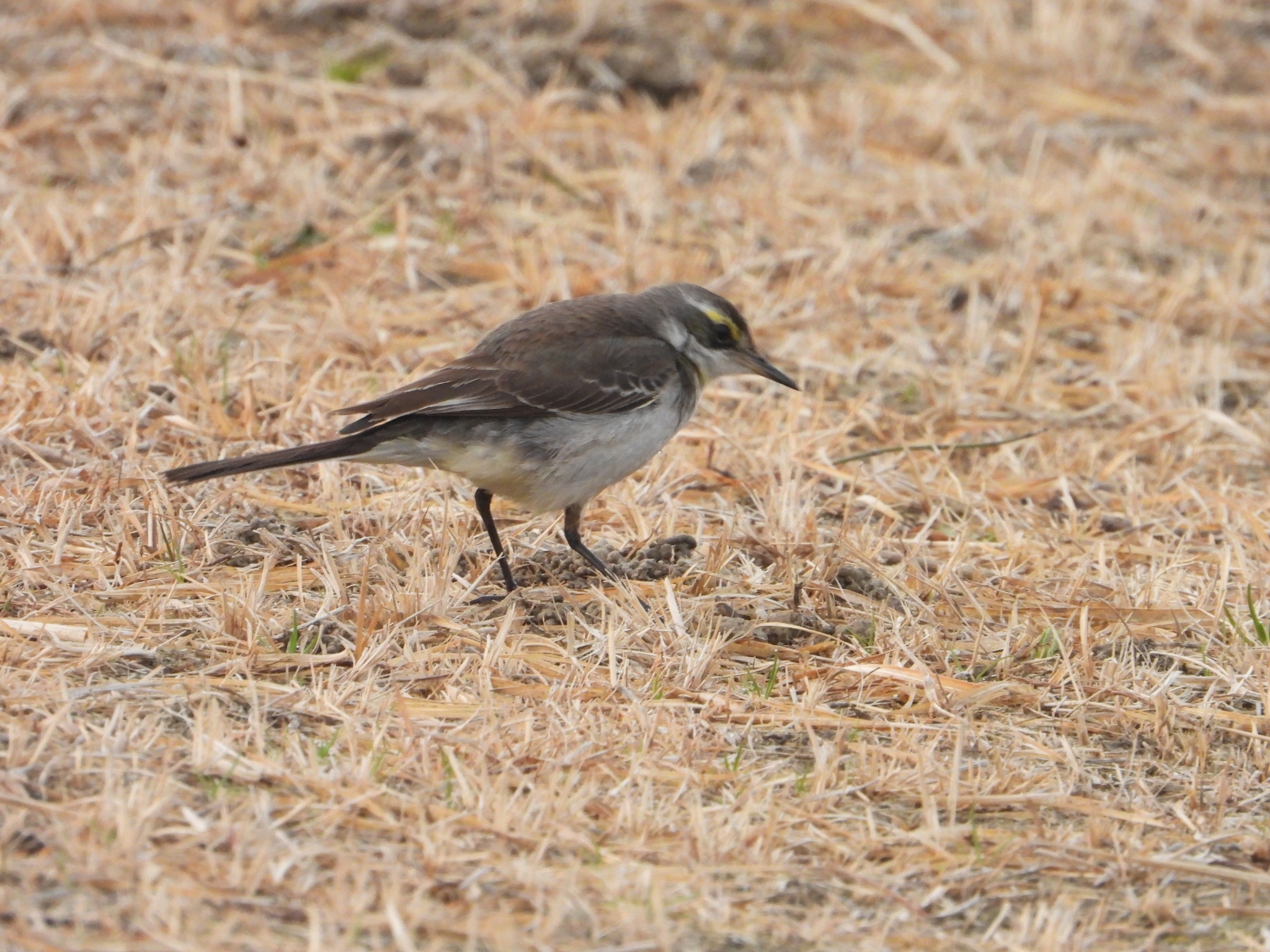
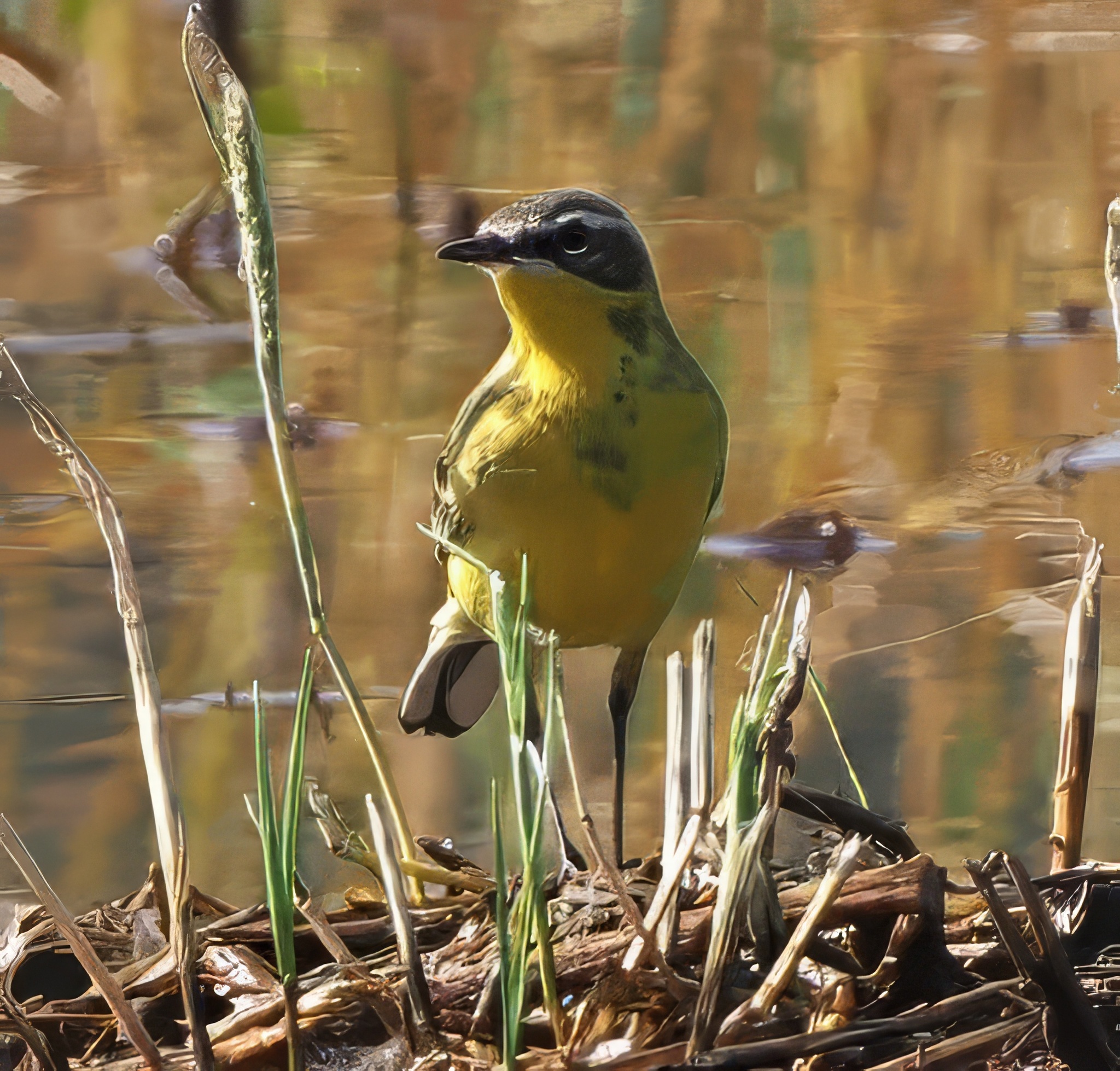
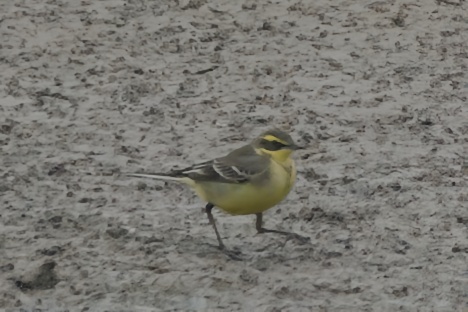
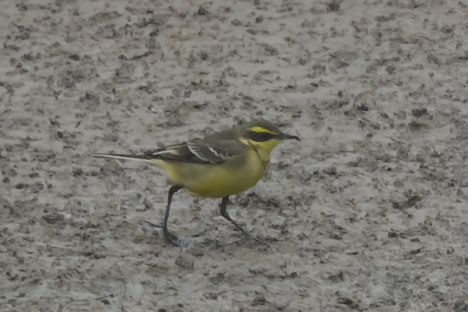
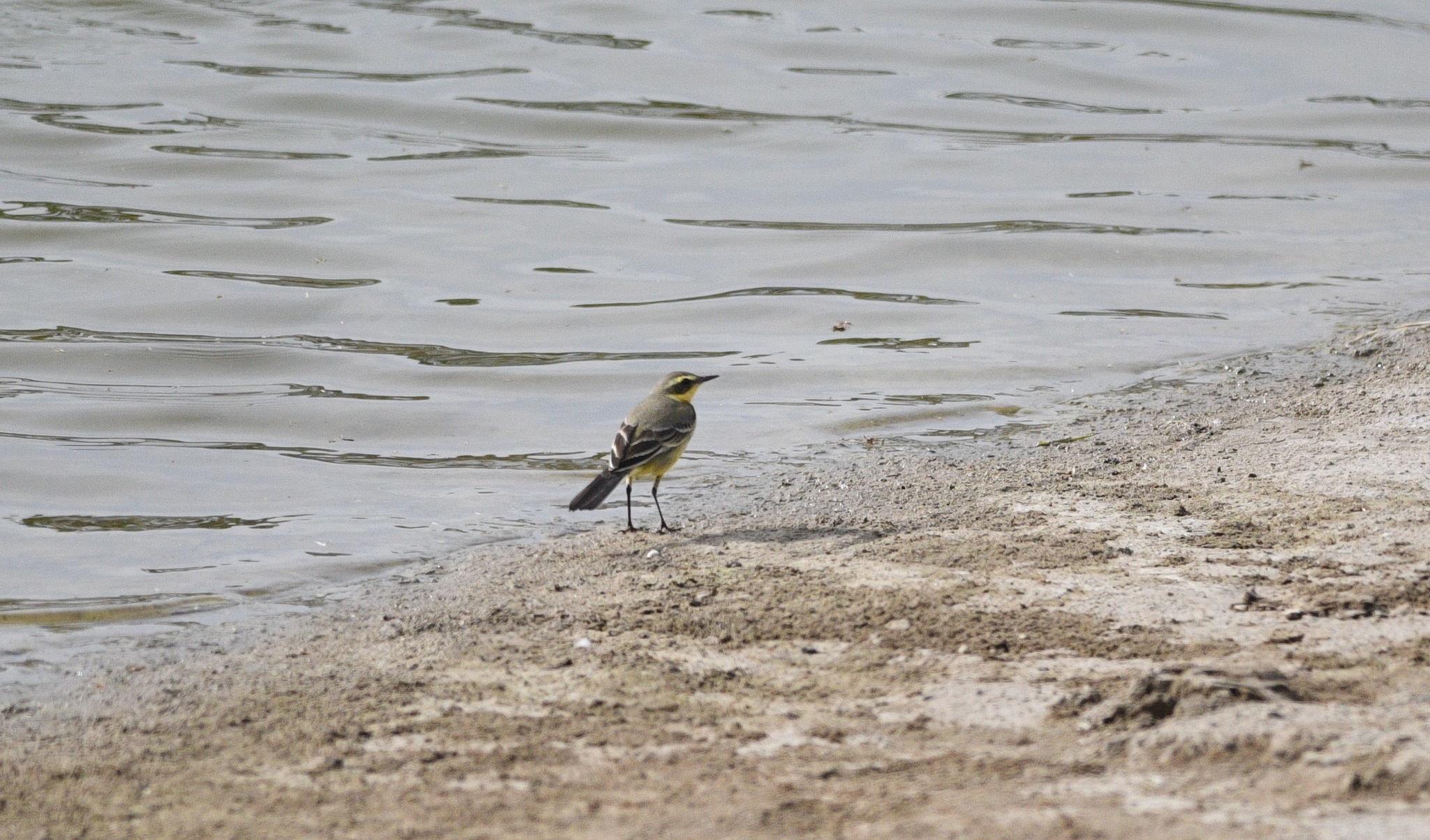
Eastern Yellow Wagtail
Motacilla tschutschensis
黄鹡鸰
Introduction
This small passerine inhabits open wetlands and grasslands across the eastern Palearctic. Formerly considered a subspecies of the western yellow wagtail, genetic research confirmed its species status in 2003. The species breeds in Siberia, Mongolia, and Alaska, migrating to South Asia and Australia for winter. Four subspecies are recognized, differing in head patterns and coloration of breeding males. The species favors damp meadows, marshes, and grassy areas near water. It forages for insects while moving through vegetation and frequently bobs and wags its long tail. Its calls are loud and sharp.
Description
A slim, agile bird measuring 15-16 cm in length, this species possesses the hallmark elongated tail that wags continuously even when the bird is at rest. The breeding male displays olive-green upperparts contrasting with vivid yellow underparts, though the yellow can appear muted in females and first-winter birds, often washed with white. Subspecies exhibit considerable variation in male head coloration and patterning during the breeding season. The bill and legs are uniformly black. A key distinguishing feature is the hind claw, which is relatively long and only mildly curved—a characteristic that separates it reliably from the western yellow wagtail, though this trait requires close observation to detect. The vocalization is a sharp, high-pitched 'zrri' or 'jeet'.
Identification
Separating this species from the western yellow wagtail presents challenges for birdwatchers, as plumage overlap can be considerable. The most reliable diagnostic feature is the hind claw structure: this species shows a longer, less curved claw compared to the western counterpart's shorter, more strongly curved claw. However, observing this trait in field conditions proves difficult when birds are actively foraging in grass. The call offers another identification clue—voice recordings reveal a distinctly shriller and more rasping quality compared to western yellow wagtails. Male breeding plumage varies noticeably among subspecies, with some showing pale gray heads and others displaying darker patterns, requiring careful attention to geographic context when identifying subspecies.
Distribution & Habitat
This species breeds extensively across the eastern Palearctic, from central north Siberia through Mongolia, Kazakhstan, and northern China to northeast Siberia and northwest North America, with a notable foothold in Alaska. The breeding range extends to Sakhalin and northern Hokkaido. Wintering grounds span South Asia and Australia, with the non-breeding range extending west to eastern India and Sri Lanka. Migrant flocks are regularly observed on Pacific islands including Palau, while vagrants appear surprisingly frequently in western and northwestern Europe, with multiple records in Britain and Sweden during autumn migration. Some individuals overwinter in these areas. The species inhabits open country near water, particularly wet meadows and grasslands.
Behavior & Ecology
Strictly insectivorous, this bird forages by running and walking through grassland and shallow water, catching invertebrates on the ground or in flight. It inhabits open country near water, showing particular preference for wet meadows. The nest is constructed in tussocks or grass clumps, where the female lays a clutch of 4-8 speckled eggs. The species is known for its restless, active behavior, constantly moving through its habitat while flicking its tail. Courtship displays involve aerial pursuits and characteristic posturing by males, who vary in appearance across the subspecies. The species forms small flocks outside the breeding season.
Conservation
The species maintains a broad global distribution and large population, though precise population figures require verification against current IUCN assessments. Major threats include habitat loss from agricultural intensification, wetland drainage, and climate change affecting breeding and wintering grounds. Pollution and pesticide use reduce insect prey availability. Conservation efforts focus on protecting wetland habitats across its migratory range. The species benefits from some protected areas within its breeding and wintering ranges, though habitat degradation continues in certain regions.
Culture
The eastern yellow wagtail holds cultural significance in various regions along its extensive migratory route. In parts of East Asia, wagtails generally appear in traditional folklore and are sometimes featured in local festivals celebrating migratory birds. Their arrival in spring has been noted in various cultural traditions across their range. The species features in some regional ornithological literature and birdwatching guides, contributing to public awareness of migratory birds. No specific mythology or extensive folklore is prominently documented for this particular species compared to some other wagtail species.
Source: Wikipedia · CC BY-SA 3.0
Taxonomy
- Order
- Passeriformes
- Family
- Motacillidae
- Genus
- Motacilla
- eBird Code
- eaywag
Vocalizations
Subspecies (4)
-
Motacilla tschutschensis macronyx
breeds Ussuriland to northeastern Mongolia and central Manchuria; winters to southeastern Asia and southeastern China
-
Motacilla tschutschensis plexa
breeds northern Siberia; winter range incompletely known, but winters in southeastern Asia, westward perhaps to India
-
Motacilla tschutschensis taivana
breeds southeastern Siberia to Sea of Okhotsk and northern Japan; winters to southern Asia, Indonesia, and northern Australia
-
Motacilla tschutschensis tschutschensis
breeds eastern Siberia southward tonorthern Mongolia, Kamchatka, and Commander and northern Kuril islands, and far northwestern North America; winters to southeastern China, Philippines, and southeastern Asia from Myanmar eastward to Indochina and southward to Indonesia and northern Australia
Data Sources
Species description from Wikipedia, licensed under CC BY-SA 3.0.
Bird images and sounds sourced from GBIF, contributed by citizen scientists worldwide under Creative Commons licenses.
Taxonomy data from AviList 2025.