White-winged Snowfinch
Montifringilla nivalis
白斑翅雪雀
Introduction
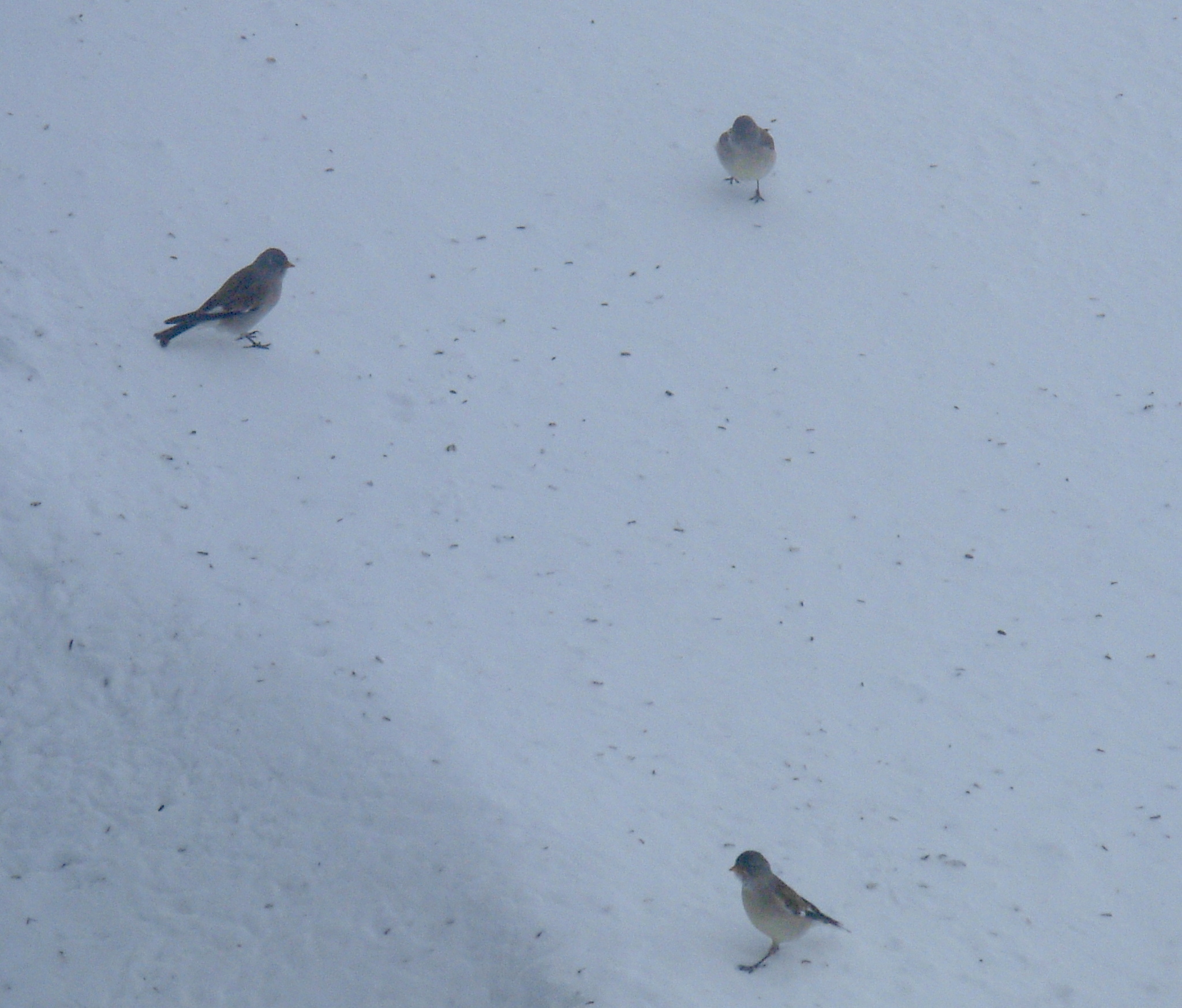
A sparrow (family Passeridae) in the genus Montifringilla. Resident breeding species across bare mountains of southern Europe (Pyrenees, Alps, Corsica, Balkans) through central Asia to western China. Inhabits high-altitude terrain typically above 1,500 meters. Notable for its fearlessness around humans, foraging readily at ski resorts, and remarkable hardiness—rarely descending below 1,000 meters even in severe winter weather.
Description
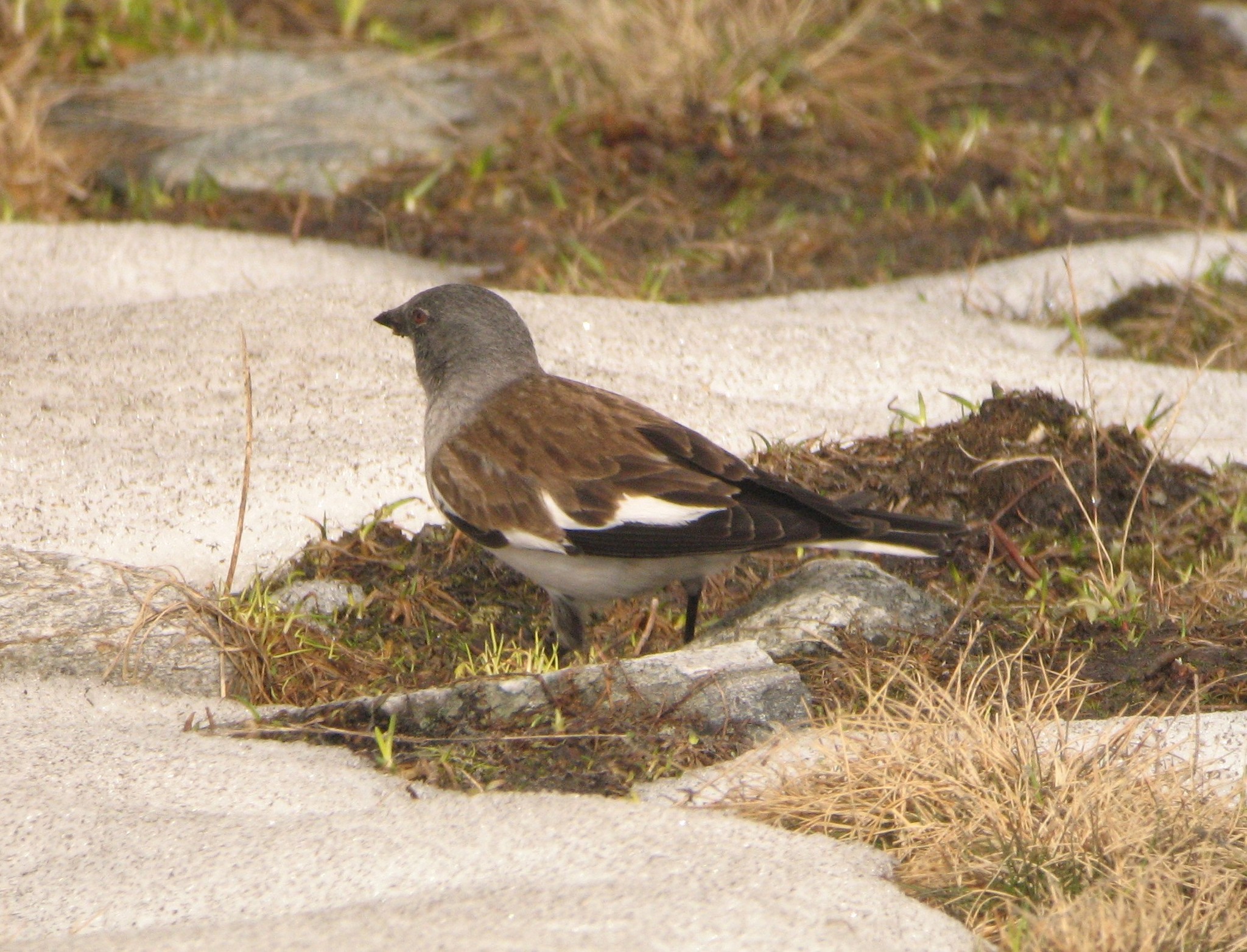
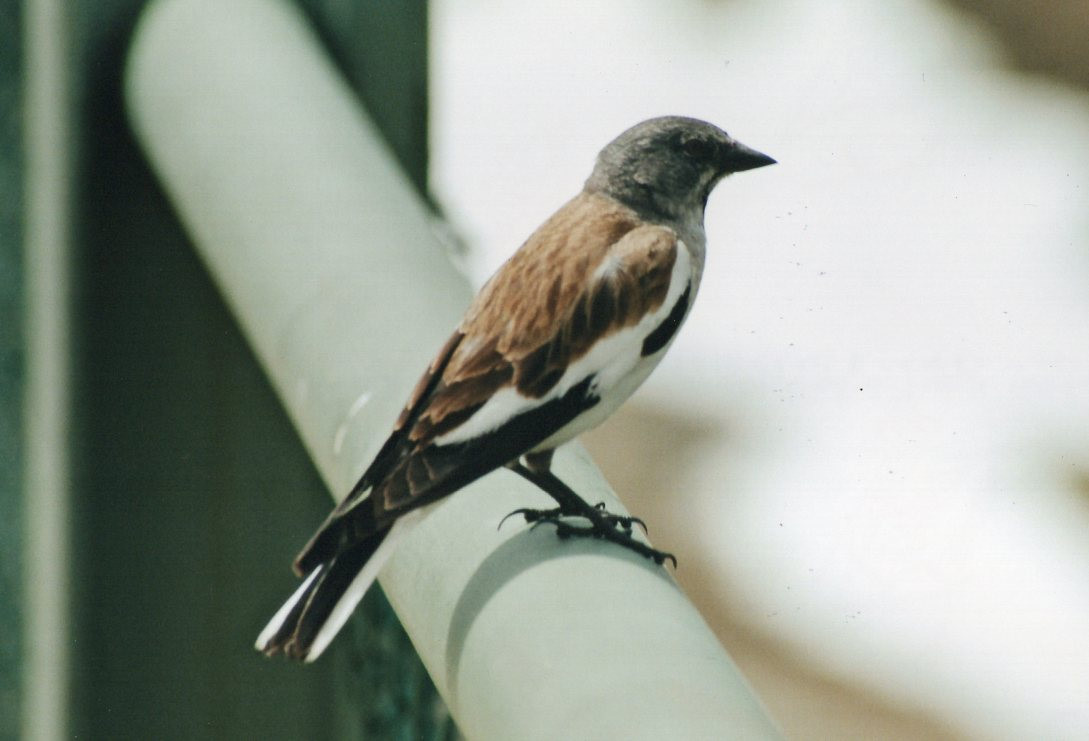
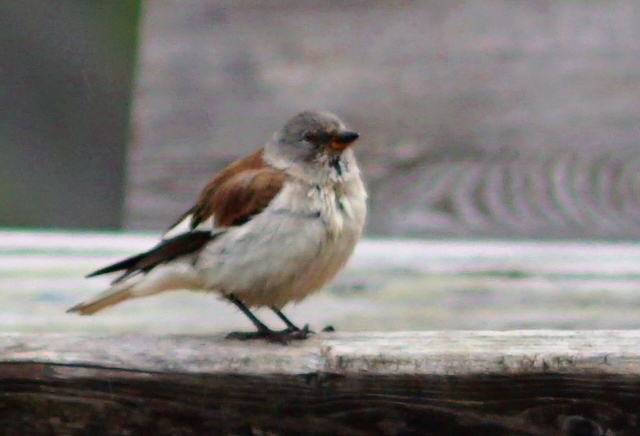
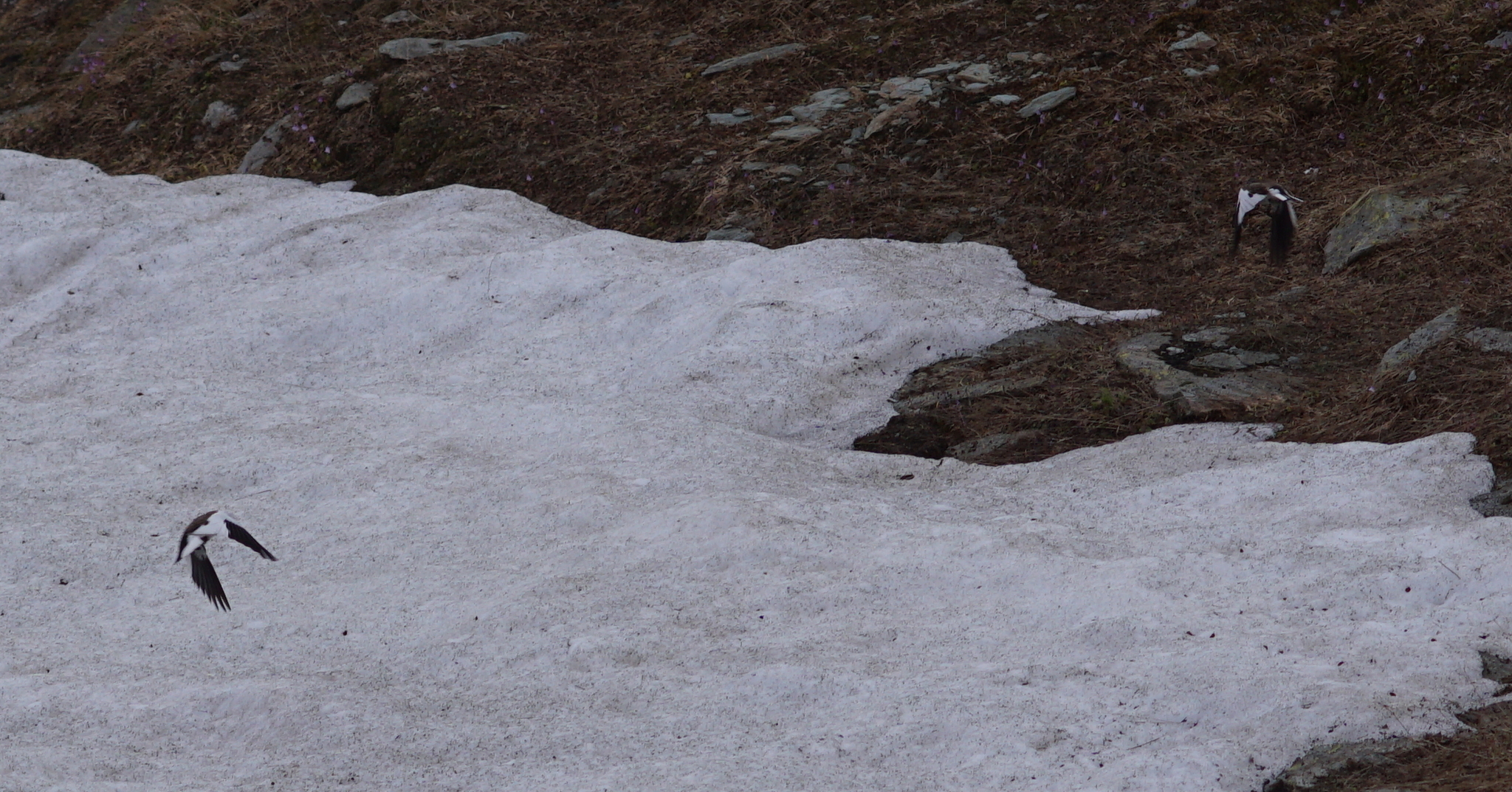
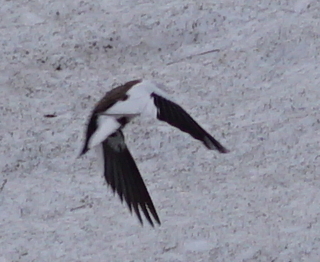
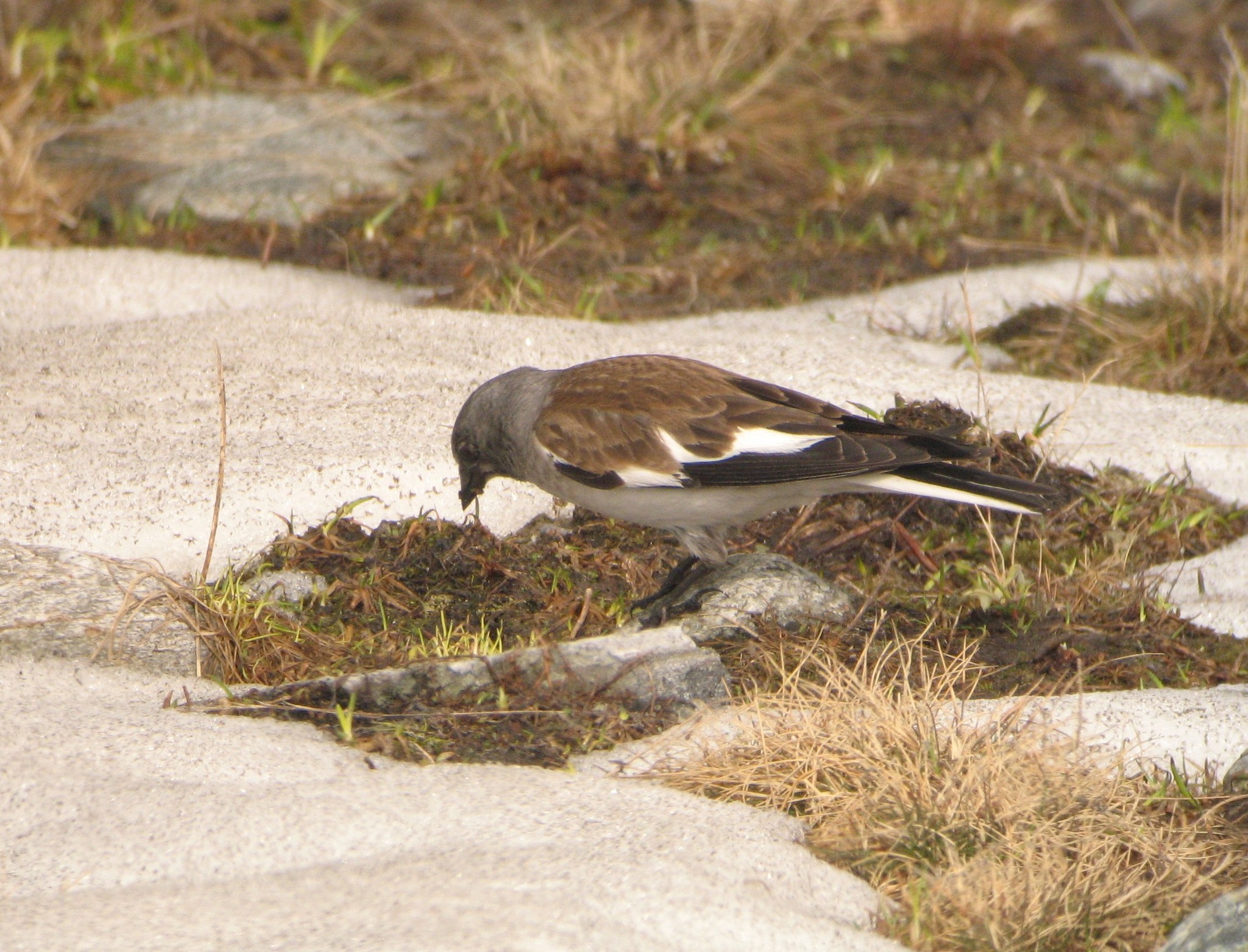
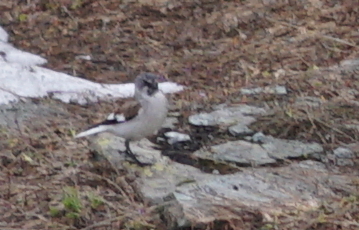
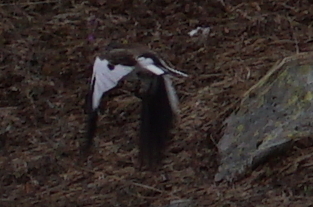
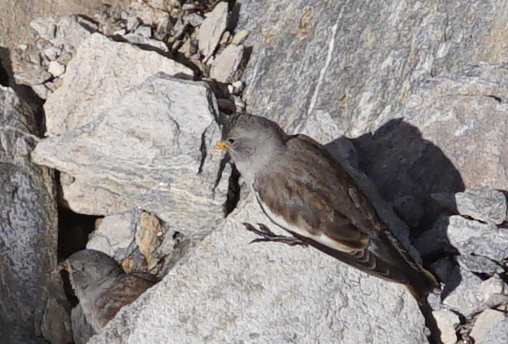
Large, stocky snowfinch measuring 16.5–19 cm in length. Brown upperparts contrast with white underparts and grey head. Diagnostic long narrow white wing panel visible on folded wings. Seasonal bill variation: black in summer with prominent black bib on throat, yellow in winter with bib absent. Sexes appear similar. In flight reveals black wings with extensive white panels and white-edged black tail.
Identification
Largest snowfinch in its range. Distinctive white wing panel and white-edged tail visible in flight. Chattering song with numerous trills distinguishes it from similar species; also gives rolling or creaky calls. Summer black bib and bill are key seasonal markers. Confusable with other snowfinches but larger size and prominent white wing panels are diagnostic.
Distribution & Habitat
Resident breeder across southern European mountains (Pyrenees, Alps, Corsica, Balkans) eastward through central Asia to western China. Inhabits bare alpine terrain above 1,500 meters elevation. Nests in rock crevices or abandoned rodent burrows, typically laying 3–4 eggs. Highly sedentary; rarely descends below 1,000 meters even during harsh winters. Seven subspecies recognized across this range.
Behavior & Ecology
Diet consists primarily of seeds supplemented by insects. Exceptionally bold and approachable, readily foraging around human settlements and ski areas. Nests in protected locations such as crevices and rodent burrows. Social behavior not extensively documented; presumed territorial during breeding season. Vocalizations include a chattering song with many trills and various rolling or creaky calls.
Conservation
IUCN assessment, population trends, and specific threats are not provided in the source material.
Culture
Cultural significance, folklore, or historical references are not documented in the source material.
Source: Wikipedia · CC BY-SA 3.0
Taxonomy
- Order
- Passeriformes
- Family
- Passeridae
- Genus
- Montifringilla
- eBird Code
- whwsno1
Vocalizations
Subspecies (7)
-
Montifringilla nivalis alpicola
Caucasus to far southwestern Russia, northern Iran, Afghanistan (Hindu Kush), and western Pamirs
-
Montifringilla nivalis gaddi
Zagros Mountains (southwestern Iran)
-
Montifringilla nivalis groumgrzimaili
northwestern China (eastern Tian Shan and Altai mountains in northern Xinjiang) eastward to central Mongolia and far south-central Russia
-
Montifringilla nivalis kwenlunensis
southwestern China (southern Xinjiang: Kunlun Shan and Altun Shan ranges)
-
Montifringilla nivalis leucura
southern and eastern Türkiye
-
Montifringilla nivalis nivalis
southern Europe from northern Spain (the Pyrenees) and Corsica through the Alps and Italy to Greece
-
Montifringilla nivalis tianshanica
Alayskiy and Chatkal'skiy mountains to western Tien Shan Mountains
Data Sources
Species description from Wikipedia, licensed under CC BY-SA 3.0.
Bird images and sounds sourced from GBIF, contributed by citizen scientists worldwide under Creative Commons licenses.
Taxonomy data from AviList 2025.