




Common Rock Thrush
Monticola saxatilis
白背矶鸫
Introduction
A medium-sized chat species in the family Muscicapidae. Breeds across southern Europe through Central Asia to northern China. Strongly migratory, with all populations wintering in Africa south of the Sahara. Uncommon visitor to northern Europe. The range has contracted at the periphery in recent decades due to habitat destruction; for example, it bred in the Jura Krakowsko-Częstochowska in Poland in the early 20th century but no longer occurs there. Not considered globally endangered.
Description
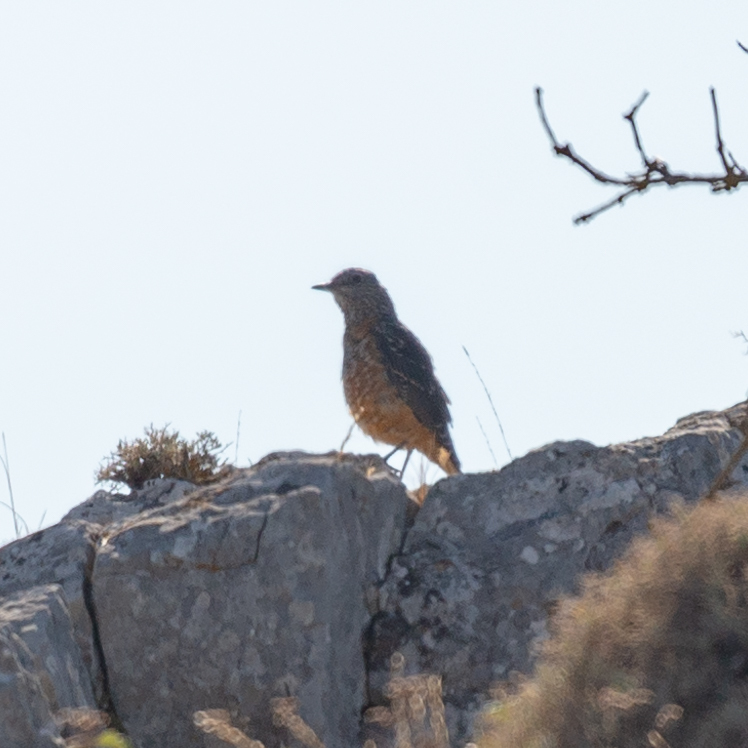
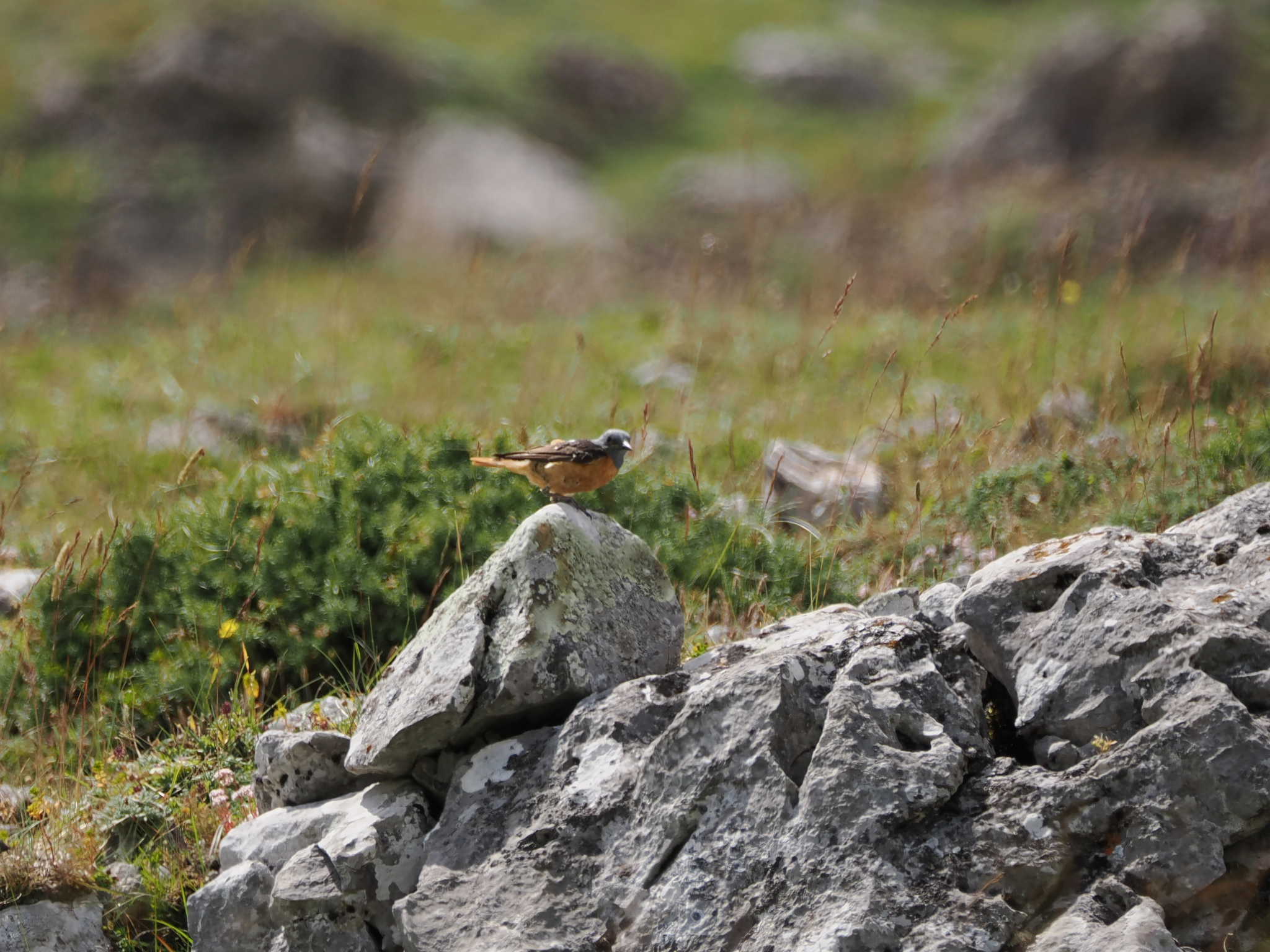
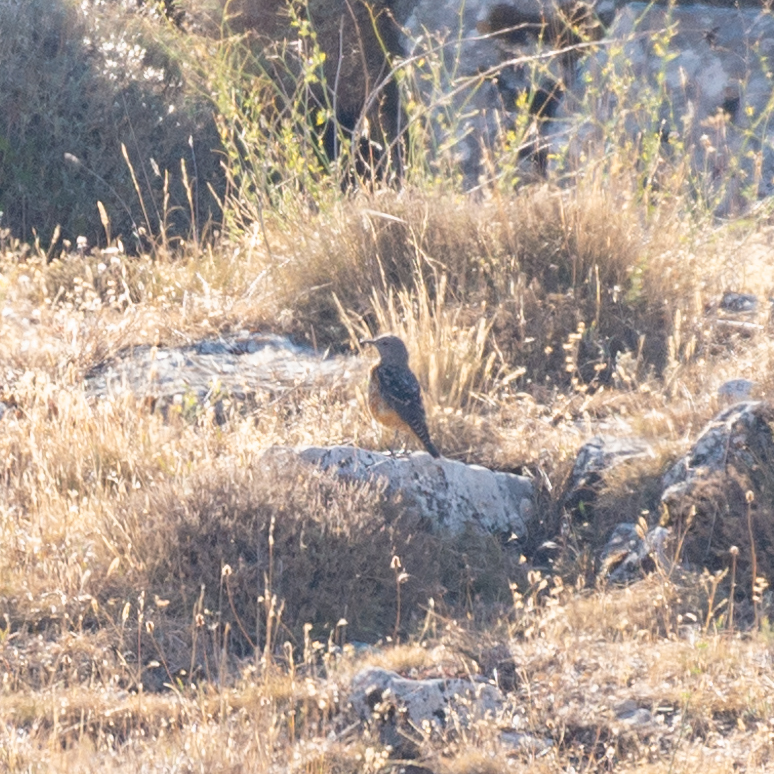
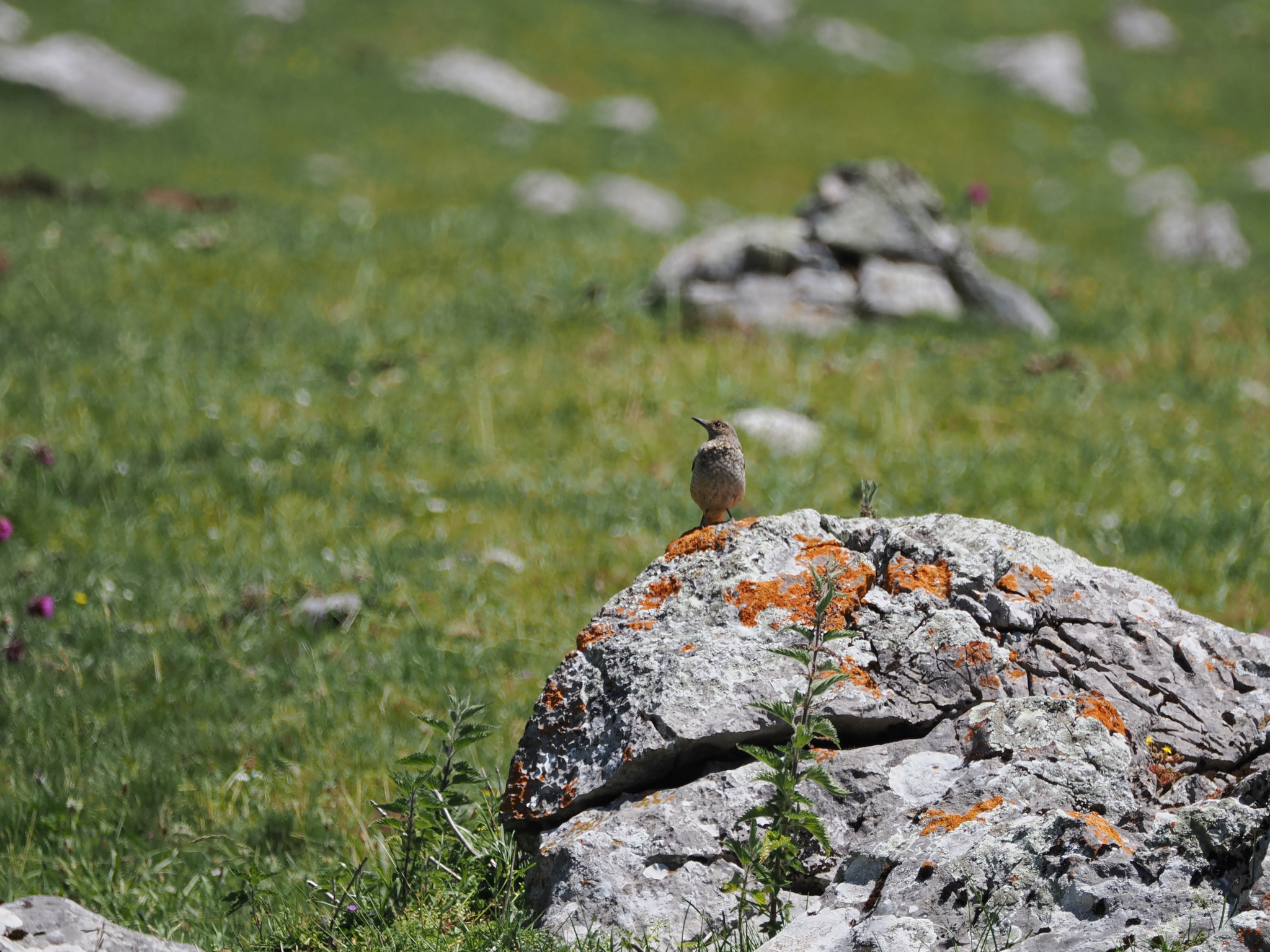
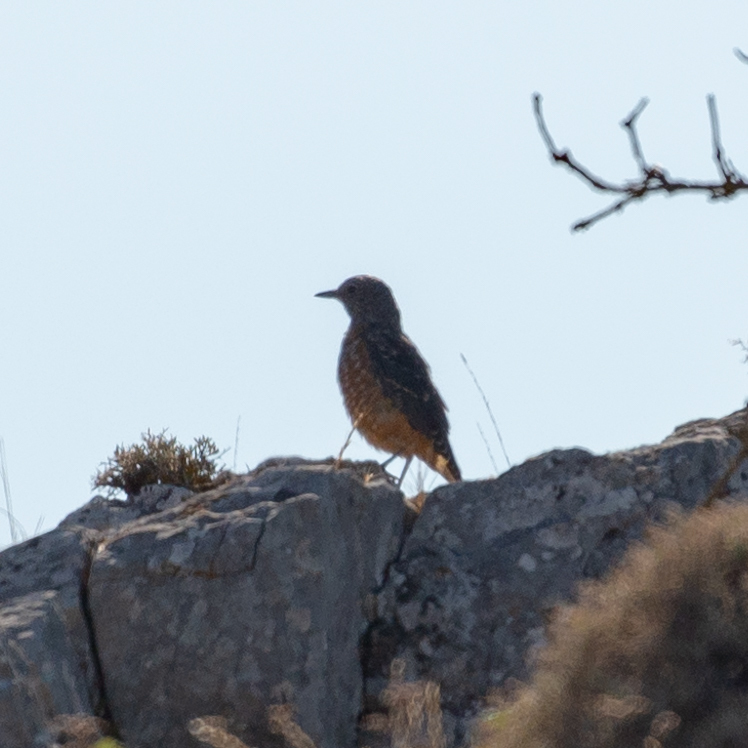
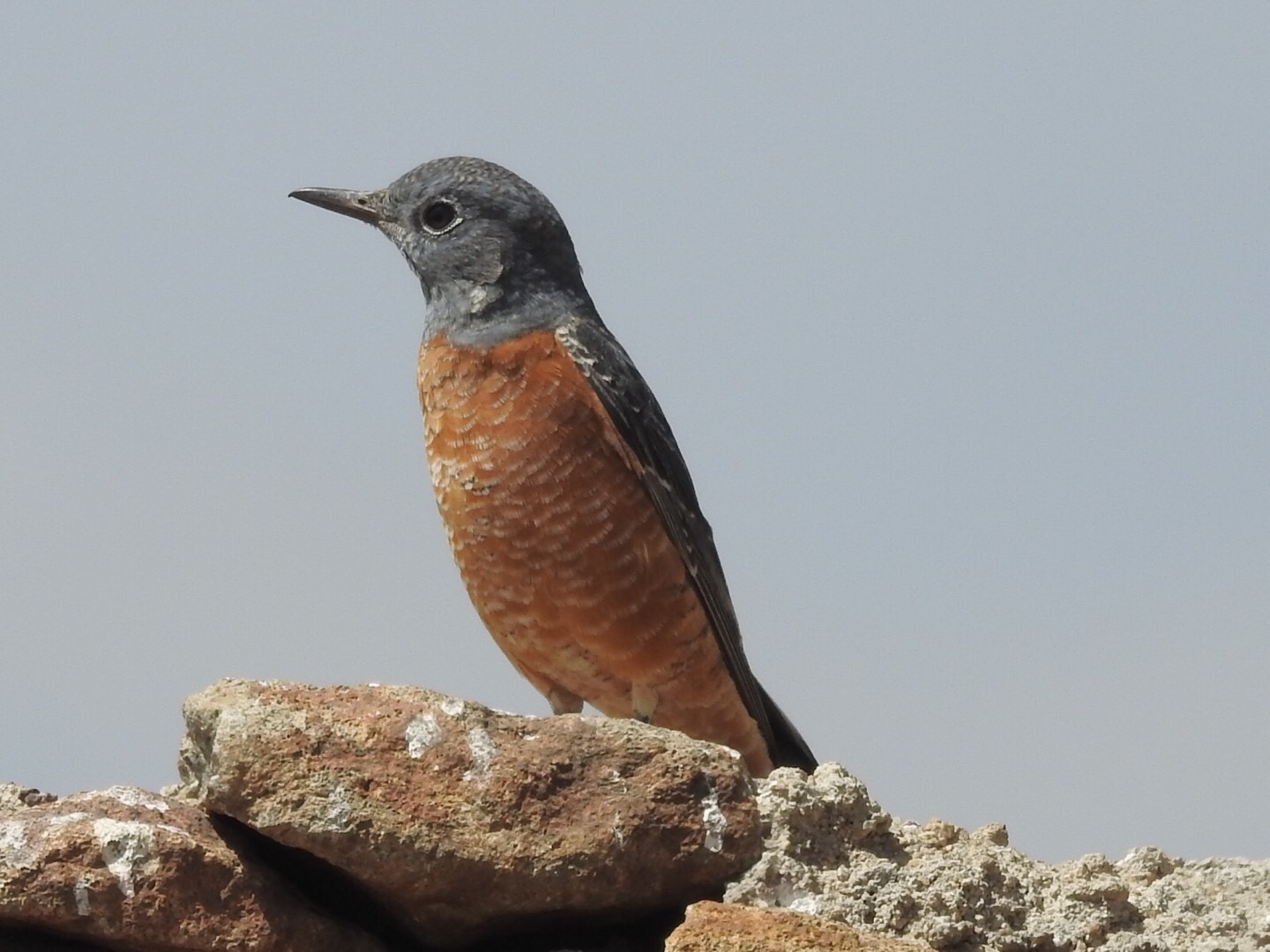
A stocky thrush measuring 17–20 cm in length. The breeding male has a blue-grey head, orange underparts and outer tail feathers, dark brown wings, and a white back. Females and immatures are much less striking, with dark brown scaly-patterned upperparts and paler brown scaly underparts. The outer tail feathers are reddish in all plumages.
Identification
Breeding males are unmistakable with their blue-grey head, orange underparts, and white back. Females and immatures are more challenging to identify, appearing as typical brown thrushes with scaly patterning and reddish outer tail feathers that help distinguish them from similar species.
Distribution & Habitat
Breeds from southern Europe across Central Asia to northern China. Winters entirely in sub-Saharan Africa. Occurs as an uncommon visitor to northern Europe. Inhabits open dry hilly areas during the breeding season, typically at elevations above 1500 m.
Behavior & Ecology
Breeds in open, dry, hilly terrain at elevations usually above 1500 m. Nests in rock cavities, laying 4–5 eggs. Omnivorous diet consisting of insects, berries, and small reptiles. The male produces a clear and tuneful song.
Conservation
While not considered globally endangered, the species has experienced range contractions at the periphery of its distribution due to habitat destruction. Population trends at the range-wide level are not specified.
Source: Wikipedia · CC BY-SA 3.0
Taxonomy
- Order
- Passeriformes
- Family
- Muscicapidae
- Genus
- Monticola
- eBird Code
- rtrthr1
Distribution
breeds rocky regions of southern Palearctic region; winters to eastern Africa
Data Sources
CBR Notes: 英文名由Rufous-tailed Rock Thrush为Common Rock Thrush
Species description from Wikipedia, licensed under CC BY-SA 3.0.
Bird images and sounds sourced from GBIF, contributed by citizen scientists worldwide under Creative Commons licenses.
Taxonomy data from AviList 2025.