White-throated Rock Thrush
Monticola gularis
白喉矶鸫
Introduction
This small passerine is distributed across eastern Asia. It breeds in montane forests and migrates to wintering grounds in Southeast Asia. The species shows strong sexual dimorphism: males have white, chestnut, cobalt blue, and black plumage, while females are brown with bold scalloping. It inhabits forested areas, shrubland, and rocky terrain from sea level to 1,500 meters elevation. The species constructs cup-shaped nests from tree matter, lichen, and moss, typically placed in tree forks.
Description
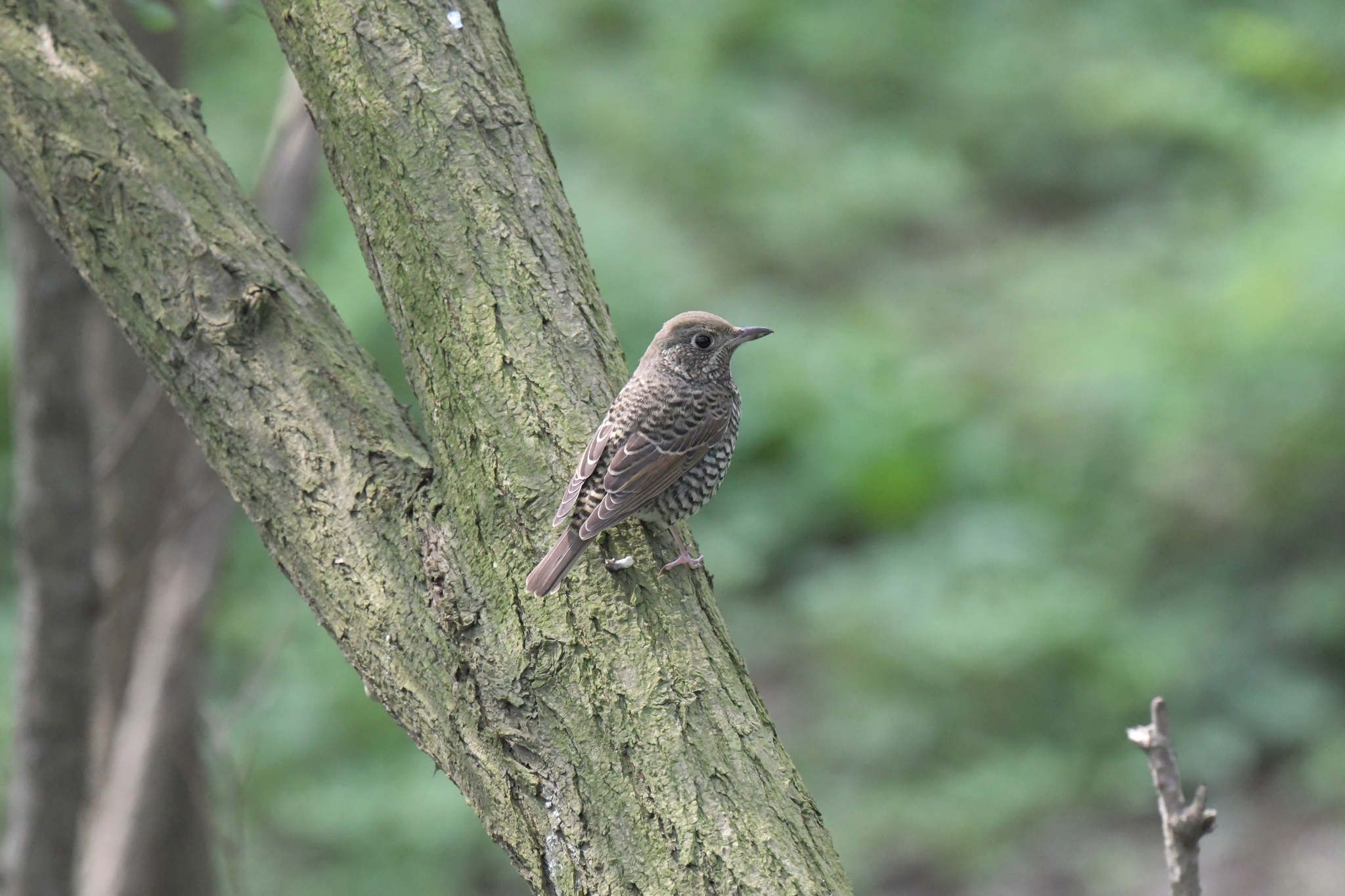
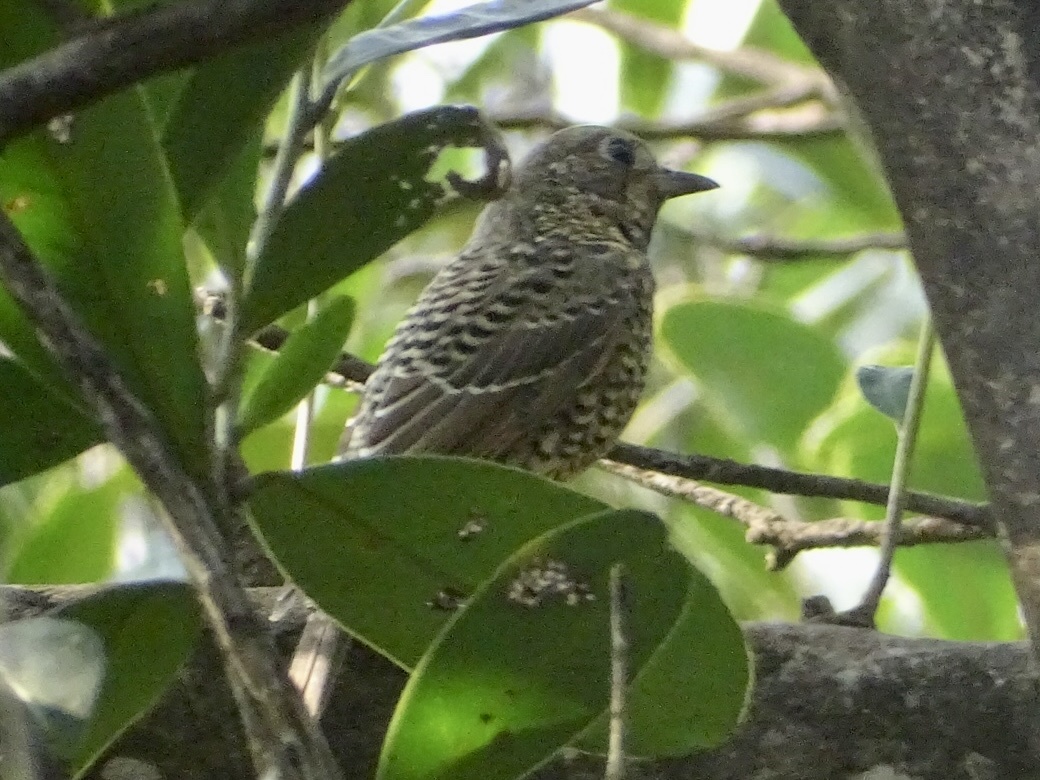
A compact thrush weighing 34 grams on average (32-37 grams range) and measuring 16-19 centimeters in length. Adult males display white patches on the chin and throat, with the remainder of the undersides in chestnut-orange. The upperparts show cobalt blue and black coloration. Adult females have brown or olive-brown upper parts with boldly scalloped underparts. Young males exhibit gray or golden-brown feathers with orange undersides. The species has a typical generation length of 3.8 years.
Distribution & Habitat
The species occupies a substantial range of 1,710,000 square kilometers across eastern Asia. It breeds in Manchuria, the Russian Far East, and surrounding regions, arriving on breeding grounds between May and departing by September. Wintering occurs in Indochina and southern China. Occasional vagrants have been recorded in Japan, Hong Kong, and Singapore. The bird inhabits temperate forests, shrubland, and rocky areas from sea level to 1,500 meters elevation. Population status remains unknown, though it is considered relatively common in China away from coastal areas, while being rare in North Korea.
Behavior & Ecology
The species is fully migratory, occupying breeding territories from May through September. Breeding occurs between May and July, with the pair raising two broods per season. Nests are cup-shaped structures composed of tree matter, lichen, rootlets, and moss internally, with pine needles and stems forming the exterior, typically positioned in tree forks. The diet consists primarily of invertebrates, including weevils, mole crickets, and lepidopterans. The song has been described as melancholy, flute-like, consisting of drawn-out rising whistles.
Conservation
The species holds an IUCN Red List category of 'least concern.' Its population status remains unknown but appears stable, neither increasing nor declining significantly. The bird has maintained consistent conservation status since 2000, previously classified as 'lower risk' between 1988 and 2000. While considered rare in North Korea, it remains relatively common throughout much of its extensive Chinese range.
Culture
In modern times, this species is widely kept as a pet across its range. Additionally, the bird is consumed as food in some countries within its distribution area.
Source: Wikipedia · CC BY-SA 3.0
Taxonomy
- Order
- Passeriformes
- Family
- Muscicapidae
- Genus
- Monticola
- eBird Code
- wtrthr1
Distribution
breeds southeastern Siberia to northeastern China and Korea; winters to southeastern Asia
Vocalizations
Data Sources
Species description from Wikipedia, licensed under CC BY-SA 3.0.
Bird images and sounds sourced from GBIF, contributed by citizen scientists worldwide under Creative Commons licenses.
Taxonomy data from AviList 2025.