Pin-striped Tit-Babbler
Mixornis gularis
纹胸鹛
Introduction
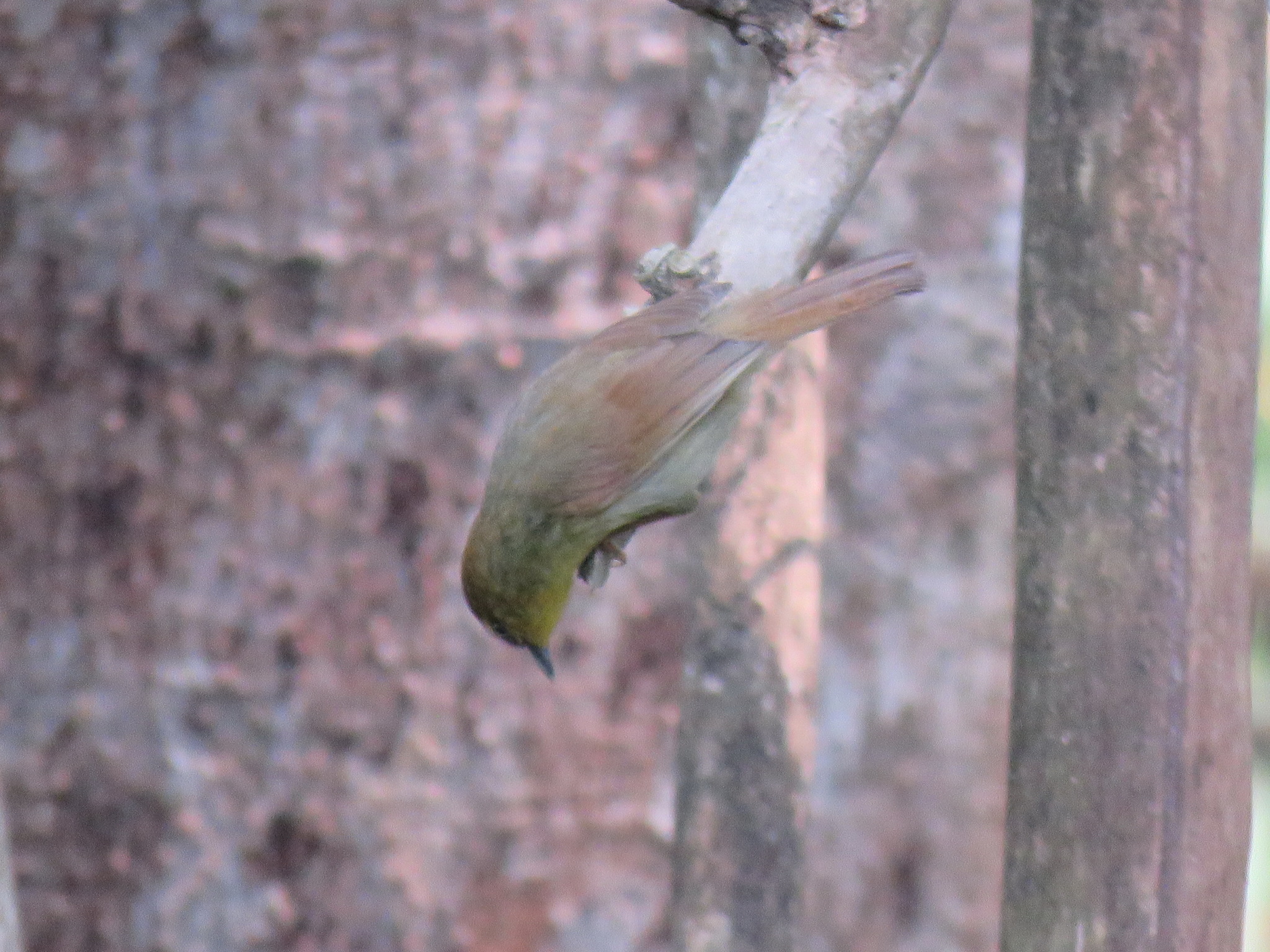
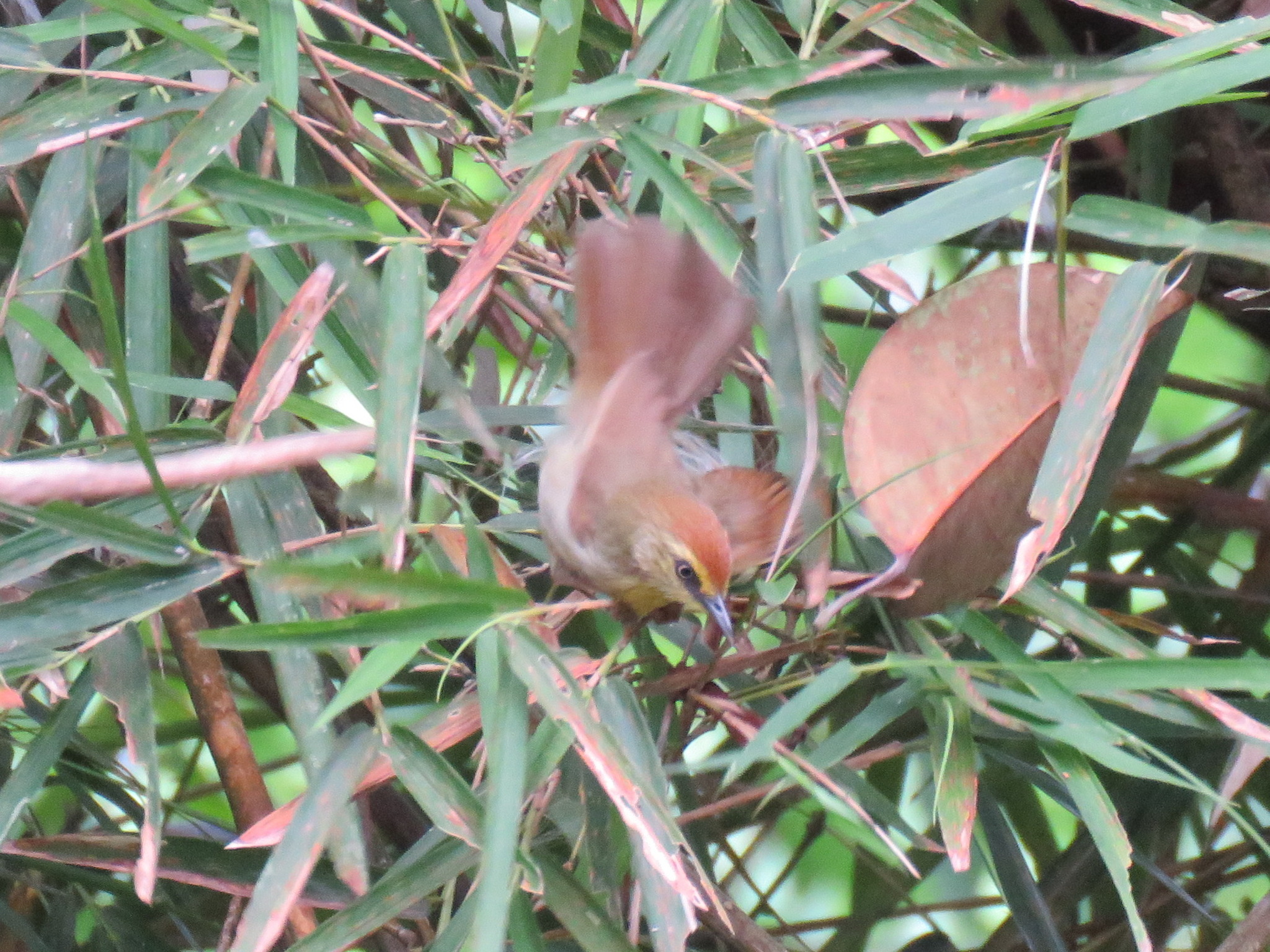
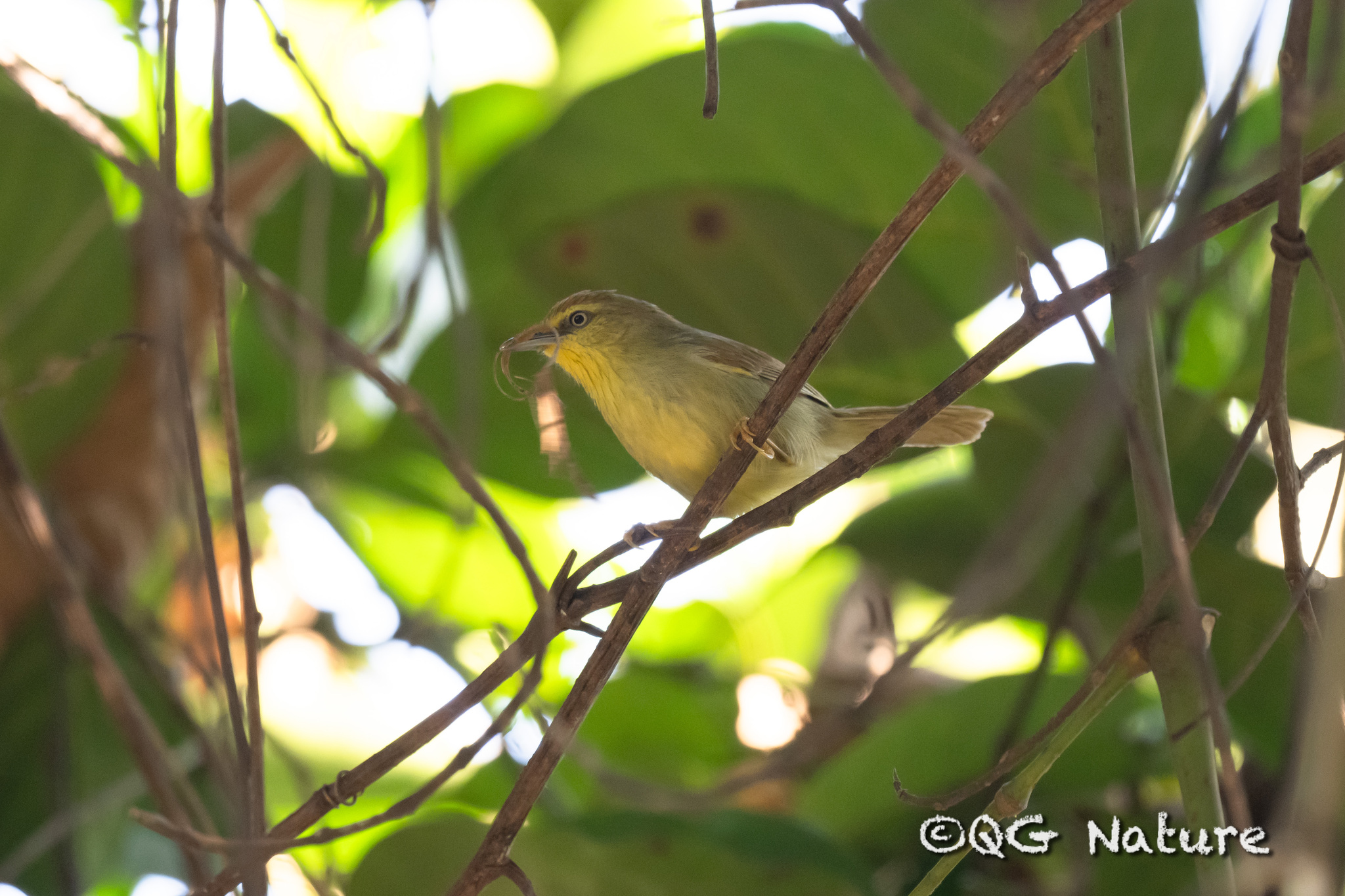
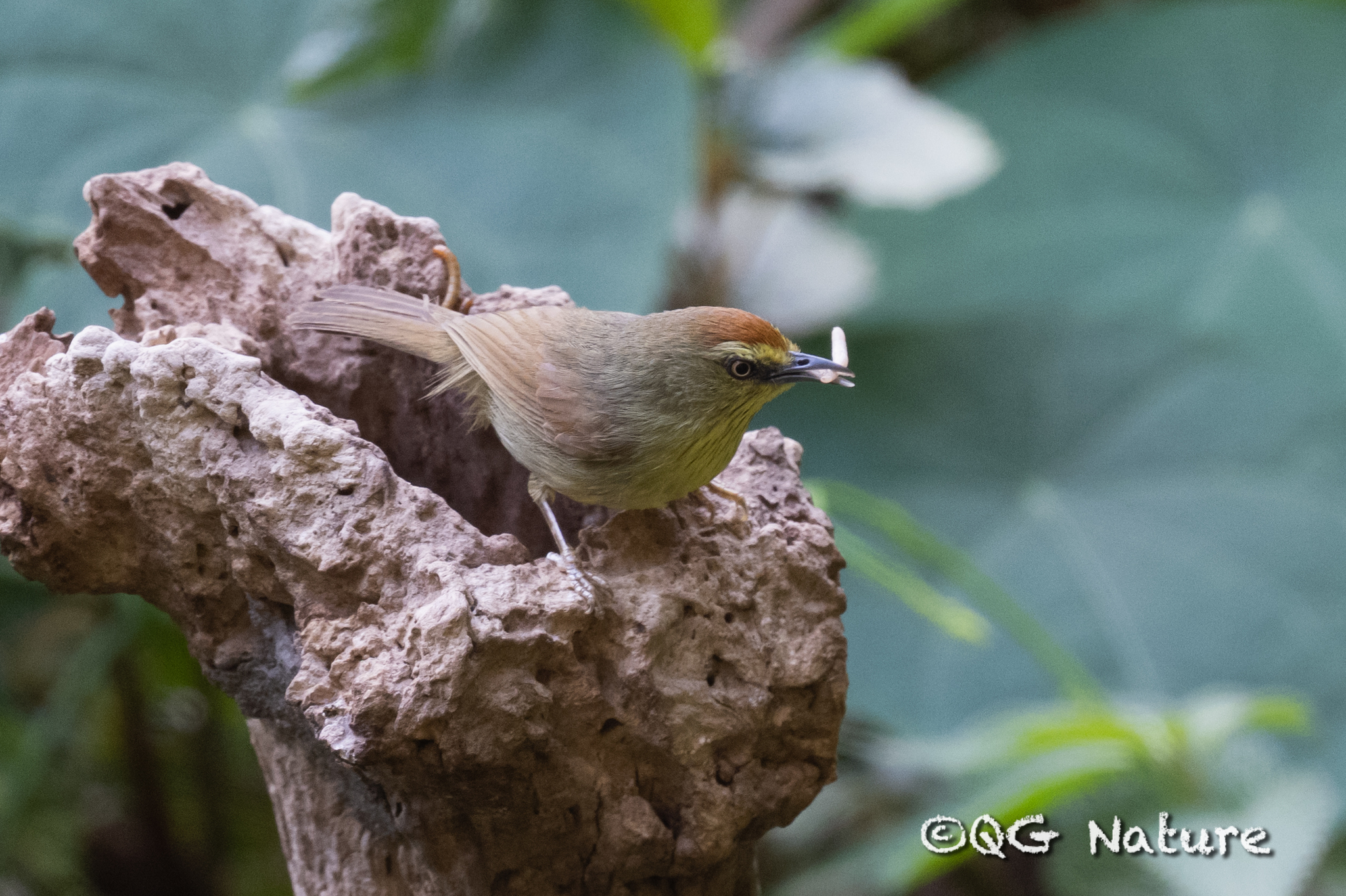
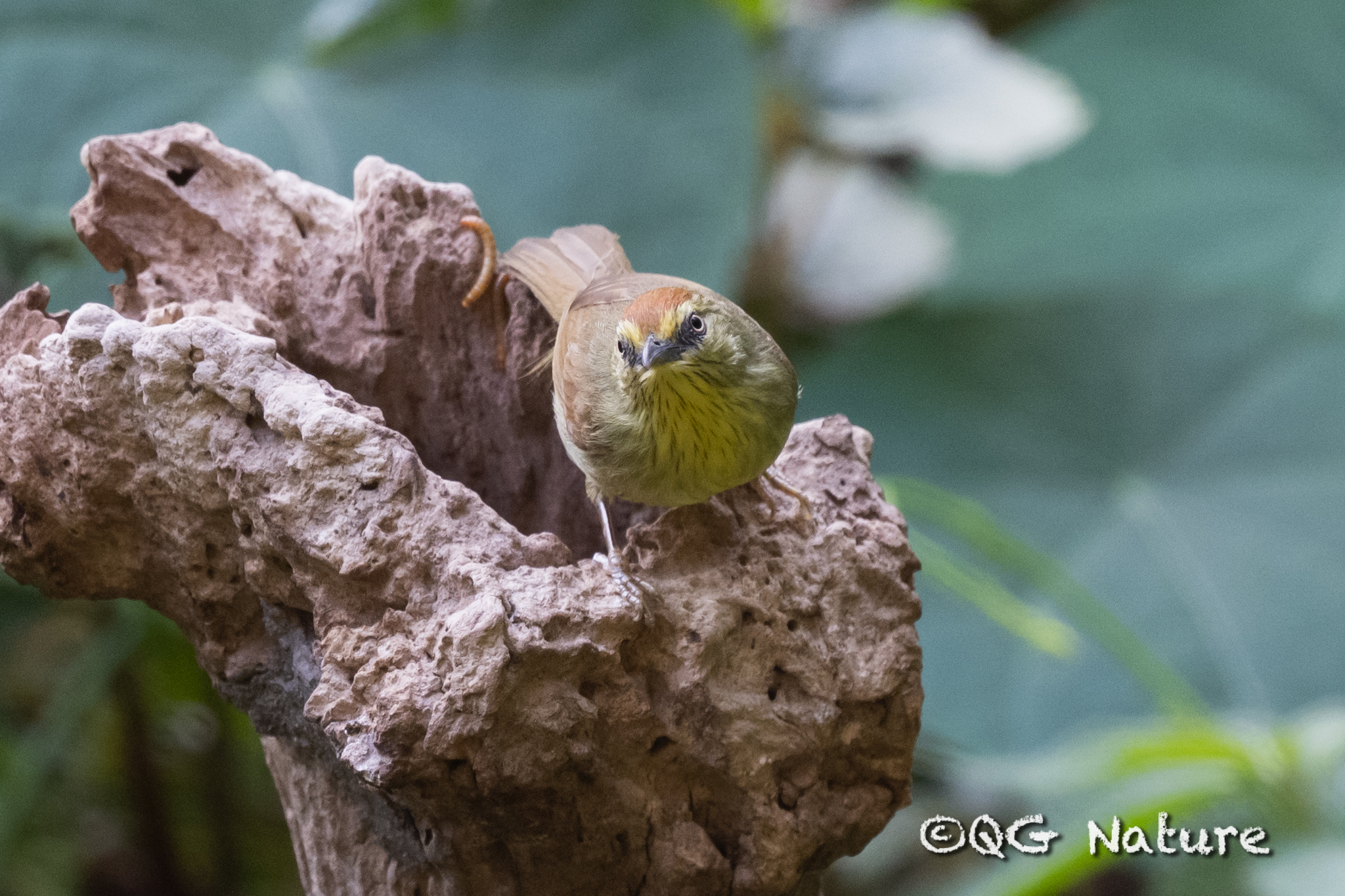
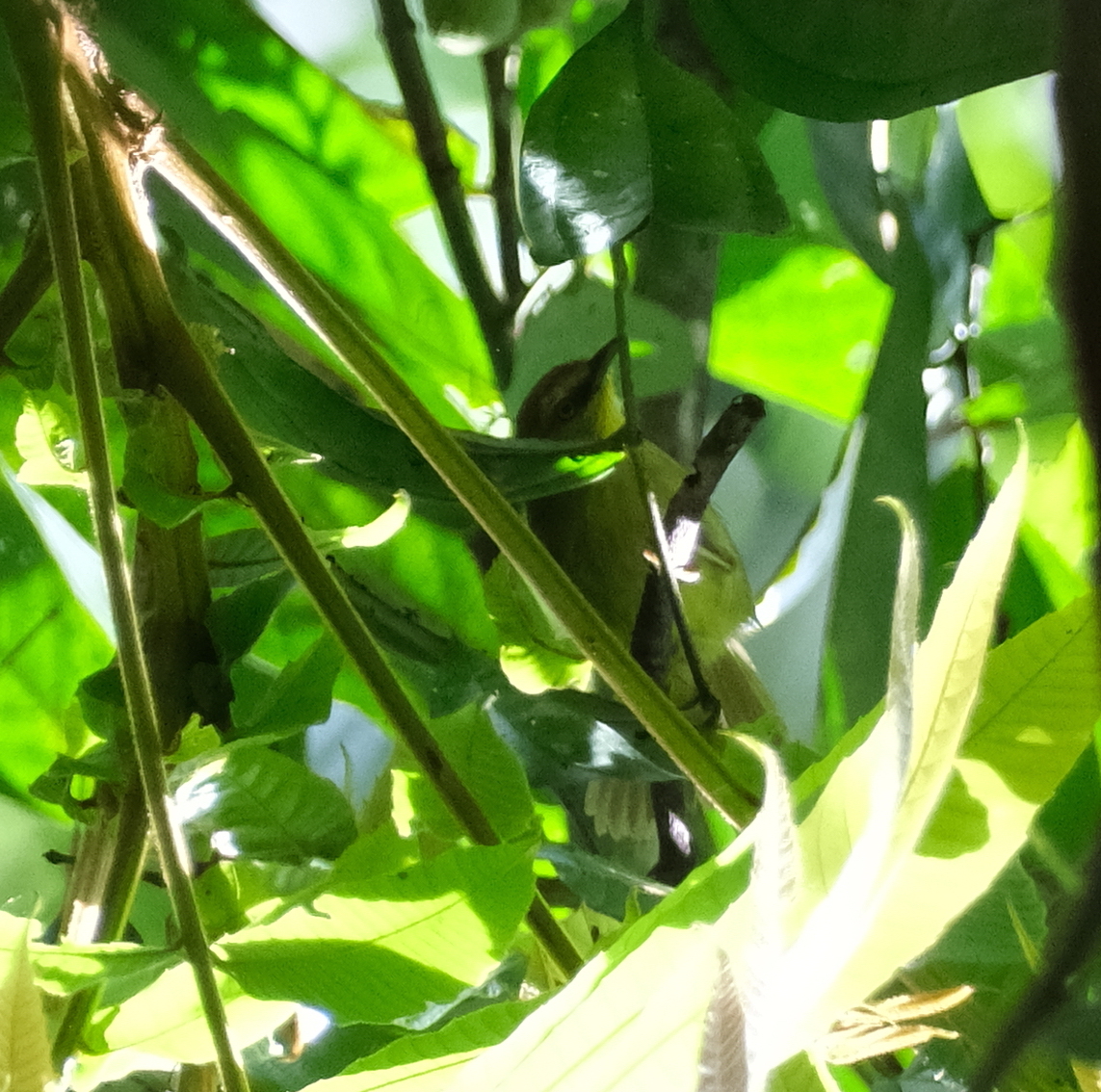
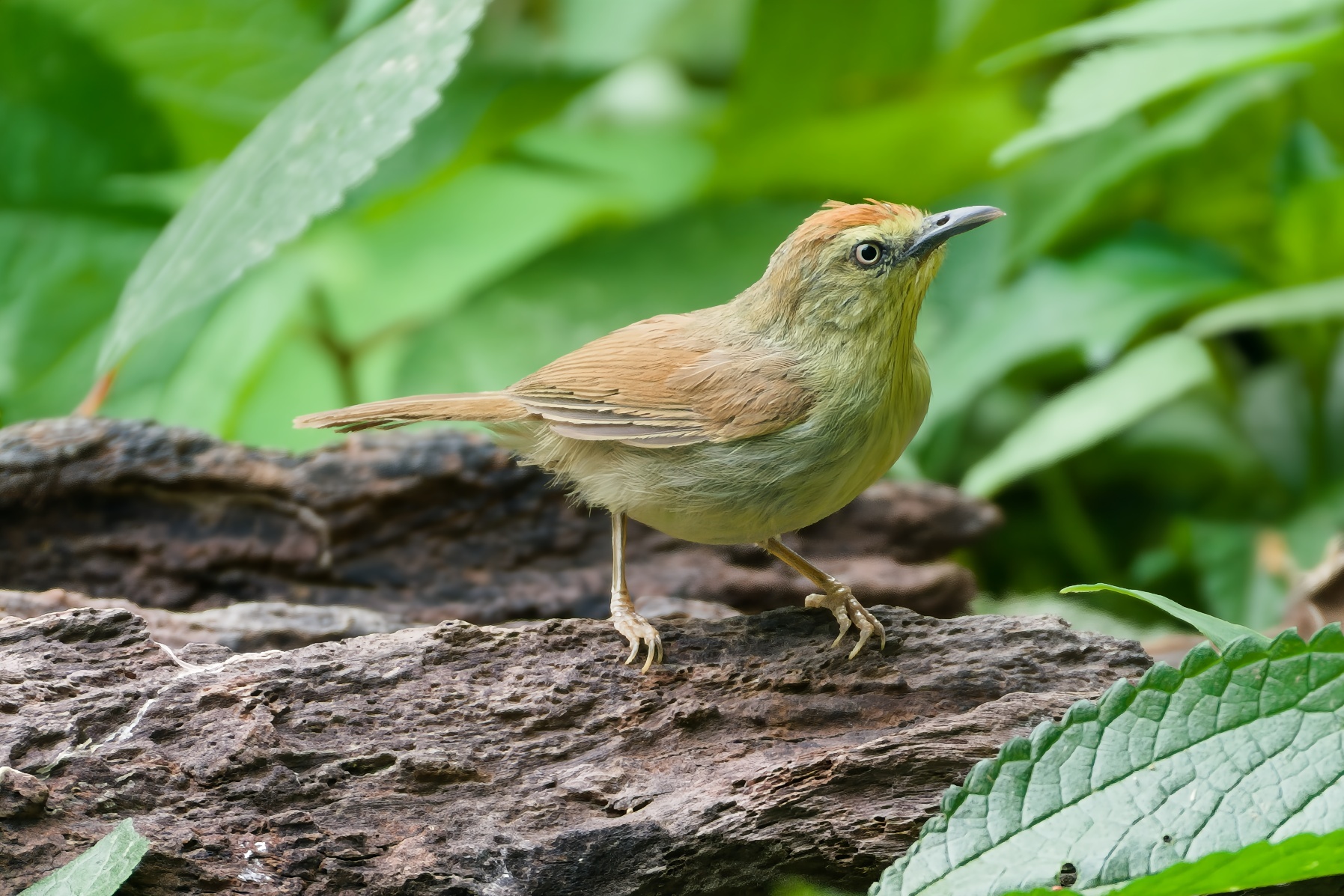
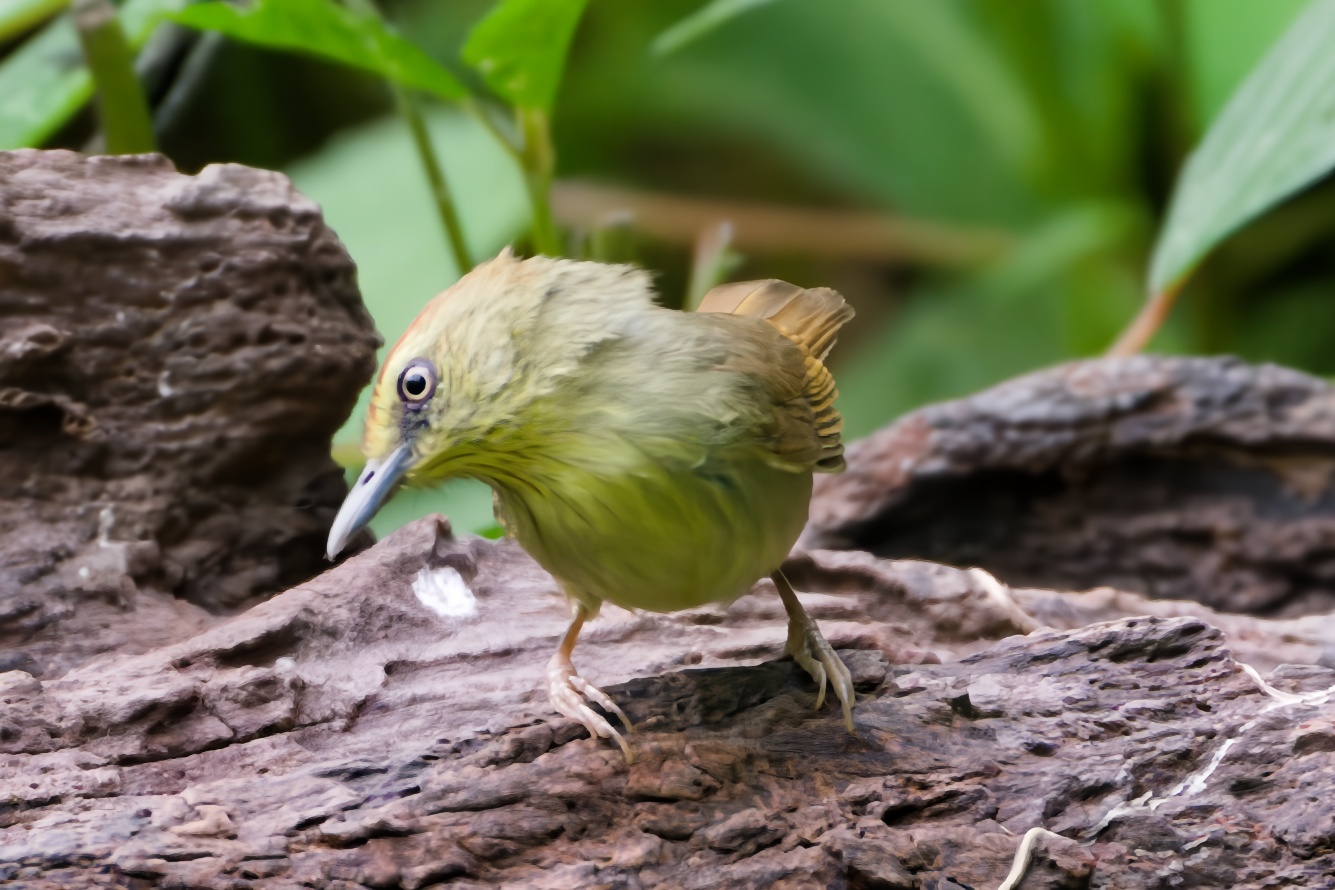
A small passerine bird in the Old World babbler family Timaliidae. Inhabits South and Southeast Asia across Bangladesh, Bhutan, Brunei, Cambodia, China, India, Indonesia, Laos, Malaysia, Myanmar, Nepal, Philippines, Singapore, Thailand, and Vietnam. Distinctive features include a yellowish supercilium and rufous crown, with a loud repeated chonk-chonk call. Forages in small flocks by creeping and clambering through low vegetation. Breeds during the pre-monsoon season from February to July.
Description
A small babbler characterized by a distinctive yellowish supercilium and rufous crown. The throat is yellowish with brown streaks. The species is active and agile, typically moving through low vegetation in small flocks. Its plumage provides effective camouflage in its forested habitats. The call is a loud, repeated chonk-chonk-chonk-chonk-chonk that carries through the understory.
Identification
The combination of yellowish supercilium, rufous crown, and yellowish throat with brown streaks distinguishes this species from similar babblers. The loud, repeated chonk call, somewhat reminiscent of the common tailorbird, is a key identification characteristic. It is best detected by voice in its dense understory habitat.
Distribution & Habitat
Widely distributed across South and Southeast Asia, occurring in Bangladesh, Bhutan, Brunei, Cambodia, China, India, Indonesia, Laos, Malaysia, Myanmar, Nepal, Philippines, Singapore, Thailand, and Vietnam. In India, disjunct populations exist in southern India (Masinagudi area in Mudumalai, rediscovered in 2004) and the northern Eastern Ghats. Inhabits lowland and hill forests, particularly in dense understory vegetation.
Behavior & Ecology
Forages in small flocks, moving with agility through low vegetation by creeping and clambering. Diet consists primarily of insects and small invertebrates found in the understory. The breeding season coincides with the pre-monsoon period from February to July. Constructs a loose ball-shaped nest using grasses and leaves, typically placed in dense vegetation. Vocalizations include a distinctive loud, repeated chonk-chonk-chonk-chonk-chonk call.
Conservation
Not assessed in the provided text.
Culture
Not mentioned in the provided text.
Source: Wikipedia · CC BY-SA 3.0
Taxonomy
- Order
- Passeriformes
- Family
- Timaliidae
- Genus
- Mixornis
- eBird Code
- sttbab1
Vocalizations
Subspecies (13)
-
Mixornis gularis archipelagicus
Mergui Archipelago (off southwestern Myanmar)
-
Mixornis gularis condorensis
Pulau Kundur (South China Sea)
-
Mixornis gularis connectens
Tenasserim (southeastern Myanmar), coastal Gulf of Thailand to central Malay Peninsula
-
Mixornis gularis gularis
southern Malay Peninsula, Sumatra, and Banyak, Batu, Lingga, and Riau islands
-
Mixornis gularis inveteratus
coastal islets off southeastern Thailand and Cambodia
-
Mixornis gularis kinneari
central Vietnam
-
Mixornis gularis lutescens
southern China (southeastern Yunnan) to northern and eastern Thailand, Laos, and Tonkin
-
Mixornis gularis rubicapilla
lowlands of eastern Nepal to northeastern India and far northern Myanmar
-
Mixornis gularis saraburiensis
eastern Thailand and western Cambodia
-
Mixornis gularis sulphureus
southern China (southwestern Yunnan) to eastern Myanmar and northern plateau of Thailand
-
Mixornis gularis ticehursti
western Myanmar (Upper Chindwin District to Arakan)
-
Mixornis gularis versuricola
eastern Cambodia and southern Vietnam
-
Mixornis gularis woodi
southwestern Philippines (Balabac and Palawan)
Data Sources
CBR Notes: 中文名由纹胸巨鹛改为纹胸鹛
Species description from Wikipedia, licensed under CC BY-SA 3.0.
Bird images and sounds sourced from GBIF, contributed by citizen scientists worldwide under Creative Commons licenses.
Taxonomy data from AviList 2025.