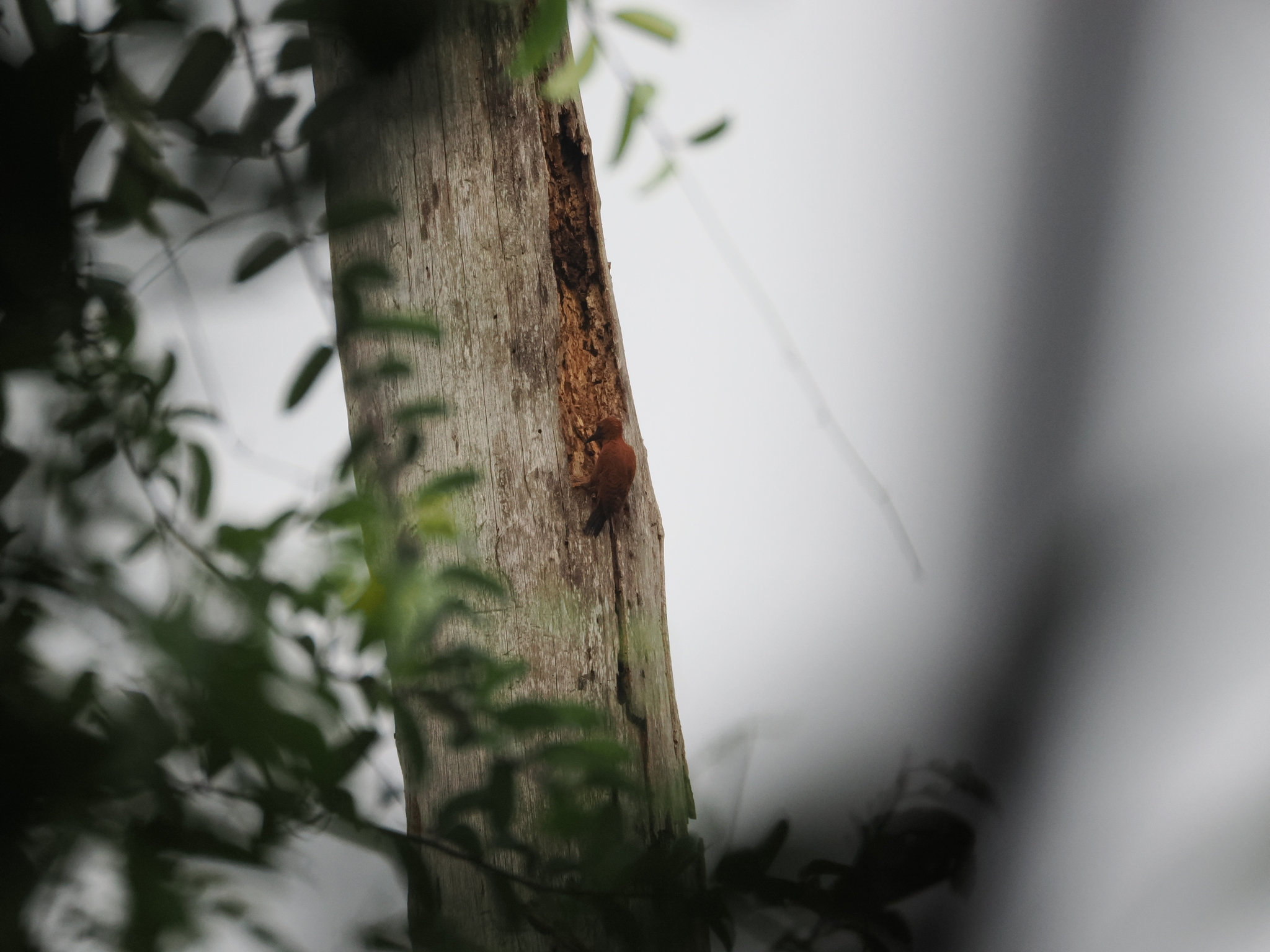
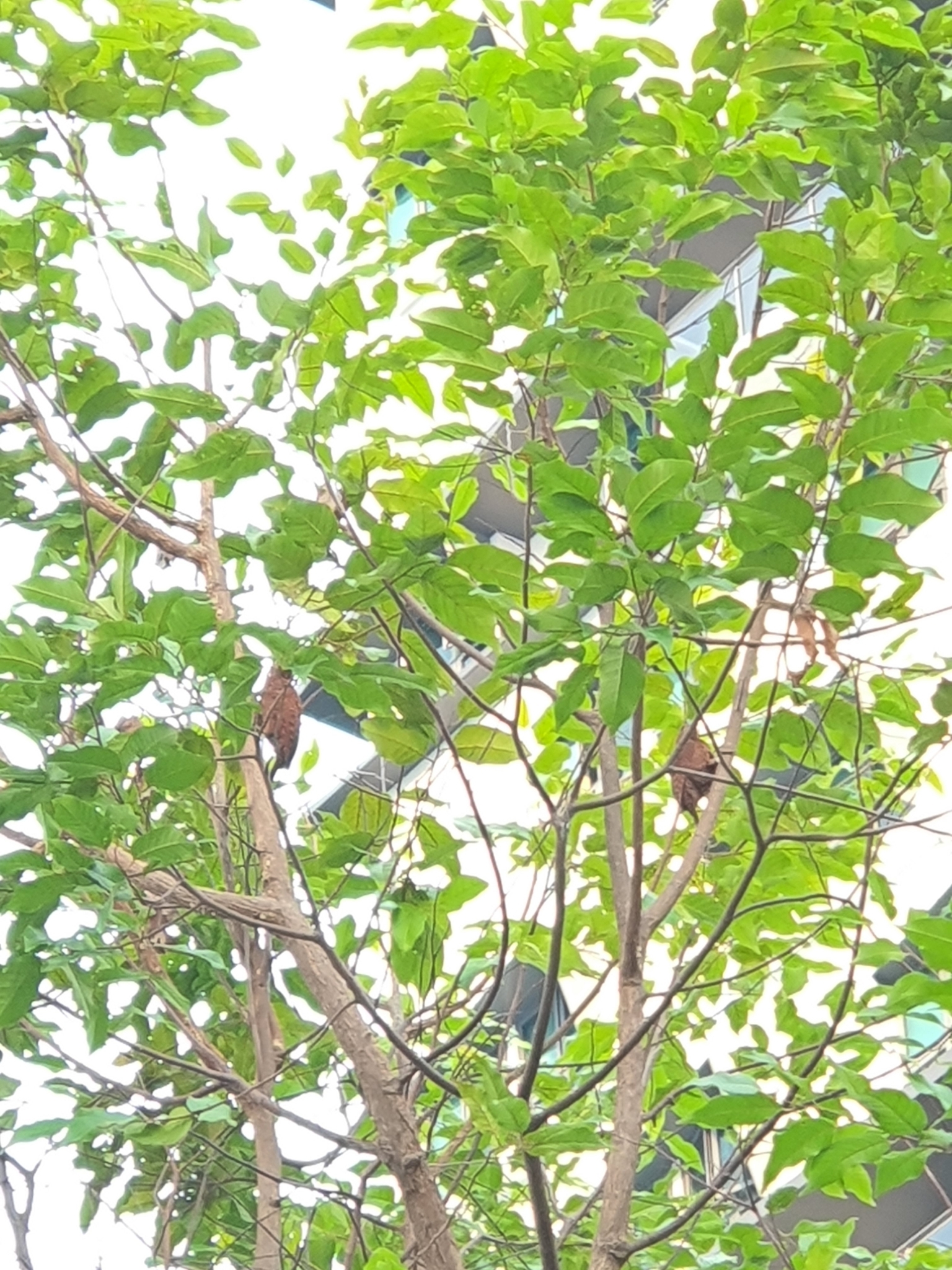
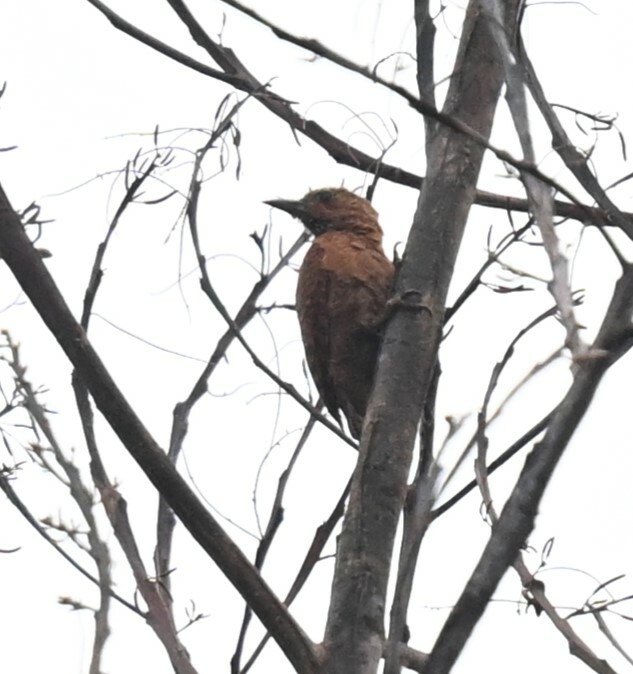
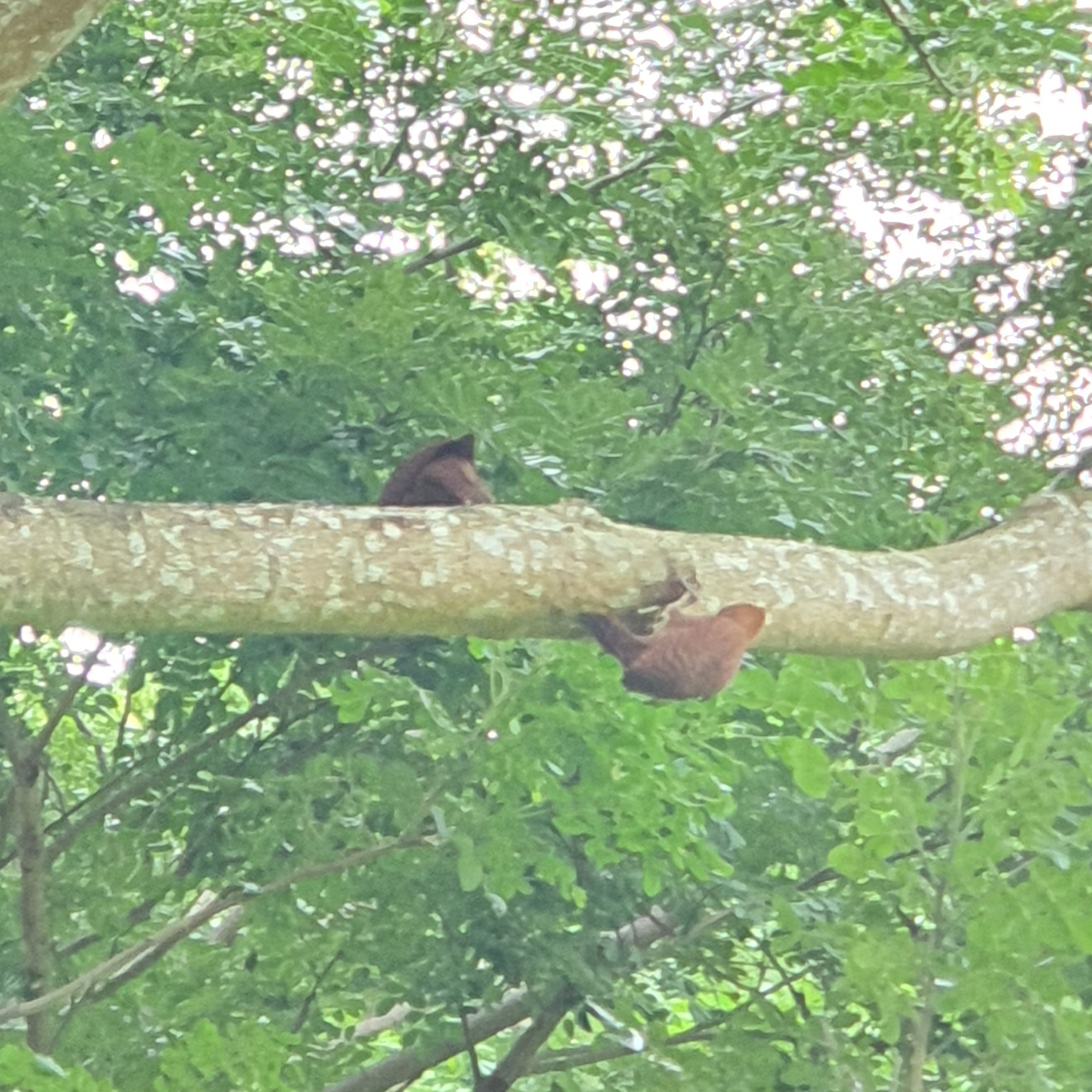
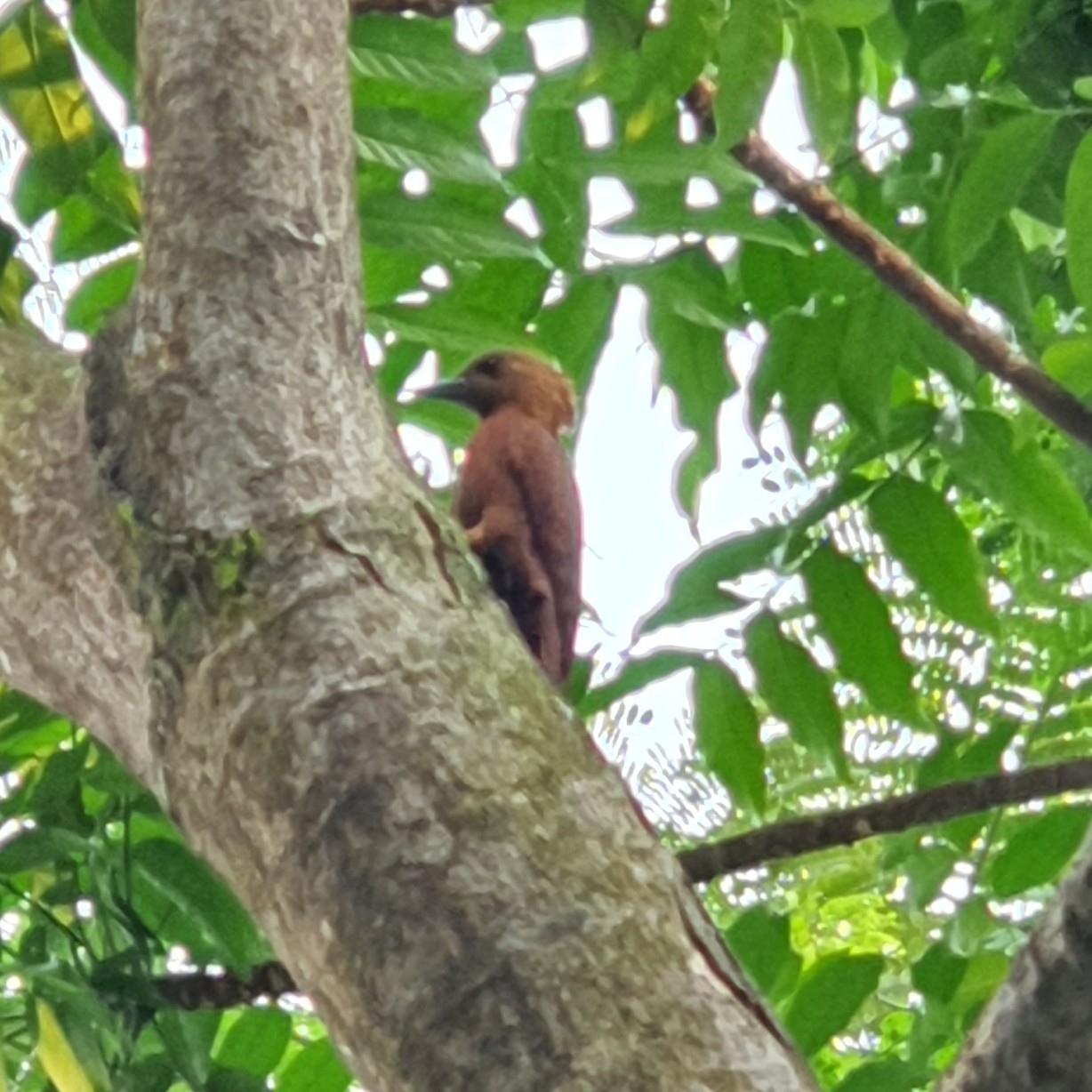
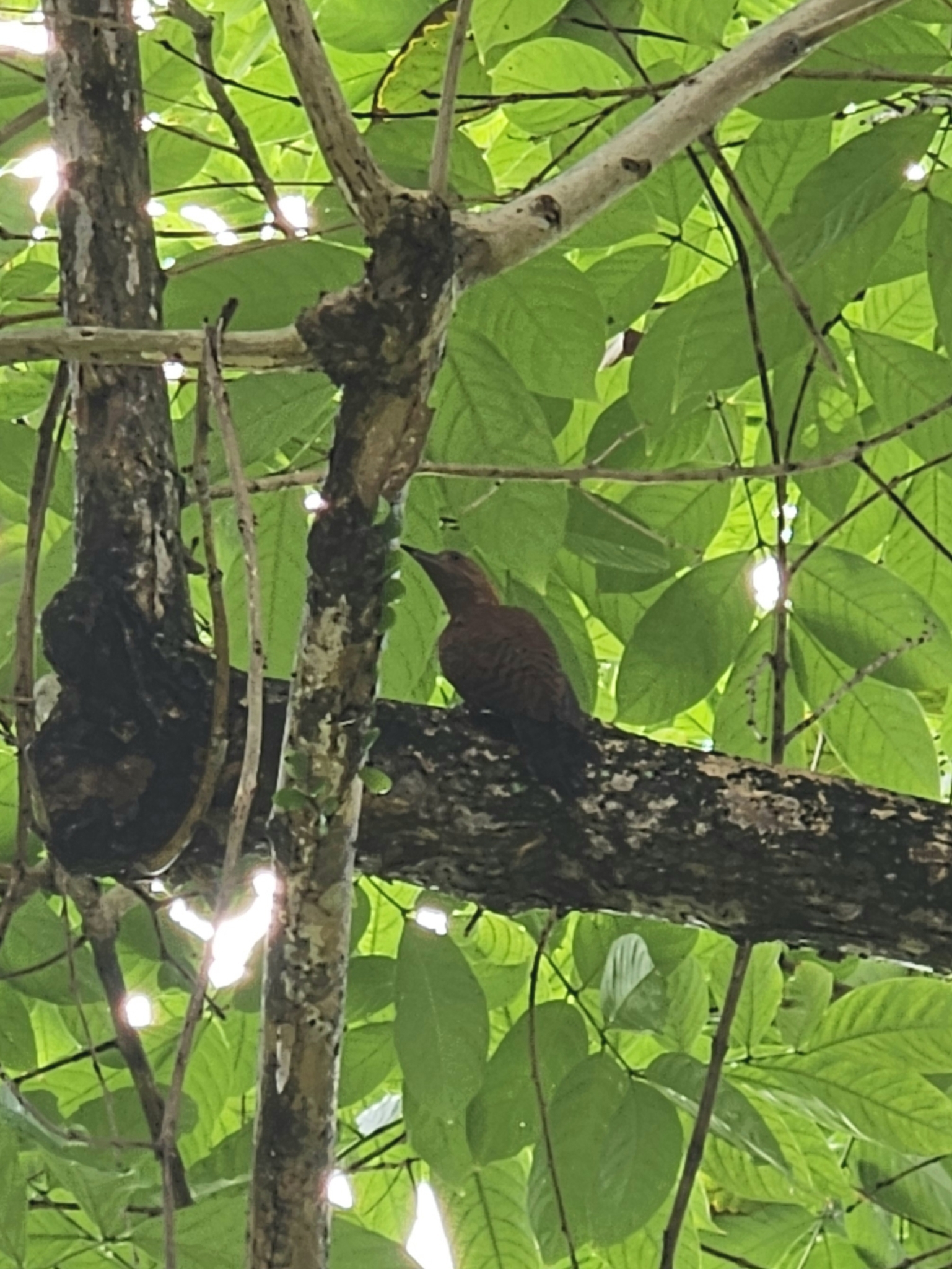
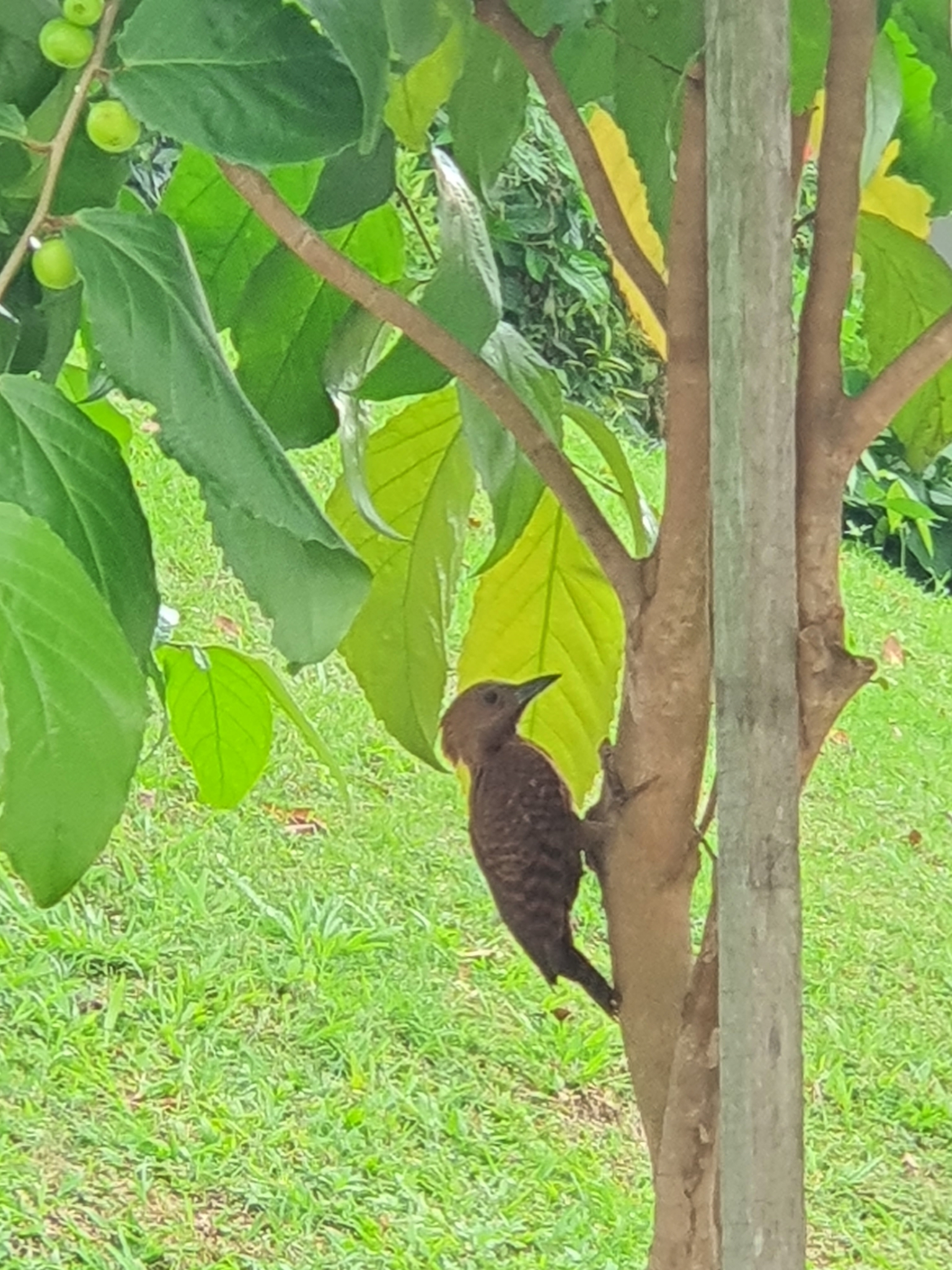
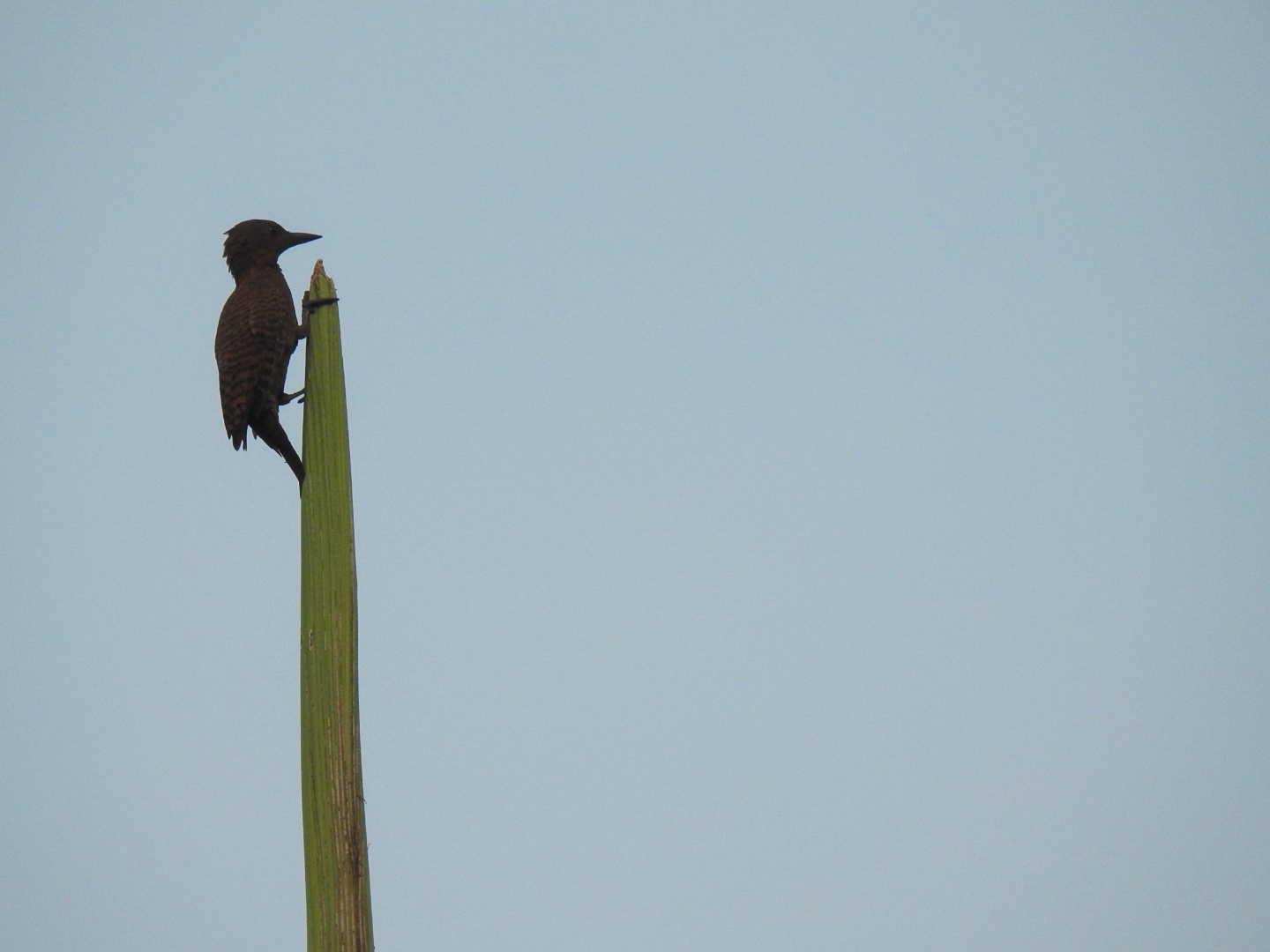
Rufous Woodpecker
Micropternus brachyurus
栗啄木鸟
Introduction
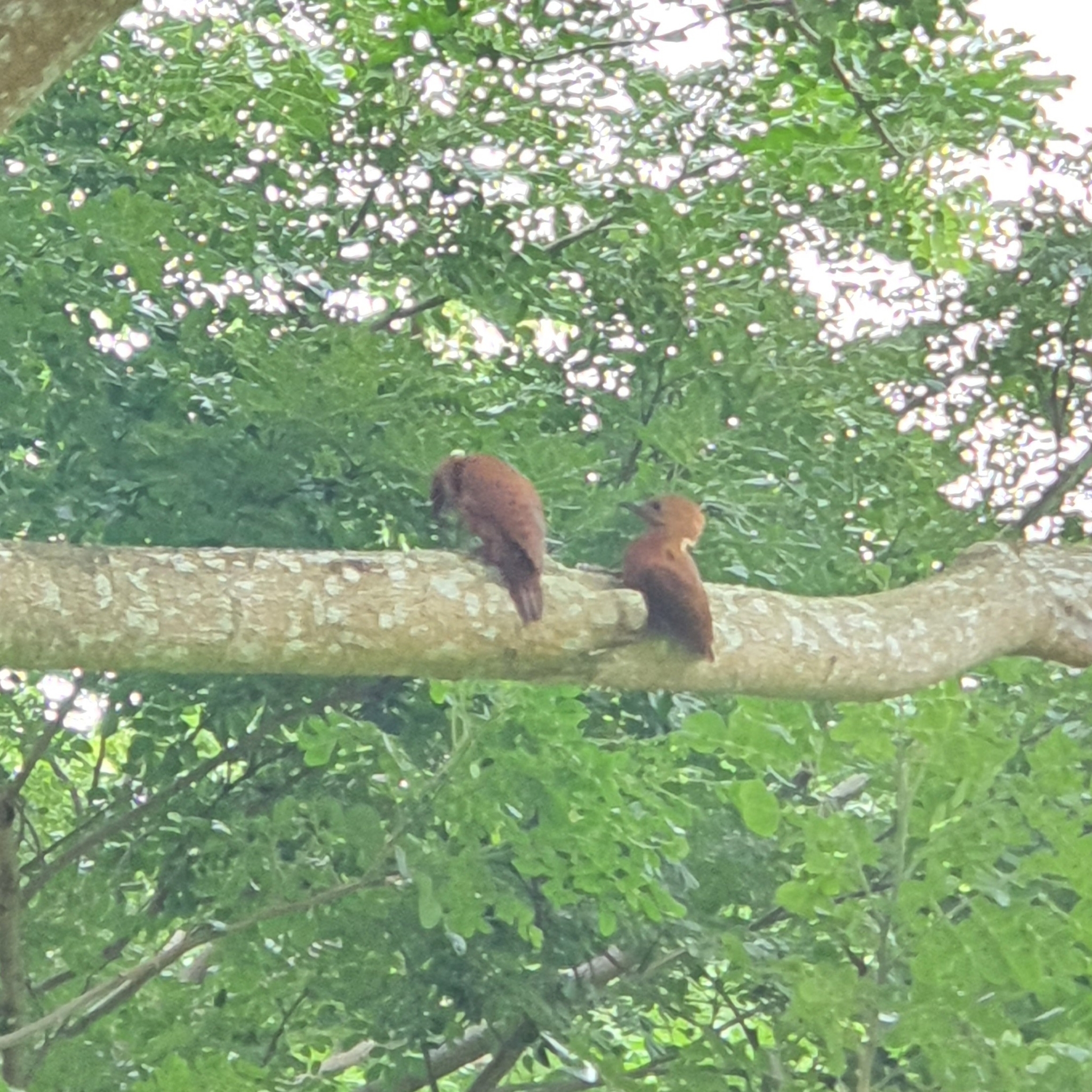
A medium-sized brown woodpecker in the monotypic genus Micropternus, formerly placed in the Neotropical genus Celeus due to external resemblance. Native to South and Southeast Asia including the Indian subcontinent, Sri Lanka, Myanmar, Thailand, Malaysia, Indonesia, and southern China. Inhabits scrub, evergreen, and deciduous forests, mainly in plains and lower hills below 3000m elevation. Two most distinctive traits are its specialized breeding behavior of constructing nests within the carton nests of arboreal ants (Crematogaster), and its foraging preference for ants and termites. The species is not considered threatened on the IUCN Red List.
Description
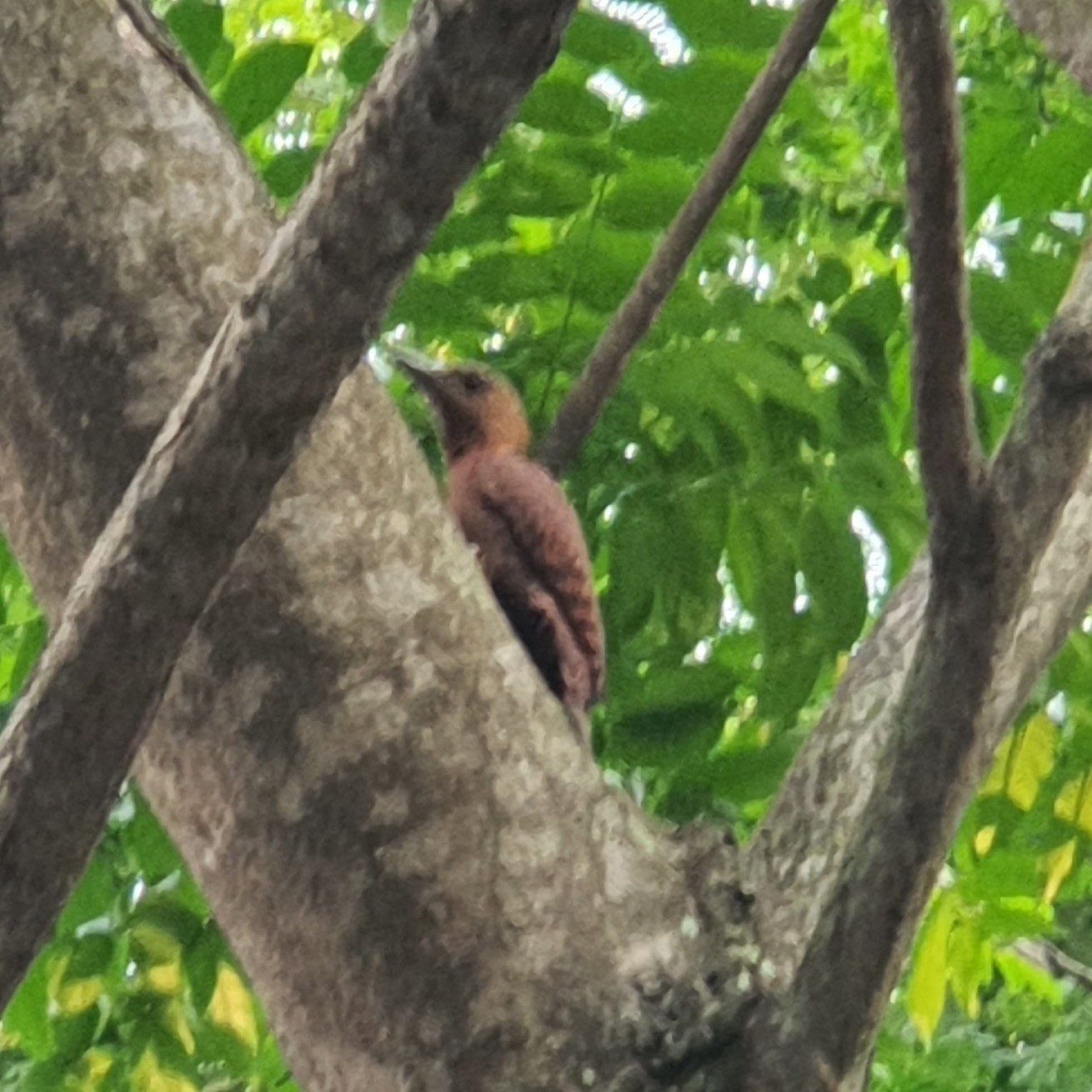
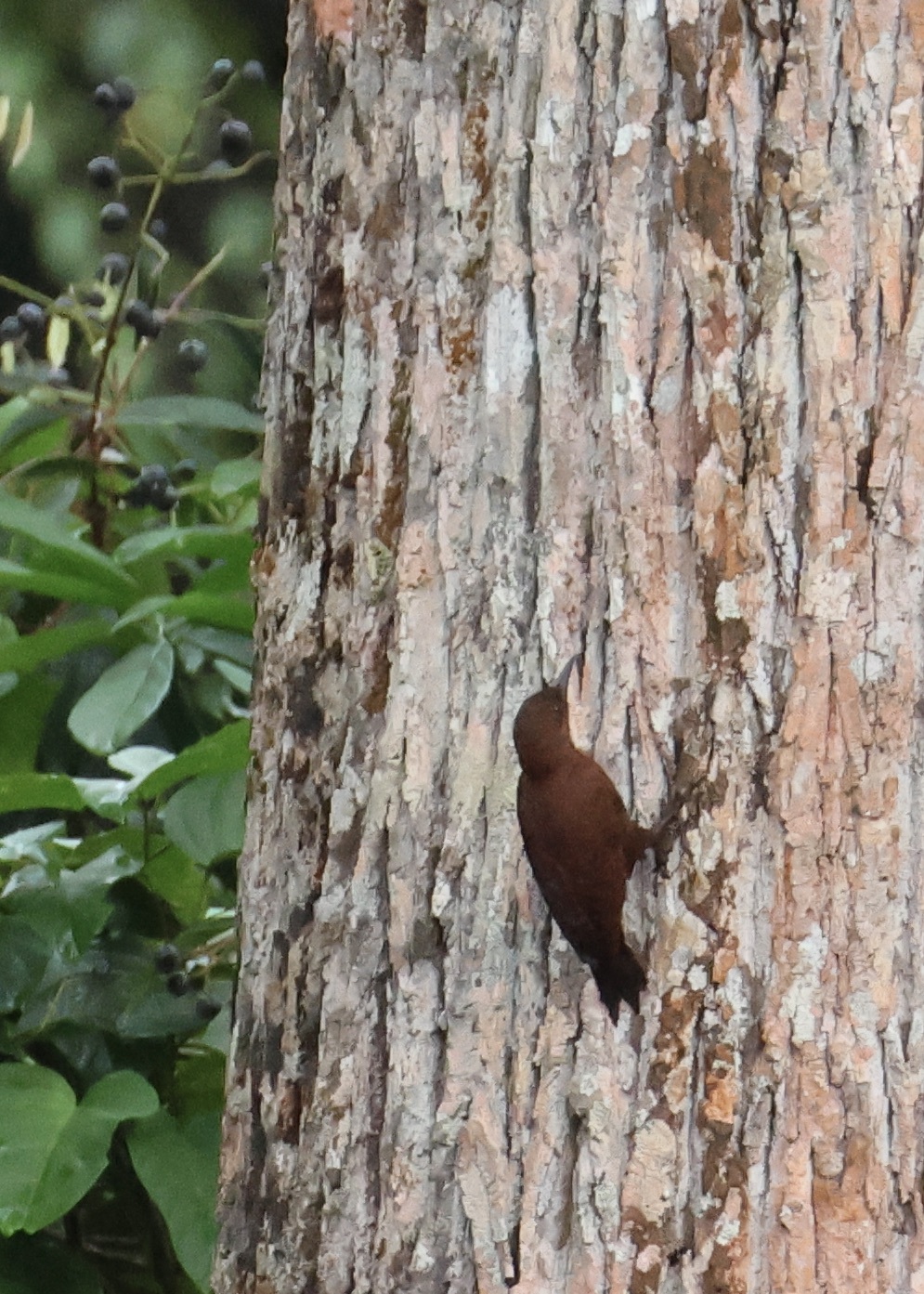
About 25 cm in length with an overall dark brown plumage. Wings and tail feature dark bands creating a black-barred appearance. Head appears paler than the body, while underparts are darker. The short, black bill has a slight curvature of the culmen and narrows at the nostrils. Tail is short and rufous with narrow black bars, though subspecies badiosus has a dark tail with narrow rufous bars. A weak, erectile crest is present. Males display red-tipped feathers below the eyes, between the eye and ear coverts, and on the malar region; females and juveniles lack these red markings. Juveniles show streaking on the throat. Birds often appear soiled and may smell of ant secretions due to their nesting and foraging activities in ant colonies.
Distribution & Habitat
Widespread across South and Southeast Asia. The nominate subspecies M. b. brachyurus occurs in Java. Subspecies humei is found along the western Himalayas with streaked throat and greyish head. Subspecies jerdonii occurs in peninsular India and Sri Lanka. Subspecies phaioceps ranges from the eastern Himalayas through central Nepal, Myanmar, Yunnan, and southern Thailand. Subspecies fokiensis is found in southeast China and northern Vietnam with a sooty abdomen. Subspecies holroydi occurs on Hainan with a very dark tail. Subspecies annamensis occurs in Laos, Cambodia, and southern Vietnam. Subspecies badius occurs from the Malay Peninsula south to Sumatra. Subspecies badiosus is found in Borneo and the north Natuna Islands. Inhabits plains and lower hills below 3000m elevation.
Behavior & Ecology
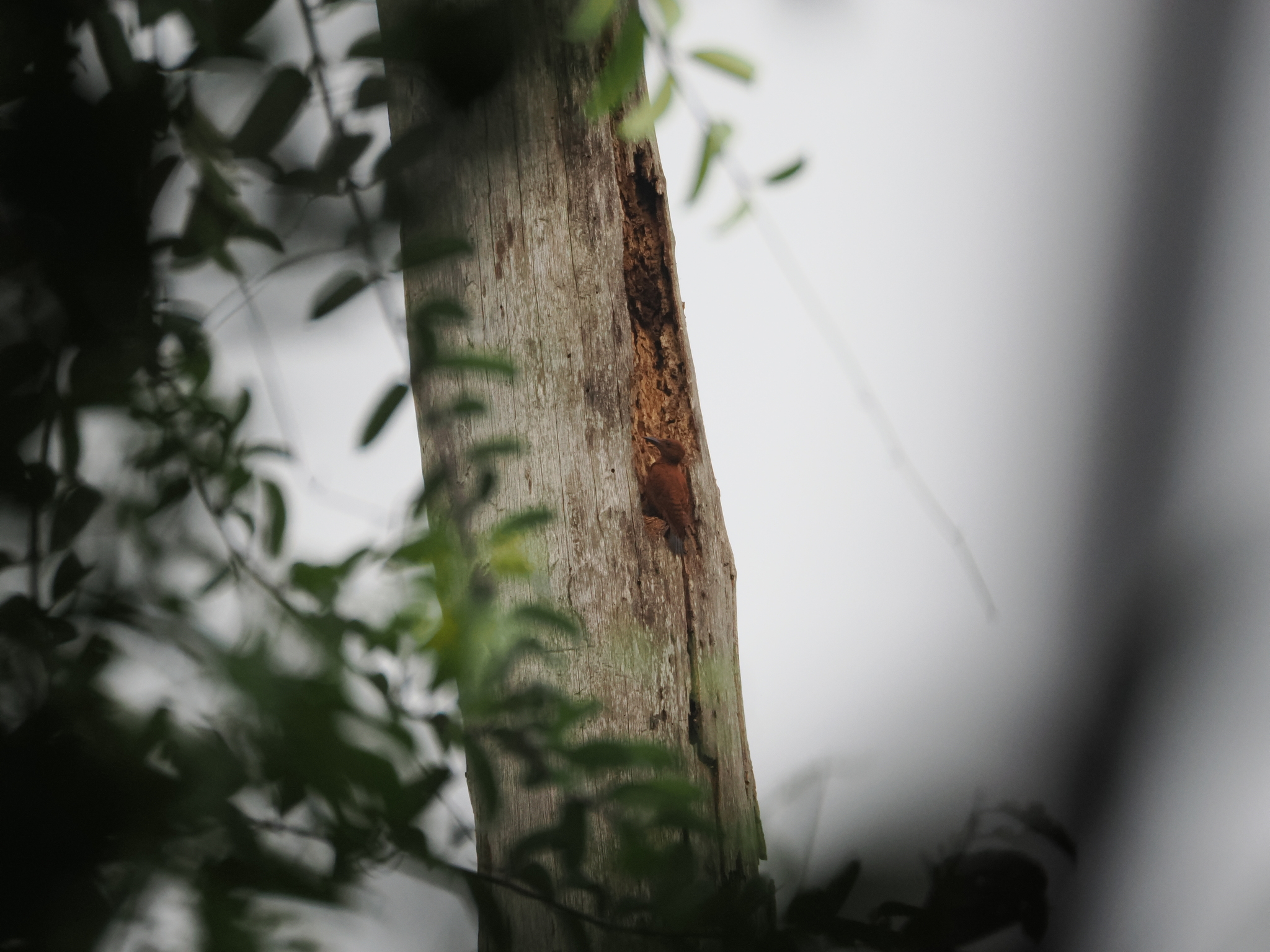
Forages in pairs on ant nests in trees, fallen logs, dung heaps, and termite hills. Feeds primarily on ants of the genera Crematogaster and Oecophylla. Also takes nectar from Bombax and Erythrina flowers and sap from banana frond bases. Vocalizations include a sharp nasal three-note call (keenk-keenk-keenk), a long wicka, and a series of wick-wick notes. Drumming starts rapidly and slows in tempo, occurring year-round with increased frequency in winter in southern India and peaking March-April in Nepal. Breeding season is February to June during the pre-Monsoon dry period. Nests are built within Crematogaster ant nests; both sexes excavate. Lays two white, matt, thin-shelled, translucent eggs with 12-14 day incubation. Both parents feed young. Moult occurs mainly September to November.
Conservation
Not considered threatened on the IUCN Red List. The species has a wide habitat tolerance and persists even in modified habitats such as oil palm plantations in Malaysia where swamp forests have been cleared. The wide distribution range and presumably large population contribute to its stable conservation status.
Culture
No specific cultural significance, folklore, or mythological references were documented in available sources.
Source: Wikipedia · CC BY-SA 3.0
Taxonomy
- Order
- Piciformes
- Family
- Picidae
- Genus
- Micropternus
- eBird Code
- rufwoo2
Vocalizations
Subspecies (10)
-
Micropternus brachyurus annamensis
Laos, Cambodia and southern Vietnam
-
Micropternus brachyurus badiosus
Borneo and North Natuna Islands
-
Micropternus brachyurus badius
Malay Peninsula southward to Sumatra, including Nias Island, Bangka, and Belitung
-
Micropternus brachyurus brachyurus
Java
-
Micropternus brachyurus fokiensis
southern China and northern Vietnam
-
Micropternus brachyurus holroydi
Hainan (southern China)
-
Micropternus brachyurus humei
northwestern India (Himachal Pradesh) to far western Nepal
-
Micropternus brachyurus jerdonii
central and southern peninsular India and Sri Lanka
-
Micropternus brachyurus phaioceps
central Nepal and eastern India to southeastern Tibet, Myanmar, southern China, and southern Thailand
-
Micropternus brachyurus williamsoni
southern and southwestern Thailand
Data Sources
Species description from Wikipedia, licensed under CC BY-SA 3.0.
Bird images and sounds sourced from GBIF, contributed by citizen scientists worldwide under Creative Commons licenses.
Taxonomy data from AviList 2025.