Pied Falconet
Microhierax melanoleucos
白腿小隼
Introduction
Small bird of prey in the family Falconidae, belonging to the genus Microhierax which contains the world's smallest birds of prey. Found across Bangladesh, Bhutan, China, Hong Kong, India, Laos, and Vietnam. Inhabits temperate forests and deciduous forest edges in wooded foothills. Nests in old woodpecker or barbet cavities. Classified as Least Concern due to large range and stable population size.
Description
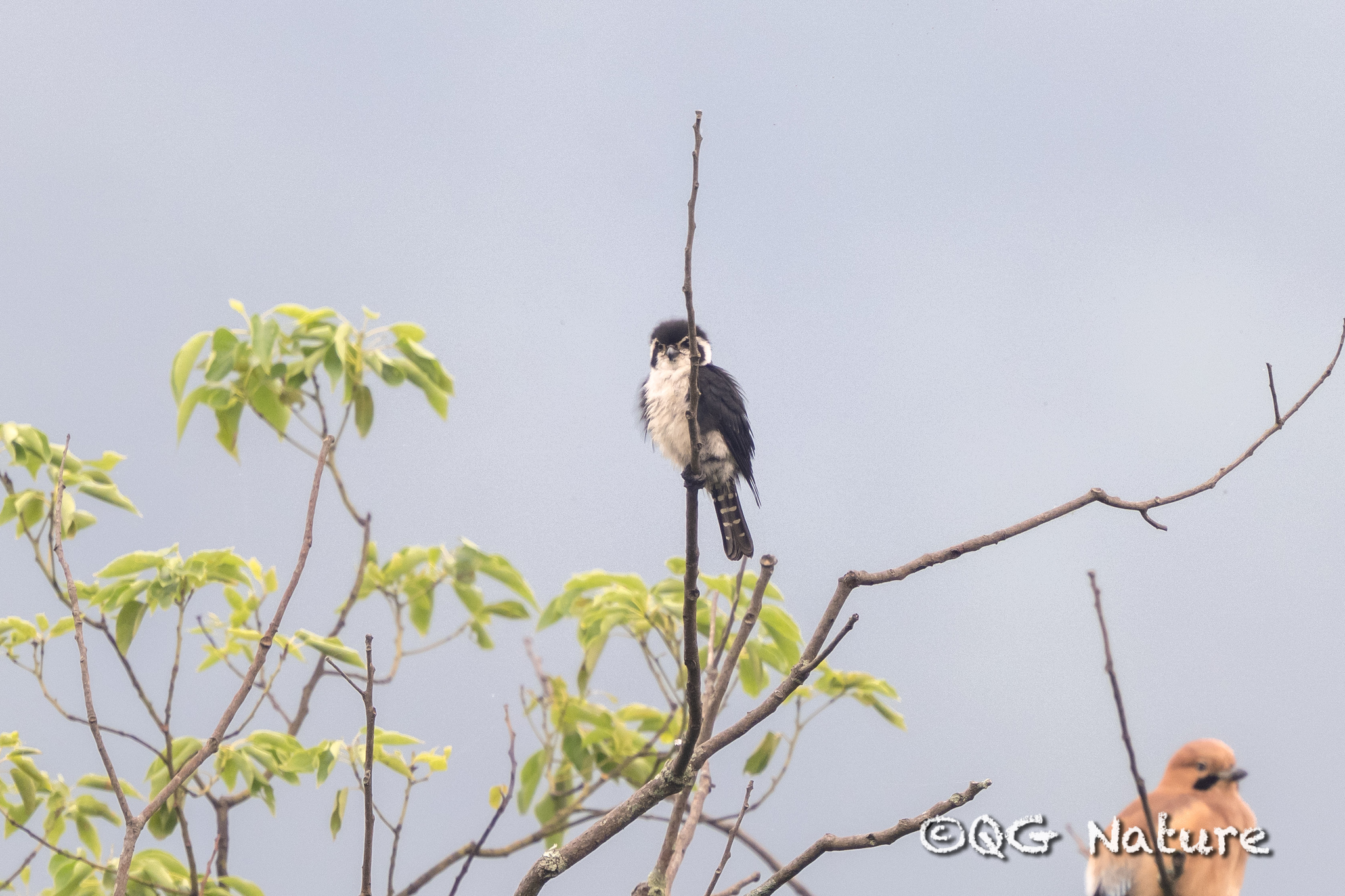
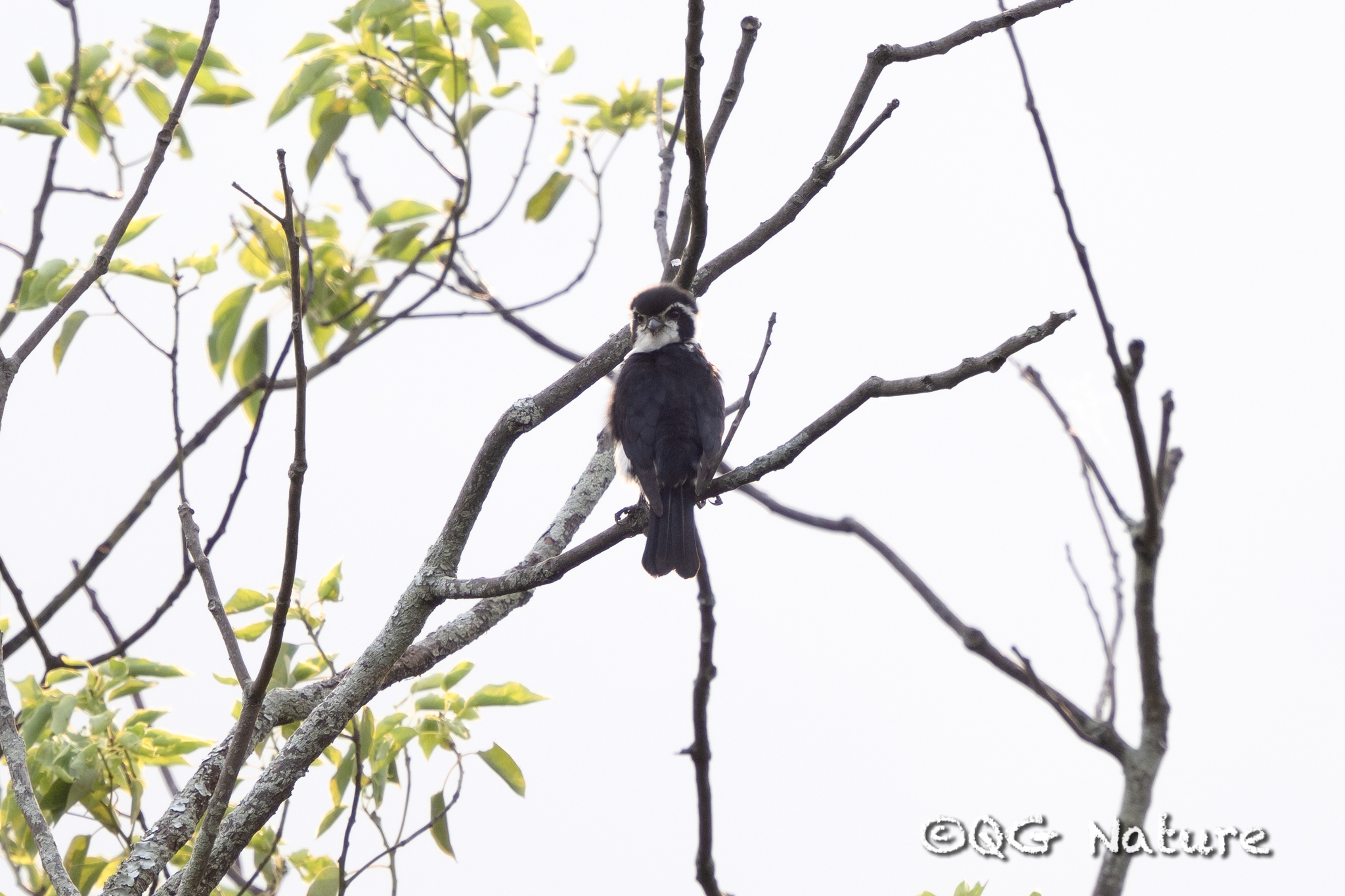
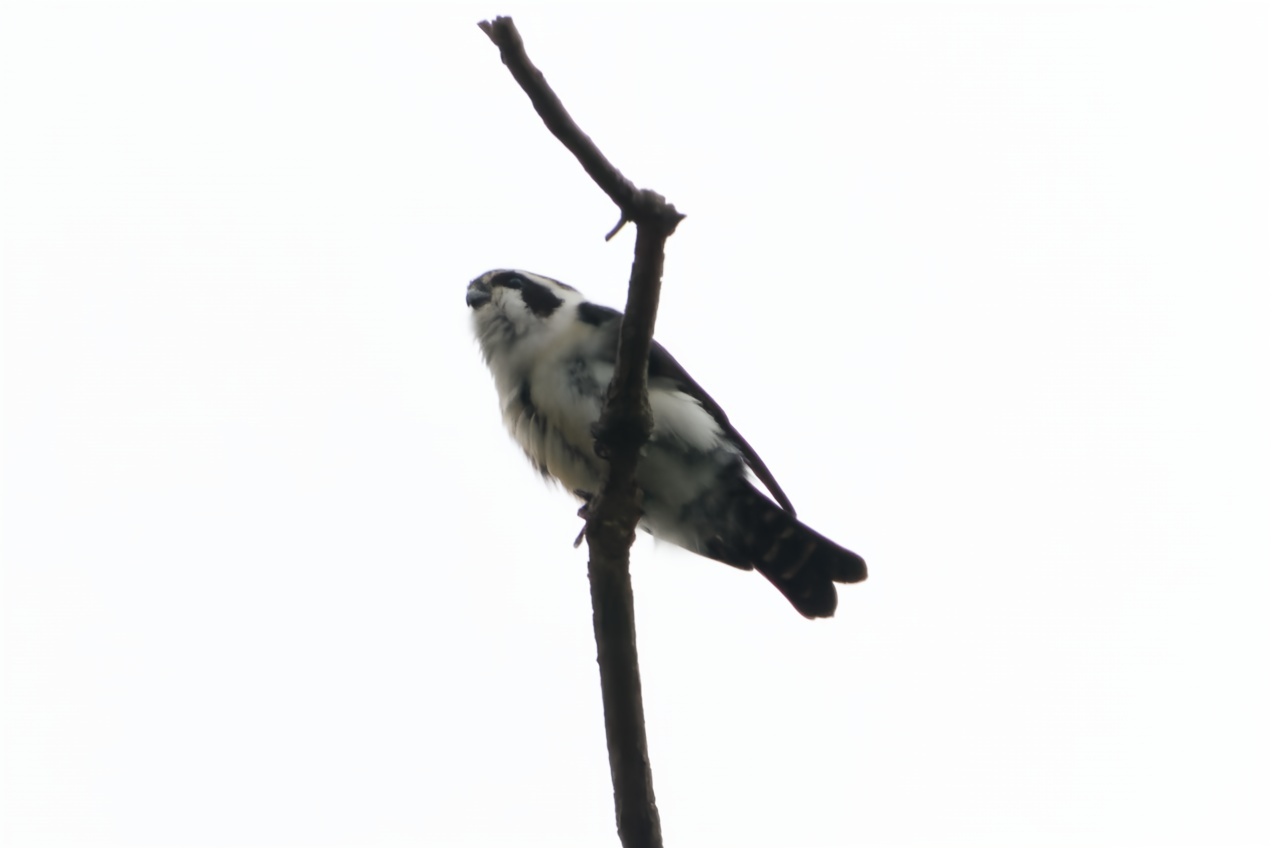
A compact black and white raptor measuring 7 to 7.5 inches in length and weighing 55 to 75 grams. The face is white with a prominent black patch covering the eyes and extending to the ear coverts. The crown and all upperparts are uniformly black. The primaries display black coloration with white wing bars. The long tail is black above with white bars visible from below. No sexual dimorphism exists, and juveniles closely resemble adult plumage. Distinguished from other Microhierax species by white thighs and absence of chestnut coloration.
Identification
Distinguished from other Microhierax species by white thighs and lack of chestnut markings. Frequently confused with the ashy woodswallow (Artamus fuscus), but the pied falconet shows distinctly black upperparts compared to the grey-ash coloration of the ashy woodswallow. Larger than other members of the genus Microhierax despite still being among the world's smallest birds of prey.
Distribution & Habitat
Ranges from northeastern India through southeast Asia to eastern China. Inhabits deciduous forest edges, clearings in wooded foothills, and old cultivation areas near banks and streams. Found across Bangladesh, Bhutan, China, Hong Kong, India, Laos, and Vietnam. Resident species that remains in the same area throughout the year rather than migrating. Typically perches on tree tops in open areas.
Behavior & Ecology
Diet consists primarily of insects, supplemented with small mammals, reptiles, and birds. Catches prey in mid-flight or plucks it from foliage. Despite small size, displays considerable speed and power, capable of taking prey as large as itself or slightly larger. Vocalizations include a shrill, high-pitched scream and chattering whistle. During breeding season (March to May), males perform courtship displays including presenting leaves to females and frantic bobbing while calling. Nests in abandoned barbet or woodpecker cavities lined with leaves, grass, or sometimes insect remains. Lays three to four white eggs. Often observed in groups of 5-6, suggesting cooperative breeding behavior.
Conservation
IUCN Red List status: Least Concern. Population considered stable due to extensive geographic range. Benefits from large home range size and adaptability to secondary habitats including forest edges and old cultivation areas.
Culture
No significant cultural information provided.
Source: Wikipedia · CC BY-SA 3.0
Taxonomy
- Order
- Falconiformes
- Family
- Falconidae
- Genus
- Microhierax
- eBird Code
- piefal2
Distribution
forest of northeastern India to southern China and northern Indochina
Data Sources
Species description from Wikipedia, licensed under CC BY-SA 3.0.
Bird images and sounds sourced from GBIF, contributed by citizen scientists worldwide under Creative Commons licenses.
Taxonomy data from AviList 2025.