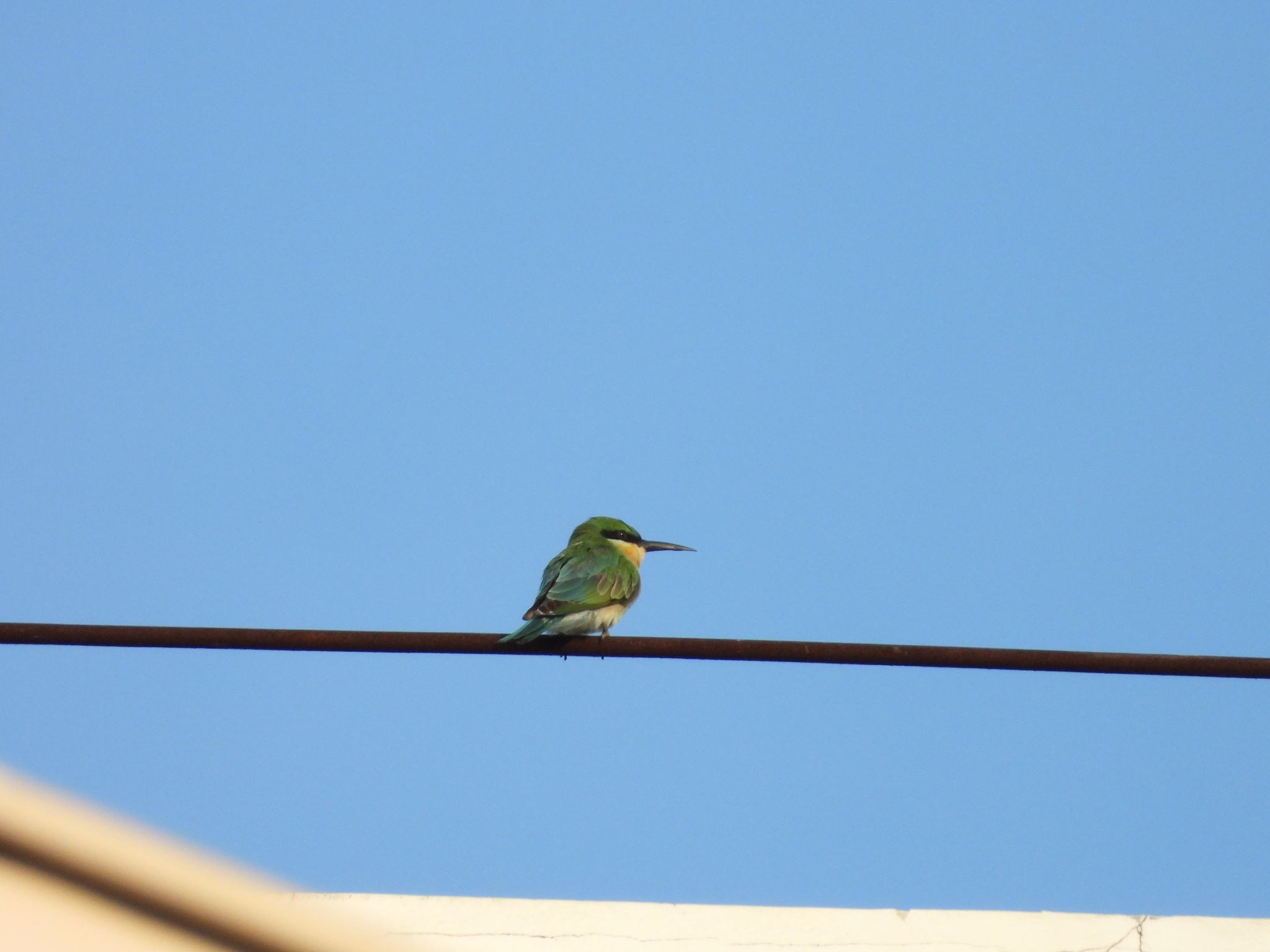
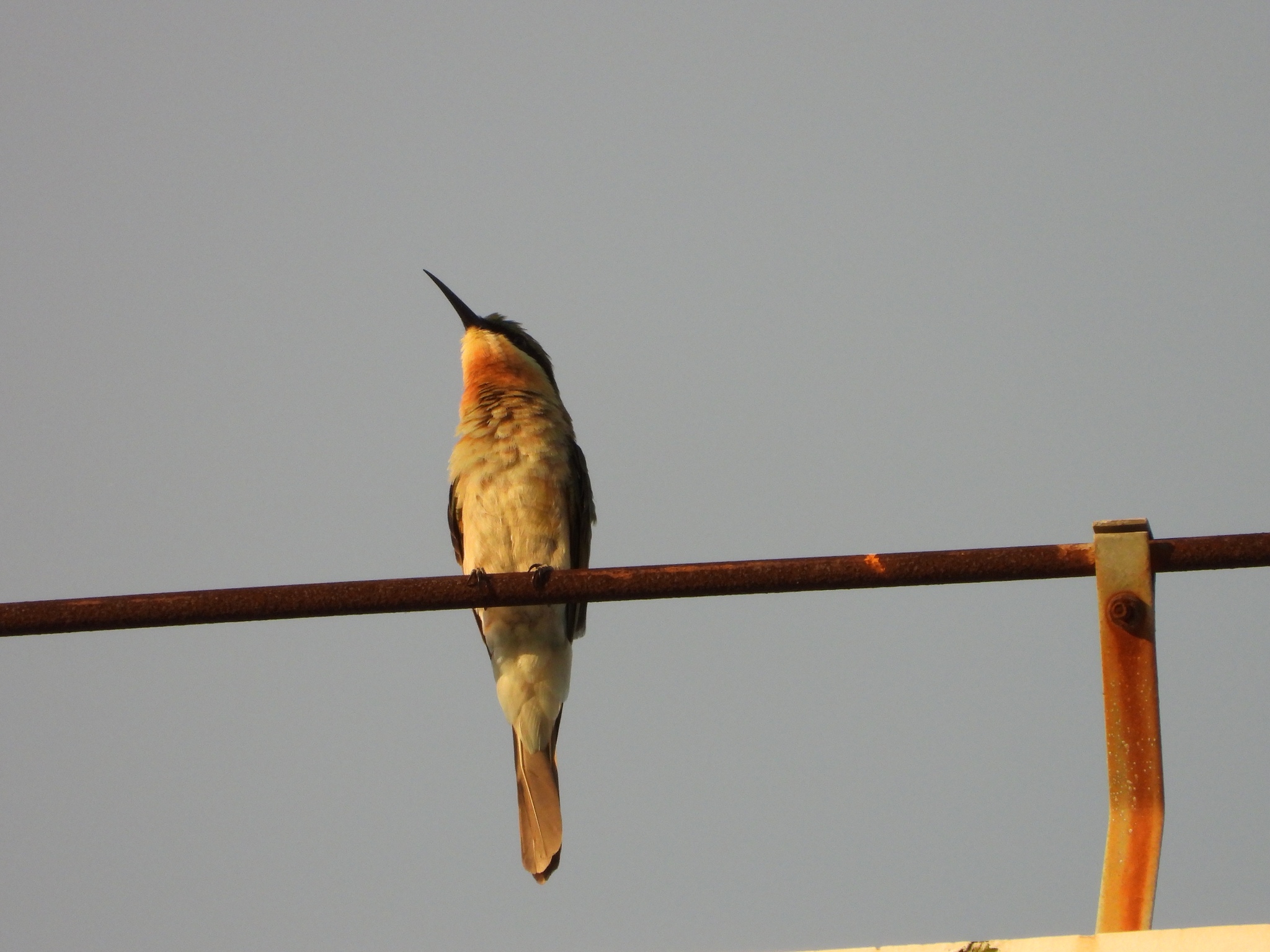
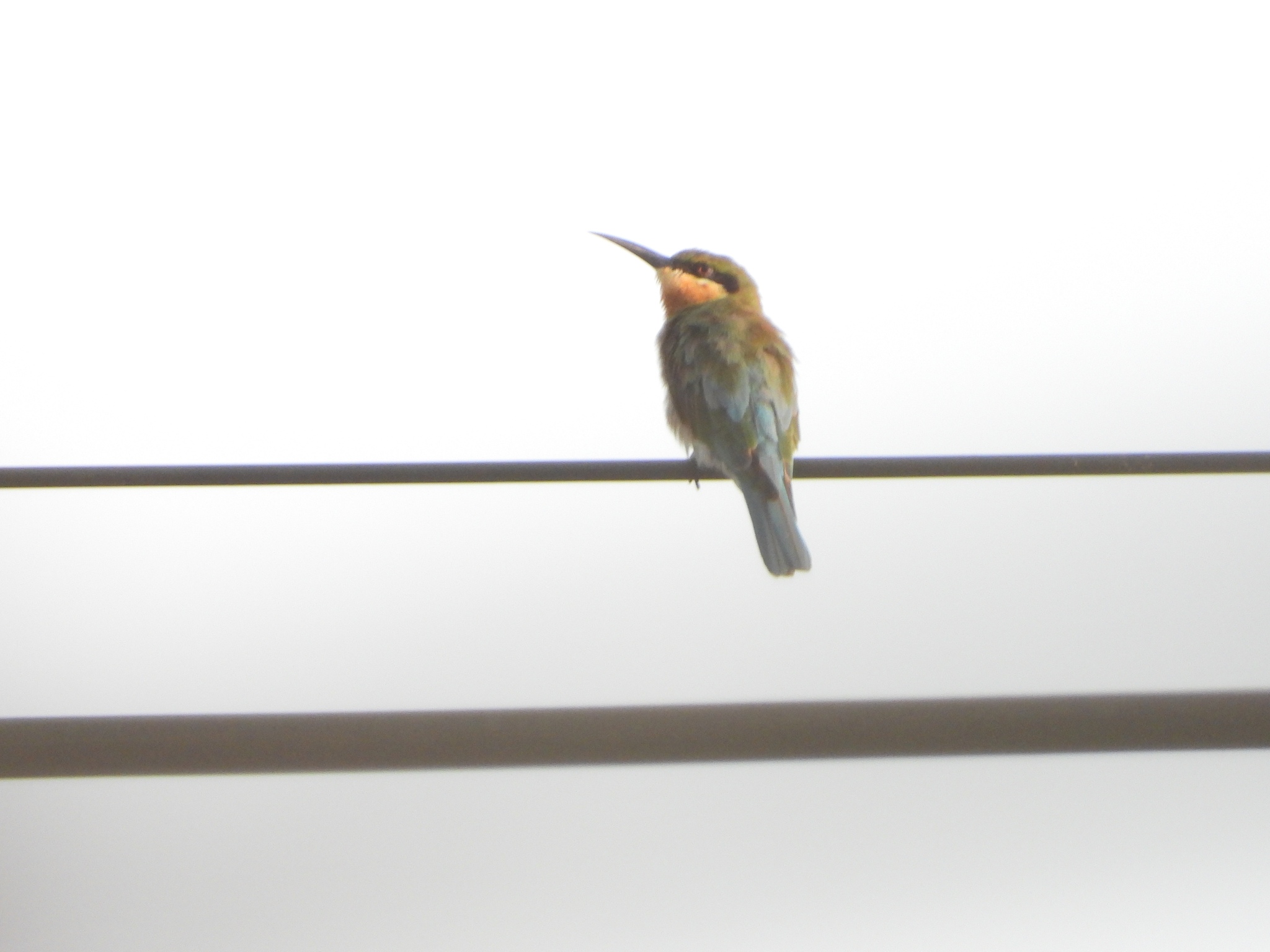
Blue-tailed Bee-eater
Merops philippinus
栗喉蜂虎
Introduction
A bee-eater species (Merops philippinus) widely distributed across South and Southeast Asia. Inhabits open habitats close to water, particularly river valleys where it nests by tunneling into loamy sand banks. Populations are strongly migratory, with seasonal movements noted across much of its range. Known to breed colonially in small areas, with breeding occurring in river valleys of India and eastern Sri Lanka. Classified as Least Concern by the IUCN.
Description
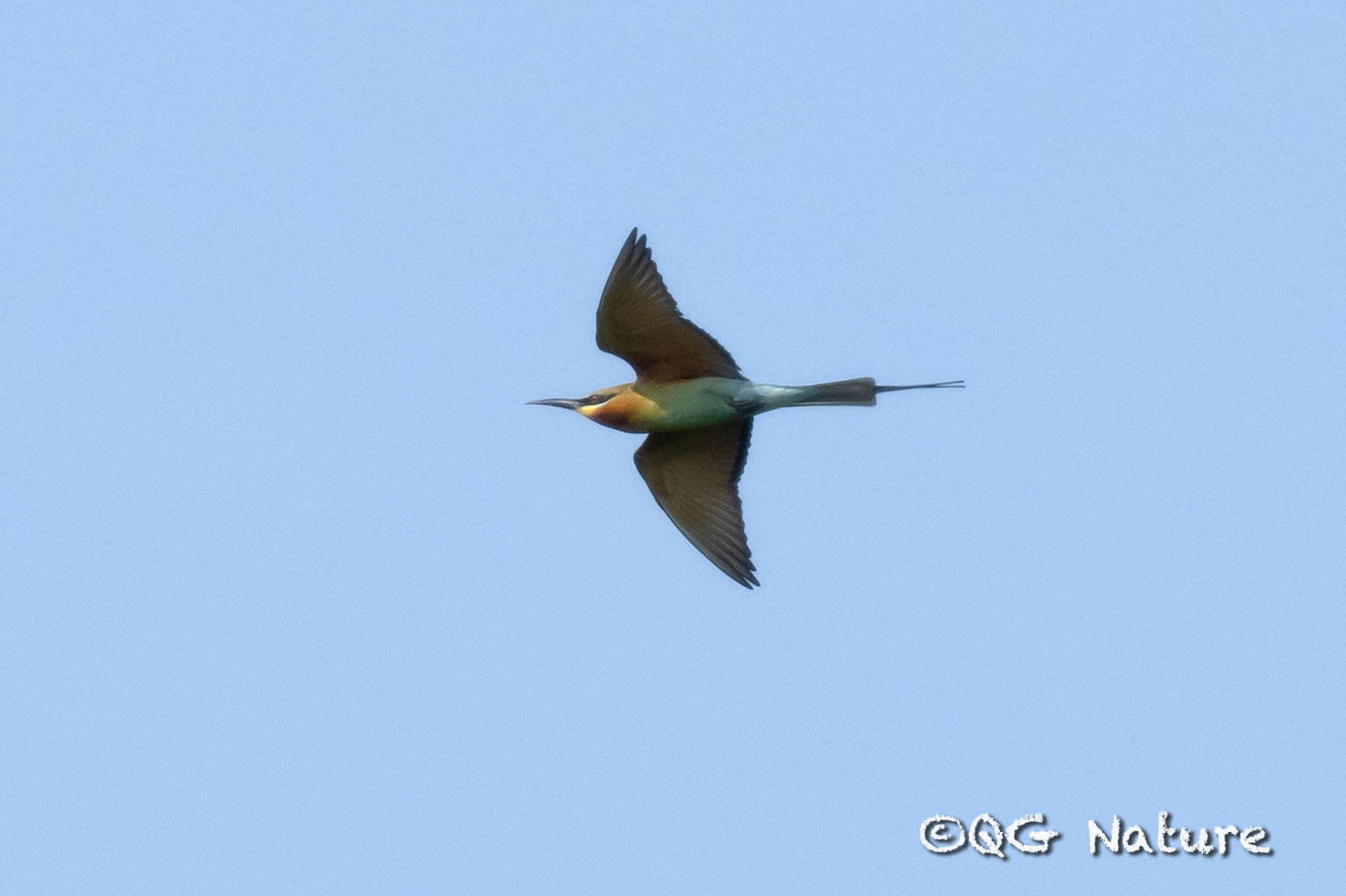
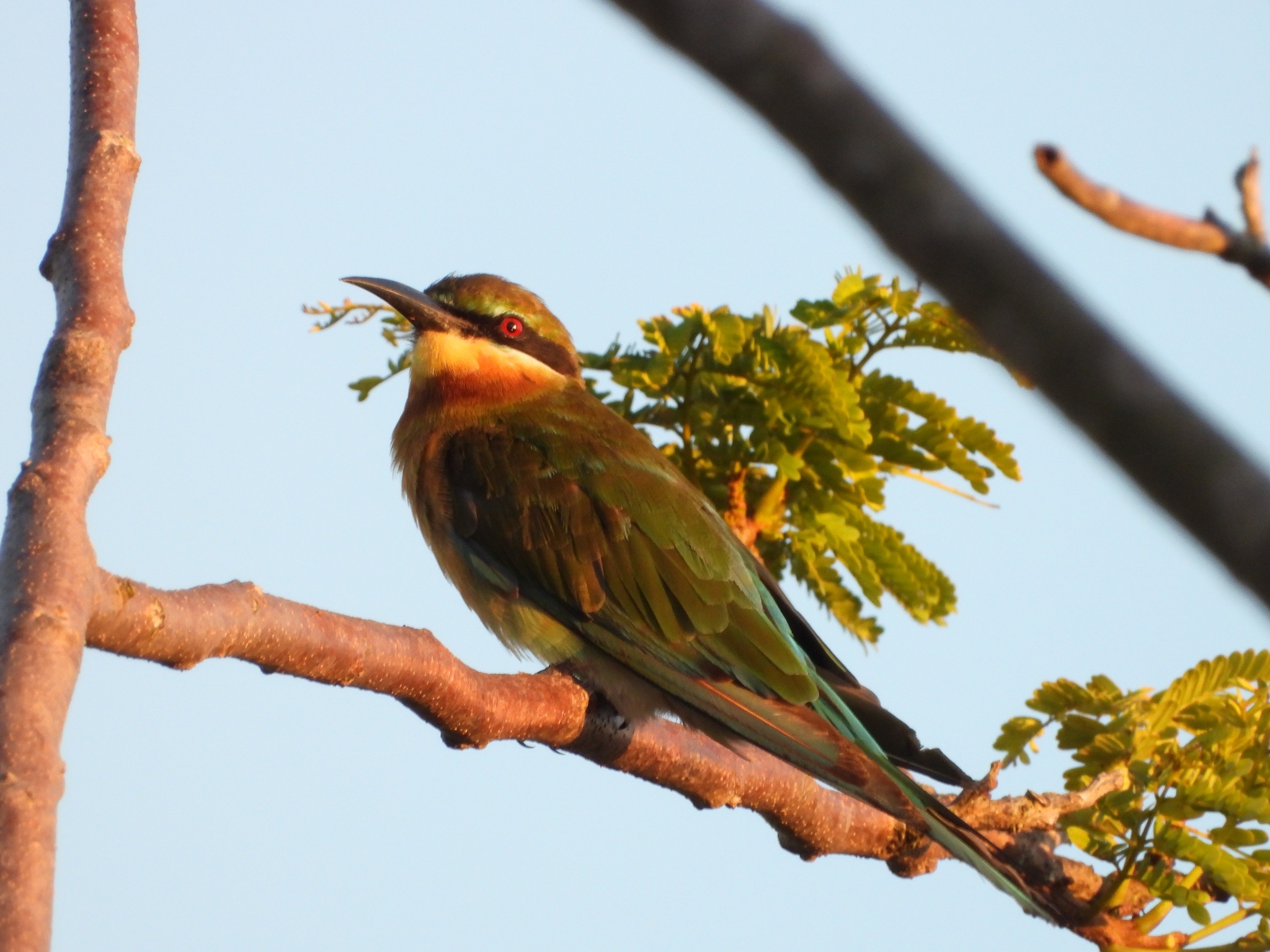
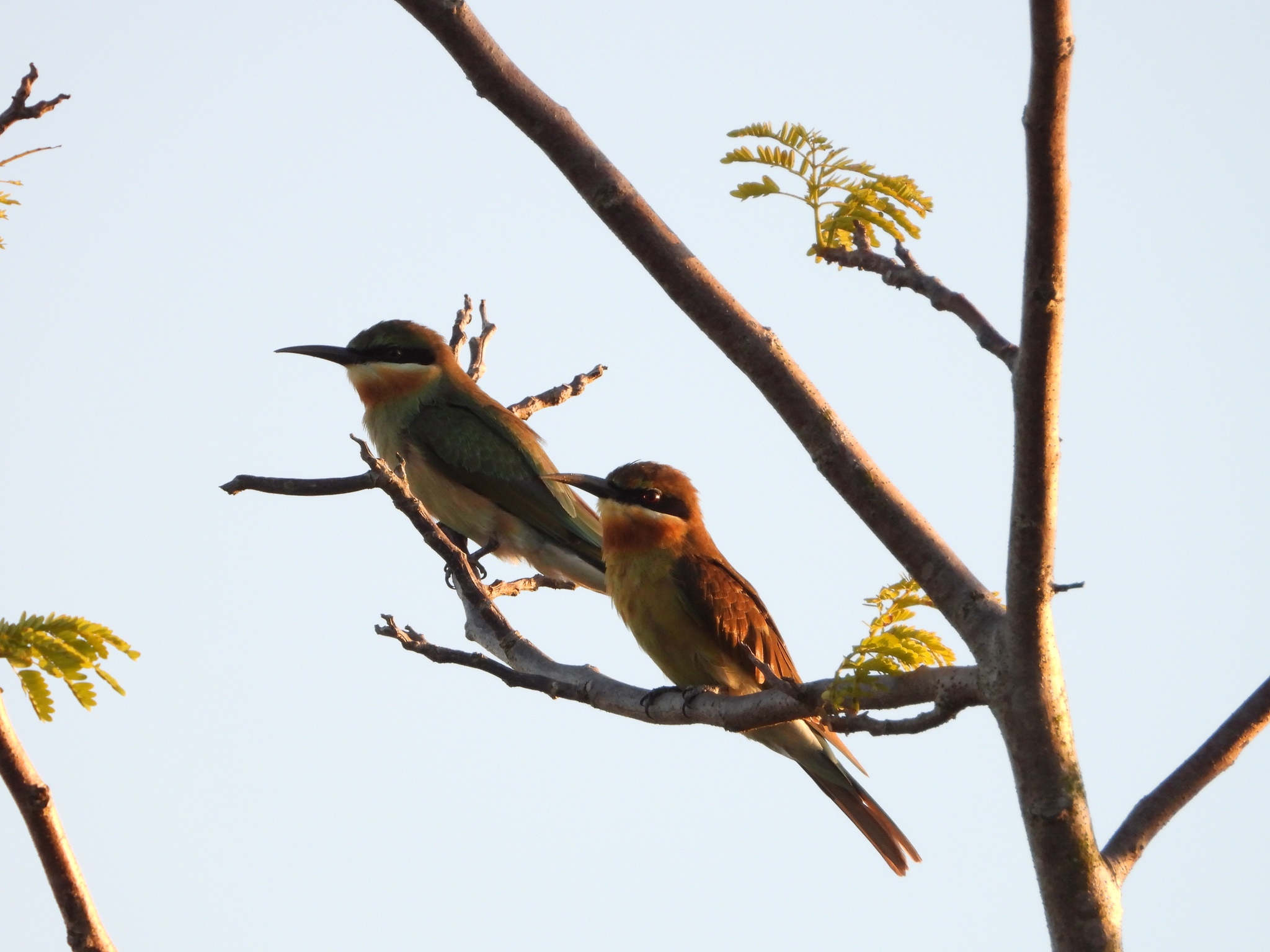
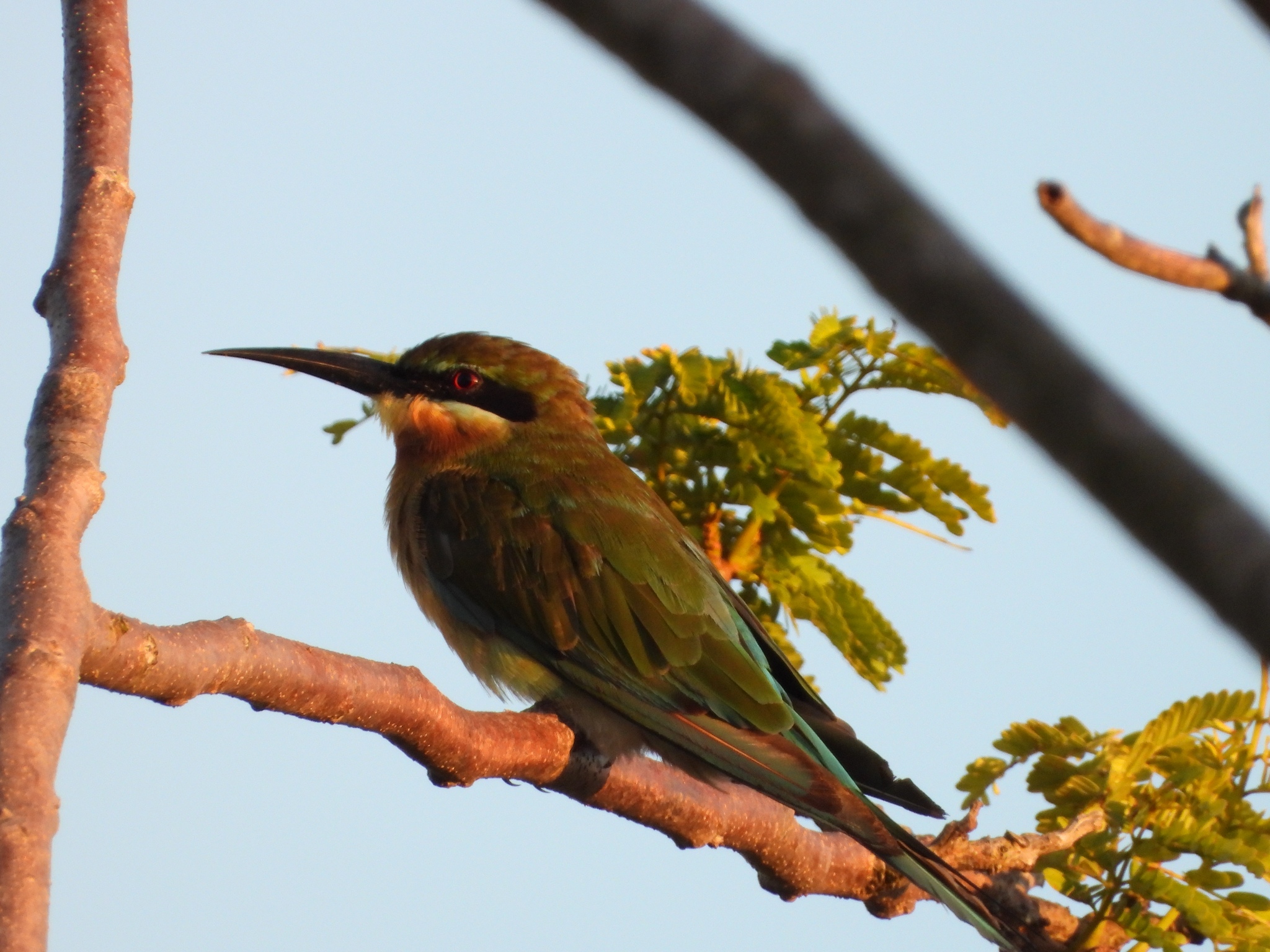
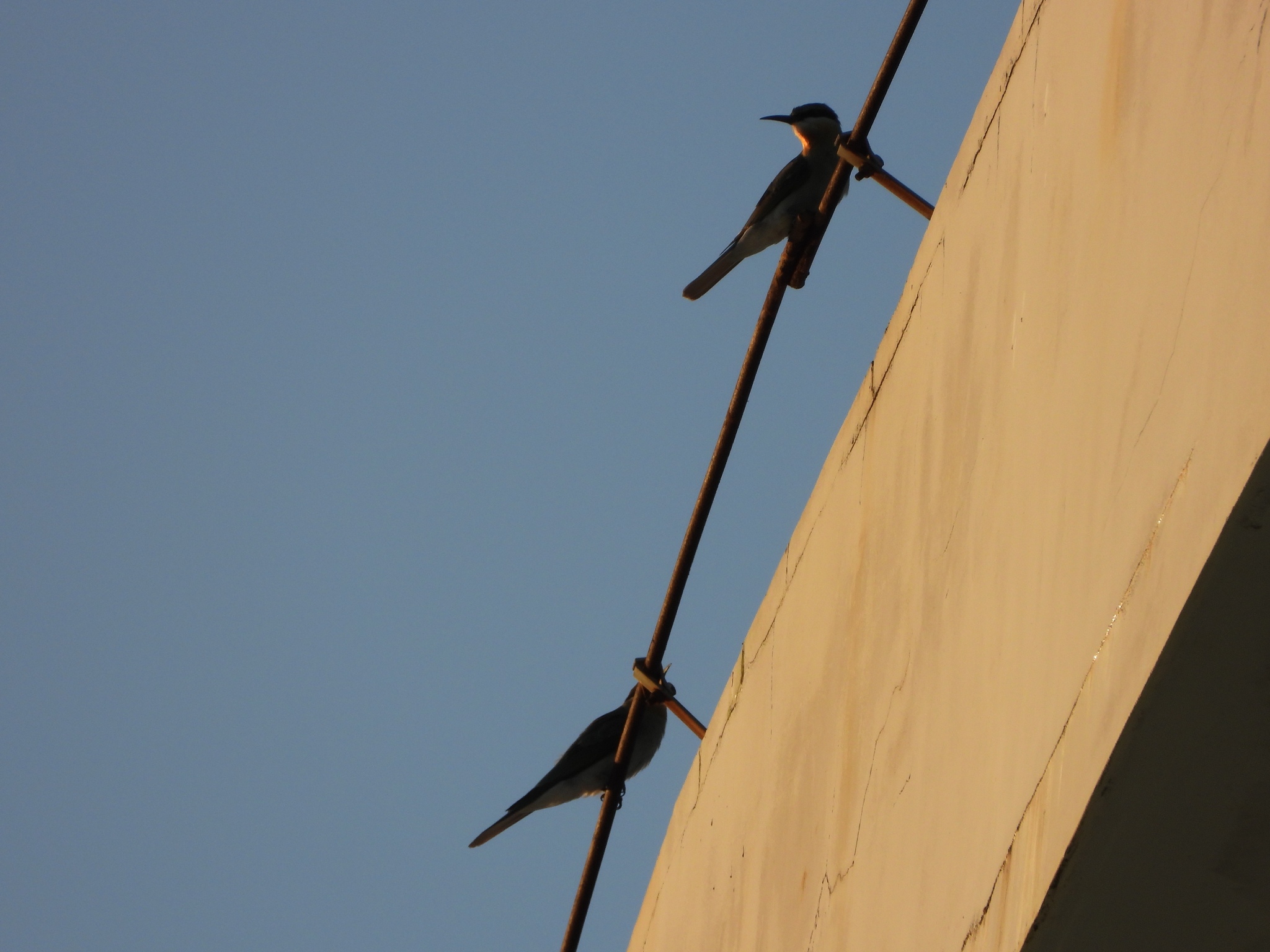
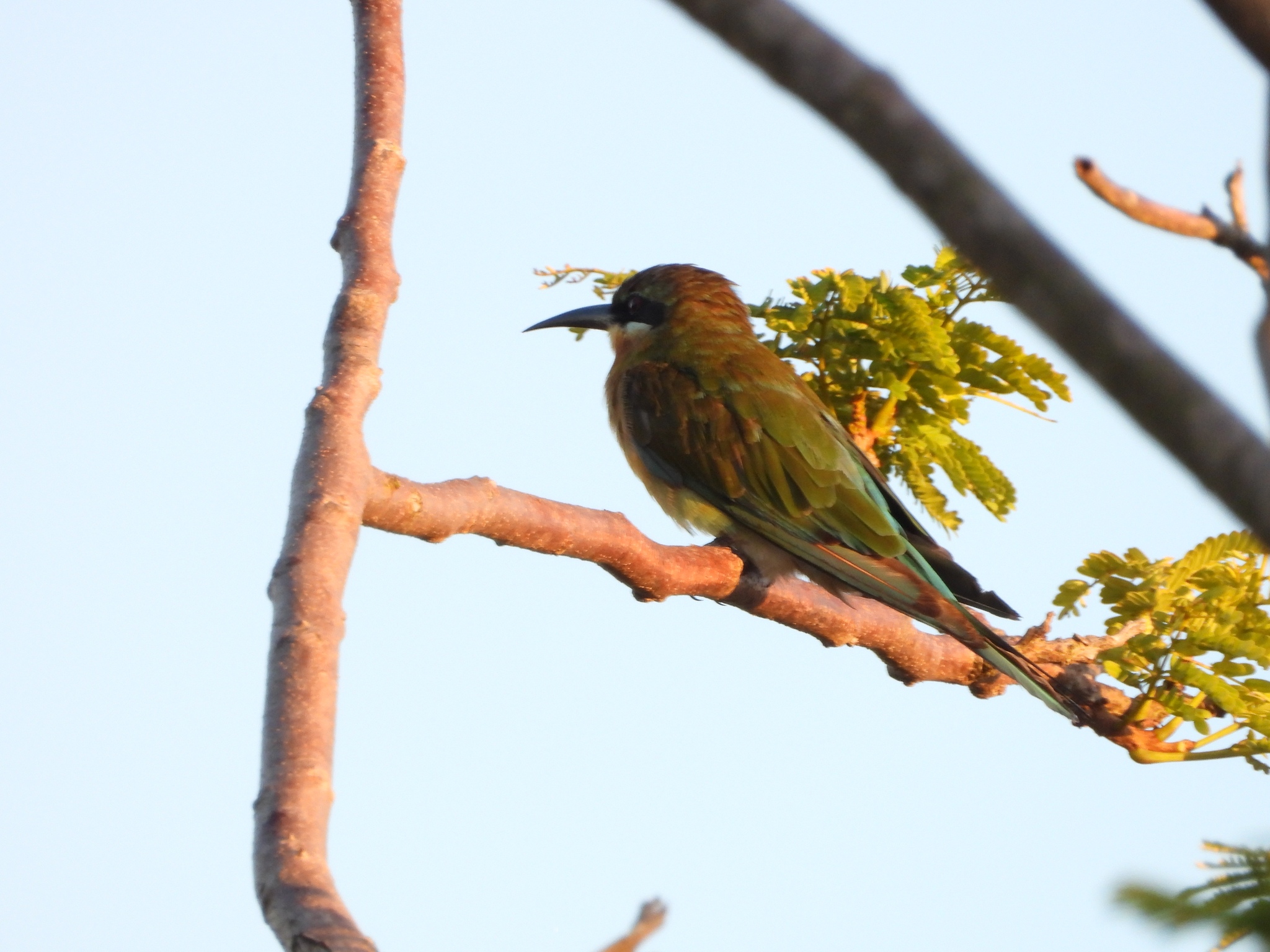
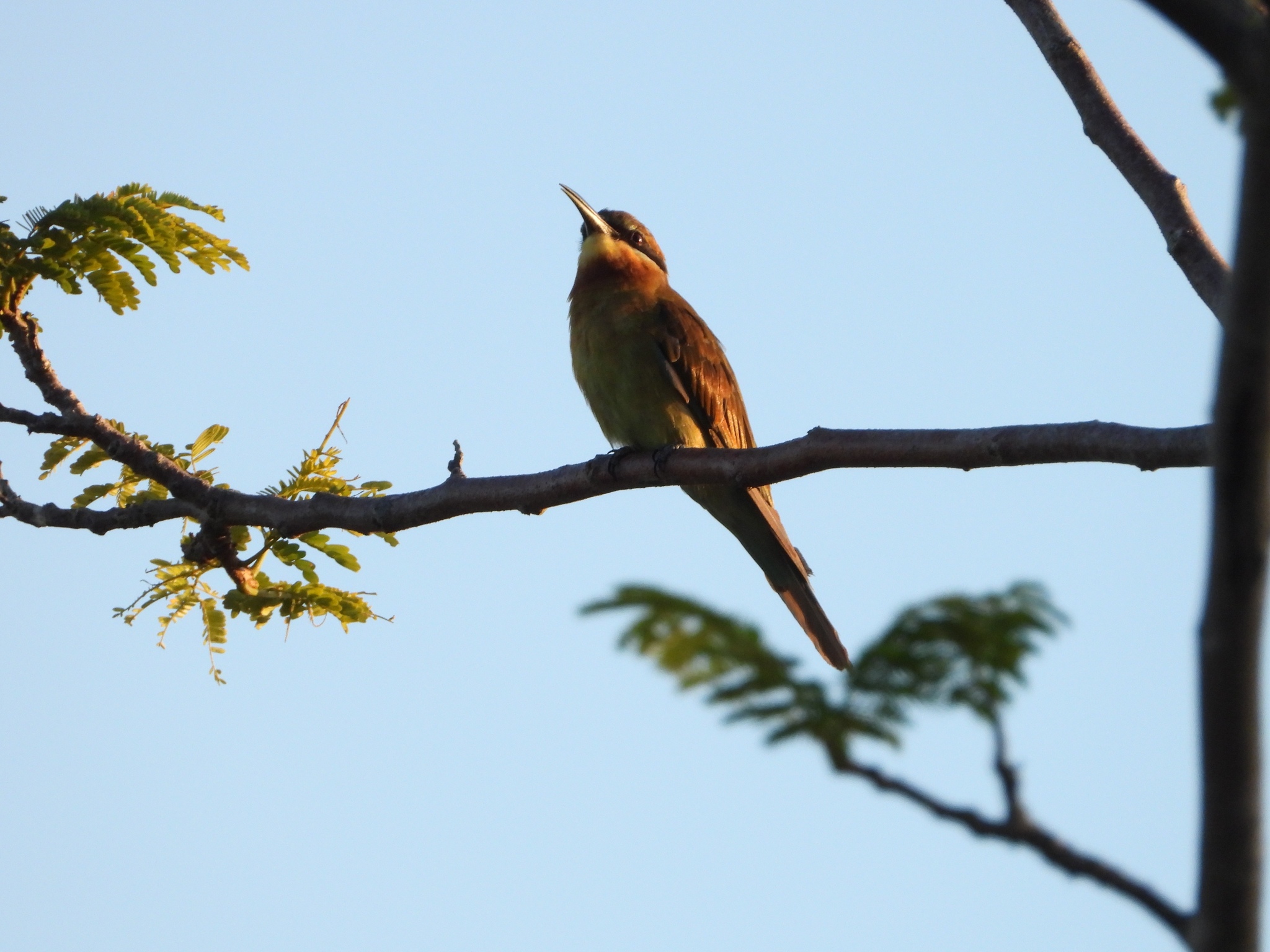
A richly coloured, slender bird measuring 29 cm in length (excluding central tail feathers) with an additional 7 cm from elongated tail streamers. Weight ranges from 29–43 grams. Predominantly green plumage with a narrow blue face patch, black eye stripe, and yellow-and-brown throat. Tail is blue and the beak is black. The three outer toes are united at their bases. Sexes appear alike; juveniles are drabber and lack the elongated central tail feathers.
Identification
The only confusable species within its range is the blue-cheeked bee-eater, which however typically inhabits drier areas. Distinguishing features include: rump and tail blue rather than green and black; undertail feathers bluish rather than green; blue cheek patch much smaller; and chestnut coloration on throat and breast darker and covering a larger area.
Distribution & Habitat
Patchy breeding distribution across India, Myanmar, and parts of Southeast Asia. In India, breeds in river valleys including Godavari, Kaveri, Tunga Badra, and Krishna rivers, and in eastern Sri Lanka. Seasonal in many parts of range, migrating diurnally en masse at locations like Tanjung Tuan (W. Malaysia) and Promsri Hill (southern Thailand). Winter visitor to Malaysia and peninsular India. Non-breeding range overlaps with blue-cheeked bee-eater in Gujarat and western peninsular India.
Behavior & Ecology
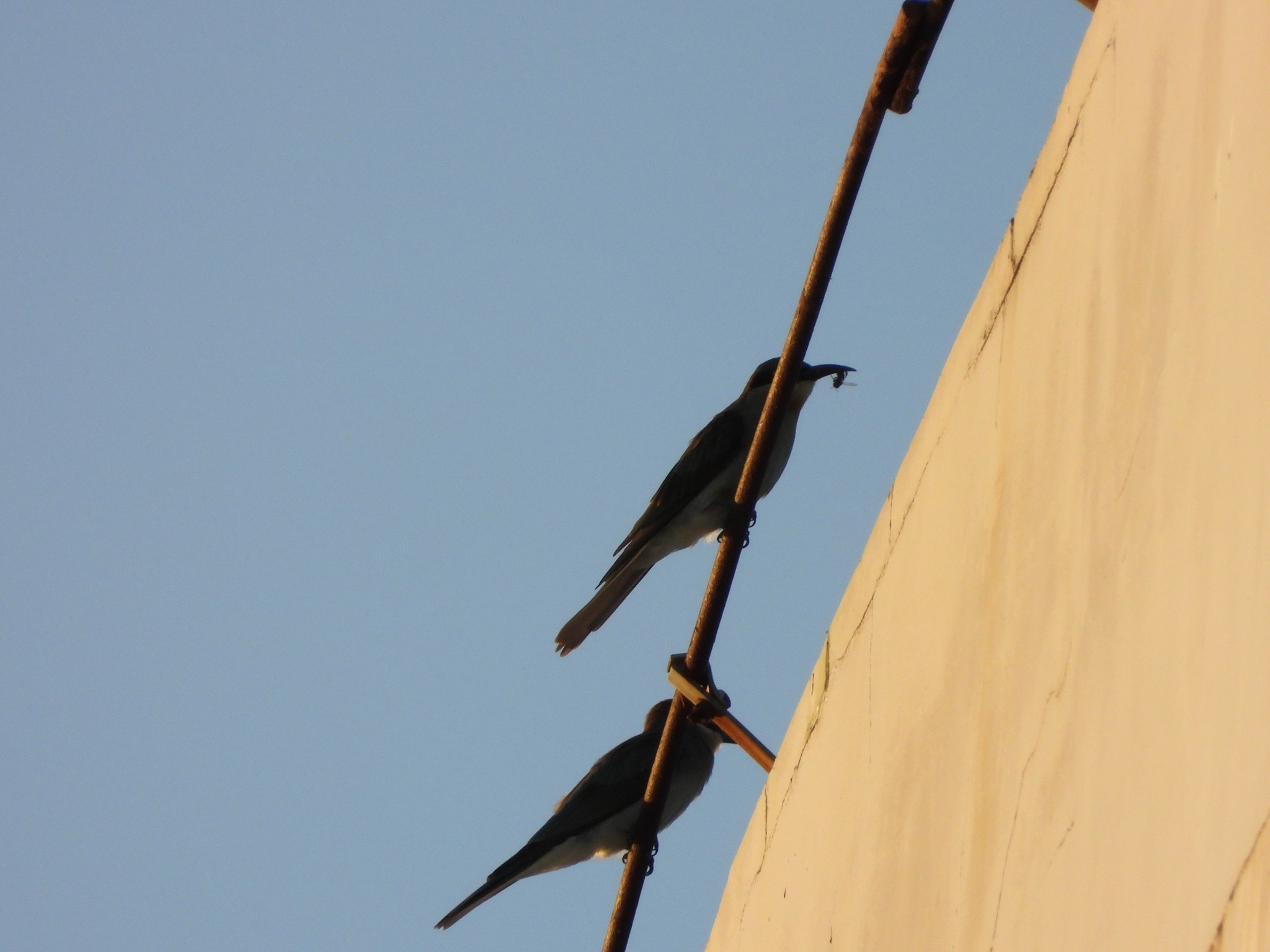
Predominantly eats flying insects, especially bees (including Xylocopa species), wasps, and hornets, caught in air by sorties from open perches. May forage over estuaries, backwaters, and near coast. Takes bees and dragonflies in roughly equal numbers. Captured insects are beaten on perches to kill them and break exoskeletons. Main call is a rolling chirping whistling teerp, given mainly in flight. Breeds April–May in India, nesting colonially with closely placed tunnel nests in vertical mudbanks or gently sloping land, preferring sandy and sandy clay loams without vegetation cover. Nest tunnels run nearly 2 meters deep with 5–7 spherical eggs. Both parents care for eggs and guard against brood parasitism. Communal feeding and roosting; one or two helpers may join breeding pair after incubation begins.
Conservation
Listed as Least Concern by the International Union for Conservation of Nature. No specific population trends or major threats detailed in source.
Culture
No cultural significance, folklore, or traditional references documented.
Source: Wikipedia · CC BY-SA 3.0
Taxonomy
- Order
- Coraciiformes
- Family
- Meropidae
- Genus
- Merops
- eBird Code
- btbeat1
Distribution
breeds northern Pakistan eastward to southeastern China and Philippines, and southward in Central India and southern Sri Lanka, and eastward in Wallacea through New Guinea and New Britain; winters to southern India, Sri Lanka, Malayan Peninsula, and Greater Sundas
Vocalizations
Data Sources
Species description from Wikipedia, licensed under CC BY-SA 3.0.
Bird images and sounds sourced from GBIF, contributed by citizen scientists worldwide under Creative Commons licenses.
Taxonomy data from AviList 2025.