Blue-cheeked Bee-eater
Merops persicus
蓝颊蜂虎
Introduction
Species of bee-eater in the genus Merops. Breeds in Northern Africa and the Middle East from eastern Turkey to Kazakhstan and India, generally strongly migratory and wintering in tropical Africa, though some populations are resident year-round in the Sahel. Occurs as a rare vagrant north of its breeding range, most frequently in Italy and Greece. Inhabits subtropical semi-desert with a few trees such as acacia during breeding season, and open woodland or grassland in winter. Takes more dragonflies than any other food item. Closely related to blue-tailed bee-eater and olive bee-eater, with which it has been considered conspecific.
Description
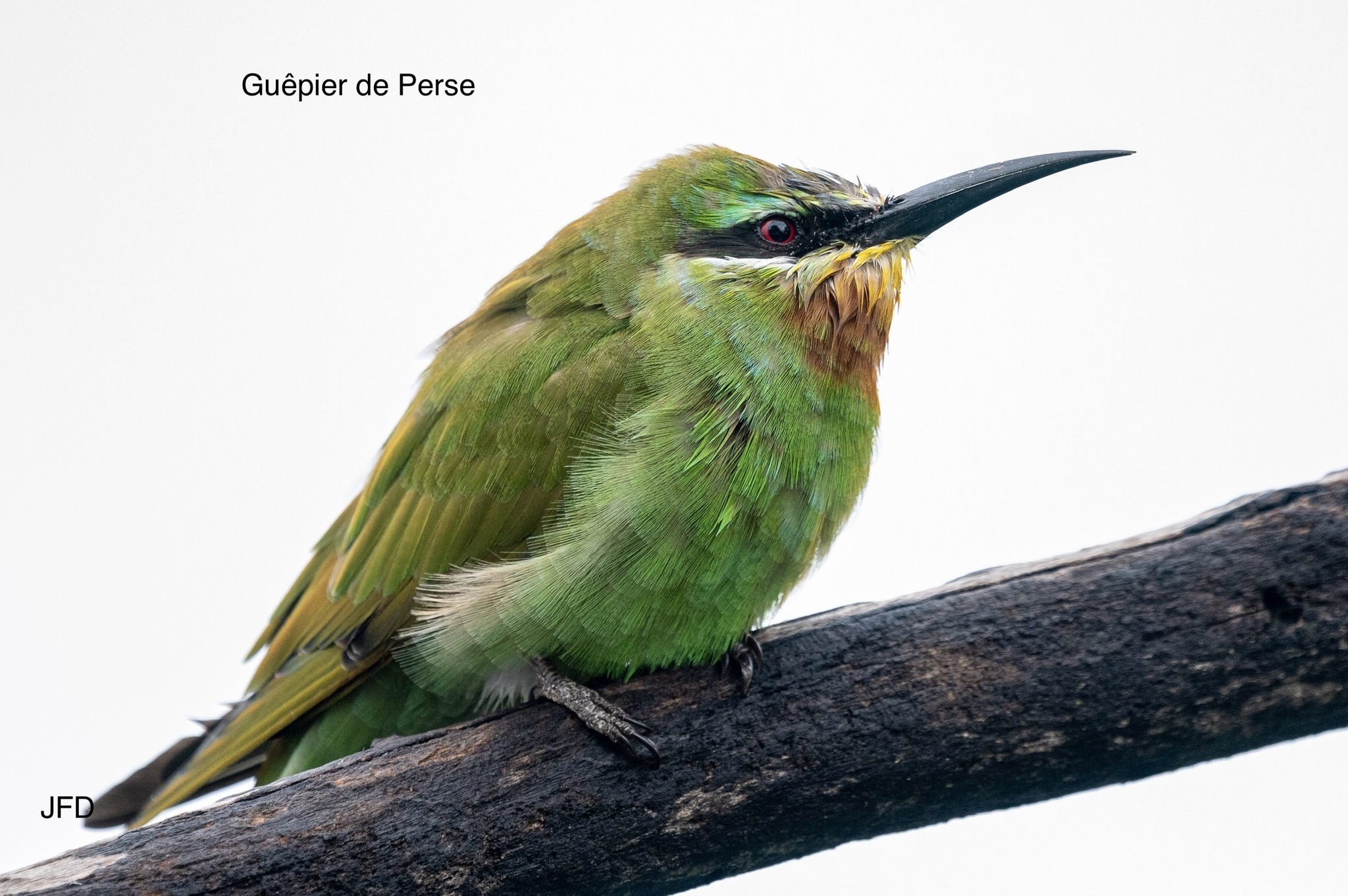
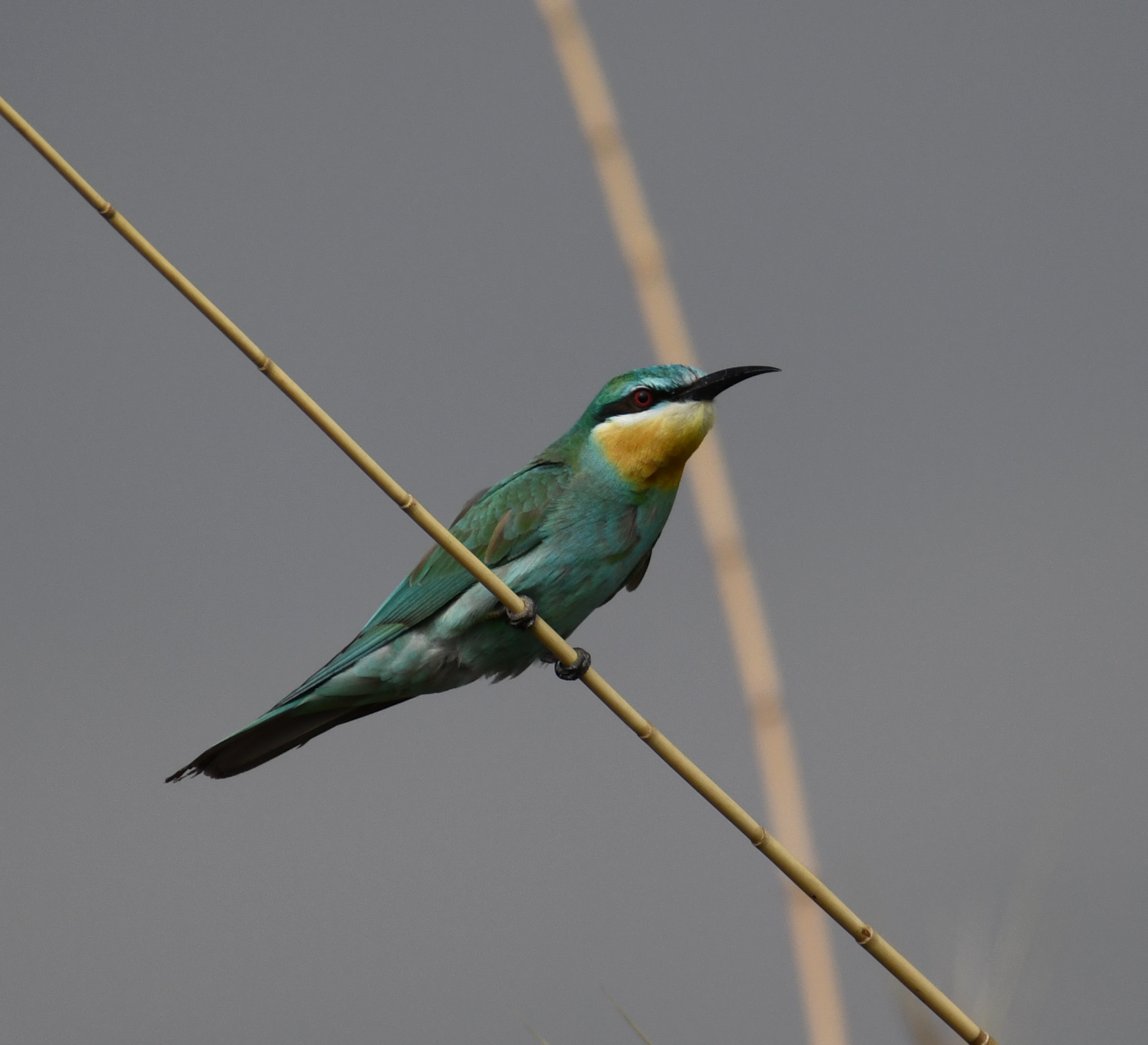
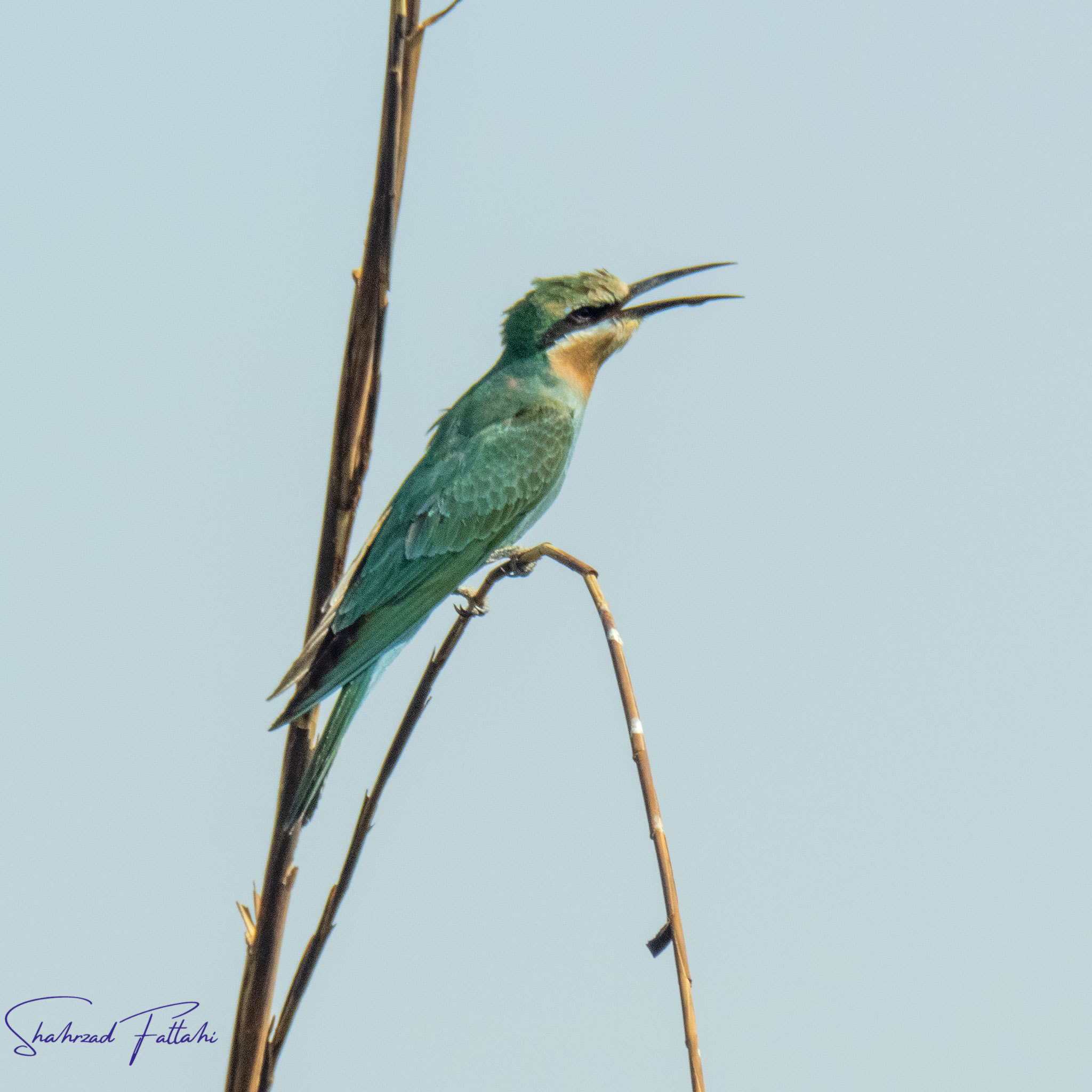
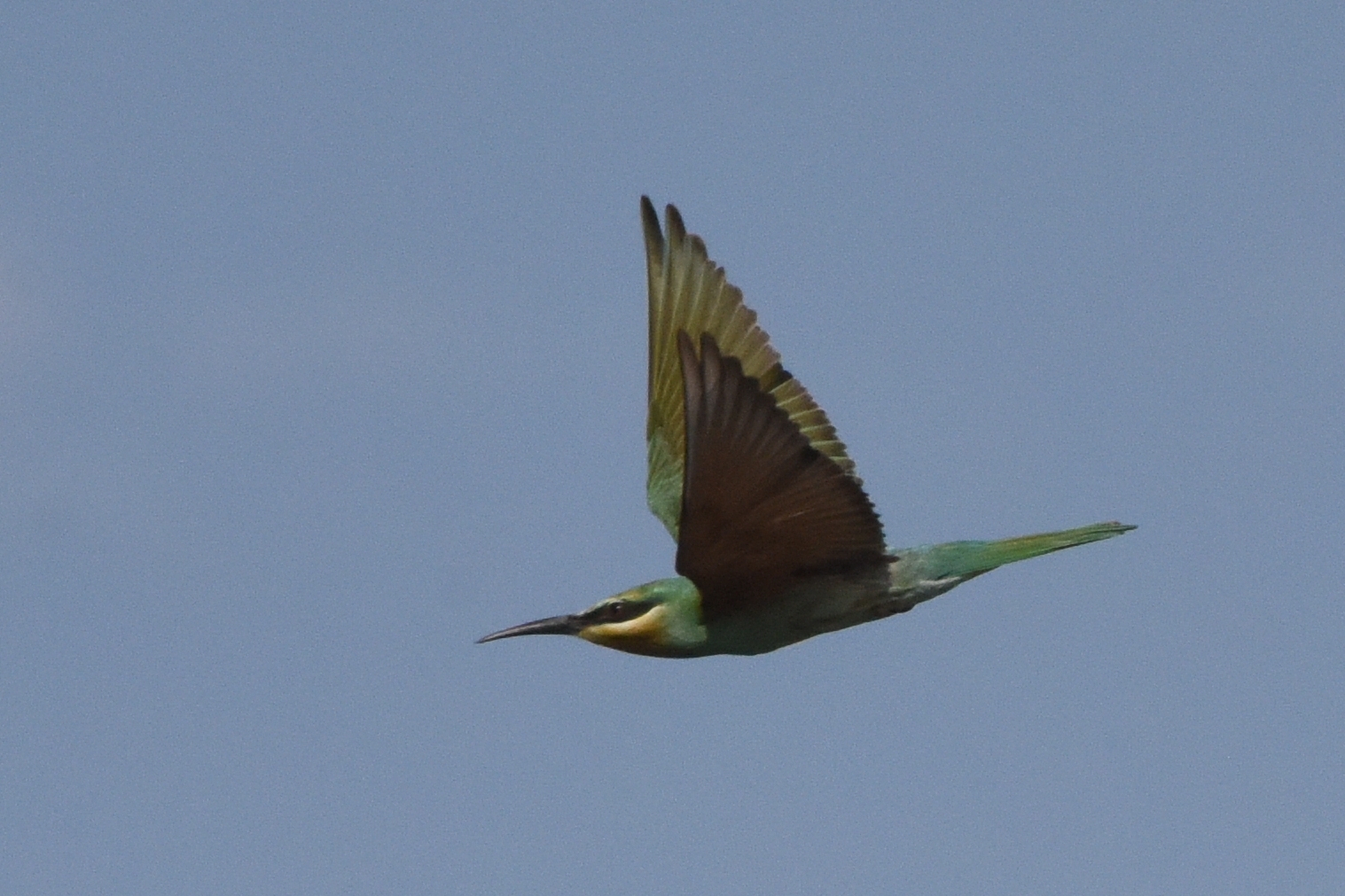
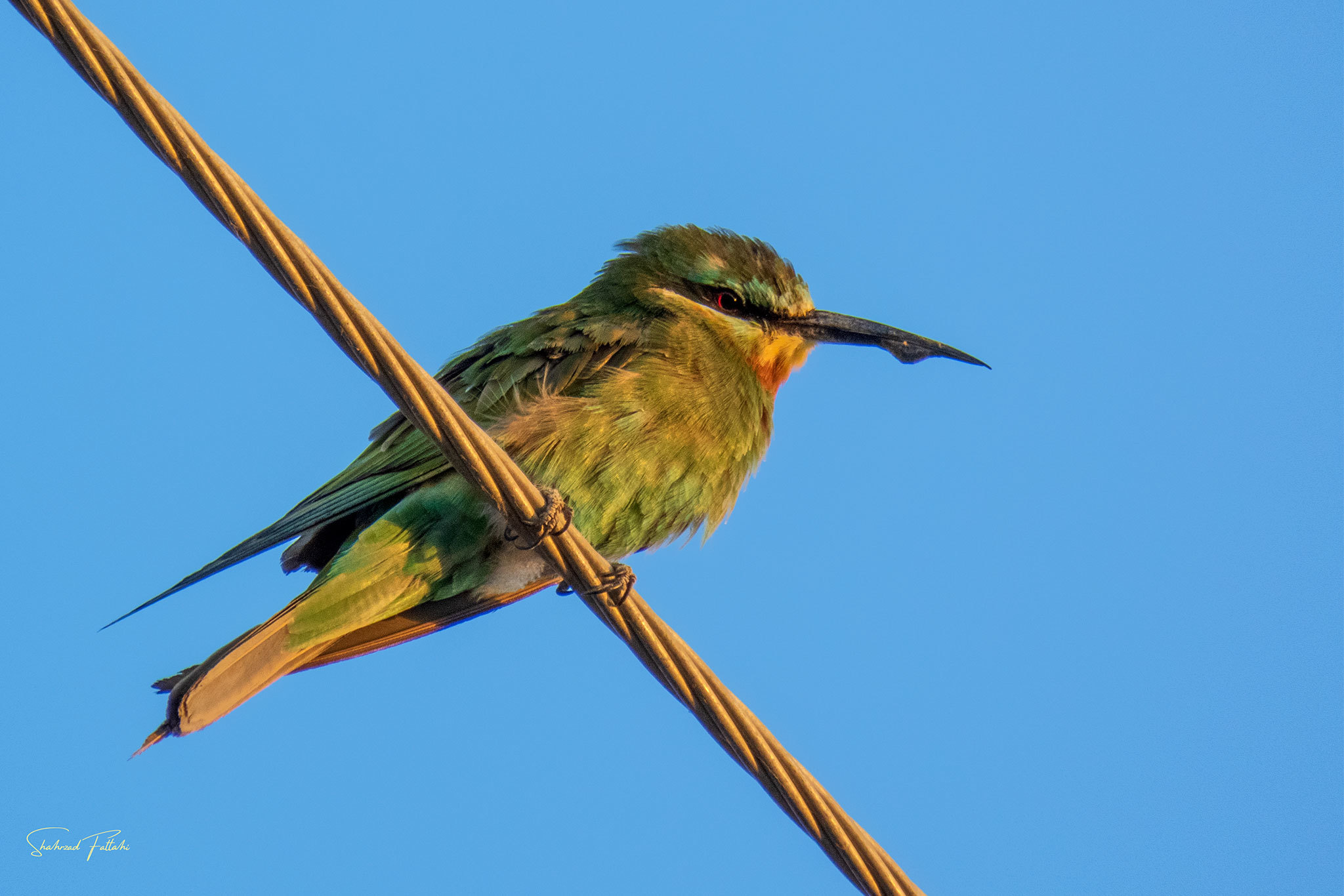
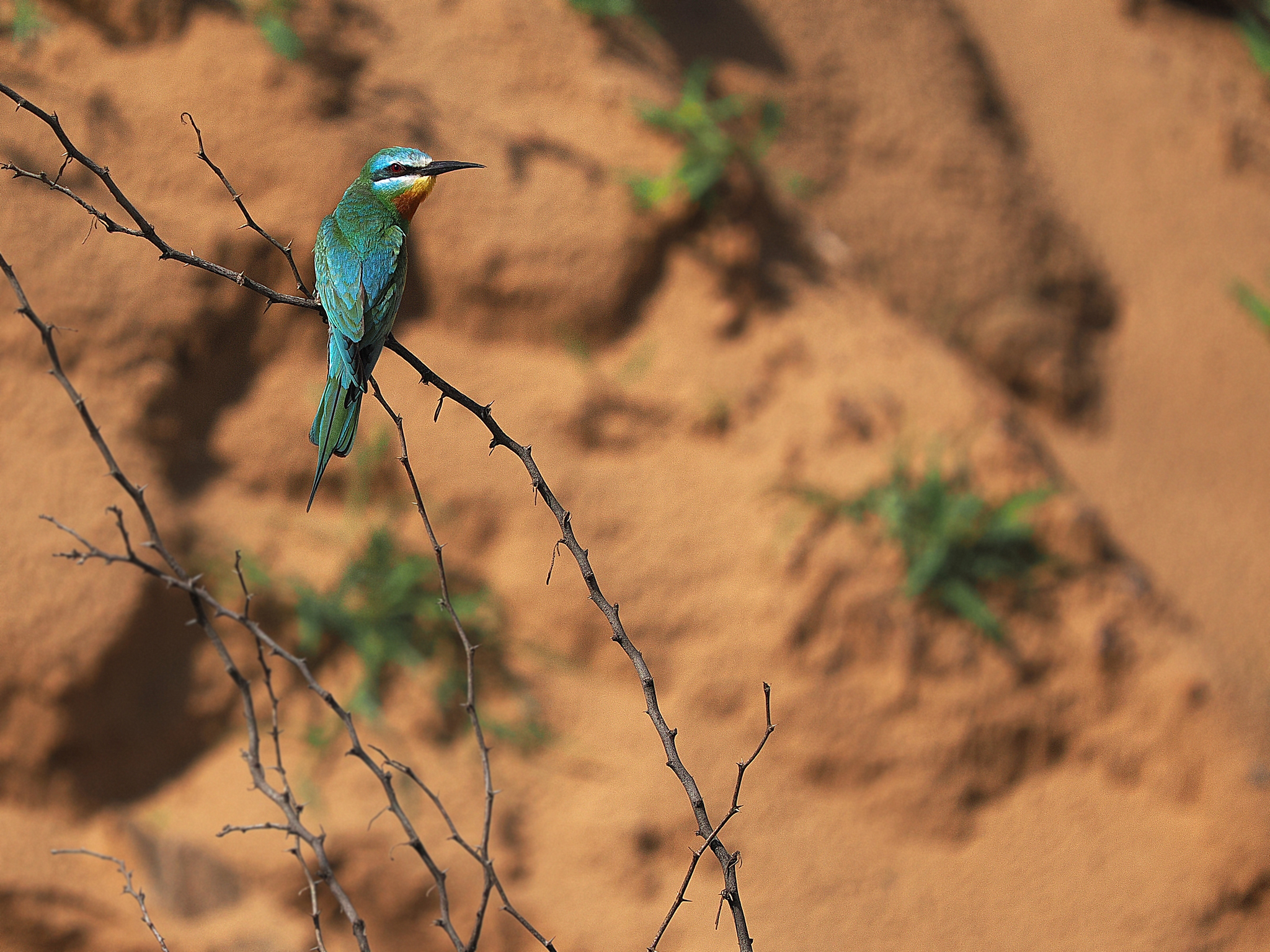
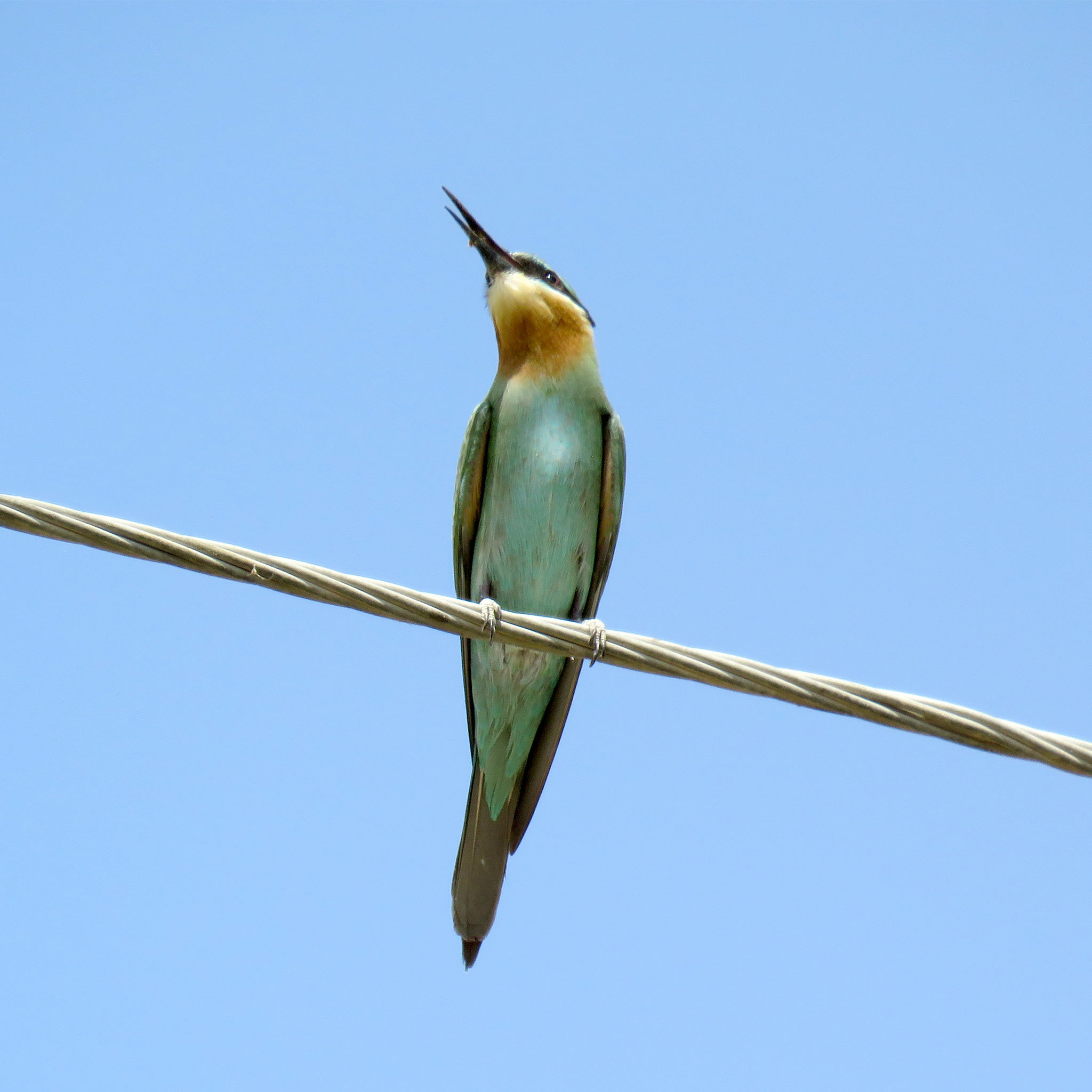
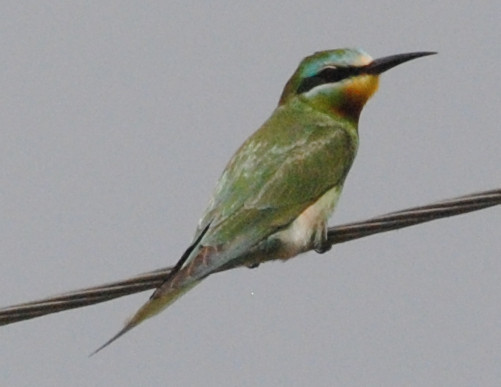
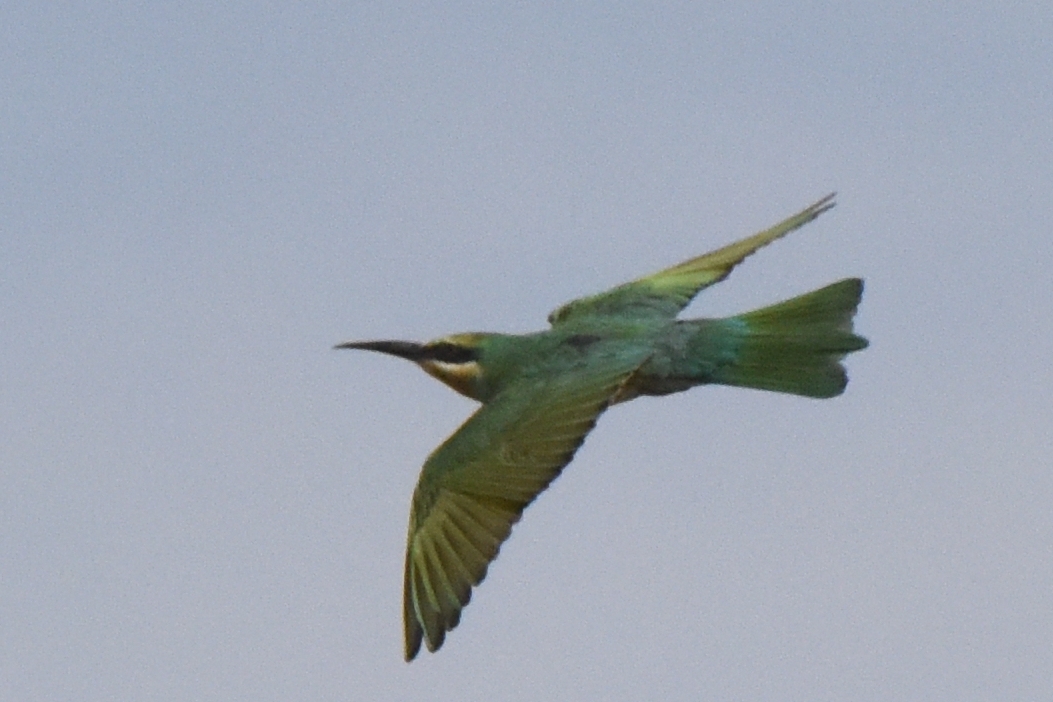
A richly coloured, slender bird reaching 31 cm (12 in) in length, with two elongated central tail feathers adding another 7 cm (2.8 in). Plumage is predominantly green. The face has blue sides with a black eye stripe, and the throat is yellow and brown. The beak is black. Sexes are similar in appearance, though females have noticeably shorter tail-streamers than males.
Identification
Similar to other bee-eaters but distinguished by its blue face sides and black eye stripe combination. The call is notably 'flatter' and less 'fluty' than that of the European bee-eater. Closely resembles the blue-tailed bee-eater and olive bee-eater, with which it forms a species complex.
Distribution & Habitat
Breeds across Northern Africa and the Middle East from eastern Turkey through Kazakhstan to India. Winters in tropical Africa, with Asian populations moving to East and Southern Africa and North African populations to West Africa. Some populations remain resident year-round in the Sahel zone. A rare vagrant north of the breeding range, with most records from Italy and Greece.
Behavior & Ecology
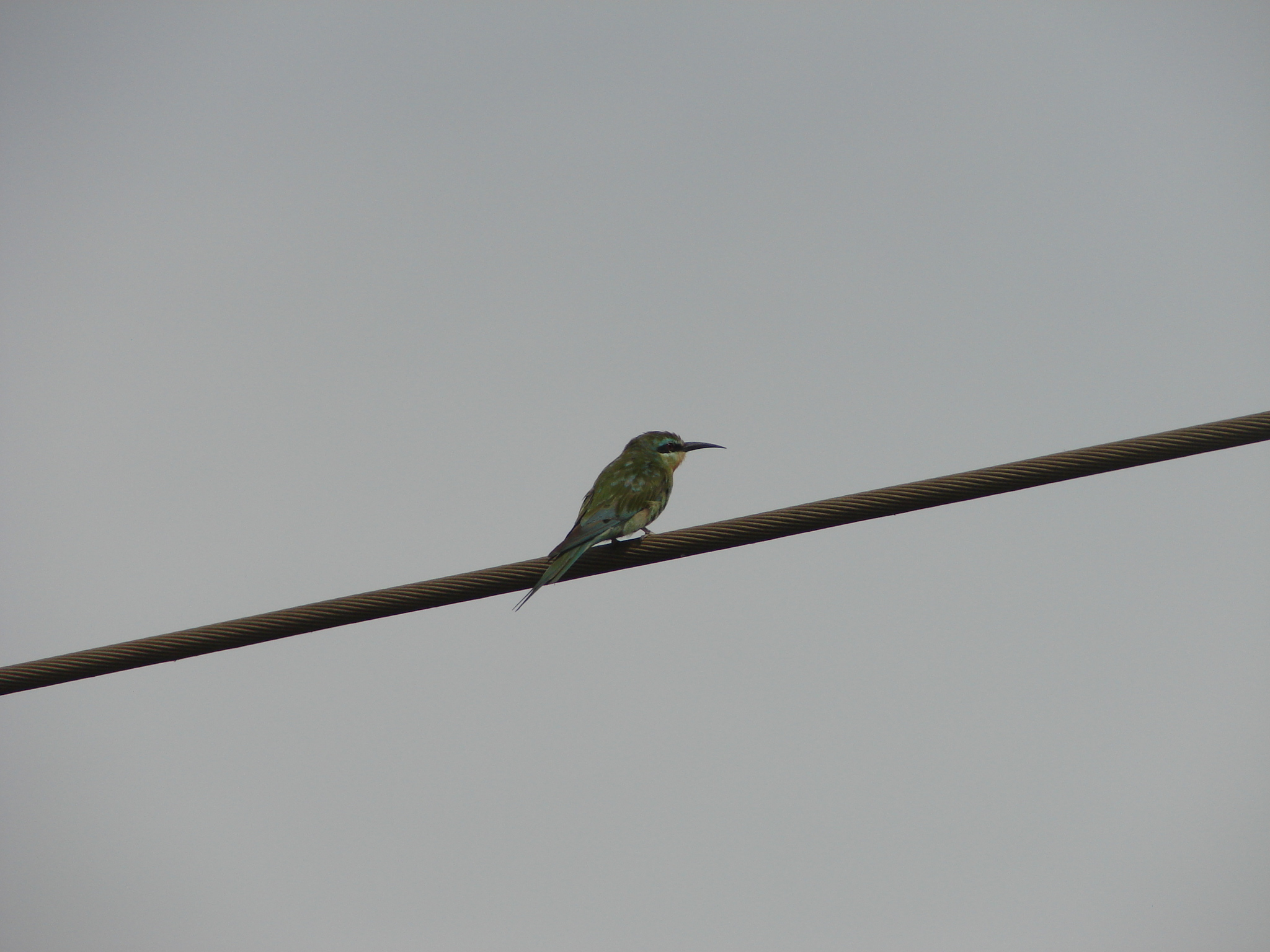
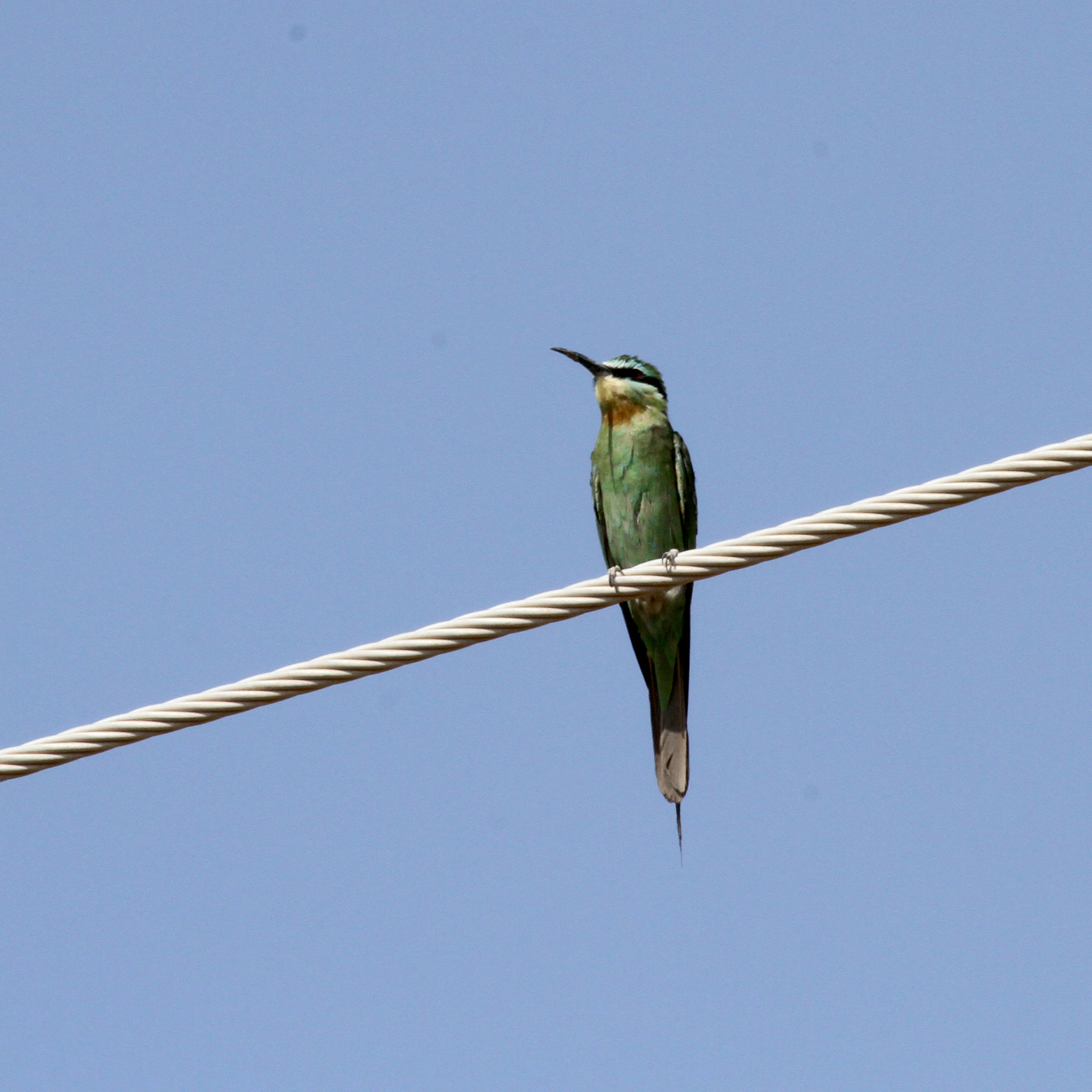
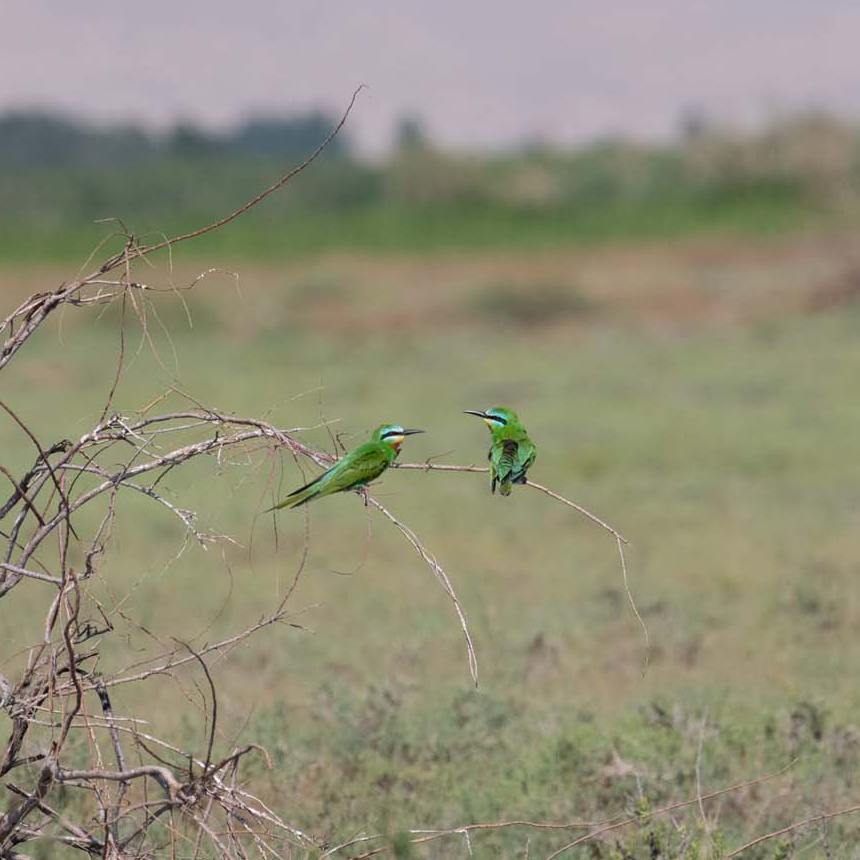
Diet consists predominantly of insects, especially bees, wasps, and hornets, though this species takes more dragonflies than any other food item. Hunts by making aerial sorties from open perches, preferring telephone wires when available. Nests solitarily or in loose colonies of up to ten birds, sometimes alongside European bee-eaters. Nests are situated in sandy banks, embankments, low cliffs, or Caspian Sea shores, consisting of a tunnel 1-3 m (3-10 ft) long containing 4-8 spherical white eggs, usually six or seven. Both parents care for the eggs, though only the female incubates them at night during the 23-26 day incubation period.
Conservation
Not specifically assessed in the provided article.
Culture
The genus name Merops is Ancient Greek for 'bee-eater', and the species name persicus is Latin for 'Persian'. No other cultural significance or folklore mentioned.
Source: Wikipedia · CC BY-SA 3.0
Taxonomy
- Order
- Coraciiformes
- Family
- Meropidae
- Genus
- Merops
- eBird Code
- bcbeat1
Vocalizations
Subspecies (2)
-
Merops persicus chrysocercus
northwestern Africa (south of Atlas Mountains); Senegambia to Lake Chad
-
Merops persicus persicus
breeds Egypt to Lake Balkhash and Hindu Kush; winters to southern Africa
Data Sources
Species description from Wikipedia, licensed under CC BY-SA 3.0.
Bird images and sounds sourced from GBIF, contributed by citizen scientists worldwide under Creative Commons licenses.
Taxonomy data from AviList 2025.