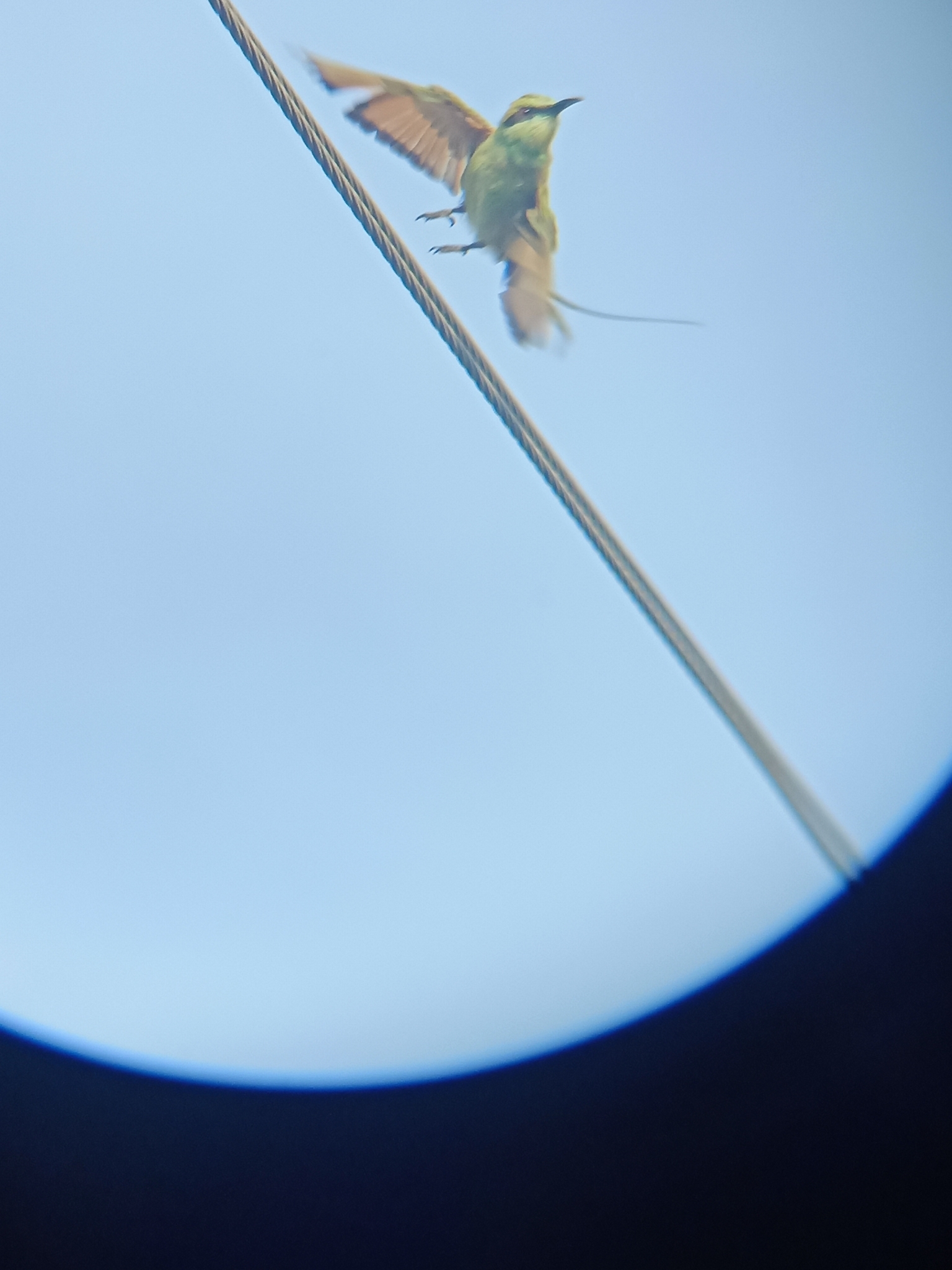
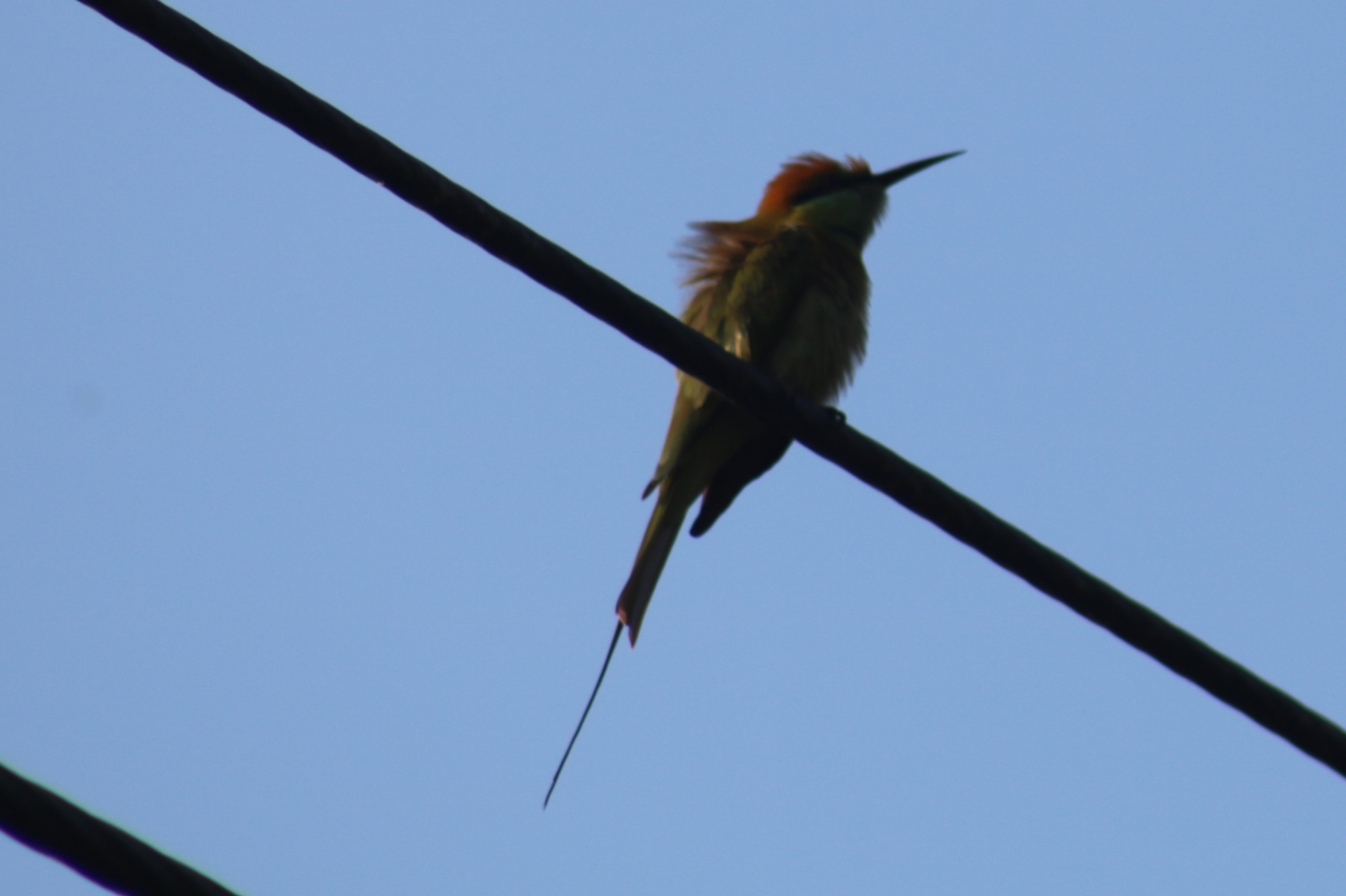
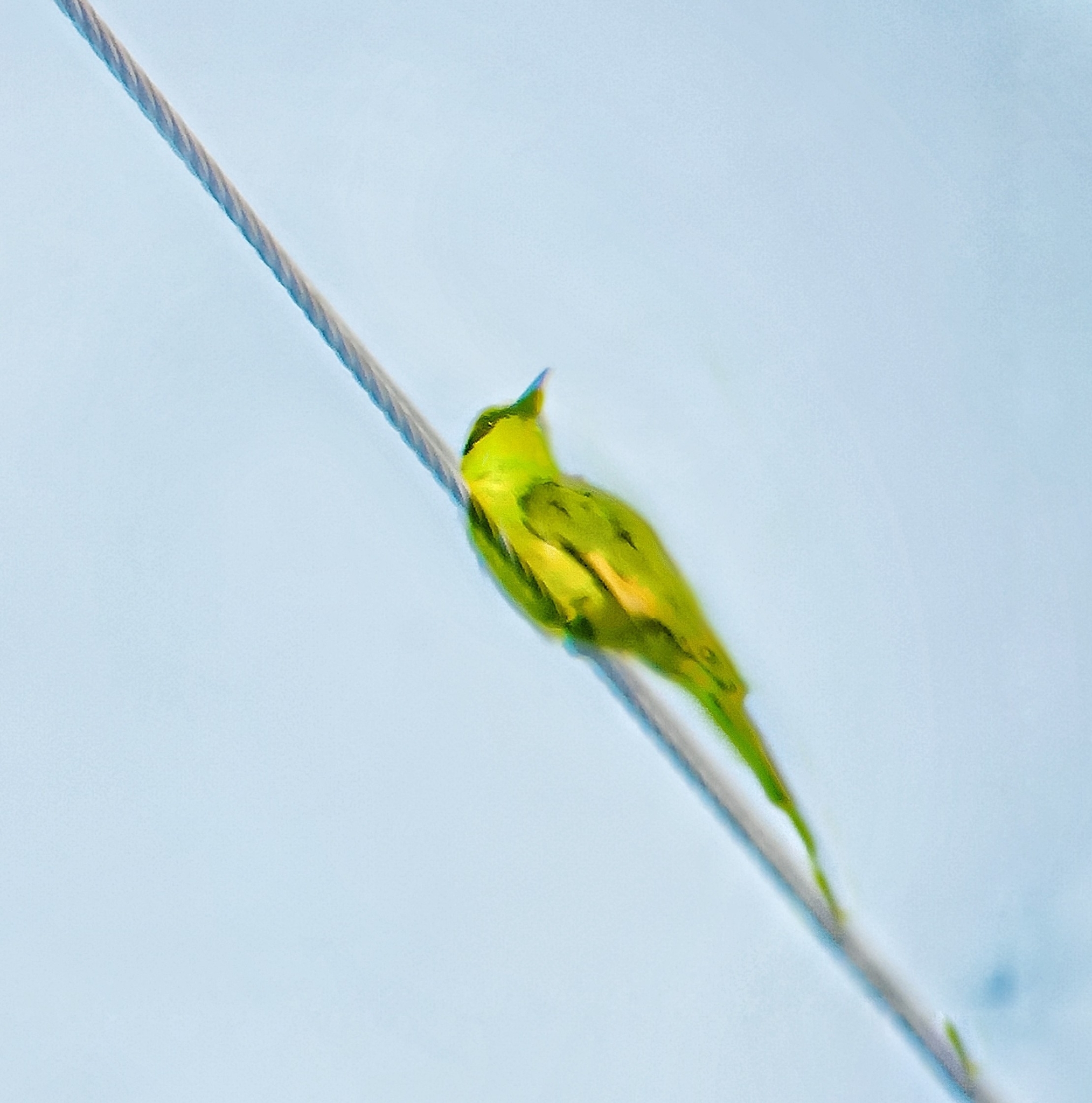
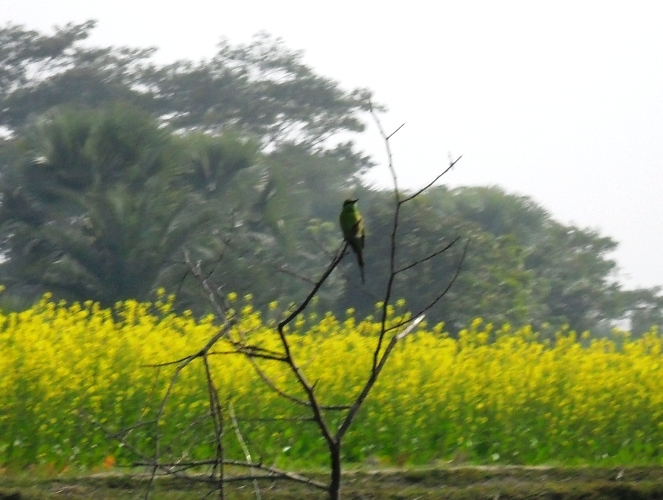
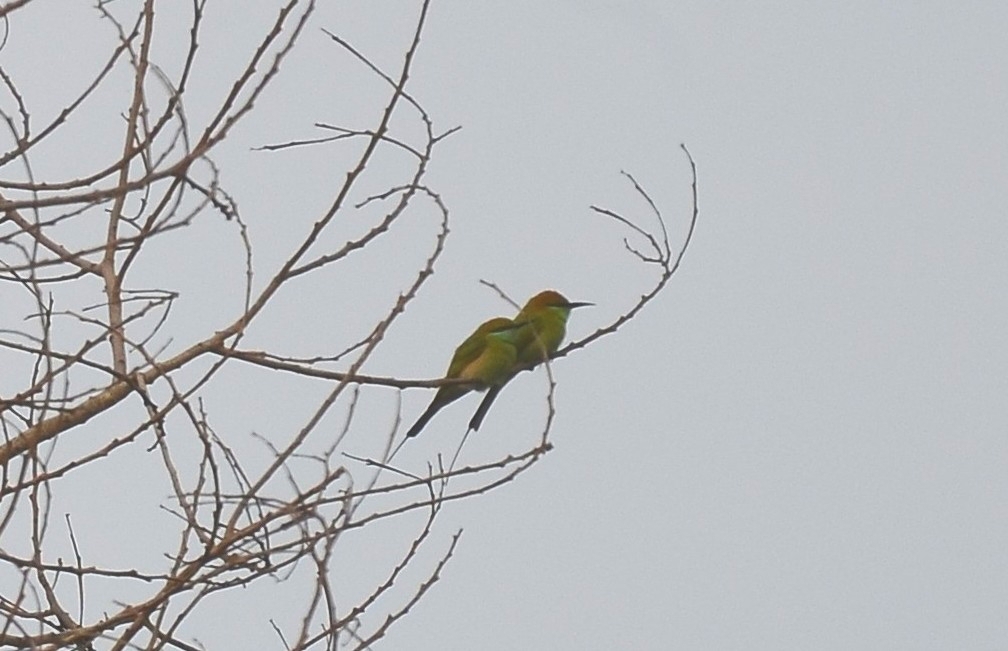
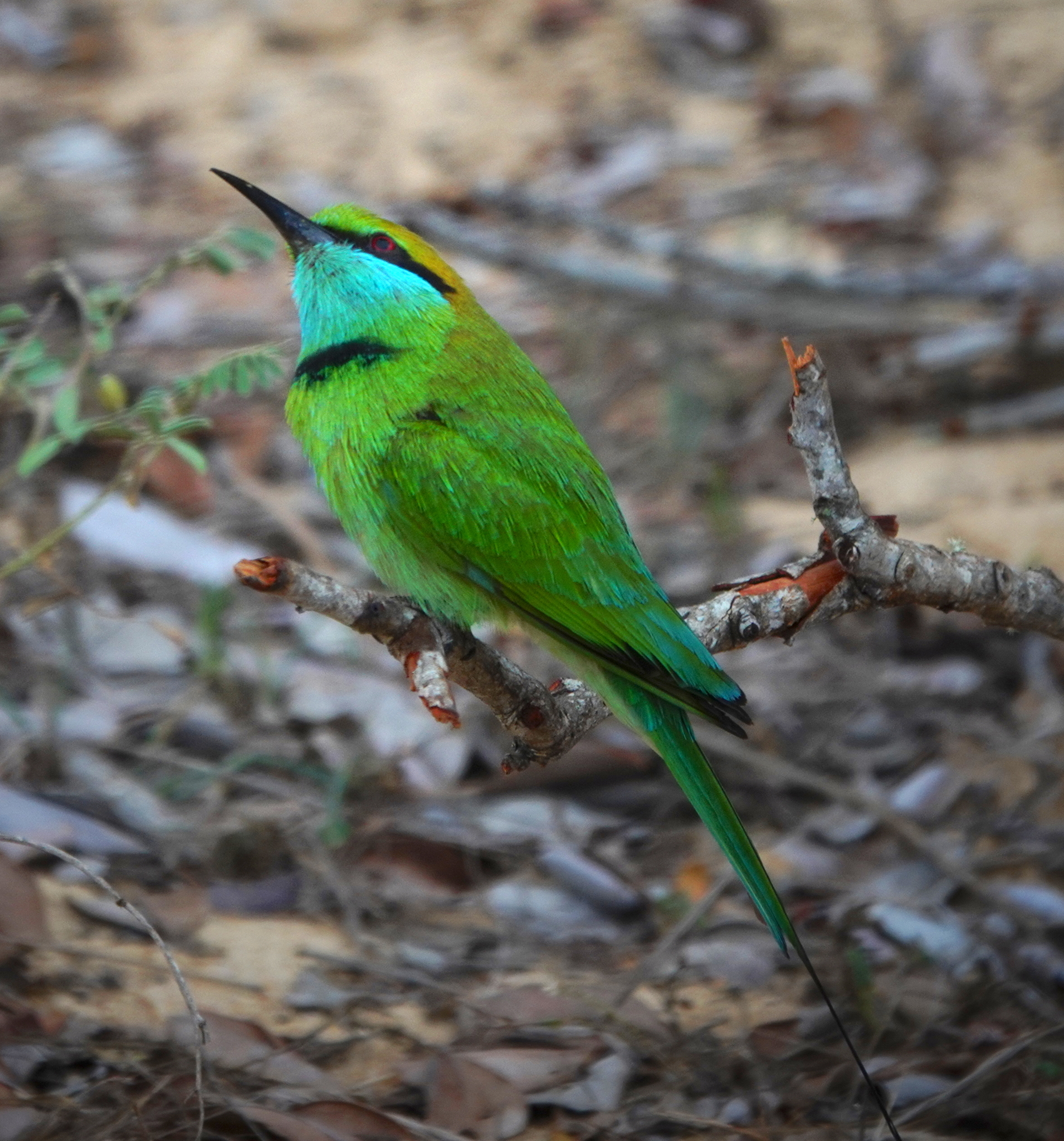
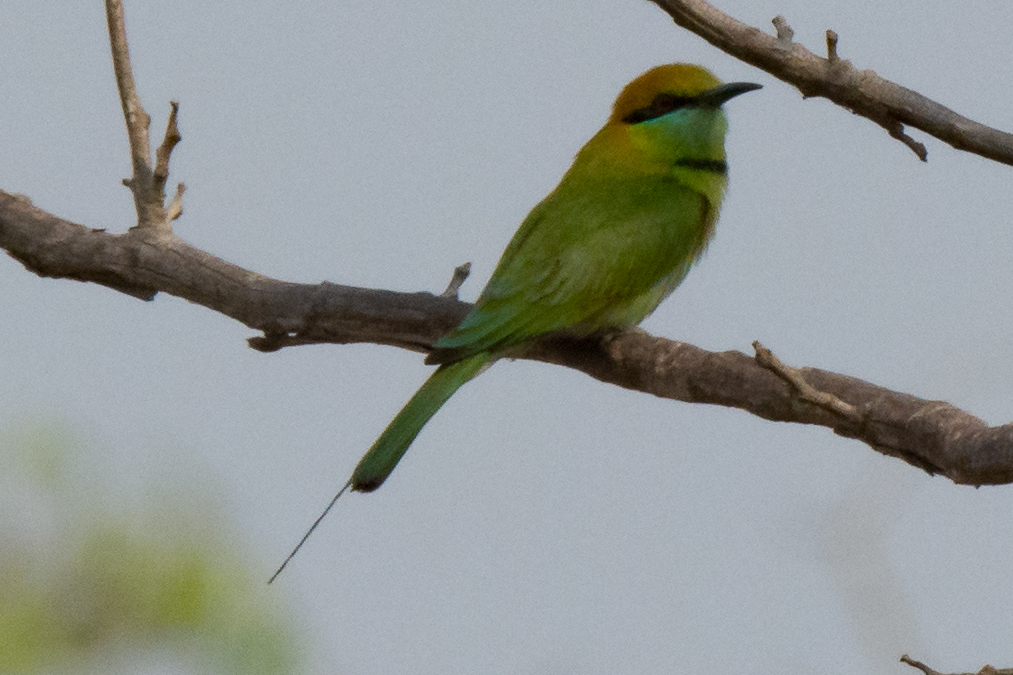
Asian Green Bee-eater
Merops orientalis
绿喉蜂虎
Description
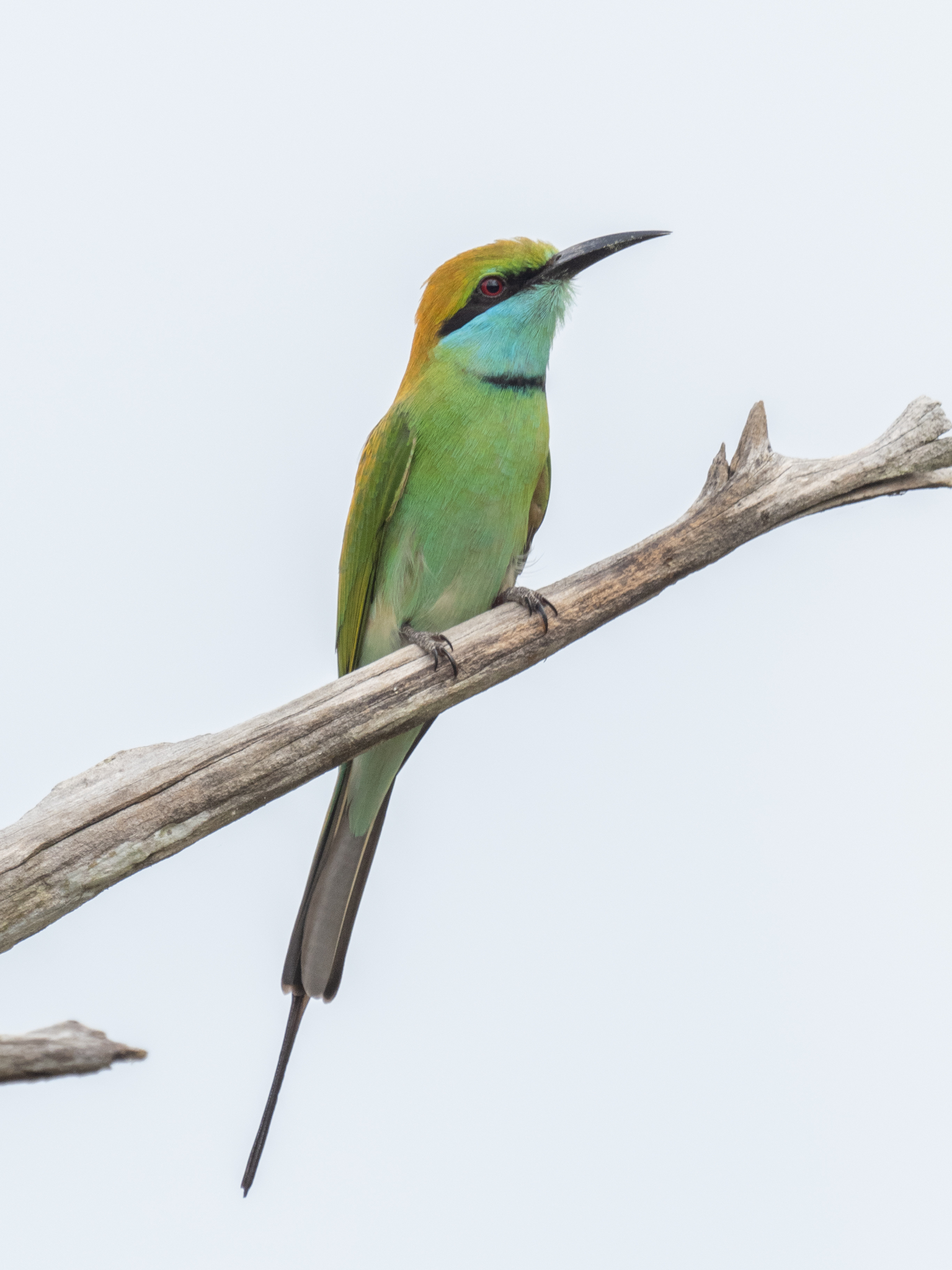
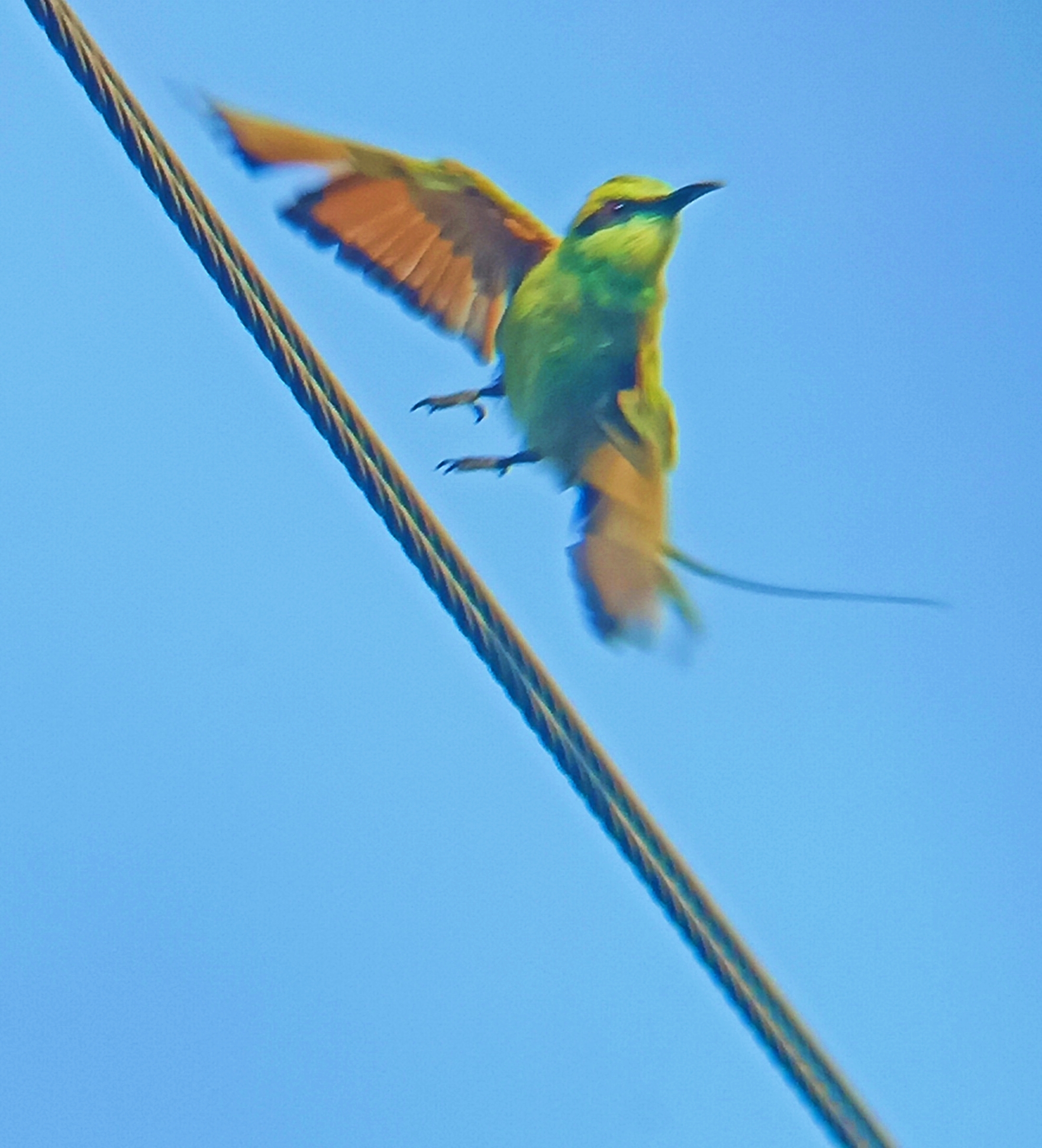
A slender, richly coloured bird measuring 16-18 cm in length, not including the elongated central tail-feathers which add an additional 7 cm. The entire plumage is bright green, with blue toning on the chin and throat, while the crown and upper back show golden rufous. Flight feathers are rufous washed with green and tipped with blackish. A fine black eyestripe runs in front of and behind the eye, and a slender black crescent marks the top of the breast. The iris is crimson, the bill black, and the legs are dark grey. The feet are weak with three toes joined at the base. Regional variations exist: Southeast Asian populations have rufous crown and face with green underparts, while the western subspecies M. o. beludschicus shows a greener crown, bluer face, and bluish underparts. In flight, wings appear bronzed coppery-green above and coppery-orange below. Juveniles are paler and duller, lack elongated tail feathers and the black throat crescent, and have a yellow-tinged throat rather than blue. The sexes are identical.
Distribution & Habitat
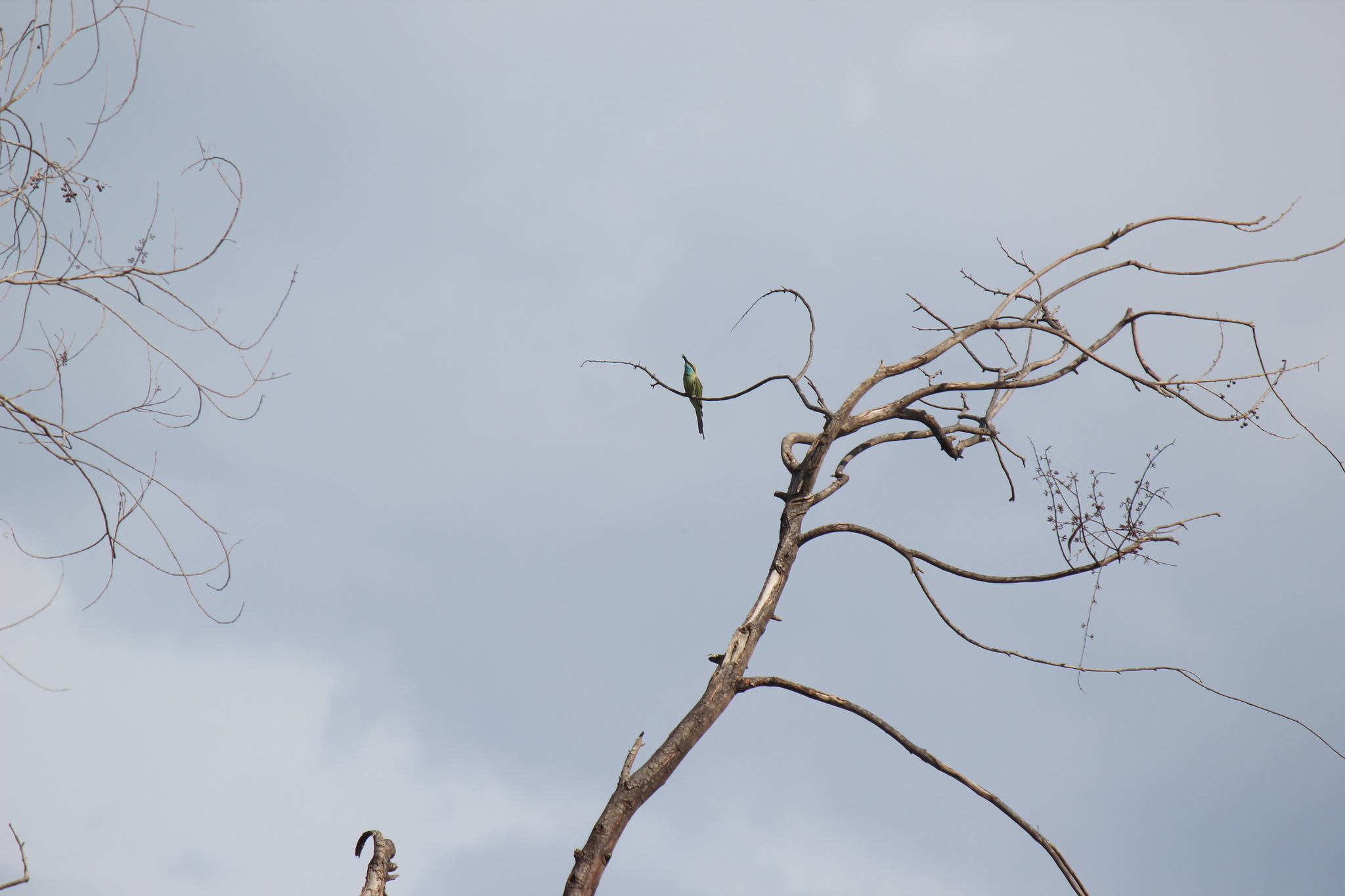
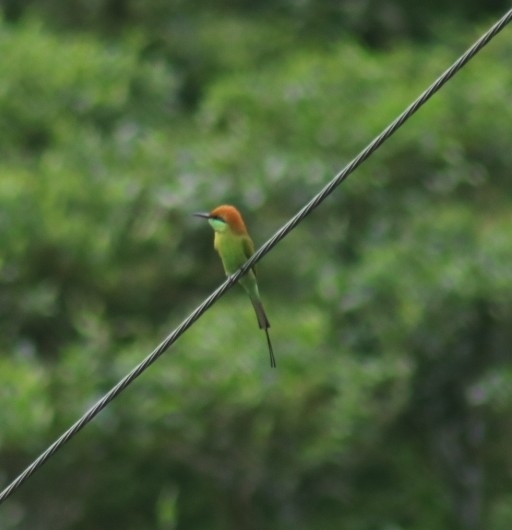
Widely distributed across Asia from coastal southern Iran east through the Indian subcontinent to Vietnam. This abundant and tame species inhabits open country with bushes, including grassland, thin scrub, and forest, often far from water. Found mostly in plains but occurs up to 2,000 m elevation in the Himalayas. Resident in South Asian lowlands, though some populations make seasonal movements in response to rainfall, moving to drier regions during rainy seasons and warmer areas in winter. In Pakistan, some populations are summer visitors. Shows adaptability to urban and suburban environments, perching on wires and antennae.
Behavior & Ecology
Mainly eats insects, particularly bees, wasps, and ants, caught in aerial sorties from open perches. Before swallowing prey, removes stings and breaks exoskeletons by thrashing against perches. Often hunts from low perches about a metre high or less, readily using fence and electric wires. Breeding season runs from March to June. Unlike many bee-eaters, often nests solitarily, constructing tunnels up to 1.5 metres long in sandy banks. Clutch size is 3-5 spherical white eggs, which hatch asynchronously after approximately 14 days of incubation. Both sexes incubate, and chicks fledge in 3-4 weeks. Breeding pairs are often joined by helper birds. Usually seen in small groups and roosts communally in large numbers of 200-300 birds. Vocalization is a nasal trill 'tree-tree-tree-tree', typically given in flight. Known to sand-bathe frequently and sometimes dip into water while flying. Shows remarkable cognitive abilities, potentially capable of predicting human visual perception to protect nest locations.
Conservation
Described as abundant throughout its range. Population densities vary by habitat: 157 individuals per square kilometre near rivers in southern India, dropping to 101 per square kilometre in agricultural areas, and 43-58 per square kilometre near human habitations. Can be a nuisance to beekeepers due to predation on bees. No IUCN assessment or specific conservation status mentioned in the source material.
Culture
Has become increasingly common in urban and suburban neighborhoods, adapting to human structures such as television antennae for perching and hunting. No specific folklore or cultural traditions mentioned in the source material.
Source: Wikipedia · CC BY-SA 3.0
Taxonomy
- Order
- Coraciiformes
- Family
- Meropidae
- Genus
- Merops
- eBird Code
- grnbee3
Vocalizations
Subspecies (4)
-
Merops orientalis beludschicus
northern end of Persian Gulf to Baluchistan and western India
-
Merops orientalis ceylonicus
Sri Lanka
-
Merops orientalis ferrugeiceps
Assam and Myanmar to Vietnam
-
Merops orientalis orientalis
western India (Rann of Kutch) eastward to Bangladesh and southward through the Indian peninsula
Data Sources
Species description from Wikipedia, licensed under CC BY-SA 3.0.
Bird images and sounds sourced from GBIF, contributed by citizen scientists worldwide under Creative Commons licenses.
Taxonomy data from AviList 2025.