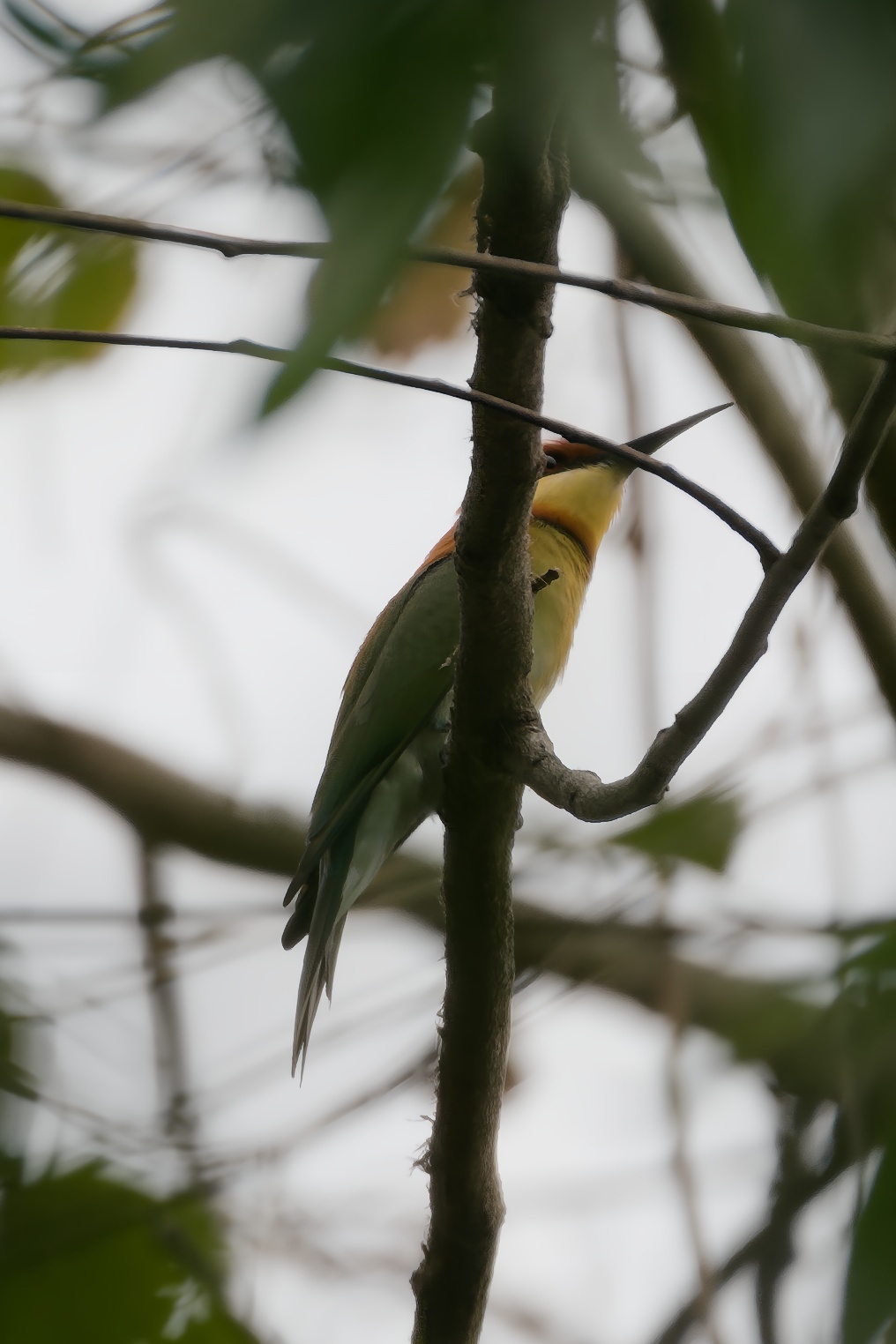
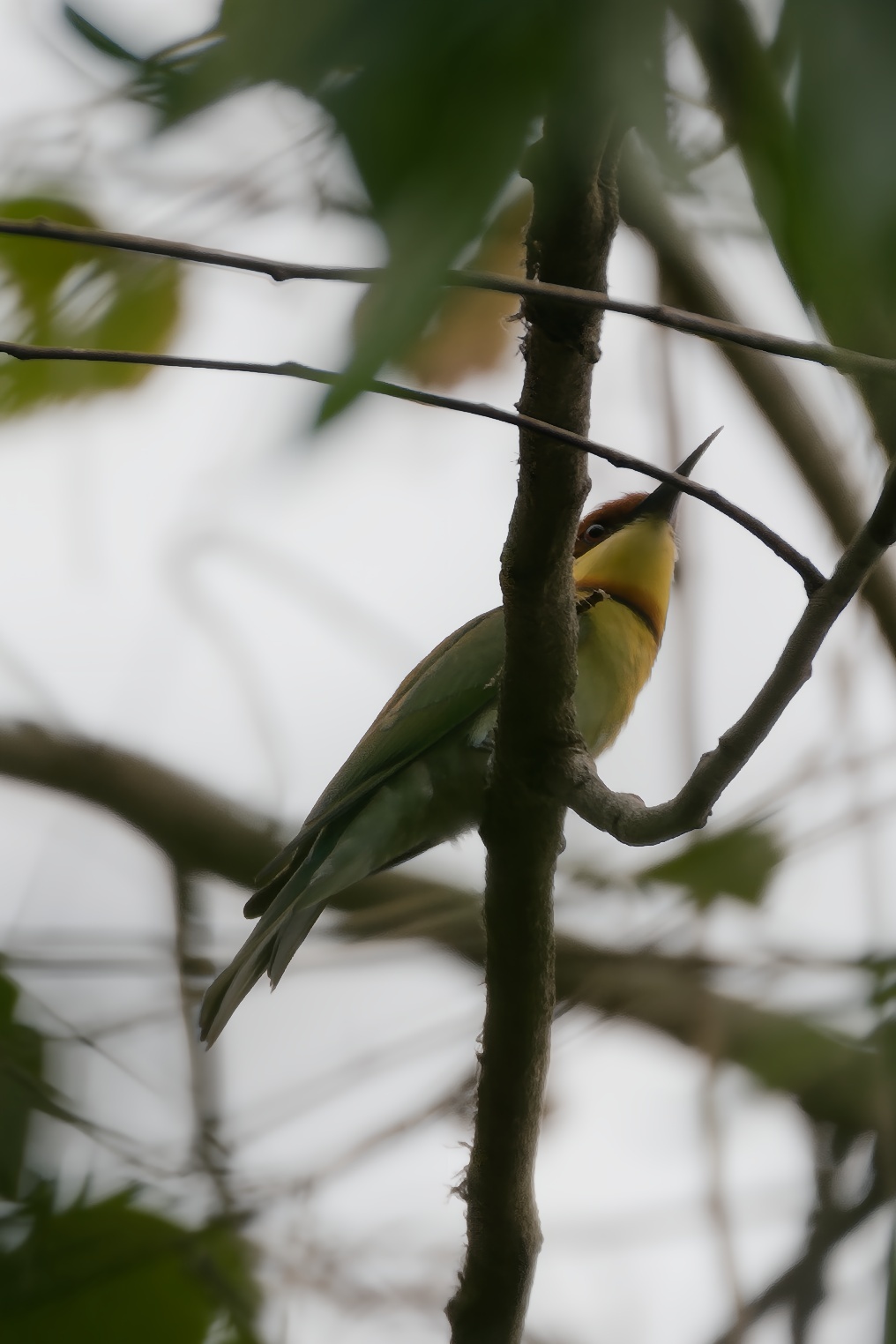
Chestnut-headed Bee-eater
Merops leschenaulti
栗头蜂虎
Introduction
A bird in the bee-eater family Meropidae. It breeds on the Indian subcontinent and adjoining regions, ranging from India, Bangladesh and Sri Lanka across Southeast Asia to Indonesia. This species inhabits sub-tropical open woodland, most commonly in highland areas. Like other bee-eaters, it is a richly coloured, slender bird. Notable traits include its gregarious nature, feeding and roosting communally, and lacking the two elongated central tail feathers possessed by most of its relatives.
Description
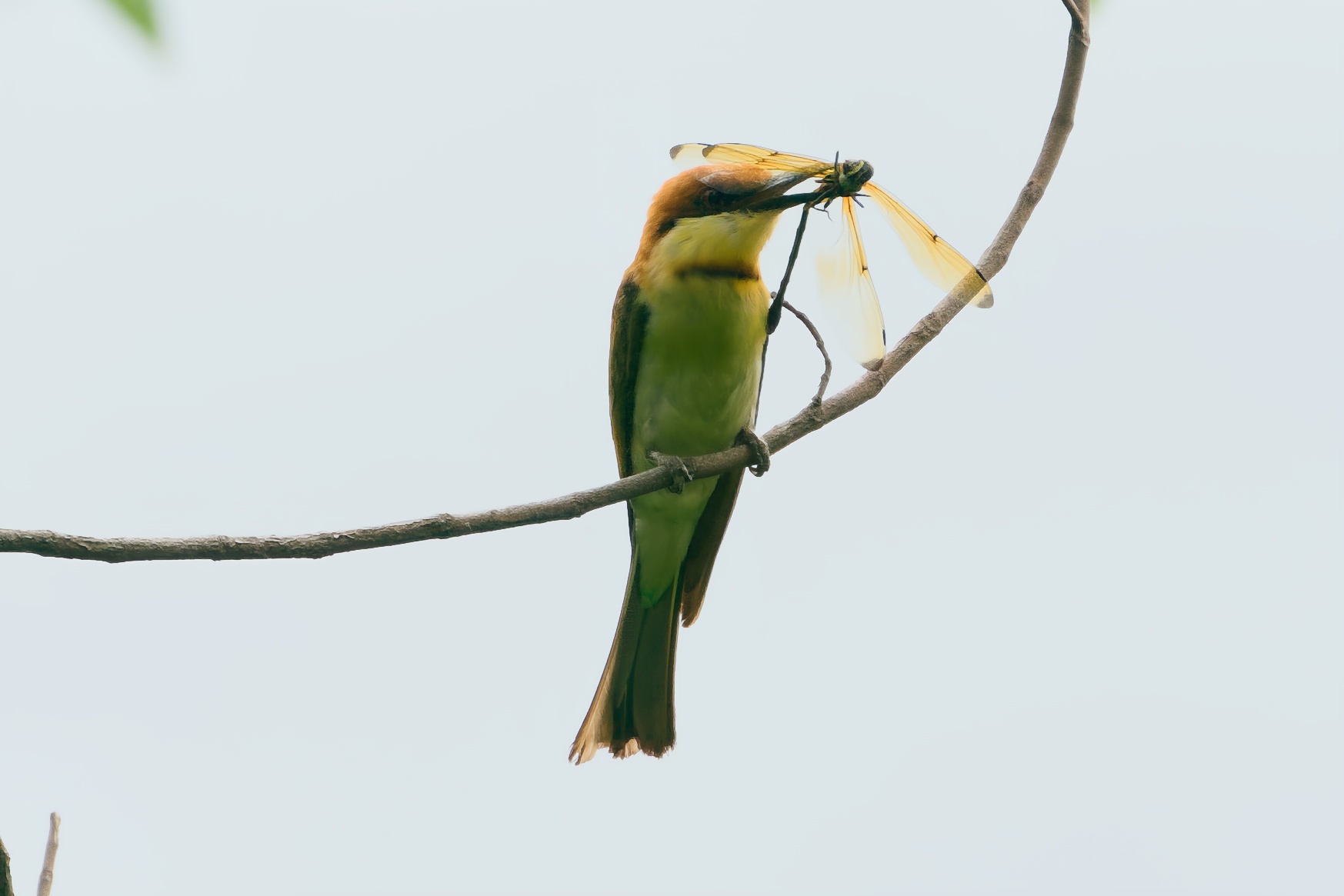
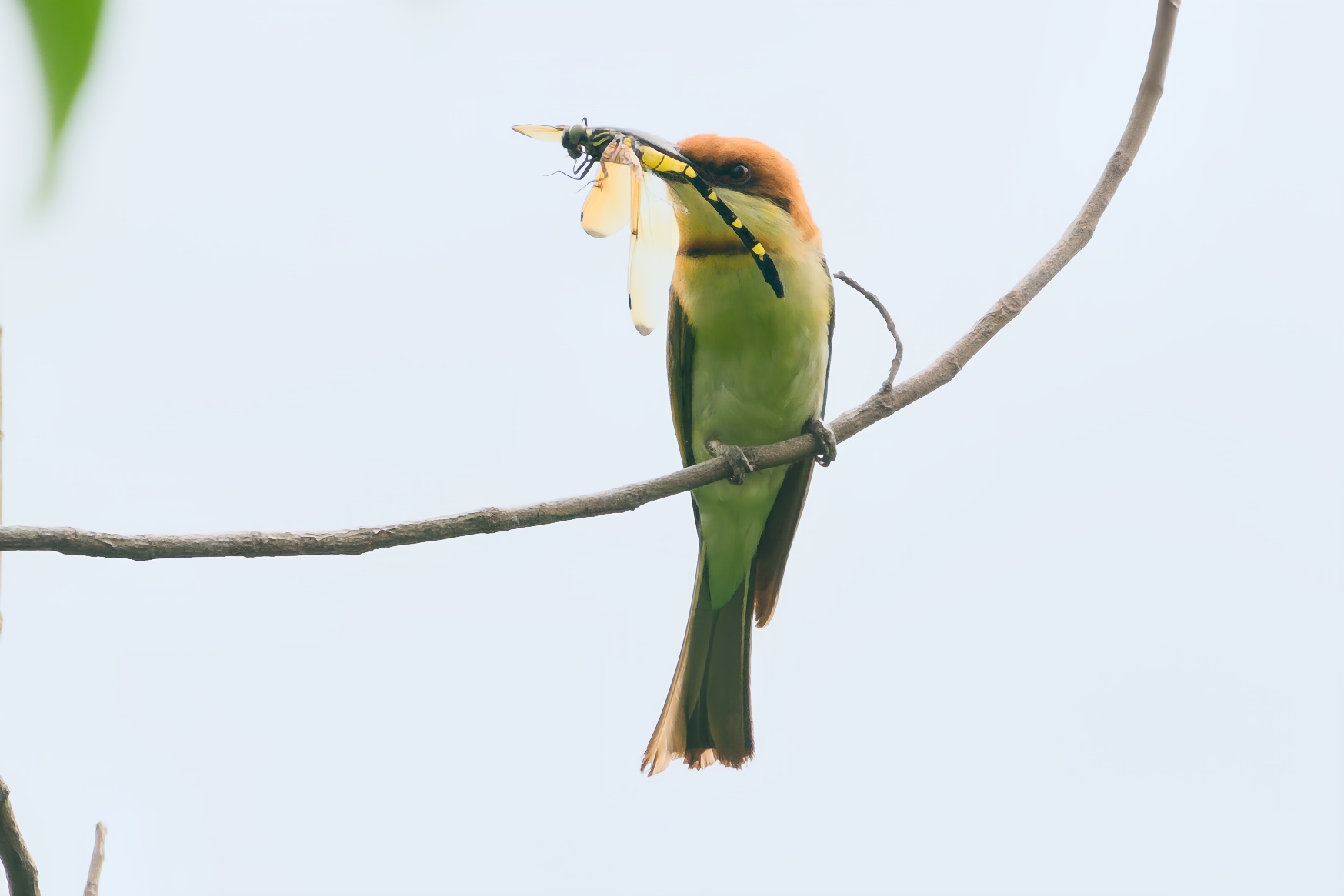
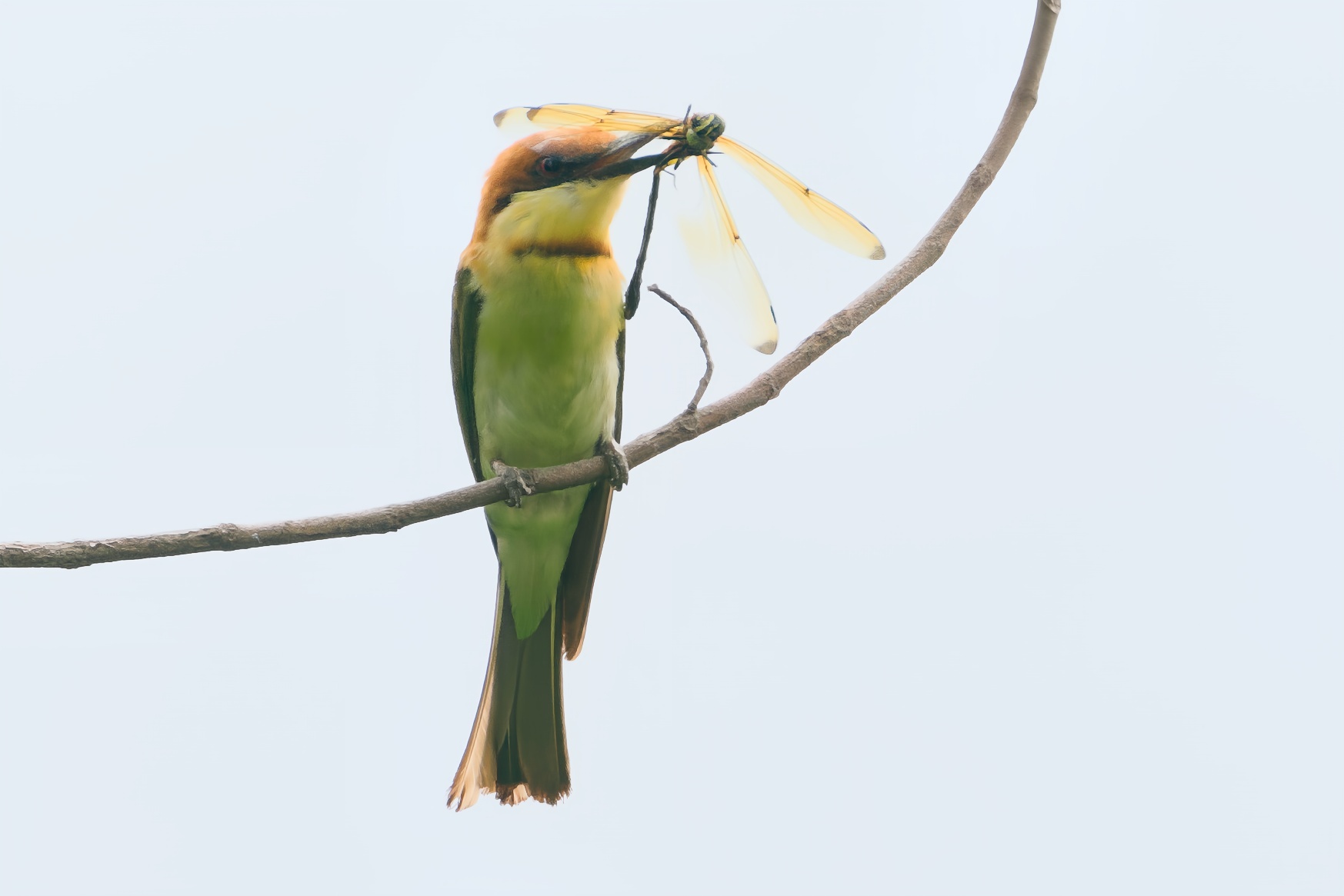
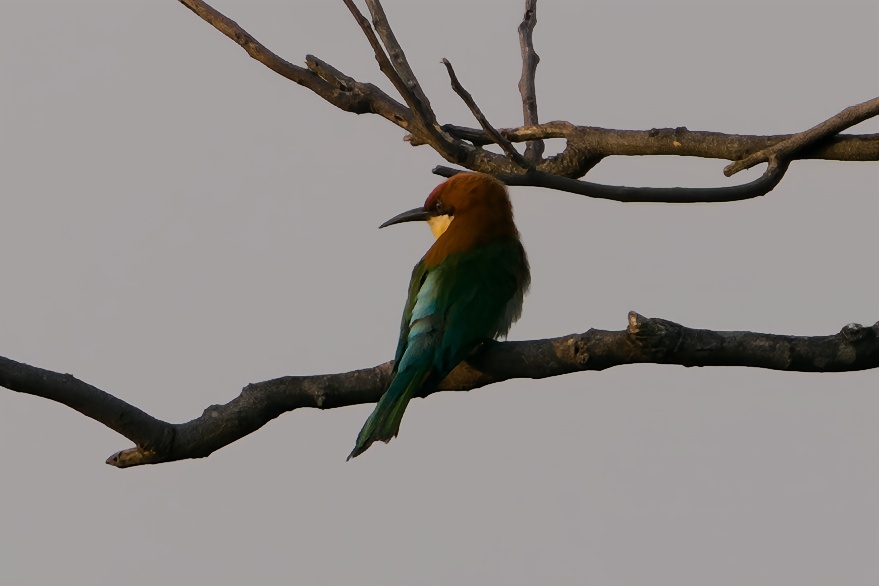
A small bee-eater measuring 18-20 cm in length and weighing 26-33 g. The forehead, crown, nape, mantle and ear-coverts are bright chestnut. The lores are black, continuing as a thin band under the eye. The wing coverts, lower back and tertials are green, the latter tipped with bluish. The rump and uppertail coverts are pale shining blue. The primaries and secondaries are green with rufous inner webs, all tipped dusky. The face, chin and throat are yellow, below which is a broad chestnut band extending to the sides of the neck, followed by a black gorget then an ill-defined yellow band. The remaining underparts are green tipped with blue. The iris is red, the bill is black, and the legs are dusky black. Sexes are similar; juveniles are duller with green forehead, forecrown and mantle, yellow lower throat, and indistinct gorget band.
Identification
The rich chestnut head and nape combined with yellow face and throat provide distinctive field marks. The black eye stripe and gorget band are additional identifying features. Unlike most bee-eaters, this species lacks elongated central tail feathers. The Javan subspecies M. l. quinticolor differs in having pure yellow from the bill to the black pectoral band without any chestnut and an entirely blue tail. The Andaman subspecies M. l. andamanensis is slightly larger than mainland populations.
Distribution & Habitat
Ranges across the Indian subcontinent and Southeast Asia from India, Bangladesh and Sri Lanka through Indochina and the Malay Peninsula to Indonesia. Three subspecies are recognised: M. l. leschenaulti occurs from India and Sri Lanka to central south China, Indochina and the Malay Peninsula; M. l. quinticolor is found in far south Sumatra, Java and Bali; and M. l. andamanensis occurs in the Andaman Islands. Inhabits sub-tropical open woodland, most commonly in highland areas.
Behavior & Ecology
Gregarious birds that feed and roost communally. Breeding occurs in small colonies in sandy banks, where pairs construct relatively long tunnels containing 5-6 spherical white eggs. Both parents share incubation duties and feed the young. Diet consists predominantly of insects, especially bees, wasps and hornets, caught in aerial sorties from an open perch. Instances of feeding on fish by flying over water have been recorded.
Source: Wikipedia · CC BY-SA 3.0
Taxonomy
- Order
- Coraciiformes
- Family
- Meropidae
- Genus
- Merops
- eBird Code
- chbeat1
Vocalizations
Subspecies (3)
-
Merops leschenaulti andamanensis
Andaman Islands
-
Merops leschenaulti leschenaulti
Sri Lanka and southwestern India to Thailand, Indochina, and Malay Peninsula
-
Merops leschenaulti quinticolor
Java and Bali
Data Sources
Species description from Wikipedia, licensed under CC BY-SA 3.0.
Bird images and sounds sourced from GBIF, contributed by citizen scientists worldwide under Creative Commons licenses.
Taxonomy data from AviList 2025.