Budgerigar
Melopsittacus undulatus
虎皮鹦鹉
Introduction
Small long-tailed seed-eating parrot in the monotypic genus Melopsittacus, the only genus in the tribe Melopsittacini. Native to Australia, naturally green and yellow with black scalloped markings on the nape, back, and wings. Found throughout the drier parts of Australia in open habitats including scrublands, open woodlands, and grasslands. Nomadic flock parakeets that have survived harsh inland conditions for over five million years through opportunistic breeding while on the move. Closely related to lories and fig parrots. Third most popular pet in the world after dogs and cats.
Description
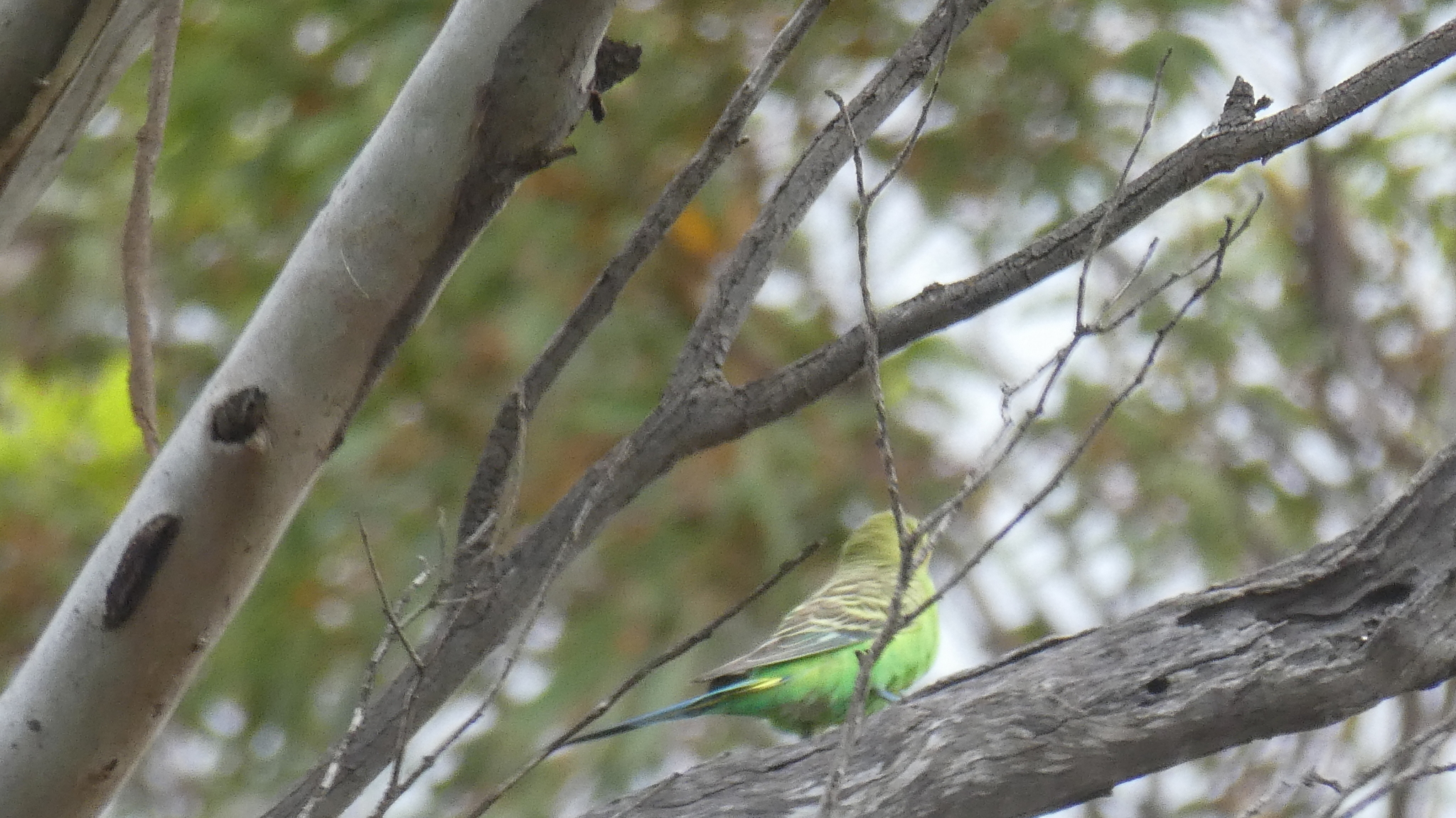
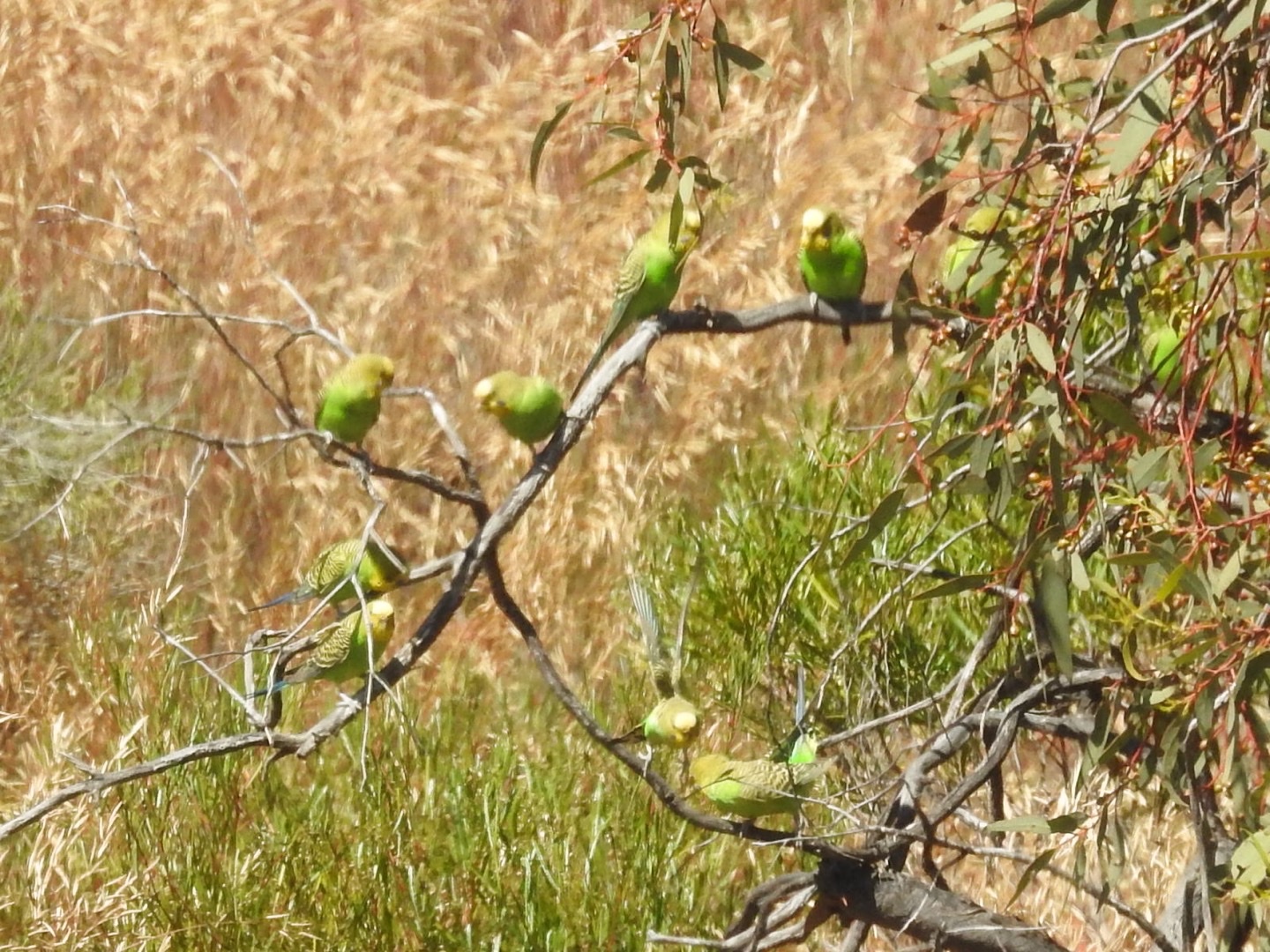
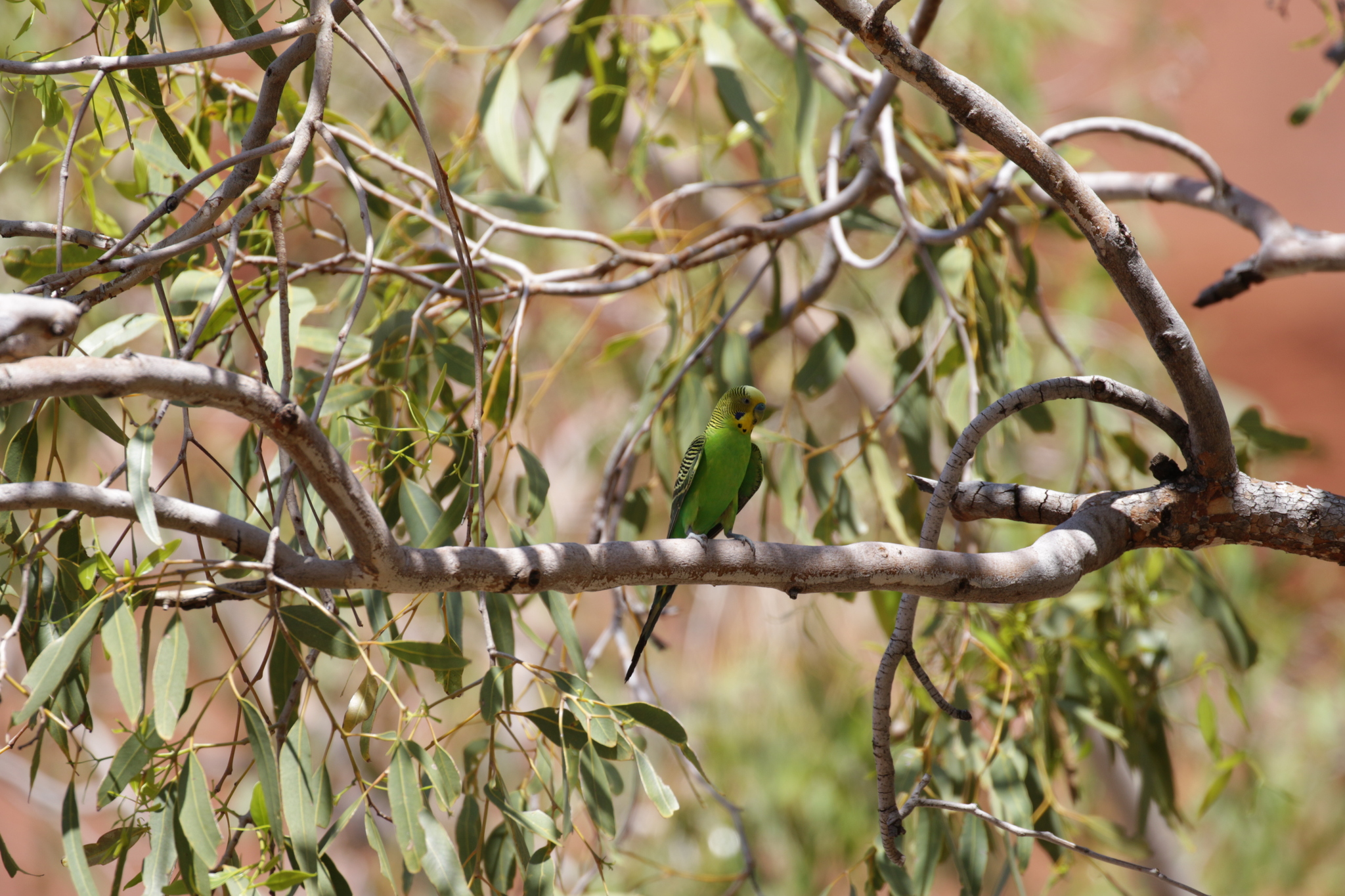
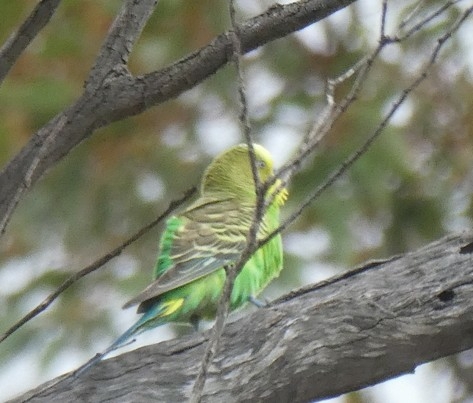
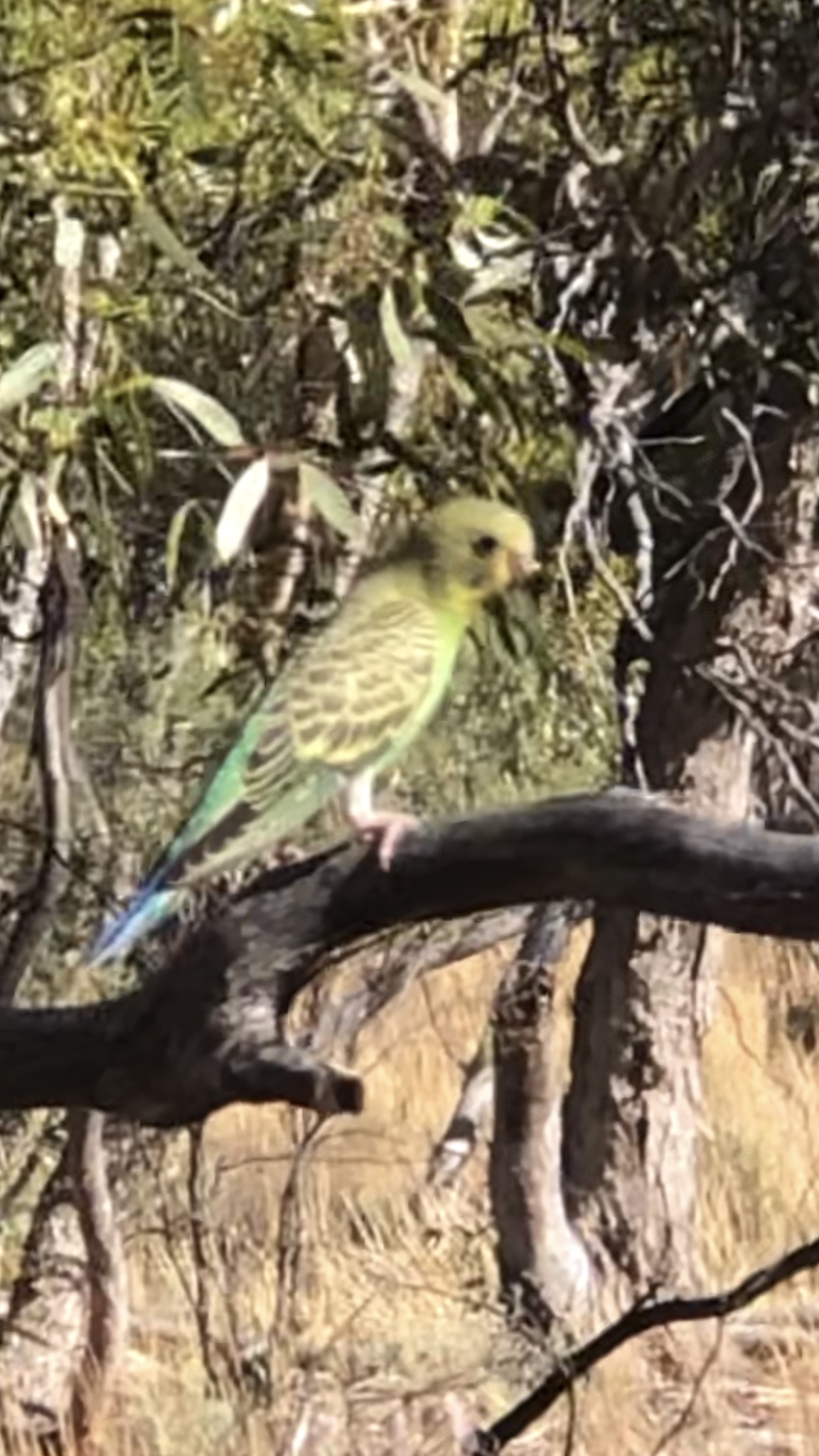
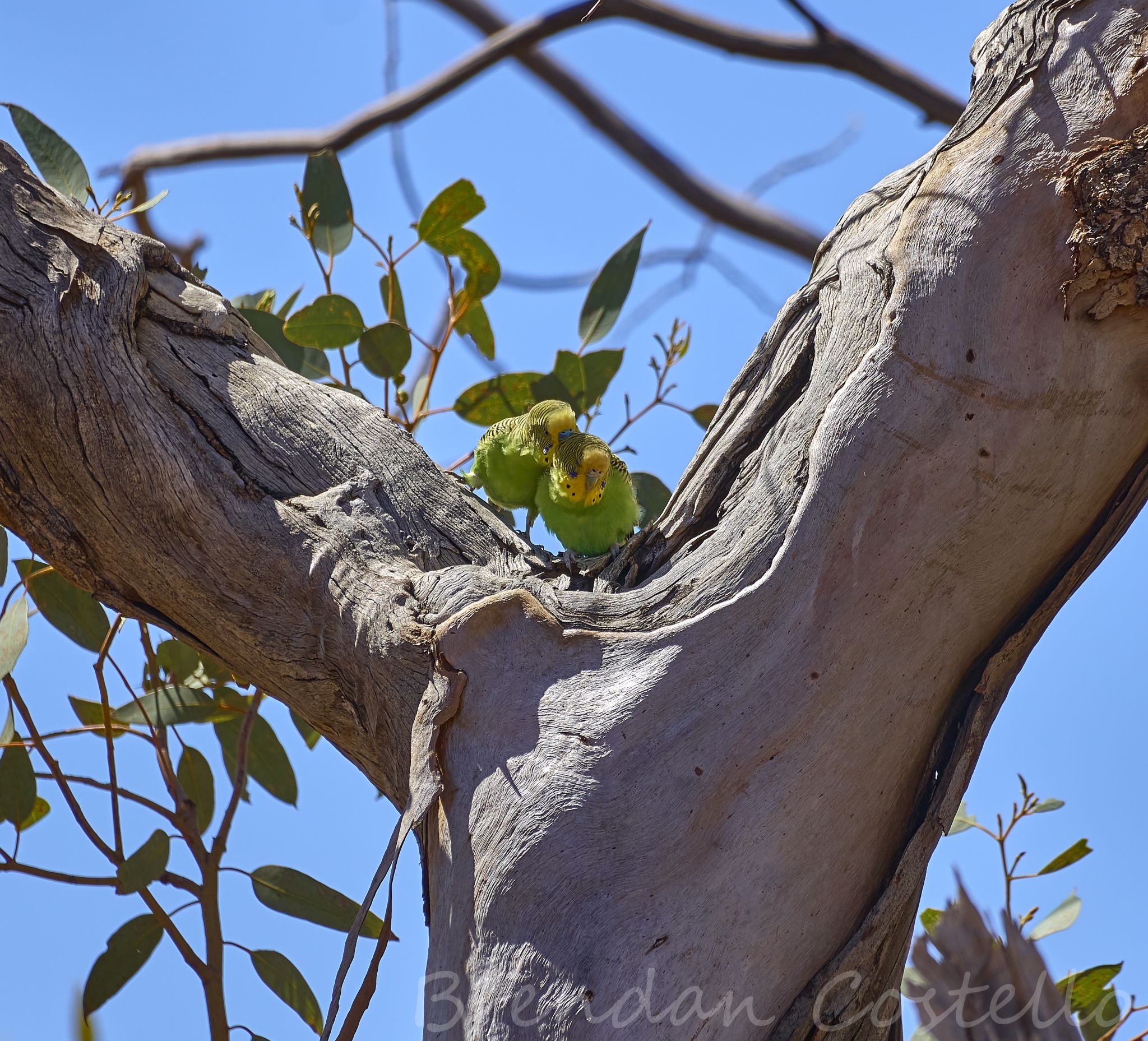
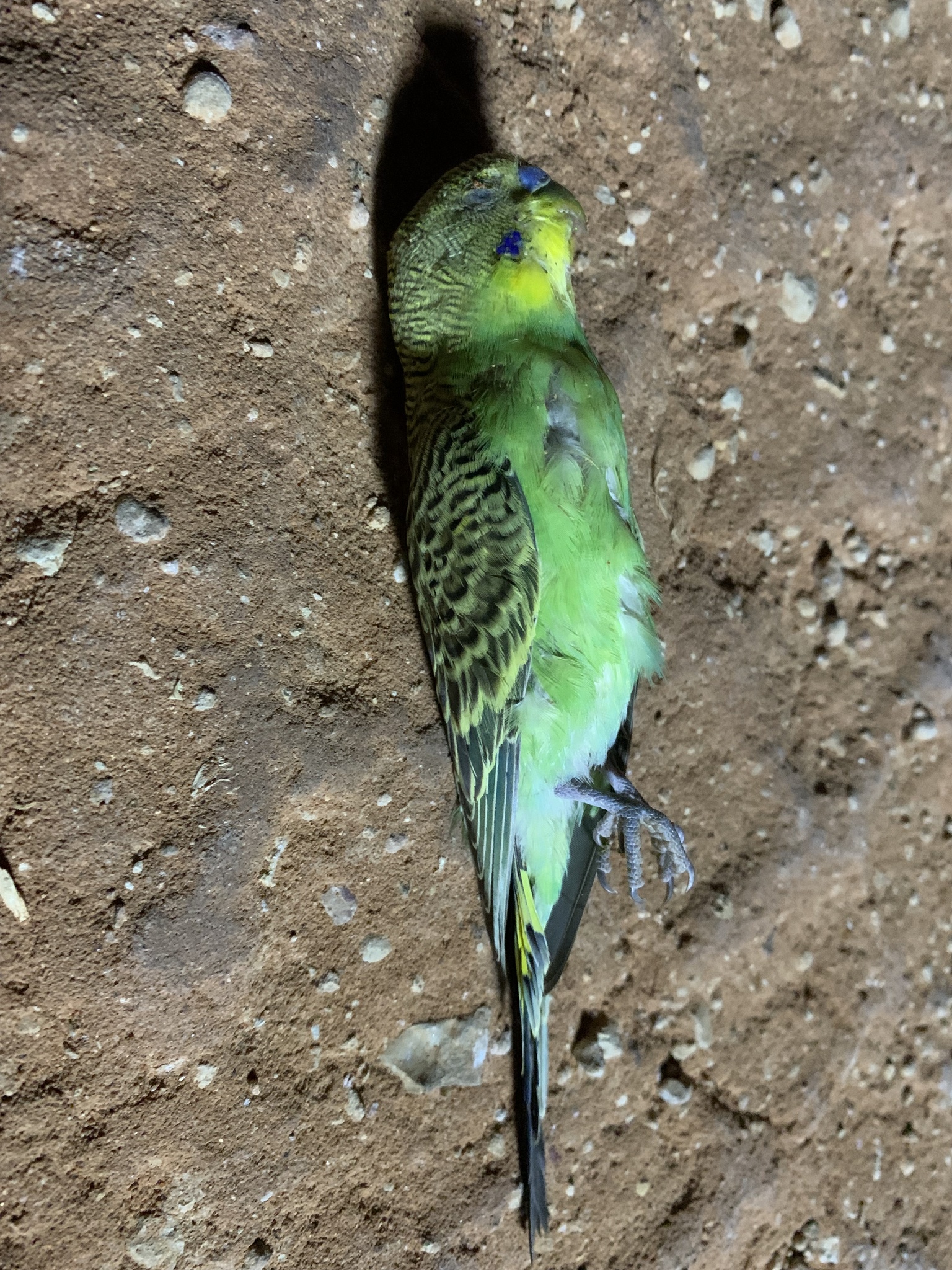
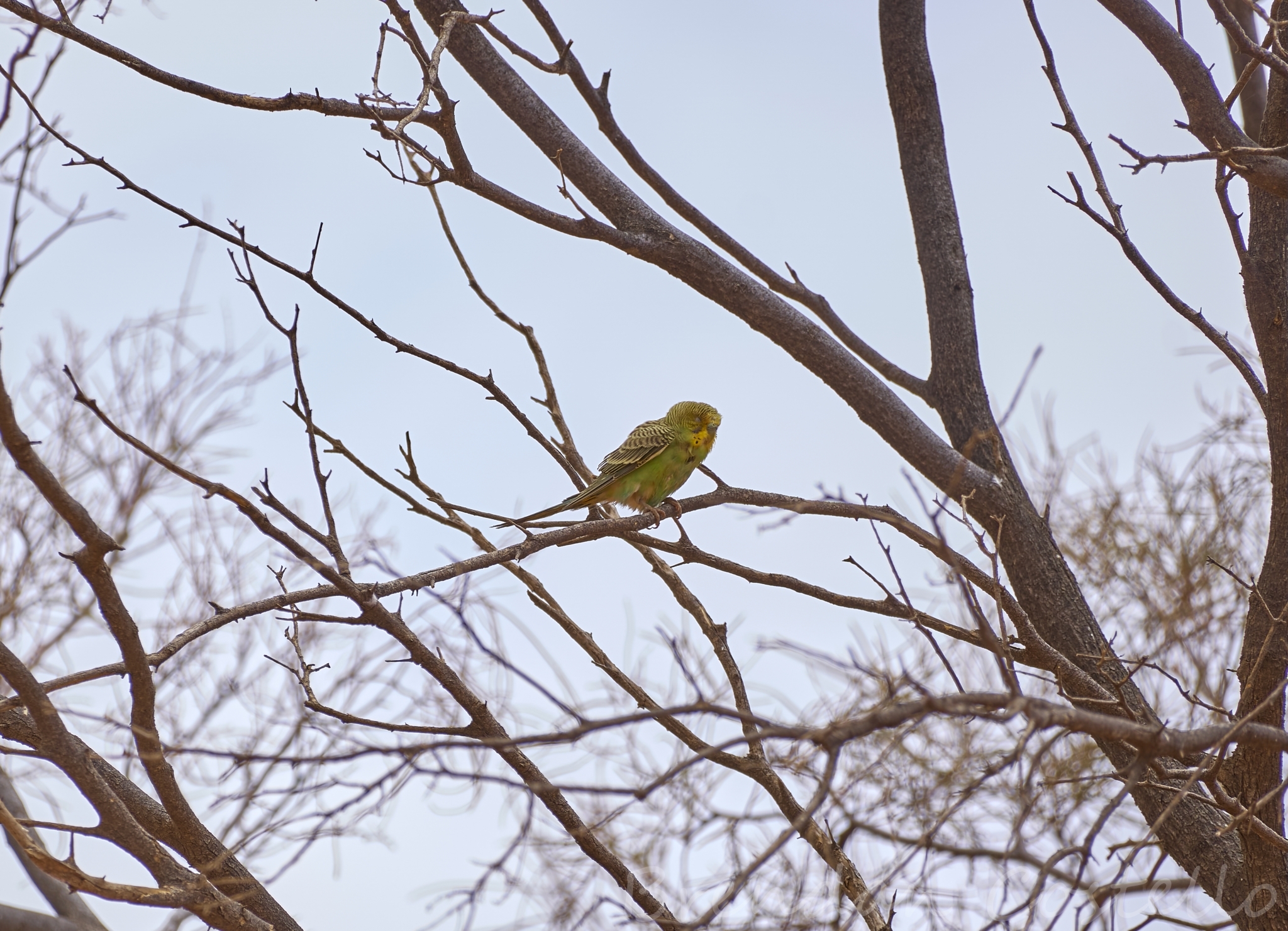
A small parrot measuring 18 cm in length, weighing 30-40 grams with a 30 cm wingspan. Wild specimens display a light green body with pitch-black mantle markings edged in clear yellow undulations. Adults have a yellow forehead and face with iridescent blue-violet cheek patches and three black spots across each side of the throat. The tail is cobalt with central yellow flashes in the outer feathers. Wings feature greenish-black flight feathers and black coverts with yellow fringes. The bill is olive grey and legs are blueish-grey with zygodactyl toes. Juveniles have blackish stripes until 3-4 months of age. Wild individuals are noticeably smaller than captive specimens.
Identification
The cere colour distinguishes sexes: males have a lavender to baby blue cere, while females have a pale brownish-white cere that turns crusty brown during breeding. Immature birds of both sexes have a pink cere. The species is the only parrot with this specific combination of barred scalloped markings on the mantle, black throat spots, and cobalt tail with yellow flashes. The ultraviolet-reflecting throat spots can identify individual birds.
Distribution & Habitat
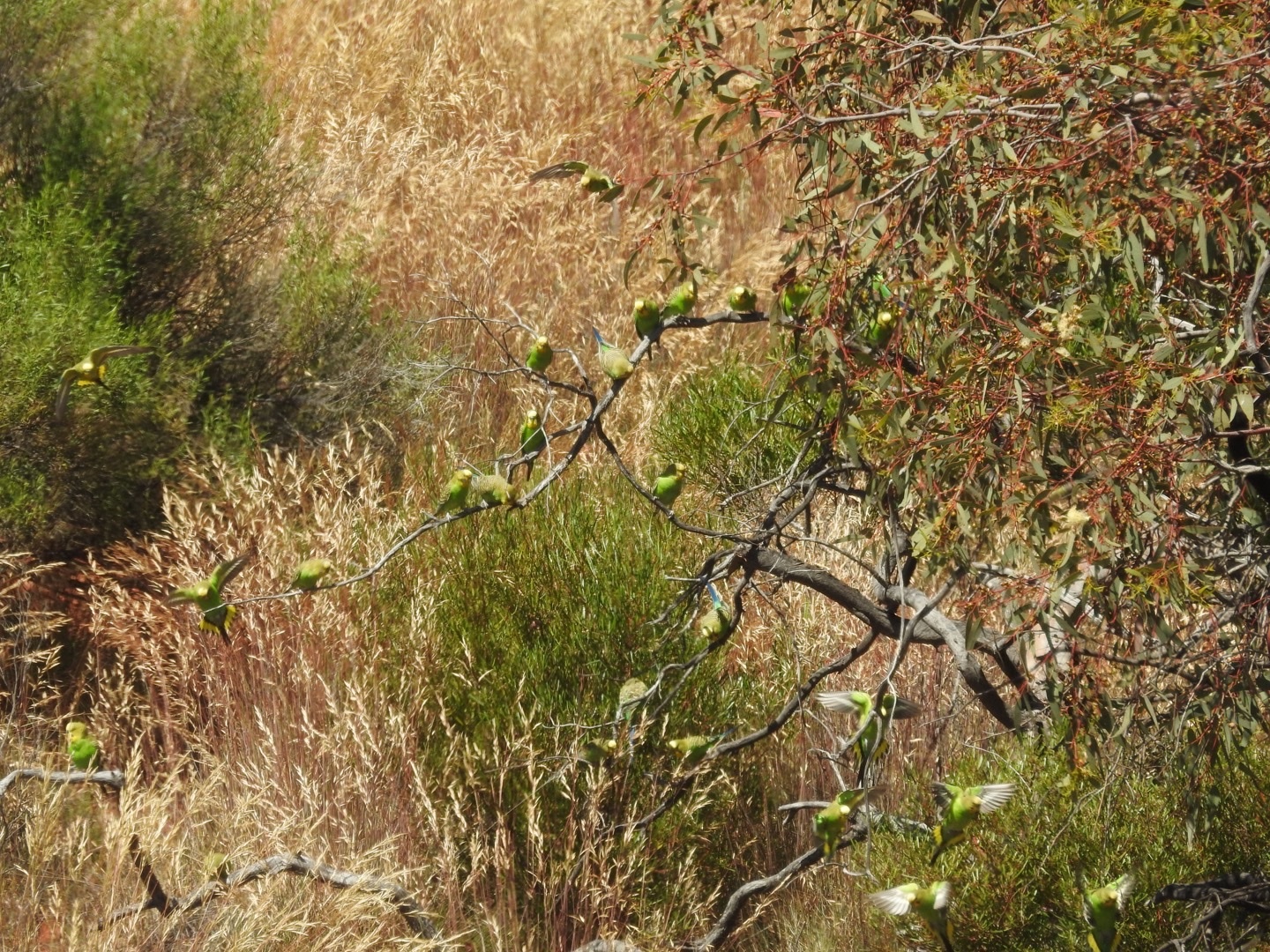
Native to the drier interior regions of Australia across all states and territories. Inhabits open habitats including scrublands, open woodlands, and grasslands. Lives in nomadic flocks that move in response to environmental conditions and resource availability, particularly water and grass seeds. Drought conditions drive flocks into more wooded coastal areas. Normally found in small flocks but forms large aggregations of thousands under favorable conditions. A naturalized feral population existed near St. Petersburg, Florida for over 50 years but died out in 2014 due to competition for nesting sites.
Behavior & Ecology
Feeds primarily on grass seeds, spinifex, and cereal crops, supplemented by fruits, berries, and vegetation. Relies on fresh water sources due to low water content in seeds. Opportunistic breeders responding to rains when grass seeds become abundant, breeding June-September in northern Australia and August-January in the south. Monogamous and colonial, nesting in tree hollows, fence posts, or ground-level logs. Clutch size is 4-8 eggs incubated 18-21 days with fledging around 30 days. Shows affection through mutual preening and regurgitation feeding. Capable of mimicking human speech with males having larger vocabularies. Possesses tetrachromatic colour vision active under sunlight or UV light.
Conservation
Not applicable - species is listed as Least Concern by IUCN with stable populations across its extensive Australian range.
Culture
The third most popular pet bird worldwide, valued for small size, low cost, and talking ability. A male budgerigar named Puck held the world record for largest bird vocabulary at 1,728 words until 1994. The bird Disco gained internet fame in 2013 with phrases like 'I am not a crook.' In Australian vernacular, small tight-fitting men's swimming briefs are humorously called 'budgie smugglers' based on the visual similarity, a term added to the Oxford English Dictionary in 2016.
Source: Wikipedia · CC BY-SA 3.0
Taxonomy
- Order
- Psittaciformes
- Family
- Psittaculidae
- Genus
- Melopsittacus
- eBird Code
- budger
Distribution
Australia, except southeastern coast and Tasmania
Data Sources
Species description from Wikipedia, licensed under CC BY-SA 3.0.
Bird images and sounds sourced from GBIF, contributed by citizen scientists worldwide under Creative Commons licenses.
Taxonomy data from AviList 2025.