
Mongolian Lark
Melanocorypha mongolica
蒙古百灵
Introduction
A lark species in the family Alaudidae. It occupies a range extending from southern Russia and Mongolia to central China, inhabiting the Mongolian steppes where it serves as an indicator species for avian biodiversity. This species is distinguished by its elaborate singing repertoire and extended vocal learning capacity, retaining the ability to acquire new songs well into adulthood. It is typically observed solitarily. Predation pressure comes from the Saker Falcon.
Description
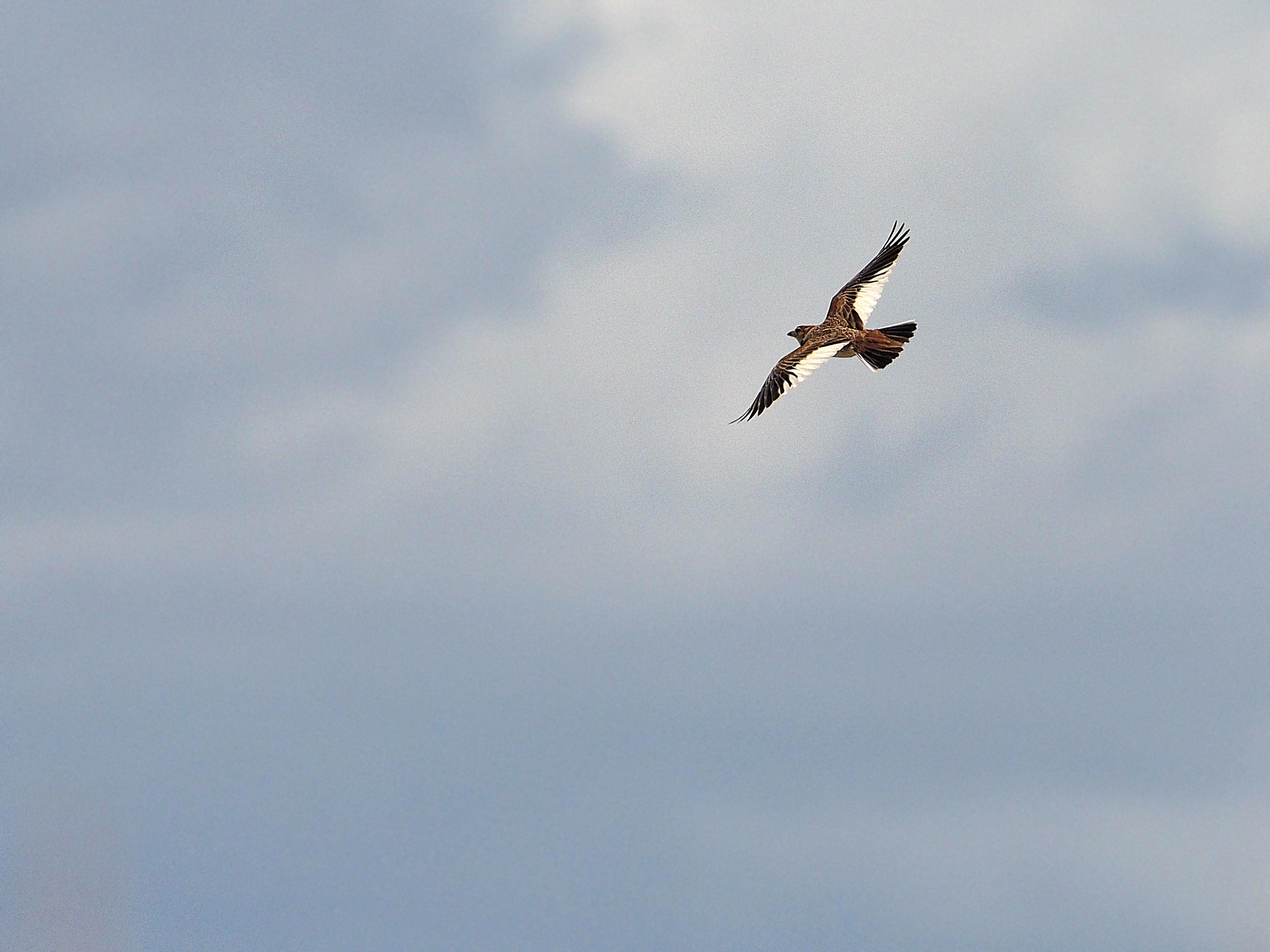
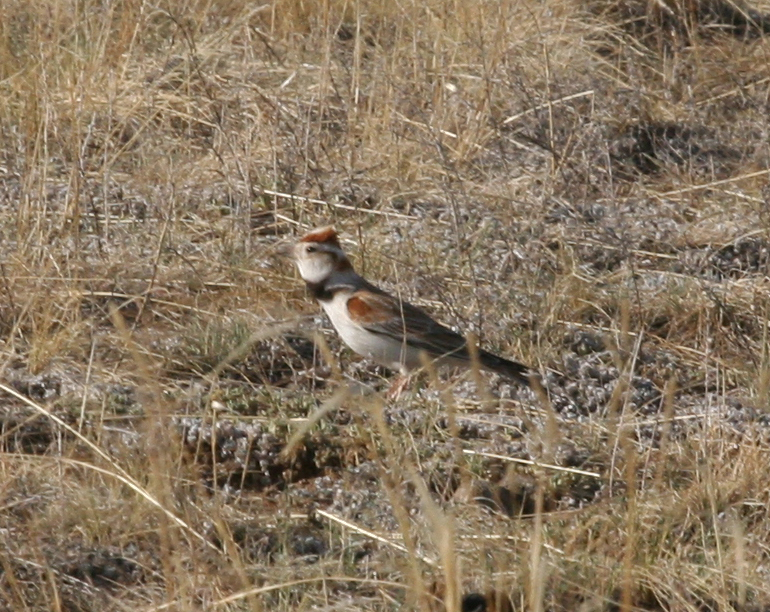
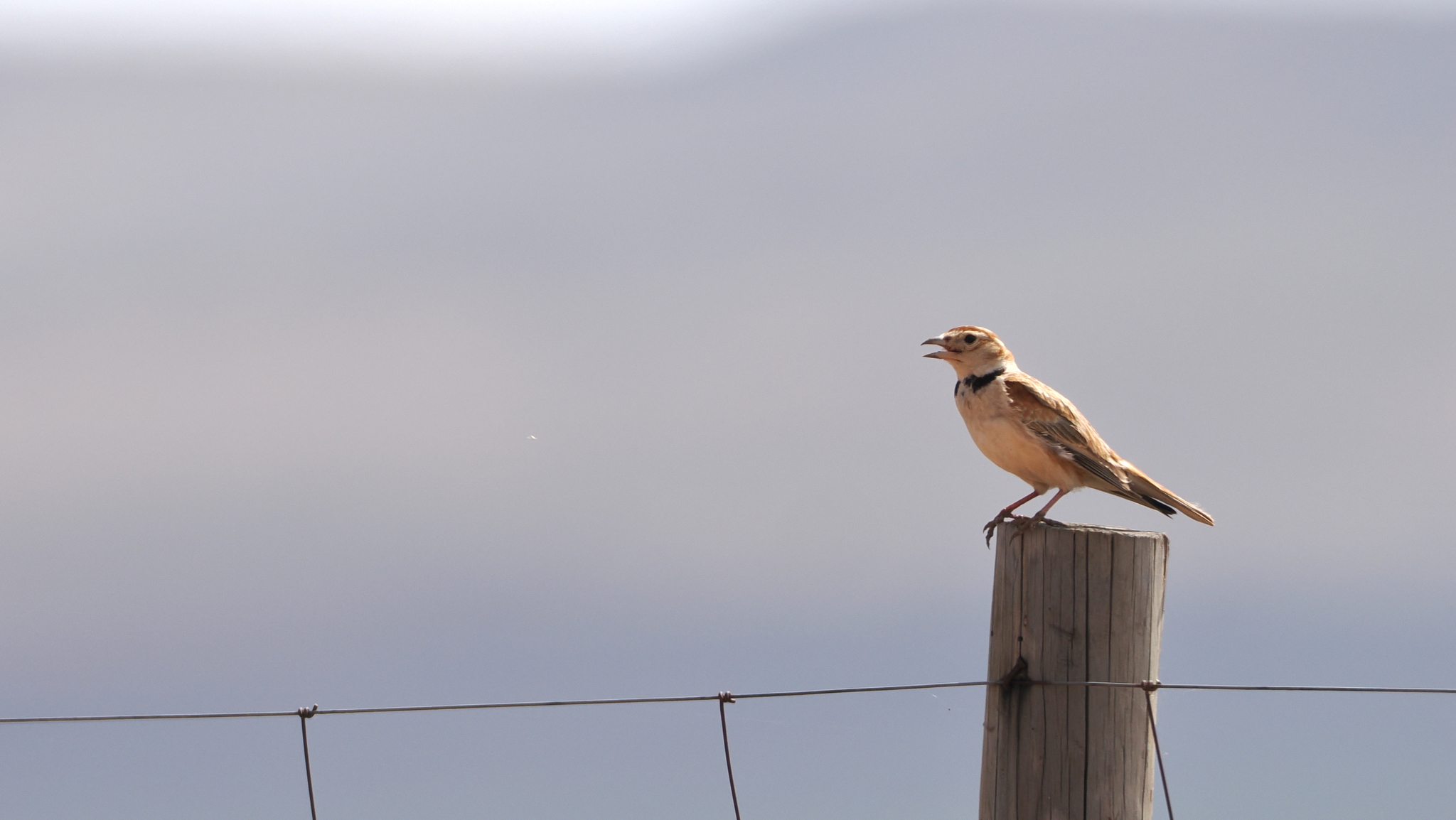
The head is pale brown, featuring a distinctive red crown. The upperparts are reddish-brown, while the underparts display a yellowish-white coloration.
Identification
No specific field identification guidance is provided in the source material.
Distribution & Habitat
This species breeds across southern Russia and Mongolia, extending its range eastward through suitable steppe habitat into central China. It is strongly associated with Mongolian steppe environments.
Behavior & Ecology
Breeding females do not sing, yet possess notable song control nuclei with strong neural connectivity. Males perform elaborate song bouts with complex phrases, resulting in exceptionally developed song control nuclei. Average clutch size is 3.3 eggs, incubated for a 13-day period. Nestlings remain in the nest for approximately 10 days. Roughly 50% of eggs successfully survive to hatching.
Conservation
No IUCN assessment, population data, or specific threat information is provided in the source material.
Culture
No cultural significance or folklore is documented in the source material.
Source: Wikipedia · CC BY-SA 3.0
Taxonomy
- Order
- Passeriformes
- Family
- Alaudidae
- Genus
- Melanocorypha
- eBird Code
- monlar1
Distribution
breeds high steppes of Mongolia and northern China; winters to central China
Data Sources
Species description from Wikipedia, licensed under CC BY-SA 3.0.
Bird images and sounds sourced from GBIF, contributed by citizen scientists worldwide under Creative Commons licenses.
Taxonomy data from AviList 2025.