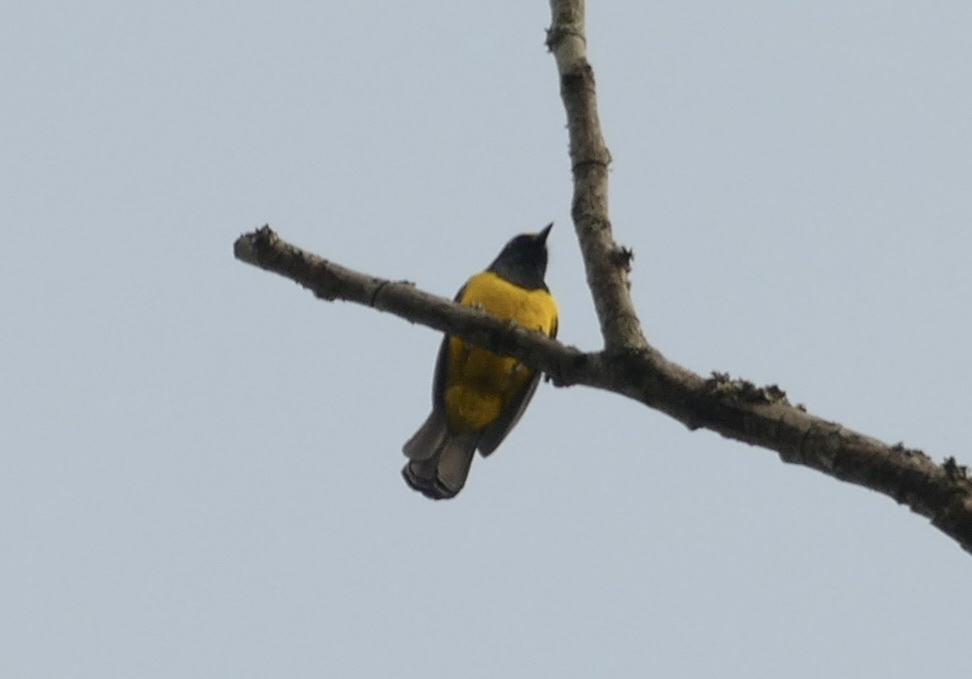
Sultan Tit
Melanochlora sultanea
冕雀
Introduction
A monotypic genus (Melanochlora) within the family Paridae, placed in a near-basal position in the tit family after Cephalopyrus and Sylviparus. An Asian forest bird widely distributed throughout its large range in suitable habitats. The largest tit species (20-20.5 cm) with distinctive exposed nostrils not covered by feathers, unlike other Paridae members. Notable for unusual panic behavior in captivity when encountering unusual noise or other species. Evaluated as Least Concern on the IUCN Red List.
Description
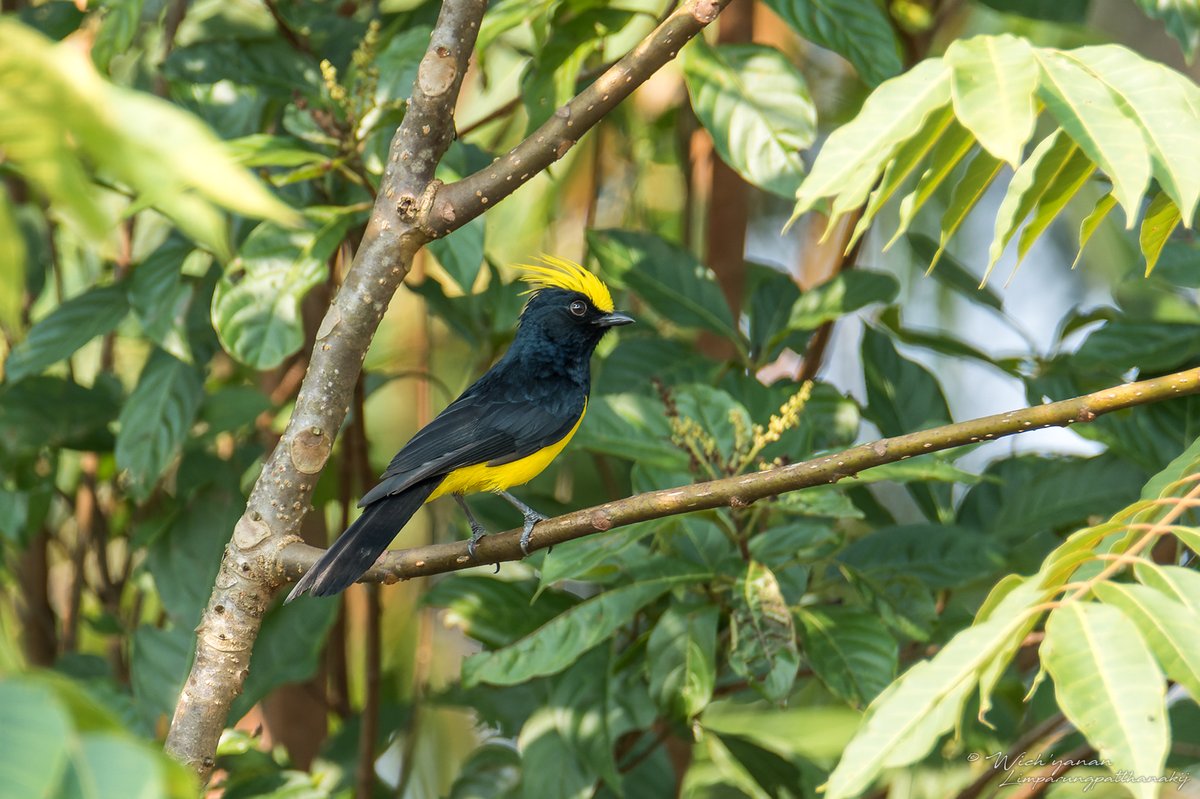
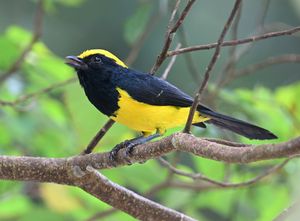
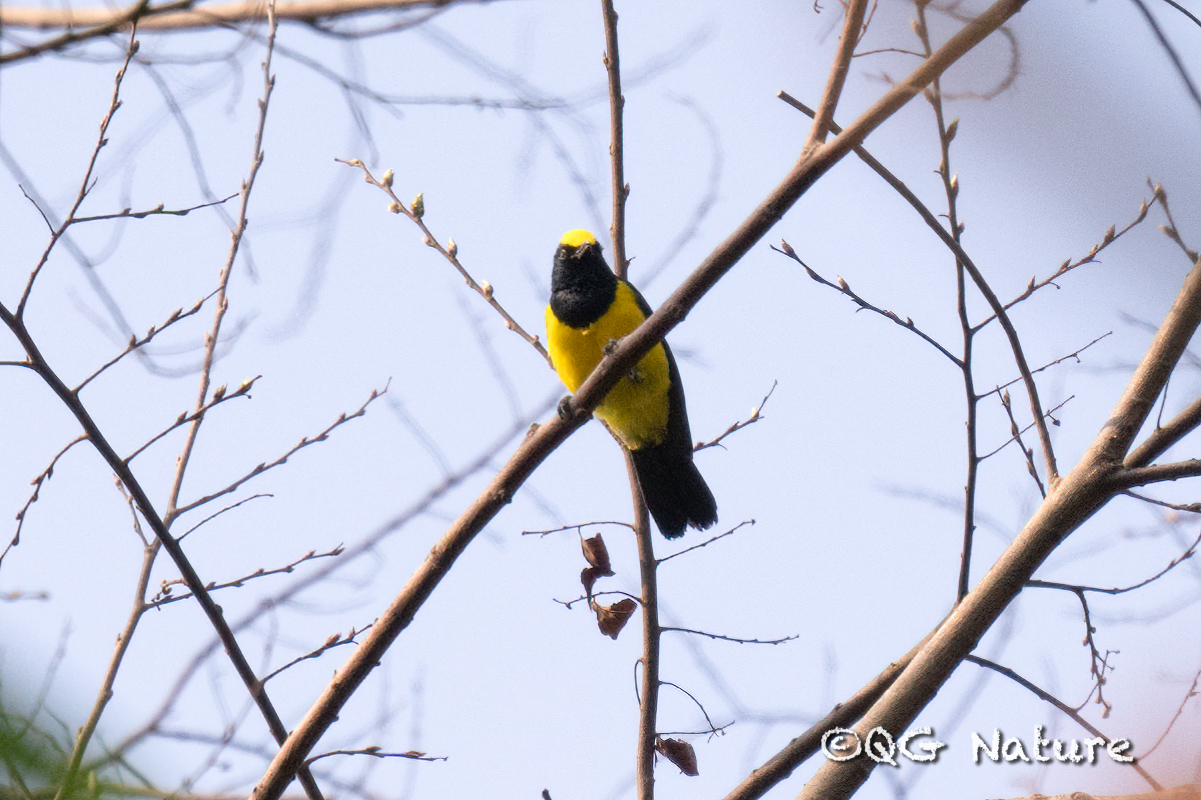
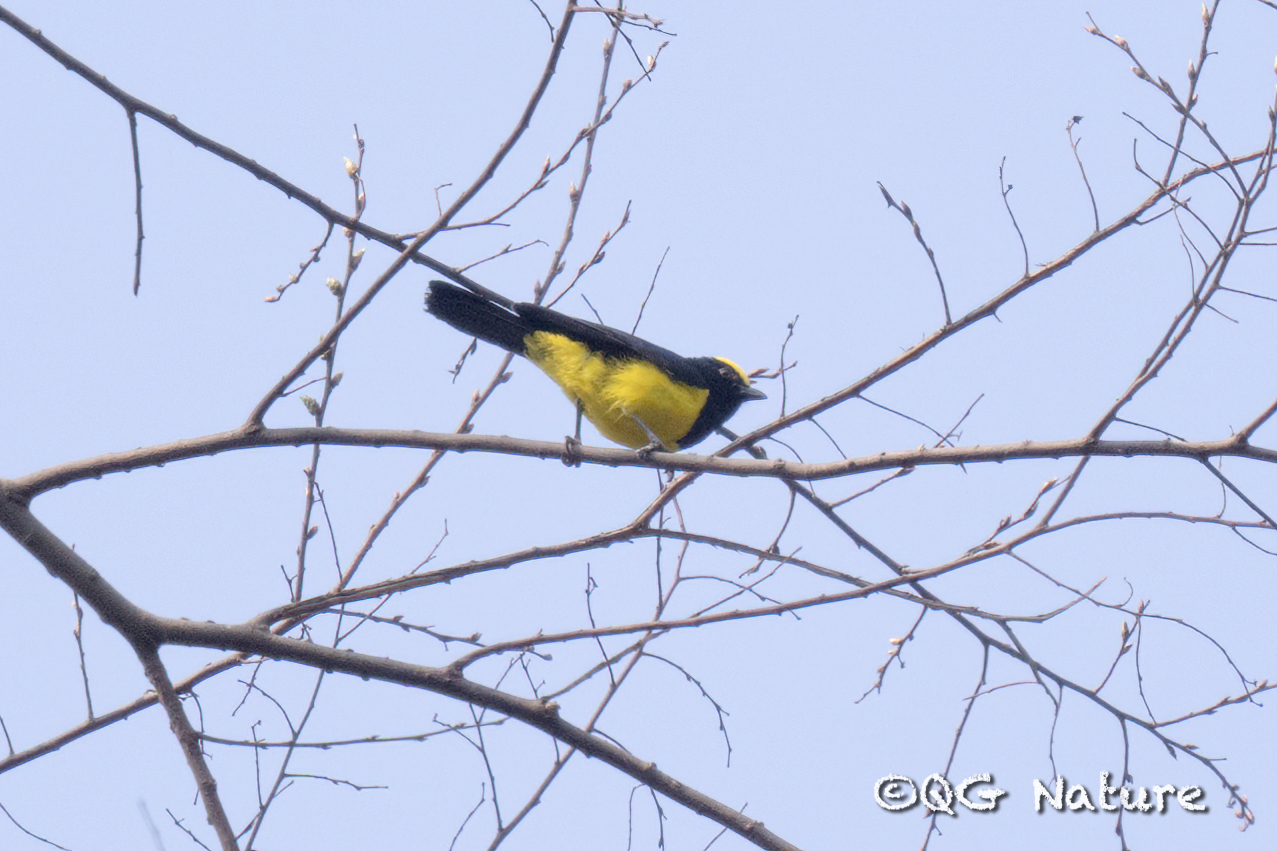
A large tit with striking black and yellow plumage. The male has brilliant yellow forehead and crown crest (glossy black in one subspecies), with entire upperparts, head, neck, chin, throat, and breast black glossed with green and metallic-edged feathers. Outer tail feathers are white-tipped, while underparts from breast downward are deep yellow, with thighs barred or mottled white. The female has duller yellow plumage, dark greenish-brown upperparts and head sides, dark olive-green chin and throat, and dull black wings and tail. Bill is black, iris dark brown, legs grey. The crest lies recumbent and raises when alert. Size: 20-20.5 cm long, weight 34-49 g.
Identification
Distinctive as the largest tit species with unique black upperparts and deep yellow underparts combination. The prominent crest (yellow in most subspecies, black in one) and white-tipped outer tail feathers are key field marks. Unlike other tits, shows exposed nostrils and atypical panic behavior when disturbed. Sexes similar though female noticeably duller with greenish-black rather than pure black upperparts.
Distribution & Habitat
Asian forest species with wide distribution across suitable habitats throughout its range. Inhabits larger trees in forest environments, occurring in small flocks. Density in some areas such as Buxa Tiger Reserve estimated at approximately 15 individuals per square kilometer. Often found in mixed-species flocks.
Behavior & Ecology
Forages mainly on invertebrates including grasshoppers, mantises, and web spiders, also consuming berries, fruits, seeds, caterpillars, and figs. Feeds primarily in tree canopy, sometimes in higher undergrowth and bamboo areas, singly or in small groups. Social in associations up to twelve individuals, mixing with warblers and other species. Vocal with loud, short repeated whistling notes, rattling calls, harsh hissing sounds, and squeaky whistles. Flight is slow and fluttering. Breeding season in India spans April to July with clutch of five to seven eggs laid in lined tree cavity.
Conservation
Evaluated as Least Concern on the IUCN Red List of Threatened Species. Widely distributed within suitable habitats throughout its large range. Population density documented at approximately 15 individuals per square kilometer in Buxa Tiger Reserve forest areas.
Source: Wikipedia · CC BY-SA 3.0
Taxonomy
- Order
- Passeriformes
- Family
- Paridae
- Genus
- Melanochlora
- eBird Code
- sultit1
Subspecies (4)
-
Melanochlora sultanea flavocristata
southern Myanmar to southern Thailand, Malay Peninsula, Sumatra, and Hainan
-
Melanochlora sultanea gayeti
central Annam (Col des Nuages) to southern Laos (Bolaven Plateau)
-
Melanochlora sultanea seorsa
southern China (central Fujian to southern Guangxi) to Laos and northeastern Tonkin
-
Melanochlora sultanea sultanea
Nepal to Assam, Myanmar, northern Thailand, northern Laos, and Vietnam
Data Sources
Species description from Wikipedia, licensed under CC BY-SA 3.0.
Bird images and sounds sourced from GBIF, contributed by citizen scientists worldwide under Creative Commons licenses.
Taxonomy data from AviList 2025.