Stejneger's Scoter
Melanitta stejnegeri
斑脸海番鸭
Introduction
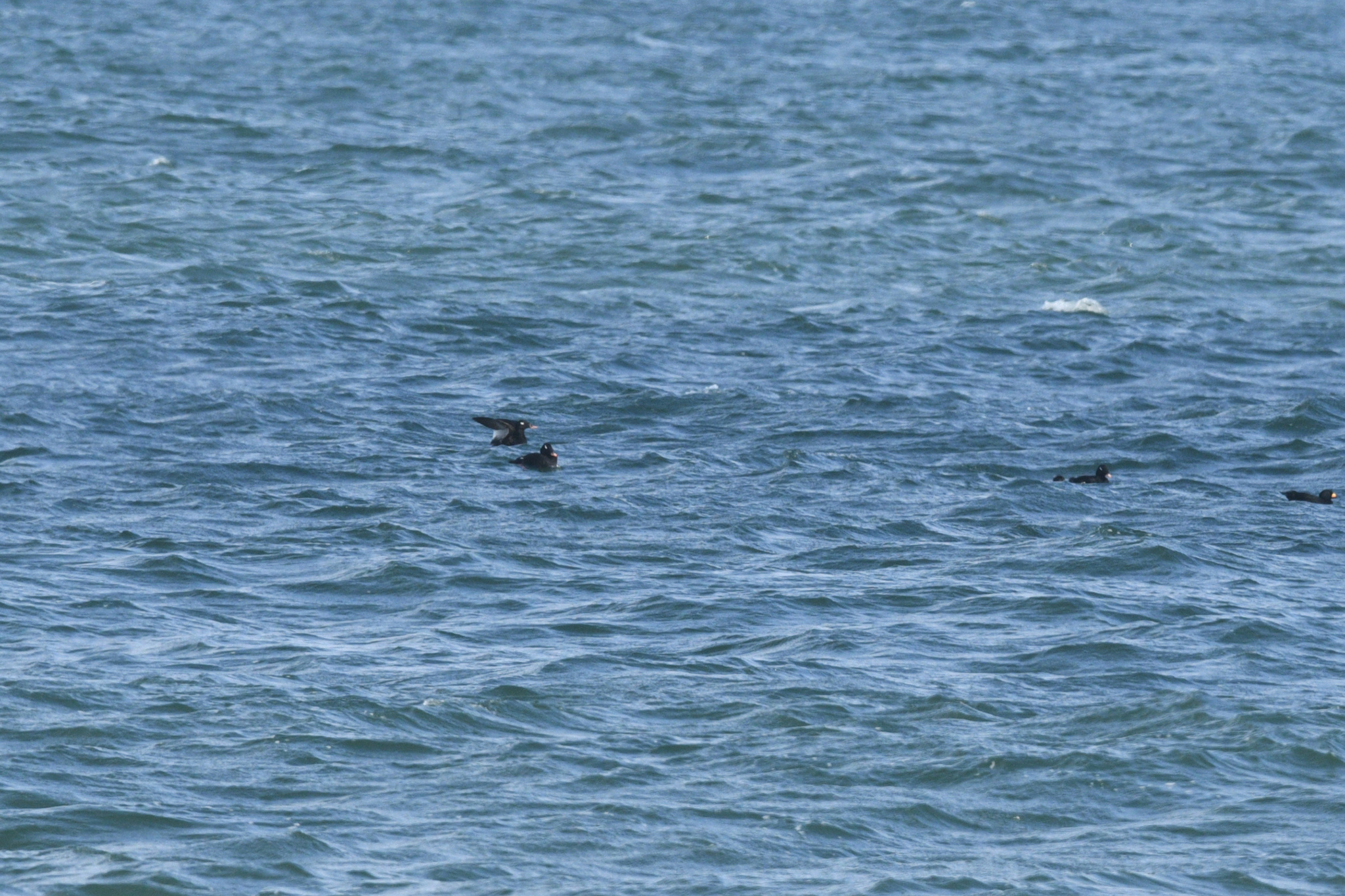
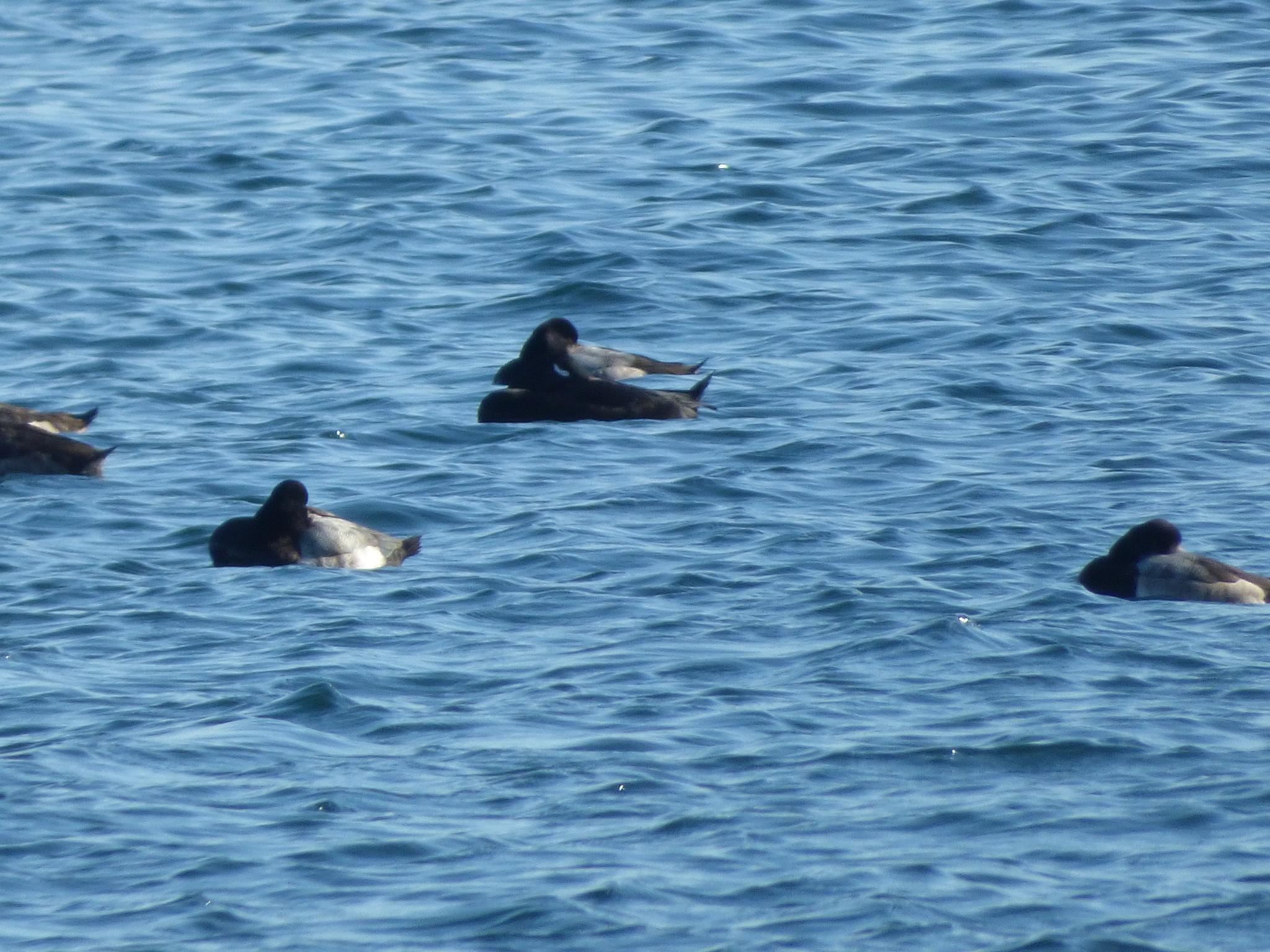
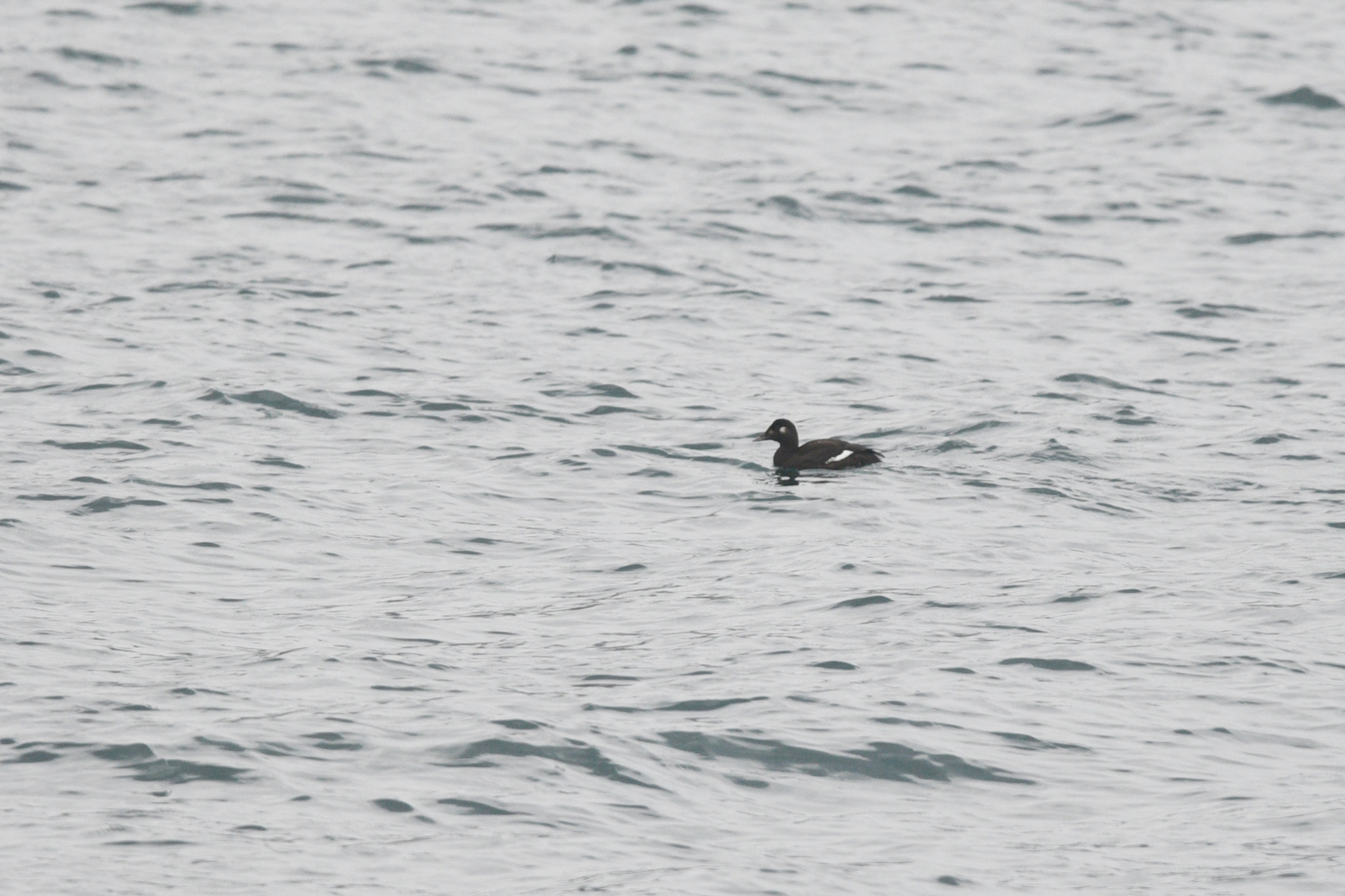
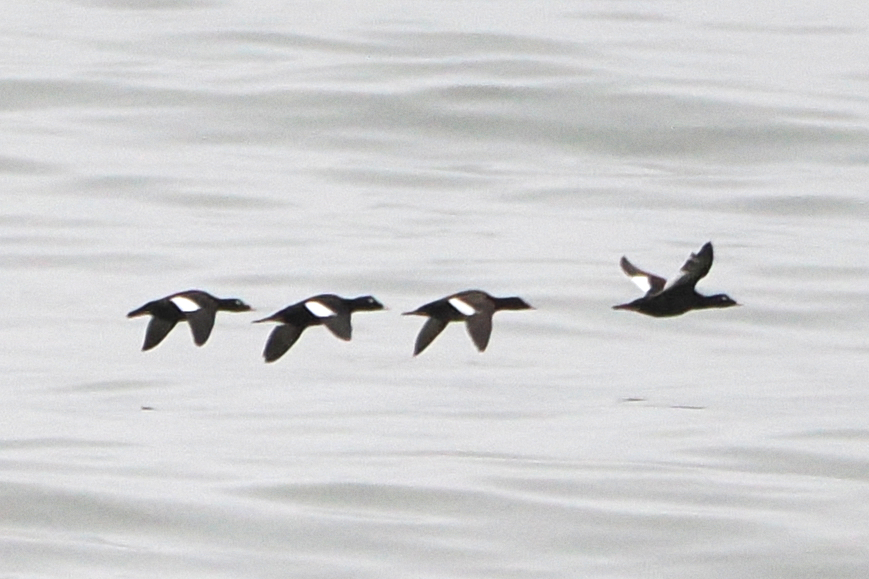
This large sea duck inhabits Arctic coastal waters. It was recently recognized as a species distinct from the white-winged scoter. In North America, it occurs regularly in western Alaska where it may breed. The core population breeds and winters along Asian coastlines from Siberia south to China. The species forms large, dense flocks on coastal waters and takes flight in coordinated groups.
Description
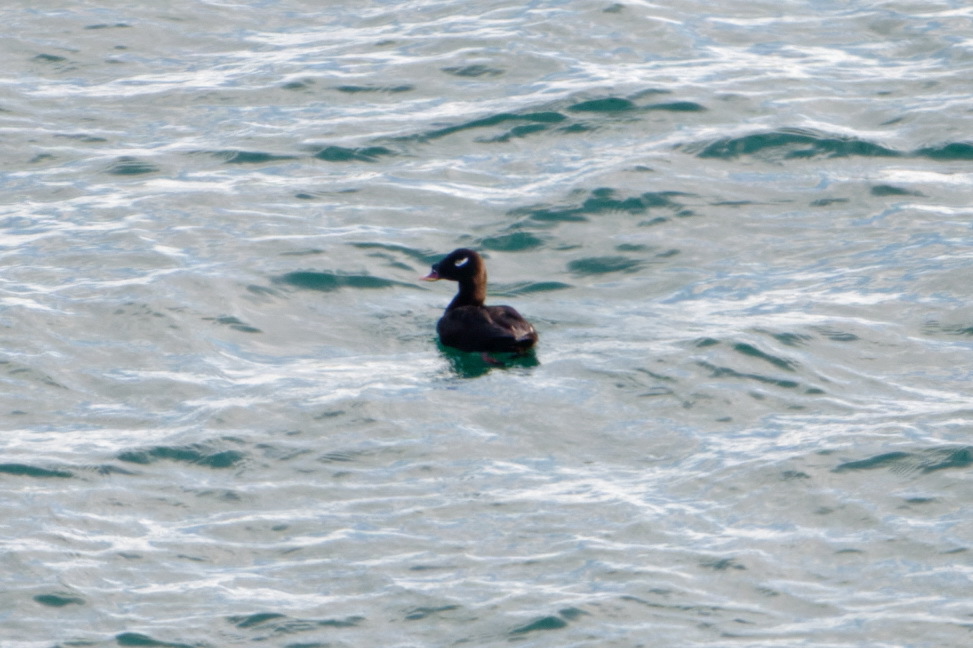
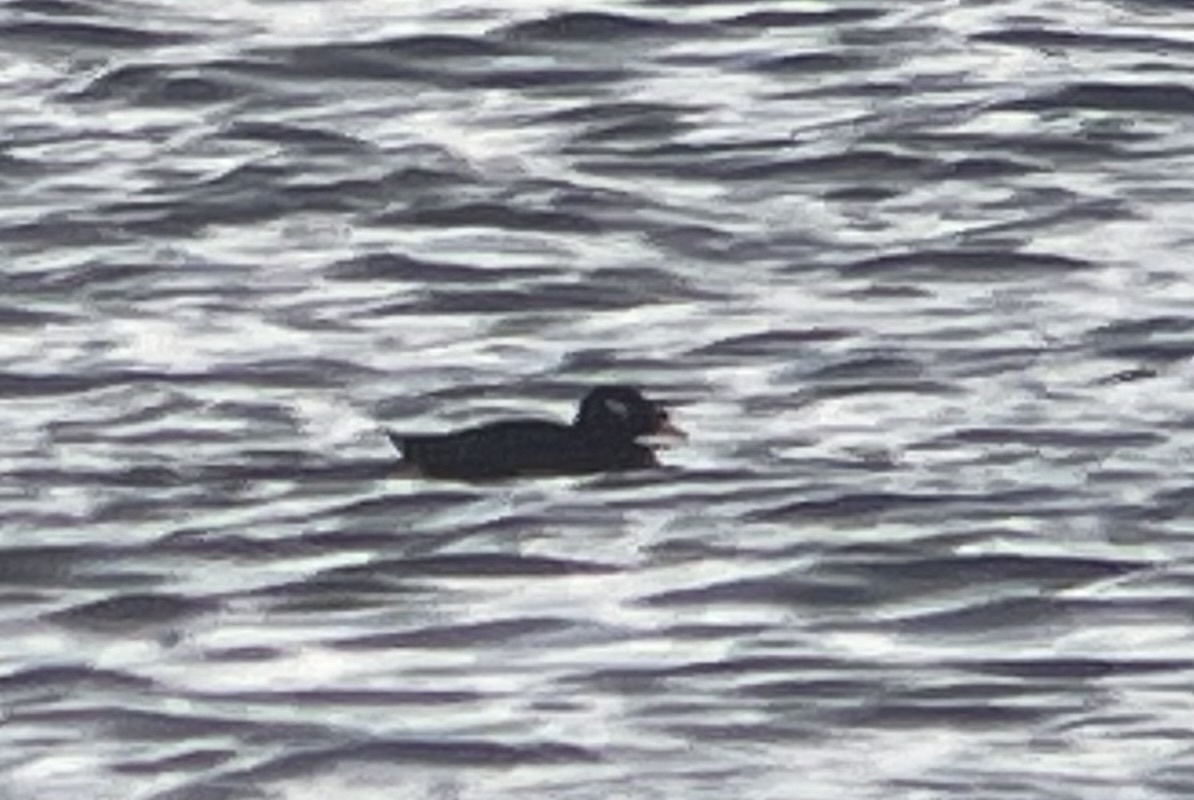
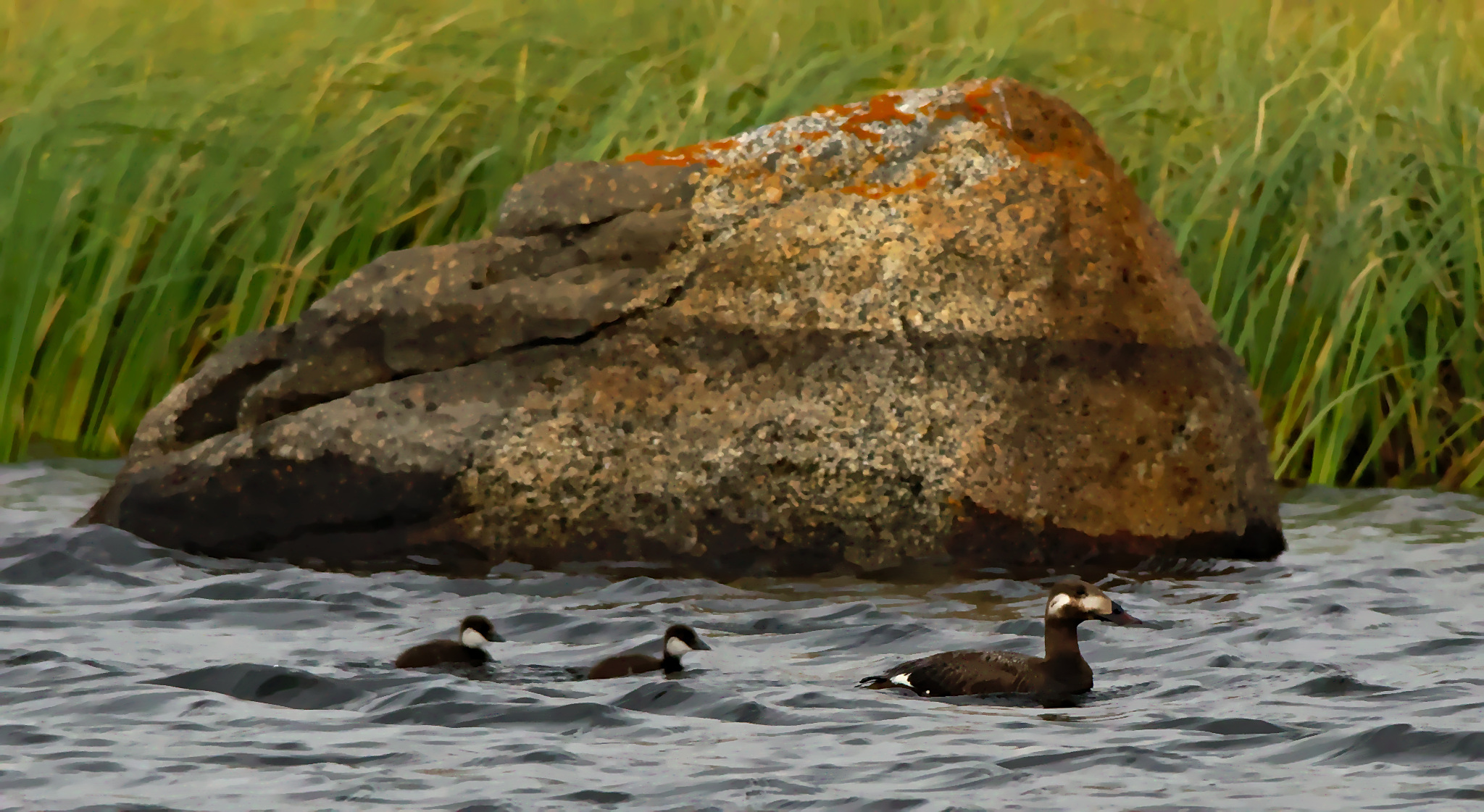
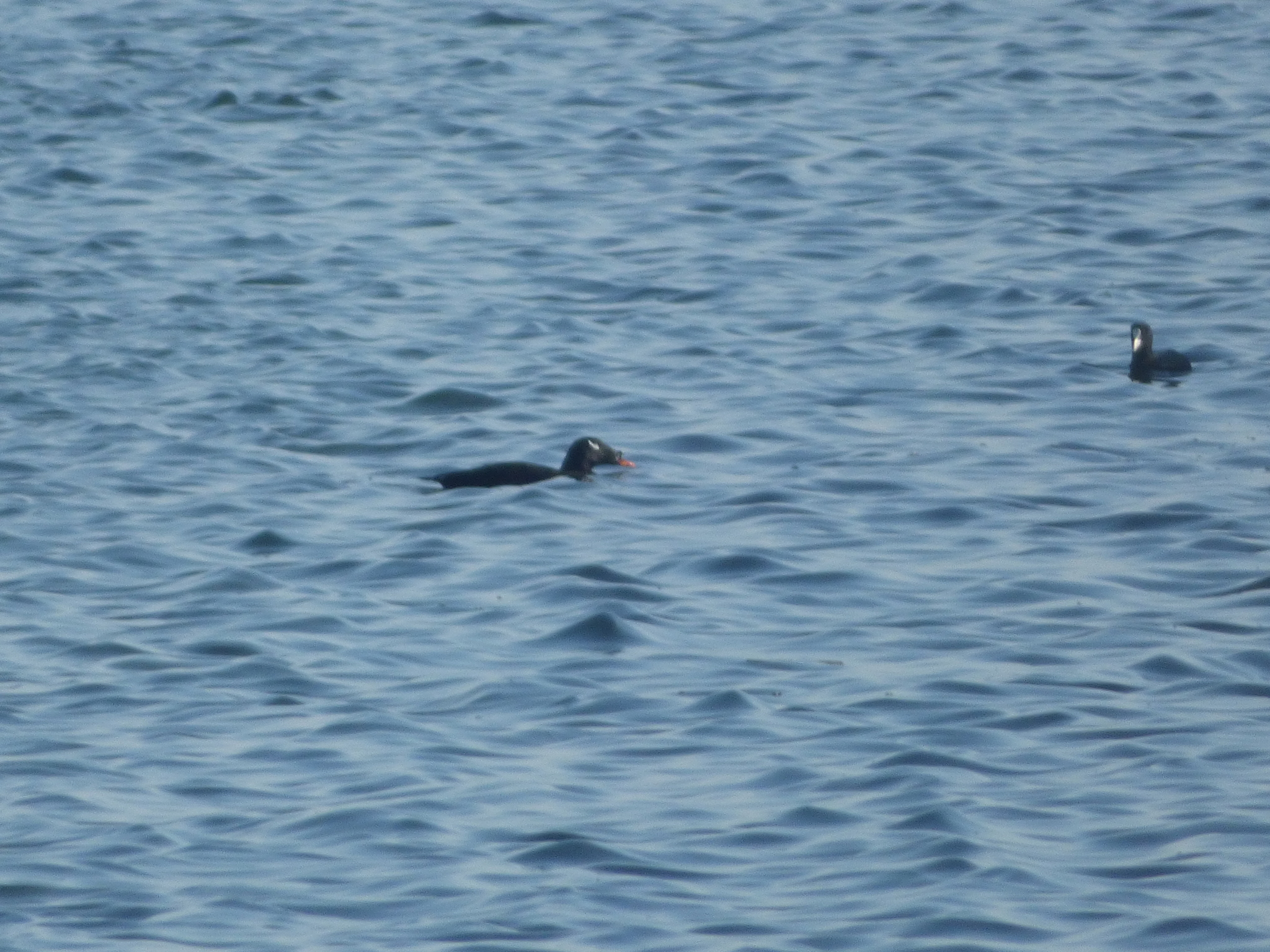
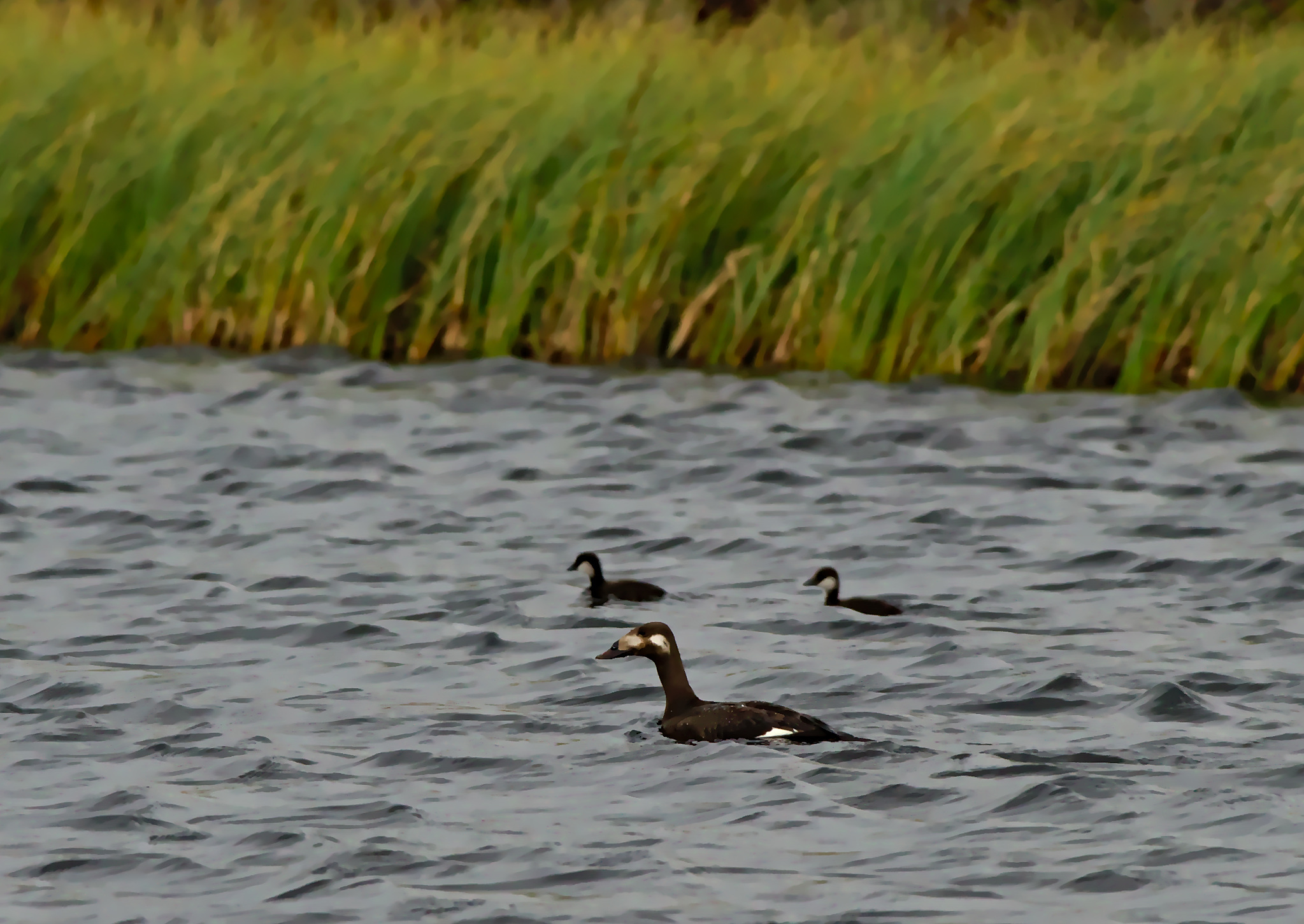
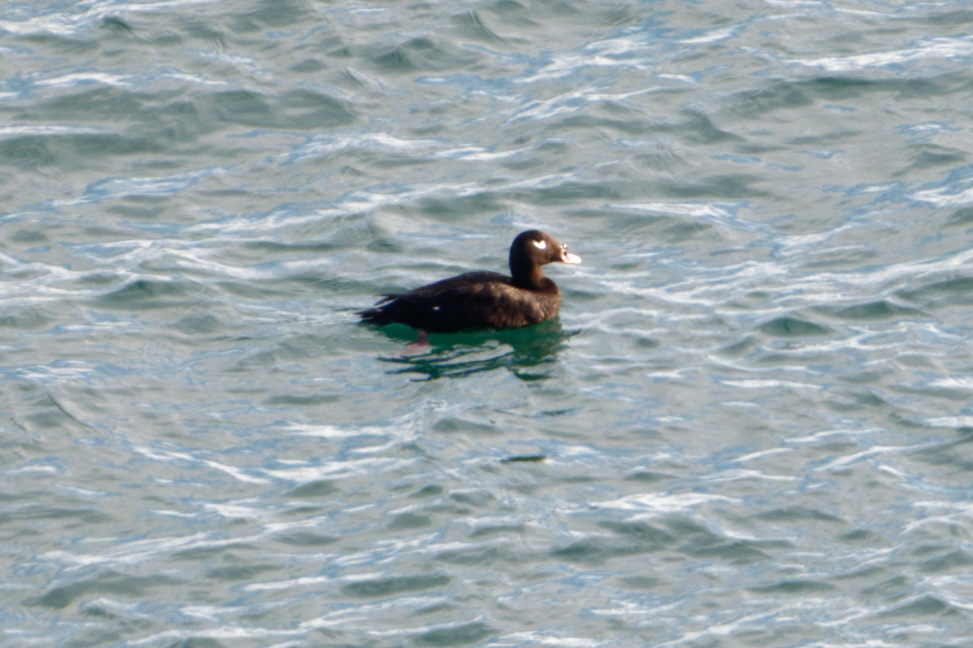
This is a large sea duck with the typical bulky scoter shape. Males are primarily black with a distinctive orange-yellow bill featuring a very prominent, tall knob at the base. The most reliable identification feature is the head profile: this species shows a long, sloping 'Roman nose' profile from bill to forehead, somewhat similar to a common eider. The feathering at the base of the upper mandible meets the bill at an acute angle. Females and immature birds are brown overall, typical of scoters and challenging to distinguish from female white-winged scoters without careful observation of bill shape and head contours.
Identification
Males are best distinguished from white-winged scoters by head shape—the 'Roman nose' profile versus the white-winged's 'two-stepped' profile between bill and head. The bill knob is taller in this species, and the bill color is mostly orange-yellow compared to the white-winged's darker yellow bill. Females require careful examination of bill structure and head shape, as plumage patterns are similar. The species was only recently split from the white-winged scoter (2019), so older field guides may not distinguish between them. Key features to observe are the acute angle of feathering at the bill base versus the right angle found on white-winged scoters.
Distribution & Habitat
Breeds across the far northern regions of Asia, east of the Yenisey Basin. Winters southward through temperate zones of Asia, reaching as far as China. Found in large coastal flocks on suitable marine waters. In North America, occurs regularly in western Alaska with records from Nome, Saint Paul Island, and Gambell. A single confirmed record south of Alaska comes from Helena Valley, Montana (April-May 2015). Also recorded as a rare vagrant in Europe, including France, Finland, Poland, Iceland, Ireland, Norway, Scotland, and Sweden.
Behavior & Ecology
Feeding habits vary by habitat: in freshwater environments, this species consumes primarily crustaceans and insects, while in saltwater areas it feeds on molluscs and crustaceans. Forms large, dense flocks on coastal waters, often tightly packed together. These flocks demonstrate coordinated behavior, with birds typically taking off simultaneously when disturbed. Courtship and breeding behavior occurs on freshwater lakes and rivers during the summer breeding season, though specific details of breeding biology are less well documented compared to other scoter species.
Conservation
Information on population status and conservation assessment not available in source material.
Culture
Information on cultural significance and folklore not available in source material.
Source: Wikipedia · CC BY-SA 3.0
Taxonomy
- Order
- Anseriformes
- Family
- Anatidae
- Genus
- Melanitta
- eBird Code
- whwsco1
Distribution
breeds Yenisey Basin to Kamchatka (central and eastern Siberia), northeastern Kazakhstan, and northern and western Mongolia; winters to Kuril and Commander islands (southeastern Russia), coasts of Japan, and eastern Korean Peninsula (northeastern Pacific)
Data Sources
Species description from Wikipedia, licensed under CC BY-SA 3.0.
Bird images and sounds sourced from GBIF, contributed by citizen scientists worldwide under Creative Commons licenses.
Taxonomy data from AviList 2025.